Art Therapy: The Science of How Creating Heals the Brain
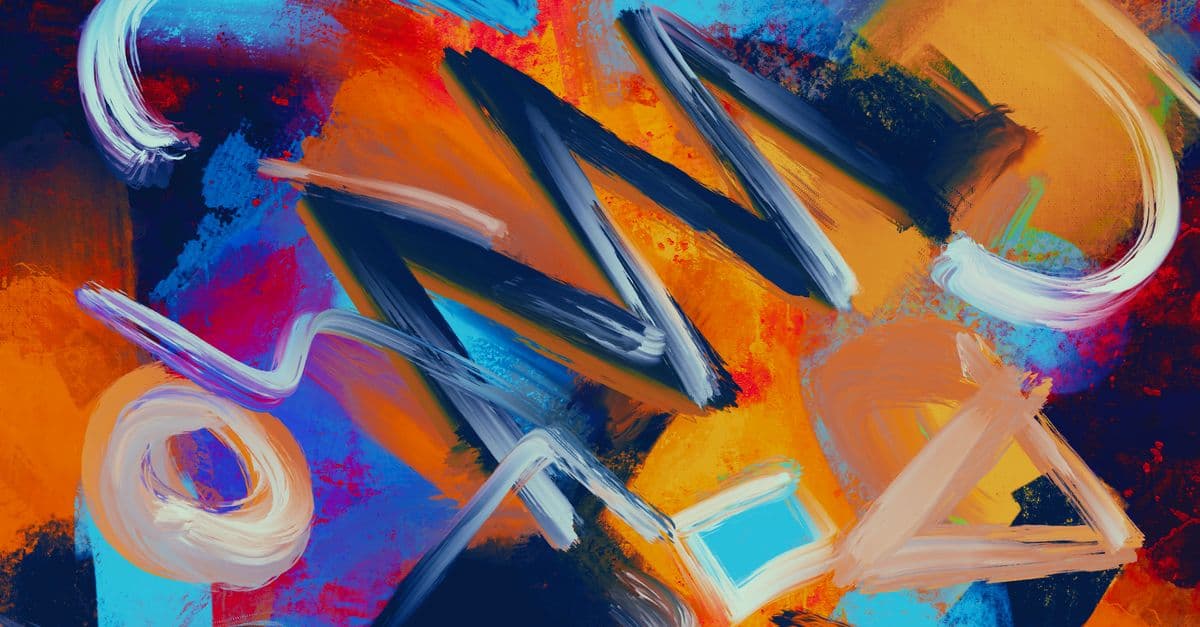
Photo: Steve A Johnson / Pexels
In 1938, the British artist Adrian Hill was recovering from tuberculosis in a sanatorium in Midhurst, England. To pass the time he drew whatever he could see from his bed, and he came to believe the drawing was helping him get better. Four years later, by most biographical accounts, he gave the practice a name: art therapy. Since then researchers have tried to find out whether he was right, and what making art actually does to a body and a brain. The answer is more interesting, and more uneven, than most wellness articles admit.
Key takeaways
- A 2016 pilot study of 39 healthy adults found salivary cortisol (a stress hormone) fell after 45 minutes of art-making in about 75 percent of them, but the study had no control group.
- A 10-week brain-imaging trial of 28 retirees found that making art, unlike analyzing it, strengthened connectivity in the brain's default mode network and was linked to higher resilience scores.
- Large trials temper the enthusiasm: group art therapy did not improve outcomes for 417 people with schizophrenia, and a Cochrane review judged the evidence for dementia to be "very low" quality.
- Skill does not seem to matter for the short-term stress effect, but clinical art therapy is a different thing from doodling and needs a trained therapist.
Where art therapy came from
Hill's story is worth knowing because it shows the practice grew from bedside observation, not from a lab. According to biographical accounts, he began drawing at the King Edward VII Sanatorium in Midhurst in 1938, started teaching other patients when occupational therapy arrived at the sanatorium, and used the phrase "art therapy" in 1942. He set out his ideas in a 1945 book, Art Versus Illness.
A popular version of the history credits First World War doctors with noticing that shell-shocked soldiers recovered faster if they drew. That story circulates widely, but it rests on anecdote, and the claim is better treated as folklore than as documented medical history. The better-documented thread runs through mid-century hospitals, where picture-lending schemes and art classes spread as a humane way to occupy long-stay patients, and where some therapists began to notice that what patients drew told them something about what patients felt.
From there the field split in two. One branch, art as therapy, treats the act of making as the healing ingredient. The other, art psychotherapy, treats the finished image as material to talk about with a therapist. Most modern clinicians blend both, which is part of why research results are hard to compare across studies.
What art therapy is, and what a drawing class is not
The American Art Therapy Association describes art therapy as a mental health profession. Practitioners need at least a master's degree and can hold the credential ATR (Art Therapist Registered) or ATR-BC (Board-Certified Art Therapist Registered). They work in hospitals, cancer centers, psychiatric facilities, schools, and private practice, with children, trauma survivors, and older adults with dementia (American Art Therapy Association).
The distinction matters because the research literature mixes three different activities:
| Activity | Who leads it | Goal | Typical research design |
|---|---|---|---|
| Free art-making in a lab | A researcher | Measure a short-term body or brain change | One session, before-and-after measurement |
| Community or hobby art | An instructor or none | Enjoyment, social contact, skill | Surveys, cohort studies |
| Clinical art therapy | A credentialed therapist | Treat a diagnosed condition | Trials over weeks or months, with comparison groups |
A finding from the first row does not automatically carry over to the third. When a headline says "art heals," it is usually quoting a study from the first or second row and implying results from the third.
The World Health Organization's European office published a scoping review in November 2019 that gathered more than 3,000 studies on the arts and health. It found a role for the arts in preventing illness, promoting health, and managing disease across the lifespan, while noting that the studies ranged from small pilots and case studies to large cohorts and randomized trials (WHO/Europe). That range is the key phrase. A scoping review maps what exists; it does not rank every claim by how well it was tested.
What happens in your brain when you make art
Making a picture recruits a lot of machinery at once: visual processing, fine motor control, memory, emotion, and planning. Researchers have focused on one network in particular, the default mode network (DMN), a set of brain regions that become more active when attention turns inward, as in daydreaming, recalling the past, or thinking about other people. If you want the full picture of what it does, see the default mode network explainer.
Think of the DMN as the brain's internal narrator. Left unsupervised, it can run a useful story about who you are and where you are going. In depression it can run the same painful story on a loop. A 2015 meta-analysis in Biological Psychiatry found that people with depression show reliably increased connectivity between the DMN and a frontal region called the subgenual prefrontal cortex, and that this coupling often tracks how much they ruminate (Hamilton et al., 2015). Rumination, in other words, looks partly like a network stuck in one pattern. For more on the broader biology, see the neuroscience of depression.
Does making art change how the DMN behaves?
Possibly, in older adults at least. In a 2014 study in PLoS ONE, Bolwerk and colleagues randomly assigned 28 healthy retirees (mean age about 64) to one of two 10-week programs of weekly two-hour sessions. One group made art in a studio class. The other analyzed existing artworks in a museum with an art historian.
Brain imaging before and after showed that the art-making group had a larger increase in connectivity between the posterior cingulate cortex and precuneus (core DMN regions) and frontal and parietal areas. Their resilience scores also improved significantly, while the analysis group's did not (Bolwerk et al., 2014).
Two caveats belong next to that result. First, the groups had 14 people each, which is small enough that one unusual participant can shift averages. Second, the authors state they cannot offer a mechanistic explanation for the findings. The study shows a difference between making and analyzing; it does not show that the connectivity change caused the resilience gain.
A useful analogy: a path through a field
The brain changes with repeated use, which is the core idea behind neuroplasticity. Picture a field of tall grass. Walk the same route daily and you wear a path; walk a new one and, over weeks, a second path appears. Weekly art-making in the Bolwerk study may be a second route through the grass, one that asks the brain's inward-looking network to cooperate with visual and motor areas rather than looping alone. That is an interpretation, not a finding, but it explains why researchers find the result plausible.
The cortisol study, step by step
The most-cited number in popular articles on this topic comes from a 2016 paper by Girija Kaimal, Kendra Ray, and Juan Muniz at Drexel University, published in the journal Art Therapy. It is worth reading carefully because the headline version drops most of the detail.
| Feature | What the study did |
|---|---|
| Participants | 39 healthy adults, ages 18 to 59, recruited from a university (33 women, 6 men) |
| Session | 45 minutes of free art-making |
| Materials | Collage, modeling clay, and markers, in any combination |
| Measurement | Saliva samples before and after, analyzed in a lab by an assay that did not know which samples were "before" |
| Average cortisol before | 17.85 ng/ml |
| Average cortisol after | 14.77 ng/ml |
| Who dropped | 30 of 39 participants (about 75 percent) |
| Who did not | 9 participants stayed the same or rose |
| Control group | None |
Source: Kaimal, Ray, and Muniz, 2016.
The average drop was statistically significant, and prior art experience, choice of materials, and gender were not significantly related to the change. That is where the claim "you don't have to be good at art" comes from. Participants also described the session as relaxing and enjoyable in written responses.
What cortisol is, and why it was the measure
Cortisol is the main hormone of the body's stress system, and it follows a daily rhythm that peaks in the morning and declines through the day. If you want the full biology, cortisol and the stress response explains how it works and why chronic elevation matters. Researchers like it as an outcome because saliva sampling is cheap and non-invasive and the result is a number rather than an opinion.
Why the study is a pilot, not proof
The authors list several limitations themselves. There was no control group, so they could not tell whether the art-making, chatting with the facilitator, or simply sitting quietly for 45 minutes produced the drop. Cortisol also falls naturally during the day, and the paper noted that time of day had a weak association with the change. The sample was healthy, about 85 percent women, and more than half had at least some art experience, so it says little about people in distress. The first author also facilitated the sessions.
None of that makes the finding worthless. It makes it a hypothesis worth testing with a comparison condition such as coloring a printed pattern, reading, or listening to music. A single before-and-after measurement is a good reason to run a larger trial and a poor reason to quote "75 percent" as a general law.
Why images may reach what words cannot
Trauma clinicians often argue that images give access to experiences that resist narration. The reasoning goes like this. Traumatic memories can be stored as fragments of sensation and emotion rather than as a tidy story, and some people find that talking about an event brings back the distress without bringing any order. Drawing or modeling the experience lets them represent it from the outside, at a pace they control, without first finding words.
This is a plausible clinical idea with real practitioners behind it. It is also much less firmly established than the popular accounts suggest. Claims about specific brain regions "shutting down" during trauma recall come from small imaging studies that have not always replicated, and the broader idea that art accesses memory through a distinct pathway is a theory rather than a measured fact. What does have some support is the practical observation that people differ in whether they find talk or images easier, and that offering both can help someone stay engaged in treatment.
Compare it to a map and a diary. A diary tells the story in order, which is useful if you can tolerate sequence. A map lays everything out at once so you can see relationships. Some people need the map before they can write the diary.
What do the PTSD trials show?
The trial evidence is small. A 2016 randomized trial by Campbell and colleagues randomized 15 veterans with combat-related PTSD, 11 of whom completed treatment, to Cognitive Processing Therapy alone or the same therapy plus art therapy. Both groups improved on PTSD and depression scales, and the art therapy group did not differ significantly from the therapy-only group on the PTSD measure. The authors called the evidence preliminary and asked for larger trials (Campbell et al., 2016). That is honest science: an encouraging signal, a tiny sample, and no proof of benefit over standard care.
Flow, and what is and is not known about it
The psychologist Mihaly Csikszentmihalyi used the term flow for a state of deep absorption in a task that matches your skill, where effort feels smooth and time distorts. Many artists describe it, and it is one reason people find creative work restorative.
Popular accounts go further and list a precise neurochemical cocktail, usually dopamine, serotonin, norepinephrine, and endorphins, then call flow a "side-effect-free drug." Those lists are better treated as plausible hypotheses than as results measured during art-making. One influential idea is that flow involves reduced activity in the prefrontal regions that supply self-criticism, which would fit the common report that the inner critic goes quiet. The evidence for that idea is mixed, and nothing in the studies discussed above measured it directly.
A practical point holds regardless of mechanism. Judgment seems to work against absorption. Therapists often use open-ended materials and avoid grading the result, because worrying about whether a picture is good pulls attention back to the self. That fits the Kaimal result, where skill did not predict the stress change.
For a related practice with a larger research literature, see what happens to your brain when you meditate. Comparing the two is useful: meditation trains attention on purpose, while art-making channels it into a task, and some people tolerate one far better than the other.
What the clinical evidence shows, condition by condition
The question most readers want answered is whether art therapy works for a specific problem. The honest answer is that it varies by condition, and in several cases the best evidence is weaker than the marketing.
| Condition | Best evidence cited here | What it found |
|---|---|---|
| Healthy adults, short-term stress | Kaimal et al., 2016 (39 adults, no control) | Cortisol fell on average; cause unknown |
| Healthy older adults, brain connectivity | Bolwerk et al., 2014 (28 adults, randomized) | DMN connectivity and resilience improved with making, not analyzing |
| Combat-related PTSD | Campbell et al., 2016 (15 randomized, 11 completed) | Both groups improved; no significant difference; preliminary |
| Schizophrenia | MATISSE trial, 2012 (417 adults, randomized) | No improvement over standard care in function or symptoms |
| Dementia | Cochrane review, 2018 (2 trials, 60 analyzed) | Insufficient evidence; "very low" quality |
The trial where art therapy did not work
The MATISSE trial, published in the BMJ in 2012, is the largest randomized test in this area. It assigned 417 adults with schizophrenia to 12 months of weekly group art therapy plus standard care, weekly activity groups plus standard care, or standard care alone. At 24 months, the groups did not differ on global functioning or on symptom scores, and attendance was low in both group types. The authors concluded that group art therapy as delivered did not improve outcomes, while noting they could not rule out a benefit for highly motivated individuals (Crawford et al., 2012).
This result deserves as much attention as the encouraging ones. It shows that "art is good for the brain" and "an art therapy program improves a diagnosed illness" are different claims, and the second needs trials, not plausibility.
What the dementia reviews say
Art therapy is popular in dementia care because people who have lost much of their verbal ability can still handle materials and respond to images. The Cochrane review published in September 2018 found only two eligible randomized trials, with 88 people randomized and 60 analyzed. It rated the evidence as very low quality and concluded there was insufficient evidence about whether art therapy helps people with dementia (Cochrane, 2018).
That conclusion does not say art therapy fails. It says nobody has run enough good trials to know, and "insufficient evidence" is a different statement from "no effect." Care homes may still reasonably offer art sessions for enjoyment and engagement, which are valuable outcomes in their own right. They are just not the same as a proven treatment effect.
Why the evidence is hard to gather
Part of the gap between plausibility and proof is practical. Psychological therapies are difficult to test, and art therapy has extra problems.
- No blinding. Participants know whether they are making art, so expectation can color self-reported outcomes.
- A hard-to-define control. A fair comparison needs an equally engaging activity without art materials, and not every study includes one.
- Variable therapists. Two therapists running "art therapy" may do different things, and the therapeutic relationship itself affects outcomes.
- Small samples. Many studies enroll fewer than 50 people, which makes results unstable.
- Self-selection. People who sign up for art studies already like art, which limits how far results generalize.
None of these is unique to art therapy, and the same issues affect much of psychotherapy research. They do mean that a single study should move your confidence a little, not a lot.
What people get wrong about art therapy
A few misconceptions come up repeatedly.
"Art therapy means painting your feelings." Often it does not. Many sessions are structured, involve collage or clay, and spend as much time on reflection and conversation as on making.
"Interpreting drawings reveals hidden problems." Therapists do talk with clients about what they made, but the idea that a trained eye can decode a drawing like a test result lacks scientific support. Good practice asks the client what the image means rather than telling them.
"If it lowers cortisol, it treats stress disorders." A temporary drop in a hormone after a pleasant activity is not the same as treating anxiety or depression. Many pleasant activities likely do the same, and the Kaimal study cannot say whether art is special. For the underlying biology of those conditions, see anxiety neuroscience and the psychology of stress.
"It only works if you are creative." The short-term results suggest skill and prior experience are not required. The reverse worry, that being "bad at art" disqualifies you, has no support in the studies reviewed here.
"It replaces other treatment." Where trials exist, art therapy has been tested as an addition to standard care, as in the PTSD and schizophrenia trials, not as a substitute. This article describes research, not personal medical guidance. Anyone dealing with depression, trauma, or dementia should talk to a clinician about options.
An old impulse, and what it might mean
The urge to make images is far older than any therapy. In January 2021, a team reported in Science Advances that a life-sized painting of a Sulawesi warty pig in Leang Tedongnge cave, Indonesia, is at least 45,500 years old. The team dated a calcite layer that had formed over the painting using uranium-series dating, so the painting is at least that old and could be older (Archaeological Institute of America summary).
Nobody knows what the painter intended, and it would be a mistake to call the pig an early form of therapy. What the find does show is that representing the world in images is deeply embedded in human behavior, which is one reason researchers take seriously the idea that the activity engages emotion, attention, and memory together. For other angles on creativity, see the psychology of creativity.
The takeaway
The best-supported claim is modest: a short session of free art-making can be relaxing, may lower cortisol in healthy adults, and, over 10 weeks, may strengthen connectivity in networks tied to self-reflection and resilience in older adults. The least-supported claim is the grandest one, that art reliably treats trauma, schizophrenia, or dementia. Large trials in schizophrenia found no benefit, and the dementia and PTSD evidence is too thin to call. The sensible reading is that art-making is a low-risk, often enjoyable activity with plausible benefits, and that clinical art therapy is a promising but still under-tested treatment that works best as an addition to standard care rather than a replacement.
Sources
- Kaimal, G., Ray, K., and Muniz, J. (2016). Reduction of cortisol levels and participants' responses following art making. Art Therapy, 33(2), 74-80. PMC5004743
- Bolwerk, A., et al. (2014). How art changes your brain. PLoS ONE, 9(7). PMC4077746
- Crawford, M. J., et al. (2012). The MATISSE study. BMJ, 344. PMC3289714
- Deshmukh, S. R., Holmes, J., and Cardno, A. (2018). Art therapy for people with dementia. Cochrane. Cochrane summary
- Campbell, M., et al. (2016). Art therapy and cognitive processing therapy for combat-related PTSD. Art Therapy, 33(4). PMC5764181
- Hamilton, J. P., et al. (2015). Depressive rumination, the default-mode network, and the dark matter of clinical neuroscience. Biological Psychiatry. PMC4524294
- WHO Regional Office for Europe (2019). What is the evidence on the role of the arts in improving health and well-being? WHO/Europe
- American Art Therapy Association. What is art therapy?
FAQ
Q: Does art therapy actually work, or is it just relaxing? A: It depends on the condition. Short sessions of art-making appear to relax people and can lower cortisol, but the main study had no control group. In larger trials, group art therapy did not improve outcomes for people with schizophrenia, and evidence for dementia and PTSD is preliminary. Relaxation is real, while treatment effects need more trials.
Q: Do you have to be good at art for it to help? A: Apparently not for short-term stress effects. In the 2016 Drexel study, prior art experience, choice of materials, and gender were not significantly related to cortisol change. The sample was small and more than half had at least some art experience, so the finding is suggestive rather than settled.
Q: How is art therapy different from doing art as a hobby? A: Clinical art therapy is led by a trained mental health professional, usually with a master's degree, who helps a client reflect on the process and the finished piece within a therapeutic relationship. Hobby art-making can be enjoyable and calming, but it is not directed treatment for a diagnosed condition.
Q: Does art therapy help with dementia? A: The evidence is insufficient. A 2018 Cochrane review found only two randomized trials, analyzed 60 participants, and rated the evidence very low quality. That means researchers cannot yet say whether it works, not that it has been shown to fail. Art sessions may still improve engagement and enjoyment in care settings.
Q: Does making art change the brain? A: One small randomized study of 28 retirees found that 10 weeks of art-making increased connectivity in parts of the default mode network and improved resilience scores, while analyzing art did not. The sample was small and the authors could not explain the mechanism, so replication is needed.
Q: What materials are used in art therapy? A: Drawing, painting, collage, and clay are common, and some therapists use photography or digital media. The 2016 cortisol study offered collage, modeling clay, and markers, and participants chose any combination. Therapists often pick materials to suit the client, since clay engages touch while markers allow more control.
Read next:
Follow new articles
Add SciHub101 to your feed reader to see new science and technology stories.
About the Author
SciHub101 is an independent science and technology publication founded and edited by Buğra Sözeri, a software engineer and app developer based in Türkiye. AI tools assist with drafting and research. Source documentation in the existing archive is uneven, and articles are being reviewed and corrected. The Editorial Team byline identifies editorial responsibility; it does not certify specialist or independent human review. Where we compare products, anything built by our own team is labelled as such — see the editorial guidelines and About page for how corrections and disclosures work.
Related Articles
Text-to-Image AI: DALL-E, Midjourney, and Stable Diffusion Compared
Three platforms, three philosophies. How DALL-E, Midjourney, and Stable Diffusion are reshaping who gets to make images.
AI Art, Copyright, and Ethics: Who Owns What an Algorithm Creates?
When an AI generates art, who owns it? And is using millions of artists' work to train that AI fair? Courts in the US, UK, Germany, and China are giving different answers.

The Science of Beauty: What Makes Art Beautiful?
Neuroscientists and psychologists have begun to decode why some artworks move us, and the answers mix shared biology with expectation, expertise, and personal history.
Complete Psychology Guide 2026 — Mind, Behavior, and Human Science
The complete guide to psychology in 2026: cognitive biases, memory, emotions, decision-making, social behavior, famous experiments, and what neuroscience reveals about the human mind.
The Psychology of Loneliness: The Science of Social Pain
Loneliness as evolutionary alarm, threat hypervigilance, inflammation, and mortality risk — why subjective isolation harms the body more than objective solitude.
Why Do We Get Bored? The Science Behind Boredom and Motivation
Boredom is not simply lack of stimulation but a complex cognitive and emotional state signaling that current activities are not meeting psychological needs. Research suggests boredom arises when attention demands are too low (monotony, routine) or when the gap between attention available and attention demanded is mismatched. The attention restoration theory proposes that boredom serves as a signal that the mind needs a change. The default mode network (brain regions active during rest) becomes hyperactive during boredom, associated with mind-wandering and future planning. Boredom is not uniformly negative: susceptibility to boredom varies with personality traits (novelty-seeking, sensation-seeking) and predicts creativity, risk-taking, and innovation. Some of history's greatest scientific and artistic achievements came from bored minds seeking stimulation. Understanding boredom reveals it as a motivational signal that pushes people toward novel goals, exploration, and self-improvement.