How Color Perception Works — Biology of Color
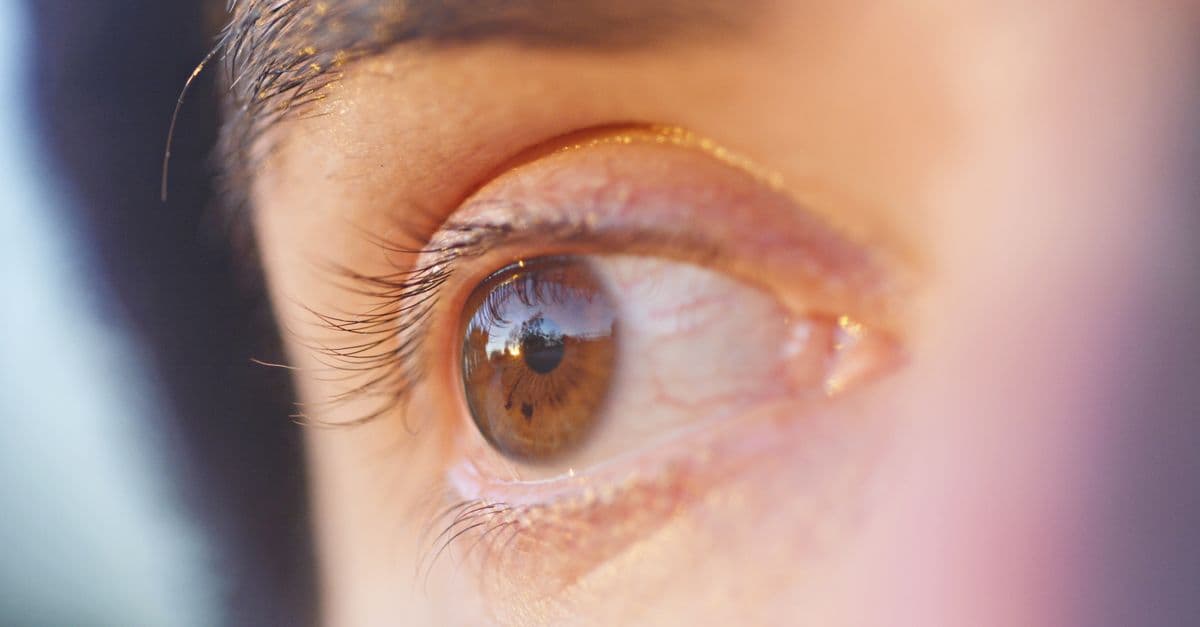
Photo: fijaos88 / Pexels
Color feels like a property of the world. Lemons are yellow, blood is red, the sky is blue. But color is not in the lemon — it's a construction your nervous system builds from a narrow slice of electromagnetic radiation. Strip the brain away and there is no yellow, only photons with different wavelengths bouncing off a peel.
Educational content, not medical advice. Talk to your doctor before changing any medication, treatment, or routine. Information here reflects current research but every person's situation differs.
Understanding color means understanding the meeting point of physics, biology, and perception.
The Physics: Light Is a Spectrum
Visible light occupies wavelengths from roughly 380 nanometers (violet) to 750 nanometers (red) — a tiny window in the electromagnetic spectrum that also includes radio waves, microwaves, X-rays, and gamma rays. We see this slice because the Sun emits most of its energy here and Earth's atmosphere is transparent to it. Evolution selected for receptors tuned to where the photons were.
Objects don't "have" color. They absorb some wavelengths and reflect others. A red apple reflects long wavelengths around 620–750 nm and absorbs most else. Under a sodium streetlamp emitting only narrow yellow wavelengths, that same apple looks brown — there's no red light to reflect. Color is an interaction between light source, object, and observer.
The Biology: Rods and Cones
The human retina has two photoreceptor types:
- Rods (~120 million per eye): exquisitely sensitive but monochromatic. They drive low-light vision but don't distinguish color, which is why moonlit scenes look gray.
- Cones (~6 million): less sensitive, concentrated in the central fovea, and they come in three flavors.
Each cone contains an opsin protein bound to retinal (a vitamin A derivative). When a photon of the right energy hits, retinal changes shape, the opsin signals a cascade, and the cone hyperpolarizes. The three human opsins are tuned to different peak wavelengths:
- S-cones ("blue") — peak around 420 nm
- M-cones ("green") — peak around 530 nm
- L-cones ("red") — peak around 560 nm
Note that L-cones peak in the yellow-green, not red. The labels are convenient but slightly misleading.
Color Is a Ratio, Not a Wavelength
Here's the crucial insight: a single cone cannot tell you what wavelength hit it. A bright dim photon at its peak wavelength produces the same response as a brighter photon at a less optimal wavelength. This is the principle of univariance.
Color emerges from comparing the relative activation of the three cone types. A 580 nm photon strongly stimulates L, moderately stimulates M, and barely stimulates S — the brain reads that pattern as "yellow." Mix red and green light to make yellow, and you get the same L:M:S ratio, indistinguishable from monochromatic yellow. That's metamerism, and it's why your screen can fake every color with just three primaries.
Trichromacy and Beyond
Most placental mammals are dichromats — only two cone types, typically S and a single L/M. Dogs and cats see the world in something like a red-green colorblind human's palette. A red ball on grass is easy for you to find, hard for your dog.
Old World primates (including humans) re-evolved trichromacy roughly 30 million years ago, likely because spotting ripe fruit and young leaves against green canopy was a fitness boost.
Many birds, reptiles, and fish are tetrachromats with a fourth cone sensitive to ultraviolet. Flowers we see as solid yellow often have UV "landing strip" patterns invisible to us but glowing to bees. Some women carry an extra cone variant and may be functional tetrachromats, though robust behavioral evidence is rare.
The famous mantis shrimp has 12–16 photoreceptor types — but counterintuitively, behavioral tests suggest they're worse at fine color discrimination than humans. They appear to use receptors as a hard-wired barcode scanner rather than mixing them into a continuous color space.
Color Blindness
About 8% of males and 0.5% of females of European descent have some form of color vision deficiency. The genes for L and M opsins sit on the X chromosome, and the most common variants — protanopia (missing L) and deuteranopia (missing M) — are X-linked recessive. Males have only one X, so a single bad copy expresses; females need two.
Red-green confusion is the typical result. True monochromacy (no working cones) is rare and severe. There is no "cure," but tinted glasses can enhance contrast between confusable wavelengths.
Color Constancy and Context
A white sheet of paper looks white under noon sunlight (around 5500K) and under a tungsten bulb (around 2700K), even though the spectra hitting your eye are radically different. The brain performs color constancy — discounting the illuminant to estimate the object's intrinsic reflectance.
This machinery occasionally misfires. The Dress went viral in 2015 because viewers' visual systems made different assumptions about the lighting (shadow vs daylight) and arrived at different reflectance estimates — blue/black or white/gold. Both groups were perceiving the same pixels; they were just running different inverse-optics calculations. Similar effects drive countless color illusions where identical patches look different in context.
Color in Language and Culture
Languages carve color space differently. English has separate words for blue and green; many languages — including ancient Greek and Japanese historically — used a single term covering both. The Berinmo of Papua New Guinea split "nol" (greenish) and "wor" (yellowish) at a boundary English speakers don't draw. Speakers of these languages are slightly faster at discriminating across their own linguistic boundary.
Color terms also enter languages in a roughly predictable order: black/white first, then red, then green/yellow, then blue, then brown, then finer distinctions. English "blue" stabilized late in the Middle Ages.
How Screens and Cameras Emulate Color
| System | Primaries | Use case | How it works |
|---|---|---|---|
| RGB (additive) | Red, Green, Blue light | Screens, projectors | Add light at different intensities; all three at max = white |
| CMYK (subtractive) | Cyan, Magenta, Yellow, Key (black) | Printing | Inks absorb wavelengths from reflected light; all three near max = dark brown, so K is added |
| HSL / HSV | Hue, Saturation, Lightness/Value | Design software | Reparameterizes RGB to be more perceptually intuitive |
| CIELAB | L*, a*, b* | Color science | Designed to be perceptually uniform — equal distances feel equally different |
Your phone screen has red, green, and blue subpixels. Drive them at different brightnesses and the resulting cone activation ratios match the metamers your eye would receive from real-world spectra. The trick works because of trichromacy. A tetrachromatic alien would find your displays look obviously fake.
Synesthesia
Roughly 1 in 25 people experience synesthesia, where one sense triggers another. Grapheme-color synesthetes see letters and numbers as colored. The "5 is red" experience is automatic and consistent across decades. Brain imaging shows cross-activation between regions; the wiring appears to be heritable and present from childhood. Far from a deficit, it's a window into how perceptual binding normally works.
Internal Links
- How the Eye Works — Biology of Vision
- How the Brain Processes Information
- Optical Illusions Explained
- How Memory Works in the Brain
FAQ
Q: Is color real or just in our heads? A: The wavelengths of light are real and measurable. The experience of "red" is a construction your brain creates from cone activation ratios. Two people seeing the same wavelength may have subtly different private experiences — a question philosophers call the "inverted qualia" problem.
Q: Why can't I see ultraviolet or infrared? A: Your cone opsins aren't tuned to those wavelengths, and the lens of your eye actually blocks most UV. People who've had cataract surgery with older lens replacements sometimes report faint UV sensitivity afterward.
Q: Can color blindness be cured? A: Not yet in humans, but gene therapy has restored trichromacy in colorblind squirrel monkeys (Mancuso et al. 2009) by adding the missing opsin gene. Human trials are early-stage.
Q: Why do some people see "the dress" differently? A: Different unconscious assumptions about the lighting. Viewers who assumed it was in shadow saw white/gold; those assuming bright illumination saw blue/black. Your brain subtracts the assumed light to estimate the cloth color.
Q: Are there colors humans can never see? A: Yes. "Forbidden colors" like reddish-green can't normally be experienced because the opponent-process system pits them against each other, though some experiments using image stabilization claim to elicit them. UV and IR are entirely outside our range without technology.
Q: Do animals see fewer colors than us? A: Most mammals do (dichromats). But birds, reptiles, fish, and many insects are tetrachromats with UV sensitivity — they likely see a richer color world than humans.
Sources
- Solomon, S. G., & Lennie, P. (2007). "The machinery of colour vision." Nature Reviews Neuroscience.
- Conway, B. R. et al. (2010). "Advances in color science." Journal of Neuroscience.
- Mancuso, K. et al. (2009). "Gene therapy for red–green colour blindness in adult primates." Nature.
- Roberson, D. et al. (2005). "Color categories: Evidence for the cultural relativity hypothesis." Cognitive Psychology.
- Land, E. H. (1977). "The retinex theory of color vision." Scientific American.
- Thoen, H. H. et al. (2014). "A different form of color vision in mantis shrimp." Science.
Weekly digest
Stay ahead of the curve
Get the best science, AI, and tech stories delivered to your inbox every week. No spam — unsubscribe any time.
About the Author
SciHub101 is an independent science and technology publication founded and edited by Buğra Sözeri, a software engineer and app developer based in Türkiye. Articles are drafted against peer-reviewed literature and primary sources, fact-checked, and edited by a human before publication. Where we compare products, anything built by our own team is labelled as such — see the editorial guidelines and About page for how corrections and disclosures work.
Related Articles

CRISPR + Machine Learning: Gene Editing at Scale
How neural networks design better CRISPR edits and predict outcomes.

How the Heart Works — Anatomy and Function
How the human heart pumps blood: chambers, valves, electrical conduction, cardiac cycle, and the most important diseases and treatments.
How the Human Eye Works — From Light to Vision
How light becomes sight: eye anatomy, rods and cones, phototransduction, the visual cortex, color vision, and why eyes evolved 8+ times.
How Does the Human Eye Actually Work?
Your eye captures light, converts it to electrical signals, and sends them to the brain — which then constructs everything you see. Here's the elegant biology behind vision.
How the Eye Works: Light, the Retina, and How the Brain Builds Sight
Your eye contains 126 million photoreceptors but only one million output fibers to the brain — meaning the retina compresses visual data by a factor of 126 before it leaves the eye. What you see is a model your brain built, not a photograph it took.
Complete Biology Guide 2026 — How Life Works
The complete guide to biology in 2026: cells and genetics, evolution, the human body, neuroscience, disease, immune systems, and the future of genetic engineering.