Countries with the Most Fast Food Restaurants (2025 Ranked)
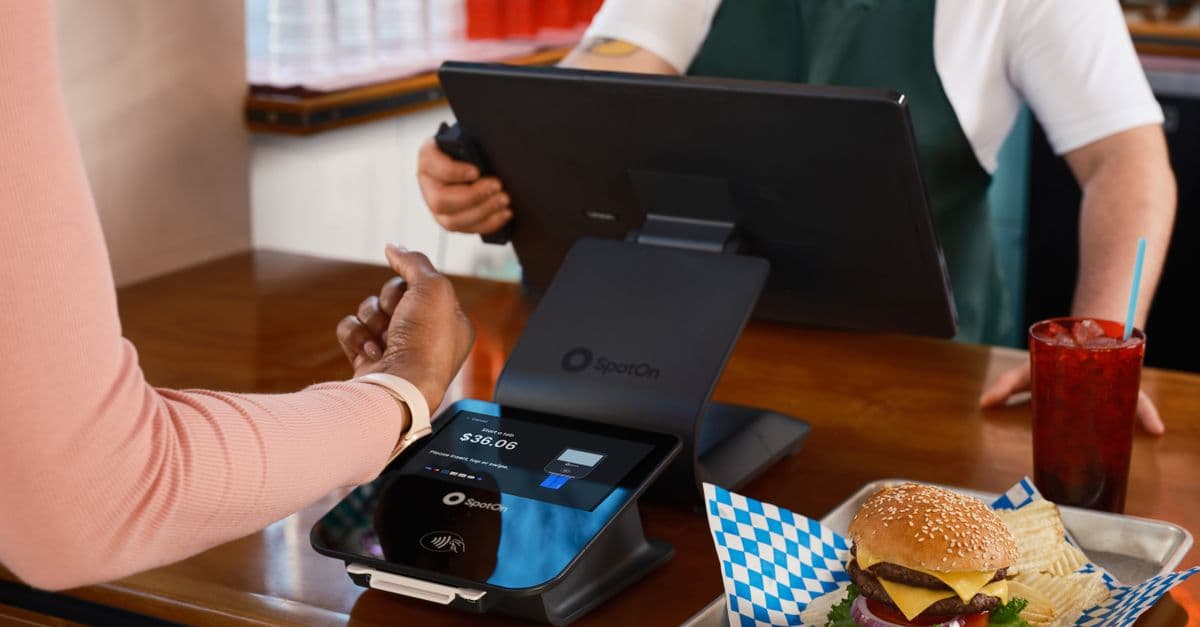
Photo: SpotOn POS / Pexels
Fast food is the most widespread single category of commercial food service in human history — and it did not exist in any meaningful form before 1950. The global fast food industry generates over $900 billion annually, operates in nearly every country with a functioning market economy, and has been identified by nutritional epidemiologists as a primary driver of the global obesity transition. The United States invented the model, refined it into a franchise machine, and exported it worldwide. Here is where those restaurants are concentrated, why the density varies so dramatically by country, and what it means for the populations that eat there.
How this ranking is measured
Fast food restaurant in this article refers to standardised, branded quick-service restaurant (QSR) chains serving food within minutes of ordering, at prices positioned below full-service dining. This includes burger chains, fried chicken chains, pizza delivery, sandwich chains, and domestic QSR equivalents. It excludes:
- Street food vendors (not branded or standardised)
- Convenience stores serving prepared food (classified separately in most markets, though Japan's konbini culture blurs this line)
- Casual dining restaurants with table service
- Food courts operating non-standardised stalls
The outlet count estimates in this article combine company-reported unit counts from annual reports and 10-K filings, Statista market research, QSR Magazine's annual chain rankings, IBISWorld global fast food industry analysis, and country-level franchise association data. All figures are estimates — precise counts are not publicly reported in most countries, and definitions vary across sources.
Key terms:
Systemwide sales — total revenue across all locations of a chain, including franchised locations. Differs from corporate revenue, which only captures what the franchisor earns.
Average unit volume (AUV) — annual revenue per individual restaurant location. The key efficiency metric for comparing chains of different sizes.
QSR — quick service restaurant, the industry's preferred term for fast food chains.
Source: QSR Magazine, "QSR 50 Annual Rankings," 2025; IBISWorld, "Global Fast Food Restaurants," 2024; Statista, "Fast food restaurant industry market size worldwide," 2024.
Countries with the most fast food restaurants (2024–2025)
| Rank | Country | Est. fast food outlets | Per 100K people | Notes |
|---|---|---|---|---|
| 1 | United States | 200,000+ | ~60 | Includes ~15,000 McDonald's, ~37,000 Subway |
| 2 | China | 150,000+ | ~10 | Fastest growing; domestic brands dominant |
| 3 | India | 80,000+ | ~6 | Rapid growth; mostly domestic QSR |
| 4 | Brazil | 60,000+ | ~28 | Bob's, McDonald's, Burger King, Subway |
| 5 | Japan | 55,000+ | ~44 | Mix of Western chains and domestic QSR |
| 6 | United Kingdom | 50,000+ | ~74 | One of highest per-capita in Europe |
| 7 | Germany | 35,000+ | ~42 | McDonald's ~1,500; döner kebab as QSR |
| 8 | Canada | 30,000+ | ~80 | Tim Hortons dominant; very high per-capita |
| 9 | Australia | 22,000+ | ~85 | Highest per-capita; McDonald's, KFC strong |
| 10 | France | 20,000+ | ~30 | McDonald's largest Europe market by sales |
| 11 | South Korea | 18,000+ | ~35 | Domestic chains BBQ, Lotteria alongside global brands |
| 12 | Russia | 17,000+ | ~12 | Post-2022 sanctions restructured foreign brands |
| 13 | Mexico | 15,000+ | ~12 | OXXO convenience-QSR hybrid counts vary |
| 14 | Spain | 14,000+ | ~30 | — |
| 15 | Italy | 10,000+ | ~17 | Lower density reflects food culture resistance |
Figures include branded QSR chains only. Per-capita figures use 2024 population estimates.
Source: QSR Magazine (2025), IBISWorld Global Fast Food Restaurants (2024), Statista market analysis, and company annual reports.
Where this data comes from
These outlet counts represent the most recent publicly available estimates from industry analysts and company filings. QSR Magazine's annual rankings remain the most widely cited source in the industry, drawing on franchisee surveys, company-reported unit counts from 10-K filings and annual reports, and third-party market research firms like IBISWorld and Statista. However, the data has inherent limitations: first, exact counts are rarely published by private companies — most figures are estimates derived from franchisee networks or market analysis; second, definitions of "fast food" vary across sources and countries, meaning some chains are classified differently in different markets; and third, the data reflects a snapshot in time, with fast-growing markets like China and India experiencing outlet count changes that outpace public reporting cycles. These rankings should be understood as reliable relative orderings (the US is genuinely #1) but potentially understate or overstate absolute counts by 10–15% in rapidly changing markets.
The United States: the birthplace and capital of fast food
The US fast food industry's density reflects the form's American origins and the country's particular combination of car-dependent geography, labour economics, and consumer culture.
The origin story. McDonald's was founded in 1940 by Richard and Maurice McDonald in San Bernardino, California, as a barbecue drive-in. The brothers redesigned it in 1948 into the "Speedee Service System" — a kitchen assembly line using standardised processes to reduce burger preparation time to 30 seconds. Ray Kroc, a milkshake machine salesman who met the brothers in 1954, saw the franchise potential and purchased the chain in 1961 for $2.7 million. By 1970, McDonald's had 1,500 locations; by 2025, over 15,000 in the US alone.
KFC was founded in 1952 by Harland Sanders in Corbin, Kentucky, built around a pressure-fried chicken recipe and a franchise model that Sanders began selling from his car across the American South. Burger King (1953), Subway (1965), Wendy's (1969), and Taco Bell (1962) followed the same pattern: a standardised product, a franchise model that transferred operating risk to individual owners, and aggressive national expansion using suburban highway infrastructure as the distribution network.
The drive-through. Approximately 70% of US fast food revenue comes from drive-through service — a format that assumes car ownership and suburban geography. The drive-through was invented by Jack in the Box in 1951 and adopted by McDonald's in 1975. It is not merely a convenience feature; it is an architectural assumption that the customer arrives by car. This format does not translate to dense urban markets in Europe, Asia, or Latin America, which is one reason per-capita fast food density is highest in the most car-dependent countries (US, Canada, Australia).
The franchise model. Approximately 93% of McDonald's US locations are operated by franchisees — individual business owners who pay royalties and fees to McDonald's Corporation in exchange for using the brand, supply chain, and systems. The franchisor provides brand equity and operational standards; the franchisee provides capital and labour. This model enabled McDonald's and other chains to expand nationally with limited corporate capital investment, but it creates an inherent tension between the franchisor's interest in brand standards and the franchisee's interest in profit margins.
The scale. The US has approximately 200,000 branded fast food outlets, including ~15,000 McDonald's, ~37,000 Subway, ~27,000 Starbucks, ~9,000 Chick-fil-A, ~18,000 Dunkin', and thousands of regional chains (Whataburger, In-N-Out Burger, Raising Cane's, Shake Shack, Wingstop). This concentration — roughly one fast food outlet per 1,650 Americans — is the highest density globally by population ratio, excluding Canada and Australia.
Source: McDonald's Corporation, 2024 Annual Report; QSR Magazine, QSR 50 Rankings 2025; National Restaurant Association, "2024 State of the Restaurant Industry Report."
McDonald's: the global standard
McDonald's is the world's most geographically distributed food brand — present in 100+ countries, absent from fewer than 15 states worldwide (North Korea, Cuba, Iceland after 2009 closure, and a handful of others).
Scale of operations. McDonald's system-wide global sales exceeded $100 billion in 2024, making it larger by revenue than the GDP of more than 60 countries in which it operates. McDonald's Corporation itself earns revenue primarily through rent (it owns significant real estate under franchise locations), royalties, and sales from the roughly 5% of locations it operates directly. This asset-light, rent-heavy business model generates extraordinary margins for the parent company.
The Big Mac Index. The Economist magazine has published the "Big Mac Index" since 1986 — comparing the local-currency price of a McDonald's Big Mac across countries as an informal measure of purchasing power parity. A Big Mac in Switzerland costs approximately CHF 7.10 ($8.00); in India (the Maharaja Mac, beef-free equivalent), approximately ₹210 ($2.50); in the US, approximately $5.80. The gap reflects both actual cost-of-living differences and local pricing strategy. The Index is widely cited in economics education as an accessible demonstration of PPP concepts.
Localisation. McDonald's core menu (Big Mac, Fries, McFlurry) is global, but significant localisation occurs in every major market:
- India: McAloo Tikki (spiced potato patty), no beef or pork, extensive vegetarian options
- Japan: Teriyaki McBurger, seasonal sakura McFlurry, Ebi Filet-O (shrimp burger)
- France: Le McBaguette, regional cheese options
- Malaysia/Indonesia: Nasi Lemak burger, halal-certified across all products
- China: taro pie, Sichuan-spiced options alongside core menu
This localisation is not a recent development — it began in the 1970s. The McDonald's model is not cultural homogenisation (one global menu) but cultural adaptation (a global system applied to local tastes).
Source: McDonald's Corporation, 2024 Annual Report (10-K filing, SEC); The Economist, "Big Mac Index," January 2025 edition.
China: the world's fastest-growing fast food market
China's fast food market has undergone the most rapid structural transformation of any major country in the past 30 years — shifting from virtually no Western QSR presence in 1987 to being the world's second-largest market by outlet count.
KFC's first-mover advantage. KFC opened its first China location in Beijing's Tiananmen Square area in November 1987 — the first major Western fast food chain to enter China. The choice of Tiananmen Square was not accidental; it placed Western food culture at China's most symbolically significant public space. KFC China now has 10,000+ locations — more than KFC operates in the United States — and is operated by Yum China Holdings (separately listed on NYSE since 2016). KFC China's menu adaptation has been extensive: egg tarts (from Hong Kong pastry tradition), rice porridge (congee), Peking duck wraps, and Sichuan-spiced chicken sit alongside Original Recipe chicken.
McDonald's China trajectory. McDonald's entered China in 1990 and has grown to 6,000+ locations, with plans for 10,000 by 2028. In 2017, McDonald's sold its Greater China franchise rights to CITIC Capital and Carlyle Group for approximately $2.08 billion — giving Chinese investors operational control over the world's second-largest McDonald's market. This transaction was strategic for McDonald's (capital return without exit) and political (Chinese ownership reduces nationalist friction).
Domestic competition. China's domestic fast food brands operate at scales that dwarf any Western chain:
- Wallace (华莱士): A Chinese burger chain founded in 2001 with approximately 20,000+ locations — comparable to McDonald's global total. Wallace operates primarily in lower-tier cities and towns where international chains have limited presence, serving burgers, fried chicken, and drinks at prices 30–50% below McDonald's.
- Luckin Coffee: Founded 2017, grew to 20,000+ locations by 2024, overtaking Starbucks in China by outlet count despite a 2020 accounting scandal.
- Mixue Ice Cream and Tea: A Chinese bubble tea and ice cream chain with approximately 36,000+ locations globally as of 2024 — by some measures the world's largest QSR chain by outlet count, though its per-location revenue is far lower than McDonald's.
The combination of international chains and domestic QSR means China's actual fast food density is substantially higher than the 150,000 estimate, which focuses on Western-defined QSR categories.
Source: Yum China Holdings, 2024 Annual Report; McDonald's Corporation, 2024 Annual Report; Euromonitor International, China Fast Food 2024.
Japan: fast food as cultural integration
Japan's 55,000+ fast food outlets represent one of the world's highest densities relative to population in Asia — roughly 44 per 100,000 people.
Domestic QSR as the dominant category. Japan's fast food landscape is not primarily Western brands. The gyudon (beef rice bowl) chains — Yoshinoya (founded 1899), Sukiya, Matsuya — have thousands of locations each and are Japan's most-used fast food category for lunch and weekday dinners. Yoshinoya's 2,000-yen ($13) beef bowl is a cultural institution; the chain has operated through every era of Japanese economic history since the Meiji period. These chains have no equivalent in Western markets — sit-down service with QSR prices and QSR preparation times.
McDonald's Japan. Japan is McDonald's third-largest market globally by revenue. McDonald's Japan (~2,900 locations) generates approximately $4 billion annually. Japan-specific products — the Teriyaki McBurger, seasonal items tied to Japanese food culture (sakura cherry blossom flavours, autumn chestnut McFlurry) — demonstrate that McDonald's global brand can successfully localise for one of the world's most food-culture-proud populations.
Convenience store food. Japan's approximately 55,000 convenience stores (7-Eleven Japan has ~21,000; Lawson ~14,000; FamilyMart ~16,000) serve high-quality prepared food that in most other markets would be classified as fast food. Onigiri (rice balls), hot steamed buns (nikuman), freshly made sandwiches, and hot entrees prepared on-site are convenience store staples consumed by millions daily. Japan's convenience store food culture is arguably more significant to the country's daily diet than traditional QSR chains — but is classified differently in industry statistics.
The United Kingdom: European fast food density leader
The UK has one of the highest fast food densities in Europe — approximately 74 outlets per 100,000 people — reflecting both the American cultural influence on British food habits and a domestic junk food tradition predating any American chain.
Fish and chips as the original QSR. The British fish-and-chip shop predates McDonald's by nearly a century — the first recorded chip shop opened in the 1860s. There are approximately 10,500 fish-and-chip shops in the UK today, making it still the country's largest individual takeaway category by outlet count. Whether fish-and-chips qualifies as "fast food" depends on definition, but its presence indicates that Britain had a standardised, price-accessible, takeaway food culture before the American model arrived.
The arrival of American chains. McDonald's entered the UK in 1974; KFC in 1965. Both found a receptive market: British consumers were already accustomed to eating hot food out of paper wrappings on the street. By the 1980s, American fast food chains had displaced fish-and-chips as the primary cultural reference for cheap, fast eating among younger British consumers.
Public health response. The UK has implemented the most extensive regulatory response to fast food of any major country:
- A sugar tax (Soft Drinks Industry Levy) introduced in 2018 reduced sugar content in soft drinks by approximately 28.8% industry-wide within two years
- Mandatory calorie labelling on menus in all food businesses with 250+ employees (implemented 2022)
- Restrictions on advertising high-fat, salt, and sugar products to children before 21:00 on television and online (implemented 2024)
- Planning restrictions in many local authorities limiting new fast food outlets within 400m of schools
Source: UK Food Standards Agency, "Food and You 2: Wave 7," 2023; Public Health England, sugar reduction programme progress report, 2020.
Chick-fil-A: the most profitable fast food model per location
One of the most counterintuitive data points in global fast food is that the world's most revenue-efficient fast food chain is not McDonald's, Subway, or KFC — it is Chick-fil-A, a US-only chicken sandwich chain with a faith-based operating policy.
Chick-fil-A's ~3,000 US locations generate approximately $7.5 million in annual sales per location (2024) — nearly double McDonald's AUV of ~$3.8 million and nearly 17 times Subway's ~$450,000. The chain is closed on Sundays as a policy originating with founder Truett Cathy's Christian beliefs, meaning it generates this revenue across 6 operating days rather than 7.
Chick-fil-A is privately held by the Cathy family and has deliberately resisted international expansion, citing quality control concerns with rapid scaling. Its market is entirely the United States — where it is consistently ranked the highest in customer satisfaction surveys by the American Customer Satisfaction Index.
The Chick-fil-A model represents a different strategic logic than the volume-maximisation approach of most global chains: tight geographic concentration, highly compensated operators (franchisees earn less but contribute less capital), premium pricing, and brand loyalty built on genuine service quality rather than primarily price competition.
Source: QSR Magazine, QSR 50 Rankings 2025; American Customer Satisfaction Index, Restaurant Report 2024.
Russia after 2022: what happens when global chains leave
Russia's fast food landscape underwent a forced restructuring after Russia's invasion of Ukraine in February 2022 and the subsequent withdrawal of major Western brands.
McDonald's closed all 847 Russia locations in March 2022 and sold the business to Siberian restaurant operator Alexander Govor in May 2022. Govor rebranded the chain as "Vkusno i Tochka" (roughly "Tasty and That's It") — maintaining the same locations, kitchen equipment, and largely the same menu while removing the McDonald's branding. The rebrand was rushed enough that the Vkusno i Tochka logo was widely mocked online for resembling the McDonald's arches reflected in a river.
Similarly, KFC's franchised Russia locations (not directly operated by Yum! Brands) largely remained open under different branding or under original franchise agreements that the withdrawal of headquarters support didn't automatically terminate. Burger King's Russia operations were controlled by a joint venture with Russian investors who refused to close.
The Russia case is a natural experiment in fast food's substitutability: the physical infrastructure (kitchens, supply chains, trained workers) largely continued operating under different brands, suggesting that fast food's value to consumers is primarily about the product and price point rather than brand loyalty per se. Vkusno i Tochka reported 900+ locations operating within 18 months of opening.
Trends: what is changing in the global fast food industry
The delivery revolution. Third-party delivery platforms — Uber Eats, DoorDash, Deliveroo, Meituan (China), Grab (Southeast Asia) — have fundamentally changed fast food economics. A restaurant that previously needed to locate on high-footfall streets can now serve a delivery radius without prime real estate costs. "Ghost kitchens" (delivery-only food production facilities with no dining room) have grown rapidly in every major urban market. McDonald's, KFC, and Burger King all operate delivery-only kitchen formats as a complement to physical locations. For the traditional alternative, see countries with the best street food culture.
Plant-based pressure and modest response. The rise of plant-based meat alternatives (Impossible Foods, Beyond Meat) prompted major chains to add plant-based options in the late 2010s. McDonald's McPlant, Burger King's Impossible Whopper, and KFC's plant-based chicken received significant media attention. Adoption has been modest — plant-based options represent less than 2% of sales in most chains that offer them. Consumer surveys suggest price (plant-based options cost more) and taste parity (not yet fully achieved) are the limiting factors.
Localisation as competitive strategy. The fast food chains that have grown fastest in non-Western markets in the 2020s are those that localise most aggressively. KFC China's congee, McDonald's India's McAloo Tikki, Jollibee's (Philippines) sweet-style spaghetti and Chickenjoy — these menu adaptations turn global brands into brands that feel local. Chains that insist on Western standardisation in culturally distinct markets consistently underperform against locally adapted or domestic competitors.
Domestic chain growth outpacing Western brands in Asia. In India, Haldiram's (Indian snacks and fast food), Wow Momo (momos/dumplings), and Biryani by Kilo are growing faster than any Western chain. In China, Mixue and Wallace have more outlets than any Western brand. In South Korea, Lotteria and BBQ Chicken compete effectively against McDonald's. The era in which Western fast food brands automatically dominated developing-market QSR is ending.
Source: Euromonitor International, "Fast Food Global Landscape 2024"; McKinsey & Company, "The future of food delivery," 2023.
Frequently asked questions
Q: Which fast food chain has the most locations globally?
A: By outlet count, Mixue Ice Cream and Tea (Chinese chain) has approximately 36,000+ locations globally as of 2024, followed by Subway (~37,000), McDonald's (~40,000), and Starbucks (37,000). However, McDonald's generates dramatically more revenue per location ($3.8M AUV vs. ~$450K for Subway), making it the dominant brand by economic scale.
Q: Is fast food consumption declining due to health trends? A: Globally, no — fast food revenues continue growing. In specific segments of Western markets, younger adults are eating fast food less frequently and premium-casual dining is taking share. However, growth in Asia, Africa, and Latin America — driven by urbanisation, rising incomes, and more women entering the workforce with less time for home cooking — far outpaces any Western market decline. The net global trajectory is continued expansion.
Q: What is the most profitable fast food chain per location? A: Chick-fil-A, with approximately $7.5 million in annual sales per US location in 2024 — operating only six days per week. This is nearly double McDonald's average unit volume and roughly 17 times Subway's. Chick-fil-A's model combines premium pricing, tight operator selection, and concentrated US presence rather than global franchise volume.
Q: Why does Canada have such a high fast food density? A: Canada combines American-style suburban geography (car-dependent, highway-oriented) with a strong domestic fast food culture built around Tim Hortons (founded 1964) — a coffee-and-donut chain with approximately 4,000 Canadian locations that represents a genuinely distinct national fast food institution. Tim Hortons generates approximately $2 billion in Canadian systemwide sales annually and is associated with national identity in a way no American chain has achieved in its home market.
Q: Does fast food cause obesity? A: Epidemiological research consistently shows positive associations between fast food consumption frequency and body mass index, waist circumference, and obesity rates. A 2021 meta-analysis in Obesity Reviews (encompassing 45 studies) found that people eating fast food 3+ times per week had significantly higher obesity risk than those eating it rarely. Causation is difficult to isolate from socioeconomic confounders — populations who eat more fast food also tend to have lower incomes, less access to fresh food, more sedentary jobs, and less sleep. The WHO identifies fast food's caloric density, high sodium, and ultra-processed ingredients as risk factors for non-communicable disease independent of total calories consumed.
Q: Why is Italy's fast food density so low compared to other Western European nations? A: Italy's food culture places exceptional social and identity weight on home cooking and traditional restaurant dining. The "Slow Food" movement — founded in Bra, Italy in 1989 specifically as a protest against a McDonald's opening near the Spanish Steps in Rome — originated in Italy precisely because fast food's encroachment felt culturally threatening. McDonald's Italy operates approximately 600 locations (versus 1,500 in Germany with slightly smaller population) and has adapted significantly, serving regional Italian cheeses, espresso, and pastries alongside its standard menu.
The takeaway
Fast food's global spread follows the geography of urbanisation, female labour force participation, and rising incomes more reliably than any cultural explanation. The United States created the model; Canada and Australia adopted it most fully in their car-dependent suburban form; and China has generated the world's fastest growth while simultaneously producing domestic chains that rival Western brands in scale. The next decade of fast food's expansion will be driven by South and Southeast Asia and Sub-Saharan Africa — markets where rapid urbanisation is creating exactly the conditions (time pressure, disposable income, dense retail) that made American fast food viable in the 1960s. The most significant question is not where fast food grows but whether it can grow without the public health consequences that have followed it everywhere it has already been.
Read next:
Follow new articles
Add SciHub101 to your feed reader to see new science and technology stories.
About the Author
SciHub101 is an independent science and technology publication founded and edited by Buğra Sözeri, a software engineer and app developer based in Türkiye. AI tools assist with drafting and research. Source documentation in the existing archive is uneven, and articles are being reviewed and corrected. The Editorial Team byline identifies editorial responsibility; it does not certify specialist or independent human review. Where we compare products, anything built by our own team is labelled as such — see the editorial guidelines and About page for how corrections and disclosures work.
Related Articles

Countries with the Lowest Birth Rates (2025 Ranked)
South Korea has a total fertility rate of 0.72 — the lowest ever reliably recorded for any country in human history. At that rate, each generation is roughly one-third the size of its predecessor. Japan has been below replacement level since 1975. Here are the countries with the lowest birth rates and what the data actually means.

Countries with the Most Tattoos (2025 Ranked)
Italy has the highest tattoo prevalence of any country — 48% of Italians have at least one tattoo. The United States has the world's largest tattoo industry at $1.8 billion annually. New Zealand's Māori ta moko tradition is one of the world's oldest continuous tattooing cultures.
Who Invented the Fork? The Surprising History of a Scandalous Utensil
No one invented the fork. Large forks cooked and carved food for thousands of years, the personal table fork emerged in the Byzantine world, and Western Europe took it up slowly, with a Byzantine bride's 1004 marriage into Venice's ruling family as the best-known early anecdote. Resistance was moral, social, and practical, and the fork only became everyday tableware across Britain and North America between the 17th and 19th centuries.
Countries with the Best Street Food Culture (2025 Ranked)
Thailand, Vietnam, and Mexico have the world's most celebrated street food cultures. Singapore's hawker centres received UNESCO recognition in 2020. An estimated 2.5 billion people eat street food daily. Here's the ranking of the world's greatest street food nations — and what makes street food so central to urban life.

Countries with the Most Official Languages (2025 Ranked)
Zimbabwe has 16 official languages — the world's most. India recognises 22 scheduled languages. Papua New Guinea has 840+ spoken languages, making it the world's most linguistically diverse country. Here's the full ranking of countries by official and spoken languages — and what extraordinary linguistic diversity means for governance.

Countries with the Best Food (2025 Ranked)
Italy, Japan, and Mexico top most global food rankings. France invented fine dining. China has the world's most diverse cuisine. But 'best food' is culturally contested — here's what the data on Michelin stars, UNESCO food heritage, and culinary tourism actually shows about the world's greatest food cultures.