Countries with the Best Street Food Culture (2025 Ranked)
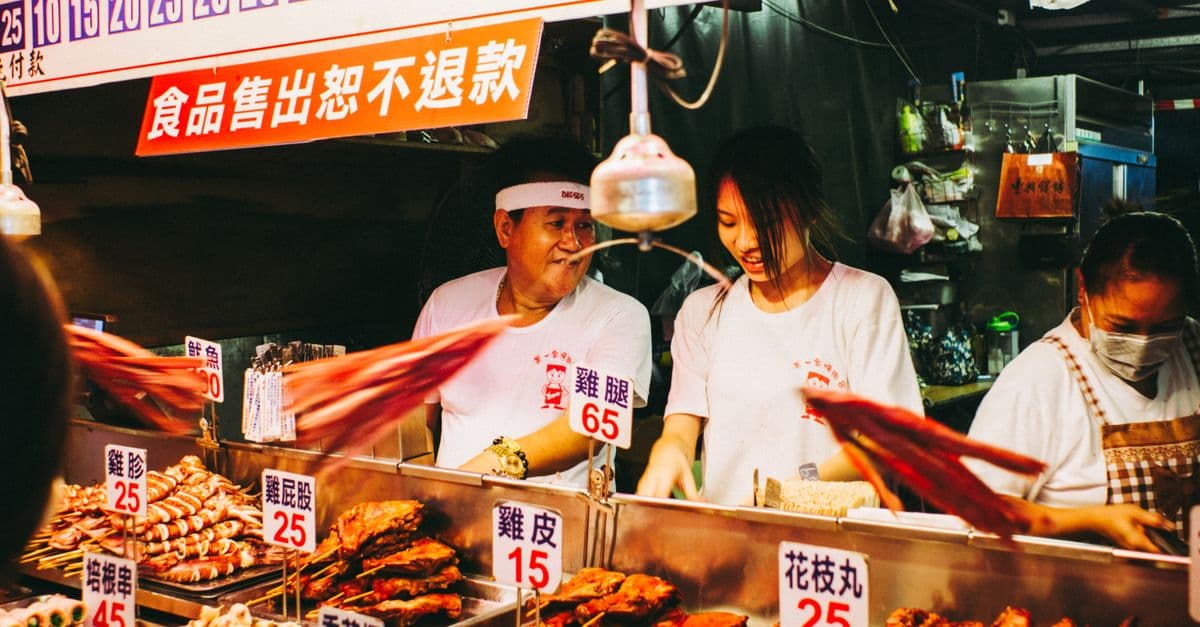
Photo: 宇峰 吳 / Pexels
Street food is the world's most democratic culinary form — complex technique, centuries of accumulated flavour knowledge, and genuine cultural identity, available to anyone with the equivalent of a dollar or two. The FAO estimates 2.5 billion people eat street food daily, making it the most widely consumed form of prepared food on the planet by sheer volume.
The rankings below are not arbitrary. They measure four things: variety and technical complexity of the food itself, cultural centrality (does street eating cross class lines, or is it only for the poor?), affordability relative to local income, and the degree to which the food represents authentic culinary tradition rather than tourist performance. On all four dimensions, the same countries consistently emerge at the top.
Source: FAO — Street food statistics
What defines a genuine street food culture — not just food on a street
A useful distinction separates authentic street food cultures from two imposters. The first imposter is tourist street food — dishes that exist primarily as a performance of local identity for foreign visitors, often at inflated prices, cooked to expectations rather than tradition. The second is poverty food — prepared meals sold cheaply because buyers have no alternative, without the cultural investment that produces culinary depth. The industrial counterpart is covered in countries with the most fast food restaurants.
The world's greatest street food nations share a specific characteristic: street eating is the preferred mode of food consumption for locals across all economic classes. A Bangkok investment banker and a motorcycle taxi driver may eat at the same pad thai cart. A Singaporean government minister and a construction worker may sit side by side at the same hawker centre table. This cross-class adoption is the signal that street food has achieved genuine cultural status, not merely functional food provision.
In Bangkok, 20,000 street food vendors provide an estimated 40% of city residents' total daily food intake. This is not a marginal or informal food channel; it is the primary food infrastructure of the city.
Countries with the best street food culture
(Composite ranking: variety, quality, cultural significance, affordability, cross-class adoption)
| Rank | Country | Signature dishes | UNESCO status | Est. annual market |
|---|---|---|---|---|
| 1 | Thailand | Pad thai, som tam, mango sticky rice, boat noodles | — | $20bn+ |
| 2 | Vietnam | Phở, bánh mì, bún bò Huế, bánh xèo | — | $15bn+ |
| 3 | Mexico | Tacos, tamales, elote, tlayuda, quesadillas | UNESCO 2010 (cuisine) | $25bn+ |
| 4 | Singapore | Char kway teow, laksa, Hainanese chicken rice, roti prata | UNESCO 2020 | ~$2bn |
| 5 | India | Vada pav, pani puri, chole bhature, dosa, chaat | — | $50bn+ |
| 6 | Taiwan | Beef noodle soup, oyster omelette, stinky tofu, bubble tea | — | $10bn+ |
| 7 | Japan | Yakitori, takoyaki, taiyaki, okonomiyaki, ramen carts | — | $15bn+ |
| 8 | Malaysia | Nasi lemak, char kway teow, roti canai, satay | — | $8bn+ |
| 9 | Indonesia | Nasi goreng, satay, soto, martabak, tempeh goreng | — | $20bn+ |
| 10 | China | Jianbing, lamb skewers, xiaolongbao, tang hulu, roujiamo | — | $100bn+ |
| 11 | Turkey | Simit, balık ekmek, döner, kumpir, midye | — | $10bn+ |
| 12 | Italy | Pizza al taglio, arancini, cannoli, porchetta sandwich | — | $8bn+ |
| 13 | Peru | Anticuchos, ceviche (market stalls), lomo saltado | — | $5bn+ |
| 14 | Morocco | Tagine (street), mechoui, msemen, harira, bastilla | — | $3bn+ |
| 15 | Ethiopia | Injera with wats, tibs, sambussa | — | $4bn+ |
Source: FAO street food market data, national tourism boards, UNESCO intangible cultural heritage registry, market research (Statista, IBISWorld).
Where this data comes from
Street food market size estimates derive from FAO reports and national tourism/trade statistics, though accurate global street food valuation is complicated by the informality of much of the sector. Signature dishes and cultural significance assessments draw from food journalism, UNESCO cultural heritage designations, and culinary research. The ranking prioritises first-hand knowledge and cross-national consistency: dishes and cultural features cited across multiple independent food sources receive more weight than single-source claims. UNESCO's 2020 inscription of Singapore's hawker culture is a formally documented cultural recognition. Estimates of vendors (Bangkok's 20,000, Mumbai's informal economy participation) come from municipal records and NGO research. Market size estimates for developing countries are inherently uncertain due to informal economy opacity; the figures provided are the most conservative available estimates from reputable sources.
A brief history of street food: from Roman tabernae to Bangkok carts
Street food is not a modern innovation. Archaeological excavations at Pompeii — the Roman city preserved by the 79 CE eruption of Vesuvius — revealed a dense network of thermopolia: shops with built-in stone counters containing terracotta jars of warm food for sale to the public. Over 80 thermopolia have been excavated in Pompeii. The Roman working class, which typically lacked kitchen facilities in cramped urban apartments, ate most of its meals from these establishments. This is structurally identical to Bangkok's street food ecology 2,000 years later.
Medieval European market towns had permanent street food vendors — pie sellers, bread vendors, hot soup stalls — that fed urban working populations without home cooking capacity. London's "costermongers" — street vendors selling fruit, vegetables, and prepared food from carts — were a major feature of 18th and 19th century urban life, documented extensively by Charles Dickens and Henry Mayhew.
Street food cultures did not persist equally in all countries, however. European industrialisation, rising incomes, and the development of domestic gas cooking infrastructure reduced the economic necessity of street eating. By the 20th century, most European street food had contracted to narrow niches — hot dog stands, pretzel vendors, pizza by the slice — rather than the full dietary function it once served. Asian, Latin American, and African cities retained their street food cultures through different urbanisation trajectories, larger proportions of outdoor-equipped street space, and the economic conditions that kept eating out cheaper than cooking at home for much of the urban working population.
Thailand: the benchmark
Bangkok's street food is the global reference point — not because it has more dishes than other cities, but because of what it demonstrates about specialisation and mastery.
A pad thai vendor at a serious Bangkok street stall may cook nothing but pad thai. Every day, for years or decades, the same dish. The result is technique refined to a level impossible in restaurant kitchens where cooks must manage dozens of dishes simultaneously. The wok — seasoned with years of use, known intimately by one cook — is calibrated for one dish. The timing, heat, the specific choreography of tamarind, fish sauce, egg, and rice noodle is second nature.
This specialisation is what produces the Michelin-starred street food phenomenon. Jay Fai — Bangkok's most famous street cook — received a Michelin star in 2018 while working alone at a small street stall, wearing ski goggles to protect her eyes from the wok's intense heat. She specialises in a small number of dishes: her crab omelette, made in a wok with imported butter, costs approximately $30 and requires a wait of several hours. The Michelin recognition did not transform her into a restaurateur; she remained at the street stall.
Bangkok's 24-hour street food culture is a further differentiator. Boat noodle vendors begin serving at 5am near the canals. Mango sticky rice carts operate past midnight. The city's food infrastructure does not observe working hours because the city itself does not — service workers, night market traders, and transport workers create demand across all hours.
The recurring threat to Bangkok's street food is urban policy. The city government has periodically cleared street vendors from pavements — citing pedestrian obstruction, food safety concerns, and the image Thailand projects to international tourists. Each clearance campaign has met significant resistance from vendors, food journalists, and locals. The tension between urban modernity (clean pavements, orderly public space) and the messy vitality of street food culture is unresolved and ongoing.
Singapore: UNESCO recognition and the hawker centre model
Singapore's hawker culture became the first street food tradition formally recognised by UNESCO, receiving its Intangible Cultural Heritage inscription on December 16, 2020. The UNESCO citation recognised hawker centres as "a social institution enabling cross-class and cross-ethnic interactions in shared spaces."
The hawker centre model is Singapore's specific contribution to the problem of how to preserve street food culture in a modernising, regulated city. In the 1960s and 1970s, Singapore's streets were dense with unlicensed itinerant food hawkers — cooking on portable equipment, operating without sanitation infrastructure, and creating public health concerns. Rather than simply banning them, the government relocated them into purpose-built, government-managed food centres: covered, with running water, electricity, and waste management, but preserving the open-seating communal format and competitive multi-vendor pricing.
There are now more than 110 hawker centres across Singapore. A typical centre hosts 20 to 50 individual stalls, each specialising in specific dishes — one stall for Hokkien mee, another for nasi padang, another for roti prata, another for Hainanese chicken rice. Meals cost $3 to $8 per dish. The centres serve millions of meals daily to a population of 5.9 million, across all income levels.
The multicultural composition of Singaporean hawker food reflects the country's demographics. Chinese, Malay, and Indian cuisines — each further subdivided by ethnic sub-group (Hokkien, Teochew, Cantonese; Malay; Tamil, North Indian) — coexist in the same physical spaces. Dishes like laksa — a spiced coconut curry noodle soup that is Peranakan (Straits Chinese-Malay fusion) in origin — exist only in Singapore because of this specific cultural confluence.
Singapore now faces an acute succession problem. Many of its most celebrated hawker cooks are in their 60s and 70s and retiring, with limited succession because the work is physically demanding, hot, and economically modest relative to alternatives available to educated younger Singaporeans. The government has invested in hawker apprenticeship programmes and subsidised stall leases for new entrants. Whether these structural interventions can sustain the human knowledge chains — the specific recipes, techniques, and accumulated skill of individual hawker masters — against demographic pressure is uncertain.
Vietnam: bánh mì and the logic of fusion
Vietnam's street food culture acquired global recognition in the 21st century, partly through food journalism and partly through diaspora spread — Vietnamese communities in France, Australia, the US, and Canada brought their food traditions with them, and the food proved transportable and popular.
The bánh mì is a compression of culinary history. The baguette arrived in Vietnam with French colonialism, adopted by Vietnamese bakers who adapted the recipe using local rice flour to achieve a lighter, crispier crust. The filling — pâté, often some form of pork, pickled daikon and carrot (đồ chua), cucumber, fresh chilli, and cilantro — bears no resemblance to any French sandwich. The result is a genuinely new food, born from the intersection of French bread technique and Vietnamese flavour architecture of sour, spicy, fresh, and umami.
Phở requires a different kind of respect: not for synthesis, but for depth. The broth is the dish. A serious phở broth simmers beef bones and aromatics — charred ginger, star anise, cinnamon, cloves, cardamom — for six to eight hours minimum. The noodles and garnishes (fresh herbs, bean sprouts, lime, chilli) that diners add at the table are almost secondary to the quality of the broth. Hanoi's best phở shops have been making their version of the same broth for 50 or more years — the accumulated seasoning of the same pot, passed across generations.
Vietnam's narrow north-south geography produces extraordinary regional variation. Northern cooking (Hanoi) tends toward restraint — clear broths, fewer spices, refined presentation. Central cooking (Hue) is more complex and spiced — reflecting the imperial court cuisine of the Nguyen dynasty. Southern cooking (Ho Chi Minh City) is sweeter and more herb-abundant, reflecting Khmer and Cham culinary influences. Street food tourists who visit only one city miss most of what Vietnamese food actually is.
India: the world's largest street food market
India's street food market is estimated at over $50 billion annually — the world's largest by value, which is logical given the 1.4 billion population, the extremely high rate of eating outside the home in urban India, and the extraordinary regional variation.
What makes Indian street food remarkable at a culinary level is the flavour system. Indian street food in all its regional forms operates on a flavour axis that European and East Asian food cultures barely use: the simultaneous combination of sweet, sour, spicy, salty, and crunchy in a single mouthful. Delhi's pani puri — hollow fried spheres filled with spiced tamarind water, chickpeas, potato, and mint chutney — delivers all five simultaneously. This is not accidental; it reflects a flavour philosophy codified in ancient texts and refined across centuries.
Mumbai's vada pav demonstrates street food's social function. The "Mumbai burger" — a spiced potato fritter (vada) inside a small bread roll (pav), with multiple chutneys — costs approximately 20 rupees (under $0.25) from carts outside train stations. It fuels millions of Mumbai's working-class commuters daily. It is not "gourmet" in any conventional sense, but it is perfectly engineered for its purpose: calorie-dense, flavour-complex, portable, and fast. No description of Mumbai is complete without it.
South India's street food ecosystem is entirely distinct from North India's — based on fermented rice-lentil batter (dosa, idli, uttapam, vada) rather than wheat, potatoes, and fried preparations. The fermentation process — batter left for 8 to 12 hours at room temperature — produces lactic acid that creates a clean sourness and improves digestibility. Dosa batter chemistry is a genuine food science, and the large-format crispy dosa cooked on a seasoned griddle requires specific skill to execute well.
Why street food quality and safety are not in conflict
A persistent misconception treats street food as inherently risky. In countries with strong street food traditions, the opposite is often true.
High-turnover street stalls that cook continuously serve fresh food: nothing sits for long, which means bacterial growth is minimal. Outdoor cooking — in open air, on high heat — means food is cooked to temperature consistently. Vendors who make customers sick lose their livelihoods immediately; the incentive structure for food safety is more immediate than in restaurants. Bangkok's Michelin-starred street food passed the same hygiene inspections as the restaurants with which it competed.
The higher-risk profile comes from cold preparations (raw salads, cold proteins), low-turnover stalls, and environments where water quality is poor — often in areas without adequate sanitation infrastructure. "Eat from the busy stall, avoid the quiet one" is the most practical rule: turnover is the best proxy for freshness, and freshness is the key food safety variable.
Turkey and Italy: Europe's strongest traditions
Turkey's street food culture is anchored by a few iconic dishes that have achieved global distribution. Döner — rotisserie-cooked seasoned meat, shaved and served in bread — originated in Bursa in the 19th century and spread first to Istanbul, then to the entire world through the Turkish diaspora. Germany's Döner Kebab, now generating more annual revenue in Germany than McDonald's, is a Turkish-German fusion product developed in Berlin in the early 1970s. The original Istanbul version bears some resemblance to its German adaptation, but the seasoning, bread, and sauce profiles differ substantially.
Istanbul's balık ekmek (fish bread) — a grilled mackerel fillet in a white bread roll, sold from boats moored in the Golden Horn — is probably Istanbul's most photographed street food. The simit — sesame-crusted circular bread sold from carts across Turkey — is the country's everyday street breakfast.
Italy's street food is geographically fractured, with distinct traditions in almost every region. Palermo's markets (Ballarò, Vucciria) represent perhaps the most ancient and atmospheric Italian street eating experience: offal-based street food (pani ca meusa — spleen sandwich in lard-fried bread), fried foods, and arancini (rice balls) that bear comparison with anything in Asia for complexity. Rome's pizza al taglio — thick-crust pizza sold by weight from rectangular trays, a different product entirely from Neapolitan pizza — is a distinct regional tradition. Naples invented pizza, but Neapolitan street pizza is a sit-down product; Rome's version is the street food.
Q: Is street food safe to eat while travelling? A: In countries with strong, high-volume street food traditions — Thailand, Singapore, Vietnam, Mexico, India — street food from busy vendors cooking continuously is generally safe and often of higher quality than restaurant food at equivalent prices. The key variables are: turnover (high turnover means fresh food), temperature (freshly cooked hot food is safer than cold or reheated food), and water source (in areas with poor sanitation, anything washed in tap water or involving ice from uncertain sources carries higher risk). Cold preparations, raw items, and very low-traffic stalls carry higher risk everywhere.
Q: What is the world's most widely consumed street food? A: By volume and geographic spread, flatbreads in their various cultural forms — Mexican tortillas, Indian roti and paratha, Middle Eastern pita, West African flatbreads — are probably eaten by more people daily than any other street food category. By specific dish, satay (Southeast Asia), tacos (Mexico and globally), falafel (Middle East and globally), and dumplings in their many forms (Chinese jiaozi, Georgian khinkali, Nepalese momo, Japanese gyoza) are among the most globally distributed.
Q: Why is street food disappearing in some wealthy cities? A: Urban real estate pressure, food safety regulation, and hygiene-related city beautification campaigns have reduced street food in many cities as they have become wealthier. Hong Kong's dai pai dongs — open-air cooked food stalls — declined from thousands in the 1950s to dozens by 2020. Bangkok, Taipei, and Seoul have all seen vendor clearances. The process is consistent: as property values rise and municipalities focus on pedestrian and tourist-facing urban cleanliness, the pavements and public spaces where vendors operated get reclaimed. Singapore's hawker centre model — deliberately preserving street food in purpose-built infrastructure — is one response to this pattern, but it required sustained government will and investment.
Q: Did Singapore really get UNESCO recognition for street food? A: Yes. On December 16, 2020, UNESCO added "hawker culture in Singapore — community dining and culinary practices in a multicultural urban context" to its Representative List of the Intangible Cultural Heritage of Humanity. It was Singapore's first UNESCO intangible heritage inscription. The designation recognises the social function of hawker centres — not just the food, but the cross-ethnic, cross-class shared dining that the centres facilitate — as culturally significant. The inscription has since been used to advocate for hawker apprenticeship programmes and stall subsidy policies.
Q: Is Mexico's inclusion appropriate for a street food list — isn't it just tacos? A: Mexico's street food tradition is far wider than tacos, though tacos alone constitute one of the world's largest and most complex street food categories — dozens of distinct regional styles from al pastor (Mexico City, spit-roasted pork with pineapple) to birria (Jalisco, braised goat) to cochinita pibil (Yucatán, achiote-marinated slow-cooked pork). Mexican cuisine received UNESCO Intangible Cultural Heritage status in 2010 — the first national cuisine to receive this designation — recognising the complexity, regional diversity, and pre-Columbian depth of the culinary tradition. Tamales, elote (grilled corn with mayonnaise, cheese, and chilli), tlayuda (Oaxacan large crispy tortilla), memelas, and dozens of regional preparations extend the tradition well beyond tacos.
Q: How do street food cultures affect local economies? A: Street food generates significant economic activity and employment at the informal and micro-enterprise level. In Bangkok, street vending employs an estimated 400,000 people. In India, the urban street food sector employs millions of vendors, suppliers, and support workers. FAO research shows that in some Latin American cities, street food purchases account for up to 30% of urban household food spending. This economic contribution is often invisible in formal GDP statistics because much of it operates in the informal economy — but its social and nutritional function for urban working populations is essential.
The takeaway
The countries at the top of every serious street food assessment — Thailand, Vietnam, Mexico, Singapore, India — share one quality: their street food is not a poverty-food fallback or a tourist attraction. It is the genuinely preferred mode of eating for people who have other options. That cross-class adoption is both the cause and the result of culinary depth: when everyone eats street food, vendors have to be good, and being good for decades produces the accumulated mastery that drives excellence. Singapore's UNESCO inscription gives institutional recognition to what street food communities have always known: that a hawker centre meal can be a serious, culturally significant act of eating, not just an affordable one. Bangkok's Michelin-starred street stall makes the same point with a gold star. The food that feeds billions is not lesser for being cheap or cooked outdoors. In many cases, it is better.
Related Reading
Follow new articles
Add SciHub101 to your feed reader to see new science and technology stories.
About the Author
SciHub101 is an independent science and technology publication founded and edited by Buğra Sözeri, a software engineer and app developer based in Türkiye. AI tools assist with drafting and research. Source documentation in the existing archive is uneven, and articles are being reviewed and corrected. The Editorial Team byline identifies editorial responsibility; it does not certify specialist or independent human review. Where we compare products, anything built by our own team is labelled as such — see the editorial guidelines and About page for how corrections and disclosures work.
Related Articles

Most Powerful AI Companies in the World, Ranked for 2026
From OpenAI to DeepMind, here are the companies shaping the future of artificial intelligence — ranked by influence, valuation, and impact.

Countries With the Most AI Startups in 2026
The US dominates AI startup formation, but the UK, Israel, and India are building ecosystems that rival Silicon Valley in specific niches.

Countries with the Best Food (2025 Ranked)
Italy, Japan, and Mexico top most global food rankings. France invented fine dining. China has the world's most diverse cuisine. But 'best food' is culturally contested — here's what the data on Michelin stars, UNESCO food heritage, and culinary tourism actually shows about the world's greatest food cultures.
Who Invented the Fork? The Surprising History of a Scandalous Utensil
No one invented the fork. Large forks cooked and carved food for thousands of years, the personal table fork emerged in the Byzantine world, and Western Europe took it up slowly, with a Byzantine bride's 1004 marriage into Venice's ruling family as the best-known early anecdote. Resistance was moral, social, and practical, and the fork only became everyday tableware across Britain and North America between the 17th and 19th centuries.
Countries with the Most Coffee Production (2025 Ranked)
Brazil produces nearly 40% of the world's coffee — more than the next three countries combined. Vietnam is the world's top Robusta producer. Ethiopia is coffee's birthplace. Global coffee production is worth $50 billion at origin but $460 billion at retail — the biggest markup in agriculture. Here's the full coffee production ranking.

Countries with the Most Tea Consumption (2025 Ranked)
China drinks more tea than any country — 3 million tonnes per year. But Turkey has the highest per-capita consumption at 4.6 kg per person. Tea is the world's second most consumed beverage after water. Here's the full global tea ranking, who grows it, who drinks it most, and why.