Countries Hosting the Most Refugees (2025 Ranked)
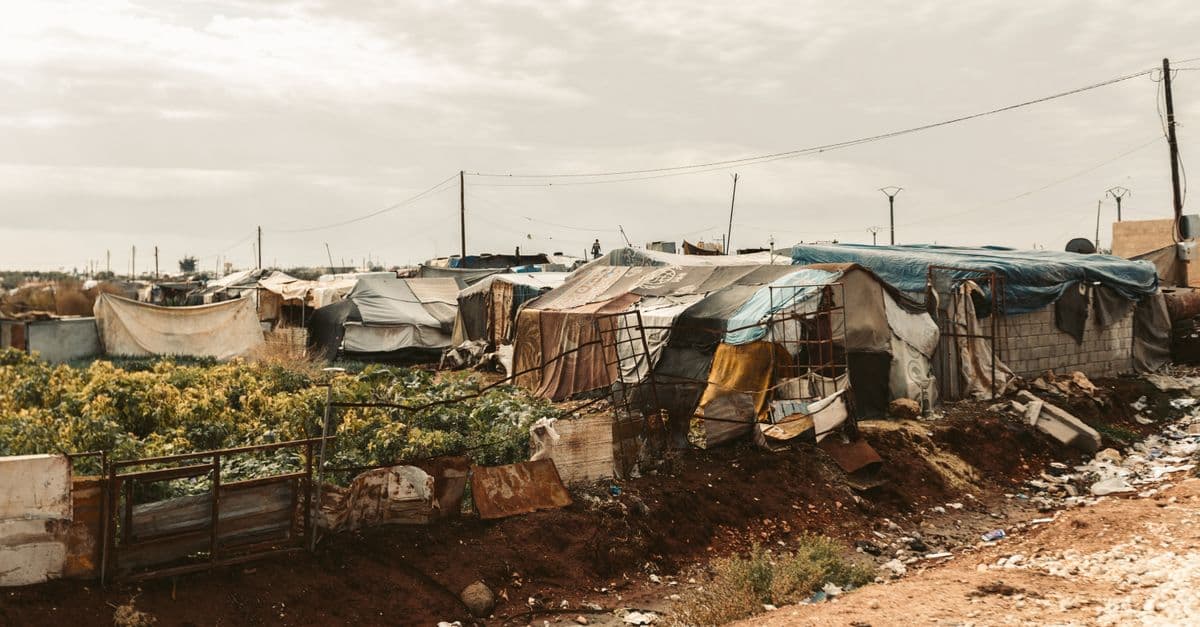
Photo: Abd Alrhman Al Darra / Pexels
By the end of 2024, the number of forcibly displaced people worldwide reached an estimated 123.2 million — a figure that has grown every single year for over a decade, according to the UNHCR 2024 Global Trends Report. Within that total, 42.7 million are refugees who have crossed an international border. The common assumption is that wealthy Western nations absorb most of this flow. The data says the opposite: low- and middle-income countries host 73% of the world's refugees, overwhelmingly because proximity to conflict is the primary driver of where people flee.
Key takeaways
- Turkey hosts more refugees than any country in the world — approximately 2.9 million registered Syrian refugees as of end-2024, down from a 2019 peak of 3.7 million.
- Iran and Pakistan each host over 2–3 million Afghan refugees — one of the world's longest-running displacement situations, spanning four decades since the Soviet invasion of 1979.
- Germany hosts the most refugees in Europe — approximately 2.2 million — and has the largest asylum application processing system in the EU.
- The global forcibly displaced population reached 123.2 million at end-2024, up 7 million (6%) from 2023 — the highest total ever recorded.
- Uganda provides refugees with the right to work and move freely — considered the most progressive refugee policy in sub-Saharan Africa — while hosting 1.7 million people on a very limited national budget.
Methodology: What the Numbers Count — and Don't
Refugee figures are produced by UNHCR (the UN Refugee Agency) through its annual Global Trends report, which aggregates data from national governments, UNHCR field offices, and partner organisations. The figures require careful reading.
"Refugees" in the technical sense are individuals recognised under the 1951 Refugee Convention or its 1967 Protocol — people who have fled persecution based on race, religion, nationality, political opinion, or membership in a particular social group. UNHCR also tracks "asylum seekers" (people whose applications are pending) and "other people in need of international protection" under broader mandates. Some countries' figures in international databases include all three categories combined; others report only Convention refugees.
Venezuela's displacement to Colombia is counted under a special UNHCR framework — "Venezuelans displaced abroad" — rather than the standard refugee category, because Colombia and other host countries have used alternative legal instruments rather than the 1951 Convention to provide protection. This explains why Colombia appears in global rankings despite not using the word "refugee" for most of its Venezuelan population.
Palestinian refugees under UNRWA's mandate (approximately 5.9 million people in Jordan, Lebanon, Syria, and Palestinian territories) are tracked separately and are not included in the UNHCR figures discussed here — a distinction that significantly affects Middle Eastern host country totals.
Source: UNHCR Global Trends Report 2024 — unhcr.org/global-trends-report-2024
Countries Hosting the Most Refugees (2024)
| Rank | Country | Refugees Hosted | Primary Origin Countries |
|---|---|---|---|
| 1 | Turkey | 2,900,000+ | Syria |
| 2 | Iran | 3,400,000+ | Afghanistan |
| 3 | Colombia | 2,900,000+ | Venezuela |
| 4 | Germany | 2,200,000+ | Syria, Afghanistan, Ukraine |
| 5 | Pakistan | 2,000,000+ | Afghanistan |
| 6 | Uganda | 1,700,000+ | DRC, South Sudan |
| 7 | Russia | 1,200,000+ | Ukraine |
| 8 | Sudan | 1,100,000+ | South Sudan, Ethiopia, Eritrea |
| 9 | Ethiopia | 1,100,000+ | South Sudan, Eritrea, Somalia |
| 10 | Bangladesh | 950,000+ | Myanmar (Rohingya) |
| 11 | United States | 1,000,000+ | Cuba, El Salvador, Venezuela |
| 12 | Kenya | 730,000+ | South Sudan, Somalia |
| 13 | France | 580,000+ | Afghanistan, Syria, Congo |
| 14 | Canada | 450,000+ | Afghanistan, Syria |
| 15 | United Kingdom | 380,000+ | Syria, Afghanistan, Eritrea |
UNHCR Global Trends 2024 data; figures include refugees, asylum seekers, and Venezuelan displacement figures where applicable. Lebanon, with an estimated 1.5 million Syrians relative to its 4 million population, has the world's highest per-capita refugee burden.
Source: UNHCR Global Trends Report 2024, UNHCR Operations by Country datasets, national asylum authorities.
Where this data comes from
UNHCR Global Trends is the authoritative annual reporting on global displacement, aggregating data from national governments, UNHCR field operations, and partner NGOs. Countries report refugee and asylum seeker populations to UNHCR, though many nations do not maintain comprehensive data systems and figures contain significant uncertainty margins. Palestinian refugees (approximately 5.9 million under UNRWA mandate) are tracked separately and are not included in UNHCR's global totals. Venezuelan displacement in Colombia is reported under a special framework rather than the 1951 Convention. Figures represent end-of-year snapshots, and in-year displacement patterns can shift dramatically. The relationship between formal registration and actual population presence is complex — many countries host larger numbers of undocumented migrants and asylum seekers than formal statistics capture.
A Short History of International Refugee Law
The modern legal framework for refugees was built in the direct aftermath of World War II — a response to the 40–60 million people displaced by the conflict and the specific horror of Jewish refugees who had been denied entry to countries that could have saved them.
The 1951 Refugee Convention, adopted in Geneva, established for the first time a binding legal definition of "refugee" and the principle of non-refoulement — the prohibition on returning a person to a territory where they face persecution. This principle is now considered customary international law, binding even on states that have not signed the Convention.
The Convention was initially limited to European refugees displaced by pre-1951 events — a Cold War-era design meant to address the specific situation of Eastern Europeans. The 1967 Protocol removed both the geographic and temporal limitations, making the Convention apply globally. Today, 149 countries are signatories.
The limits of this framework have become increasingly visible over the following decades. The Convention defines who qualifies for protection but creates no mechanism for distributing the responsibility of hosting refugees proportionally among nations. Countries that happen to border conflict zones — Turkey, Pakistan, Uganda, Bangladesh — absorb vastly disproportionate numbers relative to their resources, while wealthier countries farther from conflicts contribute far less. This burden-sharing gap is the central structural failure of the international refugee regime.
Source: UN Refugee Agency, 1951 Refugee Convention — unhcr.org/1951-refugee-convention
Turkey: The World's Largest Host
Turkey's Syrian refugee population represents the single largest refugee hosting arrangement in history, by one country hosting one national group.
Syria's civil war, which began in 2011, produced one of the fastest mass displacement events in modern history. Turkey — sharing an 822-kilometre border with Syria — received the largest share of the outflow. At peak in 2019, Turkey hosted 3.7 million registered Syrian refugees, plus an estimated 500,000–1 million undocumented. The registered figure has declined gradually to approximately 2.9 million as some returned voluntarily and others moved onward through irregular migration routes toward Europe.
Turkey's legal framework for Syrians is distinct from the 1951 Convention: Turkey operates a "temporary protection" system that grants Syrians legal status, access to public health services, and access to education but with less secure long-term rights than Convention refugee status provides. Turkey maintains a geographic limitation on the 1951 Convention, applying it only to refugees from European countries — meaning non-European refugees cannot formally obtain Convention status in Turkey regardless of how long they stay.
The political dimension of Turkey's hosting situation has become increasingly complex. Turkish public opinion has shifted sharply against the Syrian presence over the past several years. Surveys consistently find majorities of Turkish citizens wanting Syrian refugees to leave. Opposition parties made refugee return a central campaign issue in the 2023 elections. President Erdogan's government has used the refugee population as leverage in EU negotiations — the 2016 EU-Turkey Statement provided approximately €6 billion in funding to Turkey in exchange for preventing irregular departures to Greece — while also responding to domestic political pressure by promoting "voluntary" return programs.
Syrian economic integration into Turkey has been uneven. Many Syrians work in agriculture, textiles, and construction at wages below Turkish legal minimums, sometimes in informal conditions. Syrian entrepreneurs have established significant businesses in Turkish cities, with some becoming important employers. But language barriers, credential non-recognition, and discrimination limit integration for the majority, particularly in a country where anti-refugee sentiment has become a politically mobilised force.
Source: UNHCR Turkey — unhcr.org/countries/turkey
Iran and Pakistan: Forty-Four Years of Afghan Displacement
Iran and Pakistan's Afghan refugee populations are among the world's most enduring displacement situations — a crisis that began with the Soviet invasion of Afghanistan in 1979 and has never fully resolved.
The first wave of Afghan refugees reached Pakistan and Iran during the Soviet-Afghan War (1979–1989), when an estimated 6 million Afghans fled. Many were Pashtuns with linguistic, cultural, and family ties to Pakistani border communities, which eased initial absorption. A second wave followed during the Taliban's first rule (1996–2001). Millions returned after 2001 as international support stabilised Afghanistan, but many remained. The 2021 Taliban takeover produced the third major wave.
Iran's 3.4 million Afghan population includes people from all three displacement waves: refugees who arrived in the Soviet era and whose children were born in Iran; those who came during the 1990s Taliban rule; and those who arrived after 2021. Iran provides some Afghans with formal documentation, but large numbers live in irregular status — particularly the more recent arrivals. Afghans in Iran work extensively in construction, agriculture, and domestic labour. The Iranian government has been under severe economic pressure from US sanctions, which has reduced its capacity and, at times, willingness to support the refugee population. Iran periodically conducts deportation operations.
Pakistan's 2 million official Afghan population (with estimates of total Afghan presence, including undocumented, reaching 3–4 million at various points) has been under intensified pressure since 2023. The Pakistani government launched large-scale deportation operations in late 2023, arguing that Afghan nationals had overstayed their welcome and citing security concerns. Tens of thousands were pushed back across the border. This pressure continued into 2024, representing a significant hardening of Pakistan's historically more permissive approach.
The 2021 Taliban takeover dramatically accelerated the displacement of Afghans particularly at risk: women, journalists, civil society workers, former government employees, interpreters who worked for NATO forces, and minority ethnic and religious communities. Western countries evacuated approximately 100,000 Afghans collectively (the US airlifted approximately 76,000; the UK approximately 15,000; Germany approximately 5,000+). The overwhelming majority of those who fled — hundreds of thousands — went to neighbouring countries with no evacuation support.
Source: UNHCR Pakistan — unhcr.org/countries/pakistan
Germany: Europe's Primary Destination
Germany's position as Europe's largest refugee host is the product of geography, policy choice, and economic circumstance.
The pivotal moment was 2015. Syrian refugees — many of whom had been stuck in Hungary after the Dublin Regulation failed to function — were permitted by Hungarian authorities to take trains toward Austria, and Chancellor Angela Merkel announced Germany would not send them back. Germany received 890,000 asylum seekers in 2015 alone — the largest single-year influx since the post-WWII period. The decision was simultaneously framed as humanitarian leadership and criticised domestically as having triggered the rise of the AfD (Alternative für Deutschland), which became the main opposition party partly on the strength of anti-refugee sentiment.
Germany's 2.2 million current refugee population includes approximately 1.1 million Ukrainians under EU temporary protection rules (which provide work authorization, housing support, and social benefits equivalent to German residents) plus Syrians (approximately 370,000), Afghans, Eritreans, Somalis, and Iraqis. The temporary protection framework for Ukrainians was distinct from the standard asylum process: it provided immediate rights rather than requiring an individual determination, allowing Ukrainians to enter the labour market rapidly.
Integration outcomes for the 2015 wave have improved significantly over time. Employment rates for refugees who arrived in 2015 had reached approximately 55% by 2024, up from near-zero in the first two years. Many have completed German language courses, obtained professional qualifications recognition, and established themselves in the labour market. Germany's severe skilled worker shortage — affecting healthcare, engineering, and trades — has made refugee integration not only a humanitarian priority but an economic one.
The German asylum system processes hundreds of thousands of applications annually, with a backlog that stretches processing times for many applicants to 12–24 months or longer. The political environment has shifted: the 2025 German elections returned a coalition with hardened immigration positions, and Germany has implemented stricter border controls at multiple land borders, reflecting the broader European shift toward more restrictive migration management.
Source: German Federal Office for Migration and Refugees (BAMF) — bamf.de
Uganda: The Progressive African Model
Uganda's refugee policy is frequently cited as a model — and equally frequently noted as being dramatically underfunded relative to its ambitions.
Uganda's Refugee Act of 2006 and its Refugee Regulations of 2010 established what is known as the "settlement system": rather than confining refugees to camps, Uganda allocates land plots in rural areas, grants refugees freedom of movement throughout the country, and extends the right to work. Refugees in Uganda can access national health and education services on the same basis as Ugandan citizens. This approach contrasts starkly with the camp-based model operating in Kenya and Ethiopia, where the movement and employment rights of refugees are significantly restricted.
Uganda hosts approximately 1.7 million refugees, primarily from the Democratic Republic of Congo and South Sudan. The DRC and South Sudan conflicts are among the world's most protracted — South Sudan has been in or near civil war since independence in 2011, generating a continuous outflow into Uganda, Ethiopia, Kenya, and Sudan.
The economic logic of Uganda's model is genuine. When refugees receive land and work rights, they grow food and establish businesses. They contribute to local economies around settlements rather than depending entirely on humanitarian aid. Ugandan host communities near settlement areas have shown measurable economic benefits — additional markets, customers for local services, and in some cases new businesses created by refugees that employ Ugandans.
The fundamental problem is funding. UNHCR's Uganda operation is chronically underfunded: annual appeals meet approximately 50–60% of their targets. Schools in settlement areas are overcrowded. Health facilities are understaffed. Water and sanitation infrastructure is inadequate. Uganda's own poverty rate — approximately 21% of the population lives below the international poverty line — means the country is absorbing a massive additional burden on social infrastructure that was already stretched. International burden-sharing is supposed to fill this gap. It does not.
Source: UNHCR Uganda — unhcr.org/countries/uganda
Bangladesh: The Rohingya Crisis
The Cox's Bazar refugee concentration in southern Bangladesh is the largest refugee camp in the world — a fact that requires a moment to fully register.
The Rohingya are a Muslim minority group from Myanmar's Rakhine State who have been stateless since the Myanmar government stripped them of citizenship in 1982. Decades of persecution, forced displacement, and violence culminated in August 2017 when the Myanmar military conducted what the UN described as a "textbook example of ethnic cleansing" — burning villages, killing civilians, and driving approximately 750,000 people across the border into Bangladesh within weeks. Combined with earlier refugee populations, approximately 950,000 Rohingya refugees now live in and around Cox's Bazar.
Bangladesh, one of the world's most densely populated countries with a GDP per capita of approximately $2,700, has provided emergency shelter to this population. The conditions in Cox's Bazar camps — prone to flooding, cyclones, and fire — are precarious. Bangladesh has consistently maintained that it cannot provide permanent integration or citizenship to the Rohingya, and that return to Myanmar is the only viable long-term solution. Given that Myanmar has made no meaningful steps toward creating conditions for safe return — and that the military government responsible for the 2017 violence remains in power — the Rohingya face an indefinite limbo.
Source: UNHCR Bangladesh — unhcr.org/countries/bangladesh
The Countries That Host the Least, Relative to Wealth
The distribution of refugee hosting relative to national income is one of the most striking features of the global data.
Lebanon — a country with a GDP per capita of approximately $5,000 and severe political and economic instability — hosts approximately 1.5 million Syrians (government estimate), giving it the world's highest per-capita refugee burden. Ethiopia and Uganda, both among Africa's lower-income countries, each host over 1 million refugees. Bangladesh, one of the world's most densely populated and poorest large economies, hosts nearly 1 million Rohingya.
The Gulf states — Saudi Arabia, UAE, Qatar, Kuwait — host essentially no refugees from nearby conflicts despite their enormous wealth and geographic proximity. They are not signatories to the 1951 Refugee Convention and have not established large-scale refugee admission systems. This is arguably the most glaring gap in international burden-sharing.
Australia, despite strong economic capacity and relatively low geographic obstacles to resettlement, resettles approximately 13,750 refugees per year through its formal program — modest relative to its wealth. The US resettlement program has ranged from 25,000 to 125,000 annually depending on the political administration, peaking at 207,000 in 1980 and falling to 11,800 in 2020 before recovering.
Source: UNHCR Resettlement Data — unhcr.org/resettlement
Why Most Refugees End Up in Neighboring Countries
The geographic distribution of refugees follows a simple but important logic: people fleeing violence cross the nearest border with the least resistance. The nearest border is almost always into another developing country.
Reaching Europe or North America from Syria, Afghanistan, or South Sudan requires money, connections, physical endurance, and tolerance of significant risk. It requires navigating smuggler networks, dangerous sea crossings, or years-long waiting lists for formal resettlement programs. The global formal resettlement program processes approximately 100,000–150,000 people per year from a global refugee population of 42 million — a ratio of roughly 1 in 400.
The result is that the geography of conflict determines the geography of refuge. Because most major conflicts in the past two decades have occurred in the Middle East, South Asia, and sub-Saharan Africa, the burden falls primarily on their neighbours — countries that often share the same economic challenges and in some cases the same instability. The international framework provides legal definitions and protections on paper but has no mechanism to redistribute the physical burden proportionally.
Frequently Asked Questions
Q: What is the difference between a refugee and an asylum seeker? A: A refugee is someone who has fled their country and has been formally recognised as meeting the 1951 Refugee Convention's definition of persecution — based on race, religion, nationality, political opinion, or membership in a particular social group. An asylum seeker is someone who has applied for that status but whose case has not yet been decided. Before a decision, they are an asylum seeker; if approved, they become a refugee with full legal protections; if rejected, they may face deportation. Both terms are often used loosely in public discourse.
Q: What is non-refoulement? A: Non-refoulement (from the French "refouler," to push back) is the core principle of international refugee law: states cannot return a person to a country where they face serious risks of persecution, torture, or cruel treatment. It is enshrined in Article 33 of the 1951 Refugee Convention and is also considered customary international law, binding even on states that have not signed the Convention. In practice, it is unevenly enforced — pushbacks at sea and land borders occur regularly despite the principle's legal clarity.
Q: Do refugees cost or benefit host country economies? A: Economic research finds that outcomes depend heavily on integration policy, refugee skills, and the host labour market. Short-term, refugees typically require government support: housing, language training, legal status processing, and social benefits. Long-term, refugees who receive work authorization and integrate into labour markets tend to become net fiscal contributors — paying taxes and filling labour shortages. A study of Germany's 2015 cohort found approximately 55% employed by 2024. Countries that restrict refugees from working (as Bangladesh does with Rohingya) generate the worst economic outcomes while bearing the highest humanitarian costs — a policy contradiction that benefits no one.
Q: What happened to Syrian refugees after the Assad regime fell in 2024? A: The collapse of the Assad government in December 2024 created new possibilities for Syrian refugee return. UNHCR and host governments began assessing whether conditions were safe for voluntary return. Some Syrians in Turkey and Lebanon began exploring return, particularly those from areas not controlled by jihadist factions. However, large-scale return requires reconstruction, security guarantees, and property rights protections that did not yet exist in early 2025. Most Syrian refugees remained in host countries while monitoring developments cautiously.
Q: Which country has the highest per-capita refugee burden? A: Lebanon. With an estimated 1.5 million Syrian refugees (some 755,400 registered with UNHCR) in a country of approximately 4 million citizens — one of whom is also facing a severe economic and political crisis — Lebanon has by far the world's highest per-capita refugee burden. Jordan follows with approximately 611,000 Syrian refugees in a country of around 10 million. These numbers help explain the political fragility of both countries' hosting arrangements.
Q: Is the global refugee population growing or shrinking? A: Growing, consistently, for over a decade. The global forcibly displaced population reached 123.2 million at end-2024, up from approximately 65 million in 2015 and 43 million in 2012. The increase reflects both the emergence of new conflicts (Ukraine in 2022, Sudan in 2023) and the failure to resolve existing ones (Syria, Afghanistan, South Sudan, Myanmar). No major refugee crisis has been resolved by safe, voluntary, and dignified mass return in the past decade.
The Takeaway
The global refugee architecture has a fundamental structural flaw: it defines who deserves protection but creates no proportional mechanism for sharing the burden of providing it. Countries that happen to be geographically adjacent to conflict — Turkey, Pakistan, Iran, Uganda, Bangladesh — bear responsibilities vastly disproportionate to their wealth, while wealthy nations far from conflicts contribute modest numbers through resettlement programs that process a fraction of 1% of the global refugee population. The doubling of the forcibly displaced total since 2013 is not an anomaly; it reflects the failure to resolve the conflicts driving displacement and the absence of political will to build an international framework adequate to the scale of the problem. At 123 million displaced people, the world is facing a humanitarian challenge that its 1951-era legal architecture was never designed to handle.
Related Reading
Follow new articles
Add SciHub101 to your feed reader to see new science and technology stories.
About the Author
SciHub101 is an independent science and technology publication founded and edited by Buğra Sözeri, a software engineer and app developer based in Türkiye. AI tools assist with drafting and research. Source documentation in the existing archive is uneven, and articles are being reviewed and corrected. The Editorial Team byline identifies editorial responsibility; it does not certify specialist or independent human review. Where we compare products, anything built by our own team is labelled as such — see the editorial guidelines and About page for how corrections and disclosures work.
Related Articles
Cycling by Country: How to Interpret Trips and Modal Share
How to compare cycling trip shares, commute statistics, and national travel surveys without confusing cities with countries.

Countries with the Most Cryptocurrency Users (2025 Ranked)
India has the most cryptocurrency users of any country — 93 million crypto holders. The United States has the largest crypto market by value with $1 trillion+ in holdings. El Salvador made Bitcoin legal tender in 2021 — the first country to do so.
Countries Receiving the Most Asylum Seekers (2025 Ranked)
Germany received 351,000 new asylum applications in 2023 — the most of any country. The US received 620,000 but most are processed differently. UNHCR counts 117 million forcibly displaced people globally — the highest ever recorded. Here's who receives the most asylum seekers and what determines where people flee.
Countries That Host the Most Refugees in the World (2025)
Iran hosts nearly 3.5 million refugees — the most of any country. Turkey hosts 2.9 million. Germany leads Europe with 2.6 million. Contrary to popular perception, the majority of the world's refugees are hosted not by wealthy Western nations but by low- and middle-income countries neighbouring conflict zones.
Countries Most Affected by Human Trafficking (2025 Ranked)
India, China, and North Korea have the largest populations in modern slavery. The ILO estimates 50 million people are in forced labour or forced marriage globally. Thailand and Mexico are major transit and destination countries. The Gulf's kafala sponsorship system has enabled widespread labour exploitation.

Countries with the Highest Birth Rates (2025 Ranked)
Chad and Somalia have the world's highest birth rates at approximately 6.0 children per woman. Sub-Saharan Africa dominates the top 20. Meanwhile Europe and East Asia face demographic contraction below 1.5. The gap between the world's fastest-growing and fastest-shrinking populations is the largest in recorded history — with consequences for migration, economics, and geopolitics that are only beginning.