Top 10 Best-Selling Video Games of All Time (2025)

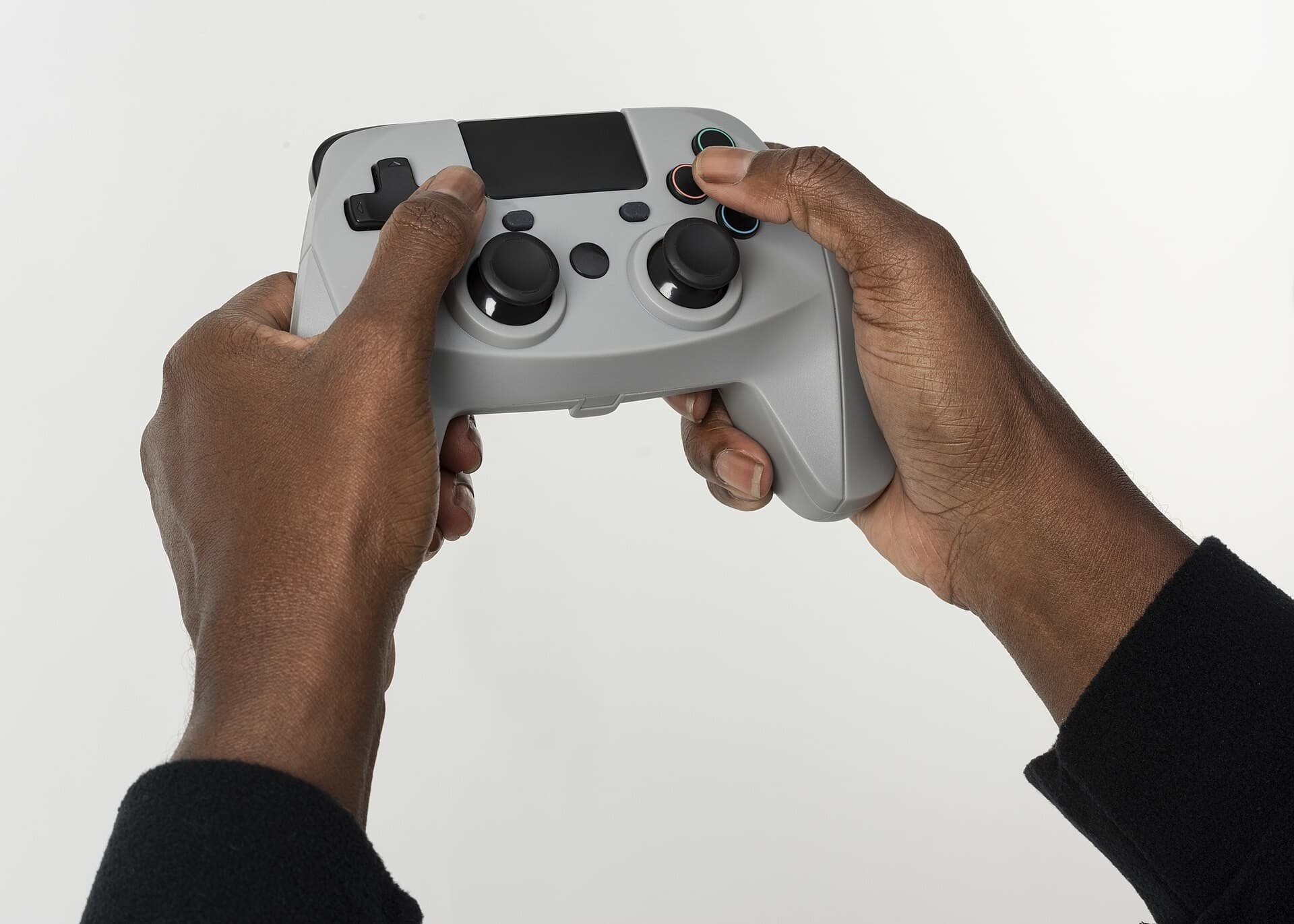
Photo: RDNE Stock project / Pexels
The video game industry generates over $180 billion annually — more than film and music combined. But within this vast market, a handful of titles have achieved cultural saturation that transcends gaming. These games are played by people who don't consider themselves gamers, referenced by politicians, studied by academics, and played on every continent. Minecraft's 300 million copies, Tetris's 520 million across all versions, and GTA V's $8 billion in lifetime revenue tell us as much about human psychology as about game design. Here are the 10 best-selling video games ever made, what drove each one's success, and what the list reveals about what people actually want from entertainment.
Key takeaways
- Minecraft (300 million+ copies) is the single best-selling video game ever made — it outsells the second-place title by 100 million units.
- Tetris (520 million+) leads all-time if every official version across every platform is counted together since 1984.
- Grand Theft Auto V has earned over $8 billion — more revenue than any film ever made, including Avatar.
- 8 of the top 10 best-selling games were released after 2006, reflecting digital distribution's explosion.
- Nintendo appears 4 times in the top 10 — more than any other publisher — through accessible, family-friendly design.
Methodology: how we count "best-selling"
Copies sold seems like a simple metric until you examine it. Three counting approaches produce genuinely different rankings, and each has legitimate uses.
Single-title counting tracks physical and digital sales of one specific product — one game, one publisher, one set of release dates. Minecraft under this approach is the clear leader at 300 million copies. This is the most useful metric for understanding commercial success, because it reflects a single investment decision and its returns.
Franchise counting aggregates across all numbered sequels, remakes, and spin-offs. Pokémon has sold over 480 million units across all mainline games since 1996. Mario Kart's total across all releases exceeds 200 million. This metric is useful for understanding the cumulative value of intellectual property but obscures which specific game created the franchise's foundation.
All-version counting is used for Tetris, which has been officially licensed and released on hundreds of platforms since 1984 — from Soviet arcade machines to Nintendo Game Boy to iOS. Under this approach, Tetris leads all-time at over 520 million copies. But comparing it to Minecraft involves comparing 40 years of versions across hundreds of products against one product.
This ranking uses single-title counting, which is the industry standard for best-selling comparisons. Tetris is noted separately because its all-version total is the highest ever recorded.
Sales data sourced from official publisher announcements, NPD/Circana tracking data, and verified media reports. GTA V revenue figures sourced from Take-Two Interactive's financial filings.
Source: NPD/Circana (2025) — Annual Physical and Digital Video Game Sales Tracking; Take-Two Interactive Financial (2025) — FY2025 Annual Report; Mojang/Microsoft (2024) — Minecraft 15th Anniversary Sales Report.
Top 10 best-selling video games ever
(Total copies sold across all platforms, all-time to 2025)
| Rank | Game | Studio | Year | Copies sold |
|---|---|---|---|---|
| 1 | Minecraft | Mojang / Microsoft | 2011 | 300 million+ |
| 2 | Grand Theft Auto V | Rockstar Games | 2013 | 200 million+ |
| 3 | Wii Sports | Nintendo | 2006 | 83 million |
| 4 | PUBG: Battlegrounds | Krafton | 2017 | 75 million+ |
| 5 | Mario Kart 8 Deluxe | Nintendo | 2014/2017 | 65 million+ |
| 6 | Super Mario Bros. | Nintendo | 1985 | 58 million |
| 7 | Terraria | Re-Logic | 2011 | 58 million+ |
| 8 | Pokémon Red/Blue/Green | Game Freak | 1996 | 47 million |
| 9 | Wii Sports Resort | Nintendo | 2009 | 33 million |
| 10 | Human: Fall Flat | No Brakes Games | 2016 | 40 million+ |
Tetris (520M+ across all official versions since 1984) is excluded from this ranking as its copies are spread across hundreds of distinct releases. Minecraft leads among unified single-title franchises.
Source: VGChartz verified data (2025); official publisher announcements; NPD/Circana tracking.
How gaming sales records evolved: a brief history
The concept of a "best-selling video game" is newer than it might seem. Before the 1980s, the commercial video game industry barely existed. Understanding what made each record-holder possible requires a quick look at how the industry's distribution and audience evolved.
The arcade and early console era (1975–1990). The first games to sell in meaningful volume were arcade cabinets (Space Invaders, Pac-Man, Donkey Kong) and early home console titles. These did not use unit sales as the primary commercial metric — arcade machines were leased to venues and measured by coin insertions; home console games had no digital distribution and relied entirely on physical retail. Space Invaders' estimated 360,000 cabinet units at $2,000 each would represent $720 million today; Pac-Man's 100,000+ cabinets were similarly profitable.
Source: International Arcade Museum (2024) — Production Numbers Database. arcade-museum.com
Super Mario Bros. and the Nintendo era (1985–1995). Super Mario Bros. became the landmark of the NES era, selling 58 million copies largely through hardware bundling (it was included with the NES in North America). Nintendo's ability to use game bundling as a hardware sales driver and hardware as a game sales driver established the platform ecosystem model that still defines console gaming. Nintendo appears four times in the current top 10 because it has replicated this model across Wii (sports game bundling), Wii U/Switch (Mario Kart bundling), and Game Boy (Pokémon bundling).
The PC gaming and DVD-ROM era (1993–2005). CD and DVD-based distribution lowered physical production costs, enabling longer, more complex games. The era produced high-selling franchises (Diablo, Warcraft, Sims) but not single titles that could challenge Nintendo's hardware-bundled games in pure unit terms, because PC gaming lacked a bundled delivery mechanism equivalent to console pack-in games.
The digital distribution turning point (2008–2015). Steam's launch in 2003 and its rapid growth through the late 2000s, combined with the App Store (2008) and Google Play (2012), removed the physical manufacturing and retail distribution constraints on game sales. A game could now sell to a global audience at near-zero marginal cost per copy. This structural change is why 8 of the top 10 all-time best-sellers were released after 2006. Minecraft's 300 million copies would have been physically impossible before digital distribution.
Source: Valve Corporation (2024) — Steam Year in Review 2024; App Annie / data.ai (2024) — Mobile Gaming Market Report.
The live service era (2016–present). GTA Online, PUBG, Fortnite, and their successors demonstrated that a game's sales life could extend indefinitely through continuous content updates and in-game purchase ecosystems. GTA V's 200 million copies sold over 12 years, on three console generations, is a direct product of GTA Online's live service revenue keeping the base game commercially relevant long past its normal sales shelf life.
Why these games dominate: the shared mechanics of mass appeal
The top 10 best-sellers share consistent structural characteristics. These are not accidents — they are the result of design decisions that either intentionally or inadvertently maximized the potential audience.
Accessibility without a ceiling. None of these games require deep gaming knowledge to begin enjoying. Minecraft's blocks are self-explanatory. Wii Sports' tennis is obvious to anyone who has ever seen tennis. PUBG's battle royale premise — 100 players, last one standing — can be grasped in 30 seconds. But all of these games also have high ceilings: Minecraft's redstone logic gates enable in-game computers; Mario Kart's optimal racing lines take years to master; PUBG's advanced positioning and rotation strategies fill entire coaching programs. This combination of accessible floor and high ceiling is how games reach both casual players and competitive communities simultaneously.
Procedural or multiplayer infinite replayability. Minecraft worlds are procedurally generated and mathematically unique — no two worlds are identical. PUBG's battle royale matches never play out the same way twice. Mario Kart's competitive multiplayer creates infinite game states through human opponent unpredictability. Human: Fall Flat's physics-based puzzle solutions emerge differently each time. Games with finite, deterministic content exhaust themselves; games with structural replayability continue generating new experiences indefinitely.
Social mechanics that create external demand. All of these games are more fun with others, and several specifically require or reward social play. This creates a word-of-mouth multiplier that advertising cannot replicate: a player's friends need to buy the game to play together, and watching someone else play creates direct purchase intent. Minecraft's YouTube presence — billions of views across millions of content creators — functioned as continuous organic advertising for over a decade. Wii Sports' viral "bowling grandma" cultural moment brought in buyers who had never owned a gaming console.
Low price-to-value ratio. Minecraft costs $26.95 on most platforms and offers essentially unlimited gameplay time. Terraria costs $9.99 and has been played for hundreds of hours by millions of players. PUBG's transition to free-to-play in 2022 immediately expanded its player base. The games that sell the most copies are rarely the most expensive — they offer the highest ratio of entertainment value to purchase cost.
1. Minecraft: the game that ate the world
Minecraft's 300 million copies represent something unprecedented: a game with no explicit objective, no authored story, and no designed ending becoming the most-sold software product in human history. It outsells every operating system, every productivity suite, every other game.
The open-world formula. Players build, mine, craft, and survive in procedurally generated worlds made of blocks. This open-endedness has produced creations ranging from replicas of the Eiffel Tower to working neural network computers built from in-game redstone logic gates. Universities in Denmark used Minecraft to create a 1:1 scale model of the country for geographic education. Teachers on every continent use it for history lessons, architecture demonstrations, and STEM education. The game became a medium.
Source: OECD (2022) — Minecraft in Education: Documented Case Studies; Minecraft Education (2024) — Impact Report 2024. education.minecraft.net
The YouTube engine. Minecraft content on YouTube has accumulated cumulative billions of views since 2010. The game created YouTube's first generation of celebrity content creators — PewDiePie's early growth was built on Minecraft, and creators including Dream, Technoblade (whose passing in 2022 became a cultural event), and Stampylonghead built careers entirely around one game. This content ecosystem drove sales that would have been impossible through conventional advertising, because it created continuous new discovery of the game by audiences who had never seen it before.
The Microsoft acquisition. Microsoft acquired Mojang for $2.5 billion in September 2014. At the time, many analysts questioned whether a 15-person Swedish studio was worth that price for a single game. At 300 million copies, continued double-digit growth, Minecraft Education reaching over 35 million students, and the Minecraft brand generating licensing revenue across toys, merchandise, film, and television, it ranks among the best acquisitions in technology history.
Source: Microsoft (2024) — Microsoft Annual Report FY2024; Mojang (2024) — Minecraft 15th Anniversary Blog Post.
Why it keeps selling. Minecraft is not a game from 2011 running on 2011 technology. Mojang releases multiple major updates annually: Caves and Cliffs (2021), The Wild Update (2022), Trails and Tales (2023), and beyond. Each update expands the game's mechanics and creates a new wave of returning players and press coverage. For a game over a decade old, this sustained development investment is unusual and is a direct function of Microsoft's post-acquisition resources.
2. Grand Theft Auto V: the $8 billion game
GTA V released in September 2013 and has never stopped selling. Its $8 billion in lifetime revenue surpasses every film ever made — Avatar ($2.9 billion box office), Avengers: Endgame ($2.8 billion), and the entire Marvel Cinematic Universe's theatrical total. A single video game has generated nearly three times the revenue of the highest-grossing film of all time.
Source: Take-Two Interactive (2025) — FY2025 Annual Report and Earnings Call; Box Office Mojo (2025) — All-Time Worldwide Box Office Rankings.
The GTA Online mechanism. The base game is a single-player crime story set in a satirical Los Angeles (Los Santos). GTA Online is a separate, continuously updated multiplayer world that Rockstar has maintained for over a decade. Players purchase in-game currency (Shark Cards) with real money to buy virtual properties, vehicles, aircraft, and criminal enterprises. This microtransaction model — applied to a game already sold at full price — generates hundreds of millions of dollars annually without requiring development of a new game.
Three console generations, one title. GTA V launched on PlayStation 3 and Xbox 360, was remastered for PlayStation 4 and Xbox One, and received a further-enhanced version for PlayStation 5 and Xbox Series X in 2022. Many players have purchased it multiple times across console generations, and the PS5/Xbox Series X version was sold as a standalone purchase, not a free upgrade. Rockstar has extracted extraordinary commercial longevity from a single development cycle by maintaining the live service layer across platform generations.
The cultural dimension. GTA V is also a legitimate work of social satire — its depiction of American materialism, media culture, and institutional corruption is deliberate and frequently noted by cultural critics. Unlike most games on this list, its sales are partly driven by a specific artistic vision that attracts players who would not typically buy an action game. The game's three playable protagonists, each representing a different archetype of American masculinity and failure, are better-developed characters than most Hollywood films manage.
3. Wii Sports: games for everyone
Wii Sports was bundled with the Nintendo Wii in most markets, which inflates its standalone sales count. But its cultural impact is real and significant — it achieved something no game before it had managed at scale: making video games accessible to people who had never played them and had no intention of becoming gamers.
Motion controls changed the accessible game. The Wii's motion-sensing remotes made gaming physical and intuitive. Wii Sports (bowling, tennis, golf, boxing, baseball) required actual arm movements recognizable to anyone who had done the real-world activity. This made it enjoyable for people who had never touched a controller — parents, grandparents, retirement home residents.
The "bowling grandma moment" became shorthand for the Wii's audience expansion. Nursing homes across the US and UK purchased Wii consoles specifically for residents who found digital games inaccessible. The physical therapy benefits of arm-movement gaming were documented in several studies.
Source: Journal of Physical Therapy Science (2012) — Wii-based exercise programs in older adults: systematic review of outcomes.
The bundle effect. Including Wii Sports with the hardware meant that 83 million copies shipped essentially automatically with 83 million consoles. This conflates "sold as a bundle" with "purchased as a standalone choice," which matters for interpreting the number. But it also reflects a strategic choice by Nintendo to make a specific game the defining experience of a new console — and that choice drove Wii hardware sales, which is the relevant commercial outcome.
4. PUBG: the battle royale catalyst
PUBG: Battlegrounds is the game that created the battle royale genre as a mainstream commercial category. Before PUBG, battle royale games existed as Minecraft and Arma mods; after PUBG's 2017 early-access launch and record-breaking PC sales, every major game developer launched a battle royale title.
The competitive innovation. PUBG drops 100 players onto a large map, reduces the playable area over time (the "blue zone" that damages players outside it), and declares a winner when one player or team remains. This formula is simple enough to understand immediately but generates infinite strategic variation based on landing location, loot availability, and opponent positioning. Unlike scripted game modes, no two PUBG matches play identically.
The early-access experiment. PUBG launched on Steam Early Access in March 2017 — before the game was finished — and sold 4 million copies in its first month. This demonstrated that players would pay for access to a game in active development, fundamentally validating the early-access model that has since been used by hundreds of games. By December 2017, PUBG had sold 30 million copies on PC alone, faster than any game in Steam's history at that point.
Source: Krafton (2024) — PUBG: Battlegrounds Player Milestone Announcement; Steam (2024) — Concurrent Player Peak Records.
The free-to-play transition. PUBG moved to a free-to-play model in January 2022, immediately expanding its player base and shifting its revenue model to cosmetic sales. This transition added tens of millions of players who had been unwilling to pay the entry price, demonstrating the elasticity of gaming audiences when price barriers are removed.
5. Terraria: the indie outlier
Terraria's presence at rank 7 with 58 million copies is the list's most surprising entry. It was developed by a two-person team (later expanded) at Re-Logic, released at $9.99 in 2011, and has sold more copies than any game in the history of most major publishers. It has no marketing budget relative to its peers, no major studio backing, and no cinematic production values.
Its success reflects the same formula as Minecraft — procedurally generated world, open-ended survival crafting, no defined ending — applied in 2D with an emphasis on combat and exploration rather than construction. Like Minecraft, it has received years of free major content updates that keep the game commercially relevant and the player base engaged. The most recent major update ("Journey's End") released in 2020 and was free for all existing owners.
The long-tail digital sales model. At $9.99, Terraria has earned approximately $580 million in lifetime revenue. Its development costs were a fraction of any AAA game. It represents a model of sustainable indie game development that depends on low price, high quality, long support, and digital distribution — none of which would have been viable in the physical retail era.
Source: Re-Logic (2023) — Terraria Sales Milestone Announcement; Steamspy estimated data (2024).
6–10: Nintendo's formula and the outliers
Super Mario Bros. (58 million) is the foundational document of accessible game design. Released in 1985 alongside the NES, its left-to-right side-scrolling format, run-and-jump mechanics, and escalating difficulty were immediately legible to anyone who could see a screen. Its sales represent the first proof that video games could be a mass market consumer product rather than a specialist hobby — a conclusion that shaped every game on this list.
Pokémon Red/Blue/Green (47 million) launched the franchise that would become one of the most valuable intellectual properties in the world (the Pokémon Company reported total franchise revenue of over $150 billion across all media by 2023). The original game's link-cable trading mechanic was not a feature — it was the core loop. You could not complete the Pokédex alone. The game required social connection with other players, making it the first major social network built on a portable gaming device.
Source: The Pokémon Company (2023) — Pokémon Franchise Cumulative Sales Data.
Human: Fall Flat (40 million) is the list's second indie outlier, representing the impact of mobile distribution and streaming. Its physics-based puzzle gameplay is inherently funny when things go wrong — characters flop, stumble, and fall in ways that generate shareable moments. Its addition of multiplayer and its availability across PC, console, and mobile (with cross-platform play) gave it a long commercial tail well beyond its initial release.
What people get wrong about game sales rankings
Mistake 1: Equating copies sold with revenue earned. GTA V at $8 billion from 200 million copies generates approximately $40 per copy on average across its lifetime. Terraria at $580 million from 58 million copies generates approximately $10 per copy. The revenue-per-copy difference reflects different monetization models (live service vs. fixed price) more than relative popularity.
Mistake 2: Ignoring mobile. Free-to-play mobile games have download counts that dwarf paid games — Candy Crush Saga and Subway Surfers each exceed 3 billion downloads. But downloads of free games are not comparable to unit sales of paid games. By revenue, mobile games like Honor of Kings, PUBG Mobile, and Clash of Clans generate billions annually from in-app purchases, but they are not "sold" in the sense used in this ranking.
Mistake 3: Treating the ranking as static. Minecraft adds millions of new copies per year. GTA V adds millions per year. PUBG continues generating active players through its free-to-play model. This ranking reflects the state of a dynamic process, not a closed historical record.
Trends to watch: what the next generation of best-sellers looks like
The live service model is becoming the dominant commercial structure. The games that will appear on updated versions of this list in ten years are almost certainly live service games — titles designed from launch to sustain player engagement indefinitely through content updates, seasonal events, and cosmetic monetization. Fortnite, Roblox, and Genshin Impact are the current templates. They do not appear on this list because "copies sold" is not their metric (most are free-to-play), but their revenue and player engagement numbers dwarf several games on this list.
Player-generated content extends commercial life. Roblox, which is a platform for user-created games, has been played by over 350 million users. Minecraft's user-created servers, mods, and maps have generated a secondary economy. The games with the longest commercial lives increasingly depend on players creating content for other players — turning customers into content creators and reducing the developer's content creation burden.
AI-generated game content is beginning to arrive. Several studios are experimenting with AI systems that generate procedural quests, dialogue, and environmental content. If these tools mature, they could enable even smaller teams to build even larger game worlds — potentially extending the indie success story represented by Terraria and Human: Fall Flat to more ambitious titles.
Frequently asked questions
Q: What is the best-selling video game of all time if you count mobile? A: Mobile free-to-play games have download numbers that dwarf paid games — Candy Crush Saga and Subway Surfers each exceed 3 billion downloads. However, downloads of free games are not comparable to unit sales of paid games. By revenue, mobile games like Honor of Kings, PUBG Mobile, and Clash of Clans generate billions annually, but from revenue-per-user models rather than upfront sales. Under any consistent definition, Minecraft leads among games sold at a price.
Q: Has any video game earned more revenue than a blockbuster film? A: Yes. GTA V at $8 billion surpasses every film ever made by a wide margin. Fortnite (free-to-play) has earned over $20 billion since launch. The comparison illustrates that video games are now the dominant entertainment medium by revenue — larger than global box office, larger than the recorded music industry.
Q: Are game sales declining due to streaming services? A: Not significantly. Xbox Game Pass, PlayStation Plus Extra, and Nintendo Switch Online offer subscription access to game libraries — reducing some individual purchases. But the gaming market continues growing as mobile gaming expands the global audience faster than subscriptions reduce per-unit retail sales. The shift is from physical to digital, not from owned to subscribed.
Q: Why is Tetris excluded from the main ranking? A: Tetris has sold over 520 million copies across all official versions since 1984 — the highest all-time total if you count across every platform, developer, and license holder. However, comparing this aggregate to Minecraft's 300 million single-title figure is methodologically inconsistent. Tetris has been produced by hundreds of different developers under license. Minecraft is one product from one company. The ranking uses single-title counting for consistency; Tetris is noted as the all-time leader under the all-version counting method.
Q: What makes Nintendo appear 4 times in the top 10? A: Nintendo's design philosophy consistently prioritizes accessibility, family-friendliness, and hardware integration. Wii Sports was designed for the specific motion-control hardware of the Wii and bundled with it. Mario Kart 8 Deluxe was the best-selling Switch title partly because Nintendo included a version in many Switch bundle packages. Super Mario Bros. was bundled with the original NES. Pokémon Red/Blue were designed for the Game Boy's link-cable hardware feature. In each case, the game succeeded in part because it was optimized for a specific hardware context and widely distributed through bundling.
Q: Could an indie game ever top this list? A: Minecraft was effectively an indie game when it began — made by one developer (Markus Persson, "Notch") in Java, sold directly from a website before it had a publisher. Terraria was made by two people. The digital distribution era has removed the physical manufacturing and retail gatekeeping that once made it impossible for small teams to reach large audiences. The constraint is now discoverability and quality, not production scale.
The bottom line
The best-selling video games of all time are not the most technically sophisticated, the most graphically impressive, or the most critically acclaimed. They are the most accessible, the most replayable, and the most social. Minecraft's blocks. Tetris's falling pieces. Wii Sports' arm movements. Simple mechanics executed with precision and depth, combined with structural replayability, social components, and business models that put low barriers between the game and new players.
GTA V is the partial exception — technically ambitious and narratively sophisticated — but its longevity comes from GTA Online's live service layer, not its single-player campaign. The industry's commercial future resembles Minecraft more than Call of Duty: open worlds, player-generated content, continuous live service, and business models built around time spent rather than copies sold.
Related Reading
Follow new articles
Add SciHub101 to your feed reader to see new science and technology stories.
About the Author
SciHub101 is an independent science and technology publication founded and edited by Buğra Sözeri, a software engineer and app developer based in Türkiye. AI tools assist with drafting and research. Source documentation in the existing archive is uneven, and articles are being reviewed and corrected. The Editorial Team byline identifies editorial responsibility; it does not certify specialist or independent human review. Where we compare products, anything built by our own team is labelled as such — see the editorial guidelines and About page for how corrections and disclosures work.
Related Articles

Countries with the Highest (and Lowest) Marriage Rates (2025)
The Maldives has the world's highest marriage rate — 20 per 1,000 people — driven by easy divorce and remarriage. In contrast, Japan's marriage rate has hit record lows and South Korea is in a full-scale marriage crisis. Western Europe is seeing marriage replaced by cohabitation. Here's how marriage patterns define societies.

How the Global Financial System Works
About $9.6 trillion of foreign exchange changes hands on an average day. Banks create most money by lending, central banks set the price of credit, and the dollar sits on one side of almost every trade. Here is how the machinery fits together, and how it failed in 2008.

Procedural Generation: How Minecraft Builds Infinite Worlds
Minecraft's world spans roughly 60 million blocks in each direction, yet it fits in a few bytes of seed data. The mathematics behind biomes, caves, and mountains from a single number is one of gaming's most elegant engineering achievements.
Complete Gaming Guide 2026 — Technology, Design, Esports, and Psychology
The complete guide to gaming in 2026: how game engines work, gaming hardware, esports, game design psychology, industry trends, and what makes games engaging and addictive.

The Most Anticipated Video Games of 2026: Major Releases and What to Expect
2026 marks a pivotal year for gaming: a final wave of ninth-generation console exclusives before the inevitable tenth-generation hardware transition, a maturation of ray-traced visuals as standard rendering pipeline, and the arrival of several franchises fans have waited half a decade to see continued. This article examines the factual release landscape of 2026 across PlayStation 5, Xbox Series X/S, Nintendo Switch 2, and PC, detailing known development status, gameplay mechanics, and the reasons each title has captured player anticipation.

Game Sound Design: How Audio Creates Immersion
You hear a footstep above you in *Alien: Isolation* and your heart rate spikes before you consciously register what you heard. Game audio operates at the boundary of conscious and unconscious processing — and the science behind it is as sophisticated as anything in visual rendering.