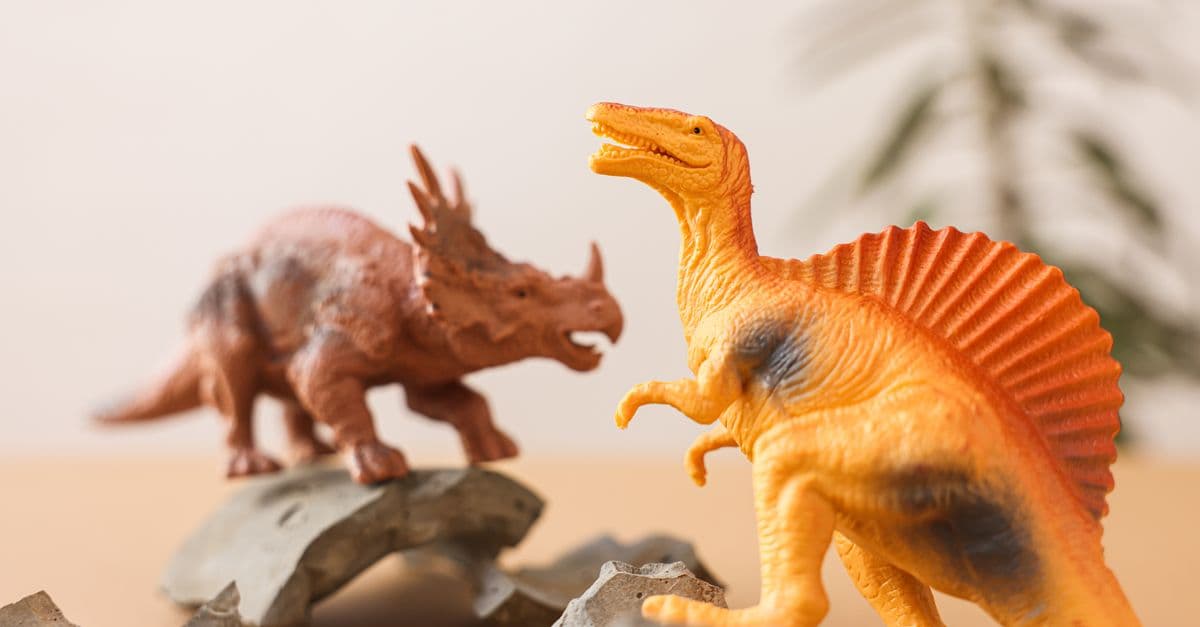
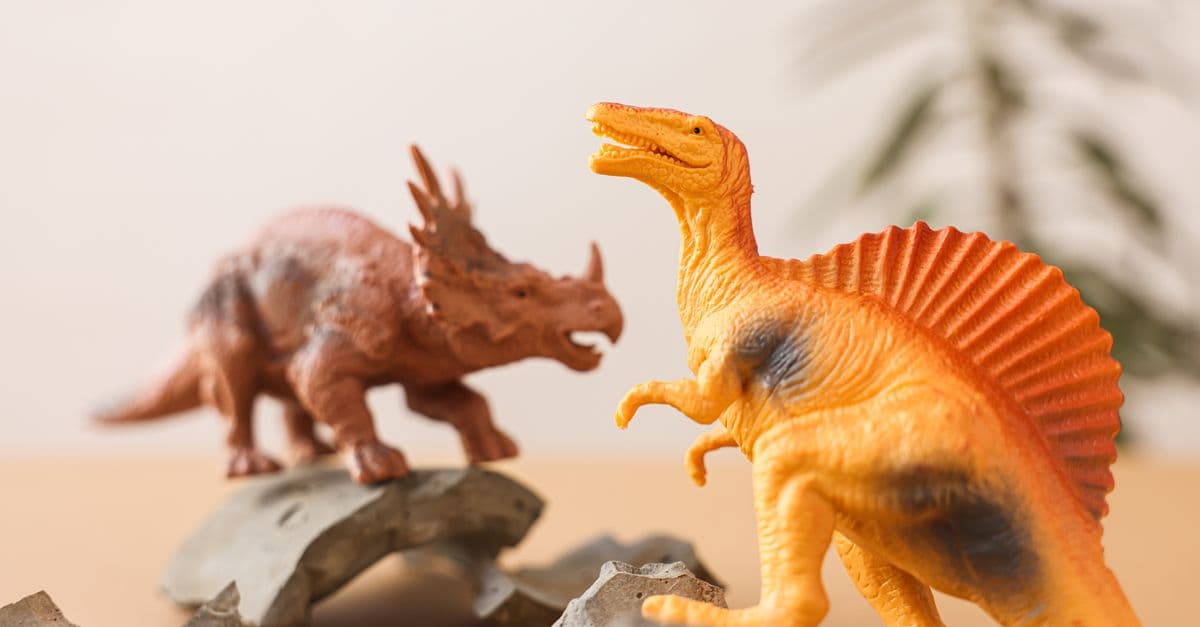
Why Did Some Dinosaurs Have Horns?
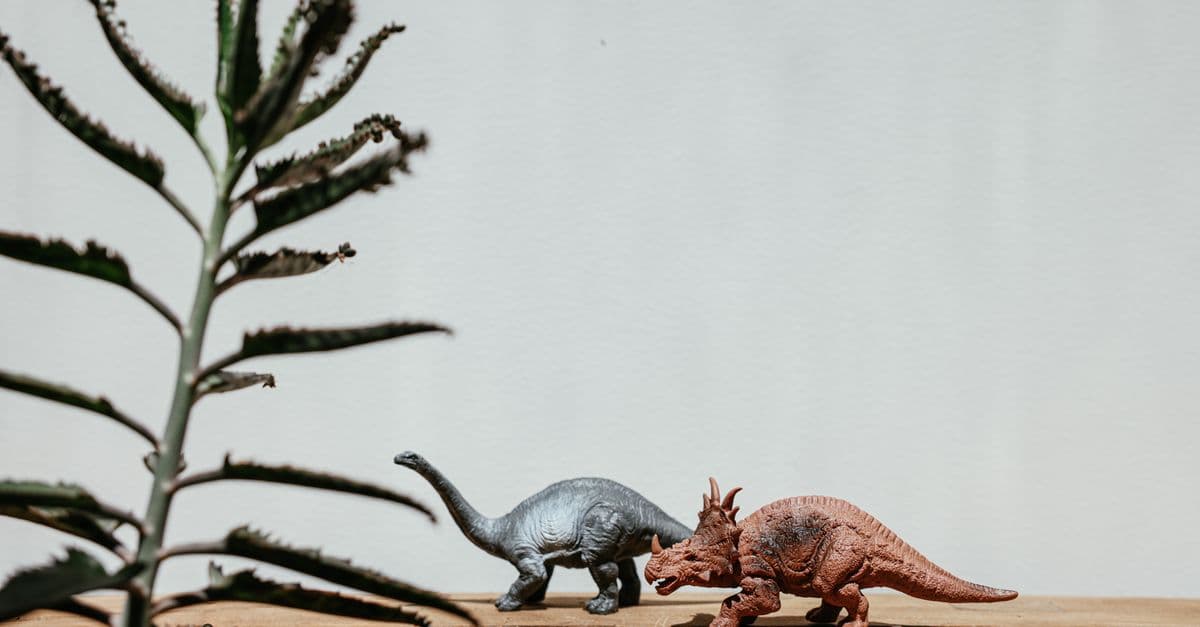
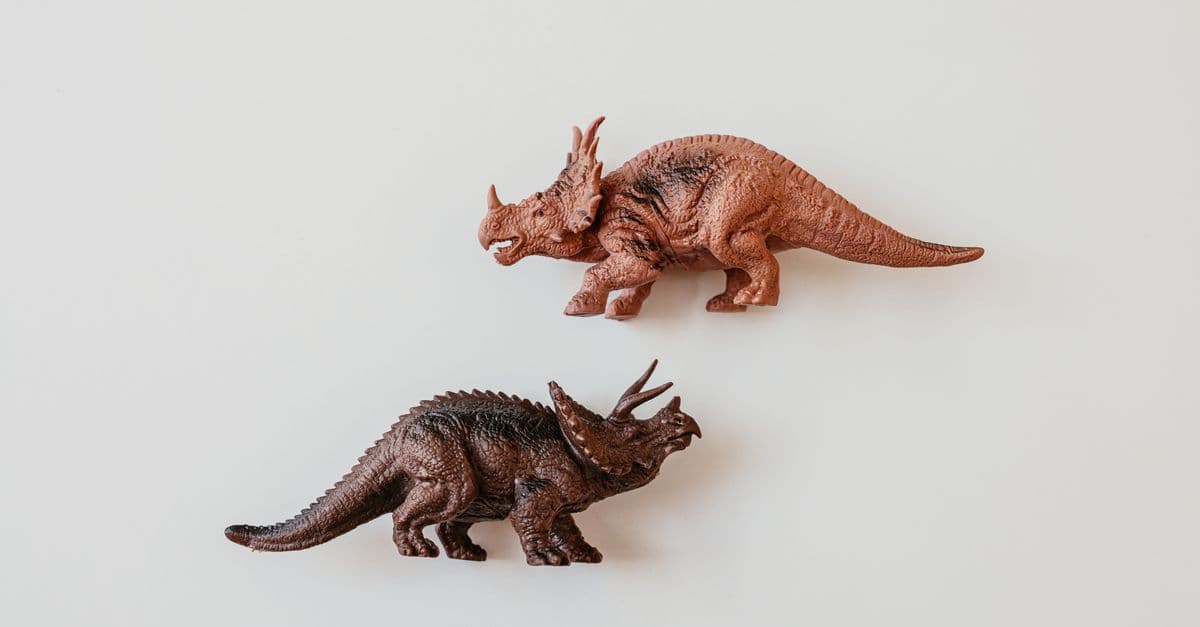
Photo: Cup of Couple / Pexels
Ceratopsian horns — the bony spikes and frills carried by Triceratops, Styracosaurus, and their relatives — most likely evolved primarily for display and competition within their own species, not for fighting off predators. Paleontologist Andrew Farke, who has studied horn function using scale models and injury patterns, found that Triceratops horns and frills changed shape dramatically through growth, a pattern that fits social signaling far better than a fixed anti-predator weapon. This guide walks through the fossil evidence, the competing hypotheses, and what remains genuinely unsettled.
What ceratopsian horns actually were
Ceratopsia — a group of plant-eating, beaked dinosaurs that includes Triceratops, Styracosaurus, and roughly 75 named genera — is defined partly by a distinctive rostral bone at the tip of the snout and, in its later members, elaborate cranial ornamentation. The earliest ceratopsians, small bipedal animals like Psittacosaurus from the Early Cretaceous of Asia, had no horns at all, just a parrot-like beak. Horns and frills appear later, in the Late Cretaceous ceratopsids of North America and Asia, and they diversify explosively in the final 20 million years before the end-Cretaceous extinction.
The horns themselves were not solid bone the way antlers might be imagined. In life, a keratin sheath — the same protein that makes up fingernails, hooves, and bird beaks — likely covered the bony horn core, extending its effective length and possibly its color beyond what the fossil bone alone shows. This matters for interpretation: a keratin-sheathed horn could have looked sharper, longer, or more colorful in life than the fossilized core suggests, and keratin itself almost never fossilizes, so reconstructions carry built-in uncertainty about the finished appearance.
The frill, meanwhile, is an extension of the parietal and squamosal skull bones that grows backward and outward over the neck. In centrosaurines like Styracosaurus, the frill edge sprouts long spikes; in chasmosaurines like Triceratops and Pentaceratops, the frill is broader and often solid, with horns concentrated over the brow and nose instead. That split in architecture — spiky frill versus long brow horns — is itself a clue that different ceratopsian lineages solved the "why do we need ornamentation" question in different ways, which argues against any single, universal explanation.
The species recognition hypothesis and its problems
Species recognition hypothesis — the idea that horns and frills evolved mainly to let animals visually identify members of their own species, avoiding wasted mating attempts or aggression toward the wrong species — was formally proposed by paleontologists Kevin Padian and John Horner in a influential 2010 paper. Their argument rested on two predictions: ornamented structures should evolve rapidly and somewhat randomly in shape, and species with the most similar ranges should show the most distinct ornamentation, since that is where confusing two species would carry the highest cost.
The hypothesis is intuitive. A frill silhouette or horn arrangement really could work like a species-specific signboard, the dinosaur equivalent of how closely related bird species use different plumage patterns to avoid cross-species courtship. That analogy is worth sitting with: many living animals do use appearance for species identification, so it was not an unreasonable place to start.
But subsequent testing weakened it. A comprehensive review by paleontologist David Hone and colleagues, published in the Journal of Zoology in 2013, examined the geographic overlap prediction directly and found no consistent relationship between how elaborate a ceratopsian's ornamentation was and how many other similarly ornamented species shared its habitat (Hone, 2013). If species recognition were the main driver, that overlap pattern should show up clearly, and it largely does not. Species recognition may still play some secondary role, but the evidence does not support it as the primary explanation for why the ornaments exist at all.
The case for sexual and social selection
Sexual selection — evolutionary pressure driven by competition for mates, rather than survival alone, first formalized by Charles Darwin in 1871 — is now the leading explanation among ceratopsian researchers for why horns and frills became so elaborate. Farke's own work supports this: he has described the way ceratopsid horns and frills change shape through an individual's lifespan, becoming more exaggerated and distinctive only as the animal reaches breeding maturity, as "most consistent with sexual selection being pretty important" (Smithsonian Magazine interview with Farke).
That growth pattern is the strongest single piece of evidence in this debate. In many living animals with sexually selected ornaments, like the antlers of deer or the horns of bighorn sheep, the structure is small or absent in juveniles and grows disproportionately large right around sexual maturity. Triceratops brow horns follow a similar trajectory: small, backward-curving nubs in juveniles that lengthen, straighten, and rotate forward as the animal ages, tracking the developmental timeline you would expect from a display or competition structure rather than a defensive one present from birth.
A related idea called social selection, discussed by paleontologist Rob Knell and colleagues, broadens sexual selection to include signaling used in non-mating social contests too, such as establishing dominance within a herd or defending territory without necessarily fighting to the death (Knell, 2011). Under this framework, a Styracosaurus's spiked frill or a Triceratops's brow horns did not need to serve one single purpose. They could function simultaneously as a visual advertisement of size and fitness, a tool for occasional ritualized combat between rivals, and a backup weapon against predators, the way a stag's antlers do all three jobs for red deer today.
Do horned dinosaurs show sexual dimorphism?
Sexual dimorphism, meaning consistent physical differences between males and females of the same species, would be strong supporting evidence for sexual selection, but it is genuinely hard to confirm in ceratopsian fossils. Padian and Horner specifically cited the lack of documented dimorphism as a weakness in the mate-competition argument. Later researchers have proposed candidate dimorphism in Triceratops nasal horn size, but sample sizes remain small and sex cannot be confirmed independently for most specimens, so this question stays genuinely open.
Evidence of horn-to-horn combat
Paleopathology — the study of injury and disease in fossil remains — provides the most direct physical evidence for how ceratopsian horns were used in life. Farke and colleagues built full-scale models of Triceratops skulls and used them to predict exactly which bones should get injured if two Triceratops locked horns the way modern bovids do, then checked those predictions against real fossil skulls with healed damage (Farke et al., 2009, PLOS ONE). The postorbital horns and squamosal bones — the areas the combat model predicted would take the most damage — showed significantly more pathology than other skull regions, exactly matching the prediction.
That result is a genuinely rare thing in paleontology: a testable, falsifiable hypothesis about behavior that produced a clear, matching physical signature in the fossil record. It does not prove combat was the original evolutionary reason horns appeared, but it does confirm that adult Triceratops used their horns against each other, at least occasionally, and that some of those contests caused lasting skeletal injury that the animal survived.
Centrosaurine ceratopsians with shorter brow horns but spiked frills, like Styracosaurus and Centrosaurus, present a different picture. Their horn geometry is less obviously suited to head-to-head locking combat compared to the long, forward-pointing horns of Triceratops, which has led researchers to suggest that frill spikes in those lineages leaned more heavily toward visual display than direct weaponry. This is part of why paleontologists increasingly avoid a single answer for "ceratopsian horns" as a category and instead treat each genus's ornamentation as its own case study.
Horns as defense against predators
The predator-defense hypothesis is the oldest and most intuitive explanation, and it is not wrong so much as incomplete. Triceratops shared its Late Cretaceous North American ecosystem with Tyrannosaurus rex, and fossil evidence of their interaction exists: a Triceratops specimen shows a horn that was bitten, with damage matching tyrannosaur tooth spacing, that subsequently healed, meaning the animal survived the attack. Multiple Triceratops frill fragments also show puncture and gouge marks consistent with large theropod bite force.
That evidence confirms horns and frills were sometimes used in genuine life-or-death encounters with predators, and that they sometimes worked well enough for the animal to survive. What it does not confirm is that predator defense is why the structures evolved in the first place. As paleontologist Denver Fowler and colleagues have noted, the only clearly documented combat injuries in Triceratops skulls match other Triceratops, not tyrannosaurs, which suggests intraspecific fighting was at minimum a more frequent source of horn use than predator encounters, even if predator encounters happened and mattered when they did.
What bone microstructure reveals about growth and use
Osteohistology — the study of bone microstructure under a microscope, used to reconstruct how fast an animal grew, how old it was, and sometimes how its bones responded to mechanical stress — has become one of the more productive lines of evidence in the ceratopsian horn debate over the past decade. A comprehensive 2023 analysis of Triceratops bone tissue examined cross-sections from the postorbital horns, nasal horn, and frill of multiple individuals spanning a range of ages, tracking how the internal tissue architecture changed from juvenile to adult (Triceratops osteohistology study, Cretaceous Research, 2023).
That analysis found the postorbital horns and squamosal frill bones underwent major shifts in both external shape and internal tissue type across an individual's lifespan, with young animals showing fast-growing, well-vascularized fibrolamellar bone, a tissue type associated with rapid deposition, and older animals showing denser, slower-growing bone with more closely spaced lines of arrested growth, essentially annual growth rings similar to tree rings that record pauses in the growth cycle. That pattern confirms the horns were not simply scaled-up versions of a juvenile structure that stayed anatomically static; they were actively remodeled tissue that kept responding to the animal's changing biology well into adulthood, which is consistent with a structure serving an active social or reproductive function rather than one that was "finished" early and then just got bigger.
Separately, a detailed pathology study used both histological sectioning and chemical analysis to examine a suspected combat lesion on a Triceratops skull, confirming through tissue-level evidence, not just surface appearance, that the bone had been damaged and had begun healing before the animal died (Histological and chemical diagnosis of a combat lesion in Triceratops). This kind of microscopic confirmation matters because surface damage on old fossil bone can sometimes result from erosion, breakage during burial, or scavenging rather than an in-life injury; histology lets researchers distinguish a genuine healed wound, which shows the specific cellular signature of bone remodeling around an injury site, from post-mortem damage that shows none of that biological response.
It is worth remembering, too, that none of this histological work can examine the keratin sheath itself, since keratin is not bone and essentially never survives fossilization in dinosaurs the way it occasionally does in mummified skin impressions. Everything paleohistologists study is the bony core; the finished, keratin-covered horn that a living Triceratops actually displayed to a rival or a potential mate was very likely somewhat longer, sharper, and possibly more visually striking than the fossil core alone would suggest, in the same way a living rhino's horn extends well beyond any bony attachment point on its skull, because rhino horn is pure compressed keratin with no bone core at all.
What modern horned mammals suggest about function
Ceratopsian horns evolved independently of, and roughly 65 million years before, the horns carried by living rhinos, bovids (cattle, antelope, bison, and their relatives), and other hoofed mammals, but the comparison is still useful precisely because it is independent. When two unrelated lineages facing similar selective pressures, competing for mates and defending resources within their own species, converge on similar-looking solutions, that convergence is itself evidence about what those solutions are good for.
Modern rhinoceroses offer one of the closer functional parallels, despite the anatomical differences (rhino horn is solid keratin with no bone core, while ceratopsian horns had a bony core beneath keratin). Male rhinos use their horns primarily in contests with other males over mating access and territory, ranging from shoving matches to serious fights that can draw blood, and the winner of those contests earns preferential access to receptive females, directly tying horn use to reproductive success rather than to predator defense as the primary driver (Animals Around the Globe, rhino horn use). Rhinos also use their horns in non-combat display and territory-marking behavior, gouging bark or scraping the ground to leave visible signs of their presence, a use with no direct combat function at all, which mirrors the layered, multi-purpose model paleontologists now favor for ceratopsian horns.
Bovids sharpen the comparison further because the group spans an enormous range of horn shapes, from the short, straight horns of duikers to the massive curled horns of bighorn sheep and the long, saber-like horns of some antelope, and researchers studying that diversity have found that horn shape correlates closely with fighting style rather than any single universal design. A 2014 study in PNAS examined how bovid horn shape relates to combat mechanics, finding that species specializing in head-to-head, sustained-contact clashes evolve differently shaped weapons than species that fight with glancing or twisting strikes, meaning the horn's geometry is itself an adaptation tuned to a specific style of contest, not just a generic weapon (Structural adaptations to diverse fighting styles in sexually selected weapons, PNAS, 2014). That same logic maps directly onto the difference between Triceratops's long, forward-pointing brow horns, suited to head-on locking combat, and Styracosaurus's radiating frill spikes, better suited to visual display than to any specific fighting technique.
Bovid research also reinforces the sexual selection case on a broader evolutionary timescale. A comparative study across bovids and cervids (deer and their relatives) found that horn and antler shape evolves faster than sperm morphology within the same lineages, a striking result because sperm competition is itself a well-established marker of strong sexual selection pressure (Weapons Evolve Faster Than Sperm in Bovids and Cervids). Faster-than-expected evolution of a visible weapon structure, relative to other traits shaped by mating competition, is exactly the signature you would expect if horns are under strong, ongoing selection pressure tied to reproductive success, which is the same broader argument Farke and colleagues make for ceratopsians using growth-pattern and injury-pattern evidence instead of comparative evolutionary-rate data.
Comparing horned dinosaur species
Ceratopsian ornamentation varied enormously across genera, and the differences in horn placement, count, and frill shape are a big part of why no single hypothesis fits every species equally well.
| Species | Horn configuration | Frill type | Best-supported primary function |
|---|---|---|---|
| Triceratops horridus | Two long brow horns (~1 m/3 ft), one shorter nasal horn | Short, solid, no major spikes | Display and intraspecific combat (Farke et al., 2009) |
| Styracosaurus albertensis | One large nasal horn, minimal brow horns | Long frill spikes (up to ~0.6 m/2 ft) | Visual display, possible species/social signaling |
| Pentaceratops sternbergii | Two long brow horns, one nasal horn, plus jugal (cheek) horns | Very large frill with paired epoccipital spikes | Display; frill size is among the largest of any land animal skull structure |
| Centrosaurus apertus | One prominent, forward-curving nasal horn, reduced brow horns | Moderate frill with hook-like spikes | Display and social signaling |
| Psittacosaurus spp. (early ceratopsian) | No true horns | No frill | Not applicable — ancestral condition, pre-ornamentation |
The shift from hornless early ceratopsians like Psittacosaurus to heavily ornamented Late Cretaceous ceratopsids shows the trait evolving rapidly within roughly the final 20 million years of the group's existence, which is itself consistent with strong selective pressure of some kind acting on display structures.
What people get wrong about dinosaur horns
The most common misconception is that horns must have one obvious job, usually assumed to be fighting predators, because that is the version that shows up in documentaries and museum dioramas depicting a Triceratops squaring off against a T. rex. That single-purpose framing is easy to visualize but does not match how paleontologists now interpret the evidence. Farke's comparison of Triceratops horns to "the Swiss Army knife of the dinosaur world" captures the current consensus better: multiple plausible uses layered on a structure whose primary evolutionary driver still looks like social and sexual signaling.
A second misconception treats "we don't know for certain" as equivalent to "scientists have no idea." That is not the state of the evidence. Farke's combat-injury study produced a specific, falsifiable prediction that was confirmed by pathology data. Hone's geographic-overlap study directly tested and substantially weakened the species recognition hypothesis. Growth-series fossils document exactly how horn shape changed from hatchling to adult. None of that is guesswork; it is converging, testable evidence pointing toward a multi-function display-and-competition structure with occasional defensive and combative use, rather than a single fixed answer.
A third misconception is assuming every ceratopsian used its ornamentation the same way. Styracosaurus's frill spikes and Triceratops's brow horns are different tools shaped by different evolutionary pressures within the same broader family, and lumping them together under one explanation glosses over exactly the kind of variation that makes this group interesting to study.
Did all ceratopsians use horns the same way?
No. Long-horned genera like Triceratops show injury patterns consistent with head-to-head combat, while spike-frilled genera like Styracosaurus have geometry better suited to visual display than direct locking combat. Paleontologists now treat horn function as genus-specific rather than assuming one explanation covers every ceratopsian.
The takeaway
Ceratopsian horns were not built for a single job. The strongest current evidence, growth patterns that intensify at sexual maturity, injury patterns matching predicted combat contact points, and a weak link between ornamentation and species overlap, points to social and sexual selection as the primary evolutionary driver, with combat and occasional predator defense layered on top as real but secondary uses. The debate between Padian and Horner's species-recognition model and the sociosexual-selection model that succeeded it is a genuine case study in how paleontology tests ideas against physical evidence rather than settling for the first plausible story. What remains open, honestly, is how much weight each function carried and whether that balance shifted across the 15 or so genera that carried elaborate horns.
Read next:
- How Do We Know What Dinosaurs Looked Like?
- What Killed the Dinosaurs? The Asteroid Impact
- Did Dinosaurs Have Feathers? The Fossil Evidence Explained
Frequently Asked Questions
Q: Why did Triceratops have horns? A: Triceratops horns most likely evolved primarily through sexual and social selection for display and competition among individuals of the same species. Fossil injury patterns confirm the horns were also used in direct combat between rivals, and healed bite wounds show they were occasionally effective against predators like Tyrannosaurus rex, though defense does not appear to be the original evolutionary driver.
Q: Did dinosaur horns evolve for species recognition? A: The species recognition hypothesis, proposed by Padian and Horner in 2010, predicted that ornamented dinosaurs sharing habitats should show more distinct ornamentation. A 2013 review by David Hone and colleagues tested this directly and found no consistent supporting pattern, which substantially weakened species recognition as the primary explanation, though it may still play a minor secondary role.
Q: Is there direct evidence Triceratops fought each other with their horns? A: Yes. Paleontologist Andrew Farke used scale models to predict which skull bones should show injury from horn-locking combat, then found that real Triceratops fossils showed significantly elevated pathology exactly in those predicted locations, confirming genuine intraspecific combat use.
Q: Did Triceratops horns work against Tyrannosaurus rex? A: Sometimes. At least one Triceratops fossil shows a horn bitten by an animal with Tyrannosaurus-matching tooth spacing that subsequently healed, proving the animal survived the encounter. Other frill fragments show puncture marks from large theropod bites, but researchers note the clearest combat injury evidence points to fights with other Triceratops, not predators.
Q: Why do different horned dinosaurs look so different? A: Ceratopsian lineages diverged into distinct ornamentation styles, long brow horns in chasmosaurines like Triceratops and Pentaceratops versus spiked frills in centrosaurines like Styracosaurus, suggesting each lineage solved display and competition pressures with different structures rather than one universal design.
Sources
- Farke, A. A., Wolff, E. D. S., and Tanke, D. H. (2009). "Evidence of Combat in Triceratops." PLOS ONE. https://www.ncbi.nlm.nih.gov/pmc/articles/PMC2617760/
- Hone, D. W. E. (2013). "The 'species recognition hypothesis' does not explain the presence and evolution of exaggerated structures in non-avialan dinosaurs." Journal of Zoology. https://zslpublications.onlinelibrary.wiley.com/doi/10.1111/jzo.12035
- Knell, R. J., et al. (2011). "Response to Padian and Horner." Journal of Zoology. https://zslpublications.onlinelibrary.wiley.com/doi/10.1111/j.1469-7998.2010.00758.x
- Padian, K., and Horner, J. R. (2011). "The evolution of 'bizarre structures' in dinosaurs: biomechanics, sexual selection, social selection or species recognition?" Journal of Zoology. https://zslpublications.onlinelibrary.wiley.com/doi/10.1111/j.1469-7998.2010.00719.x
- Smithsonian Magazine, interview with Andrew Farke. "Why Did Dinosaurs Have Horns? It May Not Have Been Simply for Defense." https://www.smithsonianmag.com/science-nature/why-did-dinosaurs-have-horns-it-may-not-have-been-simply-for-defense-180984866/
- "Exploring the ceratopsid growth record: A comprehensive osteohistological analysis of Triceratops." Cretaceous Research (2023). https://www.sciencedirect.com/science/article/pii/S0195667123002665
- "Histological and chemical diagnosis of a combat lesion in Triceratops." https://www.ncbi.nlm.nih.gov/pmc/articles/PMC8990019/
- "How Rhinos Use Their Horns (It's for More Than Defense)." Animals Around the Globe. https://www.animalsaroundtheglobe.com/how-rhinos-use-their-horns-its-for-more-than-defense-5-347639/
- "Structural adaptations to diverse fighting styles in sexually selected weapons." PNAS (2014). https://www.pnas.org/doi/10.1073/pnas.1409585111
- "Weapons Evolve Faster Than Sperm in Bovids and Cervids." https://www.ncbi.nlm.nih.gov/pmc/articles/PMC8145498/
Follow new articles
Add SciHub101 to your feed reader to see new science and technology stories.
About the Author
SciHub101 is an independent science and technology publication founded and edited by Buğra Sözeri, a software engineer and app developer based in Türkiye. AI tools assist with drafting and research. Source documentation in the existing archive is uneven, and articles are being reviewed and corrected. The Editorial Team byline identifies editorial responsibility; it does not certify specialist or independent human review. Where we compare products, anything built by our own team is labelled as such — see the editorial guidelines and About page for how corrections and disclosures work.
Related Articles
Did Humans and Dinosaurs Ever Coexist? The Timeline Explained
The non-avian dinosaurs went extinct approximately 66 million years ago. The earliest members of the genus Homo appeared roughly 2.8 million years ago. Modern Homo sapiens are at most 300,000 years old. The gap between the last non-avian dinosaur and the first human is 63 million years wide — wider than the entire span of the Paleogene and Neogene periods combined. This article examines why the coexistence myth persists, what dinosaurs actually left behind in human evolutionary history, and why birds are the honest answer to the question.
Were Dinosaurs Colorful?
Fossil pigments, feathers, skin impressions, and living relatives suggest many dinosaurs were more colorful than old museum models.

Triceratops and the Horned Dinosaurs: Frills, Horns, and the Fossil Evidence
Ceratopsians — the horned and frilled dinosaurs — are among the most distinctive animals in the fossil record, and among the most misunderstood. Triceratops's frill was not armor. Its horns may have been used for display as much as combat. Torosaurus may or may not be a different animal from Triceratops — the debate is genuinely unresolved. And ceratopsian herds, though often depicted as vast migratory columns, are supported by specific but limited fossil evidence. Here is what the bones actually show.
The Three Periods of Dinosaurs: Triassic, Jurassic, and Cretaceous
Dinosaurs did not exist in a single monolithic era. They ruled Earth across three distinct geological periods spanning 165 million years — longer than the time separating us from the last non-avian dinosaur. Each period had its own continents, climates, ecosystems, and dominant species. Understanding what changed across the Triassic, Jurassic, and Cretaceous is the key to understanding why dinosaurs became what they became.