The Three Periods of Dinosaurs: Triassic, Jurassic, and Cretaceous
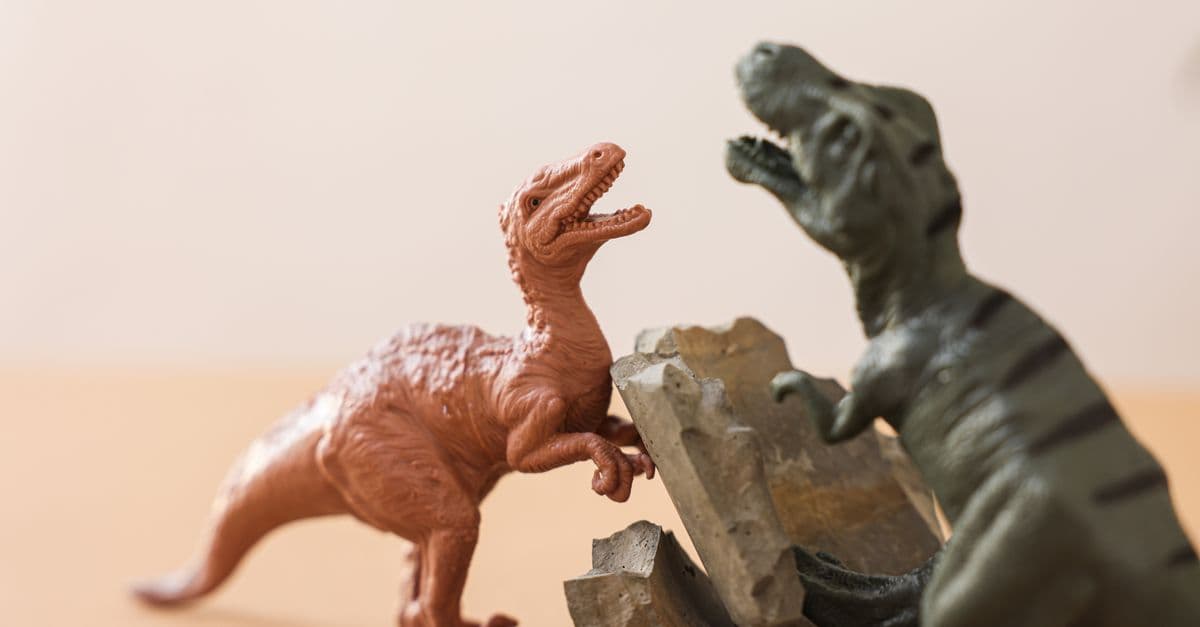
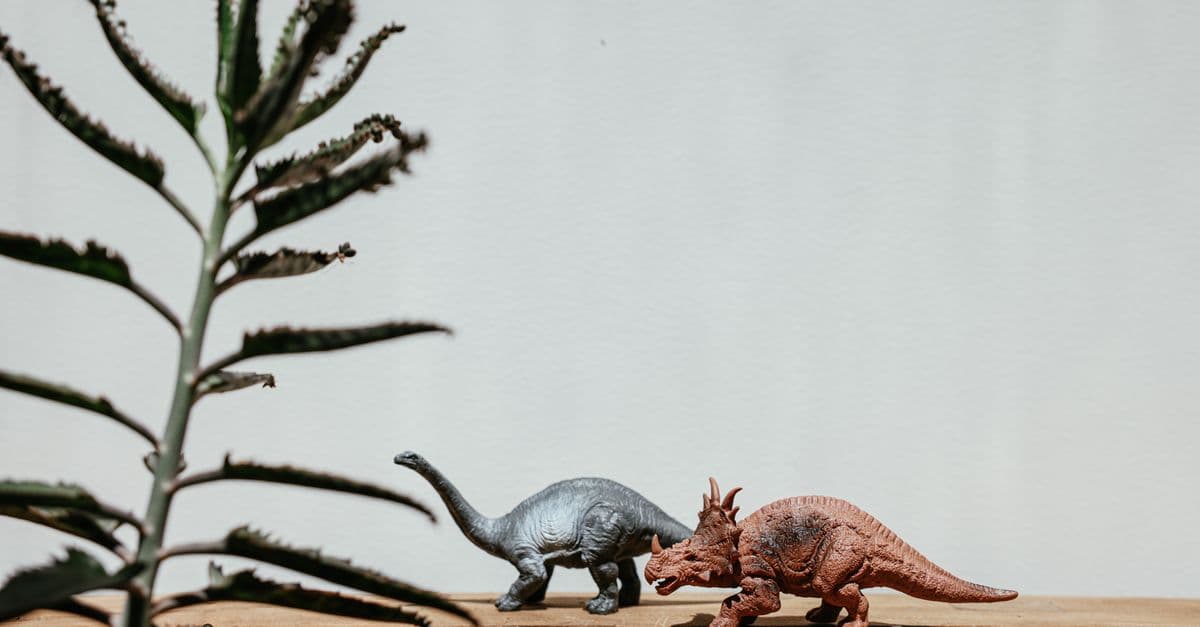
Photo: Cup of Couple / Pexels
Dinosaurs existed for 165 million years — a span so vast that Stegosaurus and Tyrannosaurus rex are separated by more time than T. rex and us. They didn't live in one continuous, static "dinosaur age." Instead, they evolved through three geological periods, each with radically different geography, climate, plant life, and dominant species. To understand any dinosaur, you first need to understand when it lived, what the world looked like around it, and what had come before.
The Mesozoic Era: The Framework That Contains All Three Periods
Mesozoic Era — the geological era spanning approximately 252 to 66 million years ago (Ma), subdivided into the Triassic, Jurassic, and Cretaceous periods, during which non-avian dinosaurs were the dominant large land animals.
Geologists measure time using a hierarchy of units: eons contain eras, eras contain periods, periods contain epochs. The three dinosaur periods all fall within the Mesozoic Era, which itself sits within the Phanerozoic Eon. The Mesozoic is bookended by two of the five largest mass extinctions in Earth's history — the Permian-Triassic extinction at its opening (the largest known, killing roughly 90% of marine species) and the Cretaceous-Paleogene extinction at its close (the asteroid impact that ended non-avian dinosaurs).
The world within those bookends was profoundly alien. Oxygen levels fluctuated. Continents drifted thousands of kilometers. Sea levels rose and fell by hundreds of meters. Temperatures were generally warmer than today, with no permanent polar ice caps for most of the era. Dinosaurs did not evolve into a stable, familiar Earth — they evolved alongside a planet in continuous geological and atmospheric flux.
| Period | Duration | Age Range | Key Geography |
|---|---|---|---|
| Triassic | ~51 million years | 252–201 Ma | Single supercontinent: Pangaea |
| Jurassic | ~56 million years | 201–145 Ma | Pangaea splitting; Laurasia + Gondwana |
| Cretaceous | ~79 million years | 145–66 Ma | Continents approaching modern positions |
Source: International Commission on Stratigraphy, International Chronostratigraphic Chart (2023) — The authoritative reference for all geological period dates and boundaries cited in this article.
The Triassic Period (252–201 Ma): Dinosaurs Arrive on a Recovering World
The Triassic opened in the aftermath of catastrophe. The Permian-Triassic extinction had been so severe that ecosystems were still rebuilding for millions of years into the new period. The world was dominated by a single landmass — Pangaea (from Greek: "all Earth") — a supercontinent stretching from pole to pole, surrounded by a single global ocean called Panthalassa.
Pangaea — the supercontinent that assembled roughly 335 million years ago and began breaking apart during the Triassic and Jurassic, connecting all major landmasses into a single C-shaped landmass.
Living on a single landmass had a profound implication: land animals could, in principle, migrate anywhere on Earth. Early dinosaurs spread across Pangaea relatively rapidly after their origin. But Pangaea's interior was also brutal — a vast, hot, arid heartland far from any ocean moisture, generating extreme seasonal temperature swings. The Triassic climate was drier and hotter than today, with much of the interior resembling a Sahara-scale desert.
When and Where Did Dinosaurs First Appear?
The earliest unambiguous dinosaur fossils date to approximately 231–233 million years ago, from the Ischigualasto Formation in what is now northwestern Argentina. Eoraptor lunensis and Herrerasaurus ischigualastensis are among the oldest known dinosaurs, both bipedal carnivores roughly the size of a large dog. They lived alongside a diverse ecosystem of non-dinosaurian reptiles — crurotarsans (the archosaur lineage that includes modern crocodilians), rhynchosaurs, and dicynodonts — and were not yet the dominant animals of their time.
Crurotarsans — the archosaur group ancestral to modern crocodilians, which were the dominant large land animals in the early Triassic and competed with early dinosaurs for ecological space.
Early dinosaurs were bipedal, relatively small, and likely fast-moving predators or omnivores. The features that would eventually make them dominant — upright posture with legs directly beneath the body, efficient lung-ventilation systems, possibly endothermic (warm-blooded) metabolisms — gave them advantages in the hot, oxygen-varying Triassic environment. But they did not immediately take over. For the first 30 million years of dinosaur history, they were one group among many.
The end-Triassic mass extinction, approximately 201 Ma, changed that. Triggered by massive volcanic eruptions — the Central Atlantic Magmatic Province (CAMP), which flooded vast areas of what is now the Americas, Europe, and Africa with lava — the extinction killed the crurotarsans and many other Triassic vertebrates. Dinosaurs survived, and into the emptied ecological space of the early Jurassic, they radiated explosively.
Key Triassic dinosaurs include:
- Eoraptor (Argentina, ~231 Ma) — one of the earliest known dinosaurs, 1 m long, bipedal omnivore
- Herrerasaurus (Argentina, ~231 Ma) — early large predator, up to 6 m long
- Plateosaurus (Europe, ~214 Ma) — one of the first large herbivorous dinosaurs, an early sauropodomorph reaching 10 m
- Coelophysis (North America, ~210 Ma) — small, slender predator known from hundreds of specimens at Ghost Ranch, New Mexico
Source: Irmis, R.B. et al., Science (2007) — Analysis of the Ischigualasto Formation fauna establishing the timing and geography of dinosaur origins in the Late Triassic.
Source: Blackburn, T.J. et al., Science (2013) — CAMP volcanism linked to the end-Triassic extinction, explaining the ecological vacuum into which dinosaurs expanded at the Triassic-Jurassic boundary.
The Jurassic Period (201–145 Ma): Giants on a Splitting World
The Jurassic is the period most people visualize when they think of dinosaurs. This is partly because Jurassic Park imprinted the name culturally, but also because the Jurassic produced some of the most anatomically extreme animals in terrestrial vertebrate history: the giant sauropods. Brachiosaurus, Diplodocus, Apatosaurus — animals 20–30 m long, weighing up to 60–80 tonnes, the largest land animals that have ever lived.
These giants were made possible by two converging factors: the breakup of Pangaea and the transformation of global vegetation.
Pangaea Breaks Apart
During the Jurassic, Pangaea began splitting along a north-south axis. The northern half (Laurasia, encompassing what would become North America, Europe, and Asia) separated from the southern half (Gondwana, encompassing South America, Africa, Antarctica, Australia, and India). A rift between them allowed the infant Atlantic Ocean to begin forming. By the mid-Jurassic, shallow seas flooded previously continuous land connections, beginning the long process of turning one world into many.
Laurasia — the northern supercontinent formed when Pangaea split, eventually fragmenting into North America, Europe, and Asia.
Gondwana — the southern supercontinent, eventually fragmenting into South America, Africa, Antarctica, Australia, and India.
The splitting had immediate evolutionary consequences. Animal populations that had been interconnected became isolated on separate landmasses. Over millions of years, isolated populations diverged — the beginning of the endemic fauna we see by the Cretaceous, where different dinosaur groups dominated different continents.
Why Jurassic Sauropods Got So Big
The Jurassic also saw an explosion of conifer forests. The warm, humid climate — driven partly by volcanic outgassing and partly by the geography of splitting continents allowing more oceanic moisture inland — supported vast lowland forests of conifers, cycads, ferns, and tree ferns. No flowering plants yet; the Jurassic world was entirely gymnosperm-dominated.
Sauropods evolved to exploit this vegetation at scales no other animal could match. Their long necks functioned like boom cranes, sweeping through large arcs to harvest foliage without moving the body. Their digestive systems were essentially fermentation vats — they didn't chew their food (their teeth were simple pegs or rakes for stripping vegetation), relying on gut bacteria and possibly swallowed gastroliths (stomach stones) to break down plant material. This low-cost harvesting strategy, combined with highly efficient avian-style air-sac respiratory systems that oxygenated tissue without demanding enormous metabolic investment, is the leading explanation for why sauropod body size could scale so dramatically.
Think of a sauropod as a walking factory: low-overhead fuel intake (sweep neck, strip leaves, swallow whole) scaled to an enormous energy-producing body mass, with a skeleton honeycombed with air pockets to keep weight manageable despite the size.
| Jurassic Sauropod | Length | Estimated Mass | Formation/Location |
|---|---|---|---|
| Brachiosaurus altithorax | ~26 m | ~56 tonnes | Morrison Fm., USA |
| Diplodocus carnegii | ~26 m | ~14 tonnes | Morrison Fm., USA |
| Apatosaurus ajax | ~21 m | ~18–22 tonnes | Morrison Fm., USA |
| Brachiosaurus brancai (Giraffatitan) | ~26 m | ~38 tonnes | Tendaguru Fm., Tanzania |
The Morrison Formation of the western United States — a geological layer deposited between approximately 155 and 148 Ma — is one of the richest dinosaur fossil beds in the world, preserving an entire Jurassic ecosystem in extraordinary detail.
Jurassic predators scaled up to match the prey. Allosaurus fragilis, the dominant Jurassic apex predator of North America, reached 9–12 m and may have hunted large sauropods using a hatchet-bite strategy — driving the upper jaw into flesh like an ax rather than crushing with bite force.
Stegosaurus is the other iconic Jurassic dinosaur: the plated ornithischian whose tail spikes (thagomizer — a term coined by Gary Larson in a 1982 Far Side cartoon and subsequently adopted informally by paleontologists) were a genuine defensive weapon. Analysis of Stegosaurus tail spike injuries on Allosaurus vertebrae confirms they were used in actual combat.
Source: Carpenter, K. et al., Swiss Journal of Geosciences (2005) — Documentation of Allosaurus vertebrae with wounds consistent with Stegosaurus tail spike punctures, confirming predator-prey combat behavior.
Source: Sander, P.M. et al., Biological Reviews (2011) — Comprehensive analysis of sauropod gigantism, identifying the interplay of avian-style respiratory efficiency, fermentation-based digestion, and reproductive strategy as the key drivers of extreme size.
The Cretaceous Period (145–66 Ma): The Age of Diversity
The Cretaceous was the longest of the three periods — 79 million years — and the most diverse. By this point, continents were approaching (though not yet at) their modern positions. The Atlantic was a recognizable ocean. India had separated from Gondwana and was drifting north toward Asia. Sea levels were dramatically higher than today, with shallow inland seas covering much of what is now central North America (the Western Interior Seaway) and dividing North America into two landmasses for much of the period.
The defining ecological event of the Cretaceous was the rise of flowering plants — angiosperms.
Angiosperms — flowering plants that enclose their seeds within a fruit, the dominant plant group on Earth today, which diversified explosively during the Cretaceous.
Angiosperms had appeared by the early Cretaceous (roughly 130 Ma) and diversified explosively. By the late Cretaceous, flowering plants dominated many ecosystems, co-evolving with insects in an evolutionary feedback loop that produced modern pollination systems. For dinosaurs, this mattered enormously: the plant base of the food web transformed. The vast conifer forests that had fed the Jurassic giants were progressively replaced by lower-growing, nutritionally denser flowering vegetation, likely driving the diversification of the ornithischian dinosaurs — the hadrosaurs (duck-billed dinosaurs), ceratopsians (horned dinosaurs), and ankylosaurs — which evolved highly sophisticated dental batteries capable of processing flowering plant material.
The Cretaceous Dinosaurs That Dominate Popular Culture
The late Cretaceous (approximately 83–66 Ma) is the slice of time from which most famous dinosaurs come.
Tyrannosaurus rex existed only in the last ~2 million years of the Cretaceous — a geological eyeblink. It was not the dominant predator for the entire Mesozoic; it was a late-period specialist of the Hell Creek ecosystem of western North America. Its closest Asian relatives (Tarbosaurus in Mongolia) suggest the tyrannosaurid family originated in Asia and dispersed to North America via the Bering land bridge.
Triceratops horridus shared the Hell Creek ecosystem with T. rex, and fossil evidence indicates the two interacted — Triceratops bones bearing T. rex bite marks and healed puncture wounds from horns have both been documented.
Velociraptor mongoliensis, the famous dromaeosaurid, lived in the Gobi Desert of Mongolia roughly 75–71 Ma — not in North America. It was turkey-sized, feathered, and its famous "fighting dinosaurs" specimen (locked in combat with a Protoceratops) is one of the most extraordinary behavioral fossils ever discovered.
Hadrosaurs — the ornithopod dinosaurs with elaborate cranial crests and dental batteries of hundreds of tightly packed teeth — were the Cretaceous equivalent of modern ungulate herds: abundant, diverse, and the primary prey of large theropods across Laurasia.
The Cretaceous ended abruptly 66.043 Ma (±0.011 Ma by radiometric dating) with the Chicxulub impactor — a bolide approximately 10–15 km in diameter that struck the Yucatán Peninsula. The impact, and the subsequent environmental collapse, ended all non-avian dinosaurs. For more on the mechanism, see What Killed the Dinosaurs? The Asteroid Impact Explained.
Source: Renne, P.R. et al., Science (2013) — High-precision radiometric dating placing the Cretaceous-Paleogene boundary at 66.043 ± 0.011 Ma.
Source: Erickson, G.M. et al., Science (2004) — T. rex growth rate analysis, establishing its lifespan (~28 years), growth trajectory, and relatively recent evolutionary origin within the Cretaceous.
How Continental Drift Shaped Dinosaur Evolution
The story of dinosaur evolution cannot be told without plate tectonics. Pangaea's breakup is not background scenery — it is one of the primary drivers of dinosaur diversification.
When Pangaea was intact in the Triassic, the same early dinosaur lineages spread across the entire landmass. Plateosaurus-type sauropodomorphs appear on every continent from this period. As Pangaea fragmented, populations became isolated. South America developed its own distinct giant sauropod lineages — the titanosaurs, which by the Cretaceous included Patagotitan mayorum (estimated 69 tonnes, possibly the heaviest land animal known). Africa had its own distinct fauna. The splitting of Laurasia and Gondwana meant that by the Cretaceous, North America and South America had mostly separate dinosaur communities, Asia and North America exchanged species intermittently via the Bering connection, but Africa and Europe were increasingly isolated.
Titanosaurs — a clade of sauropod dinosaurs that dominated the Cretaceous, especially in Gondwana, and includes the largest known land animals; see The Biggest Dinosaurs Ever Explained for size comparisons.
This is why T. rex and Triceratops are North American while Spinosaurus is African and Abelisaurus is South American. They were shaped by the same geological forces that shaped the continents themselves.
Source: Upchurch, P. et al., Journal of Biogeography (2002) — Analysis of sauropod distribution across Pangaea breakup, demonstrating continental drift as a primary driver of dinosaurian biogeography.
What Each Period Left Behind: The Fossil Record
The three periods are known with different resolutions because of differences in how rocks from each period have survived and where they've been studied.
Triassic dinosaur fossils are relatively rare — partly because the earliest dinosaurs were small and fragile, partly because Triassic rock formations are less exposed than Jurassic or Cretaceous deposits in studied regions. The Ischigualasto Formation (Argentina) and the Chinle Formation (southwestern USA) are the key windows into early dinosaur evolution.
Jurassic fossils are abundant in the Morrison Formation (USA) and the Tendaguru Formation (Tanzania/East Africa), giving us exceptional knowledge of large sauropod fauna. European Jurassic deposits (Solnhofen, Germany; Portuguese formations) preserve the small-bodied fauna including Archaeopteryx.
Cretaceous fossils are the most abundant and globally distributed. The Hell Creek Formation (Montana/South Dakota), the Horseshoe Canyon Formation (Alberta), the Nemegt Formation (Mongolia), and formations across Argentina, China, and Europe collectively give us the richest picture of any dinosaur fauna. The relative abundance of Cretaceous material is part of why Cretaceous dinosaurs dominate public imagination.
Source: Weishampel, D.B. et al., The Dinosauria, 2nd ed. (University of California Press, 2004) — The comprehensive technical reference on dinosaur diversity, distribution, and fossil record completeness across all three periods.
What People Get Wrong About the Three Periods
The most persistent misconception is that all famous dinosaurs lived at the same time. They did not. Stegosaurus and T. rex are separated by roughly 83 million years — longer than the gap between T. rex and us (66 million years). A time-traveling Stegosaurus would be as much an anachronism to a T. rex as a mammoth would be to us.
The second misconception is that dinosaurs "became" dominant gradually and held that position comfortably. The reality involves multiple disruptions: the initial competition with crurotarsans in the Triassic, the end-Triassic extinction that opened space for dinosaurs, the Jurassic-Cretaceous transition that saw major fauna turnover, and the mid-Cretaceous angiosperm revolution that reshaped herbivore communities. Dinosaurs were not a static success story — they were a continually evolving response to a continually changing world.
The third error is conflating "Mesozoic" with "dinosaur age" and imagining pterosaurs and marine reptiles as dinosaurs. They were not. Pterosaurs (flying reptiles), mosasaurs, plesiosaurs, and ichthyosaurs (marine reptiles) were contemporaries of dinosaurs — archosaurs or diapsid reptiles — but not members of the clade Dinosauria. They shared the world without being the same thing.
The Takeaway
165 million years is not one story — it is three overlapping stories shaped by geology, climate, and chance. The Triassic gave dinosaurs a recovering, fractured world to emerge into and one mass extinction to take advantage of. The Jurassic handed them a splitting supercontinent and a vegetation boom that allowed bodies to scale to extremes never repeated on land. The Cretaceous diversified them into every ecological niche as flowering plants rewrote the food web, until a 10-km rock ended the experiment for the non-avian lineages. The avian ones are still with us, and they are still — by every technical definition — dinosaurs.
Frequently Asked Questions
Q: How long did dinosaurs actually exist?
A: Non-avian dinosaurs existed for approximately 165 million years, from roughly 231 Ma (Triassic) to 66 Ma (end-Cretaceous). If you include avian dinosaurs (birds), the lineage has existed for over 230 million years and continues today with roughly 10,000 living species.
Q: Did humans and dinosaurs ever coexist?
A: No. The last non-avian dinosaurs went extinct 66 million years ago. The earliest members of the genus Homo appeared roughly 2.8 million years ago — a gap of over 63 million years. The coexistence of humans and non-avian dinosaurs is biologically impossible within the known fossil record.
Q: Which period had the most species of dinosaurs?
A: The Cretaceous, by a large margin. Its 79-million-year span, combined with the diversification driven by angiosperm evolution and continental separation, produced the greatest dinosaur diversity on record. Estimates suggest more named Cretaceous dinosaur genera than Triassic and Jurassic combined.
Q: What was Earth's climate like during the dinosaur periods?
A: Generally warmer than today, with no permanent polar ice caps for most of the Mesozoic. The Triassic was hot and arid, particularly in continental interiors. The Jurassic was warm and humid with high sea levels. The Cretaceous was the warmest of the three, with sea surface temperatures in tropical regions possibly exceeding 35°C (95°F) at peak warming intervals.
Q: Did any dinosaurs live in all three periods?
A: No single species spanned all three periods — individual species typically persisted for 1–10 million years. Some higher-level clades did persist across period boundaries: sauropods originated in the Triassic and survived to the end-Cretaceous, and theropods originated in the Triassic and persist today as birds.
Q: What separated the Jurassic from the Cretaceous?
A: There was no mass extinction at the Jurassic-Cretaceous boundary (~145 Ma). The boundary is defined by changes in the rock record (primarily marine fauna shifts) rather than a catastrophe. Many dinosaur lineages crossed the boundary without major disruption, though some Jurassic groups (like stegosaurs) declined and others (like hadrosaurs and ceratopsians) diversified strongly in the Cretaceous.
Source: Fastovsky, D.E. & Weishampel, D.B., Dinosaurs: A Concise Natural History, 3rd ed. (Cambridge University Press, 2016) — Accessible but technically rigorous overview of dinosaur evolution through all three Mesozoic periods.
Source: Brusatte, S.L., The Rise and Fall of the Dinosaurs (William Morrow, 2018) — Narrative synthesis of modern dinosaur research covering Triassic origins through end-Cretaceous extinction.
Read next:
Follow new articles
Add SciHub101 to your feed reader to see new science and technology stories.
About the Author
SciHub101 is an independent science and technology publication founded and edited by Buğra Sözeri, a software engineer and app developer based in Türkiye. AI tools assist with drafting and research. Source documentation in the existing archive is uneven, and articles are being reviewed and corrected. The Editorial Team byline identifies editorial responsibility; it does not certify specialist or independent human review. Where we compare products, anything built by our own team is labelled as such — see the editorial guidelines and About page for how corrections and disclosures work.
Related Articles
How Did Dinosaurs Evolve Into Birds? The Theropod-Bird Transition
Birds are not the descendants of dinosaurs. Birds are dinosaurs — a lineage of small feathered theropods that survived the end-Cretaceous extinction and now numbers approximately 10,000 living species. The transition from ground-running theropod to flying bird is documented in extraordinary fossil detail, and nearly every defining feature of modern birds turns out to have a dinosaurian precursor.
Pterosaurs: The Flying Reptiles That Were Not Dinosaurs
Pterosaurs were the first vertebrates to achieve powered flight, doing so roughly 50 million years before birds and 80 million years before bats. At their largest — Quetzalcoatlus northropi, with a wingspan matching a small aircraft — they were the heaviest flying animals in Earth's history. Yet despite sharing the Mesozoic with dinosaurs and appearing in every dinosaur documentary, pterosaurs were not dinosaurs. They were something altogether different.
Marine Reptiles of the Dinosaur Age: Mosasaurs, Plesiosaurs, and Ichthyosaurs
While dinosaurs ruled the land and pterosaurs owned the sky, the Mesozoic oceans were controlled by three groups of reptiles that had returned from land to sea and evolved into apex predators of staggering power. Mosasaurs, plesiosaurs, and ichthyosaurs were not dinosaurs. They were something the Mesozoic produced separately — and in doing so, they repeatedly reinvented the dolphin, the shark, and the whale, from scratch.
Why Did Some Dinosaurs Have Horns?
Triceratops horns likely evolved for mate competition, display, and species recognition, with combat as a secondary use. This guide explains the fossil evidence behind ceratopsian horns.

Triceratops and the Horned Dinosaurs: Frills, Horns, and the Fossil Evidence
Ceratopsians — the horned and frilled dinosaurs — are among the most distinctive animals in the fossil record, and among the most misunderstood. Triceratops's frill was not armor. Its horns may have been used for display as much as combat. Torosaurus may or may not be a different animal from Triceratops — the debate is genuinely unresolved. And ceratopsian herds, though often depicted as vast migratory columns, are supported by specific but limited fossil evidence. Here is what the bones actually show.
Velociraptor: The Real Science Behind the Jurassic Park Icon
The Velociraptor in Jurassic Park stands 1.8 meters tall, hunts in coordinated packs, and opens doors. The actual animal was the size of a turkey, covered in feathers, and probably hunted alone. Almost nothing about cinema's most famous raptor matches the fossil record — yet the real animal is, in its own way, more interesting than the fiction.