Spinosaurus: The Aquatic Dinosaur Bigger Than T. Rex
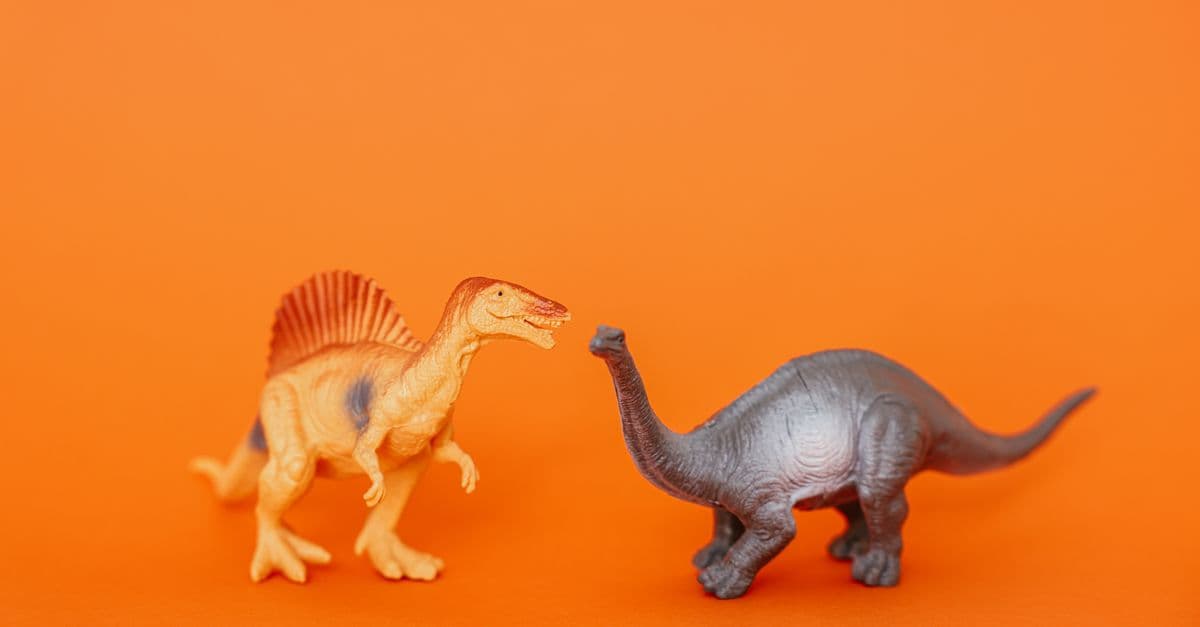
Photo: Cup of Couple / Pexels
The original Spinosaurus bones were destroyed in a 1944 Allied bombing raid on Munich. For most of the 20th century, the animal existed mainly as an outline — a massive theropod with a spectacular sail, known from a 1915 German expedition to Egypt and almost nothing else. Then a Moroccan fossil hunter found bones in the Sahara, a young paleontologist named Nizar Ibrahim tracked them across two continents, and between 2014 and 2020, Spinosaurus aegyptiacus was reconstructed almost from scratch as something no one had anticipated: a dinosaur that hunted underwater, propelled by a fin-like paddle tail, in a massive Cretaceous river system that no longer exists. Whether the science fully supports that reconstruction remains one of the most heated debates in modern paleontology.
The Original Discovery and Its Destruction
Ernst Stromer von Reichenbach was a Bavarian paleontologist who led expeditions to Egypt between 1910 and 1914. From the Bahariya Formation of Egypt — Cretaceous deposits dating to approximately 95–100 million years ago — he recovered the bones that would become the type specimen of Spinosaurus aegyptiacus, formally named in 1915.
The specimen was fragmentary: parts of the jaw, vertebrae, and the extraordinary neural spines — elongated processes extending up from each vertebra, reaching lengths of up to 1.65 m and presumably forming a sail or hump structure along the back. Stromer recognized immediately that the animal was massive, but without a complete skeleton, precise size estimates were impossible.
Stromer housed the specimen in the Paläontologisches Museum München (Bavarian State Collection of Palaeontology). On the night of April 24–25, 1944, Allied bombing of Munich destroyed the museum building. The Spinosaurus holotype specimen was lost entirely. For the next 70 years, Spinosaurus was known almost entirely from Stromer's original 1915 descriptions and drawings — an almost unprecedented situation in dinosaur paleontology, where a famous taxon's entire type material had been obliterated.
Source: Stromer, E., Abhandlungen der Bayerischen Akademie der Wissenschaften (1915) — Original description and naming of Spinosaurus aegyptiacus from Egyptian Cretaceous deposits.
Source: Smith, J.B. et al., Journal of Vertebrate Paleontology (2006) — Documentation of additional North African spinosaurid material and re-evaluation of Spinosaurus systematics following 90 years of incomplete knowledge.
The 2014 Reconstruction: A Semi-Aquatic Hunter
The modern scientific story of Spinosaurus began with Nizar Ibrahim, then a postdoctoral researcher, tracking down fragments sold by a Moroccan fossil hunter to European museum collections. Ibrahim identified overlapping bones between fragments in different institutions and connected them with new material from the Kem Kem Beds of Morocco — sedimentary deposits from the same geological age as the original Egyptian specimens, across the ancient Cretaceous seaway.
The 2014 paper in Science, co-authored by Ibrahim with Paul Sereno and colleagues, was the first substantive reconstruction of Spinosaurus anatomy in a century. The skeleton it described was unlike any other theropod known.
Key features of the 2014 Spinosaurus reconstruction:
Retracted nasal opening: In most theropods, the nostrils open near the tip of the snout. In Spinosaurus, the external nasal opening is positioned far back on the skull, away from the snout tip. This is a feature found in modern crocodilians — animals that spend significant time submerged with only the back of the skull above water, breathing through nostrils positioned to remain above the waterline while the snout is submerged.
Dense, compact bones (pachyostosis): Most theropod bones are hollow and pneumatized for weight reduction — an advantage for bipedal, fast-moving terrestrial predators. Spinosaurus limb bones show pachyostosis — bone densification that reduces buoyancy, the same adaptation seen in modern hippos, dugongs, and early whale ancestors. Dense bones act as ballast, helping an animal stay submerged rather than floating to the surface.
Short hind limbs: The hind legs of Spinosaurus are proportionally shorter and less robust than those of other large theropods. On land, this would make bipedal locomotion awkward. In water, it has no disadvantage.
Elongated feet with possible webbing: The foot bones of Spinosaurus are elongated relative to other theropods, and some researchers have proposed that soft-tissue webbing may have connected them — though direct evidence of webbing from preserved soft tissue has not been found.
Isotopic chemistry: Oxygen isotope ratios in Spinosaurus teeth differ from those of contemporary land-based predators and resemble those of crocodilians in the same deposits, consistent with a lifestyle of prolonged water immersion.
The 2014 reconstruction presented Spinosaurus as a semi-aquatic predator wading or swimming in the rivers of the "Kem Kem sea" — a vast river delta system draining into the Tethys Ocean during the Cretaceous, teeming with giant coelacanths, sawfish, and large lungfish that would have formed its prey.
Source: Ibrahim, N. et al., Science (2014) — Landmark reconstruction of Spinosaurus aegyptiacus anatomy from newly recovered Moroccan material, arguing for semi-aquatic lifestyle.
The 2020 Tail Discovery: The Paddle That Changed Everything
The 2014 paper was controversial from publication. Critics argued that the evidence for full aquatic locomotion was incomplete — short legs and dense bones suggested semi-aquatic wading, but did not demonstrate that Spinosaurus actively swam in open water. The animal might have been a shoreline ambush predator, like a heron at giant scale, rather than an active swimmer.
Then the tail was found.
Between 2015 and 2019, Ibrahim's team — working in the Moroccan Sahara — recovered additional Spinosaurus material including a remarkably complete tail section. The anatomy of this tail was unlike any other theropod tail known. Published in Nature in 2020, the findings showed:
Enormously elongated neural spines on the tail vertebrae: The tail spines were extremely long relative to the body of each vertebra, creating a large, thin, paddle-like surface area. The geometry was not that of a stabilizing rudder but of an active propulsive surface.
Highly flexible tail joints: The articulation between tail vertebrae allowed significant lateral (side-to-side) movement — the undulatory motion characteristic of tail-driven aquatic locomotion. Most theropod tails are relatively stiff, functioning as counterbalances during running. The Spinosaurus tail was designed to bend.
Biomechanical modeling confirming propulsive power: Ibrahim's team built a scale model of the Spinosaurus tail and attached it to a robotic test platform that could replicate swimming motions. They compared its propulsive performance against tail models from other animals — crocodiles, newts, and other dinosaurs. The Spinosaurus tail generated significantly more thrust than any other theropod tail and was comparable to semi-aquatic modern animals. The researchers concluded it was unambiguously adapted for tail-propelled aquatic locomotion.
This was the first direct structural evidence that a non-avian dinosaur was adapted for active swimming. The 2020 paper proposed that Spinosaurus was not merely a wader but a genuine aquatic predator — a "river monster" spending substantial time actively swimming and hunting underwater in Cretaceous North Africa.
Source: Ibrahim, N. et al., Nature (2020) — Description of the Spinosaurus tail anatomy and biomechanical modeling demonstrating adaptation for tail-propelled aquatic locomotion.
How Big Was Spinosaurus?
Size estimates for Spinosaurus have fluctuated considerably, and the question of how it compares to Tyrannosaurus rex is genuinely important to get right.
The 2014 and 2020 reconstructions, based on the Moroccan material, estimate total body length for Spinosaurus aegyptiacus at approximately 14–15 m (46–49 ft). For comparison, the largest T. rex specimens (Sue, Scotty) reach approximately 12–12.3 m. Spinosaurus was longer than T. rex by a meaningful margin.
However, length and mass are different things. Spinosaurus was long but had a relatively slender body, short hind limbs, and an overall body plan that was much less massive than T. rex. Mass estimates for Spinosaurus range from approximately 7 to 20+ tonnes — a huge range reflecting the incompleteness of the skeleton and genuine disagreement about reconstruction methodology. T. rex mass estimates converge around 8–14 tonnes for the largest individuals. It is possible that T. rex was heavier despite being shorter.
Spinosaurus also never met T. rex — they lived on different continents. Spinosaurus lived in North Africa approximately 95–100 Ma, while T. rex lived in North America approximately 68–66 Ma. A comparison of "who would win in a fight" has no historical basis.
| Theropod | Estimated Length | Estimated Mass | Period/Location |
|---|---|---|---|
| Spinosaurus aegyptiacus | ~14–15 m | 7–20+ tonnes | ~95–100 Ma, North Africa |
| Tyrannosaurus rex | ~12–12.3 m | ~8–14 tonnes | ~68–66 Ma, North America |
| Giganotosaurus carolinii | ~12–13 m | ~6–13 tonnes | ~97 Ma, South America |
| Carcharodontosaurus saharicus | ~12–13 m | ~6–15 tonnes | ~95 Ma, North Africa |
Carcharodontosaurus saharicus — a large allosauroid theropod — actually coexisted with Spinosaurus in the Kem Kem Formation. The two animals occupied different ecological niches: Spinosaurus taking aquatic prey, Carcharodontosaurus as the dominant terrestrial apex predator.
Source: Scott, R.S. et al., PLOS ONE (2019) — Revised mass estimation for T. rex specimen "Scotty" from Saskatchewan, establishing it as potentially the largest known individual.
Source: Ibrahim, N. et al., Science (2014) — Original length and mass estimates for the reconstructed Spinosaurus skeleton.
The Sail: What Was It For?
The neural spines of Spinosaurus — reaching nearly 1.65 m in height and forming a continuous sail along the back — are the animal's most visually distinctive feature. Their function has been debated since Stromer's original 1915 description.
Several hypotheses have been proposed:
Thermoregulation: A large, blood-vessel-rich sail could have functioned as a heat exchanger — absorbing solar radiation when oriented toward the sun, or radiating excess heat when oriented away. Modern animals with large dorsal structures (like the pelycosaur Dimetrodon, which is not a dinosaur but a mammal-like synapsid from the Permian) have been proposed to use them similarly. The problem is that thermoregulation sails work best in consistently warm environments, and Cretaceous North Africa was already extremely hot. Absorbing more heat might have been counterproductive.
Energy storage (hump hypothesis): Some researchers have proposed that the neural spines supported a large muscle or fat hump, like a modern bison or camel, rather than a thin sail membrane. Camels' humps store fat and water as energy reserves for lean seasons. The hump hypothesis would explain why the neural spines are so broad at the base — supporting a mass of tissue rather than a thin skin sail. A 2020 analysis of neural spine cross-sections found internal bone structures more consistent with a muscular hump than a skin sail.
Sexual selection/species recognition: Elaborate dorsal structures in modern animals (peacock tails, elk antlers, chameleon crests) often function primarily as display signals. Spinosaurus's sail/hump may have been a species-recognition or mate-attraction structure visible over long distances — the Cretaceous equivalent of a billboard.
Aquatic use: Given the 2020 evidence for aquatic locomotion, a dorsal fin-like sail could also have provided additional stability during swimming — though the shape is not optimally hydrodynamic.
No consensus exists. The honest answer is that we don't know what the sail was for.
Source: Gimsa, J. et al., PLOS ONE (2016) — Analysis of neural spine microstructure in Spinosaurus, arguing for a muscular hump rather than a thermoregulatory sail based on internal bone architecture.
The Controversy: How Aquatic Was Spinosaurus, Really?
The 2014 and 2020 reconstructions generated significant pushback from other paleontologists, and the debate is ongoing and genuinely unresolved.
The central criticism, articulated most prominently by paleontologist Paul Barrett and others, concerns whether the evidence demonstrates active aquatic locomotion or merely semi-aquatic shoreline behavior. The counter-arguments:
The short legs are not necessarily aquatic adaptations. Short hind limbs could reflect a quadrupedal terrestrial posture, a center-of-mass shift related to the heavy sail, or simply allometric scaling in a very large animal.
The tail evidence, while striking, may not require full submergence swimming. Crocodilians swim with a tall-spined, flexible tail, but they also walk on land. A Spinosaurus with a propulsive tail may still have been primarily a shoreline ambush predator rather than an open-water swimmer.
The 2014 skeleton reconstruction has been criticized for proportion. Some paleontologists argue that the Moroccan material may represent a juvenile or that different bones in the composite reconstruction may not belong to the same individual, potentially distorting the body proportions used to infer aquatic adaptation.
A 2021 study by Hone and Holtz published in PeerJ proposed a "wading and ambush" model — Spinosaurus as a shoreline predator similar in ecological role to a giant heron or pelican, capable of swimming but not primarily aquatic. The debate is not about whether Spinosaurus was semi-aquatic (that is now broadly accepted) but about the degree of aquatic specialization and whether it actively hunted underwater or primarily fished from the shallows.
This kind of scientific disagreement is not a sign that one side is obviously wrong — it is a sign that the fossil record is genuinely incomplete and that paleontologists are doing their jobs by examining the evidence critically.
Source: Hone, D.W.E. & Holtz, T.R., PeerJ (2021) — Alternative interpretation of Spinosaurus ecology as a shoreline ambush predator rather than a fully aquatic swimmer.
Source: Ibrahim, N. et al., Nature (2020) — Response to critics and defense of the aquatic locomotion interpretation based on tail morphology and biomechanical modeling.
What People Get Wrong About Spinosaurus
The largest misconception, accelerated by its appearance in Jurassic Park III (2001), is that Spinosaurus was simply "a bigger T. rex" — a terrestrial apex predator that happened to be larger. The actual animal was anatomically quite different from T. rex: longer skull, conical (not blade-like) teeth suited for catching fish rather than crushing bone, shorter hind legs, and a completely different ecological niche. Comparing the two as equivalent terrestrial predators misrepresents both animals.
The second error is treating the aquatic hypothesis as settled fact, which it is not. The 2020 tail paper is influential and the aquatic evidence is real, but active scientific debate continues. News coverage that presents Spinosaurus as definitively "the first swimming dinosaur" is slightly ahead of where the scientific consensus actually is.
The third error is confusing Spinosaurus with the other sail-backed predators of the Mesozoic — particularly Dimetrodon, which is neither a dinosaur nor even an archosaur. Dimetrodon was a synapsid (the lineage that would eventually produce mammals) from the Permian, roughly 270 Ma — nearly 40 million years before the first dinosaur.
For more on the largest dinosaurs and how Spinosaurus compares in overall mass, see The Biggest Dinosaurs Ever Explained.
The Takeaway
Spinosaurus is the most dramatically revised major dinosaur of the 21st century. In 2013 it was a mysterious, fragmentarily known sail-backed theropod. By 2021 it had become the center of one of the most productive and contentious debates in modern paleontology: a 14-m predator with dense bones, retracted nostrils, and a paddle tail adapted for swimming — the first dinosaur we can plausibly describe as aquatic. The exact degree of its aquatic lifestyle is still being argued. The underlying evidence that Spinosaurus was something fundamentally different from every other non-avian dinosaur is not.
Frequently Asked Questions
Q: Was Spinosaurus bigger than T. rex?
A: In length, yes. Current estimates place Spinosaurus at approximately 14–15 m compared to 12–12.3 m for the largest T. rex individuals. In mass, the comparison is less clear — Spinosaurus was slender and T. rex was more robust, and mass estimates for Spinosaurus vary widely (7–20+ tonnes). The two animals never coexisted; Spinosaurus lived in Africa approximately 30 million years before T. rex lived in North America.
Q: What did Spinosaurus eat?
A: The primary evidence points to fish as the main prey. Spinosaurus teeth are conical and slightly curved — ideal for catching slippery fish — rather than the blade-like, serrated teeth of terrestrial apex predators. Isotopic analysis of its teeth is consistent with a diet of aquatic prey. The Kem Kem Formation ecosystem contained giant coelacanths, sawfish over 7 m long, and large lungfish. Spinosaurus may also have eaten other available prey opportunistically.
Q: Did Spinosaurus have a sail or a hump?
A: Both possibilities remain scientifically viable. The neural spines could have supported a thin skin sail (like the unrelated Permian synapsid Dimetrodon) or a muscular/fatty hump (like a bison or camel). Analysis of neural spine internal structure in 2016 favored the hump interpretation, but no soft tissue preservation has been found that would resolve the question definitively.
Q: Could Spinosaurus and T. rex have coexisted?
A: No. Spinosaurus lived approximately 95–100 million years ago in what is now North Africa. T. rex lived approximately 68–66 million years ago in western North America. They were separated by roughly 30 million years and an ocean. Any comparison between them as potential combatants is a thought experiment with no historical basis.
Q: Is the aquatic Spinosaurus interpretation accepted by all paleontologists?
A: No. The semi-aquatic interpretation (that Spinosaurus spent significant time in water, had adaptations for swimming, and primarily ate aquatic prey) is broadly accepted. The stronger aquatic interpretation (that Spinosaurus was an active open-water swimmer comparable to a modern otter or crocodile) remains actively debated. The 2020 tail paper strengthened the aquatic case, but a 2021 study proposed a shoreline-ambush model as an equally valid interpretation of the available evidence.
Q: Why was the original Spinosaurus specimen destroyed?
A: The type specimen collected by Ernst Stromer between 1910 and 1914 was housed in the Paläontologisches Museum München (Munich Paleontological Museum). On the night of April 24–25, 1944, Allied bombing raids on Munich destroyed the museum building. The Spinosaurus holotype bones were lost in the fire and rubble. Stromer had repeatedly requested that the specimens be moved to safety as bombing intensified; the museum director refused. Almost all of Stromer's Egyptian material — including multiple other unique species — was lost in the same event.
Source: Nothdurft, W. & Smith, J., The Monster of Loch Ness Is Real—and It Isn't What You Think (no) — see instead: Nothdurft, W. & Smith, J., The Lost Dinosaurs of Egypt (Random House, 2002) — Narrative account of Ibrahim's predecessor expeditions and the history of Stromer's discoveries and their wartime destruction.
Source: University of Leicester, Discovery reveals remains of first aquatic dinosaur 'river monster' (2020) — Press summary of the Nature 2020 tail publication and its implications.
Read next:
Follow new articles
Add SciHub101 to your feed reader to see new science and technology stories.
About the Author
SciHub101 is an independent science and technology publication founded and edited by Buğra Sözeri, a software engineer and app developer based in Türkiye. AI tools assist with drafting and research. Source documentation in the existing archive is uneven, and articles are being reviewed and corrected. The Editorial Team byline identifies editorial responsibility; it does not certify specialist or independent human review. Where we compare products, anything built by our own team is labelled as such — see the editorial guidelines and About page for how corrections and disclosures work.
Related Articles
Marine Reptiles of the Dinosaur Age: Mosasaurs, Plesiosaurs, and Ichthyosaurs
While dinosaurs ruled the land and pterosaurs owned the sky, the Mesozoic oceans were controlled by three groups of reptiles that had returned from land to sea and evolved into apex predators of staggering power. Mosasaurs, plesiosaurs, and ichthyosaurs were not dinosaurs. They were something the Mesozoic produced separately — and in doing so, they repeatedly reinvented the dolphin, the shark, and the whale, from scratch.
What Did Dinosaurs Eat? Herbivores, Carnivores, and the Evidence
Dinosaur diets are not guesswork. Fossilized teeth, stomach contents, coprolites, bone bite marks, and isotope chemistry all leave chemical and physical signatures that paleontologists read like a menu. From the grinding dental batteries of hadrosaurs to the bone-cracking bite of T. rex, from gastroliths in sauropod ribcages to grass seeds inside a titanosaur coprolite, the fossil record has preserved an unexpectedly detailed picture of who ate what — and how plants and dinosaurs co-evolved over 165 million years.

Did Dinosaurs Have Feathers? The Fossil Evidence Explained
In 1996, a Chinese farmer cracked open a rock and found a small predatory dinosaur still wearing its coat of filamentous proto-feathers — 130 million years after it died. That discovery, along with hundreds of similarly preserved fossils from northeastern China, permanently changed how science understood both dinosaurs and the origin of birds. The answer to whether dinosaurs had feathers is not 'some of them.' It's 'most of the lineage that gave rise to birds, and quite possibly several others.'