Archimedes: The Buoyancy Principle That Bears His Name
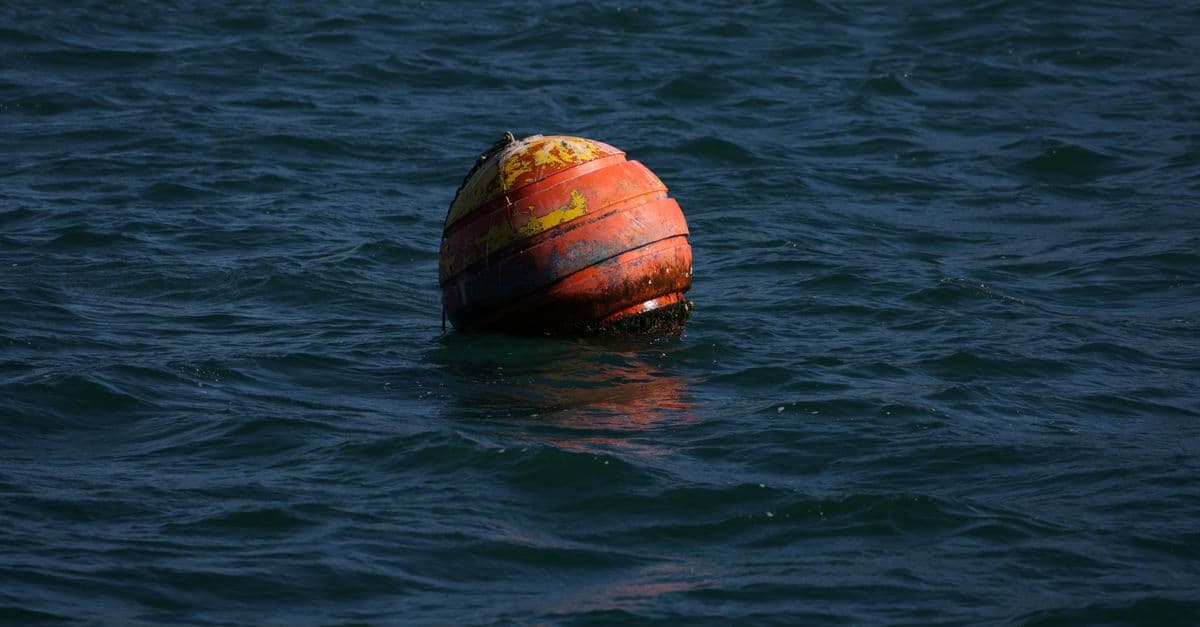
Photo: Magda Ehlers / Pexels
In ancient Syracuse, the king commissioned a golden crown. But did the goldsmith cheat, substituting silver for gold?
Archimedes pondered this problem while bathing. Noticing water displacement, he realized: the volume of water displaced equals object's volume.
He could compare water displacement from the crown versus pure gold—different volumes would reveal fraud.
Excited, he ran through streets naked, shouting "Eureka!" (I have found it!)
From his bath-time insight flowed a principle explaining buoyancy, ships floating, submarines diving. One of physics' most practical laws.
The Problem
The king needed to detect if the crown was pure gold or adulterated.
Weighing wouldn't work—if adulterated with silver, crown would need more volume but weigh similar amount.
Archimedes needed a way to measure volume accurately.
The Insight
When Archimedes submerged himself in water, the water level rose.
The amount of water displaced equals his volume.
If he could measure water displacement for the crown and compare with pure gold, the fraud would be evident.
Different volumes despite same weight meant different densities, proving fraud.
The Principle
Archimedes generalized:
An object immersed in fluid experiences upward force equal to weight of fluid displaced.
Mathematically: F_buoyant = ρ_fluid × V_displaced × g
Where:
- ρ_fluid = fluid density
- V_displaced = volume of displaced fluid
- g = gravitational acceleration
Why It Works
Fluid exerts pressure on all sides of object:
- Pressure increases with depth
- Bottom experiences higher pressure than top
- Pressure difference creates net upward force
- This upward force = weight of displaced fluid
The physics: pressure equilibrium.
Practical Consequences
Floating objects: If buoyant force ≥ weight, object floats. If buoyant force < weight, object sinks.
Density determines floating: Objects less dense than water float. Objects denser than water sink.
Ships: Steel is denser than water (sinks as block). But ship hull displaces water volume equal to ship weight. Buoyant force = ship weight → floating.
Submarines: Fill ballast tanks with water (increases density above that of water) → sink. Pump water out (decreases density) → rise. Change density to control buoyancy.
The Crown Mystery
Back to the king's crown:
Archimedes tested the crown vs. pure gold:
- Crown and pure gold weigh same
- Submerge in water, measure displacement
- If crown displaced more water → lower density → adulterated with silver
- If crown displaced equal water → same density → pure gold
The legend says he confirmed the goldsmith cheated. (Historically uncertain, but principle sound.)
Mathematical Foundation
Archimedes didn't just observe; he proved buoyancy mathematically.
His proof (in "On Floating Bodies"):
- Considered fluid pressure at various depths
- Summed pressure forces on object surface
- Showed net upward force = displaced fluid weight
Rigorous mathematical physics, centuries before Newton.
Applications
Archimedes' Principle enables:
Ships and boats: Designed with displacement capacity to float cargo
Submarines: Control buoyancy by managing water ballast
Hot air balloons: Displace air (less dense than surrounding), buoyant force causes rise
Underwater diving: Weight belts compensate for positive buoyancy
Designing floats: Calculate volume needed for desired buoyancy
Measuring density: Water displacement method determines object volume
Average Density
Archimedes' Principle reveals why density matters:
Average density < fluid density → floats
Average density = fluid density → neutral buoyancy (submarines, scuba divers)
Average density > fluid density → sinks
An object's average density (including interior void space) determines floating.
Dead Sea Phenomenon
The Dead Sea is so salty (density ~1.24 g/cm³) that humans float effortlessly.
Your average density < salt water density.
Same body that sinks in fresh water floats in salt water.
Archimedes' Principle explains this.
Air Buoyancy
Archimedes' Principle applies to air too:
Helium balloon displaces air volume greater than helium mass.
Buoyant force from air displacement > balloon weight.
Result: balloon rises.
Same principle, different fluid.
Archimedes' Life
Archimedes (287-212 BCE) was ancient world's greatest mathematician and physicist.
He calculated π accurately, designed mechanical devices, proved geometric theorems.
During Roman siege of Syracuse, he created military devices (legendary catapults, ship-tipping mechanisms).
When Rome captured Syracuse, Archimedes was killed—reportedly while absorbed in geometry problem.
His contributions influenced physics for 2000 years.
The Legend
"Eureka!" story may be apocryphal, but it captures Archimedes' approach: finding profound principles through everyday observation.
A bath → buoyancy principle. A catapult → mechanics. A spiral → geometry.
Archimedes found deep truths in simple situations.
Modern Developments
Archimedes' Principle remained central to fluid mechanics.
Newton and others formalized it mathematically.
Modern fluid mechanics builds on Archimedes' foundation.
Every engineering involving fluids uses his principle.
Pressure Distribution and the Origin of Buoyant Force
The physics of buoyancy comes from pressure variation with depth. Fluids exert pressure on all sides of an immersed object.
Pressure Increases with Depth: In any fluid, pressure increases as depth increases. At depth h below the surface:
P(h) = P₀ + ρgh
Where P₀ is atmospheric pressure, ρ is fluid density, g is gravitational acceleration.
Asymmetric Pressure on Immersed Objects: An object submerged in fluid experiences higher pressure on its bottom surface than on its top. The object has different heights on top and bottom, so pressure is higher at the bottom.
Net Upward Force: The pressure difference between bottom and top creates a net upward force. The magnitude of this net upward force exactly equals the weight of fluid the object displaces.
Mathematically, integrating pressure over the object's surface yields a net upward force equal to displaced fluid weight—this is Archimedes' Principle derived directly from pressure physics.
Analogy: Think of pressure like the crush of a crowd. At the bottom of a tall person standing in a crowd, more people push down than at the head. The asymmetric push creates net upward force—a crowded stadium pushes people upward compared to an uncrowded room.
Neutral Buoyancy and Control
Archimedes' Principle enables neutral buoyancy — a state where buoyant force equals weight, so net force is zero and the object neither rises nor sinks.
Submarines Achieve Neutral Buoyancy: Submarines have ballast tanks (compartments that can be filled with water or air). By adjusting water percentage, submarines can precisely control average density. At neutral buoyancy, the submarine floats indefinitely.
Scuba Divers Use Buoyancy Vests: Divers wear weight belts and buoyancy control devices (BCDs). Underwater, they adjust air in the BCD to achieve neutral buoyancy at target depth. This enables effortless hovering without finning, conserving energy.
Submarines Exploit Compressibility: As submarines go deeper, water pressure compresses the air-filled compartments slightly, reducing buoyancy. Experienced submarine operators account for this pressure effect when targeting neutral buoyancy at specific depths.
Hot Air Balloons Demonstrate Principle in Air: A hot air balloon filled with heated air (density less than surrounding air) displaces cooler air. Buoyant force exceeds weight, providing lift. Cooling the air inside the balloon increases its density, reducing buoyancy and initiating descent.
Density: The Hidden Determinant
Archimedes' Principle is really about average density—the total mass divided by total volume, including interior void space.
Objects Less Dense Than Fluid Float: If an object's average density is less than the surrounding fluid's density, the object floats. The buoyant force (proportional to volume) exceeds weight (proportional to mass), and net force is upward.
Objects More Dense Than Fluid Sink: If average density exceeds fluid density, weight exceeds buoyant force, and net force is downward.
Density and Ships: A steel ship sinks if it's a solid block—steel density (~7.8 g/cm³) exceeds water density (1.0 g/cm³). Yet ships float by being hollow. The hull displaces water volume equal to ship mass. For example, a 100,000-ton ship displaces 100,000 cubic meters of water (100,000 tons at water density). The buoyant force exactly equals the ship's weight, so it floats at the water line that displaces the right volume.
Density and the Dead Sea: The Dead Sea's salinity (roughly 34% salt vs. ocean's 3.5%) increases its density to ~1.24 g/cm³. Human body density (~1.0 g/cm³) is less than Dead Sea density, so humans float effortlessly. The Dead Sea is so dense that even submerged humans experience buoyant force exceeding weight.
Archimedes' Mathematical Proof
Archimedes didn't just observe buoyancy; he proved it mathematically in his work "On Floating Bodies" — a geometric masterpiece written 2000 years before calculus existed.
His approach: He considered a fluid in equilibrium (not flowing). Any imaginary surface within the fluid encloses fluid that is in equilibrium—net force on that fluid parcel is zero.
Replacing that fluid parcel with a solid object of identical shape and size, the pressure distribution remains identical. Thus the force distribution remains identical. So the net upward force on the object equals the weight of the fluid it displaced.
This proof is remarkable for its rigor—achieved entirely through geometric reasoning without calculus. Modern calculus-based proofs integrate pressure over surfaces, arriving at the same result.
Key Takeaway
Archimedes discovered that objects immersed in fluid displace fluid volume equal to their volume, experiencing upward force equal to displaced fluid's weight.
Simple observation. Profound principle.
Applied for 2000 years: ships, submarines, ballooning, diving.
The legend: discovered while bathing, ran through streets naked shouting "Eureka!"
More likely: careful mathematical reasoning.
But either way: one of science's most practically important principles.
Archimedes' Principle explains why ships float, submarines dive, hot air balloons rise, and why the Dead Sea's buoyancy is legendary.
From ancient Syracuse to modern engineering, Archimedes' insight remains central to understanding fluids.
Frequently Asked Questions
Q: Why don't submarines sink if they're made of metal denser than water?
A: Submarines are hollow. The displaced water volume is enormous compared to the metal hull itself. The buoyant force (weight of displaced water) exceeds the submarine's weight if the average density (total mass / total volume) is less than water. Ballast tanks control density by adding or removing water.
Q: How did Archimedes actually test the crown problem without modern scales?
A: The historical legend may be apocryphal, but the principle is sound. Archimedes could measure water displacement using a method called "displacement weighing." He would observe the water level rise when the crown was submerged versus when an equal-weight amount of pure gold was submerged. Different volumes would indicate fraud.
Q: If a ship is made of steel denser than water, why does it float?
A: Ships float because of displacement. A ship's average density (total mass including hollow interior / total volume) is less than water. The massive hollow space inside the ship means the average density is around 0.3-0.5 g/cm³ (much less than steel's 7.8 g/cm³), enabling floating despite steel's density.
Q: Can an object that weighs more than water float?
A: Yes, if its volume is large enough. Buoyant force depends on volume displaced, not weight directly. A 100-ton steel ship floats because it displaces enormous water volume (around 100,000+ cubic meters), creating buoyant force exceeding weight.
Q: Why do submarines become harder to move as they go deeper?
A: Water pressure compresses air-filled compartments at depth. This reduces overall volume slightly, reducing the buoyant force. Additionally, water pressure increases resistance to motion. Submarine operators must account for pressure effects when managing depth and neutral buoyancy.
Q: Could a solid ball of gold float in mercury?
A: Yes. Gold's density (~19.3 g/cm³) is much less than mercury's (~13.6 g/cm³). Wait, that's backwards—gold is denser than mercury, so it would sink. But a hollow gold ball would float in mercury because the average density would be less than mercury's density.
Read next:
Follow new articles
Add SciHub101 to your feed reader to see new science and technology stories.
About the Author
SciHub101 is an independent science and technology publication founded and edited by Buğra Sözeri, a software engineer and app developer based in Türkiye. AI tools assist with drafting and research. Source documentation in the existing archive is uneven, and articles are being reviewed and corrected. The Editorial Team byline identifies editorial responsibility; it does not certify specialist or independent human review. Where we compare products, anything built by our own team is labelled as such — see the editorial guidelines and About page for how corrections and disclosures work.
Related Articles
Heisenberg's Uncertainty Principle — Why Nature Has a Fundamental Fuzziness
Heisenberg showed that position and momentum cannot both be sharply defined at once. This is not a limit of our instruments. It is built into how quantum states work. Here's why.

Evangelista Torricelli: Inventing the Barometer and Measuring Atmospheric Pressure
Torricelli demonstrated that atmospheric pressure could support a column of mercury 760mm high, inventing the barometer and proving air has weight.
Eratosthenes Measures the Earth: Ancient Genius with Geometry
Around 240 BCE, Greek mathematician Eratosthenes used only sunlight, shadows, and geometry to calculate Earth's circumference with remarkable accuracy. A timeless example of clever scientific thinking.

Eratosthenes Measures Earth: The Shadow Experiment
Around 240 BCE, Eratosthenes measured Earth's circumference using two sticks and shadows. Here is exactly how he did it — and why the result was nearly perfect.
Archimedes: The Naked Run, the Claw, and the Man Who Almost Invented Calculus — SciHub101
Archimedes of Syracuse: buoyancy, levers, war machines, and verified quirks — the Eureka story examined, the circle and the soldier, and why he came closer to calculus than anyone for 1,800 years.
Quantum Error Correction Explained: Physical Qubits, Logical Qubits and Thresholds
Quantum error correction protects one logical qubit across many noisy physical qubits. Learn how syndromes, surface codes, and thresholds work in practice.