Countries Contributing Most to Scientific Research (2025)
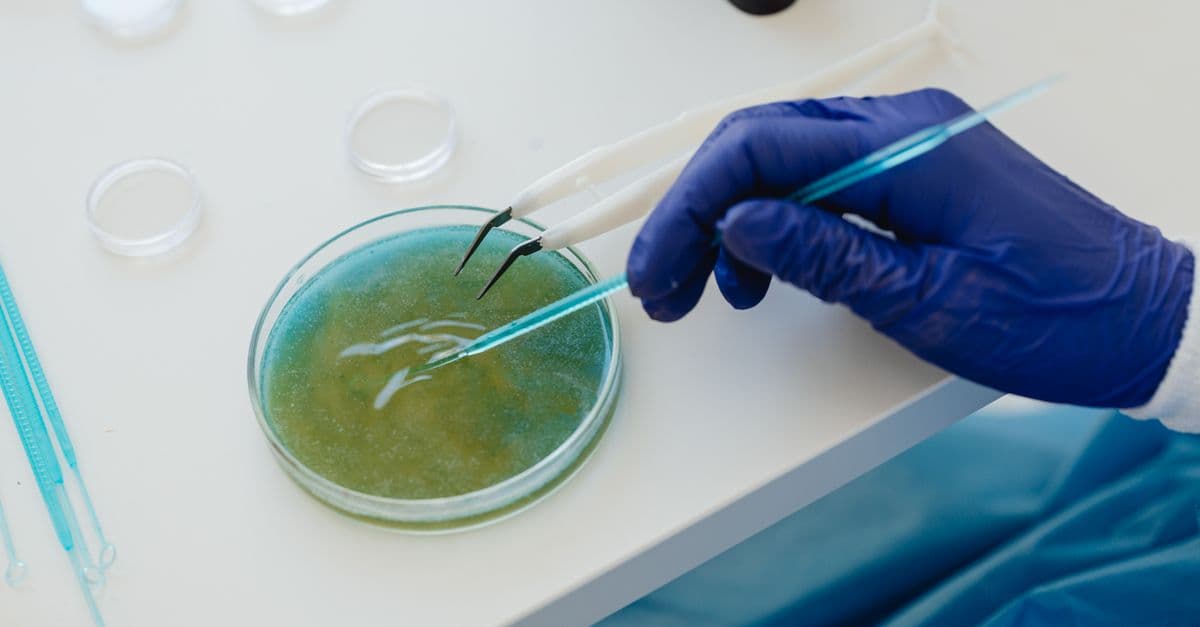
Photo: Mikhail Nilov / Pexels
Science is increasingly global, but it is not equally distributed. A handful of nations produce the overwhelming majority of peer-reviewed research, attract the most research funding, and generate the most-cited discoveries. Understanding which countries lead scientific output — and why — matters for policy, funding allocation, and international collaboration.
This ranking uses three primary metrics: annual peer-reviewed publication volume (sourced from Web of Science and Scopus databases), research and development (R&D) spending as a percentage of GDP, and citation impact scores that measure how often each country's research is referenced by other scientists worldwide. Together, these metrics paint a more complete picture than raw publication counts alone.
Key takeaways
- China now produces approximately 3.4 million peer-reviewed papers annually, overtaking the USA (2.8 million) as the world's largest publisher of scientific research
- The USA maintains the highest citation impact globally, meaning American papers are cited more frequently than those from any other nation
- India has emerged as the world's third-largest research publisher, surging past traditional European powers like Germany and the UK
- South Korea and Taiwan achieve outsized research output relative to their populations, driven by technology-sector investment in applied R&D
- Switzerland invests 3.4% of GDP in R&D — the highest ratio in the world — producing extraordinary output per researcher
Top 20 Countries by Annual Scientific Publications (2025 estimates)
| Rank | Country | Papers/Year (est.) | R&D % GDP | Researchers (per million) | H-Index Score |
|---|---|---|---|---|---|
| 1 | China | 3,400,000 | 2.4% | 1,307 | High |
| 2 | USA | 2,800,000 | 3.5% | 4,412 | Very High |
| 3 | India | 970,000 | 0.7% | 255 | Medium |
| 4 | Germany | 540,000 | 3.1% | 5,241 | Very High |
| 5 | Italy | 320,000 | 1.5% | 2,167 | High |
| 6 | South Korea | 310,000 | 4.9% | 7,980 | High |
| 7 | UK | 480,000 | 1.7% | 4,476 | Very High |
| 8 | Japan | 410,000 | 3.3% | 5,322 | High |
| 9 | France | 380,000 | 2.2% | 4,713 | Very High |
| 10 | Canada | 300,000 | 1.7% | 4,594 | High |
| 11 | Brazil | 280,000 | 1.2% | 899 | Medium |
| 12 | Russia | 270,000 | 1.1% | 2,968 | Medium |
| 13 | Spain | 270,000 | 1.4% | 3,102 | High |
| 14 | Australia | 240,000 | 1.9% | 4,598 | High |
| 15 | Netherlands | 220,000 | 2.3% | 4,896 | Very High |
| 16 | Switzerland | 190,000 | 3.4% | 5,095 | Very High |
| 17 | Poland | 180,000 | 1.4% | 2,612 | Medium |
| 18 | Turkey | 180,000 | 1.1% | 1,318 | Medium |
| 19 | Taiwan | 170,000 | 3.5% | 3,908 | High |
| 20 | Sweden | 160,000 | 3.4% | 6,996 | Very High |
China's Research Explosion: Volume, Quality, and Ambition
China's ascent to the top of the global publication rankings represents one of the most dramatic transformations in the history of science. In 2000, China produced roughly 30,000 peer-reviewed papers annually — a fraction of the American output. By 2025, that number has surpassed 3.4 million, driven by the Chinese government's deliberate strategy to become a global science superpower.
The investment behind this surge is staggering. China's total R&D spending now exceeds $620 billion annually — second only to the United States in absolute terms. The government has built more than 160 national laboratories, created major research universities through the "985 Project" and "Double First Class" initiative, and linked academic promotion directly to publication counts.
Quality, however, lags behind volume. Chinese papers are cited less frequently than American or European counterparts on a per-paper basis, reflecting a system that rewards quantity. China's citation-adjusted h-index scores remain below those of comparable Western nations. But this gap is narrowing. Chinese publications in high-impact journals like Nature, Science, and Cell have grown substantially, and China now leads global output in areas including materials science, quantum computing, artificial intelligence, and renewable energy technology.
The United States: Declining Volume, Rising Quality
The United States produces fewer papers than China but maintains an enormous qualitative advantage. American researchers produce a disproportionate share of the world's most-cited papers — the top 1% of scientific publications by citation count. Analysis of "highly cited researchers" by Clarivate Analytics consistently shows approximately 40-45% are based at American institutions.
This quality edge reflects structural advantages: the US government spends approximately $800 billion annually on R&D (public and private combined), the majority flowing through private industry. The National Institutes of Health ($47B annual budget) remains the world's largest funder of biomedical research. DARPA, NSF, and DOE together fund cutting-edge basic research across physics, computing, and materials science.
The USA also benefits from a global talent pipeline. Approximately 55% of STEM doctorate graduates at American universities were born outside the United States. This extraordinary concentration of global talent — maintained through H-1B visas, postdoctoral fellowship programs, and competitive salaries — creates research environments with no parallel elsewhere.
Europe's Research Ecosystem
European nations collectively represent the world's second-largest research ecosystem, producing a combined output that exceeds both China and the USA. The European Research Council (ERC) and Horizon Europe program distribute approximately €95 billion in research funding over the 2021-2027 period, supporting collaborative research across member states.
Germany anchors European research with 540,000 annual publications and an R&D investment of 3.1% of GDP. The Max Planck Society, Helmholtz Association, Leibniz Association, and Fraunhofer Institutes together form a research infrastructure with global influence. Germany's strength in chemistry, engineering, and physics reflects a manufacturing economy deeply invested in applied research.
The United Kingdom, despite Brexit complications for EU research programs, produces approximately 480,000 papers annually with an exceptionally high citation impact. Oxford, Cambridge, and Imperial College maintain their positions among the world's top 10 research universities. The UK's success in medicine, genetics, and climate science is particularly notable.
The Netherlands achieves remarkable citation impact despite its relatively small size, hosting institutions like Leiden University, Amsterdam, and Eindhoven that produce research far above their numerical ranking. Switzerland, with 190,000 papers and the world's highest R&D intensity (3.4% of GDP), produces some of the world's most-cited research through ETH Zurich, EPFL, and the University of Basel.
India and the Emerging Research Giants
India's emergence as the world's third-largest research publisher (970,000 papers annually) reflects both population scale and growing investment. However, India's R&D spending at 0.7% of GDP remains well below international benchmarks, and much of its output is concentrated in engineering and computer science rather than distributed across fields.
The Indian government's National Science and Technology Policy targets 2% of GDP in R&D by 2030, which would represent a near-tripling of investment in absolute terms. Indian Institutes of Technology and the Indian Institute of Science produce researchers with global impact, and India's diaspora in American and European research institutions represents a significant additional contribution to global science.
Brazil leads Latin American science output with 280,000 papers annually, anchored by FAPESP (São Paulo Research Foundation) and the University of São Paulo system. South Korea's 310,000 annual papers come from a research system that devotes 4.9% of GDP to R&D — the second-highest ratio globally — with particular strength in semiconductor physics, display technology, and battery science driven by Samsung, LG, and Hyundai Research institutes.
Most Cited Countries: Quality vs. Quantity
Publication volume and citation impact diverge significantly. The table below shows the top countries by citation impact score — a measure of how frequently each country's research is cited relative to the world average:
| Country | Citation Impact (World avg = 1.0) | Strength Fields |
|---|---|---|
| Switzerland | 1.82 | Chemistry, Physics, Biology |
| Netherlands | 1.79 | Medicine, Social Science |
| Denmark | 1.76 | Medicine, Sustainability |
| USA | 1.72 | All fields |
| Sweden | 1.71 | Medicine, Engineering |
| UK | 1.67 | All fields |
| Australia | 1.63 | Medicine, Earth Science |
| Canada | 1.62 | Medicine, Environment |
| Germany | 1.58 | Chemistry, Physics |
| France | 1.54 | Mathematics, Physics |
China's citation impact score of approximately 1.15 is above the world average but well below leading Western nations, confirming the volume-quality gap. India (0.88) and Russia (0.82) score below the world average, indicating relatively low citation rates relative to their publication volumes.
Frequently asked questions
Which country produces the most scientific research?
China leads global scientific publication output with approximately 3.4 million peer-reviewed papers per year as of 2025, ahead of the USA (2.8 million) and India (970,000).
Which country has the best quality scientific research?
By citation impact metrics, Switzerland, Netherlands, and Denmark produce the most highly-cited research relative to their publication volumes. The USA leads in absolute terms, producing the most top-1%-cited papers globally.
Which country spends the most on R&D?
South Korea spends the highest share of GDP on R&D at 4.9%, followed by Israel (5.4%), Taiwan (3.5%), and the USA (3.5%). In absolute dollar terms, the USA leads with over $800 billion total R&D investment (public plus private).
Is China catching up to the USA in research quality?
Yes, gradually. Chinese publications in top journals have grown sharply, and China now leads global output in several key fields including materials science and AI. The citation impact gap with the USA is narrowing but remains substantial.
What role does collaboration play in modern science?
International collaboration is central to modern research. Papers with international co-authors are cited approximately twice as frequently as single-country papers. The USA, UK, and Germany are the most-connected nodes in the global scientific collaboration network.
The bottom line
The global scientific landscape is undergoing a fundamental rebalancing. China's volume now exceeds the USA's, and India is rapidly climbing the rankings. But raw publication counts obscure important quality differences. The most impactful research per paper still flows disproportionately from Western Europe, the United States, and small innovation-intensive nations like Switzerland and Israel. The nations that will lead science over the next generation are those that successfully combine volume with quality — an outcome that depends on research funding, academic freedom, and talent mobility policies that are currently under pressure in multiple leading nations.
Related Reading
Follow new articles
Add SciHub101 to your feed reader to see new science and technology stories.
About the Author
SciHub101 is an independent science and technology publication founded and edited by Buğra Sözeri, a software engineer and app developer based in Türkiye. AI tools assist with drafting and research. Source documentation in the existing archive is uneven, and articles are being reviewed and corrected. The Editorial Team byline identifies editorial responsibility; it does not certify specialist or independent human review. Where we compare products, anything built by our own team is labelled as such — see the editorial guidelines and About page for how corrections and disclosures work.
Related Articles
Countries With the Most Earthquakes (USGS Data, 2000-2024)
Indonesia, Japan, and Papua New Guinea lead USGS counts of magnitude 5+ earthquakes since 2000. This ranking shows the numbers, the plate tectonics behind them, the strongest and deadliest events, and why shaking frequency and death tolls rarely line up.
Why Silk Is So Expensive — The Ancient Biology Behind the World's Most Coveted Fabric
Silk comes from a caterpillar that spins a single filament up to 1,500 metres long, eats almost nothing but mulberry leaves and can no longer live in the wild. That biology, not marketing, is why silk costs what it does.

Countries With the Most Nobel Prize Winners (All Time)
Which countries have produced the most Nobel laureates? Counts from the Nobel Prize's own database, by birth country and by institutional affiliation, 1901 to the 2026 announcements.

Countries With the Most Top Universities (2025)
The United States has 58 universities in the top 200 of the 2025 Academic Ranking of World Universities, and mainland China now has 35, up from 7 a decade earlier. This ranking counts institutions from the official tables, explains how QS, THE and ARWU measure universities differently, and shows why their country totals disagree.