The Twin Paradox Explained — Time Dilation

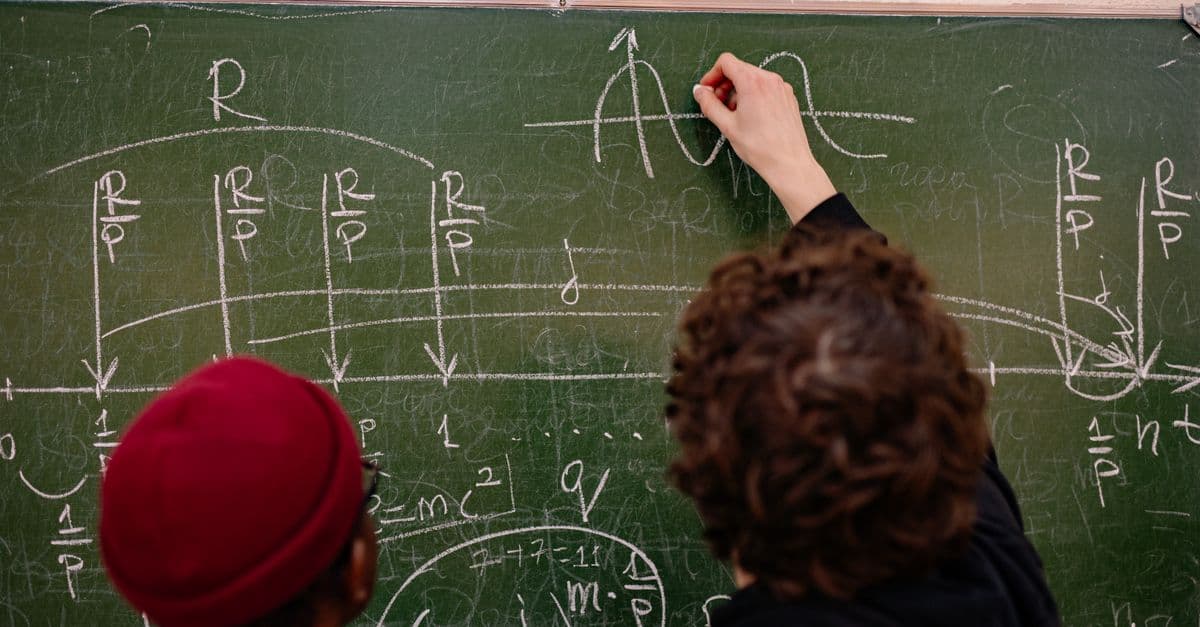
Photo: Towfiqu barbhuiya / Pexels
The twin paradox is the most famous thought experiment in special relativity. Two identical twins are born on the same day. One stays on Earth. The other boards a spaceship, flies to a distant star at near-light speed, turns around, and comes home. When they reunite, the traveling twin is younger — sometimes by decades. Special relativity makes the prediction, and real experiments have confirmed it. So why is it called a "paradox," and where does the asymmetry actually come from?
The Setup
Twins Alice and Bob are 20 years old. Bob stays on Earth. Alice boards a ship that accelerates almost instantly to 0.99c (99% the speed of light), travels 10 light-years to a star, and returns at the same speed. From Bob's point of view on Earth, Alice's round trip takes about 20.2 years — Bob is now ~40. From Alice's onboard clock, the trip lasts only ~2.9 years — she's ~23 when she walks down the ramp.
This is not a metaphor or an illusion. Alice's heart beat fewer times. Her hair grew less. Her body aged less. Every physical and biological process on board ran slow as measured by Earth — and Alice didn't feel a thing, because in her own frame everything was normal.
Where's the Paradox?
Special relativity says motion is relative: there is no preferred frame. From Alice's frame, the Earth was moving away at 0.99c, then moving back. So shouldn't Bob be the one who aged less? If the situation is symmetric, why isn't the outcome symmetric?
Resolution: The situation is not symmetric. Bob stayed in a single inertial (non-accelerating) reference frame the whole time. Alice did not — she had to accelerate, decelerate, turn around, and decelerate again to return. The moment she changed direction, her notion of "now on Earth" jumped forward by years (this is called the relativity of simultaneity). That jump accounts for all the missing time. Only Alice felt g-forces. Only Alice experienced multiple inertial frames. The asymmetry is real and physical.
The Math
Time dilation is governed by the Lorentz factor:
γ = 1 / √(1 − v²/c²)
For every 1 second of moving-frame time, γ seconds pass in the stationary frame.
| Speed | γ (Lorentz factor) | 1 year on ship = ? on Earth |
|---|---|---|
| 0.10 c | 1.005 | 1.005 yr |
| 0.50 c | 1.155 | 1.16 yr |
| 0.90 c | 2.294 | 2.3 yr |
| 0.99 c | 7.089 | 7.1 yr |
| 0.999 c | 22.37 | 22.4 yr |
| 0.9999 c | 70.71 | 70.7 yr |
| 0.99999 c | 223.6 | 223.6 yr |
At 0.999c, a 10-year trip for the traveler corresponds to 224 years back home. This is why interstellar travel at near-light speed is a kind of one-way ticket to the future.
Real-World Evidence
Time dilation isn't theoretical — it's tested daily.
- Hafele–Keating, 1971. Four cesium atomic clocks were flown on commercial jets around the world eastward and westward. Compared to clocks left at the U.S. Naval Observatory, the flying clocks gained/lost time within a few nanoseconds of the relativistic prediction (including both special and general relativistic effects).
- GPS satellites. Satellite clocks tick 38 microseconds per day faster than ground clocks (45 μs from weaker gravity minus 7 μs from orbital velocity). Without that correction, GPS would accumulate ~10 km of error every day. Read more in our GPS time dilation explainer.
- Atmospheric muons. Muons created when cosmic rays hit the upper atmosphere have a rest lifetime of 2.2 microseconds — only enough to travel ~660 m before decaying. Yet they reach sea level in huge numbers because, traveling at ~0.998c, their internal clocks slow by γ ≈ 16, extending their effective range past 10 km.
- Particle colliders. Unstable particles in storage rings live measurably longer than at rest — and the dilation factor matches γ to better than 0.1%.
The Most Time-Dilated Humans Alive
For humans, the effect is tiny because we go nowhere near light speed. The record holders are cosmonauts.
| Person | Time in orbit | Approximate aging difference |
|---|---|---|
| Gennady Padalka | 878 days cumulative on Mir/ISS | ~1/44 of a second younger |
| Sergei Avdeyev | 748 days on Mir | ~1/50 of a second younger |
| Scott Kelly | 340 days on ISS (one mission) | ~5 milliseconds younger than twin Mark |
Yes — NASA actually has a real-life twin pair in Scott and Mark Kelly. The aging gap was about 5 milliseconds. Not exactly dramatic, but measurable in principle.
Could You Time-Travel to the Future?
Yes. Special relativity gives you a working one-way time machine to the future, with no paradoxes — you just need enough energy. To accelerate a 1,000-kg spacecraft to 0.99c requires roughly 6 × 10²⁰ joules of kinetic energy, more than the world's annual electricity production. At 0.999c, multiply by 3.
Even ignoring fuel, there's the radiation shielding problem (interstellar hydrogen becomes lethal cosmic rays), the deceleration problem (you need to slow down at the destination), and the collision problem (a dust grain at 0.999c packs as much energy as a hand grenade).
But the physics is sound. A trip equivalent to 100 Earth years could be completed in roughly 4 years of ship time at 0.999c. You'd return to a world that had moved 100 years on without you. This is the same effect explored in our what-if travel near the speed of light article.
Why Time Dilation Isn't Obvious in Daily Life
The reason no one notices time dilation in everyday life is that γ is essentially 1 for any speed humans encounter. Walking, driving, even flying gives γ values that differ from 1 by less than one part in a trillion. You'd need to hit roughly 30% of the speed of light before the effect became noticeable without precision instruments.
Acceleration and the Breakdown of Symmetry
The key to resolving the paradox lies in understanding what acceleration does. In special relativity, observers in uniform motion cannot determine who is "really" moving — all motion is relative. But acceleration is absolute: if you feel g-forces, you are accelerating. There is no reference frame where the accelerating twin feels nothing.
When Alice accelerates to 0.99c, she experiences real forces (from the ship's engines). The sensation of acceleration is not relative — both Alice and Bob agree she is accelerating. This asymmetry breaks the symmetry of the scenario. Alice's experience is fundamentally different from Bob's from the beginning.
Moreover, relativity of simultaneity makes the effect visible. During Alice's turn-around, her notion of "what time it is right now on Earth" jumps forward by years (this jump depends on the acceleration and the distance traveled). In her own frame, this manifests as Earth's clocks suddenly jumping ahead. The time gap opens up during this turning-around, not during the constant-velocity portions.
Source: Resnick, R., & Halliday, D. Introduction to Special Relativity (1992) — Classic exposition of relativity of simultaneity and why acceleration breaks the twin-scenario symmetry.
Experimental Confirmation Beyond Clocks
While atomic clocks on airplanes confirm time dilation precisely, a more surprising confirmation comes from particle physics. Muons are unstable particles created when cosmic rays collide with the upper atmosphere. Their rest-frame lifetime is 2.2 microseconds — short enough to decay into electrons before traveling more than ~660 meters.
Yet muons reach sea level at rates 100 to 1,000 times higher than physics without time dilation would predict. Why? Because muons are born traveling at ~0.998c (relative to the lab), their clocks run slow by a factor γ ≈ 16. Their effective lifetime in the lab frame becomes 16 × 2.2 μs ≈ 35 μs, long enough to traverse 10 km before decaying.
This is time dilation in action with particles. The same effect happens to the muons: from their perspective, the atmosphere is contracted and rushes by, so they traverse it in time relative to their internal clock. Both descriptions are correct — muons live longer in the lab frame because time runs slow in their fast-moving frame.
Relativity of Simultaneity: The Deep Reason for Asymmetry
A profound aspect of special relativity often missed in popular explanations: events that are simultaneous in one frame are not simultaneous in another. This is the relativity of simultaneity.
Imagine Alice passes Earth at t=0 in both frames, traveling away at 0.99c. After Alice has been gone for 10 years (Earth time), from Earth's perspective, it's still year 10. But from Alice's perspective, due to relativity of simultaneity, Earth has advanced much further — roughly year 71 (γ ≈ 7). Both are correct in their own frames.
This leads to the crucial insight: When Alice turns around at the distant star, her definition of "now on Earth" changes discontinuously. Before turnaround, "now on Earth" was year ~71. After turnaround, "now on Earth" becomes year ~129 (roughly). Earth's time jumped by 58 years in an instant from Alice's perspective — this is where all the missing time accumulates.
This may seem paradoxical, but it is the correct physics. Simultaneity is not absolute; it depends on the reference frame. And the traveling twin's change of reference frame (via acceleration at turnaround) accounts for the age difference.
Source: Griffiths, D. J. Introduction to Electrodynamics (4th ed., 2013) — Rigorous treatment of relativity of simultaneity in accelerated frames.
Biological Aging and Proper Time
At a fundamental level, aging is a process regulated by proper time — the time that passes on a clock moving with the aging object. Alice's body's cells age according to proper time elapsed in her reference frame. Because her clock runs slow relative to Earth's, her cells undergo fewer divisions, her DNA accumulates fewer mutations, and all biological processes occur at a slower rate (relative to Earth).
This is not an illusion. When Alice returns, the difference is real: she has truly undergone fewer biological cycles. If longevity were primarily determined by the number of heartbeats or cell divisions, Alice would objectively live longer than Bob.
However, a subtlety: proper time is not just time on a traveling clock — it is the integral of time along a spacetime path. The twin who takes a slower, more circuitous path through spacetime (by accelerating and decelerating) experiences less proper time overall. This is often called the "clock hypothesis" or the aging as path-length interpretation.
Could We Correct the Age Gap Afterward?
Interestingly, once Alice returns and both twins are on Earth again, there's no mechanism to reverse the age difference. Alice has genuinely aged less. Her cells have undergone fewer divisions; her telomeres are longer; her biological clock shows less time passed. This is why it's not a symmetrical situation that can be "corrected" — the age difference is stamped into their biological states.
If Alice were to take another round trip at high speed, she would age less again (relative to Bob), widening the gap further. But Alice herself would not feel any discomfort or "jumpiness" in time during either trip — from her perspective, all clocks (including her body's) run at a normal rate. The asymmetry appears only in the comparison between frames.
The Lorentz Transformation: Mathematical Precision
While the qualitative explanation is valuable, the precise mathematics uses the Lorentz transformation, which converts coordinates between reference frames:
t' = γ(t - vx/c²) x' = γ(x - vt) y' = y z' = z
where primed variables are in the moving frame, unprimed in the stationary frame, v is relative velocity, and γ is the Lorentz factor.
Key insight: Note the mixing of space and time in the transformation (the vx/c² and vt terms). This shows that space and time are not separate entities — they're woven together. A simultaneous event (Δt = 0) in one frame is not simultaneous in another (Δt' ≠ 0) if the events are spatially separated. This is the relativity of simultaneity in mathematical form.
For the twin paradox: The age difference can be computed precisely by integrating the time dilation factor along Alice's worldline (path through spacetime). The result confirms that the traveling twin ages less by the predicted amount, and the discrepancy arises entirely from her acceleration, which breaks the symmetry mathematically.
Source: Griffiths, D. J. Introduction to Electrodynamics (4th ed., 2013) — Lorentz transformations and their geometric interpretation
General Relativity Correction: Gravity Adds to the Effect
The example above uses special relativity, but real scenarios (like satellites or airplanes) experience gravity. General relativity adds an additional effect: clocks in weaker gravitational fields run faster than clocks in stronger fields.
For the Hafele-Keating experiment:
- Eastward flight: special relativistic slowing dominates → clocks aboard ran slow
- Westward flight: same special relativistic slowing, but at a different latitude → clocks aboard ran slightly fast overall
- GPS satellites: weaker Earth gravity (+45 μs/day gain) dominates over orbital velocity (-7 μs/day loss), net +38 μs/day gain
The combination of both effects is why GPS requires relativistic corrections. Ignore gravity's effect and GPS would accumulate ~5.4 km/day error; ignore velocity's effect and it would accumulate ~4.9 km/day error. Both must be accounted for.
For idealized twin paradox setups (special relativity, no gravity), gravity effects are negligible. But for any real-world scenario involving orbits or altitudes, general relativistic effects matter.
The Anthropic Question: Why Do We Experience Time at All?
A deeper philosophical question the twin paradox raises: why do conscious observers like Alice and Bob experience the passage of time at all?
In physics, time is just another coordinate in 4D spacetime. There's no fundamental reason the universe should "flow" or that observers should experience "now" as moving forward. Yet we do. This is the arrow of time problem.
One perspective (thermodynamic): Time "flows" in the direction of increasing entropy. We experience yesterday as the past because our memories are entropy-preserved states (lower entropy than the current state). The "forward" direction is simply the direction toward higher disorder.
Another perspective (relational): Time doesn't exist intrinsically — only change exists. What we call "time passing" is really our subjective experience of change. Alice ages less because fewer changes (fewer atomic vibrations, fewer chemical reactions) occur in her body during her journey. The age difference isn't mysterious — it's a direct count of how many state-changes her body underwent.
Why does this matter for the twin paradox? It clarifies that the age difference is not an illusion or relativistic trick. Alice's body underwent fewer physical changes. This is an objective fact about the universe, not an artifact of reference frames.
Real Complications Glossed Over
The thought experiment assumes:
- Instantaneous acceleration (no gradual speed-up). Real acceleration takes time, and a more detailed calculation must account for forces experienced during acceleration.
- Perfect clocks that measure proper time precisely. Real clocks have noise and calibration errors.
- No gravitational effects (pure special relativity). Real spacecraft would experience Earth's gravity, requiring general relativistic corrections.
- Flat spacetime. If Alice travels far enough, spacetime curvature from distant masses would matter.
For the basic twin paradox, these complications don't change the answer qualitatively — the traveling twin still ages less. But a PhD-level treatment must handle all of them rigorously.
Source: Resnick, R. Introduction to Special Relativity (1992) — Discussion of realistic complications in twin-paradox scenarios
Time Dilation Beyond Relativity: Quantum Effects
Interestingly, time dilation has a quantum analog in quantum decoherence. Particles in superposition gradually "collapse" into definite states through interaction with the environment. The rate of decoherence depends on environmental temperature and noise.
While not the same as time dilation (which is relativistic), the effect shares a deep similarity: time-related processes (coherence lifetime, decoherence time) depend on the system's state and environment. A quantum system isolated from the environment ages differently (coherence-wise) than one immersed in noise.
This connection is speculative but hints that time might not be as fundamental as relativity suggests — it might emerge from deeper quantum processes.
The Takeaway
The twin paradox is resolved by recognizing that the twins' situations are not symmetric: one accelerates and changes reference frames while the other does not. This asymmetry is real and physical, reflected in g-forces that only the traveling twin experiences. The traveling twin's clock runs slow according to special relativity, accumulating less proper time. When they reunite, the traveling twin is genuinely younger—not due to an illusion or reference-frame trick, but because their body underwent fewer physical changes. Real experiments (GPS satellites, muon decay, atomic clocks on airplanes, even identical-twin cosmonauts) confirm the prediction quantitatively. Time dilation reveals that time itself is woven into the fabric of spacetime and is relative to the observer's motion and gravitational environment.
Frequently Asked Questions
Q: Is the twin paradox actually a paradox?
A: No. It looks paradoxical only if you assume both twins' situations are symmetric. They are not—the traveling twin accelerates and changes inertial frames while the stay-at-home twin does not. This asymmetry is real and measurable.
Q: How much younger does the traveling twin actually come back?
A: It depends on speed and trip duration. At 0.99c for a round trip of 20 Earth-years, the traveler ages about 2.9 years—a 17-year difference. At 0.999c, the gap grows to roughly 19 years for the same Earth-time trip.
Q: Has time dilation ever been measured in actual humans?
A: Yes, but the effect is tiny at speeds humans achieve. Cosmonaut Gennady Padalka, with 878 cumulative days in orbit, is roughly 1/44 of a second younger. Scott Kelly, after one ISS year, is about 5 milliseconds younger than his identical twin Mark.
Q: Does GPS really depend on relativity for accuracy?
A: Yes, critically. Satellite clocks experience both special relativistic slowing (from orbital speed: -7 μs/day) and general relativistic speeding (from weaker gravity: +45 μs/day), netting +38 μs/day total. Without correction, GPS would drift ~10 km per day.
Q: Could time dilation enable interstellar travel?
A: In principle, yes—at 0.999c, a 100-light-year trip takes only ~4.5 years of ship time. In practice, energy, radiation shielding, and collision hazards are extreme. The physics is settled; engineering is the barrier.
Q: Does time dilation allow time travel to the past?
A: No. Special relativity permits asymmetric aging (forward time travel) but forbids closed timelike curves. Backward time travel requires general relativistic exotica like wormholes or rotating spacetimes—speculative and likely unphysical.
Read next:
Follow new articles
Add SciHub101 to your feed reader to see new science and technology stories.
About the Author
SciHub101 is an independent science and technology publication founded and edited by Buğra Sözeri, a software engineer and app developer based in Türkiye. AI tools assist with drafting and research. Source documentation in the existing archive is uneven, and articles are being reviewed and corrected. The Editorial Team byline identifies editorial responsibility; it does not certify specialist or independent human review. Where we compare products, anything built by our own team is labelled as such — see the editorial guidelines and About page for how corrections and disclosures work.
Related Articles

Why Yawning Is Contagious — The Science
Contagious yawning catches 50-60% of adults. Empathy, mirror neurons, social bonding — what the research really says about why we copy yawns.

The Marshmallow Test Explained — Self Control
Walter Mischel's famous marshmallow test shaped how we think about self-control. New research shows the story is more complicated than willpower.

The Twin Paradox Thought Experiment — SciHub101
How Einstein's special relativity predicts that a traveling twin ages slower, why this isn't actually a paradox, and the atomic clock flights that proved it real.
Why Time Moves Slower Near Gravity
Time moves slower near gravity because mass curves spacetime, and general relativity says clocks deeper in that curvature tick at a measurably slower rate.

How GPS Uses Einstein's Relativity Every Single Day
Your phone's navigation relies on corrections from both special and general relativity. Without Einstein, GPS would be off by kilometers within hours.

The Hafele-Keating Experiment: Atomic Clocks, Airplanes, and Time Dilation
In October 1971, physicists flew atomic clocks around the world and proved time dilation is real — clocks gained and lost nanoseconds exactly as Einstein predicted.