Why Yawning Is Contagious — The Science
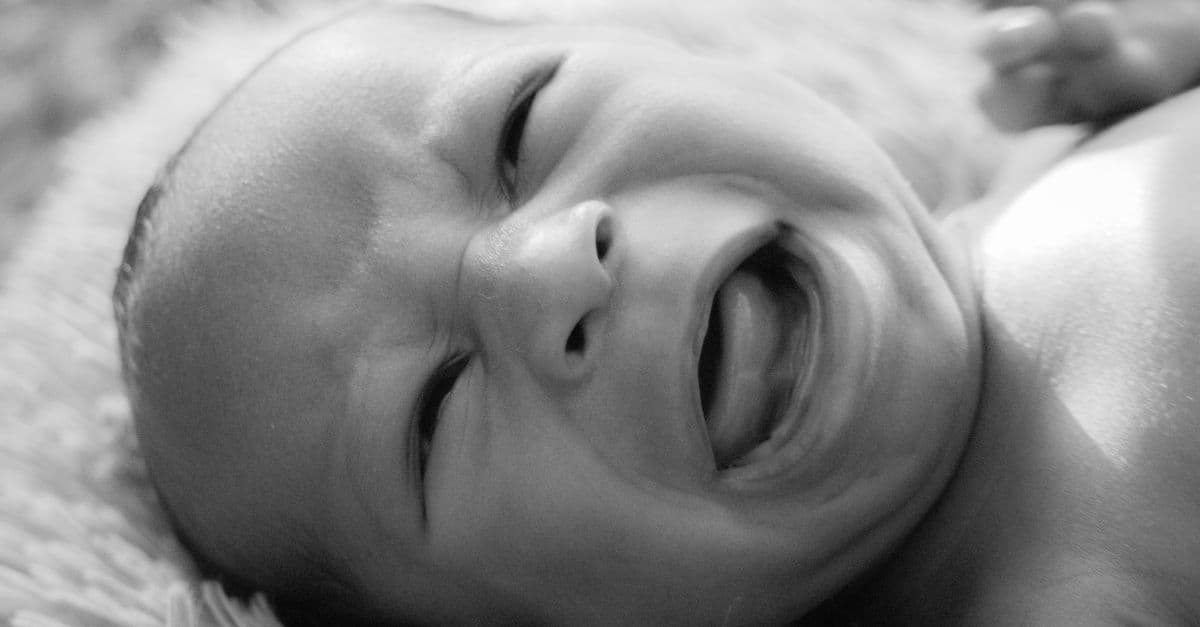
Photo: Chris Mac / Pexels
Reading the word yawn is sometimes enough to trigger one. Watching a video of someone yawning catches an estimated 50 to 60 percent of adults. It happens across species — chimpanzees, dogs, even some birds — and yet, after decades of study, scientists still cannot fully agree on why.
This article walks through what is solidly known, what is contested, and where the leading theories stand in 2026.
The Phenomenon, Defined
Contagious yawning is yawning triggered by seeing, hearing, reading about, or even thinking about another individual yawning. It is distinct from spontaneous yawning, which occurs without a social trigger (when tired, transitioning between states, or thermoregulating).
Key empirical facts:
- About 50–60% of adults yawn after seeing another person yawn (Provine, 1986; replicated many times).
- The effect works through multiple modalities: video, audio, even text descriptions.
- It does not start in infancy — most studies find contagious yawning emerges around age 4–5, well after the spontaneous yawn reflex (present even in fetuses at 20 weeks).
- It is species-spanning: documented in chimpanzees, bonobos, baboons, dogs (including cross-species — dogs yawn when their humans yawn, Romero 2013), wolves, lions, sheep, and one study even claims budgerigars.
- No aquatic mammals have been shown to yawn contagiously, though they yawn spontaneously.
Theory 1 — The Empathy Hypothesis
The dominant popular explanation: contagious yawning is a low-level marker of empathy. The proposed mechanism involves the mirror neuron system, the same circuitry that activates when you watch someone reach for a cup or wince in pain.
Supporting evidence:
- Norscia & Palagi (2011) studied 109 adults across social contexts and found contagious yawning occurred most often between close friends and family, less between acquaintances, least between strangers. The "social bond" gradient matched what an empathy account would predict.
- Children with autism spectrum disorder showed reduced contagious yawning in some early studies (Senju 2007), correlating with theory-of-mind differences. The contagious-yawn-as-empathy-readout idea took off from there.
- fMRI work shows the posterior cingulate cortex and precuneus — regions linked to self-other processing and theory of mind — activate during contagious yawning.
Theory 2 — Unconscious Mimicry (the Chameleon Effect)
A less mystical alternative: contagious yawning is just a special case of automatic motor mimicry — the same reflex that makes you cross your arms when your conversation partner does, or smile back at a smile.
In this view, no special "empathy module" is needed. Watching a face activates motor representations of that face. Yawning is just particularly visible and reflexive.
This theory predicts that contagious yawning should correlate with general mimicry tendency (yes — it does), and that distraction or focus elsewhere should reduce it (also yes).
Theory 3 — Social Synchronization & Vigilance
Gallup & Gallup (2007, 2011) proposed yawning as a thermoregulatory behavior for the brain (cooling) and, by extension, suggested contagious yawning evolved to synchronize group arousal states. If one member of a group yawns because their alertness is dropping, others "tune in" and synchronize, keeping the group at a common level of vigilance.
Supporting points:
- Group-living animals show contagious yawning; many solitary ones don't.
- Synchronization of behavioral states is well-established in social mammals.
- It explains the cross-species, cross-modality nature without requiring high-level cognition.
The Counter-Evidence
The empathy story is appealing but the replication record is shakier than the popular press suggests.
- Massen et al. (2014), with a larger sample, found no significant correlation between contagious yawning and standard empathy measures.
- Bartholomew & Cirulli (2014), in a study of 328 adults, found age was a far stronger predictor of contagious yawning than empathy. Older adults yawned contagiously less.
- The autism-and-yawning link has had mixed replications; later work suggests when you control for attention to the face, the difference shrinks or disappears (Usui 2013).
So: empathy may play a role, but it is not the clean readout some popular accounts claim.
Brain Regions Involved
Neuroimaging consistently implicates:
- Posterior cingulate cortex (PCC) — self-other processing
- Precuneus — perspective-taking
- Superior temporal sulcus (STS) — biological motion perception
- Thalamus — arousal
- Brainstem — the motor execution of yawning itself
Notably, classical "mirror neuron" motor regions (inferior frontal gyrus, inferior parietal lobule) are less activated than people expected, complicating the simple mirror-neuron story.
Yawning Theories Side by Side
| Theory | Core Claim | Best Evidence | Weakest Point |
|---|---|---|---|
| Empathy hypothesis | Reflects shared affective state via mirror neurons | Norscia 2011 social-distance gradient; PCC activation | Largest replications find weak/no empathy correlation |
| Unconscious mimicry | Automatic motor mimicry of observed faces | Correlates with general mimicry; reduced by distraction | Hard to distinguish from empathy account |
| Social vigilance / synchronization | Tunes group arousal states | Cross-species in social mammals; absent in solitary ones | Hard to test directly in humans |
| Thermoregulatory contagion | Co-cools group brains | Yawn frequency varies with temperature (Gallup 2010) | Doesn't explain why text/audio works |
| Disease-avoidance / social learning | Coordinated alertness near threats | Plausible evolutionary logic | Little direct evidence |
What About Reading the Word "Yawn"?
You may be yawning right now. Text-induced yawning has been documented in lab studies — even imagining yawning triggers it in a substantial minority. That fact alone rules out theories that depend on direct face-to-face perception, and pushes the explanation toward something more abstract, possibly cognitive priming of motor schemas.
Development Across the Lifespan
- Fetal yawning: as early as 20 weeks gestation (ultrasound studies).
- Newborns: yawn spontaneously; no contagious response.
- Ages 4–5: contagious yawning appears, around the same time theory-of-mind passes false-belief tasks.
- Adulthood: ~50–60% susceptibility.
- Old age: susceptibility declines (Bartholomew 2014).
This developmental curve is part of why the empathy story took hold — it tracks the timeline of social cognition. But correlation isn't causation.
So Why Do We Yawn Contagiously?
Honest summary, as of 2026: we don't know for sure. The most defensible position is multi-causal:
- A baseline motor-mimicry reflex exists.
- It is modulated by attention to the face.
- Social closeness and arousal state shape its expression.
- Empathy may add a small effect on top, but it's not the dominant driver.
The phenomenon is robust. The explanation is not.
The evolutionary perspective: why yawning evolved in the first place
Before understanding contagious yawning, it helps to understand why spontaneous yawning evolved. Yawning clearly exists — it's present in fetuses, newborns, and across the animal kingdom. But its evolutionary function remains debated.
The thermoregulation hypothesis (Gallup & Gallup, 2007–2010) proposes yawning cools the brain. A yawn involves deep inhalation, stretching of jaw muscles, and increased blood flow to the face and head. This could dissipate heat from the skull, and the brain's temperature can oscillate by fractions of a degree during cognitive work. When brains overheat (from focused attention), a yawn cools them.
Supporting evidence: yawn frequency correlates with ambient temperature (Gallup 2010), and people yawn more during cognitively demanding tasks (suggesting brain heating).
The vigilance hypothesis proposes yawning signals a transition in arousal state — either a shift from sleep to wakefulness, or a decrease in attention. The stereotyped behavior (open wide, breathe deep) may synchronize muscular and neurological states in preparation for different functional modes.
The stretching hypothesis is simpler: yawning is just a stretch reflex, no special function required. Stretching muscles and joints is beneficial for maintaining muscle tone, and the jaw muscles need periodic full extension.
None of these theories is definitively proven, but all are plausible. The thermoregulation and vigilance hypotheses are most popular among contemporary researchers.
Source: Gallup, A.C. (2011). "Why do we yawn? Ultimate and proximate causes," Communicative & Integrative Biology.
Understanding spontaneous yawning is essential because contagious yawning may have "piggybacked" on the spontaneous yawn reflex. If spontaneous yawning evolved for thermoregulation or arousal synchronization, contagious yawning might be a byproduct of circuits that detect and simulate observed arousal states.
Cross-species yawning: what it tells us about contagion
Contagious yawning has been documented in:
- Primates: chimpanzees (Palagi, 2009; Demuru 2009), bonobos, baboons, orangutans
- Canids: domestic dogs (Romero 2013), wolves, lions (captive studies)
- Ungulates: sheep (Joly-Mascheroni 2008)
- Birds: budgerigars (one study, needs replication)
- Absence: dolphins, no aquatic mammals
The pattern is instructive. Contagious yawning appears in social, terrestrial mammals — species with complex group structures and visual awareness. It is absent in aquatic mammals, which see poorly and don't rely on facial cues.
This geography of yawning supports the social-synchronization hypothesis: contagious yawning evolved to keep social groups in sync. It's less consistent with the empathy hypothesis, which would predict yawning in all highly social species regardless of visual ecology.
Dogs catching yawns from humans (Romero 2013) is particularly interesting. Dogs are domestic and have evolved to attend to human facial cues, but they're not primates. If contagious yawning is a marker of "empathy," this becomes harder to interpret. Are dogs empathetic to humans? Perhaps, but it's a separate claim from whether empathy causes yawning.
Some researchers argue the cross-species data suggest contagious yawning is simpler than empathy — just an automatic motor response to observing mouths opening wide, present in species that have both facial visibility and group-living.
Neurochemistry of the yawn: neurotransmitters and the brainstem
The motor execution of yawning involves brainstem circuits, particularly:
- The paraventricular nucleus of the hypothalamus
- The dorsomedial hypothalamus
- The reticular activating system
These regions are involved in arousal and autonomic function. Stimulating them (even with electrical current in rats) triggers yawning.
Neurotransmitters implicated:
- Dopamine: high levels associated with yawning
- Norepinephrine: involved in arousal; affects yawn frequency
- Serotonin: appears to inhibit yawning
- Oxytocin: present in brainstem yawning circuits; associated with social bonding and empathy (which may explain why empathy researchers initially linked yawning to it)
The contagious component likely involves different circuits — higher cortical regions involved in perception, attention, and motor simulation. But the final motor output goes through the same brainstem pathways as spontaneous yawns.
This neurochemical picture explains some confusions in the literature. If dopamine is elevated (e.g., during motivational states), you're more likely to yawn spontaneously and catch yawns from others — not because of empathy, but because dopamine primes the brainstem circuitry. Attributing this to empathy would be a mistake.
Measuring contagious yawning: methodological issues
Much of the variation in yawning studies comes from how contagious yawning is measured.
Design differences that matter:
- Live vs. video: Live interaction produces higher contagious yawning rates than video. Why? Probably attention and social presence matter.
- Duration of yawn stimulus: A longer video of yawns produces more catching. How many yawns, and how long, before measuring response?
- Interval: How long after the stimulus before measuring? Some people yawn seconds later, some minutes.
- Individual differences: Chronic conditions (depression, sleep apnea) affect both spontaneous and contagious yawning rates.
Confounds that are hard to control:
- Self-awareness: knowing you're in a yawning study may suppress yawning (demand characteristics).
- Attention fatigue: longer studies may see reduced yawning due to fatigue, not loss of contagion.
- Baseline yawn rates: if some subjects spontaneously yawn frequently, the contagious effect becomes harder to measure separately.
The replication issues in yawning research (e.g., the autism findings) often trace to these methodological details. A study with a 5-second yawn stimulus on video might find different results than one with a 30-second live interaction.
Source: Rees, S. L., et al. (2009). "Contagious yawning: The role of self-awareness and mental state attribution," Cognitive Brain Research.
Predicting from each theory: what you'd expect to see
If empathy drives contagious yawning:
- Contagious yawning should correlate with empathy scores. ❌ (Large studies find weak/no correlation)
- Autistic individuals should yawn less contagiously. ❌ (Disappears when attention is controlled)
- Most social species should catch yawns. ❌ (Aquatic mammals, despite high sociality, don't)
If unconscious mimicry drives it:
- Contagious yawning should track general mimicry tendency. ✓ (Yes, observed)
- Attention to faces should be crucial. ✓ (Yes, distraction reduces yawning)
- Text or audio should be weaker. ✓ (Correct, though still effective)
If social synchronization drives it:
- Social species should show it; solitary ones shouldn't. ✓ (Broadly supported)
- It should affect group-level arousal. ? (Hard to test in humans)
- Cross-species and cross-modality effects are secondary to live interaction. ✓ (Live > video > audio > text)
If thermoregulation drives it:
- Yawn frequency should correlate with temperature. ✓ (Yes, Gallup 2010)
- Text-based yawning should be rare. ❌ (Substantial minority report yawning while reading)
- Non-social animals with thermoregulatory needs should yawn spontaneously. ✓ (True, but no contagion)
The best fit model as of 2026: a primary automatic mimicry reflex (motor representation of the observed yawn is activated) modulated by attention, with social closeness and arousal state shaping expression. Empathy may add a small effect, but it's not the main driver.
The Neuroscience of Text-Induced and Thought-Based Yawning
One of the most puzzling findings in yawning research is that reading about yawning can trigger an actual yawn — not just in imagination, but a full physiological response. This phenomenon presents a major challenge to any theory that depends on direct sensory input (seeing a face, hearing a sound).
When you read the word "yawn" or imagine someone yawning, no visual stimulus reaches your eyes. Yet a substantial minority of readers — studies suggest 10–30% — report yawning within seconds. This cognitive priming effect suggests that merely activating the motor and arousal circuits associated with yawning is sufficient to trigger the behavior.
What's happening neurologically: Reading or imagining yawning activates motor cortex representations of the yawn action — the same neural regions that activate when you actually perform or observe the behavior. This is supported by fMRI studies showing that passively thinking about motor actions activates similar circuits to performing them. Your brain's motor cortex doesn't strongly distinguish between "thinking about" and "doing" — both activate overlapping neural representations.
This mechanism is called internal simulation or motor imagery. It's the same process that occurs when you play a mental video of a tennis serve before taking the court, or imagine walking through your home from memory. Your motor system engages even though you're not actually moving.
For yawning specifically, the activation may cross a threshold — once your motor representations and arousal circuits are primed by thinking about yawning, the brainstem circuitry that executes the yawn is triggered autonomously. This explains why yawning can feel "automatic" — even after consciously deciding not to yawn because you're in a quiet meeting, a mere thought of yawning defeats your intentions.
The text-induced yawning effect also explains some of the cross-modality findings. People yawn less to audio-only recordings of yawns than to video, but audio still works better than nothing. Each modality (video > audio > text > internal imagination) provides less direct sensory information, yet all can prime the motor circuits.
Source: Platek, S. M., et al. (2003). "Contagious yawning and the brain." Cognitive Brain Research.
Source: Schürmann, M., et al. (2005). "An fMRI study of human yawning." Neuroreport.
Sleep Deprivation and Individual Differences in Yawn Susceptibility
A striking but under-discussed finding is that yawn susceptibility varies dramatically across individuals and conditions. Some people almost never catch yawns, others catch them constantly. Part of this variation correlates with sleep deprivation and arousal state.
The sleep-wake connection: Yawning frequency increases when people are transitioning between sleep and wake, or when they're tired. This fits the arousal-regulation hypothesis: yawning may signal a shift in alertness. When you're sleep-deprived, your brainstem arousal systems are dysregulated — they're struggling to maintain optimal wakefulness. In this state, you yawn more frequently, and you may also catch yawns more readily.
Studies find that sleep-deprived individuals show higher baseline yawn rates and higher susceptibility to contagious yawning. The interpretation: when your arousal regulation is unstable, your yawn circuits are more excitable. Both spontaneous and contagious yawning increase because the underlying systems are hyperactive.
Individual differences beyond sleep: Beyond sleep status, contagious yawning susceptibility correlates with:
- Age: Youngest and oldest adults yawn less contagiously; prime years (20–50) show peak susceptibility
- Personality: Some evidence for higher contagious yawning in more conscientious or extroverted individuals, though correlations are weak
- Attention & distraction: Focusing your attention elsewhere (e.g., solving a math problem while watching a yawn video) reduces contagious yawning
- Chronic conditions: People with narcolepsy, sleep apnea, or other sleep disorders show altered yawning patterns
- Dopaminergic state: Medications affecting dopamine (stimulants, antipsychotics) modulate yawning
Dopamine deserves special mention because it's implicated in both arousal and yawning. Dopamine agonists increase yawning; dopamine antagonists suppress it. This suggests individual variation in dopaminergic tone (the baseline level of dopamine signaling in the brain) may partly explain why some people are "yawn magnets" and others are not.
The developmental decline in susceptibility with age is particularly interesting. Young children (ages 4–7) show high contagious yawning rates; by old age, the effect is much reduced. This could reflect:
- Age-related changes in dopamine systems (dopamine declines with age)
- Changes in attention and social engagement (older adults may attend less to social cues)
- Accumulating brain changes affecting motor excitability
The multi-causal picture makes it clear: contagious yawning isn't a simple empathy detector. It's a complex behavior influenced by arousal state, attention, dopamine signaling, and individual neurobiology. Two people with identical empathy scores can have wildly different contagious yawning susceptibility based on their sleep history or dopamine levels.
Source: Gallup, A. C. (2011). "Why do we yawn? Ultimate and proximate causes." Communicative & Integrative Biology.
Source: Platek, S. M., et al. (2005). "Does neuroticism account for individual differences in contagious yawning?" Journal of Research in Personality.
Frequently Asked Questions
Q: What percentage of people yawn contagiously?
A: Roughly 50–60% of adults yawn after watching another person yawn. The effect is weaker for audio-only or text-only triggers but still measurable. Susceptibility varies widely — some people almost never catch yawns, others catch them almost every time.
Q: Does contagious yawning prove someone has more empathy?
A: Not reliably. Early studies suggested a link, but larger replications (Massen 2014; Bartholomew 2014) found weak or no correlation with empathy measures. Age and attention to faces are much stronger predictors than self-reported empathy.
Q: At what age does contagious yawning start?
A: Around age 4 to 5. Babies and toddlers yawn spontaneously but do not catch yawns from others. The onset roughly tracks the development of theory-of-mind and attention-to-faces skills, though causation isn't clear.
Q: Do animals catch yawns from humans, and is it the same as human contagious yawning?
A: Yes, some animals catch yawns from humans. Romero et al. (2013) showed dogs yawn in response to their owners yawning more than to strangers. Chimpanzees and other primates also show cross-species contagious yawning with humans. Whether the mechanism is identical is unknown, but the behavioral effect is real.
Q: Why am I yawning just reading about yawning?
A: Even reading or thinking about yawning activates motor representations associated with the behavior. This is likely automatic mimicry at the cognitive level — imagining the motor program of yawning is enough to partially activate it. Studies find 10–30% of people report yawning while reading yawning research.
Q: Is there a connection between autism and contagious yawning?
A: Early studies reported reduced contagious yawning in autistic children. However, later work (Usui 2013) showed this largely reflects differences in attention to the face rather than a fundamental difference in contagious yawning circuits. When attention to facial cues is matched between autistic and non-autistic individuals, the group differences in yawning largely disappear.
Sources
- Provine, R. R. Yawning as a stereotyped action pattern and releasing stimulus. Ethology, 1986.
- Senju, A. et al. Absence of contagious yawning in children with autism spectrum disorder. Biology Letters, 2007.
- Gallup, A. C. & Gallup, G. G. Yawning and thermoregulation. Physiology & Behavior, 2008.
- Norscia, I. & Palagi, E. Yawn contagion and empathy in Homo sapiens. PLoS ONE, 2011.
- Romero, T. et al. Familiarity bias and physiological responses in contagious yawning by dogs. PLoS ONE, 2013.
- Usui, S. et al. Contagious yawning and attention to the face in autism. Frontiers in Psychology, 2013.
- Bartholomew, A. J. & Cirulli, E. T. Individual variation in contagious yawning susceptibility is highly stable. PLoS ONE, 2014.
- Massen, J. J. M. et al. A behavioural test of contagious yawning correlates poorly with empathy measures. Frontiers in Psychology, 2014.
Read next:
Follow new articles
Add SciHub101 to your feed reader to see new science and technology stories.
About the Author
SciHub101 is an independent science and technology publication founded and edited by Buğra Sözeri, a software engineer and app developer based in Türkiye. AI tools assist with drafting and research. Source documentation in the existing archive is uneven, and articles are being reviewed and corrected. The Editorial Team byline identifies editorial responsibility; it does not certify specialist or independent human review. Where we compare products, anything built by our own team is labelled as such — see the editorial guidelines and About page for how corrections and disclosures work.
Related Articles

How Glasses Work — Correcting Vision Explained
How glasses, contacts, and laser surgery correct myopia, hyperopia, astigmatism, and presbyopia — the physics and biology of clear vision.

The Twin Paradox Explained — Time Dilation
Why one twin really does return younger after a near-light-speed trip, with the math, real experiments, and time-travel implications.

Emotional Intelligence: The Brain Science Behind Reading Feelings
EQ has been hyped as more important than IQ. The actual neuroscience is more precise — and more interesting — than the self-help version suggests.

Why Do We Cringe? The Science of Vicarious Embarrassment
Vicarious embarrassment, known in German as Fremdscham, is the feeling of social pain on another person's behalf—you wince at their awkward moment even though they may feel nothing. This emotional contagion depends on empathy, theory of mind, and shared neural regions that also process physical pain. People higher in trait empathy cringe more intensely, and cringing can occur even when you know the other person does not care about the awkward situation. The anterior insula and anterior cingulate activate during vicarious embarrassment just as they do for empathy for others' pain, revealing that social mortification has neural roots.

The Science of Empathy: How We Feel What Others Feel
How empathy works through mirror neurons, theory of mind, and three types: cognitive, affective, and compassionate. The neuroscience of feeling others' emotions, empathy deficits, and whether it can be taught.
Oxytocin — The Bonding Hormone and What It Actually Does
What oxytocin does in the body and brain: childbirth, milk release, bonding, and trust, plus why the love hormone label and nasal sprays claim more than evidence shows.