Scientists
Edwin Hubble: The Man Who Discovered the Universe
Edwin Hubble proved galaxies exist beyond the Milky Way and that the universe is expanding. His 1924 and 1929 discoveries rewrote cosmology forever.
Biographies of the world's most famous scientists: little-known habits, quirks, personal stories, and the discoveries that changed history.
Edwin Hubble proved galaxies exist beyond the Milky Way and that the universe is expanding. His 1924 and 1929 discoveries rewrote cosmology forever.

Enrico Fermi built the first nuclear reactor, won the Nobel Prize, and pioneered estimation science. Discover the life of Italy's greatest modern physicist.
Évariste Galois invented group theory, solved a 350-year-old problem, survived prison, and died in a duel at 20. Here is how he changed mathematics forever.

Fritz Haber invented the Haber-Bosch process that feeds half the world — and directed Germany's chemical weapons program in WWI. His story has no clean ending.
George Boole invented Boolean algebra in 1854, giving mathematics a way to express logical thought. Every digital circuit built since then runs on his rules.

George Gamow predicted the cosmic microwave background, co-authored the αβγ paper on Big Bang nucleosynthesis, and bridged physics and DNA science.

Gregor Mendel's pea plant experiments from 1856–1863 established the laws of heredity. Discover how an Augustinian monk built the foundation of modern genetics.
Henrietta Leavitt's 1912 discovery of the Cepheid period-luminosity relation gave astronomy its first reliable cosmic distance scale. Her story and legacy.
Jocelyn Bell Burnell discovered pulsars in 1967 as a PhD student. Her Nobel Prize snub became science's most debated injustice. Here is the full story.
John von Neumann invented game theory, defined computer architecture, and shaped the atomic bomb. Meet the mind that colleagues called beyond human.
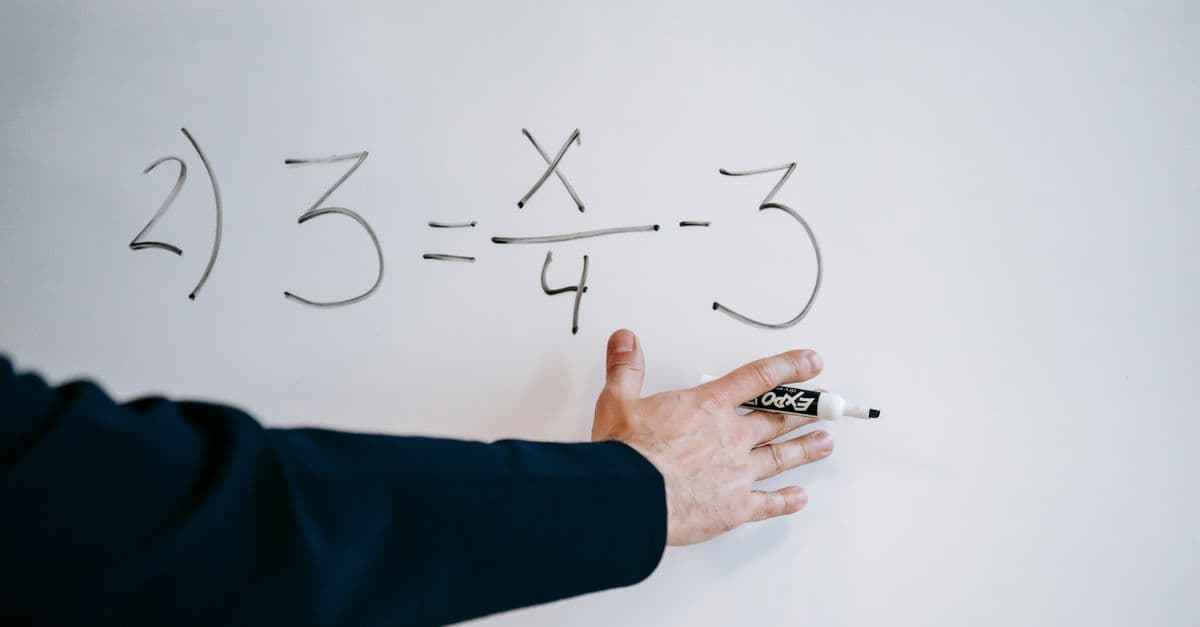
Leonhard Euler wrote over 850 works, invented graph theory, gave us e^(iπ)+1=0, and produced his best work while blind. The story of history's most prolific mathematician.

Lev Landau won the 1962 Nobel Prize for superfluidity, survived Stalin's purges, and ranked every physicist in history on a logarithmic scale — including himself.