brain
43 articles tagged with #brain

Psychology
The Psychology of Awe: Why Vastness Heals the Self
Awe is the breath-catching emotion we feel facing something too large to fit into our understanding—a mountain range, a cathedral, a scientific revelation. Psychologists define it by two core features: perceived vastness and a need for mental 'accommodation,' the struggle to update our worldview. When experiencing awe, the sense of self shrinks, self-focus quiets, and generosity rises. This small-self effect reshapes how we relate to others and the world, boosting well-being, expanding our sense of time, and even altering our neural activity. Understanding awe reveals how the feeling serves as a psychological reset button, pulling us out of rumination and into connection.

Psychology
Why Do Songs Get Stuck in Our Heads? The Science of Earworms
An earworm — scientifically termed involuntary musical imagery (INMI) — is a short, catchy melodic fragment that loops involuntarily in consciousness without deliberate effort or intention. They arise from how auditory memory and the brain's phonological loop rehearse simple, repetitive hooks, and are triggered by recent exposure, stress, and idle mind-wandering. Research shows certain musical features — simple rhythmic patterns, unexpected melodic intervals, and familiarity — make songs more prone to earworm status. Understanding the cognitive machinery behind them reveals how memory, attention, and prediction interact in the brain.

Psychology
Why Do We Cringe? The Science of Vicarious Embarrassment
Vicarious embarrassment, known in German as Fremdscham, is the feeling of social pain on another person's behalf—you wince at their awkward moment even though they may feel nothing. This emotional contagion depends on empathy, theory of mind, and shared neural regions that also process physical pain. People higher in trait empathy cringe more intensely, and cringing can occur even when you know the other person does not care about the awkward situation. The anterior insula and anterior cingulate activate during vicarious embarrassment just as they do for empathy for others' pain, revealing that social mortification has neural roots.

Human Body
How the Body Processes Alcohol: The Science of Metabolism and Intoxication
Alcohol is absorbed into the bloodstream within minutes of consumption, but the liver metabolizes it at a nearly constant rate of about one standard drink per hour, a rate that cannot be accelerated by food or hydration. The body treats ethanol as a toxin, converting it to acetaldehyde (more toxic than ethanol) and then to acetate through two enzyme-mediated reactions. Blood alcohol concentration (BAC) depends on body weight, sex, food intake, and genetics, making some individuals metabolically unable to process alcohol efficiently, as seen in alcohol flush syndrome. Once intoxicated, alcohol disrupts the balance of GABA and glutamate neurotransmitters in the brain, impairing judgment and coordination. Understanding alcohol metabolism reveals why hangovers occur, why some populations have lower tolerance, and why no trick can accelerate the clearance of alcohol from the body.

Human Body
Why Do We Feel Pain? The Science of Nociception
Pain is not a sensation but a perception — the brain's interpretation of a threat signal from specialized nerve endings called nociceptors. When you touch a hot stove, nociceptors detect the temperature change and fire electrical signals up the spinal cord to the brain. The brain then constructs the feeling of pain, which is why you can feel pain from a phantom limb that no longer exists, or feel no pain during surgery under anesthesia despite injury. Pain serves a critical protective function, preventing injury, but when it persists beyond healing (chronic pain), it becomes a malfunction of the nervous system.

Biology & Health
The Science of Sleep: What Happens in the Brain During REM Sleep
Sleep is not a passive shutdown but an active state of brain and body reorganization. During an 8-hour sleep cycle, humans alternate between non-REM (NREM) sleep—characterized by slow theta waves, reduced muscle tone, and energy conservation—and REM (rapid eye movement) sleep, when the brain shows activity patterns similar to wakefulness, the eyes move rapidly beneath closed eyelids, and skeletal muscles are paralyzed except for the diaphragm. REM sleep makes up approximately 20–25 percent of sleep in adults and is the stage where most vivid dreaming occurs. The neuroscience of REM reveals that memory consolidation (particularly emotional and procedural memories), creativity processing, and amygdala-driven emotion regulation all occur during this stage. The glymphatic system—a network of fluid pathways that clear metabolic waste from the brain during sleep—becomes most active during deep NREM sleep, not REM. This article explains the neuroscience of REM sleep, the discovery of the glymphatic system, and why sleep is essential to brain health.

Biology & Health
What Happens to Your Body with No Sleep for 24 to 72 Hours
After 17 hours without sleep, your cognitive performance matches someone with a blood alcohol concentration of 0.05% — legally impaired to drive in most countries. After 24 hours, the equivalent is 0.10% — above the legal limit in all US states. After 72 hours, hallucinations are common, emotional regulation breaks down, and the immune system's ability to mount a response is measurably compromised. Sleep deprivation is not discomfort — it is a physiological insult to nearly every system in the body, and it unfolds on a precisely documented timeline.

Biology & Health
What Happens to Your Brain When You Meditate
In 2005, Sara Lazar at Harvard found that experienced meditators had measurably thicker cortex in regions associated with attention and interoception — and that the thickness correlated with years of practice, not age. A year later the same group confirmed the finding with a larger sample. Since then, hundreds of neuroimaging studies have examined meditation's effects on brain structure and function, with results that are genuinely interesting, frequently overstated, and worth reading carefully. The brain does change. The question is how much, in whom, through what mechanism, and whether those changes explain the psychological effects people report.

Blog
The Psychology of Horror: Why People Enjoy Being Scared
Horror movies make the heart pound, yet many people seek them out and feel good afterward. Research points to a gap between a body that reacts as if threatened and a mind that knows it is safe, and to individual differences that explain who enjoys the gap most.

Blog
The Myth of Multitasking: Why Your Brain Can't Do Two Things at Once
You feel productive answering email during a meeting. The research is more specific than the slogan: two tasks that both need deliberate attention mostly take turns, every turn has a cost, and a few combinations still work. Here is what the studies show, and where the popular claims run ahead of them.
Science
The Neuroscience of Learning Elvish: What Conlangs Reveal About the Brain
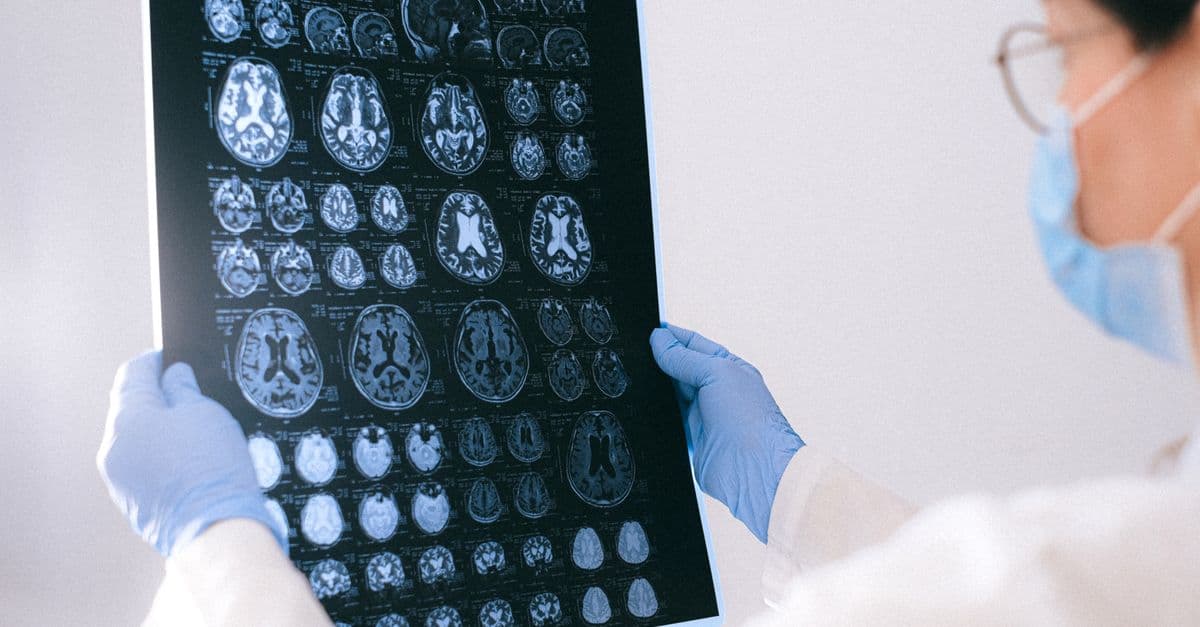
In 2025, MIT researchers published fMRI data showing that Klingon, High Valyrian, and Esperanto activate the same neural circuits as English or Mandarin — the same brain regions that process natural human languages developed over thousands of years. A constructed language invented a decade ago by a screenwriter activates the identical network as a language shaped by centuries of use. This finding tells us something fundamental about how the brain decides what counts as a 'real' language — and it has practical implications for how anyone, at any age, learns any language, fictional or otherwise.
Page 1 of 4Next →