Countries with the Most Skyscrapers (Ranked by 150m+ Buildings)
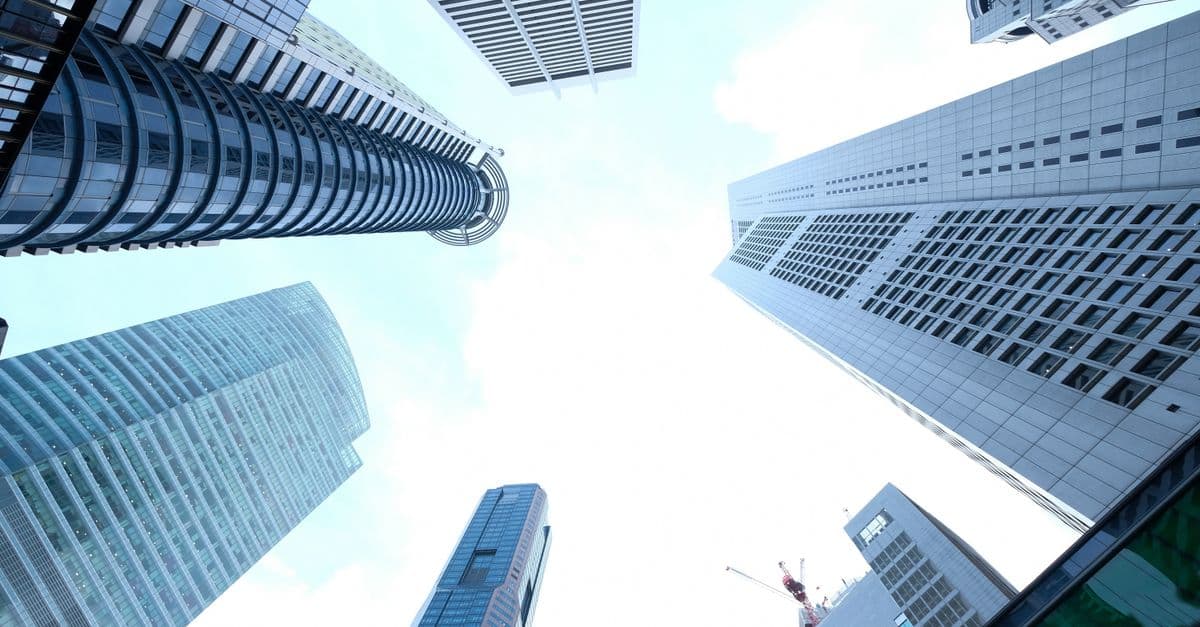
Photo: Towfiqu barbhuiya / Pexels
China has built more skyscrapers than any other country in history, and the pace has not slowed. With 3,492 completed buildings standing at 150 metres or taller as of 2024 data — a threshold used by the Council on Tall Buildings and Urban Habitat (CTBUH) as the entry-level definition for a "tall building" — China's stock of high-rise structures exceeds that of the next several countries combined. The United States, long the world's presumptive skyscraper capital by reputation, counts approximately 905 buildings at the same height threshold. China has more than three times as many.
The gap reflects something fundamental about the pace of Chinese urbanization in the first two decades of the twenty-first century. In 2000, China had a handful of cities with meaningful tall-building stock; by 2024, it has dozens of tier-two and tier-three cities with skylines that would have ranked among the world's most dramatic just twenty years ago. Shenzhen, a fishing village in 1980, now has a skyline competitive with Hong Kong, which sits directly across the border. Chongqing, a city of over 30 million people in China's interior that most people outside China cannot locate on a map, has more skyscrapers than most entire countries.
The United Arab Emirates, South Korea, and Japan follow the United States in the global ranking, each for different historical and economic reasons. Canada, Australia, Indonesia, and Thailand round out the leading second tier.
Methodology
Q: What counts as a skyscraper, and what data source is used? A: The word "skyscraper" has no universally agreed definition. The Council on Tall Buildings and Urban Habitat (CTBUH), the authoritative global body on tall building research, uses 150 metres as the threshold for what it calls a "tall building" in its global country and city rankings. This is the definition used in the CTBUH Skyscraper Center database — the most comprehensive and rigorously maintained database of tall buildings worldwide — and it is the definition used in this ranking. Some analyses use 200 metres or 300 metres as thresholds; these yield different rankings in which the relative dominance of China and the UAE versus the United States is even more pronounced, because the tallest tier of global construction is more heavily concentrated in Asia and the Middle East than the 150-metre-plus tier is.
The CTBUH Skyscraper Center tracks completed buildings by height, location, function, and construction date. Country figures reflect completed, standing structures; buildings under construction or proposed are excluded unless otherwise noted. Data accessed reflects the 2024 state of the database, cross-referenced with CTBUH 2025 Trends and Forecasts report figures.
Source: CTBUH Skyscraper Center, Countries by Number of 150m+ Buildings — https://www.skyscrapercenter.com/countries
Source: CTBUH 2025 Trends and Forecasts — https://www.skyscrapercenter.com/trends-and-forecasts/2025
Top 15 countries by number of 150m+ buildings (2024)
| Rank | Country | 150m+ Buildings | 200m+ Buildings | Notes |
|---|---|---|---|---|
| 1 | China | 3,492 | ~1,400+ | Includes Hong Kong SAR; Shenzhen, Guangzhou, Chongqing leading cities |
| 2 | United States | 905 | 246 | New York and Chicago historic cores; Miami, Seattle growing |
| 3 | South Korea | 281 | 80 | Seoul concentrated; Busan emerging |
| 4 | Japan | ~240 | ~70 | Tokyo dominant; strict seismic codes limit extreme heights |
| 5 | United Arab Emirates | ~230 | 156 | Dubai skyline; Abu Dhabi growing |
| 6 | Australia | 226 | ~60 | Melbourne and Sydney; residential towers dominant |
| 7 | Canada | 224 | ~55 | Toronto and Vancouver residential high-rise boom |
| 8 | Indonesia | 193 | ~50 | Jakarta dominant; Surabaya and others growing |
| 9 | Thailand | 187 | ~40 | Bangkok-concentrated |
| 10 | Malaysia | ~150 | ~40 | Kuala Lumpur; Petronas Towers landmark |
| 11 | Russia | ~100 | ~25 | Moscow City cluster; St. Petersburg |
| 12 | Philippines | ~95 | ~20 | Metro Manila residential tower explosion |
| 13 | United Kingdom | ~90 | ~30 | London Canary Wharf, City of London; Birmingham |
| 14 | Saudi Arabia | ~85 | ~35 | Riyadh and Jeddah growing rapidly |
| 15 | Singapore | ~75 | ~25 | Dense city-state; land constraint limits horizontal spread |
Note: Exact figures above 200m for several countries are derived from CTBUH Skyscraper Center data cross-referenced with 2025 Trends and Forecasts report totals. Figures for 150m+ in several countries are compiled from the CTBUH country database and verified press coverage; minor variance from the primary database may apply.
Source: CTBUH Skyscraper Center — https://www.skyscrapercenter.com/countries
Cross-reference: Wikipedia, List of countries with the most skyscrapers — https://en.wikipedia.org/wiki/List_of_countries_with_the_most_skyscrapers
Where this data comes from
Skyscraper counts derive exclusively from the Council on Tall Buildings and Urban Habitat (CTBUH) Skyscraper Center database, the authoritative global repository of tall building data. CTBUH defines a "tall building" as 150 metres or taller (roughly 50 stories); some analyses use 200m threshold, which would shift rankings in China/UAE's favour (higher proportion of ultra-tall tier). The CTBUH database requires completed, standing buildings with verified height; buildings under construction or proposed are excluded. Data reflects 2024 state of the database. Hong Kong figures are included in China's totals per CTBUH methodology. Country-level data sometimes reflects regional variations in definition (some countries report slightly different thresholds), though CTBUH attempts standardization. The database is regularly updated; figures can shift 1–2% annually as buildings complete or data corrections occur. Height measurements follow CTBUH standards (topped-out height, not architectural height to spires).
The skyscraper count is primarily a measure of urbanization pace and vertical land-use intensity, not economic development. China's 3,492 buildings (vs. USA's 905) reflects urbanization of 700 million people since 1980; the UAE's high per-capita count (230 buildings for 10 million people) reflects petrodollar-driven construction ambition and land scarcity in small emirates. Many wealthy nations (Switzerland, Denmark, Norway) have intentionally chosen lower-rise development as a planning preference, not a development limitation. The data strongly correlates with population density, land scarcity, and commercial property values — not with per-capita wealth or living standards.
Historical context: from Chicago to Shenzhen
The skyscraper was invented in Chicago. The 1884-1885 Home Insurance Building in Chicago, generally cited as the first modern skyscraper, pioneered the steel frame construction technique that made tall buildings possible — prior to this, masonry construction limited building height because walls had to be thick enough to support upper floors, making very tall buildings structurally impractical. The steel frame transferred structural load to a skeleton of steel columns and beams, allowing glass and thin curtain walls to be hung on the outside, freeing architects to build upward with relatively modest footprints.
By the early twentieth century, the skyscraper had migrated from Chicago to New York, where the Flatiron Building (1902), Chrysler Building (1930), and Empire State Building (1931) established the iconic Manhattan skyline that defined the concept globally. Through the mid-twentieth century, American cities — New York, Chicago, Houston, Los Angeles — dominated the global tall building count, and the United States was undisputedly the world's skyscraper capital by any measure.
The shift began in the 1980s and accelerated dramatically in the 1990s and 2000s. Hong Kong's commercial property market drove extraordinary residential and office tower construction on an island with no room to spread laterally. Singapore followed. Then the Gulf states — the UAE most dramatically, with Dubai's Burj Khalifa topping out at 828 metres in 2010 to become the world's tallest building. And most consequentially, mainland China's urbanization surge drove tall building construction at a scale and pace without precedent in history.
Source: CTBUH, History of Tall Buildings — https://www.ctbuh.org/resource/history
Source: CTBUH 2025 Trends and Forecasts — https://www.skyscrapercenter.com/trends-and-forecasts/2025
China: urbanization as architectural phenomenon
China's extraordinary skyscraper count is inseparable from the most rapid urbanization in human history. Between 1980 and 2020, China's urban population grew from approximately 200 million to nearly 900 million — an increase of 700 million people moving from rural to urban settings over four decades. To house, employ, and serve this population, China built at a scale that no country has matched. The skylines of Shenzhen, Guangzhou, Chongqing, Wuhan, Nanjing, Xi'an, and dozens of other Chinese cities are the built expression of this process.
Chinese urban construction has been distinguished not only by quantity but by height. Chinese developers and municipalities have consistently chosen to build taller than comparable developments in other countries, partly because high-density central areas made tall buildings economically necessary, partly because height became a proxy for modernity and municipal ambition, and partly because land costs in city cores made vertical construction the only economically rational choice. A developer who pays billions for a central Shenzhen land parcel must build upward to amortize that cost over enough floor area to generate a return.
The Chinese government's role cannot be overstated. State-owned banks financed construction. State-linked developers — Evergrande, Country Garden, Vanke — built at enormous scale with access to credit that private Western developers could not have obtained. Municipal governments, measured partly on GDP growth and infrastructure expansion, had every incentive to approve major construction. The result was, at its peak, a construction industry that poured more concrete in a few years than the United States had in the entire twentieth century — a comparison that has circulated widely, and which various economists and researchers have cited though the precise accounting varies by source and definition.
The same system produced over-construction in some markets. Ghost cities — developments built in anticipation of population growth that never materialized at predicted scale — became a familiar feature of reporting on Chinese urbanization. The Evergrande debt crisis, which began unraveling in 2021, reflected the structural fragility of a construction-led growth model fueled by debt. China's residential construction sector has contracted significantly since 2022, slowing the pace of new skyscraper additions even as the existing stock remains enormous.
Source: CTBUH Skyscraper Center, China data — https://www.skyscrapercenter.com/countries
Source: IMF, China 2024 Article IV Consultation — https://www.imf.org/en/Publications/CR/Issues/2024/08/02/China-2024-Article-IV
The United Arab Emirates: a desert transformed
The UAE's position as the world's fifth-ranked country for 150m+ buildings — with approximately 156 completed 200m-plus towers — is among the most striking achievements in modern architecture. In 1990, Dubai was a small Gulf trading city with a handful of notable buildings. In 2024, it has a skyline that includes the world's tallest building (Burj Khalifa, 828m), multiple towers over 300 metres, and a waterfront development density that rivals Hong Kong.
The driving forces are specific to the Gulf context. Dubai and Abu Dhabi have deployed petroleum revenues — primarily from Abu Dhabi's oil fields — to fund infrastructure and real estate development explicitly intended to diversify the economy away from hydrocarbon dependence. Tall buildings serve multiple functions: they accommodate the enormous expatriate professional workforce (roughly 89 percent of UAE residents are non-nationals), they market the UAE globally as a business destination, and they generate real estate returns that have become a significant contributor to non-oil GDP.
The Burj Khalifa remains the world's tallest building as of 2024, though challenges are pending. The Jeddah Tower in Saudi Arabia, if completed as planned, will exceed 1,000 metres. Several projects in China and the Gulf are designed to be supertall or megatall structures. The competition for the tallest building title has been a consistent driver of height inflation — the desire for global recognition through architectural achievement — that CTBUH documents across its annual trend reports.
Source: CTBUH 2025 Trends and Forecasts — https://www.skyscrapercenter.com/trends-and-forecasts/2025
Source: Emaar Properties, Dubai Development Portfolio — https://www.emaar.com
South Korea and Japan: dense, regulated, earthquake-conscious
South Korea's 281 tall buildings reflect a country that urbanized rapidly in the latter half of the twentieth century, concentrating an extraordinary share of its population in the Seoul metropolitan area. Greater Seoul — including Incheon and Gyeonggi Province — contains roughly half of South Korea's entire population of 52 million in an area smaller than the US state of Connecticut. This concentration has made high-density, high-rise construction economically and practically essential in a way that is less true of more geographically dispersed countries.
Korean residential high-rises — apartment towers typically in the 30 to 60 floor range — are the dominant building type in Seoul's suburbs and satellite cities. They are generally built in large planned complexes, sometimes housing tens of thousands of residents, with shared amenities and integrated transport connections. This model of residential density has made South Korea one of the world's most urban, high-rise countries relative to its size.
Japan's ~240 tall buildings represent a somewhat different constraint: seismic engineering. Japan sits on some of the world's most geologically active terrain, and its building codes are among the world's strictest for earthquake resistance. Every tall building in Japan must be designed to withstand significant seismic events, which adds cost and structural complexity and imposes practical limits on how far height can be pushed. Tokyo's skyline is notably less vertically extreme than Shanghai or Dubai despite Japan's wealth and urbanization level — a direct reflection of seismic engineering requirements rather than lack of ambition.
Source: CTBUH Skyscraper Center, South Korea data — https://www.skyscrapercenter.com/countries
Canada and Australia: the residential tower boom
Canada's 224 tall buildings are striking for a country of 40 million people. Toronto, in particular, has experienced one of the most intense residential tower construction booms of any city outside Asia, driven by population growth from immigration, land-use restrictions that limit horizontal suburban sprawl in the urban core, and investor demand for high-density units. The CTBUH has noted that Toronto regularly competes with New York for the highest number of cranes active on tall building construction in North America.
Australia's 226 buildings reflect a similar residential tower dynamic in Melbourne and Sydney. Both cities have seen significant high-rise residential construction since the 1990s, driven by population growth, urban densification policies, and the investment appeal of inner-city apartments. Melbourne's skyline has grown dramatically in the 2010s and 2020s, and the city now rivals Sydney for Australia's most vertical urban core.
The Canadian and Australian cases illustrate an important shift in the global skyscraper story: in much of Asia and the Pacific, tall buildings are primarily residential rather than commercial. Office towers dominate the Manhattan or Chicago model; residential towers dominate the contemporary Asian and Australian model. This distinction matters for understanding what the global tall building count actually reflects — not just corporate wealth or financial center concentration, but housing demand and land scarcity in growing cities.
Source: CTBUH Skyscraper Center, Canada and Australia data — https://www.skyscrapercenter.com/countries
Why some wealthy countries have few skyscrapers
Several wealthy European countries — Germany, France, the Netherlands — have relatively few tall buildings by the standards of their economic size. Germany has approximately 20 to 30 buildings at the 150m threshold, primarily in Frankfurt (the "Mainhattan" financial district). France has the La Défense district in Paris as its primary concentrated tall-building zone. Most European countries have strict height controls in historic city centers that reflect a political and cultural preference for preserving historic skylines over maximizing floor-area density.
The contrast with Asian and Gulf cities is stark. Paris actively restricts tall building construction within the Périphérique ring road, a policy that has been contested but maintained despite economic pressure. Vienna has protected its historic center's UNESCO World Heritage status against tall building proposals. London has been somewhat more permissive, allowing Canary Wharf and more recently the City of London and Southbank to develop significant tall building clusters, but still faces constant political debate about height and heritage.
These choices reflect different urban planning philosophies: European cities have tended to prioritize horizontal mixed-use development and the preservation of human-scale street life over vertical density. Asian and Gulf cities have tended to prioritize density, efficiency, and the expressive potential of skyline-building. Neither is obviously wrong; they reflect different values about what cities are for and what makes them livable.
Source: CTBUH 2025 Trends and Forecasts — https://www.skyscrapercenter.com/trends-and-forecasts/2025
Frequently asked questions
Q: What is the world's tallest building? A: The Burj Khalifa in Dubai, United Arab Emirates, at 828 metres (2,717 feet), remains the world's tallest completed building as of 2024. It held this title since its completion in 2010. The Jeddah Tower in Meroë, Saudi Arabia, if completed as designed, would exceed 1,000 metres and claim the title, but construction has faced repeated delays and financial complications. CTBUH maintains the authoritative list of the world's tallest buildings at skyscrapercenter.com.
Q: Does the United States still have any of the world's tallest buildings? A: The United States has two buildings in the global top ten: One World Trade Center in New York (541m, sixth globally) and Willis Tower in Chicago (442m, currently around twentieth globally depending on counting methodology). The One World Trade Center was the tallest building in the Western Hemisphere upon completion in 2014. New York City's skyline remains among the world's most iconic, but in terms of absolute height, the tallest buildings in the world are now concentrated in the Gulf states, China, and Malaysia (Petronas Towers).
Q: Is the number of skyscrapers a good measure of a country's development? A: Skyscraper count is a reasonable proxy for urbanization pace, population density pressure, and investment in vertical construction — but a poor proxy for overall development or living standards. Countries with the most skyscrapers (China, UAE) have very different income distributions and public service quality levels than countries with fewer tall buildings but higher human development (Switzerland, Denmark, Norway). Tall buildings reflect where land is scarce, capital is available, and developers see profitable density — not necessarily where residents live best.
Q: Why does Hong Kong have so many skyscrapers? A: Hong Kong's mountainous terrain and small land area — 1,113 square kilometres for a population of over 7 million — have made vertical construction a physical necessity for over half a century. Hong Kong is widely considered to have the world's most dramatic high-density skyline, with more skyscrapers visible in a single panoramic view than almost any other city. In CTBUH data, Hong Kong's buildings are generally included in China's total as it is a Special Administrative Region of China, which contributes significantly to China's top ranking.
The takeaway
The global skyscraper ranking is fundamentally a story about urbanization, land scarcity, and capital. China leads because no country in history has urbanized faster, built more, or had more cities demanding vertical density simultaneously. The United States leads among Western nations because of its early adoption of steel-frame construction and the sustained commercial and residential demand of its dense coastal cities. The UAE leads the ultra-tall tier because petrodollar capital plus the ambition to build a global-stage city produces a willingness to push height to extremes.
Europe's relative absence from the top of this ranking is not a failure of wealth or engineering — it is a deliberate choice about what cities should look like. The countries that have built the most skyscrapers have made a different choice: that height, density, and vertical ambition are legitimate responses to population pressure and economic opportunity. The skylines that result are among the most dramatic human-made environments on earth.
Sources
- CTBUH Skyscraper Center, Countries by Number of 150m+ Buildings — https://www.skyscrapercenter.com/countries
- CTBUH 2025 Trends and Forecasts — https://www.skyscrapercenter.com/trends-and-forecasts/2025
- Wikipedia, List of countries with the most skyscrapers — https://en.wikipedia.org/wiki/List_of_countries_with_the_most_skyscrapers
- IMF, China 2024 Article IV Consultation — https://www.imf.org/en/Publications/CR/Issues/2024/08/02/China-2024-Article-IV
Related Reading
Follow new articles
Add SciHub101 to your feed reader to see new science and technology stories.
About the Author
SciHub101 is an independent science and technology publication founded and edited by Buğra Sözeri, a software engineer and app developer based in Türkiye. AI tools assist with drafting and research. Source documentation in the existing archive is uneven, and articles are being reviewed and corrected. The Editorial Team byline identifies editorial responsibility; it does not certify specialist or independent human review. Where we compare products, anything built by our own team is labelled as such — see the editorial guidelines and About page for how corrections and disclosures work.
Related Articles

Countries with the Fastest Internet Speeds (Fixed Broadband Ranked)
The United Arab Emirates leads the world with a median fixed broadband download speed of 413.2 Mbps — more than four times the global average of roughly 90 Mbps. High urbanization rates, state-backed fiber rollout programs, and competitive telecoms markets are the common threads running through every country at the top of the Ookla Speedtest Global Index 2024.

Countries with the Largest Militaries (Ranked by Active Personnel)
China has the world's largest military by active personnel — approximately 2,035,000 active-duty service members as of 2024, according to IISS Military Balance estimates. India ranks second at roughly 1,476,000, the United States third at approximately 1,316,000. North Korea and Russia complete the top five. But personnel count is only one dimension of military capability: the United States spends more on defense than the next ten countries combined, and technology, doctrine, and logistics matter as much as headcount. This ranking covers the top 20 countries by active military personnel using IISS Military Balance 2024 and SIPRI data, with methodology, spending comparison, and caveats.

How Skyscrapers Are Built: The Engineering of Vertical Cities
Building a skyscraper means solving physics problems at enormous scale — wind, weight, sway, and the challenge of going higher.

Countries with the Most Robots in Manufacturing (Robot Density Ranked)
South Korea has 1,012 industrial robots per 10,000 manufacturing workers — the highest robot density ever recorded for a major economy. That is more than six times the global average of 162, and more than double Germany's figure. The IFR World Robotics 2024 report shows a world where automation in factories is accelerating faster than at any point in industrial history.

Countries with the Most Internet Users (2026 Ranked)
China has 1.09 billion internet users — the largest national online population on Earth. India is close behind at 920 million, with the fastest growth. The US (315M), Indonesia (220M), and Brazil (190M) round out the top 5. By 2026, 5.5 billion people — 67% of humanity — are online. Here's the full ranking and what it means.

Countries with the Most Video Game Players (Ranked, 2024 Data)
China has the most video game players, then India and the United States. But national surveys disagree with global trackers by tens of millions, and the country with the most players is not the one that spends the most.