Countries with the Most Chess Grandmasters (FIDE Ranked)
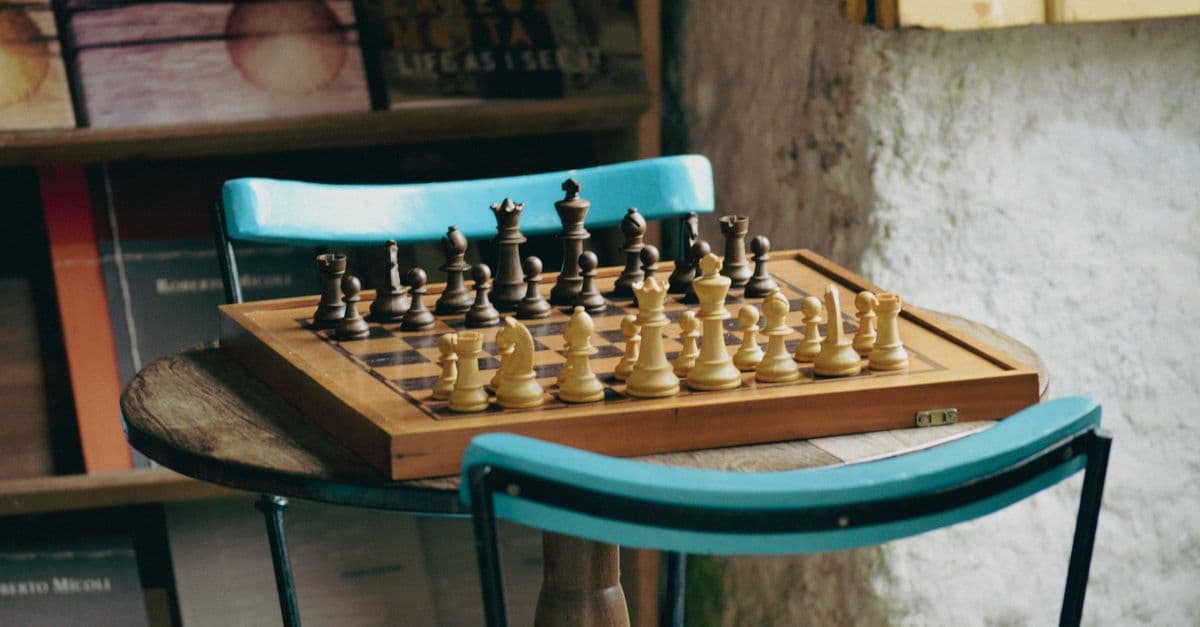
Photo: Gabriel Schincariol Cavalcante / Pexels
A chess Grandmaster title is harder to earn than most people realise. You must achieve three "norms" — outstanding results in FIDE-rated tournaments against other strong players — and maintain an Elo rating above 2,500. Of the 800 million people who play chess worldwide, approximately 1,800 to 2,000 have ever held the title. The geographic distribution of those players maps the Cold War's cultural battlefield, the Soviet state's investment in intellect as propaganda, and an ongoing shift in chess power toward Asia that may be the sport's defining story of the next decade.
This ranking covers only the elite, titled tier of players; for the total registered chess-playing population by country, see Countries with the Most Chess Players.
How the Grandmaster title works
Grandmaster (GM) — FIDE's highest title, awarded to players who achieve three tournament norms and an Elo rating of at least 2,500. The norm requires a performance rating above a threshold depending on the strength of the field. Once awarded, the title is held for life — even if a player's rating falls below 2,500.
Elo rating — a numerical measure of playing strength developed by Arpad Elo (a Hungarian-American physicist) and adopted by FIDE in 1970. The system works like compound interest: ratings increase when you beat higher-rated players and decrease when you lose to lower-rated players. The expected outcome of any match can be calculated from the rating difference. A 200-point difference corresponds to roughly a 75% win probability for the higher-rated player.
FIDE titles below GM: International Master (IM, Elo 2,400), FIDE Master (FM, Elo 2,300), Candidate Master (CM, Elo 2,200). There is also a separate women's title ladder (Woman Grandmaster, WGM) with lower requirements.
Active vs. historical GMs: FIDE's database includes both active players (currently competing with maintained ratings) and historical titleholders. The numbers in this article refer to all players ever awarded the GM title by their country affiliation, as recorded in FIDE's official statistics.
Source: FIDE Top Federations list, ratings.fide.com, 2025; World of Statistics / FIDE data compilation, January 2025.
Countries with the most chess grandmasters
(All players ever awarded the GM title, FIDE federation data, 2025)
| Rank | Country | Grandmasters | Notes |
|---|---|---|---|
| 1 | Russia | 256 | Soviet legacy; global champion factory |
| 2 | United States | 101 | Fischer's 1972 boom; NCAA-level club system |
| 3 | Germany | 96 | Strong European federation; club competition |
| 4 | Ukraine | 93 | Full Soviet training legacy |
| 5 | India | 85+ | Fastest growing; D. Gukesh World Champion 2024 |
| 6 | Hungary | 58 | Polgar sisters; per-capita among world's highest |
| 7 | Serbia | 58 | Post-Yugoslav strong tradition |
| 8 | Spain | 56 | — |
| 9 | France | 50 | Strong national federation |
| 10 | China | 48 | State-supported; Women's World Championship dominance |
| 11 | Armenia | 44 | Multiple team World Championship victories |
| 12 | Israel | 43 | Soviet emigre influx in 1990s |
| 13 | Poland | 45 | Eastern European chess tradition |
| 14 | Netherlands | 36 | Strong club competition; Jan Timman era |
| 15 | Czechia | 36 | — |
| 16 | England | 36 | — |
| 17 | Romania | 32 | — |
| 18 | Azerbaijan | 34 | State investment; Teimour Radjabov era |
| 19 | Georgia | 28 | Women's chess especially strong; Nona Gaprindashvili |
Where this data comes from
The FIDE (Fédération Internationale des Échecs) Top Federations database, updated in January 2025, is the authoritative source for grandmaster counts by country. FIDE maintains the official rating list and title registry, tracking all players ever awarded the Grandmaster designation regardless of current activity status. The figures in this article represent total historical GMs (both active and inactive) registered under each federation. These are the most reliable and verifiable international statistics available for elite chess comparison. Historical comparisons should note that federation affiliation can change — Soviet-era players may appear under current post-Soviet states — and that underreporting in countries with less formal chess infrastructure may mean actual player pools exceed recorded figures. Other country comparisons on the site, such as countries with the most official languages and countries with the most natural resources, use their own measures.
Analytical insight: Soviet legacy versus emerging dynamism
The chess grandmaster rankings reveal a geopolitical story in miniature: Soviet-era concentration of state-directed talent (Russia 256, Ukraine 93, plus diaspora to Israel and Germany) contrasts sharply with India's recent explosive growth (from 2 GMs in 1988 to 85+ in 2025). Russia maintains its lead through historical accumulation and institutional persistence, but the growth vector has swung decisively eastward. India's pace — awarding new GM titles faster than any other country — suggests it will close the numerical gap within 15–20 years. Simultaneously, China's modest GM count (48) relative to population belies its strategic investment in women's chess, where it has achieved dominance ahead of Russia. The emergence of GMs from Vietnam, the Philippines, and other countries with limited classical chess traditions demonstrates that online chess and AI training tools have finally decoupled elite chess development from expensive national institutions. The geographic distribution of future grandmasters will look fundamentally different from the Soviet-shaped pattern visible in today's rankings.
Historical context: why Russia dominates
The Soviet Union elevated chess to a national prestige project unlike anything in the history of intellectual competition. From the 1920s onward, the state built an entire ecosystem around the game:
Chess clubs were established in every major factory, school, and institution across the USSR. By its peak in the 1960s–70s, the Soviet Union had approximately 5 million registered chess players — more than the rest of the world combined. The comparison that helps most Westerners grasp the scale: imagine if every high school in the United States had a mandatory chess team with a paid professional coach, and state scholarships were available for the most talented players from age 12.
The Soviets identified promising young players through a pyramid of competitions: school level, district level, city level, republic level, Soviet championship. Each layer was fiercely competitive; players who reached the national team level were essentially full-time professionals supported by the state. They were nominally employed as engineers, professors, or military officers — but their job was chess.
The ideological motivation was explicit. From the 1940s through the 1980s, the World Chess Championship was viewed by the Kremlin as a proxy for Soviet intellectual superiority over the West. From 1948 to 1972 — 24 consecutive years — the World Chess Championship was held by a Soviet player. The streak produced some of the greatest chess players in history: Mikhail Botvinnik (the "patriarch of Soviet chess"), Vasily Smyslov, Mikhail Tal (the "Magician from Riga"), Tigran Petrosian, Boris Spassky, and Anatoly Karpov.
Bobby Fischer's 1972 victory in Reykjavik over Boris Spassky was one of the Cold War's most celebrated single contests. Fischer — a difficult, peripatetic American genius largely self-trained outside any institutional structure — defeated not just Spassky but the entire Soviet chess machine. The match drew 60 million US television viewers for the final games; Fischer appeared on the cover of every major newsmagazine. It remains the most culturally significant chess match in history precisely because it was understood as an individual defeating a state.
The Soviet system's legacy explains why Russia still leads the GM table more than 30 years after the Soviet Union ceased to exist. The generation trained in the 1970s–80s are now in their 50s–70s; many still hold their titles. And the training infrastructure, while diminished, persists through Russian chess clubs, schools, and the Russian Chess Federation, which remains one of the world's best-funded national federations.
Source: Kasparov, G., "My Great Predecessors" (volumes 1–5), Everyman Chess, 2003–2006; Brady, F., "Endgame: Bobby Fischer's Remarkable Rise and Fall," Crown, 2011.
Why the Soviet total understates Russia's true dominance
The 256 figure for Russia includes only players registered with the Russian Chess Federation. It excludes:
- Ukrainian GMs (93) who were trained entirely within the Soviet system before Ukrainian independence in 1991
- GMs from Azerbaijan, Armenia, Georgia, and the Central Asian republics — all Soviet-trained — who now compete under their own national federations
- GMs of Soviet origin who emigrated to Israel, Germany, France, or the United States and now represent those countries
If you aggregate all players trained within the Soviet chess system — wherever they now live and compete — the total is well above 500, representing a single national programme's output that dwarfs all others in history.
Israel's current GM count (43) offers a precise example of this diaspora effect. Israel has a small domestic chess tradition, but the 1990s wave of Soviet emigration brought hundreds of trained chess players from Russia, Ukraine, and other republics. Many had near-GM or GM strength acquired in Soviet training environments. Israel became the beneficiary of this diaspora, producing a GM density per capita that makes it one of the world's most chess-rich nations by population ratio.
India: the new chess superpower
India's emergence as a chess superpower is the most significant structural shift in the sport since the Soviet collapse. The trajectory is clear in the numbers: India had fewer than 20 GMs as recently as 2010; it crossed 85 in 2025; and the pipeline shows no deceleration.
Viswanathan Anand's foundational role. Anand became India's first Grandmaster in 1988 and its first World Chess Champion in 2000. He held the World Championship five times in total, most recently from 2008 to 2013. Anand's significance goes beyond his own results: he was the first person from Asia to hold the title, and he did it in a country where chess was regarded as a niche hobby rather than a national sport. His career created a generation of Indian parents who enrolled their children in chess clubs and a generation of children who grew up believing that an Indian could be the best chess player in the world.
The Pragg generation. By the mid-2010s, Indian junior chess was producing players at a rate without historical precedent. Rameshbabu Praggnanandhaa became one of the youngest GMs in history at 12 years, 10 months in 2018. Nihal Sarin, Arjun Erigaisi, and Gukesh Dommaraju followed at similarly young ages. These players share a profile: trained from early childhood using online platforms, coached by strong Indian GMs, and exposed to international competition from their earliest teens.
D. Gukesh's World Championship. In December 2024, Dommaraju Gukesh defeated Ding Liren to become the 18th World Chess Champion — and, at 18 years old, the youngest world champion in the history of classical chess. This was not a symbolic result. Gukesh won a 14-game classical match, the most rigorous format in chess, against a former world champion. India now holds the World Championship title for the first time in a generation.
The structural factors behind India's rise:
Online chess democratised training. Chess.com and Lichess provide free access to millions of games, tactical puzzles, and engine analysis that previously required expensive books and coaches. A child in Chennai with an internet connection now has access to better training material than a Soviet candidate master had in 1975.
India's large, highly educated, and competitive middle class provides a natural base of ambitious parents and motivated children. Chess has cultural prestige in India — it is considered an intellectual achievement that combines with academic attainment rather than competing with it.
The All India Chess Federation has built tournament infrastructure at state and national level that gives talented players a competitive ladder from childhood. The AICF's support for junior players includes sponsorship for international tournaments, a pipeline that most small chess federations cannot afford.
Source: FIDE official website, fide.com, India federation statistics, 2025; Times of India, "D. Gukesh becomes youngest World Chess Champion," December 2024.
Hungary: the Polgar experiment and per-capita dominance
Hungary's 58 GMs for a population of 9.7 million — roughly 6 per million people — places it among the highest-density chess nations in the world. This reflects both the country's Eastern European chess tradition and one of the most extraordinary experiments in the history of human development: the Polgar sisters.
László Polgár was a Hungarian educational psychologist who believed that genius could be cultivated through early specialisation and deliberate practice rather than innate talent. He chose chess as his proving ground and raised his three daughters — Judit, Susan (Zsuzsa), and Sofia — as chess players from infancy, with their informed consent from an early age.
The results:
Judit Polgár — peak Elo 2735, making her the strongest female chess player in recorded history and the only woman to have defeated 11 current or former World Champions in classical games. She competed in the World Championship Candidates Cycle as an equal in the open (mixed) field, not the women's division. She defeated Anatoly Karpov, Boris Spassky, and Garry Kasparov (in a rapid game). She retired in 2014 at age 38.
Susan (Zsuzsa) Polgár — Women's World Champion 1996–1999, FIDE Grandmaster (full open title, not women's title), multiple Women's Chess Olympiad gold medals.
Sofia Polgár — International Master (not GM, the only Polgár sister who did not reach full GM strength), still a world-class player.
The Polgar experiment is frequently cited in debates about nature versus nurture in human achievement. It does not conclusively prove that environment can override all genetic factors in chess ability — the Polgár sisters may have had innate advantages. But it demonstrates that early specialisation, concentrated practice, and supportive environment can produce world-class performance from a starting point of zero formal talent identification.
Hungary's broader GM production reflects the same Eastern European training tradition that produced Russian chess dominance — competitive club systems, strong national federation, and cultural prestige attached to intellectual achievement.
Armenia: the overachieving small nation
Armenia (44 GMs, population 2.97 million) has one of the highest GM-per-capita ratios of any nation — roughly 14 per million people. For context: India, with 85 GMs and 1.4 billion people, has 0.06 per million.
Armenia's chess achievement is driven by:
Tigran Petrosian's legacy. Petrosian — a defensive genius known as "Iron Tigran" — was World Chess Champion from 1963 to 1969. He remains one of the deepest positional players in chess history. His success created the same catalyst effect in Armenia that Anand created in India — a generation that believed their country could produce the world's best.
State investment. The Armenian government has specifically invested in chess as a national identity marker. In 2011, Armenia became the first country to make chess a compulsory school subject — every child from age 6 studies chess for at least two hours per week as part of the standard curriculum. The programme has since been studied and partially replicated in countries including Wales, Italy, and parts of India.
Team success. The Armenian national team won the Chess Olympiad (the team world championship) three times consecutively (2006, 2008, 2012) with a team including Levon Aronian (peak rating 2830), Vladimir Akopian, Sergei Movsesian, and Gabriel Sargissian. These victories amplified chess's national prestige and attracted more young players into the pipeline.
Source: Chess.am, Armenia compulsory chess curriculum overview; FIDE Chess Olympiad historical results.
China: state-directed chess excellence
China's 48 GMs reflect a state chess programme that mirrors its approach to other Olympic disciplines — identify strategic targets, fund infrastructure, and develop athletes systematically.
China began serious chess investment in the 1990s with a specific focus on women's chess, where the title requirements are lower and Chinese players could achieve international results faster. The strategy worked: Chinese women have dominated Women's World Championship events for decades, winning the Women's World Team Championship (Women's Olympiad) multiple times and producing multiple Women's World Champions.
Ding Liren became China's first classical World Chess Champion in 2023, defeating Ian Nepomniachtchi in a dramatic final match. Ding held the title until losing to Gukesh in December 2024. His rise was supported by the Chinese Chess Association's training infrastructure, international tournament participation funding, and the general prestige of competitive achievement in Chinese culture.
The Chinese chess pipeline is still developing — 48 GMs is modest relative to population, and the bottleneck is not talent but the slow process of achieving FIDE norms in international tournaments. As Chinese players gain more international competition exposure, the GM count is likely to rise substantially.
Norway: Magnus Carlsen and the outlier effect
Norway has 12 Grandmasters — not a large number by any standard. Yet Norway dominated chess from 2013 to 2023 through a single player who may be the greatest in history.
Magnus Carlsen became World Chess Champion in 2013 at age 22, defeating Viswanathan Anand. He held the title until 2023, when he declined to defend it against Ian Nepomniachtchi — not because he lost, but because he said the prospect of preparing for and playing a World Championship match no longer motivated him sufficiently.
Carlsen's peak Elo rating was 2882 — the highest ever recorded, surpassing Garry Kasparov's previous record of 2851. The gap between 2882 and the second-highest player of his era (typically in the 2800–2830 range) was statistically unusual; world champions typically lead the live ratings list by smaller margins.
Norway illustrates the outlier effect in country-level rankings: a single extraordinary individual can place a small nation at the top of chess rankings despite no systemic advantage in player production. Norway's 12 GMs versus India's 85+ GMs is not evidence that Norway is a better chess environment — it reflects one exceptional individual rather than systemic depth.
The youngest Grandmasters: how AI training tools have changed development
The record for youngest Grandmaster has been broken multiple times in the past 15 years, and the trend is directly linked to the availability of AI chess analysis.
Before computer engines became widely available (roughly pre-2000), elite chess training required access to a strong coach, large collections of annotated games, and the practical experience of many tournament games against strong opponents. This was expensive and geographically limited — it favoured players in cities with strong chess clubs, ideally Soviet ones.
From roughly 2006 onward, Stockfish (a free, open-source chess engine) became strong enough to beat any human player, providing essentially perfect tactical feedback to any player with a computer. From 2017, AlphaZero (DeepMind) demonstrated superhuman positional chess, and Leela Chess Zero (a free implementation of similar architecture) became freely available. These engines allow any player anywhere to analyse their games against the best chess thinking in history, identifying mistakes with precision that no human coach can match.
The result: talented young players now compress what previously took 15 years of development into 8 or 9 years. They learn tactical patterns faster, identify strategic errors more precisely, and train more efficiently. The youngest GMs in history — Carlsen achieved the title at 13; Sergey Karjakin at 12 years 7 months (2002 record); Abhimanyu Mishra (USA, Indian origin) at 12 years 4 months 25 days (2021, current record) — reflect this compression of development timelines.
Source: FIDE, "Youngest Grandmasters," official records database; ChessBase, analysis of GM title age trends, 2024.
Online chess and the coming wave of new nations
Chess.com reports over 100 million registered users globally (as of 2024). The platform's free tier provides access to unlimited games, puzzles, and basic analysis. Lichess, a fully open-source platform, provides everything Chess.com does without a paywall.
This has democratised chess access in countries without traditional chess infrastructure: Vietnam, Brazil, Indonesia, and several African nations are seeing rapid chess growth driven by online play and online streaming platforms. YouTube and Twitch chess streamers — notably Hikaru Nakamura and Alexandra Botez — have created new audiences in countries where chess had minimal prior visibility.
The bottleneck between online chess growth and GM production is tournament access: FIDE norms require playing in rated over-the-board (physical) tournaments against sufficient numbers of strong players. These tournaments are concentrated in Europe, Russia, India, and the US. A talented player in Nigeria or Indonesia faces significant travel and cost barriers to accumulating norms that a player in Moscow or Chennai does not.
FIDE has begun addressing this through online norm-eligible tournaments and by accrediting more tournaments in underrepresented regions. The next decade is likely to see GMs from countries currently absent from the table.
Frequently asked questions
Q: What is the youngest age anyone has become a grandmaster? A: Abhimanyu Mishra (USA, of Indian origin) achieved the Grandmaster title at 12 years, 4 months, and 25 days in 2021, breaking Sergey Karjakin's record that had stood since 2002. The concentration of record-young GMs in the 2010s–2020s directly reflects the training revolution brought by AI chess engines, which compress development timelines.
Q: How does Elo rating relate to the GM title? A: A 2,500 Elo player (minimum GM level) will beat a 2,300 player (strong FM) in approximately 76% of games. World Champions typically rate 2,800+. Magnus Carlsen reached 2,882 — the all-time record. The practical difference between 2,500 and 2,882 is enormous: Carlsen would be expected to win approximately 97% of games against a minimum-rated GM in classical time control.
Q: Is online chess changing which countries produce GMs? A: Yes, meaningfully. Platforms like Chess.com and Lichess provide free high-quality training globally, removing the access advantages that previously favoured players near strong clubs or coaches. Countries with large internet-connected young populations are seeing rapid chess growth. The remaining bottleneck is tournament infrastructure — accumulating FIDE norms requires over-the-board play in rated events, which are still concentrated in Europe and Asia.
Q: Is women's chess a separate category? A: FIDE maintains a parallel women's title ladder (Woman Grandmaster, WGM) with lower Elo requirements. Women can also compete for and hold the open GM title — Judit Polgár is the most notable example. Fewer than 45 women hold the full open GM title as of 2025. The separate women's titles reflect historical barriers to women's access to competitive chess rather than inherent capability differences; Judit Polgár's career is the clearest demonstration that women can compete at the absolute highest level.
Q: Why does Armenia make chess compulsory in schools? A: Armenia's government views chess as a tool for developing analytical thinking, concentration, and problem-solving skills in children, alongside its role as a national cultural symbol. A 2016 study by the Armenian Ministry of Education found improvements in mathematics performance among students in the compulsory chess programme, though causal attribution in such studies is difficult. Wales and some Italian regions have adopted similar programmes citing the Armenian model.
Q: Who is the greatest chess player of all time? A: A contested question. Garry Kasparov (peak Elo 2851, World Champion 1985–2000) and Magnus Carlsen (peak Elo 2882, World Champion 2013–2023) are the primary candidates by rating and sustained dominance. Bobby Fischer's 1972 dominance — he lost only 3 games in his entire World Championship run and won the championship match 12.5–8.5 — is historically extraordinary. The question cannot be fully resolved because players of different eras faced different opponents and had access to different preparation methods.
The takeaway
The geography of chess grandmasters is a map of three overlapping historical forces: Soviet-era state investment that built the world's most effective chess infrastructure and whose legacy still accounts for the majority of the world's title holders; a post-Soviet diaspora that transplanted Soviet-trained players to Israel, Germany, the United States, and Western Europe; and a new wave of Asian chess power centred on India, which is producing GMs at a rate unprecedented in the sport's history and now holds the World Championship title. Online platforms and AI training tools have removed the access advantages that previously favoured Soviet-tradition nations, meaning the next generation of grandmasters will come from a broader range of countries than any previous generation — making chess's geographic distribution the most dynamic it has ever been.
Read next:
Follow new articles
Add SciHub101 to your feed reader to see new science and technology stories.
About the Author
SciHub101 is an independent science and technology publication founded and edited by Buğra Sözeri, a software engineer and app developer based in Türkiye. AI tools assist with drafting and research. Source documentation in the existing archive is uneven, and articles are being reviewed and corrected. The Editorial Team byline identifies editorial responsibility; it does not certify specialist or independent human review. Where we compare products, anything built by our own team is labelled as such — see the editorial guidelines and About page for how corrections and disclosures work.
Related Articles
Countries with the Most Olympic Gold Medals All Time (Total Ranked)
The United States has won more than 1,100 Olympic gold medals since 1896 — more than any other nation. The Soviet Union, which no longer exists, ranks second. Here's the all-time medal table, the stories behind the dominant nations, and how the balance of Olympic power has shifted over 130 years.

Alcohol Consumption by Country: Comparing the Measures
Country alcohol comparisons depend on pure-alcohol units, the age range, and estimates of unrecorded drinking. Learn what a per-capita figure can tell you and what it cannot.
Countries with the Most Chess Players (2025 Ranked)
Russia has produced more World Chess Champions than any country — 16 of 17 champions from 1927 to 2007 were Soviet or Russian. India is now the world's fastest-growing chess nation with 80+ active grandmasters. Magnus Carlsen of Norway held the world title for 10 years. Here are the countries dominating chess.

Countries with the Most Official Languages (2025 Ranked)
Zimbabwe has 16 official languages — the world's most. India recognises 22 scheduled languages. Papua New Guinea has 840+ spoken languages, making it the world's most linguistically diverse country. Here's the full ranking of countries by official and spoken languages — and what extraordinary linguistic diversity means for governance.

Countries with the Most Tea Consumption (2025 Ranked)
China drinks more tea than any country — 3 million tonnes per year. But Turkey has the highest per-capita consumption at 4.6 kg per person. Tea is the world's second most consumed beverage after water. Here's the full global tea ranking, who grows it, who drinks it most, and why.

Countries with the Most Sports Participation (2025 Ranked)
Finland and Sweden have the highest sports participation rates — over 70% of adults play sport regularly. Australia has the most sports organisations per capita. The US has the most professional sports leagues. Here's the full ranking of the world's most sports-active nations.