Countries with the Most Sports Participation (2025 Ranked)
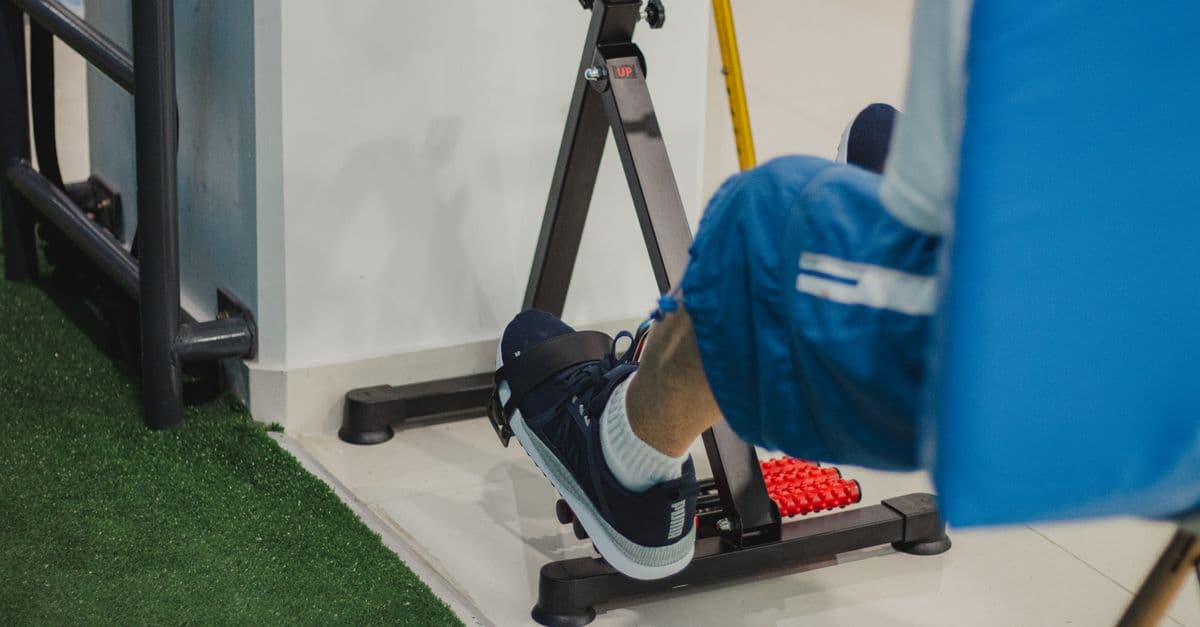
Photo: Juan Manuel Montejano Lopez / Pexels
Sports participation — the share of adults who regularly engage in organised or informal sport — is one of the more revealing public health and cultural indicators a country produces. Nations where most adults move their bodies regularly spend less on preventable chronic disease, report higher social trust, and sustain stronger community infrastructure. But "most sporty" means different things depending on what you count: professional achievement, sheer number of sports practiced, grassroots participation rates, or elite Olympic output. This article ranks the world's most sports-active nations by adult participation rate, then drills into what actually drives those numbers and why they differ so dramatically.
How This Ranking Works: Methodology
Sports participation data come primarily from three sources. The Eurobarometer Sport and Physical Activity survey (most recently published in 2022) covers all EU member states using a consistent methodology — asking adults whether they exercise or play sport at least once per week. The Australian Bureau of Statistics and Sport Australia publish comparable annual surveys. For non-European, non-Australian countries, this ranking draws on national sports authority reports and where available, WHO Global Health Observatory physical activity data.
"Sports participation" here means engaging in any structured or semi-structured physical activity — running clubs, swimming sessions, community football, tennis, and gym-based exercise all qualify. Unstructured walking does not. Professional spectators who never leave the couch are not counted regardless of how much they identify with a team.
Industry size estimates draw on market research from IBISWorld and Statista industry reports. Where figures vary between sources, the more conservative estimate is used.
Source: Eurobarometer Sport and Physical Activity Survey 2022 (europa.eu), Australian Bureau of Statistics Sport and Physical Activity data, WHO Global Health Observatory physical activity module.
Countries by Sports Participation Rate (2025)
Share of adults participating in sport or physical activity at least once per week.
| Rank | Country | Weekly sports participation | Top sports | Notes |
|---|---|---|---|---|
| 1 | Finland | 72% | Ice hockey, athletics, skiing, football | Highest in EU |
| 2 | Sweden | 70% | Football, ice hockey, orienteering | |
| 3 | Denmark | 68% | Football, handball, cycling | |
| 4 | Netherlands | 66% | Football, cycling, field hockey | |
| 5 | Australia | 64% | AFL, cricket, swimming, rugby | Highest sports clubs per capita |
| 6 | Austria | 62% | Football, skiing, cycling | |
| 7 | New Zealand | 63% | Rugby union, cricket, netball | |
| 8 | Luxembourg | 60% | Cycling, football | |
| 9 | Canada | 58% | Hockey, lacrosse, basketball | |
| 10 | Germany | 55% | Football, gymnastics, cycling | |
| 11 | UK | 52% | Football, rugby, cricket | |
| 12 | Japan | 52% | Baseball, judo, football, sumo | |
| 13 | United States | 48% | American football, basketball, baseball | Most professional leagues |
| 14 | South Korea | 46% | Football, baseball, taekwondo | |
| 25 | France | 44% | Football, tennis, cycling | |
| 30 | Brazil | 38% | Football, volleyball, beach sports | |
| 35 | Italy | 33% | Football, cycling, volleyball | |
| — | Bulgaria | 12% | — | Lowest in EU |
Source: Eurobarometer Sport and Physical Activity Survey 2022, Australian Bureau of Statistics AusPlay, national sports authority reports.
Where this data comes from
Sports participation data across this ranking comes from three primary sources. The Eurobarometer Sport and Physical Activity Survey (most recent edition 2022) covers all EU member states using a standardised methodology — asking adults whether they exercise or play sport at least once per week. Australia's participation data comes from Sport Australia's AusPlay annual survey, which tracks nearly identical metrics. For non-European, non-Australian countries, data comes from national sports authorities (StatsCan for Canada, ACSM for the US) and where available, WHO Global Health Observatory physical activity data. "Sports participation" is defined consistently across sources as engaging in structured or semi-structured physical activity at least once weekly; this excludes unstructured walking and spectator-only engagement. Estimates for industry size and club counts come from national sports federation records. Variations between sources are common; this article uses the most recently available and most conservative figures.
Historical Context: How Sports Became a National Project
Organised sport as a civic institution is largely a 19th-century invention. Britain codified the rules of association football (1863), rugby (1871), and cricket (standardised laws, 1788), and exported these games through its empire and merchant networks. The modern Olympic Games, revived in Athens in 1896 by Pierre de Coubertin, established sport as a vehicle for national identity on a global stage.
The Nordic countries developed their distinctive sports culture through a different path. The gymnastics movement — founded by Danish-Norwegian educator Franz Nachtegall and expanded by Swede Per Henrik Ling in the early 19th century — established physical education as a democratic and civic project rather than an aristocratic leisure pursuit. By the late 1800s, Finnish and Swedish schools had mandatory physical education curricula, a policy foundation that has never been dismantled.
Australia's sports culture crystallised in the colonial period, where inter-colony cricket matches and later Australian Rules Football competitions provided the social glue for communities separated by vast geography. The 1880 test match between Australia and England — the match from which the Ashes tradition grew — was a galvanising national event before Australia was even a federated nation. Sport became the language of Australian identity before political nationhood was formalised.
The United States professionalised sport early, with baseball's National League established in 1876 and the first professional American football organisation emerging in 1920. American sport diverged from the European model by becoming primarily a spectator entertainment industry rather than a mass participation system — a distinction that still shows up in today's participation statistics.
Source: History of European sports culture draws on UNESCO Thematic Study on Sports and Physical Education and IOC Olympic Heritage publications.
Why Sports Participation Matters Beyond Recreation
The economic and health case for high national sports participation is well-established. The WHO Global Action Plan on Physical Activity 2018–2030 estimates that physical inactivity costs the global economy approximately $67.5 billion per year in healthcare expenditure and lost productivity. Countries with high participation rates are, in effect, making an investment that pays compound returns in lower cardiovascular disease rates, reduced depression and anxiety, and higher workplace productivity.
Social capital is harder to quantify but equally real. Finland's 9,000 sports clubs — largely volunteer-run — provide the civic infrastructure through which hundreds of thousands of Finns build cross-cutting social relationships: the middle-aged accountant who coaches a junior ice hockey team knows parents from different neighbourhoods, professions, and political backgrounds. This social mixing has measurable effects on community trust levels that show up in surveys measuring social cohesion.
The public health parallel works like compound interest: every percentage point increase in adult sports participation lowers the incidence rate of type 2 diabetes, hypertension, and depression over a 10–15 year horizon. Countries that invest in sports infrastructure in their 30s and 40s harvest the savings in healthcare budgets in their 50s and 60s.
Per-Country Deep Dive
Finland: The World's Most Sports-Active Nation
Finland's 72% adult participation rate has structural causes that cannot be replicated by a single policy intervention — they are the product of a mutually reinforcing system.
The sports club infrastructure is the foundation. Finland operates approximately 9,000 registered sports clubs for a population of 5.5 million — roughly one club per 600 people. These clubs, funded through a combination of membership fees, state lottery proceeds, and municipal subsidy, provide coached sport from age six through adulthood in disciplines ranging from floorball and orienteering to chess and equestrian. Crucially, cost is not a barrier: Finnish club sport is heavily subsidised and typically affordable for low-income families.
The school system reinforces participation from the earliest age. Finnish schools mandate 75-minute outdoor recess periods even in winter, regardless of temperature. Forest schools — where entire lessons take place outdoors — are standard in early years. The physical education curriculum runs continuously through secondary school and is assessed as seriously as mathematics.
Finland's sporting geography shapes culture as much as policy does. With 180,000 lakes, 75,000 km of marked trails, and reliable snow cover for 3–4 months in most of the country, outdoor physical activity is the default leisure option rather than a deliberate choice. Cross-country skiing to work, ice fishing, and orienteering are not niche enthusiast activities — they are how people spend their free time.
Elite success reinforces mass participation through inspiration. Paavo Nurmi, the "Flying Finn," won nine Olympic gold medals in distance running between 1920 and 1928. Lasse Virén won the 5,000 m and 10,000 m at both the 1972 and 1976 Olympics. Mika Häkkinen won back-to-back Formula 1 world championships in 1998–1999. Each Finnish sporting icon creates a new cohort of young participants.
Source: Finnish sports club data from the Finnish Sports Federation (Valo/Olympic Committee Finland annual report).
Sweden: Organised Sport as Social Democracy
Sweden's 70% participation rate reflects the integration of sport into the Swedish welfare state. The Swedish sports movement — operated through the Swedish Sports Confederation (Riksidrottsförbundet), which represents 3.4 million members across 72 national sports federations — is one of the largest civil society organisations in Scandinavia.
Sweden's Idrottslyft ("Sports Lift") programme, a state-funded initiative channelling lottery revenue into grass-roots sport, has directed over 1 billion SEK annually into club subsidies, facility construction, and coach training. The explicit policy goal is to ensure that every child, regardless of family income or geography, has access to coached sport within a reasonable distance of home.
Orienteering — a sport Sweden essentially industrialised for mass competition — is a useful window into Swedish sports culture. The O-Ringen, held each summer, attracts 15,000+ participants over five days: a mass cross-country navigation race through forests. It is not an elite spectator event but a family participation festival. This model — mass participation in a technically demanding outdoor sport — is distinctively Swedish.
Australia: The Sports Club as Community Infrastructure
Australia's position in this ranking is particularly striking because it is the only non-European country in the top tier — and it gets there through community club culture rather than state mandate.
Australia has approximately 100,000 registered sporting clubs for a population of 26 million — an extraordinary density. These clubs, spanning Australian Rules Football, cricket, netball, swimming, rugby league, rugby union, basketball, tennis, and dozens of other sports, function as the social infrastructure of suburban life. The weekend sports club is where parents meet, where friendships form across occupational boundaries, and where Australian children spend their Saturday mornings.
The four-football-code environment is uniquely Australian. No other country sustains four distinct football codes at a high professional level simultaneously: Australian Rules Football (AFL, dominant in Victoria, South Australia, Western Australia), Rugby League (NRL, dominant in New South Wales and Queensland), Rugby Union, and Association Football (A-League). Each code has its own club structure, youth pathways, and regional loyalties. The competition for participants and supporters creates a sports-saturated environment with very few gaps in provision.
Australia's climate is another structural advantage that policy cannot manufacture. Year-round outdoor sport is possible across most of the country. The combination of beaches, public swimming pools, oval grounds, and tennis courts — all built as standard suburban public infrastructure — makes participation practically frictionless.
Source: Australian sports participation data from Sport Australia's AusPlay survey (ausport.gov.au).
United States: Professional Empire, Participation Gap
The US sits 13th in this ranking despite operating the world's most powerful sports entertainment industry — and that gap between spectator culture and participant culture is the most interesting story in American sport.
The NFL generates approximately $18 billion annually, making it the highest-revenue sports league on earth. The NBA, MLB, and NHL add tens of billions more. American sports media — networks, streaming platforms, fantasy sports, and betting — represent a consumption infrastructure without parallel. The Super Bowl is the most-watched annual television event globally.
Yet only 48% of American adults exercise or play sport weekly. The gap between spectator engagement and participant engagement is a product of how American sport developed: as a professional entertainment commodity rather than a community participation system. The high school and college sports model funnels exceptional athletes toward professionalism while providing limited pathways for non-elite participants after they age out of school teams.
The Aspen Institute's Project Play research, released in 2022, found that only 38% of American children aged 6–12 played team sports regularly, down from 45% in 2008. The decline is attributed to the rising cost of youth sport — travel teams, specialist coaches, equipment, and tournament fees have priced lower-income families out of organised participation — and to the specialisation of children in single sports at younger ages, which increases injury and burnout.
Urban design also matters. American suburban development, optimised for car travel rather than walkable access, reduces the spontaneous physical activity that European and Australian suburban design generates. The European child who walks or cycles to school accumulates activity that the American child driven door-to-door does not.
Japan: Centuries of Martial Discipline, Decades of Baseball
Japan's 52% participation rate is achieved through an unusual combination of ancient martial traditions and mid-19th-century American imports.
Baseball arrived in Japan in 1872, introduced by American educator Horace Wilson at what is now the University of Tokyo. It took root with extraordinary speed — within two decades it was the country's dominant sport, and it has held that position for over a century. Nippon Professional Baseball (NPB) has fielded teams since 1936. The national high school baseball tournament (Koshien), held twice annually at the historic Koshien Stadium in Hyogo, draws television audiences of millions and represents one of Japan's most emotionally charged annual events. Players from Koshien are treated as national celebrities regardless of whether they progress to professional careers.
Japan's martial arts tradition — judo, karate, kendo, aikido, sumo — is woven into the school curriculum in ways that generate both participation and national identity. Judo is mandatory in junior high school physical education. Sumo, Japan's national sport, is as much a cultural and spiritual institution as an athletic competition: the six annual tournaments in Tokyo, Osaka, Nagoya, and other cities draw packed crowds and high television ratings.
The bukatsu (school club activity) system is the most distinctive feature of Japanese youth sports. Japanese high school students who join a sports club practice 3–4 hours per day, six days per week, with a total commitment that would be considered extreme in most other countries. The intensity creates exceptional levels of technical proficiency — and also generates significant dropout when students cannot sustain the commitment alongside academic demands.
Source: Japanese baseball and school sports culture from Japan Sport Council annual survey (japan-sports.or.jp).
Nordic Footnote: Denmark and the Netherlands
Denmark's 68% rate and the Netherlands' 66% reflect the same underlying infrastructure as Finland and Sweden: subsidised club systems, strong cycling culture, and school PE policies that treat physical activity as a health right rather than an optional extra.
Denmark's handball culture — the national men's and women's teams are consistently among the world's best — illustrates the virtuous cycle between elite success and mass participation. When the Danish women's handball team won Olympic gold in Tokyo, participation in club handball across Denmark rose 12% in the following season. Elite visibility drives grassroots engagement in a system where clubs are already accessible.
The Netherlands generates 66% participation partly through infrastructure that the country cannot help but provide: 35,000 km of dedicated cycling lanes make cycling a default transport and exercise mode for the Dutch population regardless of any active choice to "exercise." Structural exercise embedded in daily commuting raises participation statistics in ways that are genuine health benefits but not easily replicable in car-centric countries.
Key Trends Shaping Sports Participation
Esports and the definitional question. South Korea, where competitive gaming at PC cafes (PC bangs) is a dominant youth leisure activity, and China are pushing the question of whether esports counts as sport. The Asian Games included esports as a medal event in 2022. The IOC has explored esport at the Olympics. If esports participation counts, South Korea and China would rank dramatically higher in participation figures. The definitional debate is not trivial: the physical and social benefits of traditional sport differ significantly from seated competitive gaming.
Fitness apps and the individualisation of sport. Strava, Garmin Connect, Nike Run Club, and similar platforms have created a new form of community-enabled individual sport — the solo runner who participates in monthly challenges with thousands of other solo runners globally. This model is growing fastest in urban populations in the US and UK and is likely raising participation statistics modestly, though it does not replicate the social infrastructure of the club model.
Post-pandemic recovery. Sports participation fell sharply during COVID-19 lockdowns and has recovered unevenly. Team sports generally recovered faster than individual sports; youth participation recovered faster than adult participation. Countries with strong club infrastructure — Finland, Sweden, Australia — recovered faster than countries relying on commercial gyms and recreation centres.
Frequently Asked Questions
Q: What country is best at sport overall, measured by outcomes? By Olympic medals per capita, small nations with concentrated sports cultures lead: Norway (cross-country skiing and biathlon), New Zealand (rowing, sailing, rugby), Jamaica (sprinting), and Kenya (distance running). By total medals, the US, China, and Russia dominate modern Olympics due to population and resource scale. By FIFA World Cup titles, Brazil (5), Germany (4), and Italy (4) lead. No single country leads across all measures.
Q: Why do Nordic countries have such high sports participation? Multiple reinforcing factors: subsidised sports clubs providing accessible sport from childhood through adulthood; school policies mandating daily physical activity; climate and geography that make outdoor activity a default leisure option; and a welfare state providing the economic security and leisure time that regular sport participation requires. Crucially, Nordic sport is primarily a participation culture, not a spectator culture — the same population that watches football on television also plays football on weekends.
Q: Is esports counted as sport in this ranking? No. This ranking measures physically active sport participation, consistent with WHO physical activity definitions. Esports participation may represent meaningful cognitive and social engagement but does not generate the health outcomes that justify sport's public health rationale.
Q: Why does the US rank so far below its global sports dominance would suggest? The US leads in professional sports revenue and elite athlete production, not grassroots participation. This reflects how American sport developed — primarily as a professional entertainment commodity rather than a community participation system. The European club model creates participation pathways for ordinary adults; the American school-to-professional model does not.
Q: What policy interventions most effectively increase sports participation? Evidence from across Europe consistently points to three high-impact interventions: subsidised community sports clubs (reducing cost barriers), school physical activity mandates (building lifetime habits), and walkable/cycleable urban design (embedding movement into daily life). Large-scale elite sporting events (Olympic Games, World Cups) increase spectator interest but do not reliably increase grassroots participation — the "Olympic legacy" of mass participation is largely aspirational rather than demonstrated.
Q: Which countries have the lowest sports participation and why? Bulgaria (12%), Romania (under 15%), and several other Eastern European countries consistently rank lowest in EU Eurobarometer surveys. Contributing factors include inadequate public sports infrastructure, high private sport costs relative to average incomes, cultural patterns favouring passive leisure, and the collapse of Soviet-era state sports club systems without equivalent replacements.
The Takeaway
Sports participation follows infrastructure, not inspiration. The countries at the top of this ranking — Finland, Sweden, Denmark, Australia — share a common feature: they built accessible, subsidised, community-based sports systems that make participation the default option rather than the exceptional one. The United States, with its extraordinary professional sports culture, demonstrates that spectator dominance and participant culture are almost entirely separable. Physical inactivity costs the global economy an estimated $67.5 billion per year in healthcare expenditure and lost productivity. The most cost-effective interventions — community sports clubs, mandatory school physical education, walkable urban design — are unglamorous compared to stadium construction, but they are measurably what actually works.
Related Reading
Follow new articles
Add SciHub101 to your feed reader to see new science and technology stories.
About the Author
SciHub101 is an independent science and technology publication founded and edited by Buğra Sözeri, a software engineer and app developer based in Türkiye. AI tools assist with drafting and research. Source documentation in the existing archive is uneven, and articles are being reviewed and corrected. The Editorial Team byline identifies editorial responsibility; it does not certify specialist or independent human review. Where we compare products, anything built by our own team is labelled as such — see the editorial guidelines and About page for how corrections and disclosures work.
Related Articles

How the Global Financial System Works
About $9.6 trillion of foreign exchange changes hands on an average day. Banks create most money by lending, central banks set the price of credit, and the dollar sits on one side of almost every trade. Here is how the machinery fits together, and how it failed in 2008.

How Democracy Works — and Why It's Under Threat
Four major democracy indices, V-Dem, Freedom House, the EIU and International IDEA, have reported global decline for years, though the EIU's 2025 edition found scores stabilising. V-Dem counts 92 autocracies and 87 democracies at the end of 2025. What democracy requires, how the indices measure it, where they disagree, and how democracies erode.
Countries with the Most Skiing: What the Data Shows
Worldwide, skiers made about 399 million visits in 2024/25. Austria reports roughly 52 million skier days a year, and snowmaking is now central to the business.
Countries with the Most Chess Players (2025 Ranked)
Russia has produced more World Chess Champions than any country — 16 of 17 champions from 1927 to 2007 were Soviet or Russian. India is now the world's fastest-growing chess nation with 80+ active grandmasters. Magnus Carlsen of Norway held the world title for 10 years. Here are the countries dominating chess.

Countries with the Highest Cancer Rates (2025 Ranked)
Australia has the world's highest cancer incidence rate — 468 cases per 100,000 people. Denmark leads Europe. The US ranks 5th globally. High-income countries detect more cancer but survive it better. Cancer kills 10 million people annually — the world's second-leading cause of death.

Countries with the Most Chess Grandmasters (FIDE Ranked)
Russia has produced more chess grandmasters than any other country — over 256 active and historical. The Soviet Union's chess dominance was a Cold War cultural weapon, and its legacy persists decades after its dissolution. Meanwhile, India is rapidly emerging as the new chess superpower, producing prodigies at an extraordinary rate.