Countries with the Most Chess Players (2025 Ranked)
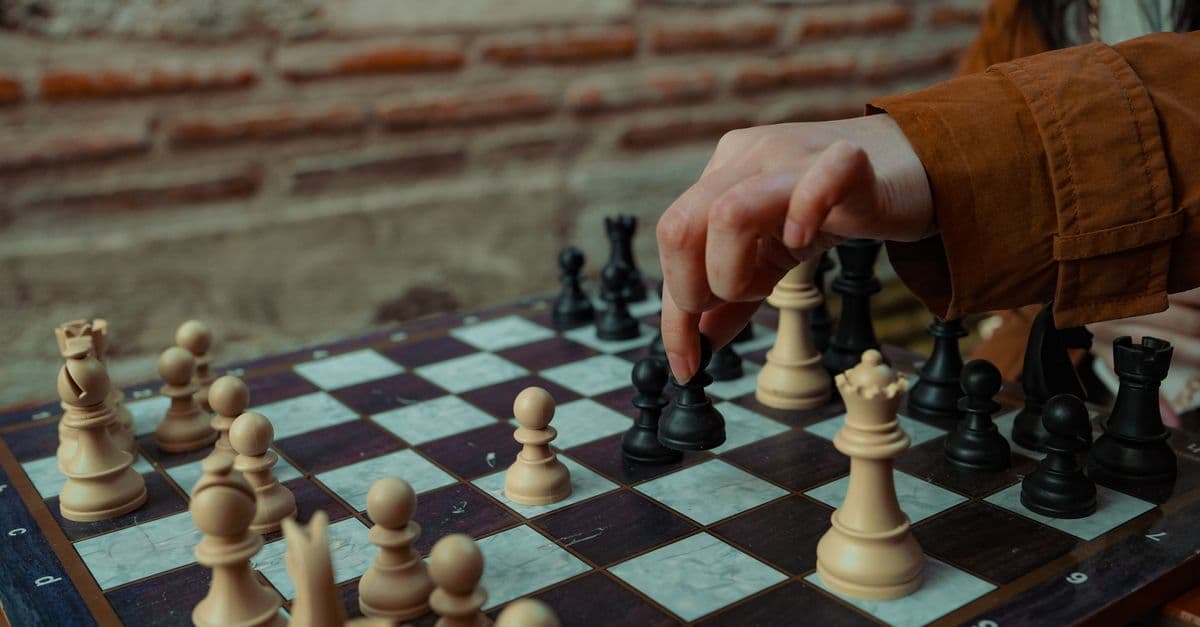
Photo: Tuğçe Açıkyürek / Pexels
Chess is played by an estimated 600 million people globally — making it one of the world's most widely played games. Yet at the elite level, a handful of countries have dominated with extraordinary consistency. Russia has produced 256 grandmasters and held the world title for most of the 20th century. India has gone from two grandmasters in 1988 to over 80 today, with the reigning world champion. The story of which countries play chess best is really a story about how states, cultures, and technology shape intellectual achievement.
Source: FIDE Top Federations Database
This ranking covers total registered chess-playing population; for a look at only the elite titled players, see Countries with the Most Chess Grandmasters.
What a grandmaster title actually means — and why it matters
The Grandmaster (GM) title is FIDE's highest permanent chess designation, awarded for meeting specific performance requirements: achieving a FIDE rating of 2500 or above and earning three "GM norms" in strong international tournaments. Once awarded, the title is held for life regardless of subsequent rating changes.
The GM title is a meaningful threshold rather than an arbitrary one. Think of it as the equivalent of a PhD from a top research university — a credential that demonstrates having reached genuine international-competitive excellence, not just local or national dominance. Of the estimated 600 million chess players globally, approximately 1,800 hold the GM title as of 2025. That is roughly 1 in 330,000 players.
Below GM, FIDE awards International Master (IM, requiring 2400+) and FIDE Master (FM, requiring 2300+). Above the formal GM threshold, the informal "super-grandmaster" designation applies to players rated 2700 or above — there are approximately 50 such players globally at any given time.
Q: How many chess grandmasters are there in the world? A: As of 2025, there are approximately 1,800 FIDE grandmasters worldwide. Of these, around 700 to 1,000 are considered "active" — meaning they regularly participate in rated tournaments and maintain competitive ratings. Russia leads with 256, followed by the USA with 101 and Germany with 96.
Methodology: how these rankings are compiled
The grandmaster count by country uses FIDE's official federation database, which lists all titled players and their current national federation affiliation. This produces some interpretive complexity: a player who was born in one country and represented another (for instance, Soviet-era players who later represented newly independent post-Soviet states) may appear under their current federation rather than where they developed.
The "chess players" count for broader participation is harder to pin down. Chess.com reports 150 million+ registered accounts; Lichess reports approximately 15 million monthly active players. Neither figure maps cleanly to a national breakdown. FIDE's estimate of 600 million regular players globally is based on national federation membership data plus survey extrapolation, and should be treated as an order-of-magnitude figure rather than a precise count.
For this article, the primary ranking uses FIDE grandmaster count by federation as the most reliable, verifiable metric of elite chess concentration by country.
Source: World of Statistics — Countries with Most Chess Grandmasters (January 2025)
Countries with the most chess grandmasters (2025)
| Rank | Country | Active GMs | World Champions (Open) |
|---|---|---|---|
| 1 | Russia | 256 | 16 (Soviet/Russian era, 1927–2007) |
| 2 | United States | 101 | 1 (Bobby Fischer, 1972–1975) |
| 3 | Germany | 96 | 0 |
| 4 | Ukraine | 93 | 0 (multiple runners-up) |
| 5 | India | 80–86 | 2 (Anand ×5; Gukesh 2024) |
| 6 | Hungary | 58 | 0 |
| 7 | Serbia | 58 | 0 |
| 8 | Spain | 56 | 0 |
| 9 | France | 50 | 0 |
| 10 | China | 48 | 1 (Ding Liren 2023) |
| 11 | Poland | 45 | 0 |
| 12 | Armenia | 44 | 1 (Kasparov, represented USSR/Armenia) |
| 13 | Israel | 43 | 0 |
| 14 | Czechia | 36 | 0 |
| 15 | Netherlands | 36 | 1 (Max Euwe, 1935–1937) |
| 16 | Norway | 25 | 1 (Carlsen, 2013–2023) |
Source: FIDE Top Federations; ChessBase Statistics
Where this data comes from
FIDE's official federation database and ChessBase's historical statistical compilation form the basis of this ranking. Both maintain comprehensive records of all players who have achieved the Grandmaster title, with FIDE providing the authoritative current list and ChessBase supplementing this with historical context and game record analysis. The "Active GMs" column reflects FIDE's maintained rating list; the "World Champions" column tracks documented championship-holding players across eras. Limitations exist: countries with less formal chess infrastructure may have undercounted players; Soviet-era records required careful attribution to successor states; and players who switched federations may appear under their current rather than original federation. Despite these caveats, the FIDE and ChessBase data represent the most rigorous and consistently applied international standard available for elite chess comparison.
Analytical insight: concentration and divergence in global chess
The chess grandmaster distribution reveals three distinct phases of global chess power: Soviet dominance (1948–1972), Western recovery and specialization (1973–2006), and Asian emergence (2007–2025). Russia's 256 total reflects decades of systematic state investment whose effects persist in institutional memory and training depth, yet India's recent trajectory — growing from 2 to 85+ GMs in a single generation — suggests that technology (online chess platforms), inspiration (individual role models like Anand), and demographic scale (1.4 billion population) now matter more than state apparatus. China's modest 48 despite equivalent population and higher investment demonstrates that chess adoption follows cultural preference hierarchies; female chess excellence (women's world championship dominance) has not yet translated to male grandmaster density. Countries that score high in both absolute and per-capita terms (Hungary, Armenia, Israel) typically combine historical Soviet-era training infrastructure with smaller populations, suggesting that chess excellence depends less on national wealth than on specific institutional and cultural preconditions that concentrate talent.
Historical context: how chess became a geopolitical game
Chess arrived in Europe from Persia in the early medieval period, having originated in northern India as chaturanga around the 6th century CE. By the 16th century it was the dominant board game of European nobility, with the first recognisable modern rules codified in Spain and Italy. The first unofficial world champion, Wilhelm Steinitz, held the title from 1886 — when the formal championship began.
For the first 40 years of organised world championship chess, the title moved between European players: Steinitz (Austrian), Emanuel Lasker (German), José Raúl Capablanca (Cuban), and Alexander Alekhine (Russian-French). The Soviet takeover of world chess was methodical and deliberate, beginning in earnest after WWII.
Soviet ideologues argued that chess mastery demonstrated the superiority of the Marxist-Leninist educational model — rational, systematic, and collective. Chess schools were established across the USSR in the 1940s and 1950s. Mikhail Botvinnik, a Soviet engineer and chess theorist, became the architect of Soviet chess dominance, training generations of players who would hold the world title in an almost unbroken chain from 1948 to 1972 and again from 1975 to 2013.
The Cold War produced chess's most dramatic cultural moment: the 1972 World Championship in Reykjavik, Iceland, between Boris Spassky (USSR) and Bobby Fischer (USA). It was not primarily a chess event — it was a proxy geopolitical confrontation. Fischer's demands, eccentric behaviour, and eventual triumph over Spassky made international front pages daily. His win was framed in the Western press as a one-man democratic victory over the Soviet chess machine. Fisher held the title only until 1975, when he refused to defend it under FIDE rules and forfeited to Anatoly Karpov.
Source: Grandmaster (chess) — Wikipedia
Russia: the chess superpower — and its post-Soviet decline
Soviet and post-Soviet Russian chess dominance remains one of history's most remarkable examples of state-directed intellectual achievement. The numbers speak for themselves: 16 of 17 World Chess Champions between 1927 and 2007 were either Soviet or Russian. The sole exception was Fischer in 1972.
The Soviet chess system functioned like a talent pipeline. Children showing aptitude were identified early through school tournaments, then channelled to regional and then national chess schools — shakhmaty (chess) was a respectable, funded career path. The state provided coaching, housing, stipends, and travel for elite players. Chess masters held a social status comparable to elite athletes in the West.
The World Champions produced by this system form a who's who of 20th-century chess: Botvinnik, Vasily Smyslov, Mikhail Tal (whose attacking style was compared to a force of nature), Tigran Petrosian, Boris Spassky, Anatoly Karpov, and Garry Kasparov. Kasparov — World Champion from 1985 to 2000 — is widely considered the greatest chess player in history, combining opening preparation of unprecedented depth with tactical calculation and psychological dominance that few opponents could withstand.
Kasparov's 1997 match against IBM's Deep Blue computer, which Kasparov lost in a six-game rematch, marked the symbolic moment when computers crossed the threshold of surpassing human chess ability. That shift has had profound effects on how chess is studied and played at the elite level: modern grandmasters train extensively with computer engines, and opening preparation has been transformed.
Post-Soviet decline is real but gradual. The collapse of state funding in the 1990s led coaches to emigrate (many went to Israel, Germany, and the US), talented young players to pursue finance and business rather than chess, and the pipeline to thin. Russia still leads the world in GM count (256), but it no longer dominates world championship results the way the Soviet system did.
Q: Why did the Soviet Union dominate chess for so long? A: The Soviet state treated chess as both an ideological demonstration project (showing the superiority of systematic socialist education) and a Cold War prestige competition. State funding, structured talent development from childhood, professional coaching, and chess as a viable career path created a depth of talent that no other country could match. When state funding collapsed in the 1990s, Soviet-era depth began to dissipate within a generation.
India: from two grandmasters to world champions in 36 years
India's chess trajectory is perhaps the most striking national talent development story in any intellectual sport. In 1988, India had two grandmasters. By 2025, it has between 80 and 86, with three players in the world top 10 and the reigning world champion.
The story begins with Viswanathan Anand — still the pivot around which Indian chess rotates. Anand became India's first grandmaster in 1988 and went on to win the World Chess Championship five times (2000, 2007, 2008, 2010, 2012), becoming the first Asian world champion. His success was not merely statistical: he became a national hero in a country that had not previously associated itself with international chess prestige, inspiring a generation of Tamil Nadu children (and their parents) to take the game seriously.
The current generation — born roughly between 2003 and 2007 — represents Anand's coaching and advocacy translated into competitive results. D. Gukesh, born in 2006 in Chennai, won the 2024 World Chess Championship against Ding Liren, becoming the youngest world champion in history at 18 years old. R. Praggnanandhaa, born in 2005, became a grandmaster at 10 years and 9 months (one of the youngest in history) and reached world #4 in the classical rankings by 2024. Arjun Erigaisi, born in 2003, is consistently ranked in the global top 5.
Why India specifically? Several factors converge. Chess education is embedded in schools in Tamil Nadu and several other states, providing structural exposure at an early age. India's large population provides talent depth — even a small percentage of chess-inclined students produces a large absolute number. Families view chess success as a prestigious intellectual achievement with potential scholarships and professional upside. Online chess has allowed players in smaller cities and rural areas to develop without expensive coaching. And Anand's example provides proof of concept that is, genuinely, hard to overstate: when a child can see someone who looks like them winning the world title, the possibility space expands.
Source: The Current Number of Chess Grandmasters — Superprof
China: systematic excellence — and the first Chinese world champion
China's chess development follows the template the country applies to virtually every domain it decides to compete in internationally: state identification of a strategic priority, centralised training infrastructure, long-term investment, and patient execution.
The Chinese Chess Federation has operated elite training programmes since the 1980s. The national team is centrally funded and coached, with players identified through school-level competitions and developed through a structured ladder of regional and national events. The model is less like Germany's federated club system and more like China's Olympic sports apparatus — deliberately constructed to produce champions.
The results in women's chess came first and remain more dominant. China has been the preeminent power in women's chess for three decades, producing multiple Women's World Champions including Xie Jun, Zhu Chen, and Hou Yifan. Hou Yifan is widely considered the greatest female chess player in history — she achieved a peak rating above 2680, competed at grandmaster level against men's fields, and held the Women's World Championship four times.
In the open category, Ding Liren's 2023 World Championship win against Ian Nepomniachtchi in a match of extraordinary psychological drama was China's breakthrough. Ding had spoken openly about depression in the period leading up to the match; his performance — coming back from a deficit in a match many observers expected him to lose — was described by grandmasters as one of the most resilient in championship history. China's first world champion in classical chess was not just a sports result; it was the fulfilment of a decades-long national programme.
Q: How good is China's chess programme compared to Russia's? A: Russia still leads substantially in total grandmaster count (256 vs. China's 48), reflecting decades of accumulated depth from the Soviet era. But China's growth trajectory, state investment, and younger player pipeline suggest it will continue narrowing the gap. In women's chess, China has already surpassed Russia. The 2023 and 2024 world championships — Ding Liren and then Gukesh — suggest that classical chess's power balance has become genuinely multipolar for the first time since Kasparov's era.
Deep dive: the per-country stories behind the numbers
Hungary's 58 grandmasters in a country of 10 million is one of the most striking ratios in global chess. Hungarian chess culture has deep roots — the Polgár sisters (Judit, Sofia, and Susan) represent the most famous chess family in history. Laszlo Polgár's systematic experiment in raising his daughters to be chess grandmasters — beginning their training from early childhood — produced Judit Polgár, who became the highest-rated female player in history (peak 2735) and is the only woman to qualify for the Candidates Tournament for the overall World Championship. Susan Polgár became Women's World Champion. The Hungarian example demonstrates that deliberate, early, intensive training can develop extraordinary talent.
Ukraine's 93 grandmasters reflect the inheritance of Soviet-era chess infrastructure in one of the USSR's most chess-active republics. Vasyl Ivanchuk — who has held a top-5 world ranking for most of the period from 1988 to 2020 — is considered by many grandmasters as the most naturally gifted player of his generation, despite never winning the world title. Ukraine's ongoing war with Russia since 2022 has disrupted chess infrastructure, with Ukrainian grandmasters competing internationally while their country is under attack.
Armenia's 44 grandmasters in a country of 3 million is another extraordinary concentration. Chess is a national obsession in Armenia — it was the first country in the world to make chess a compulsory subject in all primary schools (from 2011). The Armenian national team won the Chess Olympiad in 2006, 2008, and 2012. Levon Aronian, Sergei Movsesian, and Vladimir Akopian have all been top-10 players in the classical rankings.
The online revolution: Chess.com, Lichess, and democratisation
Chess.com has 150 million+ registered users. Lichess — the open-source, free alternative — has approximately 15 million monthly active players. These are not marginal developments in chess culture; they are a transformation of the game's global reach.
Two events accelerated online chess's growth beyond its already-strong trajectory. The COVID-19 lockdowns of 2020 drove tens of millions of homebound people to board and card games; chess surged more than most. The second event was the release of The Queen's Gambit on Netflix in October 2020 — a miniseries about a fictional female chess prodigy's rise to the world championship. Chess.com reported a 603% increase in downloads in the week of the show's release. The show reached 62 million households in its first 28 days and won 11 Emmy Awards. The result was a new cohort of chess players who had come to the game through narrative rather than competitive tradition.
Chess streaming has created a new entertainment category. Hikaru Nakamura (US grandmaster, peak rating 2816) and Magnus Carlsen built Twitch and YouTube audiences of millions through live-play and commentary. Levy Rozman (GothamChess) has over 4 million YouTube subscribers. These creators have introduced millions to competitive chess who would not have engaged with it through traditional club or tournament structures.
The geographic democratisation is the most important structural result. Online chess has enabled players from countries with no classical chess tradition to reach high levels. The 2020s have seen grandmasters emerging from Vietnam, the Philippines, Uzbekistan, and other countries not previously recognised as chess powers. The barrier to elite training is no longer primarily about physical access to strong opponents — it is about internet access.
Q: Has online chess produced more grandmasters? A: Yes. The total grandmaster count has been rising steadily, driven both by India and China's institutional programmes and by online chess enabling talent development in previously under-resourced chess environments. The rate of new GM titles awarded increased noticeably from 2019 onward. Online chess platforms have also made GM preparation (opening databases, tactical trainers, computer engine analysis) accessible to players who previously could not afford the equivalent resources.
What people get wrong about chess dominance
The most common misconception is that Russia's current position is secure. It is not: the 256-to-86 GM gap between Russia and India reflects historical accumulation, not current trajectory. India is awarding new GM titles faster than any other country. At the current rate, India will close the gap substantially within a decade.
A related misconception is that chess performance tracks national intelligence or educational quality in a simple way. It does not. Grandmaster production is a function of specifically targeted investment: chess-in-schools programmes, coaching infrastructure, competitive ladders, and cultural valuation of the game. Countries with strong chess cultures but limited economic resources (Armenia, Georgia, the former Soviet republics) outperform their per-capita income levels dramatically. Countries with high average educational attainment but limited chess culture (Japan, South Korea, Scandinavia except Norway) underperform their economic weight.
The online revolution also undermines any simple geography-based prediction. A 14-year-old in Manila or Hanoi with internet access can now access the same opening databases, tactical training tools, and computer analysis as a grandmaster in Moscow or New York. The distribution of future chess talent will reflect online access and youth demographics as much as the inherited prestige of national chess federations.
Q: Why is chess not in the Olympics despite being recognised by the IOC? A: Chess has been recognised by the International Olympic Committee as a sport since 1999, making it technically eligible for inclusion. The primary barriers are its sedentary nature (Olympic criteria emphasise physical activity) and the IOC's reluctance to expand the programme. Chess has its own robust international competition structure — the World Championship cycle through FIDE, the Chess Olympiad (team tournament every two years), and continental championships — which reduces the urgency of Olympic inclusion for the chess world.
The takeaway
Chess's global distribution reveals how intellectual competition is shaped by state investment (the Soviet model), individual inspiration catalysing national movements (Anand's India), systematic institutional development (China), and technological democratisation (online chess). The shift from Soviet-Russian dominance to a genuinely multipolar world — with India, China, and Norway all producing world champions — mirrors broader geopolitical shifts in who produces talent and how. The game's 1,500-year history has produced cultures of engagement across every civilisation that encountered it. The online era, for the first time, is creating a genuinely global chess community where a teenager in a small Indian city can train against and beat grandmasters anywhere in the world — and where the next world champion might come from a country that had no grandmasters five years ago. Another ranking that shows how countries differ is countries with the most official languages.
Frequently asked questions
Q: What is the highest chess rating ever achieved? A: Magnus Carlsen achieved a peak FIDE classical rating of 2882 in May 2014 — the highest in history. For context: the threshold for a grandmaster title is 2500; "super-grandmaster" class is typically defined as 2700+. Approximately 50 players globally exceed 2700 at any given time.
Q: How many people play chess worldwide? A: FIDE estimates 600 million people play chess regularly — though this includes casual players. Chess.com has 150 million registered users; Lichess has approximately 15 million monthly active players. Registered competitive players who participate in FIDE-rated events number approximately 350,000 globally.
Q: Which country has the most chess players per capita? A: Iceland regularly ranks highest in chess federation membership as a percentage of population. Armenia and Georgia also rank very high. Russia's absolute numbers are largest, but its per-capita rate is lower than several smaller chess-obsessed nations.
Sources
- FIDE Top Federations Database
- World of Statistics — Grandmasters by Country (January 2025)
- ChessBase — Chess Statistics Today
- List of Chess Grandmasters — Wikipedia
- Grandmaster (chess) — Wikipedia
- Superprof — Current Number of Chess Grandmasters
Related Reading
Follow new articles
Add SciHub101 to your feed reader to see new science and technology stories.
About the Author
SciHub101 is an independent science and technology publication founded and edited by Buğra Sözeri, a software engineer and app developer based in Türkiye. AI tools assist with drafting and research. Source documentation in the existing archive is uneven, and articles are being reviewed and corrected. The Editorial Team byline identifies editorial responsibility; it does not certify specialist or independent human review. Where we compare products, anything built by our own team is labelled as such — see the editorial guidelines and About page for how corrections and disclosures work.
Related Articles

Countries with the Most Marathon Runners (2025 Ranked)
The United States has 600,000 marathon finishers annually — the most of any country. Kenya and Ethiopia dominate elite marathon racing, winning 80%+ of major marathon titles. Japan's Tokyo Marathon has the world's largest field with 38,000 runners. Here are the countries with the most marathon runners.

Countries with the Most Plastic Surgery (2025 Ranked)
South Korea performs more plastic surgery per capita than any country — 1 in 5 South Korean women have had a procedure. The United States has the world's largest plastic surgery market at $24 billion annually. Brazil is #2 globally with 2.3 million procedures per year.
Countries with the Most Chess Grandmasters (FIDE Ranked)
Russia has produced more chess grandmasters than any other country — over 256 active and historical. The Soviet Union's chess dominance was a Cold War cultural weapon, and its legacy persists decades after its dissolution. Meanwhile, India is rapidly emerging as the new chess superpower, producing prodigies at an extraordinary rate.
Countries with the Most Official Languages (2025 Ranked)
Zimbabwe has 16 official languages — the world's most. India recognises 22 scheduled languages. Papua New Guinea has 840+ spoken languages, making it the world's most linguistically diverse country. Here's the full ranking of countries by official and spoken languages — and what extraordinary linguistic diversity means for governance.

Countries with the Most Tea Consumption (2025 Ranked)
China drinks more tea than any country — 3 million tonnes per year. But Turkey has the highest per-capita consumption at 4.6 kg per person. Tea is the world's second most consumed beverage after water. Here's the full global tea ranking, who grows it, who drinks it most, and why.
Countries with the Most Sports Participation (2025 Ranked)
Finland and Sweden have the highest sports participation rates — over 70% of adults play sport regularly. Australia has the most sports organisations per capita. The US has the most professional sports leagues. Here's the full ranking of the world's most sports-active nations.