The Bone Wars Explained: Cope, Marsh, and the Fossil Race That Built Paleontology
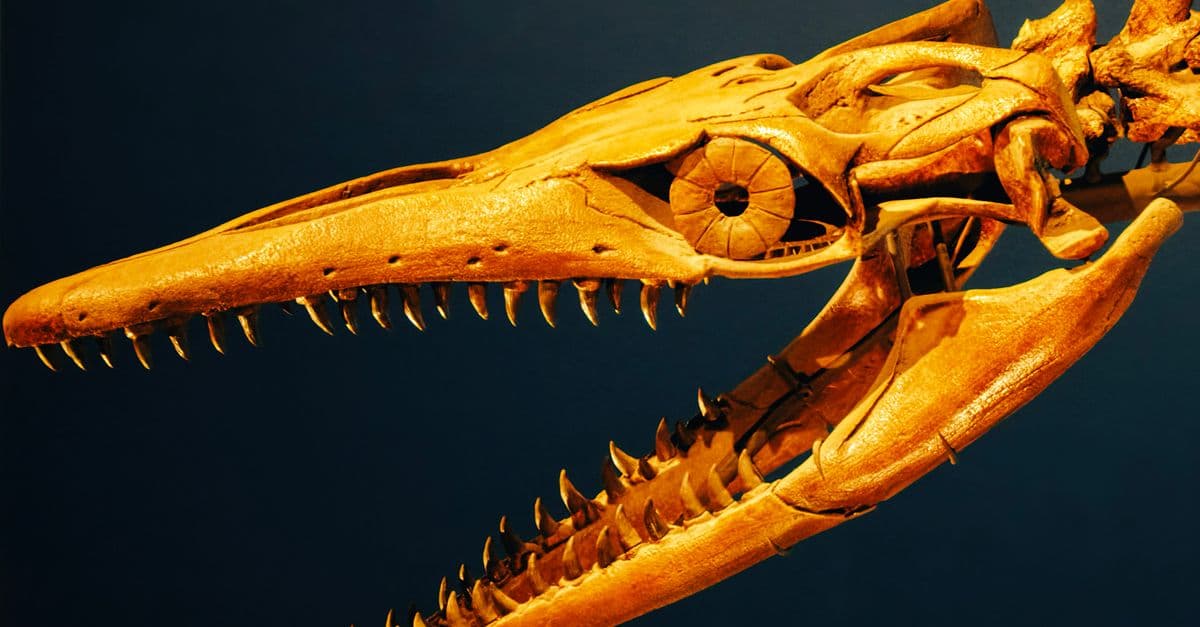
Photo: James Lee / Pexels
In the summer of 1877, a railroad worker named Arthur Lakes sent fossil bones to both Othniel Charles Marsh at Yale and Edward Drinker Cope in Philadelphia. That single act — mailing the same discovery to two rival scientists — ignited a competition so intense, so deeply personal, and so scientifically consequential that it reshaped an entire discipline. Over the next 15 years, Cope and Marsh named more new prehistoric species than any other paleontologists in history. They also bribed field crews, dynamited fossil sites to deny them to the other side, published descriptions so hasty they contained fundamental errors, and systematically attempted to destroy each other's reputations. The field of American vertebrate paleontology as it exists today — its institutions, its collections, its methods, its governing philosophy — was forged in that conflict.
Who Were Cope and Marsh?
Edward Drinker Cope and Othniel Charles Marsh came from different backgrounds but arrived at the same place: the center of American natural history science in the post-Civil War era, competing for the same scarce resource of scientific prestige.
Edward Drinker Cope (1840–1897) was born in Philadelphia to a Quaker family of comfortable means. A child prodigy, he published his first scientific paper at 19 and had named dozens of species of fish and reptiles by his mid-twenties. He was small, hyperactive, and intellectually restless — someone who could dictate a scientific paper while simultaneously working on another, who traveled everywhere with notebooks and crates, and who was constitutionally incapable of slowing down. He was also a believer in neo-Lamarckism — the idea that acquired characteristics could be inherited — which put him at odds with Darwinian orthodoxy and with Marsh.
Cope's personal finances were never stable. He had family wealth but a compulsive habit of investing in speculative mining ventures, most of which failed. By the late 1890s, he had depleted his inheritance and was selling his fossil collections simply to fund continued research.
Othniel Charles Marsh (1840–1899) was born in rural New York to a farming family of no particular means. His transformation was enabled by his uncle: George Peabody, the banker and philanthropist who established the Peabody Museum of Natural History at Yale University specifically to give his nephew a prestigious institutional base. Marsh was deliberate, institutional, and politically shrewd where Cope was intuitive, individualistic, and impulsive. He secured government funding through the U.S. Geological Survey, giving him federal resources that Cope could not match.
The two men met as young scientists in Europe in the 1860s, initially on friendly terms. The friendship deteriorated over a series of perceived slights — competitive priority claims, allegations of specimen theft, disputed credit — that escalated over the years into open war.
Source: Wallace, D.R., The Bonehunters' Revenge (Houghton Mifflin, 1999) — Narrative account of the Cope-Marsh rivalry, drawing on correspondence, institutional records, and contemporary publications.
Source: Jaffe, M., The Gilded Dinosaur (Crown Publishers, 2000) — Detailed history of the Bone Wars with primary source documentation.
The Morrison Formation and the Opening of the West
The trigger for the most intense phase of the Bone Wars was the Morrison Formation — a geological unit of Late Jurassic age (approximately 156–145 Ma) that underlies much of the American West from Montana to New Mexico. The Morrison was deposited in floodplains and river systems that covered much of the interior of North America during a period when global sea levels were high and the region was substantially wetter than today.
The Morrison Formation contains one of the richest accumulations of large dinosaur fossils anywhere in the world. It is the formation that produced Allosaurus, Stegosaurus, Diplodocus, Brachiosaurus, Camarasaurus, Apatosaurus, Ceratosaurus, and dozens of other large Jurassic dinosaurs. In 1877, quarry workers and amateur fossil hunters in Colorado and Wyoming began finding enormous bones — bones that outclassed anything yet discovered in North America — and they wrote to the scientists who they thought could help them understand what they had found.
Arthur Lakes, a schoolteacher and amateur geologist in Morrison, Colorado, sent vertebrae to both Marsh and Cope. Simultaneously, two ranch workers in Como Bluff, Wyoming — W.H. Reed and D.W. Carlin — wrote to Marsh describing enormous bones eroding from a ridge. Marsh dispatched a field crew immediately and secured the Como Bluff site — one of the most productive fossil localities in North American history — under long-term excavation.
Cope, when he learned of Como Bluff, attempted to send his own agents to the same area. The race was on.
Source: Ostrom, J.H. & McIntosh, J.S., Marsh's Dinosaurs: The Collections from Como Bluff (Yale University Press, 1966) — Detailed account of the Como Bluff excavations and catalog of specimens recovered.
The Methods: Science, Sabotage, and Speed
The Bone Wars were fought with field crews, institutional budgets, and the postal system — but also with sabotage, bribery, and the scientific convention of priority (the rule that the scientist who publishes a valid description of a new species first gets naming credit).
Priority meant speed was essential. Both Cope and Marsh published species descriptions at rates that compromised accuracy. Cope would sometimes write descriptions from a photograph or a partial specimen, naming species he could not fully characterize. Marsh, working through government funding and a team of preparators and assistants at Yale, could process and describe material faster — but he too made errors of haste.
Both men deployed teams of professional fossil hunters in the field. These crews dug through summer heat in remote Wyoming and Colorado, shipping bones east by rail in crates. The field workers — men like Samuel Wendell Williston (who later became a distinguished scientist himself) on Marsh's side, and Charles Sternberg (who founded a family dynasty of fossil hunters) on Cope's — were the ones doing the physical work of extraction and shipment.
The sabotage component is well-documented. At some sites, crews from both sides worked simultaneously in competition. Bones left in the field overnight were sometimes found smashed the next morning — deliberately destroyed to prevent the other side from collecting them. At the end of one season at a particularly productive Colorado site, one crew dynamited the remaining fossil-bearing rock rather than leave usable material for the competition.
Workers were also targeted directly. Both Cope and Marsh attempted to recruit informants in the other's camps, and both accused the other of bribing their field workers. Letters from Cope's field agents to Cope frequently contain observations about Marsh's operations and vice versa. The correspondence preserved in institutional archives reads like dispatches from competing intelligence operations.
Source: Plate, R., The Dinosaur Hunters (McKay, 1964) — Account of Cope and Marsh's field operations, drawing on correspondence with field workers including Charles Sternberg.
Source: Davidson, J.P., The Bone Sharp: The Life of Edward Drinker Cope (Academy of Natural Sciences, 1997) — Biography of Cope focusing on his scientific career and the rivalry with Marsh.
The Species They Named: Genuine Discoveries and Spectacular Errors
Between them, Cope and Marsh named more than 130 species of dinosaurs and other prehistoric vertebrates — a body of taxonomic work that, even accounting for the errors, represents an extraordinary contribution to knowledge. Many of the most familiar Jurassic dinosaurs were named during the Bone Wars and bear descriptions written during that competition.
Marsh's most significant valid descriptions include:
- Allosaurus fragilis (1877) — the dominant large predator of the Morrison Formation
- Stegosaurus armatus (1877) — the plated herbivore
- Apatosaurus ajax (1877) — the large sauropod (later involved in the Brontosaurus controversy)
- Diplodocus longus (1878)
- Brachiosaurus altithorax (1903, just after his death, from material collected during the wars)
- Triceratops horridus (1889)
- Ceratosaurus nasicornis (1884)
Cope's most significant valid descriptions include:
- Camarasaurus supremus (1877) — large sauropod
- Coelophysis bauri (1889) — small early theropod from New Mexico
- Amphicoelias fragillimus (1878) — a mysterious giant sauropod known from a single enormous vertebra that has since been lost
- Dimetrodon and Edaphosaurus — the Permian sail-backed synapsids often mistaken for dinosaurs
- Many species of fossil fish, amphibians, and early mammals
Cope was generally more willing than Marsh to name species from fragmentary material, which inflated his species count but also increased his error rate. Many of Cope's species names are now considered invalid — either junior synonyms of Marsh's species or based on specimens too fragmentary to characterize. The same applies to many of Marsh's names, though in slightly smaller proportion.
| Scientist | Valid dinosaur genera named (approximate) | Notable valid species | Notable errors |
|---|---|---|---|
| O.C. Marsh | ~80 | Allosaurus, Stegosaurus, Triceratops, Diplodocus | Brontosaurus (wrong head on Apatosaurus) |
| E.D. Cope | ~56 | Camarasaurus, Coelophysis, Monoclonius | Elasmosaurus mounted backwards |
| Combined | 130+ | Most of the familiar Jurassic fauna | Multiple synonymies and invalid species |
Source: Colbert, E.H., The Great Dinosaur Hunters and Their Discoveries (Dover, 1984) — Summary of Cope and Marsh's taxonomic output with assessment of validity.
The Brontosaurus Mistake and Its Long Aftermath
No single error from the Bone Wars has had greater cultural impact than Marsh's assembly of a composite sauropod skeleton that was publicly displayed under a wrong name for nearly a century.
In 1877, Marsh described a partial skeleton as Apatosaurus ajax — a large sauropod. Two years later, he described another, larger sauropod from different bones as Brontosaurus excelsus. The two sets of bones were actually from different growth stages or individuals of the same genus. Under the rules of zoological nomenclature, Apatosaurus (named first) has priority — Brontosaurus is technically a junior synonym of Apatosaurus and the name is invalid.
This was recognized by paleontologist Elmer Riggs in 1903, who published a paper arguing that Brontosaurus and Apatosaurus were the same animal. The scientific community broadly accepted this — and from 1903 onward, the animal was correctly called Apatosaurus in the scientific literature.
The public, however, continued to call it Brontosaurus. The name had entered popular culture too deeply to be easily corrected. The American Museum of Natural History and Carnegie Museum both mounted composite Brontosaurus/Apatosaurus skeletons under the old name, and these displays — viewed by millions — cemented the name in public consciousness. The US Post Office put Brontosaurus on a postage stamp in 1989, years after the scientific community had abandoned the name.
The head was wrong too. Marsh assembled the Carnegie Museum skeleton in the 1890s with the wrong skull — a Camarasaurus-like skull found kilometers from the body bones. The actual head of Apatosaurus (long, low, and narrow, resembling Diplodocus) was not definitively confirmed until 1975, when Jack McIntosh and David Berman argued from specimen evidence that the Camarasaurus-type skull was incorrect and a narrow Diplodocus-like skull was the true head.
A 2015 study by Emanuel Tschopp and colleagues reanalyzed diplodocid sauropod phylogeny in unprecedented detail and concluded that Brontosaurus was actually distinct enough from Apatosaurus to be considered a separate genus after all — meaning the original Riggs 1903 synonymization was incorrect. The name Brontosaurus is now considered valid again by most workers. The wheel had turned almost completely.
Source: Riggs, E.S., Field Columbian Museum Geological Series (1903) — Original paper arguing that Brontosaurus is synonymous with Apatosaurus.
Source: Tschopp, E. et al., PeerJ (2015) — Comprehensive phylogenetic analysis of diplodocid sauropods, reinstating Brontosaurus as a valid genus distinct from Apatosaurus.
Cope's Elasmosaurus Error: The Head on the Wrong End
Marsh's Brontosaurus mistake was the Bone War error that lasted longest in public consciousness. Cope's most embarrassing error was his initial reconstruction of Elasmosaurus platyurus, a long-necked marine reptile (a plesiosaur, not a dinosaur) from the Cretaceous of Kansas.
Cope received the Elasmosaurus specimen in 1868, before the most intense phase of the Bone Wars, and published a description and reconstruction showing the animal with an abnormally short neck and an extremely long tail. When Joseph Leidy — the most respected American paleontologist of the era, and Cope's early mentor — saw the reconstruction, he gently pointed out that the head was on the wrong end: what Cope had called the tail was actually the long neck.
Elasmosaurus is a plesiosaur with an extraordinarily elongated neck — roughly 7 m of neck out of a total body length of approximately 14 m, containing 71 vertebrae. It has a short, relatively small body and a short tail. The animal's center of mass is concentrated toward the middle and rear, not the front. Cope had misinterpreted the anatomy and placed the skull at what was anatomically the tail end.
Marsh obtained a copy of the offending paper and pointed out the error as publicly as possible, using it as evidence that Cope was incompetent. Cope attempted to destroy all copies of the erroneous publication he could locate — a detail that illuminates just how personally the two men took their scientific reputations.
Source: Cope, E.D., Transactions of the American Philosophical Society (1869) — Original Elasmosaurus paper (with the erroneous reconstruction).
Source: Davidson, J.P., The Bone Sharp (1997) — Account of the Elasmosaurus error and its role in the personal falling-out between Cope and Marsh.
The 1890 Newspaper War and the Public Collapse
By 1890, both men were financially depleted and the personal rivalry had consumed their professional lives. In January 1890, Cope gave a series of interviews to journalist William Hosea Ballou that were published as a front-page story in the New York Herald under the headline "Scientists Wage Bitter Warfare." Cope accused Marsh of scientific fraud, plagiarism, theft of specimens, abuse of government funding, and incompetence. Marsh responded with counter-accusations through his own channels.
The newspaper war was unprecedented in American science — two prominent scientists publicly accusing each other of fraud in the popular press. It damaged both reputations, complicated Marsh's relationship with government funding, and provided ammunition for rivals in the scientific community who disliked both men.
The U.S. Geological Survey had been funding Marsh's paleontological work since 1882. In the wake of the 1890 revelations and broader Congressional scrutiny of the Survey's budget, Marsh's government funding was cut off in 1892. Without federal money, he could no longer sustain his field operations or his team of preparators. The active phase of the Bone Wars was effectively over.
Cope died in 1897, having sold much of his fossil collection and living in rooms surrounded by specimen cases. Marsh died in 1899, leaving debts. Neither man came close to the financial rewards their discoveries generated for the institutions that acquired their collections.
Source: Ballou, W.H., New York Herald (January 12, 1890) — The newspaper article that made the Cope-Marsh rivalry a public scandal.
Source: Shor, E.N., The Fossil Feud Between E.D. Cope and O.C. Marsh (Exposition Press, 1974) — Academic history of the rivalry focusing on documentary evidence.
What the Bone Wars Built
The personal costs were enormous and the methods were often indefensible. But the scientific productivity of the Bone Wars period was genuinely extraordinary, and the institutions it created shaped paleontology for the following century.
The Peabody Museum at Yale — built around Marsh's collections — became one of the world's great natural history museums. Cope's collections, acquired by the American Museum of Natural History after his death, formed the foundation of that institution's vertebrate paleontology department. The fossils collected during the wars are still studied today; many of the type specimens (the definitive reference specimens for species names) are the original Cope and Marsh specimens.
The Bone Wars also established professional fossil hunting as a viable career, trained the first generation of American vertebrate paleontologists (including Samuel Williston, John Bell Hatcher, and Charles Sternberg — all of whom went on to distinguished careers), and demonstrated to the American public that the continent's geological past contained animals as spectacular as anything in the Old World.
The competitive publication culture of the Bone Wars produced lasting taxonomic problems — synonym species, poorly characterized taxa, disputed priority claims — that paleontologists are still sorting out. Many of the species named by Cope and Marsh in the 1870s and 1880s required subsequent revision; some are still being revised today.
For the ceratopsian species that Marsh named during this period — including Triceratops horridus — the context of competitive priority is directly relevant to understanding how the species were characterized and why some descriptions were less precise than ideal. See Triceratops and the Horned Dinosaurs.
For the broader picture of which geological periods produced the species that Cope and Marsh were racing to describe, see The Three Periods of Dinosaurs.
The radiometric dating methods that allow us to assign confident ages to the Morrison Formation and other Bone Wars excavation sites — telling us, for instance, that Allosaurus lived approximately 150 Ma — depend on principles of radioactive decay first established by the discoveries described in The Becquerel Radioactivity Discovery.
Source: Brinkman, P.D., The Second Jurassic Dinosaur Rush (University of Chicago Press, 2010) — Institutional history of the major natural history museums and their relationship to the Bone Wars era excavations.
What People Get Wrong About the Bone Wars
The most common distortion is treating the Bone Wars primarily as a story of bad behavior with incidental science. In reality, the bad behavior and the science were inseparable — the competitive pressure that produced the sabotage and bribery also produced the productivity. The Morrison Formation might not have been systematically excavated for another generation had the rivalry not driven both men to field every possible crew and collect every possible specimen.
A second distortion is the claim that all the Bone Wars species were wrong or unreliable. Many were valid on first description and remain valid today. The error rate was higher than in careful, undistracted science — but the discoveries themselves were genuine. Allosaurus, Stegosaurus, Diplodocus, Triceratops: these are not contested discoveries. The problems were in the less careful descriptions, the synonyms, and a small number of spectacular assembly errors like the Brontosaurus head.
A third error is framing Cope as the villain and Marsh as the hero, or vice versa. Both men were brilliant and both were capable of conduct that reflected poorly on them. Marsh had institutional advantages (government funding, a larger team) that Cope lacked, but Cope's intuitive anatomical ability was arguably superior. The narrative of one clear villain and one clear hero does not fit the primary sources.
The Takeaway
The Bone Wars produced a paradox: one of the most ethically compromised episodes in American science also produced some of its most lasting contributions. Cope and Marsh together named the majority of the familiar Jurassic dinosaur genera, established the systematic frameworks used to classify them, and built the natural history museum collections that researchers still work with today. The rivalry burned through both men's resources and reputations and left a legacy of taxonomic errors that took a century to untangle. It also made dinosaurs front-page news, turned the American West into a paleontological destination, and created the professional infrastructure of a discipline. Those outcomes — the good ones and the bad ones — cannot be separated from each other.
Frequently Asked Questions
Q: What started the Bone Wars between Cope and Marsh?
A: The rivalry had multiple escalating triggers. A significant early incident was Cope's description in 1868 of Elasmosaurus with the skull on the wrong end; Marsh's public mockery of this error began the personal hostility. Earlier, Marsh had arranged to have specimens from a New Jersey marl pit (which Cope had introduced him to) redirected to Yale rather than to Cope, which Cope viewed as betrayal. The 1877 Morrison Formation discoveries transformed a personal conflict into an active field war over the same fossil sites.
Q: How many species did Cope and Marsh name in total?
A: Together, approximately 130 or more new species of dinosaurs alone, plus hundreds of additional species of fossil fish, early mammals, reptiles, and other vertebrates. Marsh is credited with approximately 80 new dinosaur genera; Cope with approximately 56. Many of these names are now considered synonyms or invalid, but the valid names include most of the familiar Jurassic and Late Cretaceous dinosaurs known to the public.
Q: What happened to Brontosaurus and why was it renamed?
A: Marsh named Brontosaurus in 1879 as a new sauropod genus. In 1903, Elmer Riggs determined that Brontosaurus was the same animal as Marsh's earlier Apatosaurus (named 1877); since Apatosaurus had priority, Brontosaurus became an invalid synonym. The name persisted in popular culture for decades despite the scientific change. In 2015, a comprehensive phylogenetic analysis by Tschopp and colleagues found that Brontosaurus was actually distinct from Apatosaurus and reinstated it as a valid genus — meaning the original synonymization had been incorrect.
Q: Did the Bone Wars actually harm science?
A: The competitive pressure produced both productivity and harm. On the positive side: a massive increase in the known dinosaur fauna, trained the first generation of professional American paleontologists, built institutional collections. On the negative side: hasty species descriptions, synonymy problems requiring decades to untangle, sabotage that destroyed fossil material that could never be recovered, and the newspaper scandal that damaged both men's credibility. The net scientific legacy is positive — the collections and discoveries vastly outweigh the errors — but the methods remain indefensible.
Q: Who "won" the Bone Wars?
A: By raw numbers, Marsh: he named more species, had better institutional support, and lived slightly longer. But both men died in debt and damaged reputations. Neither "won" in any meaningful personal sense. In terms of lasting scientific legacy, the distinction is less clear — Cope's descriptions of Permian fauna (particularly Dimetrodon and early synapsids) were arguably as significant as Marsh's Jurassic dinosaurs, and Cope's 1876–1877 Morrison Formation discoveries were made before Marsh fully committed to that region.
Q: Are the Bone Wars fossil collections still scientifically used today?
A: Extensively. The Peabody Museum at Yale, the American Museum of Natural History in New York, the Smithsonian, and the Carnegie Museum of Natural History all hold major Bone Wars era collections that are actively researched. The original Cope and Marsh type specimens — the definitive reference specimens for species names they established — are still consulted for taxonomic and anatomical studies. New imaging technologies (CT scanning, synchrotron analysis) have allowed researchers to extract data from these 19th-century specimens that Cope and Marsh could never have obtained.
Source: Wallace, D.R., The Bonehunters' Revenge (Houghton Mifflin, 1999).
Source: Tschopp, E. et al., PeerJ (2015) — Reinstatement of Brontosaurus.
Source: Brinkman, P.D., The Second Jurassic Dinosaur Rush (University of Chicago Press, 2010).
Read next:
Follow new articles
Add SciHub101 to your feed reader to see new science and technology stories.
About the Author
SciHub101 is an independent science and technology publication founded and edited by Buğra Sözeri, a software engineer and app developer based in Türkiye. AI tools assist with drafting and research. Source documentation in the existing archive is uneven, and articles are being reviewed and corrected. The Editorial Team byline identifies editorial responsibility; it does not certify specialist or independent human review. Where we compare products, anything built by our own team is labelled as such — see the editorial guidelines and About page for how corrections and disclosures work.
Related Articles

Triceratops and the Horned Dinosaurs: Frills, Horns, and the Fossil Evidence
Ceratopsians — the horned and frilled dinosaurs — are among the most distinctive animals in the fossil record, and among the most misunderstood. Triceratops's frill was not armor. Its horns may have been used for display as much as combat. Torosaurus may or may not be a different animal from Triceratops — the debate is genuinely unresolved. And ceratopsian herds, though often depicted as vast migratory columns, are supported by specific but limited fossil evidence. Here is what the bones actually show.
Did Humans and Dinosaurs Ever Coexist? The Timeline Explained
The non-avian dinosaurs went extinct approximately 66 million years ago. The earliest members of the genus Homo appeared roughly 2.8 million years ago. Modern Homo sapiens are at most 300,000 years old. The gap between the last non-avian dinosaur and the first human is 63 million years wide — wider than the entire span of the Paleogene and Neogene periods combined. This article examines why the coexistence myth persists, what dinosaurs actually left behind in human evolutionary history, and why birds are the honest answer to the question.

Gregor Mendel: The Monk Who Founded Genetics
Gregor Mendel's pea plant experiments from 1856–1863 established the laws of heredity. Discover how an Augustinian monk built the foundation of modern genetics.