Esports Analytics: How AI Is Transforming Competitive Gaming Performance

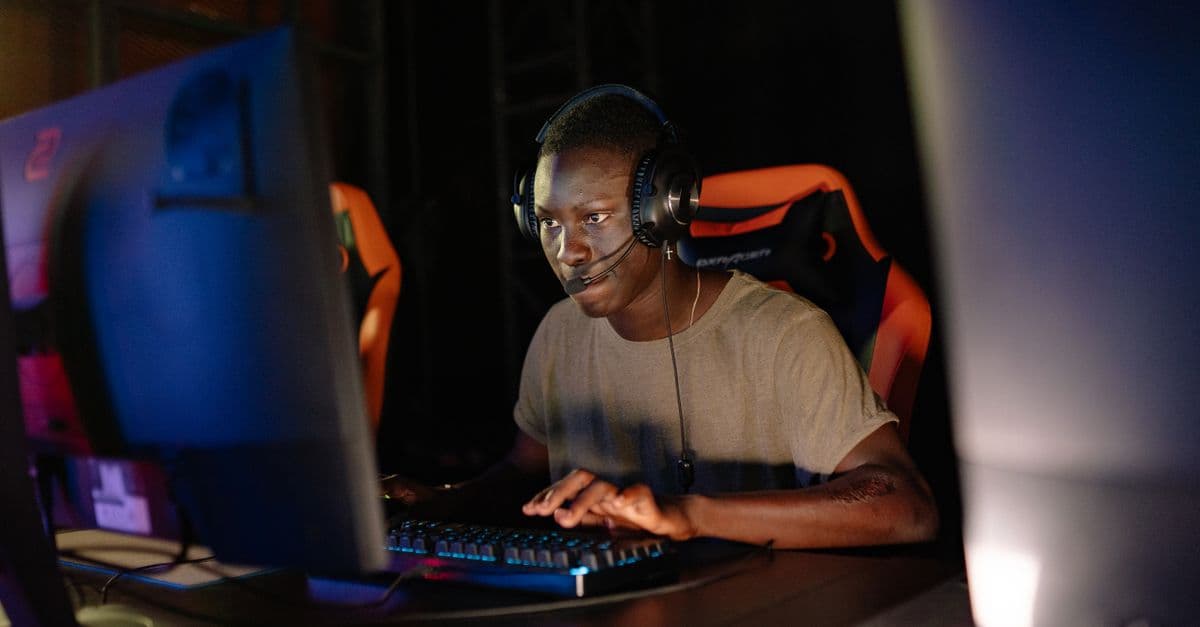
Photo: Mikhail Nilov / Pexels
When Major League Baseball front offices started leaning on statistical models instead of scouts' gut instinct in the early 2000s — a shift chronicled in Moneyball — the teams that adopted data-driven decisions gained an edge that eventually reshaped the entire sport. Esports is going through an equivalent shift right now, and it is happening faster because competitive video games generate far more structured, analyzable data than any physical sport ever could. Every ability cast, item purchase, and pixel of camera movement in a professional match is already logged in a database the moment it happens. The organizations learning to extract signal from that firehose — using machine learning to spot patterns a coach reviewing video footage would never catch — are starting to separate themselves from teams still running on intuition alone.
Key takeaways
- Esports produces structured, event-level data (positions, purchases, ability casts) at a resolution that traditional sports analytics has never had access to.
- Infrastructure providers like GRID and community projects like Oracle's Elixir turn raw match logs into the datasets teams and broadcasters actually use.
- Machine learning models built on top of that data go beyond kills and deaths to isolate individual contribution, predict win probability in real time, and flag tactical patterns humans miss.
- Biometric monitoring — heart rate variability, sleep tracking, cognitive testing — is merging with in-game data at organizations like Team Liquid, following the same trajectory traditional sports science took two decades earlier.
- Peer-reviewed research now confirms that competitive gaming produces measurable cardiovascular stress responses, giving performance science teams an actual physiological signal to work with, not just a hunch.
The data advantage: what esports has that traditional sports don't
A football analytics team works with 22 players moving across a 100-meter field for 90 minutes of match time, spread over roughly 38 league matches a season. That data is valuable, but the sample size per player, per situation, stays modest even across a full career.
A League of Legends analytics team works with ten players across a fixed, fully digital map, and every one of those matches emits a continuous stream of structured state data straight from Riot Games' tournament servers: unit positions, gold totals, item purchases, ability usage, objective timers, all timestamped and machine-readable the instant they occur (Riot Esports Data). Professional teams scrimmage dozens of practice games a week on top of official matches, and every one of those produces the same fidelity of data as tournament play. Nothing about traditional sport tracking, even with modern optical player-tracking systems, matches that combination of volume and precision.
This abundance is an opportunity and a logistics problem at the same time. No performance staff can manually review dozens of scrim VODs a week looking for a tactical pattern that shows up in maybe one game out of eight. Machine learning systems can chew through that volume without fatigue, and they don't need the pattern to be visually obvious to notice it is statistically real. Teams that build the pipeline to process this data systematically have access to a category of strategic intelligence that manual film review structurally cannot produce, no matter how many hours the staff puts in.
GRID Esports and the data infrastructure layer
Before any team can run a machine learning model on match data, someone has to capture that data cleanly, standardize it across different games and tournament organizers, and deliver it in a format software can actually consume. That plumbing layer is unglamorous but it's the precondition for everything downstream, and it's where GRID has built its business.
GRID is the official data platform for Riot Games, Ubisoft, and KRAFTON, and it holds direct data partnerships with more than 70 tournament organizers across CS2 and Dota 2 (GRID.gg). In 2024, ESL FACEIT Group signed a multi-year agreement making GRID the exclusive distributor of official match data for every EFG-operated CS2 and Dota 2 competition, including Intel Extreme Masters, ESL Pro League, and ESL One (GRID/ESL FACEIT Group partnership). GRID also serves as the official data platform for Valorant, Rainbow Six Siege, and PUBG, and it extended into new titles through a 2026 partnership with Smilegate covering Crossfire esports data (GRID/Smilegate).
The intelligence layer built on top of that raw feed is where machine learning actually does the work. GRID trains predictive models on historical match data to surface insights that would take a human analyst weeks to find manually — a team's win probability collapsing when they fall behind on gold at a specific timestamp, or an individual player's fight-impact numbers spiking in from-behind scenarios in a way that quantifies a "clutch" reputation the roster already had informally. For tournament organizers, the same data pipeline powers live win-probability graphics and momentum tracking that show up on broadcast overlays during live coverage.
GRID has also expanded that infrastructure into betting markets, partnering with sportsbook data provider Genius Sports and prediction platform Polymarket to distribute official, game-server-sourced data for wagering products (GRID/Genius Sports; GRID/Polymarket). That's a meaningful signal about how mature esports data infrastructure has become: betting markets only build on top of data feeds they trust to be accurate and low-latency, and GRID's growth into that space means the underlying data pipeline has cleared a bar that casual fan-facing stats never had to meet.
Why publisher partnerships matter more in esports than traditional sports
In physical sports, anyone with a camera and a stopwatch can collect basic performance data from the stands. In esports, the authoritative data only exists inside the game's own servers, so without a formal partnership with the publisher, a data company is stuck scraping approximations from spectator clients or broadcast overlays. Official server-side data feeds, the kind GRID licenses directly from Riot, Ubisoft, and KRAFTON, are dramatically more precise and far lower-latency, which is exactly what real-time coaching tools and live betting products require.
Oracle's Elixir: what one person building a spreadsheet did for a whole sport
Not every sophisticated esports analytics resource sits behind a corporate partnership. Oracle's Elixir started in 2015 as a side project by Tim "Magic" Sevenhuysen, who noticed League of Legends esports was generating usable match data that almost nobody was collecting, cleaning, or publishing in an accessible form (Esports Insider, "Tim Sevenhuysen — Trust the Stats"). He built the tooling to scrape and structure it himself, and the project was adopted almost immediately by broadcasters, team analysts, and fans because there was simply nothing comparable available at the time.
A decade later, Oracle's Elixir has become the de facto public reference for League of Legends and Valorant esports statistics, distributing downloadable match data files covering the LCS, LEC, LCK, LPL, PCS, CBLoL, and dozens of other regional and international leagues, free for anyone to analyze (Oracle's Elixir downloads). Sevenhuysen's own metrics work, things like jungle control percentage, first-tower rate, and gold-share rating, changed how the League of Legends community talks about individual performance, shifting the default vocabulary away from raw kill/death/assist counts toward numbers that actually correlate with winning (lol.timsevenhuysen.com). Sevenhuysen went on to become Director of Esports Analytics at 100 Thieves, which is itself a data point: a hobby project's methodology became credible enough to hire its creator into a professional front office.
Datasets like this exist specifically to answer questions raw box scores can't: how much of a team's win rate traces back to individual mechanical skill versus draft synergy? Do specific players systematically over- or under-perform in playoff, single-elimination contexts compared to regular-season best-of-ones? Machine learning models trained on years of this cleaned, structured historical data can isolate which under-the-surface metrics, vision score relative to map control, damage share adjusted for the strength of a team's composition, objective timing relative to a champion's power-spike window, actually predict outcomes, rather than just correlating with them by coincidence.
Real-time coaching: the analytics edge inside a match, not just before it
Pre-match scouting is one use case. The harder, more time-pressured application is putting AI-assisted analysis directly into a coach's hands during the brief windows competition allows for communication, the timeout between maps in CS2, the draft phase before a League of Legends game starts. In those windows, a team with faster, better-organized analysis has a genuine tactical edge over a team relying on memory and gut feel.
Consumer and semi-professional tools like Mobalytics use machine learning to score player performance across categories like farming, fighting, vision control, survivability, and consistency through what the platform calls a Gamer Performance Index, then translate that into targeted coaching feedback rather than a raw stat dump (Mobalytics feature overview). Blitz.gg built its user base on real-time in-client overlays that surface build paths, matchup data, and win-rate context the instant a champion is locked in, functionally compressing what used to require alt-tabbing to a spreadsheet into a glance at the game client itself (Blitz.gg overview). At the professional tier, the same underlying idea, structured historical data converted into an in-the-moment probability or recommendation, is what lets a coach walk into a draft phase already knowing roughly how a given composition matchup has performed historically, instead of relying purely on scouting notes written the night before.
How is AI actually used during live esports matches?
AI systems mostly work behind the scenes during live competition rather than controlling anything directly: they calculate live win probabilities from game-state data for broadcast graphics, flag statistically unusual patterns for analysts to review between games, and feed coaches condensed situational data (draft strength, historical matchup performance) during the short breaks competition rules actually allow for communication.
Team Liquid has invested some of the most visible infrastructure in this space. In 2022, the organization opened the Alienware Pro Lab in its Santa Monica headquarters, built in partnership with Dutch neuroscience research group BrainsFirst, combining performance computing setups with cognitive testing software that measures reaction time, sustained attention, and pattern memory, alongside biometric and eye-tracking sensors (Forbes, "Team Liquid, Alienware Unveil Esports Performance Lab," 2022). Jesse Hart serves as the organization's Senior Director of Sports Science and Analytics, and the stated long-term goal of the lab is building composite "digital twin" profiles of players that combine biometric data, sleep tracking, eye movement, and gameplay history into a single performance picture used to guide training load, nutrition, and in-game role assignments (Nerd Street, "Team Liquid Pro Lab," 2022). Team Liquid has also worked with SAP to build AI-assisted internal analytics infrastructure that automatically tags and categorizes in-game events across scrim footage, replacing large amounts of manual VOD review with automated pattern detection that flags where a specific tactic was attempted and how often it succeeded (SAP/Team Liquid case study).
Beyond the game client: physical and cognitive performance analytics
The most forward-thinking esports organizations treat player performance as a whole-person problem, not purely an in-game one. That shift mirrors, almost exactly, the trajectory traditional sports went through when biometric monitoring moved from a novelty to standard practice in professional locker rooms over the last two decades.
The physiological case for taking this seriously is no longer speculative. Beyond the 2024 cardiovascular-stress findings cited above, a 2025 study published in Scientific Reports examined the relationship between sleep duration and both performance and heart rate variability in elite esports athletes, adding to a small but growing body of peer-reviewed work treating competitive gamers as athletes whose recovery and readiness can be objectively measured, not just an occupation defined by hours at a keyboard (Scientific Reports, 2025). Separate research comparing neurocognitive test performance and physiological stress responses between competitive gamers and non-gamers has found measurable differences in how trained players' bodies respond to cognitive load, which is exactly the kind of signal a sports science program needs before it can design a meaningful training or recovery protocol (International Journal of Esports).
This is the raw material machine learning models are increasingly built on: correlate heart rate variability trends, sleep-tracking data, and cognitive test scores against in-game performance metrics across a full practice week, and patterns start to emerge that no single coach's intuition would surface reliably. Does a player's draft-phase heart rate elevation predict more aggressive, higher-variance decision-making later in the same match? Does mechanical accuracy measurably decline by the back half of a demanding scrim week regardless of how the player says they feel? These are exactly the questions a "digital twin" model, of the kind Team Liquid has described building, is designed to answer, and they are the same category of question traditional sports science has been answering for professional athletes since wearable tracking became standard in the 2000s.
Player scouting and recruitment: finding value data-first
Traditional esports scouting historically leaned on scrim performance, tournament results, and word of mouth from other players and coaches, the same kind of subjective network traditional sports scouting relied on before Moneyball-era statistical models started supplementing it. AI-assisted scouting tools now let organizations screen a much wider pool of candidates by running the same derived metrics used for pro roster analysis, mechanical consistency under pressure, adaptation speed when the game's balance patch shifts the meta, synergy indicators with a specific existing roster composition, against amateur and semi-professional match history that would take a human scout weeks to review manually.
That doesn't replace scouts. It changes what they spend their time on. Instead of manually reviewing hundreds of hours of amateur ladder games hoping to spot a standout, a data-informed scouting process uses machine learning to shortlist candidates whose underlying metrics look statistically promising, then sends human scouts to verify the shortlist with the qualitative judgment a model can't provide: how a player communicates under pressure, whether they take coaching well, whether their personality fits an existing roster. The model narrows the search space; humans still make the actual call.
Common confusions and myths about esports AI analytics
"AI analytics will replace coaches." This gets repeated often enough to be worth addressing directly, and it doesn't hold up against how these tools are actually deployed. Pattern recognition from historical data is one input into coaching, not a replacement for it. Motivating a roster through a losing streak, managing interpersonal conflict inside a five-person team living together, making a real-time strategic call under the pressure of a live crowd, none of that is something a win-probability model does. The tools amplify a coach's judgment by removing manual data-crunching from their workload; they don't substitute for the judgment itself.
"More data automatically means better decisions." Raw data volume isn't the bottleneck anymore in most professional esports organizations; interpretation is. A team drowning in structured match data but without the analytical infrastructure or expertise to turn it into decisions is arguably worse off than a team with less data and a sharper, more disciplined process for using what it has. The organizations actually gaining an edge invested in the analysis layer, not just the collection layer.
"Esports biometric monitoring is basically the same as what happens in traditional sports." Not quite. Traditional sports biometrics largely measure physical exertion, an obvious fit for a game that involves running and jumping. Esports biometrics are measuring something subtler: cognitive load and stress response during a sedentary activity, which is a newer and less standardized area of sports science, and one where the research base, while growing, is still considerably thinner than what exists for physical sports. Programs like Team Liquid's Pro Lab are, in a real sense, building the reference literature as they go.
"Amateur players can't access any of this." Consumer tools like Mobalytics and Blitz.gg put a meaningfully scaled-down version of professional-grade analysis in front of any player for free or a low subscription cost. The granularity is lower and the biometric layer is absent, but the fundamental question these tools answer, where are your weaknesses relative to players at your skill tier, and what specifically should you practice, is available well outside the professional tier.
FAQ
Q: What games have the most developed esports analytics ecosystems? League of Legends, CS2, Dota 2, and Valorant have the most mature analytics ecosystems, driven by large competitive scenes and direct publisher data partnerships through infrastructure providers like GRID. Rocket League and Overwatch have strong community-built analytics resources, and Starcraft II has a large historical dataset that academic AI researchers have used for years.
Q: Can amateur players access the same AI analytics tools as professionals? Consumer platforms like Mobalytics and Blitz.gg offer machine learning-powered performance insights to any player, often free or low-cost. The depth is lower than what professional organizations build internally, and biometric monitoring generally isn't part of the consumer tier, but the core analysis, identifying weaknesses and matchup-specific strategy, is broadly accessible.
Q: How do esports teams use AI analytics for player scouting? Teams run derived performance metrics, consistency under pressure, adaptation speed to meta shifts, mechanical skill ceiling, synergy with an existing roster, across a candidate's full available match history, including amateur ladder data. This narrows a much larger pool down to a shortlist, which human scouts then evaluate for the qualitative factors data can't capture, like communication and coachability.
Q: Does esports analytics raise privacy concerns? Yes. The volume of biometric and gameplay data now collected by professional organizations raises real questions about data ownership and whether players fully understand and consent to what's being gathered. Standards for esports performance-data rights are still developing, and player associations have begun pushing the issue, similar to disputes that took years to resolve in traditional professional sports.
Q: Could AI analytics eventually replace human coaches in esports? No credible organization is currently building toward that outcome, and the tools in production today are explicitly amplifiers, not substitutes. Pattern recognition from data handles one part of coaching; motivating players, managing team dynamics, and making real-time judgment calls under competitive pressure remain human functions no current system performs.
Q: What is GRID Esports and why does it matter for AI analytics? GRID is the official data infrastructure and distribution platform for major publishers including Riot Games, Ubisoft, and KRAFTON, along with dozens of tournament organizers across CS2 and Dota 2. It matters because machine learning models are only as good as the data feeding them, and GRID's official server-side data partnerships give teams and broadcasters access to precise, low-latency match data that unofficial scraping tools can't replicate.
Q: What is Oracle's Elixir? Oracle's Elixir is a free, publicly available League of Legends and Valorant esports statistics platform founded by Tim Sevenhuysen in 2015. It distributes structured match data across major regional leagues and popularized advanced metrics, like jungle control and gold-share rating, that are now standard vocabulary in competitive League of Legends analysis.
Q: What biometric data do esports organizations actually collect from players? Documented examples include heart rate and heart rate variability, sleep duration and quality, and cognitive test results measuring reaction time, sustained attention, and pattern memory, as seen in Team Liquid's Alienware Pro Lab program built with BrainsFirst. Peer-reviewed research has separately confirmed that competitive gaming produces measurable heart rate and blood pressure changes during matches.
Q: How is esports analytics different from analytics in traditional sports like football or basketball? Esports analytics starts from a structural advantage: the game itself is the data source, generating precise, timestamped event logs for every action, rather than requiring external tracking cameras or manual charting. That gives esports analysts access to a volume and granularity of data that traditional sports tracking technology is still working to approximate.
The takeaway
Esports analytics didn't need to invent a new discipline; it inherited the Moneyball playbook and applied it to a sport where the underlying data was already digital, structured, and complete from day one. What's changed in the last few years isn't the existence of the data, it's the maturity of the infrastructure (GRID's publisher partnerships, Oracle's Elixir's decade of free public datasets) and the willingness of organizations like Team Liquid to treat players as whole athletes whose sleep and stress responses matter as much as their mechanical skill. The gap this creates between well-resourced organizations and everyone else is real, but so is the fact that a meaningful slice of these tools, from Mobalytics to Blitz.gg, are already available to any player willing to look at their own data honestly.
Read next:
Follow new articles
Add SciHub101 to your feed reader to see new science and technology stories.
About the Author
SciHub101 is an independent science and technology publication founded and edited by Buğra Sözeri, a software engineer and app developer based in Türkiye. AI tools assist with drafting and research. Source documentation in the existing archive is uneven, and articles are being reviewed and corrected. The Editorial Team byline identifies editorial responsibility; it does not certify specialist or independent human review. Where we compare products, anything built by our own team is labelled as such — see the editorial guidelines and About page for how corrections and disclosures work.
Related Articles

Gaming and Mental Health: How Games Help Us Heal
Video games are increasingly recognized as tools for mental wellness. From anxiety management to therapy, gaming provides benefits science is only beginning to understand.

Women in Gaming: Breaking Barriers and Building Community
Women comprise half of gamers but are underrepresented in development, leadership, and visibility. The industry is changing, but progress is slow.
Neural Networks and Physics Simulation: How AI Is Rewriting the Rules of Game Engines
Neural networks are replacing traditional physics equations in game engines, enabling more realistic simulation of fluids, cloth, destruction, and character motion at real-time speed.
The Science of Esports: What Makes Pro Gamers Different
Professional esports players react faster, process visual information more efficiently, and maintain strategic decision-making under pressure that most people cannot sustain for minutes, let alone hours of competition. Science is beginning to understand what separates them from the rest.

AI-Powered Game Testing: How Machine Learning Is Transforming Quality Assurance
AI testing agents can play through games thousands of times overnight, finding bugs and balance issues that human QA testers would take months to discover.
Procedural Narrative Generation: Can AI Write Stories Worth Playing?
AI-powered narrative generation is enabling games to tell unique stories for every player, blending authored depth with procedural variety in ways previously impossible.