Women in Gaming: Breaking Barriers and Building Community

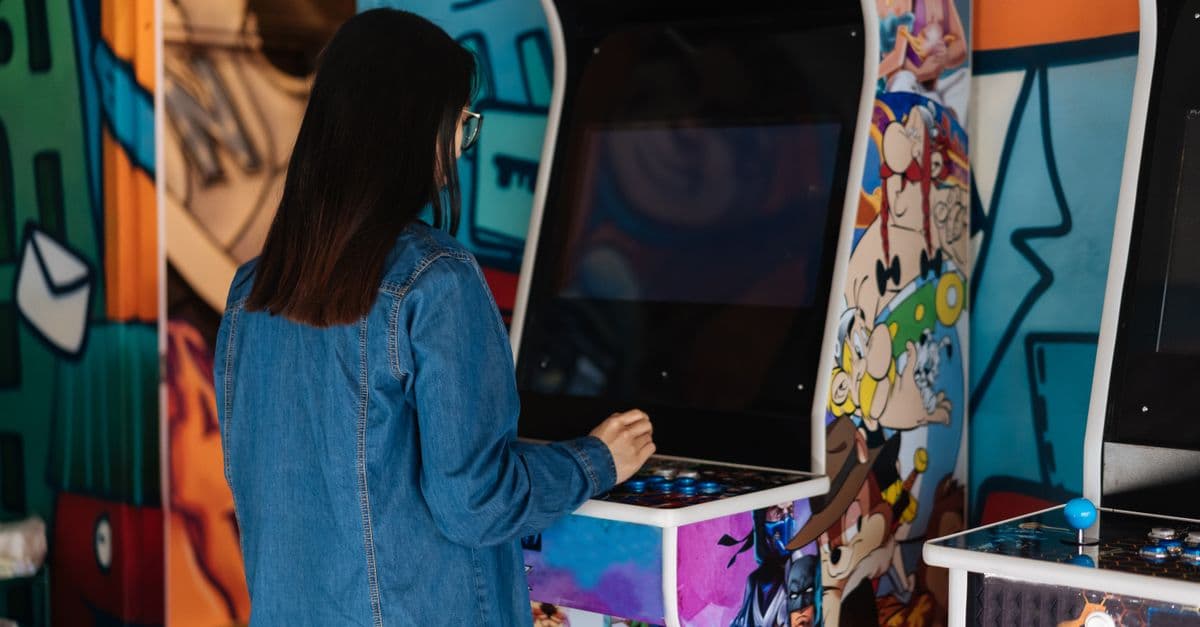
Photo: Yan Krukau / Pexels
Women make up roughly 46 percent of video game players in the United States, according to the Entertainment Software Association's 2024 Essential Facts report — nearly half the market. Yet in the studios that build those games, in the executive suites that run them, and on the leaderboards that reward them, women remain a small minority. That gap between who plays and who gets to make, lead, and be paid for gaming is the central tension of this article, and it is closing far more slowly than the headline participation numbers suggest.
The numbers behind the gap
Start with the player base, because it's the number most people already have roughly right. The ESA's 2024 survey put female players at 46 percent, male players at 53 percent, and about 1 percent identifying as non-binary or preferring not to say — a split that has hovered near parity for close to a decade. Gaming, in other words, stopped being a "boys' hobby" a long time ago, even if the industry's internal culture hasn't fully caught up.
Move from the audience to the workforce and the picture inverts. The International Game Developers Association's 2023 Developer Satisfaction Survey — a self-selected but widely cited industry benchmark drawing on 777 respondents — found 22 percent of developers identified as women, 76 percent as men, and 2 percent as transgender or another gender identity. That's real movement from the IGDA's 2009 survey, which measured female representation in development at just 11.5 percent, but it means women remain outnumbered roughly three to one in the rooms where games get built.
Leadership representation lags even further behind. Reporting from GamesIndustry.biz and other trade outlets has repeatedly found women holding under 20 percent of C-suite and studio-head positions at major publishers, and advancement into senior creative or technical leadership (lead programmer, creative director, studio head) remains disproportionately male even as entry-level hiring diversifies. A pipeline problem at the bottom becomes a representation crisis at the top.
Why the industry stayed male-dominated for so long
The mismatch between who plays and who builds didn't happen by accident, and it isn't really about preference. It's a pipeline problem with three feeder points: education, hiring, and retention, and each one compounded the others for roughly two decades.
Marketing is the first feeder point. Through the 1980s and into the 2000s, console and PC game marketing skewed heavily toward boys — think of it as a funnel that was built narrow at the mouth. Toy aisles, magazine ads, and early internet gaming culture treated "gamer" as a male identity by default, which shaped who grew up seeing game development as a viable career rather than a hobby to grow out of.
Education is the second feeder point. Computer science and game design programs inherited the same gender skew as the broader tech sector, where women have historically been underrepresented in undergraduate CS enrollment. Fewer women entering CS and design programs in the 1990s and 2000s meant fewer women in the entry-level hiring pool a decade later — a lag effect that is only now starting to reverse as younger, more gender-balanced cohorts graduate.
Retention is the third and most stubborn feeder point. Even when women entered studios, workplace culture — crunch, harassment, slower promotion — pushed many back out. Think of it like a leaky pipe: you can widen the intake all you want, but if the middle of the pipe keeps losing pressure, the far end never fills up. That's effectively what happened industry-wide for two decades, and it's why fixing hiring alone hasn't been enough to fix representation.
Why does gaming remain so male-dominated when women are half the players?
Historical marketing biases from the 1980s through the 2000s built development pipelines that skewed male at every stage — from who studied computer science to who got hired to who stayed. Player demographics reached near parity years before studio demographics did, because reversing an entrenched hiring and retention pattern takes far longer than a market simply changing. The lag is now closing as younger, more balanced cohorts enter development.
The workplace culture problem, documented in court
The clearest evidence that the industry's gender problem wasn't just underrepresentation but active hostility came from a wave of lawsuits between 2021 and 2022 that pulled internal studio culture into public record.
California's Department of Fair Employment and Housing sued Activision Blizzard in July 2021, alleging the company fostered what the filing described as a "frat boy" culture, paid women less than men for substantially similar work, promoted women more slowly, and subjected them to persistent sexual harassment including groping and unwanted advances. The U.S. Equal Employment Opportunity Commission filed a related federal suit in September 2021; a federal judge approved an $18 million settlement in March 2022 covering a potential class of more than 10,000 employees who worked at Activision Blizzard between September 2016 and March 2022.
Riot Games settled a parallel gender discrimination class action for $100 million in December 2021 — after an initial $10 million settlement attempt in 2019 was rejected by California's DFEH as inadequate. Roughly $80 million went to hundreds of current and former female employees and contractors, with payments ranging from $5,000 to just over $156,000 and an average payout near $49,700 after legal fees. Riot also committed to spending $18 million over three years on diversity, equity, and inclusion programs as part of the settlement.
These weren't isolated incidents at two unusually bad studios. They were the two cases that reached public settlements large enough to make headlines; industry surveys suggest the underlying pattern — harassment tolerated, complaints unaddressed, advancement slowed — was far more widespread than the handful of companies that got sued.
Pay equity and career advancement
Court filings and industry surveys converge on a consistent story: women in game development are paid less and promoted more slowly than male peers doing comparable work, even when accounting for role and seniority. The Activision Blizzard DFEH complaint explicitly alleged women were paid less for "substantially similar work" and fired or pushed to quit at higher rates than men — allegations a public agency was willing to litigate, not just a disgruntled-employee claim.
This is where the "leaky pipe" analogy from the earlier section becomes measurable in dollars. Fewer women in senior roles means fewer women available to sponsor and mentor junior women into leadership, which means the leadership gap self-perpetuates independent of how many women are hired at entry level. Breaking that cycle requires deliberate sponsorship programs, transparent pay bands, and promotion audits — not just diversity hiring targets at the bottom of the org chart.
How harassment shapes the player experience
If the workplace numbers describe who builds games, harassment data describes what it's actually like to play them as a woman — and the two problems reinforce each other, because a culture that tolerates harassment in-house tends to tolerate it in the products it ships.
The Anti-Defamation League's 2023 "Free to Play?" survey, a nationally representative poll of nearly 2,000 Americans ages 10–45 fielded in August 2023, found that 48 percent of women gamers reported experiencing harassment specifically because of their gender. The same research identified women and Black gamers as the identity groups most frequently targeted for identity-based harassment in online multiplayer games. Overall adult harassment rates in online games were high across genders — 76 percent of adults reported experiencing some form of harassment in 2023 — but the gender-targeted subset of that harassment fell disproportionately on women.
Academic research on livestreaming echoes the same pattern in a different venue. Peer-reviewed studies of Twitch chat logs and streamer interviews have documented that female streamers receive markedly more comments about their appearance and sexuality than male streamers of comparable skill and audience size, alongside more frequent unsolicited sexual advances in chat — a form of "emotional labor" male streamers rarely have to manage on top of the actual gameplay they're broadcasting.
What can gaming communities do to become more inclusive?
Consistent moderation matters most: enforcing codes of conduct evenly, acting visibly on reports, and removing repeat offenders rather than issuing warnings that go nowhere. Studios and platforms that publish transparency data on harassment enforcement tend to see better community trust. On an individual level, calling out gatekeeping ("real gamers") and amplifying female creators, developers, and pro players shifts community norms over time, even though it won't fix platform-level enforcement gaps by itself.
Representation on screen: how far AAA has actually come
Character representation is the most visible front of this story, and it's also the one with the clearest before-and-after data. A 2023 USC Annenberg analysis of protagonist representation in top-selling games found that roughly 30 percent of AAA game protagonists were female, up from about 15 percent in 2015 — a genuine doubling over eight years, even if it still falls well short of the player base's near-even gender split.
The games driving that shift are now commercially uncontroversial rather than risky bets. Horizon Zero Dawn, led entirely by protagonist Aloy, sold more than 20 million copies across its franchise. The Last of Us Part II, centered on Ellie's story, became one of the best-selling titles in PlayStation history despite (and arguably partly because of) its polarizing narrative choices. Games featuring or offering female protagonists — Metroid, Tomb Raider, Assassin's Creed Odyssey — have posted commercial results indistinguishable from male-led equivalents in the same genres.
That data point matters because it undercuts a persistent industry myth.
Are games with female protagonists more likely to fail commercially?
No. Sales data across major franchises with female leads — Horizon, The Last of Us, Metroid, Tomb Raider — shows no commercial penalty tied to protagonist gender. Studies of player purchasing behavior consistently find gameplay quality, marketing spend, and genre fit predict sales far better than protagonist gender does. The "female leads don't sell" assumption persisted in greenlighting decisions well after the sales data stopped supporting it.
Design choices haven't caught up as fast as headline counts, though. Even in games with female protagonists, marketing materials and character animation frequently default to what critics call the "male gaze" aesthetic — sexualized proportions, slower and more deliberate movement framing, camera angles that linger. Counting protagonists by gender captures one axis of progress; it doesn't capture whether those characters are designed with the same range of body types, ages, and movement styles male protagonists get by default.
Indie games got there first, and it wasn't an accident
Independent developers reached better representation years before AAA studios did, and the mechanism is worth understanding because it's a genuinely different structural path, not just "indie devs are more progressive."
Small teams mean fewer approval layers between a creator's vision and the shipped product — there's no marketing committee weighing in on whether a female-led narrative game will "test well" with a presumed male core audience. Direct-to-platform distribution (Steam, itch.io, Epic) let indie developers build audiences without needing a publisher's greenlight, which mattered enormously for women whose pitches might have been deprioritized inside a traditional studio hierarchy.
Games like Celeste, Spiritfarer, Unpacking, and Gris built substantial, loyal audiences with female protagonists, emotionally driven narratives, and mechanics that broke from combat-first design — and did so without the industry's default assumption that a broad audience requires a male lead. The "cozy games" genre that grew out of this space (farming sims, decorating games, narrative exploration titles) now draws documented high female participation and has become commercially significant enough that larger publishers are chasing the trend they once ignored.
The streaming and content creator economy
Twitch, YouTube Gaming, and Kick reshaped how visibility gets earned in the games industry — and for women, that reshaping cuts two ways at once.
On one side, streaming genuinely democratized access to a gaming career. A talented woman doesn't need a studio to hire her, a publisher to greenlight her project, or an editor to commission her; she needs a camera, a game, and an audience willing to show up. Streamers like Pokimane and Valkyrae built subscriber bases in the millions, competing directly with male streamers in raw viewership and building businesses (merchandise, sponsorships, brand deals) entirely outside traditional studio gatekeeping.
On the other side, that same visibility is exactly what draws disproportionate harassment. Peer-reviewed research on Twitch chat behavior — including automated content analysis of female streamers' chat logs and qualitative interviews with streamers themselves — has found women face measurably more comments about their appearance and sexuality than men doing the identical activity at a comparable skill and audience level. One study participant, quoted in academic research on gendered harassment on Twitch, described the assumption directly: viewers "think because you are a woman... on Twitch that you are there to please them," rather than to play or perform.
Platform moderation has improved unevenly in response. Twitch expanded its harassment policies and enforcement tooling over the past several years, and larger creators increasingly employ dedicated moderators to manage chat in real time — a cost smaller or newer female streamers often can't yet afford, which means the harassment burden still falls hardest on exactly the creators with the least institutional support to handle it.
Esports: a parallel gap in prize money and visibility
Esports built its own version of the same participation-versus-reward gap, and the dollar figures make it unusually concrete. According to prize-tracking data compiled by Esports Charts and Esports Insider, women's esports tournaments distributed a little over $2.2 million in prize money in 2023, rising to just under $3 million in 2024 — a real but still tiny fraction of the roughly $500 million-plus distributed annually across esports overall, a figure our esports economics explainer breaks down in detail.
Valorant's women-focused Game Changers circuit carried the largest women's esports prize pool in 2024, with its championship offering $500,000 total and the winning team, Shopify Rebellion Black, taking home $180,000. But viewership data tells the deeper story: women's Valorant events accounted for only about 5.6 percent of total Valorant esports watch time in 2024, even as the competition quality drew praise from analysts. Academic research on Counter-Strike: Global Offensive tournaments has found female players earn measurably lower prize money and draw fewer viewers than male players with statistically comparable performance metrics like kill-to-death ratios — meaning the gap isn't fully explained by skill differences, but by structural factors like sponsorship allocation and broadcast placement.
That gap has a direct downstream effect: lower prize pools and viewership make it harder for women's esports orgs to attract the same sponsorship dollars as men's leagues, which in turn caps the prize pools available for the next season. It's the same self-reinforcing cycle seen in workplace promotion pipelines, just running through a different mechanism — media rights and sponsorship deals instead of hiring committees.
What studios are actually doing differently now
It would be inaccurate to say nothing has changed structurally, even if the pace remains slow. Several concrete shifts distinguish this decade's approach from the previous one.
| Intervention | What changed | Example or evidence |
|---|---|---|
| Pay transparency | Some studios publish internal pay-band audits after litigation exposure | Riot Games' $18 million DEI commitment tied to its 2021 settlement |
| Reporting infrastructure | Platforms added "report-confirmed" feedback so players see enforcement outcomes | Twitch and major publishers expanded moderation tooling post-2020 |
| Protagonist diversity metrics | Some publishers now track lead-character demographics as a design KPI | AAA female-protagonist share rose from ~15% (2015) to ~30% (2023), per USC Annenberg |
| Women's esports investment | Dedicated leagues and circuits created separate competitive tracks | VCT Game Changers, ESL Impact (CS2) |
| Mentorship and advocacy orgs | Nonprofits formalize networking and skills pipelines | Women in Games International, Women in Games (UK) |
Table: Selected structural changes in the gaming industry's approach to gender equity, 2020–2026, with sourcing where public data exists.
None of these interventions is close to closing the gap on its own, and several (pay audits, reporting infrastructure) only exist at companies that were forced into them by litigation rather than adopting them proactively. But they represent a shift from "diversity as a talking point" to "diversity as a measured, reported metric" — a change that at least makes future backsliding easier to catch.
What people get wrong about this story
The most common misreading of "women in gaming" coverage treats it as a story with an obvious villain and an obvious fix — usually "sexist gamers" versus "just hire more women." Both framings oversimplify a problem that's structural on multiple independent axes at once: marketing history, education pipelines, workplace retention, platform moderation, and media rights allocation in esports all move somewhat independently, and fixing one doesn't automatically fix the others.
A second common error is treating player-base parity (46 percent women, per the ESA) as evidence the industry's gender problem is basically solved. Player demographics and industry demographics are different measurements answering different questions, and conflating them obscures exactly the gap this article is about — a studio can have a 50/50 audience and a 78/22 development team simultaneously, and both numbers are true at once.
A third error, common in defensive industry commentary, is assuming increased female representation in casts or rosters comes at the expense of game quality or commercial performance. The sales and viewership data reviewed above doesn't support that claim in either direction — female-led AAA titles perform comparably to male-led ones, and the gap in women's esports prize money tracks sponsorship and broadcast allocation, not measured player skill.
How much progress has been made since 2015?
Measurable gains are real: AAA female protagonist representation roughly doubled (15 percent to 30 percent per USC Annenberg), documented developer representation grew from roughly 11.5 percent in 2009 to 22 percent in the IGDA's 2023 survey, and two of the industry's largest studios paid a combined $118 million in gender discrimination settlements that came with binding DEI spending commitments. Progress is uneven by studio and region, but it is no longer just aspirational language — it shows up in court records, sales data, and survey trend lines.
Will gaming ever achieve gender parity?
Trend lines point toward continued, gradual convergence rather than either stagnation or rapid closure. Education pipelines are feeding more women into CS and game design programs than a decade ago, which should widen the entry-level hiring pool over the next several years. But leadership representation historically lags entry-level hiring by roughly a decade, meaning today's hiring gains won't show up as executive-suite parity until the mid-2030s at the earliest, absent deliberate sponsorship and promotion interventions that shorten that lag.
Are there games designed specifically with women in mind?
Some titles were built with explicitly broader emotional and narrative goals — Spiritfarer, Unpacking, Gris, and A Short Hike are frequently cited examples — but framing them as "for women" undersells their actual audience, which cuts across gender. What's more accurate is that indie studios had more freedom to move away from combat-first, male-default design defaults, and games that did so drew unusually high female participation as a byproduct, not because they were marketed at women specifically.
What is the current pay gap for women in game development?
Court filings in the Activision Blizzard case alleged women were paid less than men for substantially similar work, though the case settled without a public admission of a specific percentage figure. Broader tech-industry pay gap studies, which the games industry tracks closely given its overlap with software engineering, have generally found women in comparable technical roles earning somewhat less than male peers even after controlling for title and tenure — a gap that narrows with pay-transparency policies but rarely closes without them.
Why do women face more harassment in esports and streaming than in traditional workplaces?
The mechanism is visibility combined with anonymity: streaming and esports put individuals in front of large, often anonymous audiences in real time, with far weaker enforcement infrastructure than a traditional employer's HR department. The ADL's 2023 research found gender-targeted harassment concentrated specifically in online multiplayer and streaming contexts, where reporting tools exist but enforcement has historically been inconsistent across platforms and titles.
Do diversity initiatives actually change hiring outcomes, or are they symbolic?
Where diversity commitments are tied to enforceable, publicly reported metrics — as with Riot Games' court-mandated $18 million DEI spending commitment — there's a stronger case they produce measurable change, because a third party (the court, in that case) can verify compliance. Voluntary, unreported diversity statements without measurement or accountability mechanisms are harder to distinguish from marketing, and industry critics have specifically flagged that distinction as the difference between genuine and symbolic commitments.
The takeaway
Women are close to half of everyone who plays games, roughly a fifth of the people who build them, and a smaller fraction still of who leads the studios and wins the prize money. That three-tiered gap — player parity, development underrepresentation, leadership scarcity — didn't emerge from one cause, and it won't close from one fix. It's closing anyway, driven by a mix of litigation that forced real money into accountability commitments, sales data that quietly dismantled the "female leads don't sell" myth, and a streaming economy that let talented women build audiences without waiting for a studio's approval.
The honest read of the trend lines is neither triumphant nor bleak: representation numbers that were single digits a generation ago are now approaching a third in some categories, court settlements now carry nine-figure price tags and binding oversight, and the industry's own sales data increasingly argues against the assumptions that justified the old status quo. None of that guarantees parity arrives on any particular timeline. It does mean the gap is now visible, measured, and litigated rather than simply assumed away — which is itself the precondition for closing it.
Read next:
- Esports in 2026: Prize Pools, Viewership, and Professional Careers
- Why Random Loot Feels Rewarding
- How Matchmaking Ratings Work
Source: Entertainment Software Association (2024) — Essential Facts About the U.S. Video Game Industry — 46% of players identify as female
Source: International Game Developers Association (2023) — Developer Satisfaction Survey Summary Report — 22% of developers identify as women, up from 11.5% in 2009
Source: California Civil Rights Department / DFEH (2021) — DFEH Sues California Gaming Companies for Equal Pay Violations, Sex Discrimination, and Sexual Harassment
Source: U.S. EEOC / Variety, HCAmag reporting (2022) — $18 million federal settlement approved covering 10,000+ Activision Blizzard employees
Source: Axios (2021) — Riot Games agrees to pay $100 million in gender discrimination lawsuit
Source: Anti-Defamation League (2023) — Free to Play? Hate, Harassment, and Positive Social Experiences in Online Games — 48% of women gamers report gender-based harassment
Source: USC Annenberg (2023) — Study on female protagonist representation in top-selling video games; 30% of AAA protagonists female vs. 15% in 2015
Source: Esports Charts / Esports Insider (2023–2024) — Female esports prize pool tracking; $2.2M (2023) to ~$3M (2024); VCT Game Changers Championship $500,000 prize pool
Source: GamesIndustry.biz — Reporting on women in games leadership; C-suite representation and advancement barriers
Follow new articles
Add SciHub101 to your feed reader to see new science and technology stories.
About the Author
SciHub101 is an independent science and technology publication founded and edited by Buğra Sözeri, a software engineer and app developer based in Türkiye. AI tools assist with drafting and research. Source documentation in the existing archive is uneven, and articles are being reviewed and corrected. The Editorial Team byline identifies editorial responsibility; it does not certify specialist or independent human review. Where we compare products, anything built by our own team is labelled as such — see the editorial guidelines and About page for how corrections and disclosures work.
Related Articles
Esports Analytics: How AI Is Transforming Competitive Gaming Performance
AI-powered analytics platforms are giving esports teams the same data-driven edge that transformed traditional sports, from player scouting to live strategy adaptation.
Procedural Narrative Generation: Can AI Write Stories Worth Playing?
AI-powered narrative generation is enabling games to tell unique stories for every player, blending authored depth with procedural variety in ways previously impossible.
Complete Gaming Guide 2026 — Technology, Design, Esports, and Psychology
The complete guide to gaming in 2026: how game engines work, gaming hardware, esports, game design psychology, industry trends, and what makes games engaging and addictive.
Esports in 2026: The Rise of Competitive Gaming, Prize Pools, and Professional Careers
Esports revenue reached 1.38 billion USD globally in 2025 and is projected to 1.88 billion by 2027. Global peak concurrent viewership for major events (League of Legends Worlds, The International) routinely exceeds 100 million across all platforms, with esports tournaments distributing over 500 million dollars in prizes annually. The top 100 professional players earn 200,000 to 5 million USD annually, yet median esports player income remains 40,000 USD due to the sport's winner-take-most distribution. The esports industry now encompasses team ownership, sponsorships, media rights, coaching, sports science, equipment manufacturing, and esports venues. Professional gaming is no longer a niche pursuit; it is a legitimate career path, governed by contracts, physical training regimens, and psychological coaching. Understanding the scale, structure, and economics of esports reveals not a fad but a permanent entertainment medium comparable in revenue scale to professional tennis and growing faster than traditional sports.
What Are the Best Free-to-Play Games in 2026?
Free-to-play gaming in 2026 encompasses genres from competitive esports titles to narrative-driven adventures, with monetization ranging from cosmetic-only (respecting player progression integrity) to aggressive gacha mechanics that gate progression behind randomized paywalls. This article examines the best free-to-play games across genres, explaining the free-to-play economic model, how to identify monetization strategies, and which titles offer genuine value without requiring money spent. Featured games span competitive shooters, action RPGs, card games, and story-driven experiences, with emphasis on games where spending is optional for enjoying core content.
Apex Legends: Battle Royale With Hero Abilities and Squad Mechanics
Apex Legends proved battle royales could emphasize teamwork and hero abilities. Squad-based gameplay with legend abilities created unique BR experience.