Rhythm Games: From Guitar Hero to Beat Saber

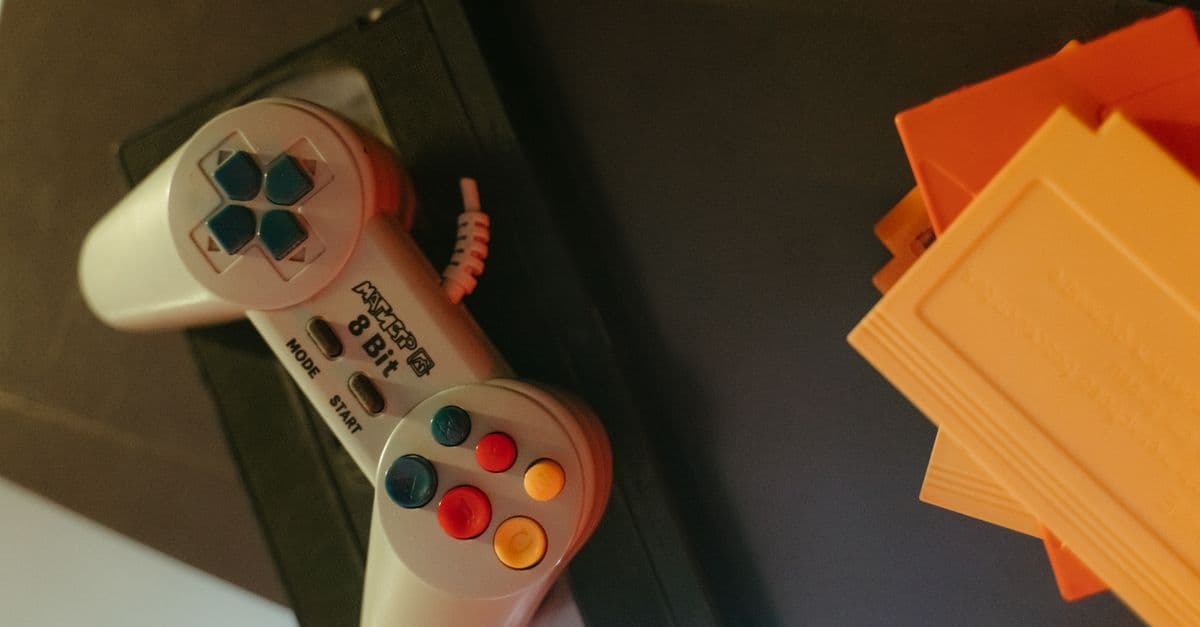
Photo: RDNE Stock project / Pexels
In November 2005, RedOctane and Harmonix released Guitar Hero, and American living rooms filled with people playing air guitar for real. By 2007, the franchise had crossed $1 billion in North American sales in just 26 months, according to Activision's own investor filings. Thirteen years later, Beat Saber did something even stranger: it made swinging plastic-free lightsabers at falling cubes feel like a legitimate cardio workout. This is the story of how music, not graphics or story, became gaming's most reliable engagement engine — and what the neuroscience says about why it works.
Why music turned out to be a better game mechanic than anyone expected
Guitar Hero's core mechanic sounds almost too simple to matter: colored notes scroll down the screen, and you press the matching button on a plastic guitar-shaped controller at the right moment. Strip away the licensed soundtrack and you have a pattern-matching exercise barely more sophisticated than Whac-A-Mole.
Add music, and the same mechanic becomes something people spend hundreds of hours mastering. That gap between the mechanic's simplicity and its addictive pull is the central puzzle of rhythm games, and it's worth taking seriously rather than waving away as "fun happens."
Guitar Hero's design team at Harmonix understood something that had eluded most music-adjacent games before it: the reward isn't beating a level, it's performing a song you already love. A player who hits every note in Metallica's "Enter Sandman" isn't solving a puzzle. They're experiencing a stylized version of playing the song themselves, note for note, with a full band backing them. That's a fundamentally different psychological hook than "clear the stage."
Researchers studying auditory-motor synchronization have since given this mechanism a name: neural entrainment. When you move in time with a beat, populations of neurons across auditory, sensorimotor, and motor brain regions begin firing in sync with the external rhythm. A 2021 review in Frontiers in Human Neuroscience on rhythm-based motor interventions describes this entrainment as also engaging the brain's dopaminergic reward circuitry — the same systems involved in motivated learning. In plain terms: matching your movement to music isn't just entertaining, it recruits the same neural reward pathway that makes practicing a skill feel good rather than tedious.
That's the mechanism Guitar Hero stumbled into, and it's the same mechanism every rhythm game since has been refining.
Guitar Hero: how a plastic guitar built a $2 billion franchise
Guitar Hero launched for the PlayStation 2 in November 2005, built by Harmonix and published by RedOctane. The pitch was almost absurdly narrow: buy a game that ships with a guitar-shaped controller, and play along to a curated setlist of classic and modern rock.
Core mechanics:
- Notes cascade down the screen in five colored lanes (green, red, yellow, blue, orange), each mapped to a fret button on the neck
- A strum bar must be pressed in sync with each note hit, separate from the fret buttons
- Consecutive correct hits build a combo multiplier, which scales score
- A "Star Power" meter, filled by hitting sustained or flagged notes, lets players trigger a temporary score bonus
- Missing too many notes in a row triggers a failure state that ends the song early on higher difficulties
The game's real innovation wasn't the note-matching loop itself — earlier titles like Konami's GuitarFreaks had done something similar in Japanese arcades since 1999. It was packaging that loop with a licensed classic-rock soundtrack and a mainstream-friendly plastic controller sold at retail, which put it in front of an audience that had never set foot in a Japanese arcade.
By 2007, Activision had acquired RedOctane for roughly $100 million and pushed the franchise into overdrive. Guitar Hero III: Legends of Rock became what Activision called its "largest product launch ever" at the time, selling more than $115 million at retail in its first week in North America alone. The Guitar Hero franchise crossed $1 billion in North American sales within 26 months of the first game's release, according to NPD Group figures cited in Activision's investor announcement. By 2010, cumulative franchise revenue had passed $2 billion across roughly 35 million units sold worldwide.
Song licensing as the actual product. Guitar Hero's genius wasn't the notation system, it was licensing. Players didn't want to master an abstract rhythm game; they wanted to "play" the Aerosmith, Metallica, and Van Halen songs already living in their heads. Every licensed track functions as pre-installed motivation — the player already loves the destination before the game teaches them the route.
That licensing model is also what killed the franchise's momentum. Activision released a new entry almost annually between 2005 and 2010 — Guitar Hero II, III, World Tour, Metallica, Van Halen, Warriors of Rock — each requiring fresh licensing deals and, in several cases, new peripheral hardware (drums, microphones, full-band controller sets). By 2011, the market had saturated: casual buyers weren't replacing plastic instruments every year, and Activision discontinued the series, later attributing the retreat to "market decline" in its own financial disclosures. A genre built on making players fall in love with specific songs turned out to have a shelf life tied to how fast the label catalog and the hardware refresh cycle could keep up.
The psychology of why rhythm games hook players
Rhythm games activate a specific, narrow bundle of cognitive rewards that most other genres only get at obliquely.
Music as pre-loaded motivation. In an RPG, the game has to build investment in a story or a character over hours. In a rhythm game, the investment already exists the moment a familiar song starts. "I want to nail this song" is a stronger and faster-forming motivator than "I want to see what happens next in the plot."
Immediate, unambiguous feedback. A hit registers instantly as a satisfying visual and audio cue; a miss registers instantly as a jarring one. There's no delay, no hidden dice roll, no ambiguity about whether you performed well. This kind of tight feedback loop is exactly what behavioral psychologists point to when explaining why certain tasks feel compulsively repeatable — the brain gets a clear, fast verdict on every single action.
Visible, granular skill progression. In week one, a player can't clear a song on Hard. By week four, they can. Unlike many skills, rhythm-game improvement is trackable to the percentage point (accuracy scores, combo counts, star ratings), which makes progress feel concrete rather than vague.
Radical accessibility relative to real musicianship. Learning to actually play "Sweet Child O' Mine" on a guitar takes years of finger-strength conditioning, music theory, and ear training. Learning to "play" it on a plastic Guitar Hero controller on Medium difficulty takes an afternoon. Rhythm games compress the emotional payoff of musicianship — the feeling of performing a song you love — into a fraction of the practice time real instruments require, while still training genuine rhythm perception in the process.
Social and cooperative play. Guitar Hero's two-guitar co-op mode and multiplayer song battles turned solo play into a shared living-room activity. This mattered commercially: a plastic guitar is a much easier thing to hand a non-gamer friend than a controller with twelve buttons and two joysticks.
Flow state through difficulty scaling. Well-designed rhythm games keep players inside what psychologist Mihaly Csikszentmihalyi termed "flow" — a state where challenge and skill are closely matched, avoiding both boredom and frustration. Difficulty tiers (Easy through Expert+) exist specifically to keep each player in that zone regardless of skill level.
Do rhythm games actually train real musical ability?
Partially, and narrowly. Rhythm games strengthen rhythm perception and auditory-motor timing — the same neural circuitry music researchers study in the context of motor rehabilitation and music training. They do not teach music theory, instrument technique, or compositional skill. A 2019 study in Journal of NeuroEngineering and Rehabilitation on music-based serious games found rhythm training tasks can measurably improve timing accuracy, but researchers are careful to frame that as a component skill, not a substitute for actual instrument instruction.
Difficulty scaling: the engineering behind "anyone can play, experts can master"
Every major rhythm game franchise, from Guitar Hero to Beat Saber to osu!, relies on a layered difficulty system that lets total beginners and obsessive experts play the same song and both come away satisfied.
Rhythm game difficulty tiers and what they teach:
| Difficulty tier | Typical player | What the tier teaches | Design purpose |
|---|---|---|---|
| Easy/Novice | First-time or casual player | Basic beat recognition, lane mapping | Guarantees an enjoyable first session regardless of skill |
| Normal/Medium | Regular player | Combo maintenance, moderate pattern reading | Builds confidence before harder content |
| Hard | Experienced player | Pattern anticipation, sustained accuracy under pressure | Rewards consistent practice with visible mastery |
| Expert/Expert+ | Dedicated or competitive player | Near-perfect timing, complex simultaneous inputs | Creates an effectively infinite skill ceiling |
Table: Generalized difficulty structure common across major rhythm game franchises, based on publicly documented tier systems in Guitar Hero, Beat Saber, and osu!.
This tiering is why rhythm games can be simultaneously described as "casual party games" and "esports with a competitive scene." The underlying song and notation are identical across difficulties; what changes is note density and timing tolerance. A designer can hand the exact same track to a grandmother playing Easy and a 16-year-old grinding Expert+, and both experiences will feel calibrated to them specifically. Few genres achieve that kind of scaling this cleanly — a fighting game's beginner and expert experiences are qualitatively different games, while a rhythm game's are the same game at different resolutions.
Dance Dance Revolution: proving rhythm games could own the arcade
Before Guitar Hero existed, Konami's Dance Dance Revolution had already shown rhythm gaming could dominate a physical space. DDR launched in Japanese arcades on September 26, 1998, designed by Konami's Naoki Maeda, and reached North American and other Asian arcades by March 1999.
DDR replaced buttons with your entire body: players stand on a floor pad with directional arrows and step on the correct arrow as it's cued on-screen, in time with the music. That physicality mattered enormously. According to retrospectives from outlets covering the game's 20th anniversary, DDR arrived at a moment when Western arcades were struggling against the rise of home consoles, and its novel controller and social, spectator-friendly format helped pull foot traffic back into arcades that home gaming had been steadily draining.
Unlike Guitar Hero, which peaked and receded within a decade, DDR machines remain installed in arcades today, more than 25 years after launch — a genuinely unusual run for any arcade cabinet. Part of the reason is structural: a DDR pad is expensive, large, and impractical to own at home in the way a plastic guitar controller is not, so the arcade retained an experience players couldn't fully replicate in their living rooms. The genre's most durable entry, in other words, survived specifically because it resisted being ported home.
Taiko no Tatsujin and osu!: rhythm gaming's other lineages
Guitar Hero and DDR represent the Western, licensed-rock branch of rhythm gaming. Two other lineages matured largely outside that spotlight and reveal how portable the core mechanic is.
Taiko no Tatsujin, released by Namco (now Bandai Namco) in Japanese arcades in 2001, replaced fret buttons and dance pads with an actual drum controller: players hit the center or rim of a taiko drum in time with descending notes set to a mix of J-pop, anime themes, and traditional Japanese music. The franchise has sustained arcade and console releases for over two decades, with Bandai Namco marking its 20th anniversary in 2021 and continuing regular console entries on platforms including Nintendo Switch. Its recent Western localizations demonstrate something notable: a rhythm game rooted in a culturally specific song catalog can still find an international audience once the mechanic itself is proven.
osu!, released in 2007 by developer Dean "peppy" Herbert, took the opposite approach from arcade hardware: it's a free, browser-downloadable game where players click circles appearing on-screen in time with music, using nothing but a mouse and keyboard. osu! has grown to over 21.8 million registered accounts, with roughly 500,000 new accounts created monthly according to community-tracked statistics, and its ranked content library spans more than 100,000 individually charted difficulties across roughly 20,000 unique beatmap sets — nearly all of it built by the player community rather than the developer. osu! also sustains a modest but real competitive circuit, with prize-money tournaments tracked by esports data aggregators.
What Taiko no Tatsujin and osu! share, despite radically different hardware and audiences, is that both proved rhythm gaming's core loop survives translation across culture, platform, and cost. You can strip away licensed rock, plastic instruments, and retail packaging entirely, and the genre still works.
Beat Saber: rhythm gaming rebuilt for a body, not a screen
Beat Saber, developed by Czech studio Beat Games and released in 2018 for PC VR headsets before expanding to the standalone Meta Quest line, took the genre somewhere Guitar Hero's flat-screen note highway couldn't reach.
Core mechanic: colored cubes fly toward the player in 3D space, each marked with an arrow indicating the direction it must be sliced. The player holds two motion controllers, functioning as sabers, and physically swings to slice each cube in the correct direction and color, all synchronized to the track's beat. Obstacles force players to duck or lean. There's no button-pressing abstraction between the player and the music — the player's actual arm movement is the input.
That embodiment is the whole design leap. Guitar Hero asks you to translate a song into finger movements on a fixed peripheral. Beat Saber asks you to translate a song into full-body motion inside the music itself, with the VR headset placing you visually inside the beat rather than watching it scroll past on a television.
Commercial trajectory. Beat Saber crossed 1 million copies sold within roughly a year of its 2018 launch, according to Road to VR's tracking of developer-released figures. By early 2021, that figure had reached 4 million copies sold plus more than 40 million individual paid song purchases through DLC, pushing estimated total revenue to around $180 million. Later reporting, citing internal documents disclosed during Microsoft's acquisition-related legal proceedings involving Meta, put Beat Saber's cumulative revenue at roughly $255 million. Unlike Guitar Hero, Beat Saber never needed an annual sequel to sustain that revenue — the same base game has stayed commercially active for more than six years through DLC songs and community mods rather than franchise reboots.
Fitness as an emergent, then deliberate, selling point. Because Beat Saber requires full-arm swings, torso rotation, and squatting or ducking on higher difficulties, it produces genuine physiological exertion. Controlled measurements summarized by VR fitness researchers found sustained Expert+ sessions burn an average of roughly 6.5 to 9.4 kilocalories per minute — comparable to brisk uphill walking or light jogging — though individual output varies nearly fourfold (from about 3.2 to 11.7 kcal/min) depending on how fully a player extends their arms and engages their hips and legs rather than just flicking their wrists. Heart-rate monitoring in the same body of research found sustained VR rhythm-game sessions can push players into 64–85% of age-predicted maximum heart rate, which falls squarely within the American College of Sports Medicine's moderate-to-vigorous cardiovascular training zone.
Custom content as the real long-term catalog. Beat Saber ships with several hundred officially licensed and original tracks, but its actual song library, sustained through the unofficial modding community, runs into the millions of user-mapped tracks spanning virtually any genre and artist, unmonetized and legally gray but tolerated in practice. This mirrors the same tension every licensed rhythm game eventually hits: official licensing is expensive and finite, and the community will always build an unofficial catalog many times larger than anything a publisher could license.
StepMania: what a rhythm game looks like with zero commercial funding
Not every important rhythm game had a publisher behind it. StepMania, an open-source rhythm engine first released in 1999 and modeled directly on Dance Dance Revolution's step-pad gameplay, has no official soundtrack, no licensing budget, and no marketing department. It has survived for more than 25 years anyway, sustained entirely by a community that builds and shares custom charts, runs its own tournaments (through community-run competitive scenes and modern forks such as ITGmania), and maintains active competitive rankings without a single dollar of commercial revenue.
StepMania is the clearest existing proof that the core rhythm-game loop — precise timing feedback tied to music a player chooses for themselves — doesn't need a publisher, a licensing budget, or a hardware peripheral sold at retail to sustain a genuinely dedicated player base. It just needs the mechanic and a community willing to keep building content for it.
Rhythm games as spectator content: why they work on Twitch
Rhythm games occupy an unusual niche in game streaming: they're compelling to watch even for viewers who've never played them, which is rare among skill-based genres.
Why the genre streams well:
- The screen shows exactly what the player is attempting to do, with no hidden information or randomized outcomes to explain
- The gap between a casual player's 80% accuracy and an expert's 99%+ accuracy is instantly legible to any viewer, even a non-gamer, in a way that (for instance) a strategy game's decision-making is not
- Leaderboards and world records give viewers an objective benchmark to root for
- The music itself is entertainment independent of the gameplay layer, so a viewer can enjoy a stream passively the way they'd enjoy a DJ set
- Free-to-play, low-hardware-cost titles like osu! give streamers a near-zero barrier to starting content, unlike genres requiring expensive rigs or paid titles
That combination keeps rhythm games consistently present in mid-tier Twitch and YouTube Gaming categories, sustained almost entirely by community interest rather than the kind of publisher marketing spend that keeps AAA shooters and battle royales visible.
What people get wrong about rhythm games
"It's just memorization, not real skill." At Expert+ tiers, top players are reacting to patterns they have genuinely never seen before, in real time, at speeds well beyond conscious note-by-note recognition — that requires the same predictive pattern-processing skill underlying high-level performance in fast-paced sports and esports, not rote memorization. Memorization helps on a first attempt at a specific chart, but it does not explain sustained high accuracy across a game's entire unfamiliar catalog.
"Rhythm games are dying because Guitar Hero is gone." Guitar Hero specifically declined due to publisher-driven annual release fatigue and expensive plastic-peripheral costs, not because the genre lost appeal. Beat Saber, osu!, Taiko no Tatsujin, and DDR were all thriving commercially or in active community use during and after Guitar Hero's decline — the genre didn't die, one licensed-hardware business model did.
"VR rhythm games are a gimmick, not real exercise." Peer-reviewed and controlled measurement studies place sustained Beat Saber sessions within recognized moderate-to-vigorous cardiovascular training zones, comparable to tennis or brisk uphill walking, provided the player engages fully rather than making minimal wrist flicks. It's a legitimate, if variable, form of exercise, not a marketing claim.
"Licensed music is what makes a rhythm game good." Licensing helps adoption, but StepMania, osu!, and Beat Saber's own community-mod ecosystem all show the mechanic sustains dedicated engagement with zero commercial licensing at all. What licensing actually buys is faster mainstream reach, not the core appeal.
Why did Guitar Hero decline so quickly if it was a billion-dollar franchise?
Activision released new entries almost annually from 2005 to 2010, each often requiring new plastic peripherals, and by 2011 the market had saturated. Casual buyers stopped replacing hardware yearly, free titles like osu! fragmented the audience, and Activision retired the series, later attributing the retreat to broader market decline in its own financial disclosures.
What's the actual difference between rhythm games and general music games?
Rhythm games require precise timing synchronization — hitting inputs at exact musical moments, scored on accuracy. Broader "music games" include creation tools like GarageBand or DJ simulators that don't score timing precision the same way. Guitar Hero and Beat Saber are rhythm games; some titles, like certain VR music sandboxes, blur the line by combining both.
The takeaway
Rhythm games proved that music itself, not narrative or graphics, can carry a game's entire engagement loop, because synchronizing movement to a beat taps directly into the brain's auditory-motor and reward circuitry. Guitar Hero showed that packaging that loop with familiar, licensed songs and a novel plastic controller could turn a niche mechanic into a $2 billion mainstream phenomenon almost overnight. Beat Saber showed the same core loop translates into full-body VR immersion and, under the right conditions, genuine cardiovascular exercise. And StepMania, osu!, and Taiko no Tatsujin each show, in their own way, that the mechanic doesn't actually need a publisher's licensing budget to sustain a devoted community for decades. What all of them share is the same underlying bet: give players music they already love, give them honest, instant feedback on how well they're keeping time with it, and the gameplay takes care of itself.
Read next:
Follow new articles
Add SciHub101 to your feed reader to see new science and technology stories.
About the Author
SciHub101 is an independent science and technology publication founded and edited by Buğra Sözeri, a software engineer and app developer based in Türkiye. AI tools assist with drafting and research. Source documentation in the existing archive is uneven, and articles are being reviewed and corrected. The Editorial Team byline identifies editorial responsibility; it does not certify specialist or independent human review. Where we compare products, anything built by our own team is labelled as such — see the editorial guidelines and About page for how corrections and disclosures work.
Related Articles
VR Gaming: Full Immersion and Presence in Virtual Worlds
VR transforms gaming through presence and immersion. Players physically present in virtual worlds. Different medium, different possibilities.
Roguelike Games and Hades: Meaningful Progression Through Repetition
Roguelikes embrace repetition through procedural generation. Hades perfected the formula: meaningful rewards across runs, beautiful presentation, compelling narrative.
Complete Gaming Guide 2026 — Technology, Design, Esports, and Psychology
The complete guide to gaming in 2026: how game engines work, gaming hardware, esports, game design psychology, industry trends, and what makes games engaging and addictive.