Nuclear Fission Explained — How Nuclear Power Works
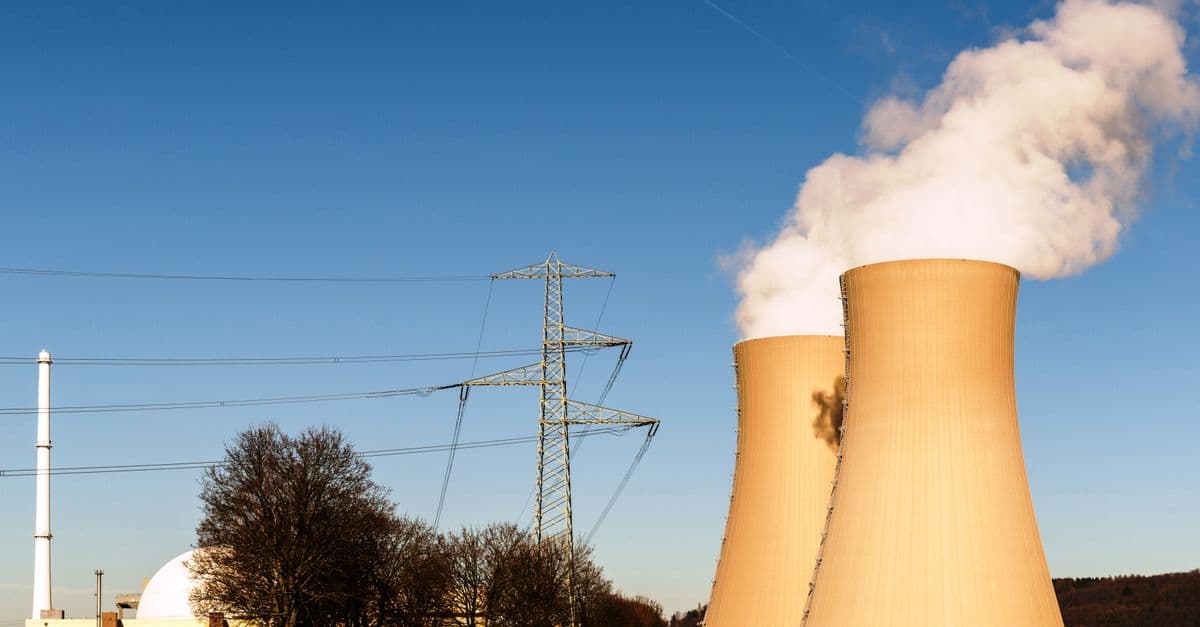
Photo: Wolfgang Weiser / Pexels
Nuclear fission is one of the most consequential discoveries in human history. Split the right kind of atom in the right way, and you release millions of times more energy than burning coal or gas. At the end of 2024, 417 power reactors with 377 gigawatts of net capacity were operating worldwide and generated 2,617 TWh of electricity that year, according to the IAEA's Power Reactor Information System (PRIS) — roughly 9% of global electricity. Yet fission also produced the most destructive weapons ever built, left behind radioactive waste that will outlast civilizations, and caused accidents that shaped public fear for generations.
This article explains the physics from first principles: what fission is, how chain reactions work, how a reactor turns that heat into electricity, and what the ongoing nuclear debate looks like in 2026.
What Is Nuclear Fission?
Every atom has a nucleus made of protons and neutrons held together by the strong nuclear force — the most powerful force in nature over short distances. For heavy elements like uranium-235 (U-235) and plutonium-239 (Pu-239), that nucleus is large enough to be unstable. When a slow (thermal) neutron collides with a U-235 nucleus, the nucleus momentarily becomes U-236, then vibrates violently and splits — typically into two smaller nuclei (called fission fragments), two or three neutrons, and a burst of gamma radiation.
The released energy obeys Einstein's mass-energy equivalence: E = mc². The mass of the fission products is very slightly less than the mass of the original nucleus and neutron. That "missing" mass — about 0.1% of the original — is converted entirely into energy. Because c (the speed of light) is ~3 × 10⁸ m/s, squaring it produces a gigantic multiplier. Each fission of U-235 releases about 200 MeV (3.2 × 10⁻¹¹ joules), and a kilogram of fissioned U-235 releases roughly 82 terajoules, according to the World Nuclear Association's physics primer — on the order of 3,000 tonnes of coal. If the role of E = mc² is unfamiliar, our explainer on Einstein's relativity covers where that equation comes from.
Why U-235 and Not Regular Uranium?
Natural uranium is 99.3% U-238 and only 0.7% U-235. U-238 absorbs thermal neutrons without fissioning; U-235 does fission readily. For most power reactors, uranium must be enriched to 3–5% U-235. Research reactors and naval reactors use higher enrichments (20–90%+). Weapons-grade uranium is enriched above 90%. The enrichment process — typically gas centrifuges spinning uranium hexafluoride (UF₆) at supersonic speeds — separates isotopes by tiny mass differences and is the technical bottleneck that makes nuclear weapons proliferation difficult to achieve.
How Fission Was Discovered (1934–1942)
Fission was found almost by accident, by chemists who were looking for something else. After James Chadwick identified the neutron in 1932, Enrico Fermi's group in Rome began bombarding element after element with neutrons in 1934. When they hit uranium, they saw new radioactivity and suspected they had made elements heavier than uranium. For four years, laboratories in Rome, Paris and Berlin chased these supposed "transuranic" products. The full story of Fermi's role is in our profile of Enrico Fermi.
In Berlin, the radiochemists Otto Hahn and Fritz Strassmann kept finding a product that behaved chemically like barium, an element with roughly half the mass of uranium. They published that conclusion in Naturwissenschaften in late 1938 (vol. 26, p. 756), with a follow-up early in 1939 (vol. 27, p. 11). As chemists, they were reluctant to claim that a uranium nucleus had broken in two, because the physics of the time said a neutron should knock off small pieces at most.
The physical explanation came from Lise Meitner, Hahn's long-time collaborator, who had fled Nazi Germany to Sweden in 1938, and her nephew Otto Robert Frisch. Treating the nucleus as an electrically charged liquid drop, they reasoned that an extra neutron could set it wobbling until electrostatic repulsion between its protons tore it into two roughly equal halves. Their letter to Nature, dated 16 January 1939 and published on 11 February 1939, estimated that the two fragments would fly apart with "a total kinetic energy of c. 200 Mev" and introduced the word "fission", borrowed from biology's term for cell division. Meitner's contribution was long under-credited; Hahn alone received the 1944 Nobel Prize in Chemistry. Her story is told in our profile of Lise Meitner.
Within weeks, physicists realised that fission also released neutrons, which meant a chain reaction might be possible. That possibility became reality on 2 December 1942, when Fermi's team achieved the first self-sustaining chain reaction in Chicago Pile-1, a stack of graphite blocks and uranium under the stands of a University of Chicago sports field. Our article on Chicago Pile-1 covers that experiment step by step, and the science of the Manhattan Project explains how the same physics was turned into weapons by 1945.
| Year | Event | Who |
|---|---|---|
| 1932 | Neutron discovered | James Chadwick |
| 1934 | Neutron bombardment of uranium begins | Fermi's group, Rome |
| Dec 1938 | Barium identified among uranium products | Hahn and Strassmann, Berlin |
| Jan–Feb 1939 | Liquid-drop explanation; "fission" coined; ~200 MeV estimated | Meitner and Frisch |
| Dec 1942 | First self-sustaining chain reaction (CP-1) | Fermi and colleagues, Chicago |
| 1954–1956 | First grid-connected nuclear electricity (Obninsk, USSR, 1954; Calder Hall, UK, 1956) | — |
How a Chain Reaction Works
The neutrons released by each fission event can trigger additional fissions. If exactly one neutron from each event causes another fission, the reaction is self-sustaining (criticality). If more than one causes another fission, the reaction grows exponentially (supercriticality — the basis of a bomb). If fewer than one, the reaction dies out (subcriticality).
Three factors govern whether criticality is reached:
- Critical mass — a minimum quantity and geometry of fissile material so that enough neutrons are captured before escaping. For bare metallic U-235, the bare critical mass is roughly 46–52 kg depending on the calculation (modern Monte Carlo estimates cluster near 47 kg), and a neutron reflector cuts it by more than half.
- Enrichment — higher U-235 concentration means fewer non-fissioning U-238 captures.
- Moderation — fast neutrons produced by fission (average ~2 MeV) are less efficient at splitting U-235 than slow thermal neutrons (~0.025 eV). Moderators (water, heavy water, graphite) slow neutrons through repeated collisions without absorbing too many.
In a power reactor, the chain reaction is kept precisely at criticality — never super-critical — by control rods made of neutron-absorbing materials (hafnium, boron carbide, or silver-indium-cadmium alloys). Inserting rods absorbs more neutrons and slows the reaction; withdrawing them allows the reaction to proceed.
Where the 200 MeV Goes
The 200 MeV figure is an average; the exact amount depends on which pair of fragments a given nucleus splits into. Fission of U-235 does not produce one fixed pair. It produces a spread of a few hundred different isotopes, with the most likely masses clustered around 95 and 140 atomic mass units, so one fragment is usually noticeably heavier than the other.
According to the World Nuclear Association, about 85% of the released energy appears first as the kinetic energy of the two fragments, which slam into surrounding atoms in the fuel pellet within micrometres and turn that motion into heat. The remainder comes out as the kinetic energy of the prompt neutrons, as prompt gamma rays, and as delayed energy from the radioactive decay of fission products over the following seconds to years. Some of the decay energy is carried away by antineutrinos, which pass through the reactor and the Earth without depositing anything, so the recoverable heat is slightly less than the total.
| Energy component (U-235, thermal fission) | Approximate share | What happens to it |
|---|---|---|
| Kinetic energy of fission fragments | ~85% (about 170 MeV) | Stopped inside the fuel; becomes heat almost instantly |
| Prompt neutrons, prompt gammas, decay betas and gammas | ~15% (about 30 MeV) | Mostly absorbed in fuel, coolant and shielding as heat |
| Antineutrinos from beta decay | small fraction | Escape the reactor entirely |
Source: World Nuclear Association, "Physics of Uranium and Nuclear Energy"; the split of the remaining ~30 MeV between components varies by reference.
The decay-energy part matters enormously for safety. Even after a reactor shuts down and fission stops, its fission products keep emitting heat — initially several percent of full power, falling over hours and days. This decay heat cannot be switched off with control rods, and losing the ability to remove it, not an uncontrolled chain reaction, is what melted the cores at Fukushima Daiichi.
Prompt and delayed neutrons: why reactors are controllable
Each U-235 fission releases on average about 2.45 neutrons (Pu-239 releases about 2.9), per the World Nuclear Association. Almost all of these appear within a tiny fraction of a second. If reactor power depended only on these prompt neutrons, the time between neutron generations would be so short that power could climb faster than any mechanical control rod could respond.
What makes a reactor controllable is a small group of delayed neutrons, emitted not by the fission event itself but by certain fission products as they decay. For U-235 they make up about 0.66% of all fission neutrons, and the longest-lived group appears with a half-life of about 56 seconds. Reactors are designed so that they reach criticality only when these delayed neutrons are counted. That stretches the effective time between generations from microseconds to around a tenth of a second or more, giving operators and automatic systems time to act.
If a reactor ever becomes critical on prompt neutrons alone — "prompt critical" — this safety margin vanishes. That is what happened in the final seconds at Chernobyl in 1986, where the RBMK's positive void coefficient pushed reactivity past that threshold. Pu-239 has a smaller delayed-neutron fraction (about 0.23%), one of several reasons plutonium-heavy cores are engineered with extra care.
How a Nuclear Reactor Works
At its core, a nuclear reactor is a sophisticated heat engine. Fission heats a coolant; the coolant transfers that heat (directly or indirectly) to water; steam drives a turbine connected to a generator. The nuclear part is just the heat source.
Key components:
- Fuel rods — ceramic pellets of uranium dioxide (UO₂) stacked inside zirconium alloy tubes, bundled into fuel assemblies.
- Moderator — slows neutrons (water in most Western reactors; graphite in older Soviet and UK designs).
- Coolant — carries heat away (pressurized water, boiling water, heavy water, CO₂, or liquid sodium in advanced designs).
- Control rods — regulate reaction rate.
- Pressure vessel — thick steel housing the reactor core; primary safety barrier.
- Containment building — reinforced concrete dome (in most designs) providing final accident barrier.
- Steam generator / turbine hall — where heat becomes electricity.
A typical 1,000 MWe pressurized water reactor generates enough electricity for roughly 750,000 homes and needs roughly 25 tonnes of fresh low-enriched uranium fuel per year, made from about 180–200 tonnes of natural uranium.
A worked example: how much uranium does a reactor split?
The numbers above allow a rough check of how little matter a reactor consumes. A 1,000 MWe plant running at roughly 33% thermal efficiency must produce about 3,000 MW of heat, or 3 × 10⁹ joules every second. Dividing by 3.2 × 10⁻¹¹ joules per fission gives close to 10²⁰ fissions per second. Over a year at full power (about 3.15 × 10⁷ seconds), that energy totals roughly 9.5 × 10¹⁶ joules. At 82 TJ per kilogram, that is on the order of 1.2 tonnes of uranium actually split per year.
That tonne or so is spread across the much larger mass of fuel loaded into the core, because commercial fuel is only a few percent U-235 and is removed long before all of it has fissioned. A coal plant of the same size, by contrast, burns millions of tonnes of coal a year. The comparison explains both nuclear power's tiny fuel-transport footprint and why its waste, though intensely radioactive, is physically small in volume.
| Quantity | Approximate value for a 1,000 MWe light-water reactor |
|---|---|
| Thermal power | ~3,000 MWt |
| Fissions per second | ~10²⁰ |
| Uranium fissioned per year at full power | ~1 tonne |
| Fuel enrichment | 3–5% U-235 |
Calculated from WNA physics constants; actual figures depend on capacity factor, efficiency and fuel burnup.
The fuel cycle in brief
Before fission can happen in a reactor, uranium goes through several industrial steps. Ore is mined and milled into a concentrate called yellowcake (U₃O₈). It is chemically converted into uranium hexafluoride, enriched, converted again into uranium dioxide powder, and pressed and sintered into ceramic pellets about the size of a fingertip. Pellets are loaded into zirconium-alloy tubes and bundled into assemblies. A typical light-water reactor replaces a fraction of its core every 12 to 24 months.
After use, fuel comes out with most of its uranium still present, plus fission products and a small amount of plutonium created when U-238 absorbs neutrons. Some countries, notably France, reprocess spent fuel to recover uranium and plutonium for reuse as mixed-oxide (MOX) fuel. Others, including the United States, follow a "once-through" cycle and treat spent fuel as waste.
Reactor Types Compared
| Reactor Type | Moderator | Coolant | Country Usage | Safety Features | Thermal Efficiency |
|---|---|---|---|---|---|
| PWR (Pressurized Water) | Light water | Pressurized water | USA, France, China, Russia | Two-loop separation; high pressure suppresses boiling | ~33% |
| BWR (Boiling Water) | Light water | Boiling water (direct) | USA, Japan, Sweden | Simpler design; lower pressure than PWR | ~33% |
| CANDU (Canada Deuterium Uranium) | Heavy water | Heavy water | Canada, South Korea, India | Refuels online; uses natural uranium (no enrichment needed) | ~29% |
| RBMK (Soviet graphite) | Graphite | Light water | Russia (legacy) | No containment dome; positive void coefficient (dangerous) | ~17% |
| Gen IV (e.g., MSR, SFR) | Varies | Molten salt / liquid sodium | Prototype stage worldwide | Passive safety; walk-away safe; some can burn nuclear waste | ~40–45% (projected) |
The RBMK's positive void coefficient was central to the Chernobyl disaster: as coolant boiled away, reactivity increased, a self-reinforcing instability that no Western design shares.
Major Accidents: What Went Wrong
Three Mile Island (1979, USA)
A stuck-open pressure relief valve caused coolant loss. Operators misread instruments and blocked emergency cooling. The result was a partial core meltdown — but the containment building held. No significant radiation was released outside the plant. Public trust in nuclear power in the US collapsed anyway (President's Commission Report, Kemeny, 1979).
Chernobyl (1986, USSR)
During a safety test, operators disabled automatic shutdown systems and operated the RBMK reactor at low power with control rods nearly fully withdrawn. A sudden power surge caused a steam explosion and graphite fire, completely destroying the reactor and releasing massive radioactivity across Europe. The IAEA attributes 31 direct deaths and estimates 4,000–60,000 eventual cancer deaths across the contaminated region (UNSCEAR 2008; Cardis et al. 2006).
Fukushima Daiichi (2011, Japan)
A 9.0 magnitude earthquake and subsequent tsunami overtopped seawall defenses and knocked out backup generators. Without cooling, three reactor cores melted down over several days. Hydrogen explosions damaged reactor buildings. About 154,000 people were evacuated. Radiation-related cancer deaths are projected at 130–1,100 (WHO, 2013) — far fewer than the deaths attributed to the evacuation and its disruption itself, which Japanese authorities have counted in the low thousands (Hasegawa et al., 2015).
Nuclear Waste: The Unresolved Problem
Nuclear fission produces high-level waste — primarily spent fuel rods containing fission products (cesium-137, strontium-90, half-lives ~30 years) and long-lived transuranic elements (plutonium-239, half-life 24,100 years; americium-241, half-life 432 years).
Currently, spent fuel is stored:
- Wet storage — cooling pools adjacent to reactors for 5–10 years while radioactive heat decays.
- Dry cask storage — welded steel cylinders surrounded by concrete, air-cooled, designed for 100+ years of interim storage.
No country has yet opened a permanent geological repository (deep borehole or mined cavern at hundreds of meters depth), though Finland's Onkalo repository is the furthest along: Posiva began a trial run of canister placement at about 430 metres depth on 30 August 2024, using no real fuel, while the regulator's operating-licence review continued (World Nuclear News, 2024). The challenge is containing waste for 100,000+ years, longer than any human institution has existed.
Nuclear vs. Fossil Fuels: Carbon Comparison
| Energy Source | Lifecycle CO₂ (g/kWh) | Land Use | Deaths per TWh |
|---|---|---|---|
| Coal | 820 | High | ~24.6 |
| Natural gas | 490 | Moderate | ~2.8 |
| Nuclear | 12 | Low | ~0.03 |
| Wind (onshore) | 11 | High (footprint) | ~0.04 |
| Solar PV (utility-scale) | 48 | Moderate | ~0.02 |
Sources: IPCC 2014 Annex III (median lifecycle values); Ritchie, Our World in Data 2020 (death rates include Chernobyl and Fukushima; coal figure is for European plants)
Nuclear power's lifecycle carbon emissions are comparable to wind and lower than solar per kilowatt-hour, making it a low-carbon technology by any serious accounting. Its death rate per unit of energy is among the lowest of any energy source, in the same range as wind and solar; the differences among those three are within the uncertainty of the estimates.
The Nuclear Renaissance Debate in 2026
Nuclear power is experiencing a policy reversal after two decades of stagnation following Fukushima. Key drivers in 2026:
- Net-zero commitments — many countries cannot model deep decarbonization without firm low-carbon baseload.
- AI data center demand — Microsoft, Google, and Amazon have all signed contracts for nuclear power (including small modular reactors) to power AI infrastructure.
- Small Modular Reactors (SMRs) — factory-built reactors under 300 MWe, theoretically cheaper due to standardization; NuScale, Rolls-Royce, and X-energy are in advanced stages; NuScale's US project was canceled in 2023 citing cost overruns, showing the path remains difficult.
- Geopolitical energy security — Europe's gas crisis following 2022 accelerated reconsideration of nuclear closures in Germany (which nonetheless closed its last plant in 2023) and Belgium (which extended its two newest reactors by 10 years).
- Opposition — waste storage remains unresolved, construction costs and timelines continue to exceed projections (e.g., Vogtle units 3 and 4 in Georgia cost more than $30 billion vs. a $14 billion original estimate), and some environmentalists remain opposed.
For a counterpart on fusion — the reaction that powers the Sun and promises no long-lived waste — see our article on nuclear fusion energy explained.
Common Misconceptions About Fission
"Fission converts uranium entirely into energy." Only about 0.1% of the mass involved disappears. The rest becomes fission products, which are physically real atoms such as cesium, strontium, iodine and xenon. That is why fission leaves behind waste at all.
"A reactor can explode like a bomb." A weapon needs highly enriched material assembled into a supercritical mass faster than it can blow itself apart. Power reactor fuel at 3–5% enrichment cannot do that. Reactor accidents are steam, hydrogen or chemical explosions and fires that spread radioactive material — serious, but physically different.
"Shutting the reactor down ends the danger." Control rods stop fission within seconds, but decay heat continues. Cooling must keep working for days after shutdown, which is why newer designs add passive cooling that needs no pumps or power.
"All uranium is fissile." Only U-235 among natural isotopes fissions readily with slow neutrons. U-238, more than 99% of natural uranium, mostly absorbs neutrons; some of it becomes plutonium-239, which is fissile and contributes a meaningful share of a reactor's output late in a fuel cycle.
"Nuclear power is a large share of world energy." It supplies roughly 9% of electricity but a smaller share of total primary energy, since most energy is used as heat and transport fuel. Country shares vary widely; our ranking of countries with the most nuclear power shows where reactors are concentrated, and our look at the safety record examines the risk numbers in detail.
Open questions
Fission's physics is settled, but its engineering and economics are not. Can small modular reactors actually deliver lower costs, or will first-of-a-kind problems repeat? Can fast reactors and reprocessing turn long-lived actinides into fuel at commercial scale? Will deep geological repositories, starting with Onkalo, perform as modelled over tens of thousands of years? And can supply chains for higher-assay fuel (5–20% enrichment, needed by several advanced designs) scale up quickly enough? These are the questions that will decide nuclear's role through the 2030s.
FAQ
Q: Is nuclear power safe compared to other energy sources? A: By deaths per unit of energy produced, nuclear is one of the safest energy sources ever used — far safer than coal, oil and gas, and in the same low range as wind and solar. The high-profile accidents skew public perception relative to the statistical record.
Q: Can a nuclear power plant explode like a nuclear bomb? A: No. Power-reactor fuel is enriched to only 3–5% U-235; weapons require 90%+. The geometry and conditions for a nuclear detonation cannot occur in a power reactor. Chernobyl was a steam and chemical explosion, not a nuclear detonation.
Q: What happens to nuclear waste? A: Spent fuel is first cooled in water pools, then transferred to dry casks. Long-term, the plan in most countries is deep geological disposal in stable rock formations, but no permanent repository is yet operating at commercial scale although Finland's Onkalo began a trial run without real fuel in August 2024 and is the closest to operation.
Q: How long does a nuclear power plant last? A: Most plants are licensed for 40 years and can be relicensed for 20-year extensions. Many US plants are now licensed to 60 years; some proposals extend to 80 years with ongoing safety assessments.
Q: What is the difference between fission and fusion? A: Fission splits heavy atoms (uranium, plutonium) and produces long-lived radioactive waste. Fusion joins light atoms (hydrogen isotopes) and produces primarily helium and short-lived activation products. Fusion is what powers the Sun; commercial fusion power remains in development.
Q: Who discovered nuclear fission? A: Otto Hahn and Fritz Strassmann identified barium among the products of neutron-bombarded uranium in December 1938. Lise Meitner and Otto Frisch provided the physical explanation and coined the term "fission" in a letter published in Nature on 11 February 1939.
Q: Why is uranium enrichment a proliferation concern? A: The same centrifuge technology that enriches uranium to 5% for power can, if operated longer or reconfigured, produce 90%+ weapons-grade material. Countries with enrichment capability therefore have a shorter path to weapons — which is why international inspections (IAEA safeguards) focus heavily on enrichment facilities.
Sources
- International Atomic Energy Agency (IAEA). Nuclear Power Reactors in the World — 2025 Edition. Vienna: IAEA, 2025.
- World Nuclear Association. Nuclear Power Reactors. wna.org, 2024.
- Serber, R. The Los Alamos Primer (1943, declassified 1992). University of California Press.
- Kemeny, J. et al. Report of the President's Commission on the Accident at Three Mile Island. Washington DC, 1979.
- UNSCEAR. Health Effects of the Chernobyl Accident and Special Health Care Programmes. New York: UN, 2008.
- Cardis, E. et al. "Estimates of the cancer burden in Europe from radioactive fallout from the Chernobyl accident." International Journal of Cancer 119, 1224–1235 (2006).
- World Health Organization. Health Risk Assessment from the Nuclear Accident after the 2011 Great East Japan Earthquake and Tsunami. Geneva: WHO, 2013.
- Hasegawa, A. et al. "Health Effects of Radiation and Other Health Problems in the Aftermath of Nuclear Accidents." Lancet 386, 479–488 (2015).
- IPCC. Annex III: Technology-specific Cost and Performance Parameters. Climate Change 2014: Mitigation of Climate Change. Cambridge: Cambridge University Press, 2014.
- Meitner, L. & Frisch, O. R. "Disintegration of Uranium by Neutrons: a New Type of Nuclear Reaction." Nature 143, 239–240 (1939). https://atomicarchive.com/resources/documents/beginnings/nature_meitner.html
- Hahn, O. & Strassmann, F. Naturwissenschaften 26, 756 (1938); 27, 11 (1939).
- World Nuclear Association. "Physics of Uranium and Nuclear Energy." https://world-nuclear.org/information-library/nuclear-fuel-cycle/introduction/physics-of-nuclear-energy
- IAEA Power Reactor Information System (PRIS), data to 31 December 2024. https://pris.iaea.org/PRIS/home.aspx
- Ritchie, H. "What are the safest and cleanest sources of energy?" Our World in Data, 2020.
Follow new articles
Add SciHub101 to your feed reader to see new science and technology stories.
About the Author
SciHub101 is an independent science and technology publication founded and edited by Buğra Sözeri, a software engineer and app developer based in Türkiye. AI tools assist with drafting and research. Source documentation in the existing archive is uneven, and articles are being reviewed and corrected. The Editorial Team byline identifies editorial responsibility; it does not certify specialist or independent human review. Where we compare products, anything built by our own team is labelled as such — see the editorial guidelines and About page for how corrections and disclosures work.
Related Articles
What Is Consciousness? Science's Hardest Question
Why does subjective experience exist at all? Explore the hard problem of consciousness, leading scientific theories, and what they tell us about minds and.

String Theory Explained — Beyond the Standard Model
What string theory really proposes, the extra dimensions, M-theory, the multiverse landscape, and why critics call it unfalsifiable in 2026.
How Thermodynamics Explains Everything: From Steam Engines to the Heat Death of the Universe
Four laws govern how energy moves, transforms, and degrades, from the steam engine to every living cell. Thermodynamics explains why engines have limits and why time has a direction.
How Nuclear Reactions Work: Fission and Fusion Explained
One splits atoms to release energy; the other fuses them together. Both tap the same fundamental force — and both are transforming how we power civilization.

How Does a Refrigerator Work? The Cool Science Behind Everyday Chill
Refrigerators don't make cold — they move heat out of one place into another. Here's how the four-step refrigeration cycle keeps your food fresh, and why it works.
Nuclear Fusion Energy Explained — The Power of the Stars
Fusion is the energy source that powers the Sun. Replicating it on Earth could provide nearly limitless clean energy. After 70 years of effort, we're closer than ever — but harder than expected.