Is Nuclear Energy Safe? An Honest Look at the Numbers
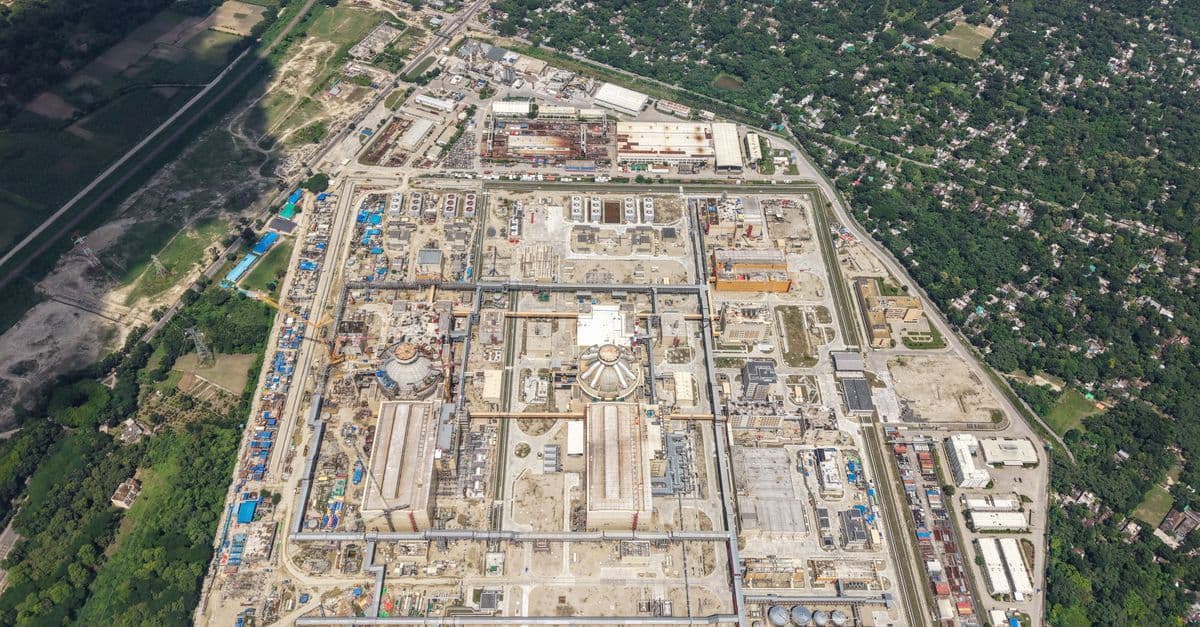
Photo: Sarowar Hussain / Pexels
Ask most people to rank energy sources by safety and they will place nuclear near the bottom — probably just above coal. Ask them why and they will say Chernobyl, Fukushima, or simply "radiation." The mental image of a nuclear disaster is vivid, frightening, and deeply embedded in popular culture. The data tells a very different story. When you measure deaths per unit of energy produced — the only honest way to compare inherently different systems — nuclear sits alongside wind and solar, roughly 800 times safer than coal. That contrast matters for how any society thinks about decarbonisation, because the alternative to nuclear is almost never perfection.
Key takeaways
- Nuclear energy causes fewer deaths per unit of energy produced than coal, oil, gas, and even biomass when measured by deaths per terawatt-hour (TWh).
- Chernobyl's confirmed death toll is far lower than most people believe — approximately 60 direct deaths, with estimates of long-term cancer deaths ranging from hundreds to several thousand, not millions.
- Fukushima caused zero confirmed radiation deaths — the evacuation itself caused over 2,200 deaths from stress and disruption among elderly evacuees.
- Modern reactor designs are orders of magnitude safer than 1970s technology, with passive safety systems that prevent the physical conditions that caused past accidents.
- The real comparison is not nuclear vs. perfect — it is nuclear vs. the alternatives, especially fossil fuels, which kill millions annually through air pollution.
The deaths-per-TWh framework
The most honest way to compare energy source safety is to calculate deaths per terawatt-hour (TWh) of electricity produced. A terawatt-hour is 1 trillion watt-hours of electricity — roughly the annual consumption of 30,000 average US homes. Dividing deaths (from accidents, pollution, and all other causes attributable to producing that energy) by output lets you compare systems that operate at radically different scales and through radically different mechanisms.
Think of it as the actuarial approach: not "has this ever caused a spectacular accident?" but "what is the expected mortality per unit of useful work?" A technology can cause occasional dramatic accidents while still being far safer than one that kills people quietly and continuously.
According to data compiled by Our World in Data drawing on peer-reviewed sources:
| Energy source | Deaths per TWh |
|---|---|
| Coal | ~24 |
| Oil | ~18 |
| Biomass | ~4.6 |
| Natural gas | ~2.8 |
| Hydropower | ~1.3 |
| Nuclear | ~0.03 |
| Wind | ~0.04 |
| Solar | ~0.02 |
Nuclear energy, including both Chernobyl and Fukushima, causes approximately 0.03 deaths per TWh. That puts it in the same safety category as wind and solar — and roughly 800 times safer than coal.
Source: Our World in Data — Death rates from energy production per TWh
The hydropower figure deserves a note. At 1.3 deaths per TWh, hydro looks relatively dangerous because the statistics include the 1975 Banqiao dam failure in China, which killed an estimated 170,000 people when catastrophic flooding occurred following a typhoon. Dam failures are low-frequency, high-consequence events that pull up the average significantly.
Fossil fuel deaths are mostly the opposite: high-frequency, low-visibility. The WHO estimates approximately 7 million people die annually from air pollution, the vast majority from burning fossil fuels. These deaths — from cardiovascular disease, respiratory failure, and stroke — accumulate invisibly across millions of households and hospitals, generating no headlines and almost no public alarm.
What actually happened at Chernobyl
The 1986 Chernobyl disaster remains the worst nuclear accident in history and deserves honest, precise examination rather than either dismissal or sensationalisation.
The accident occurred at Unit 4 of the Chernobyl nuclear power plant in what is now northern Ukraine, during a botched safety test on the night of April 25–26, 1986. The RBMK-1000 reactor design had a fatal engineering flaw: it exhibited a positive void coefficient, meaning it became more reactive — not less — as cooling water turned to steam. This is the opposite of how well-designed reactors behave. A properly designed reactor uses less coolant in crisis conditions as a natural braking mechanism; the RBMK used more. The reactor also operated without the containment dome that Western reactors were required to have under their licensing conditions.
The sequence: operators reduced the reactor to low power for the test, the power dropped further than intended, operators pulled out too many control rods to compensate, and the ensuing power surge was so extreme that the reactor could not be shut down in time. Two explosions destroyed the reactor building and ejected highly radioactive material.
The death toll, carefully counted:
Two workers died in the initial explosion. Twenty-eight emergency responders — primarily firefighters and plant workers who received lethal doses of radiation — died in the following three months from acute radiation syndrome. These 30 deaths are the direct, unambiguous fatalities.
Thyroid cancer rates rose significantly in children in Belarus, Ukraine, and western Russia who consumed contaminated milk in the days after the accident, when radioactive iodine-131 contaminated pastures and no warnings were issued. Approximately 6,000 thyroid cancer cases were diagnosed in this cohort. Thyroid cancer has a high treatment success rate; confirmed deaths attributable to this exposure number approximately 15–20.
The total confirmed death toll directly attributable to Chernobyl radiation is approximately 60.
For long-term cancer deaths beyond confirmed cases, estimates diverge significantly. The UN Scientific Committee on the Effects of Atomic Radiation (UNSCEAR) 2008 review estimated a few thousand eventual cancer deaths attributable to the exposure, acknowledging substantial uncertainty. The WHO's 2006 Chernobyl Forum report estimated up to 4,000 eventual deaths among the most highly exposed populations. A 2006 Greenpeace-commissioned report suggested hundreds of thousands of eventual deaths — a figure based on extrapolation models that most radiation epidemiologists consider unreliable at very low dose levels, because there is genuine scientific debate about whether the linear no-threshold (LNT) model accurately describes cancer risk from low doses.
The "death toll in the hundreds of thousands" that circulates widely in popular media has no credible scientific support from the primary research literature.
What actually happened at Fukushima
The 2011 Fukushima Daiichi disaster was triggered by a magnitude 9.0 earthquake off the coast of Japan on March 11, 2011 — the most powerful earthquake ever recorded in Japan — followed by a tsunami with waves reaching 15 m (49 ft) in height. The tsunami overwhelmed the plant's seawall, designed for 5.7 m (18.7 ft) waves, and disabled the backup diesel generators needed to power cooling systems.
Three reactors experienced meltdowns as cooling failed. Hydrogen explosions damaged reactor buildings. Significant quantities of radioactive material were released — about one-tenth the total release of Chernobyl, according to UNSCEAR estimates. Approximately 154,000 people were evacuated from the surrounding area.
The radiation health outcome:
Zero people have died from radiation exposure attributable to Fukushima. This is not a contested claim or a minimisation — it is the conclusion of the United Nations Scientific Committee on the Effects of Atomic Radiation in its 2020 report, after nearly a decade of monitoring. Radiation levels outside the immediate plant area were generally low enough that excess cancer risk in the general population is expected to be undetectable against the normal background cancer rate.
What did cause deaths was the evacuation. Approximately 2,200 people — primarily elderly and already medically fragile — died as a consequence of being moved rapidly from their homes. Disrupted medical care, stress, hypothermia in some cases, and the deterioration that follows displacement of elderly people from familiar environments were the causes. This is a deeply uncomfortable irony: the fear of radiation, rather than radiation itself, was the primary source of mortality at Fukushima.
The evacuation zone covered approximately 200,000 people, some of whom were kept displaced for years. Long-term studies have documented elevated rates of depression, PTSD, and physical health deterioration in the displaced population — effects attributable to the displacement, not to radiation exposure.
What happened at Three Mile Island
Three Mile Island (TMI) Unit 2 in Pennsylvania experienced a partial core meltdown on March 28, 1979 — the most serious nuclear accident in US history. A combination of equipment failure and operator errors led to approximately half the core melting.
The accident released a small amount of radioactive gases — primarily xenon — into the environment. Epidemiological studies conducted over the following decades have found no statistically significant increase in cancer rates in the surrounding population. The primary consequences were economic (the $1 billion cleanup) and political: TMI effectively halted new nuclear construction in the US for four decades.
This is a case where a genuinely serious accident caused no confirmed deaths and no detectable public health impact — yet shaped US energy policy for two generations through its effect on public perception and political will.
Modern reactor designs: why Chernobyl and Fukushima cannot be templates for the future
Both Chernobyl and Fukushima involved reactor designs from the late 1960s and early 1970s, when safety engineering relied heavily on active systems — pumps, power, and correct human decisions under pressure. Modern reactor designs proceed from a different philosophy.
Passive safety systems use physics rather than engineering to shut down reactors when things go wrong. If cooling fails or a reactor overheats, the shutdown happens through the behaviour of the materials — not through pumps activating or operators making correct decisions in crisis conditions. AP1000 reactors (currently operating in China and under construction elsewhere) use gravity, natural circulation, and compressed gas to provide 72 hours of safe cooling with no operator action and no external power. The RBMK that failed at Chernobyl had no comparable passive protection.
Negative temperature and void coefficients are now standard requirements. A well-designed thermal reactor becomes less reactive as it heats up or loses coolant, providing an inherent braking mechanism. This is the opposite of the RBMK's fatal flaw.
Containment structures enclose every commercial reactor in the West. The reinforced concrete containment dome is designed to prevent significant radioactive release even if the reactor core is severely damaged. Chernobyl had no such structure; the explosion that destroyed it was partly a consequence.
Generation IV designs — several of which are in advanced development or early deployment — take safety further. Molten salt reactors operate at atmospheric pressure (eliminating the pressurised failure modes of conventional water-cooled reactors) and drain their liquid fuel into a sealed containment vessel by gravity if they overheat, physically stopping the reaction without any active intervention. Small modular reactors (SMRs) are designed to be factory-manufactured to consistent quality standards, reducing the construction quality variance that has plagued large bespoke reactor projects.
The real question: compared to what?
The problem with asking "is nuclear safe?" in isolation is that energy production is not optional. Civilisation requires electricity — for heating, cooling, food production, hospitals, manufacturing, and increasingly for transportation. The question is never "nuclear versus nothing." It is "nuclear versus the alternatives."
Every major economy that has reduced nuclear capacity since 2011 has replaced the lost electricity primarily with natural gas and coal, not renewables. Germany's nuclear phase-out — completed in April 2023 — resulted in additional carbon emissions and additional air pollution deaths during the transition years. Japan's post-Fukushima shutdown of nearly all nuclear capacity increased fossil fuel dependence for over a decade. Both decisions were politically driven by public fear of nuclear energy, not by comparative risk analysis.
For decarbonisation specifically, nuclear offers something wind and solar cannot: high energy density and continuous baseload power regardless of weather. A nuclear plant operates at roughly 90% capacity factor — it generates near-maximum output nearly all the time. Offshore wind operates at 35–45% capacity factor; utility-scale solar at 20–30%. Matching nuclear's dispatchable baseload output from wind and solar requires a combination of overbuild and long-duration storage technology that does not yet exist at scale.
Land use is the other striking comparison. A nuclear plant producing 1 GW of electricity occupies approximately 1.3 km² (0.5 square miles). A solar farm producing equivalent annual energy, accounting for capacity factor, occupies roughly 50–100 km² (20–40 square miles). A wind farm equivalent requires even more land, though wind land can often be dual-used for agriculture.
None of this means nuclear is superior to renewables in all contexts. Solar and wind have cost trajectories that nuclear does not match. For most electricity applications, a grid powered primarily by solar, wind, and storage with nuclear providing reliable baseload may be the optimal long-term architecture. But the conversation requires comparing nuclear to its actual alternatives, not to an idealised energy system that does not yet exist.
The psychology of nuclear risk: why perception and reality diverge so sharply
The systematic gap between nuclear's statistical risk and public perception of that risk has been studied in detail by psychologists and risk communication researchers.
Psychologist Paul Slovic's foundational work on risk perception identified several properties that cause people to overestimate certain risks relative to their actuarial probability: dread (the degree of fear the hazard evokes), unfamiliarity (how well understood and controllable it feels), involuntariness (whether the person chose to accept the risk), and catastrophic potential (whether failures tend to be large and dramatic).
Nuclear energy scores high on all four dimensions: radiation triggers dread tied to nuclear weapons imagery; it is invisible and poorly understood by most people; exposure is involuntary for people living near plants; and accidents, when they occur, are large and dramatic. Coal scores low on all four: it is familiar, has been used for centuries, kills people through pollution that feels natural and diffuse, and its disasters (coal mine accidents, pollution-related illness) are individually small even if collectively enormous.
The result is that nuclear energy — which kills approximately 0.03 people per TWh — generates intense public opposition, while coal — which kills approximately 24 people per TWh — is treated as a normal background feature of the energy system. This is not an irrational failure: the brain's fear response evolved to respond to vivid, visible, social threats. It is simply not calibrated for comparing probabilistic mortality across energy systems at the terawatt-hour scale.
Understanding this gap is not an argument that public concerns about nuclear should be dismissed. It is an argument that they should be taken seriously and addressed with honest data rather than reassurance, and that policy decisions should not be driven solely by the intensity of public fear without reference to comparative risk.
Nuclear waste: the real long-term challenge
Nuclear waste is a genuine challenge, though its scale is frequently misunderstood in both directions.
Spent nuclear fuel is highly radioactive and remains dangerously so for thousands of years — this is real, not a dismissible concern. The technical challenge of long-term geological storage is significant, requiring sites that remain stable and isolated for timescales beyond any human institution's track record.
But the volume of waste is strikingly small compared to public perception. All the spent nuclear fuel ever produced in the history of US commercial nuclear power — roughly 70 years of operation — would occupy a volume roughly the size of a Walmart store if stacked in one place. The total mass is approximately 86,000 metric tons — substantial, but manageable compared to the billions of tons of CO₂ emitted by fossil fuels or the millions of tons of toxic coal ash produced annually that receive far less regulatory attention.
The primary obstacle to solving nuclear waste is political rather than technical. Countries including Finland and Sweden have selected deep geological repository sites and are in various stages of construction. The US identified Yucca Mountain as a repository site, spent $15 billion on development, and then suspended the project for political reasons unrelated to its technical merits. Interim dry cask storage at reactor sites is safe and has a strong safety record, but it was never intended as a permanent solution.
FAQ
Q: How many people did Chernobyl actually kill? A: The confirmed death toll directly attributable to radiation is approximately 60, including 2 immediate deaths, 28 emergency responders who died within months from acute radiation syndrome, and approximately 15–20 deaths from thyroid cancer in the affected child population. Estimates of eventual long-term cancer deaths range from a few thousand (UNSCEAR) to up to 4,000 (WHO Chernobyl Forum). Figures in the hundreds of thousands found in popular media are not supported by the scientific literature.
Q: Did anyone die from radiation at Fukushima? A: No confirmed radiation deaths have been attributed to Fukushima. The UNSCEAR 2020 report concluded that no radiation-induced health effects are expected to be observable in the general population. Approximately 2,200 deaths are attributed to the evacuation itself, primarily among elderly evacuees displaced from their homes and medical care.
Q: Is nuclear energy good for the climate? A: Yes, substantially. Nuclear has among the lowest lifecycle carbon emissions of any electricity source — comparable to wind and solar, and dramatically lower than any fossil fuel. The IPCC's assessments of low-carbon electricity technologies consistently include nuclear as one of the essential tools for deep decarbonisation, particularly for providing reliable baseload power.
Q: What about nuclear waste? A: Nuclear waste is a genuine long-term challenge, primarily political rather than technical. All the spent nuclear fuel from US commercial history would fit in a space roughly the size of a Walmart. Finland and Sweden are constructing deep geological repositories. The US suspended its Yucca Mountain repository project for political rather than safety reasons. Interim dry cask storage is safe and well-demonstrated.
Q: Are new nuclear reactors safer than old ones? A: Substantially. Modern designs including the AP1000 use passive safety systems that require no external power or active intervention to maintain cooling for extended periods. Generation IV designs under development — including molten salt reactors and high-temperature gas reactors — eliminate the accident modes that caused both Chernobyl and Fukushima at a fundamental physics level.
Q: Why don't we build more nuclear plants if they're safe? A: Cost and construction time are the primary practical barriers in Western countries. Large nuclear projects have repeatedly run over budget and behind schedule in Europe and the US — the Vogtle plant in Georgia, for example, came in at roughly $35 billion against an original budget around $14 billion. SMRs (small modular reactors) are being developed specifically to reduce this cost and schedule risk through factory manufacturing. In South Korea and China, where construction experience is deeper, costs are substantially lower.
Q: Is the radiation from nuclear plants dangerous to nearby residents? A: Radiation exposure to people living near operating nuclear plants is measurably tiny — lower than the annual variation in background cosmic radiation experienced by taking a single cross-country flight, and far below any exposure level associated with health effects. The average US citizen receives approximately 3.1 mSv (millisieverts) per year from natural background radiation. Living near a nuclear plant adds less than 0.01 mSv per year. By comparison, a single chest CT scan delivers approximately 7 mSv.
Sources
- Our World in Data — Safest and cleanest sources of energy
- UNSCEAR 2008 Report on Chernobyl
- UNSCEAR 2020/2021 Report on Fukushima
- WHO — Chernobyl: the true scale of the accident (2005)
- World Nuclear Association — Nuclear Safety Systems
Related Reading
Follow new articles
Add SciHub101 to your feed reader to see new science and technology stories.
About the Author
SciHub101 is an independent science and technology publication founded and edited by Buğra Sözeri, a software engineer and app developer based in Türkiye. AI tools assist with drafting and research. Source documentation in the existing archive is uneven, and articles are being reviewed and corrected. The Editorial Team byline identifies editorial responsibility; it does not certify specialist or independent human review. Where we compare products, anything built by our own team is labelled as such — see the editorial guidelines and About page for how corrections and disclosures work.
Related Articles

Why Scientists Disagree So Much (And Why That's a Good Thing)
Pick any health topic and you'll find conflicting studies, contradicting experts, and headlines that seem to reverse themselves every few years. Is science broken — or is this exactly how it's supposed to work?

Most Powerful AI Companies in the World, Ranked for 2026
From OpenAI to DeepMind, here are the companies shaping the future of artificial intelligence — ranked by influence, valuation, and impact.
Is Nuclear Power Safe? The Real Risks and Benefits
Nuclear power has the lowest death rate per kWh of any major energy source. It's also the most feared. Here's what the data actually says — beyond Chernobyl, beyond Fukushima.

Direct Air Capture: How It Works, What It Costs, and Where It Fits
Direct air capture (DAC) machines pull carbon dioxide out of ambient air with chemical sorbents or solvents, then release it as a pure stream for storage or use. The technology works. The constraint is energy and cost: reported prices run from about $600 to more than $1,000 per tonne, and operating capacity is a tiny fraction of annual emissions.
Countries That Produce the Most Solar Power (Ranked)
China installed 278 GW of new solar capacity in 2024 alone — more than the entire installed base of the United States. With 888 GW of total solar PV capacity, China now hosts nearly half of all solar power on Earth. This article ranks the top solar nations by installed capacity and explains how the global solar revolution became so geographically concentrated.
Renewable Energy Explained — Solar, Wind, and Beyond
How solar panels and wind turbines work, why their costs fell about 90%, how fast they are spreading, and what storage and grids must still solve.