The Refrigerator: How Mechanical Cooling Changed Food, Medicine, and Cities

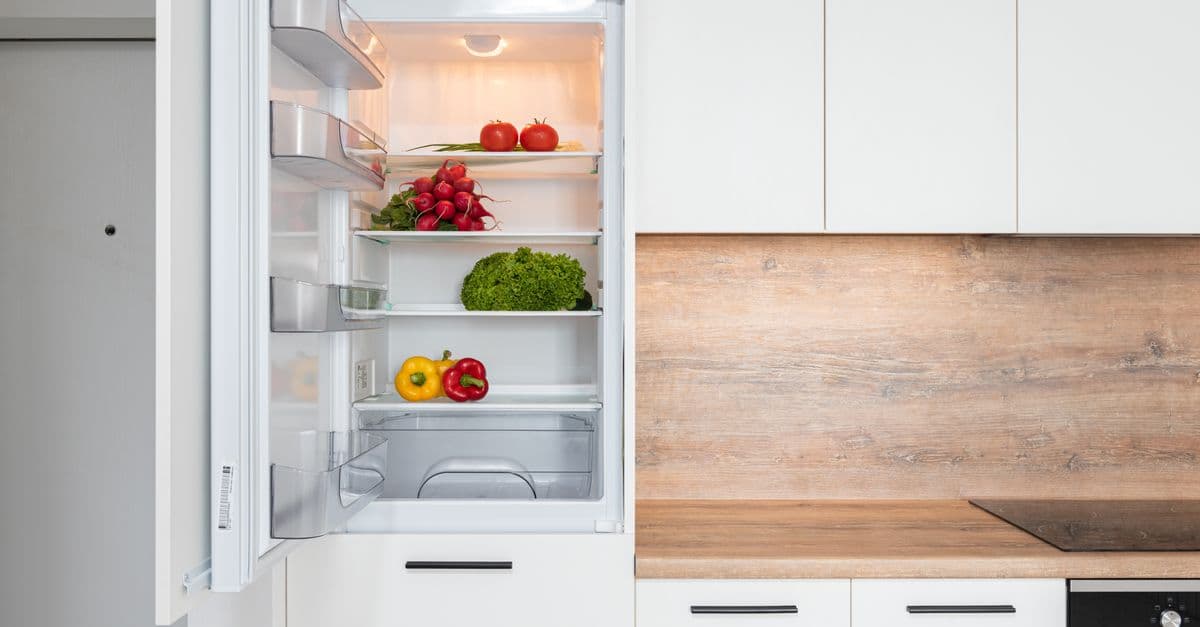
Photo: Anna Shvets / Pexels
The refrigerator is the most consequential appliance in the average kitchen, but it is also one of the most overlooked. Before mechanical refrigeration, every civilization on earth organized its food supply around the simple, brutal fact that cooked food rots and fresh food spoils. Ice, imported at enormous expense from frozen lakes, provided a partial solution for the wealthy. For everyone else, the options were salt, smoke, fermentation, and urgency. The story of how a Boston merchant's ice trade, an American inventor's patent, a German engineer's ammonia compressor, and Albert Einstein's collaboration with a nuclear physicist produced the machine now humming in every home is also the story of how modern food systems, cities, and medicine became possible.
The Story Behind the Discovery
Vapor-compression refrigeration — the dominant refrigeration mechanism, in which a fluid refrigerant absorbs heat as it evaporates (at low pressure) and releases heat as it condenses (at high pressure), driven by a mechanical compressor.
The physics underlying refrigeration were understood before any working machine existed. When a liquid evaporates, it absorbs heat from its surroundings — the same reason sweating cools the skin. If you could control that evaporation in a closed loop, forcing the refrigerant to evaporate in one space (absorbing heat from inside a cold box) and condense in another (releasing that heat to the outside), you would have a working refrigerator. The challenge was entirely engineering: finding the right refrigerant, designing a compressor that could withstand the pressure cycles, and building the system tightly enough that refrigerant did not leak.
The natural ice trade provided mechanical refrigeration's commercial predecessor. Frederic Tudor, a Boston entrepreneur who became known as the "Ice King," pioneered cutting lake ice and shipping it to hot climates starting in 1806. By the 1840s, Tudor's company was shipping ice to India, the Caribbean, and South America, packed in sawdust aboard wooden ships. The trade worked — but it required frozen water to exist somewhere, which made it geographically and seasonally dependent.
Source: Harvard Business School (Baker Library) — Frederic Tudor papers; ice trade records showing global shipping by 1840s.
The desire to manufacture cold rather than harvest it was obvious. Multiple inventors converged on it in the 1820s and 1830s.
| Year | Event |
|---|---|
| 1805 | Oliver Evans proposes a vapor-compression refrigeration cycle in writing but builds no machine |
| 1834 | Jacob Perkins patents the first working vapor-compression refrigerator in Britain |
| 1851 | John Gorrie patents a refrigeration machine in the US; ice made artificially for first time commercially |
| 1856 | James Harrison builds first practical ice-making machine for Australian meatpackers |
| 1876 | Carl von Linde's ammonia compressor refrigerator receives Bavarian patent |
| 1913 | First domestic household refrigerator, the "Domelre," sold in Chicago |
| 1928 | Thomas Midgley Jr. synthesizes dichlorodifluoromethane — Freon (CFC-12) |
| 1930 | Einstein and Szilard receive US patent for absorption refrigerator (no moving parts) |
| 1956 | Over 80 percent of American homes have a refrigerator |
| 1974 | Molina and Rowland publish paper identifying CFCs as ozone-depleting agents |
| 1987 | Montreal Protocol signed; phaseout of CFCs begins |
| 2010 | CFCs banned globally under Montreal Protocol schedule |
How Refrigeration Actually Works
The vapor-compression cycle has four stages. Start with a refrigerant in liquid form at high pressure inside the condenser (the coil at the back of a refrigerator that feels warm to the touch). The refrigerant passes through an expansion valve, where it rapidly loses pressure. This pressure drop causes the refrigerant to evaporate — absorbing large amounts of heat from inside the refrigerator cabinet in the process. That's what makes the inside cold: the refrigerant is literally pulling heat out of the food compartment as it boils.
The now-gaseous refrigerant flows to the compressor, which squeezes it back to high pressure. Compression heats the gas. It then moves to the condenser coils at the back or bottom of the fridge, where it releases that captured heat to the kitchen air and returns to liquid form. The cycle repeats continuously.
Think of the refrigerant as a heat courier: it picks up heat from inside the cabinet (at low pressure, where it evaporates), carries it to the outside world (at high pressure, where it condenses), dumps the heat, and goes back for another load. The compressor is the truck engine that moves it around the circuit.
Refrigerant — the working fluid in a refrigeration cycle; it must have specific thermodynamic properties including a boiling point well below room temperature at low pressures.
The coefficient of performance (COP) measures how efficiently a refrigerator works: it is the ratio of heat removed from the interior to the electrical energy consumed. A modern household refrigerator typically achieves a COP of around 2 to 3, meaning it removes two to three times as much heat energy from the cabinet as it consumes in electrical energy. This does not violate thermodynamics — the refrigerator is not creating cold from nothing, it is pumping heat from a cold space to a warm one, and the electrical energy pays for that thermodynamic favor.
Absorption refrigeration — an alternative to vapor-compression that uses heat (from a flame or waste heat source) rather than a mechanical compressor to drive the cycle; quieter and more durable because there are no moving parts, but less energy-efficient.
The absorption refrigerator, used in RVs and hotel minibars, replaces the compressor with a thermal process. Heat drives ammonia gas out of a water-ammonia solution; the ammonia evaporates, cools, and is reabsorbed. This is the principle behind the Einstein-Szilard refrigerator, and it is still used wherever silent operation or waste heat availability matters more than electrical efficiency.
The People Involved
Jacob Perkins
Jacob Perkins (1766–1849) was an American inventor based in London who spent most of his career building printing presses, engraving machines, and steam boilers. On August 14, 1834, he received a British patent titled "Apparatus and Means for Producing Ice, and in Cooling Fluids." It described a closed-cycle vapor-compression system using ether as the refrigerant — the first patent for a device that actually worked on this principle.
Source: ASME (2024) — Engineering Landmark designation for the Perkins Vapor-Compression Cycle; patent details confirmed.
Perkins built a working prototype and demonstrated it, making ice in London. But he was an inventor, not a manufacturer, and the machine never reached commercial production in his lifetime. The system used ether, which is highly flammable and difficult to handle at scale. Perkins is sometimes called the "father of the refrigerator," though the commercial refrigeration industry would not emerge until a generation later.
Carl von Linde
Carl von Linde (1842–1934) was a German mechanical engineer who turned refrigeration from a workshop demonstration into an industrial system. Working at the Munich Polytechnic in the 1870s, Linde first tried methyl ether as a refrigerant but encountered repeated leaks and at least one explosion that injured a worker. He switched to ammonia, which has superior thermodynamic properties, and on March 25, 1876, received a Bavarian patent for his ammonia compressor refrigerator.
The first commercial installation went to the Dreher brewery in Trieste. Lager beer requires consistent cold fermentation temperatures that the natural ice supply could not reliably provide in warm climates. Linde's machine solved that problem precisely. By 1890, he had sold 747 refrigeration units, primarily to breweries and slaughterhouses.
Source: Science History Institute (2024) — Carl von Linde biography; commercial installation records at Dreher brewery.
Linde later founded the Linde Group (now part of Linde PLC), which became a major industrial gas company. His ammonia refrigeration technology also made possible the Haber-Bosch nitrogen fixation process, which required cooling at industrial scale — an indirect connection between the refrigerator and the fertilizer that now feeds half the world's population.
Albert Einstein and Leo Szilard
The Einstein-Szilard refrigerator is one of history's most surprising intellectual collaborations. In 1926, a newspaper reported that an entire Berlin family had died in their sleep from toxic gas leaking from a broken refrigerator seal. The refrigerant was sulfur dioxide or methyl chloride — both poisonous and common in household refrigerators of the era.
Albert Einstein, then still primarily a theoretical physicist, and his former student Leo Szilard were troubled by the story. They began collaborating on a refrigerator design that eliminated the mechanical compressor and its seals entirely — a machine with no moving parts that could not leak its refrigerant.
Their solution was an absorption refrigerator using ammonia, water, and butane. Heat from a small flame or electrical heater drives the cycle; no pump is needed. Between 1926 and 1933, Einstein and Szilard filed 45 patents covering three different refrigerator designs in multiple countries. The US patent 1,781,541 was granted November 11, 1930.
Source: American Physical Society (2024) — APS News, November 2010; patent details for Einstein-Szilard refrigerator confirmed.
The design worked but was less efficient than compressor refrigerators and did not reach commercial production. Freon, introduced in 1928, made compressor refrigerators safe enough that the toxic-refrigerant problem driving Einstein and Szilard's project effectively disappeared — before their solution could address it.
Szilard went on to help design the first nuclear reactor. Einstein continued in theoretical physics. Their collaboration on a refrigerator remains one of the stranger footnotes in the history of both technology and science.
Patent and Priority Disputes
Refrigeration patent disputes were usually commercial rather than priority-based, because the underlying thermodynamic principles were not proprietary. What could be patented was a specific configuration: this refrigerant, this compressor design, this valve arrangement.
The early twentieth century saw intensive patent warfare around household refrigeration. General Electric introduced the "Monitor Top" refrigerator in 1927, the first self-contained household unit with a hermetically sealed compressor. It used sulfur dioxide refrigerant. Frigidaire (then a subsidiary of General Motors) competed with similar designs. Both companies held hundreds of refrigeration patents.
The introduction of Freon (CFC-12) by Thomas Midgley Jr. in 1928 was itself a commercial and patent move by General Motors. Midgley synthesized dichlorodifluoromethane by exposing carbon tetrachloride to hydrofluoric acid with an antimony catalyst. The resulting compound was non-toxic, non-flammable, non-corrosive, and had ideal thermodynamic properties. GM and DuPont jointly commercialized it under the brand name Freon.
Source: American Chemical Society (2024) — History of CFCs and ozone depletion; Thomas Midgley's synthesis confirmed as 1928.
The problem, not discovered until decades later, was that Freon and related CFCs were extraordinarily stable in the lower atmosphere — stable enough to migrate to the stratosphere, where ultraviolet radiation broke them down and released chlorine atoms that catalytically destroyed ozone molecules. F. Sherwood Rowland and Mario Molina published the mechanism in Nature in 1974. They received the Nobel Prize in Chemistry in 1995.
Unintended Consequences
The ozone crisis is one of the most instructive environmental stories in science history, because it had a clear mechanism, a clear villain (CFCs), and a clear resolution (the Montreal Protocol).
Freon and the roughly 100 related CFC compounds were everywhere by the 1970s: in refrigerators, air conditioners, aerosol spray cans, foam insulation, and industrial cleaning agents. Annual production was in the millions of tons. The ozone layer, which absorbs ultraviolet radiation from the sun, was measurably thinning, particularly over Antarctica where a seasonal "ozone hole" was first reported in 1985.
Source: NOAA Global Monitoring Laboratory (2024) — CFC measurements and ozone depletion data.
The Montreal Protocol, signed in September 1987, committed signatories to phase out CFC production and consumption on a schedule. It entered into force in 1989. By 2010, CFCs were effectively banned globally — the most rapidly adopted international environmental treaty in history, ratified by all 197 UN member states. The ozone layer has measurably begun to recover; the Antarctic ozone hole has been shrinking since the early 2000s.
Source: UN Environment Programme (2023) — Scientific Assessment of Ozone Depletion; recovery trends confirmed.
But CFCs were replaced with hydrofluorocarbons (HFCs), which do not destroy ozone but are powerful greenhouse gases — some with global warming potentials thousands of times greater than CO2. The Kigali Amendment to the Montreal Protocol (2016) now phases down HFCs as well. The refrigeration industry is transitioning to hydrofluoroolefins (HFOs) and natural refrigerants including CO2 (R-744), ammonia (R-717), and propane (R-290).
The refrigerator also enabled the modern food supply chain. Without refrigeration, fresh produce could not travel far; meat could not be stored; dairy could not be distributed at industrial scale. Refrigerated rail cars, introduced in the 1870s, made possible the centralized meatpacking industry that Upton Sinclair described in "The Jungle." Cold chains enabled urban populations to sever their dependence on local food production. The same technology that created food security also enabled factory farming and the concentration of food processing in a small number of very large facilities.
A more personal unintended consequence: the refrigerator made possible the leftover. The behavioral economics of home cooking shifted when food that had been cooked did not need to be consumed immediately. Food waste, paradoxically, may have increased alongside refrigeration as the urgency to eat everything cooked was removed.
Where It Stands Today
Modern household refrigerators consume approximately 300 to 400 kilowatt-hours of electricity per year in the United States — about 13 percent of a typical household's total electricity consumption. Efficiency has improved dramatically: a 2024 refrigerator uses roughly 75 percent less energy than an equivalent model from 1975.
Source: US Department of Energy (2023) — Appliance energy use data; refrigerator efficiency standards history.
The ammonia that Carl von Linde used in 1876 is experiencing a commercial revival. Natural refrigerants — ammonia, CO2, and hydrocarbons — are being adopted in new commercial refrigeration systems, supermarkets, and industrial cooling as the HFC phasedown under Kigali proceeds. Ammonia is more energy-efficient than HFCs and has zero global warming potential; its toxicity requires engineering controls that limit its use in residential settings but do not impede industrial applications.
The absorption refrigerator that Einstein and Szilard designed in 1930 is also seeing renewed interest. Their no-moving-parts principle is being revisited for waste-heat-powered cooling in industrial settings and for applications where electrical reliability is limited. The concept that a broken seal in a Berlin apartment motivated two of the twentieth century's most consequential scientists to spend years on domestic appliance design contains a lesson about where unexpected intellectual energy can be redirected.
FAQs
Q: Who actually invented the refrigerator? A: Jacob Perkins received the first patent for a working vapor-compression refrigerator in 1834. Carl von Linde built the first commercially successful refrigeration system in 1876. The household refrigerator as a mass-market product did not emerge until the 1910s and 1920s, developed by several companies simultaneously.
Q: What is Freon and why was it banned? A: Freon is a brand name for dichlorodifluoromethane (CFC-12), synthesized by Thomas Midgley Jr. in 1928. It was adopted as a refrigerant because it was non-toxic and non-flammable, replacing more dangerous refrigerants. It was phased out globally by 2010 because chlorine released from CFCs in the stratosphere catalytically destroys ozone molecules, depleting the ozone layer that shields Earth from ultraviolet radiation.
Q: What did Albert Einstein have to do with the refrigerator? A: Einstein and his former student Leo Szilard co-designed an absorption refrigerator with no moving parts between 1926 and 1933, receiving 45 patents across three designs. They were motivated by newspaper reports of families dying from toxic refrigerant leaks. Their US patent 1,781,541 was granted in 1930. The design never reached commercial production because Freon solved the toxicity problem that motivated it.
Q: How does the ozone layer relate to your kitchen refrigerator? A: The CFC refrigerants used in household fridges from the 1930s through the 1980s accumulated in the atmosphere and eventually reached the stratosphere, where ultraviolet light broke them apart and the released chlorine atoms catalytically destroyed ozone. One chlorine atom can destroy approximately 100,000 ozone molecules before it is neutralized. The Montreal Protocol phased out CFCs globally, and the ozone layer is now recovering.
Q: Why are natural refrigerants like CO2 and ammonia coming back? A: HFCs, which replaced ozone-depleting CFCs, are themselves potent greenhouse gases. Under the 2016 Kigali Amendment to the Montreal Protocol, HFCs are being phased down. Ammonia, CO2, and hydrocarbons (like propane) have zero or minimal global warming potential and are thermodynamically efficient. They require engineering safety controls for industrial use but are increasingly competitive in commercial refrigeration.
Q: How much energy does a refrigerator use compared to other appliances? A: A typical American household refrigerator uses 300 to 400 kWh per year, compared to a central air conditioner at 1,000 to 5,000 kWh and a dishwasher at around 200 kWh per year. Modern refrigerators are dramatically more efficient than older models: US efficiency standards introduced in the 1990s and tightened since have reduced consumption by roughly 75 percent since 1975.
The Takeaway
The refrigerator is invisible in the way that only the most successful technologies become invisible. Its consequences run from the eradication of seasonal food scarcity to the near-destruction of the stratospheric ozone layer, from enabling the pharmaceutical cold chain that allows vaccines to be distributed globally to inadvertently contributing to the climate crisis through a century of CFC and HFC emissions. The physics — a liquid evaporates, absorbs heat, gets compressed, condenses, releases heat, repeat — have not changed since Jacob Perkins received his patent in 1834. What changed, over and over, was which fluid did the cycling and what that choice cost the planet.
Read next:
Weekly digest
Stay ahead of the curve
Get the best science, AI, and tech stories delivered to your inbox every week. No spam — unsubscribe any time.
About the Author
SciHub101 is an independent science and technology publication founded and edited by Buğra Sözeri, a software engineer and app developer based in Türkiye. Articles are drafted against peer-reviewed literature and primary sources, fact-checked, and edited by a human before publication. Where we compare products, anything built by our own team is labelled as such — see the editorial guidelines and About page for how corrections and disclosures work.
Related Articles
The Rocket: From Gunpowder Tubes to Reusable Spacecraft
How the liquid-fuel rocket was invented — from Tsiolkovsky's 1903 equation to Goddard's 1926 launch, the V-2, Apollo, and SpaceX's reusable boosters.
The Radio: Marconi, Tesla, and the Invention That Wired the Air
How Guglielmo Marconi's 1895 wireless experiments — and a disputed 1943 Supreme Court ruling crediting prior patents — built the radio into the foundation of all modern wireless communication.
How Refrigerators Work — The Vapor Compression Cycle
How fridges, ACs, and heat pumps move heat against thermodynamics using compressors, refrigerants, and a clever pressure trick.

How Does a Refrigerator Work? The Cool Science Behind Everyday Chill
Refrigerators don't make cold — they move heat out of one place into another. Here's how the four-step refrigeration cycle keeps your food fresh, and why it works.