Florence Nightingale: Statistician, Reformer, and the Woman Behind the Lamp

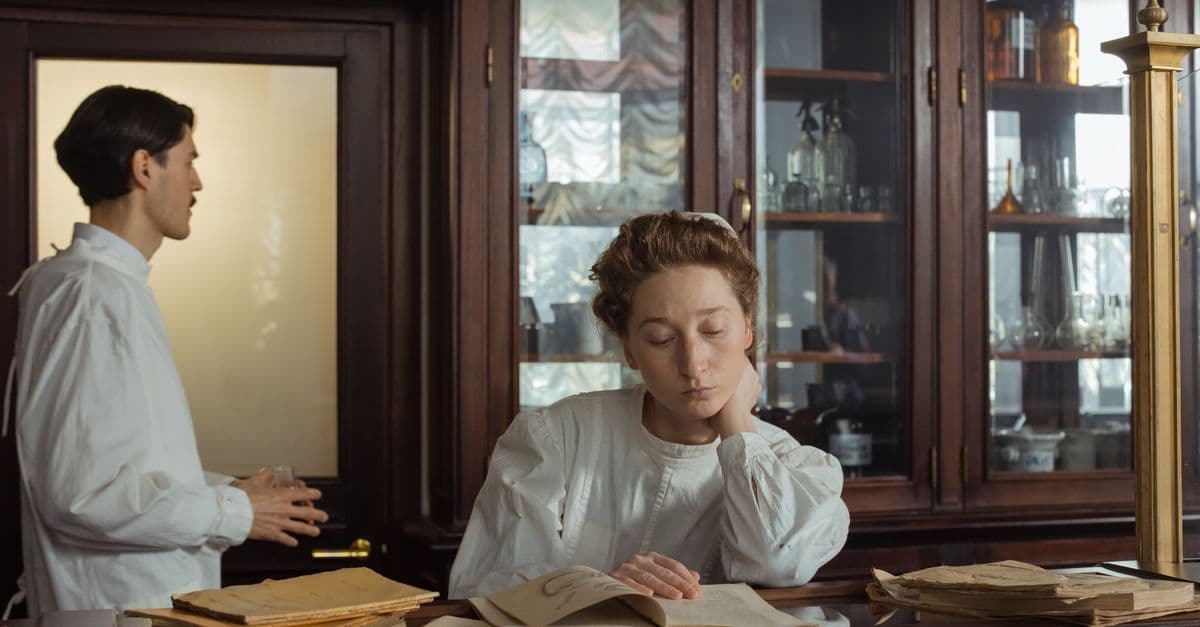
Photo: cottonbro studio / Pexels
Florence Nightingale (1820–1910) is remembered as "the Lady with the Lamp" — the nurse who walked the wards of Scutari during the Crimean War. This image, which she acquired in her early thirties, would define her public reputation for the next 150 years and almost completely obscure what she actually spent most of her life doing: inventing data visualization techniques, transforming public health statistics, designing hospital architecture, reforming military and civilian medicine, establishing professional nursing, and producing a body of social science work that influenced government policy across five continents. She did most of this work from her bedroom, because she was bedridden for fifty years, and she did it primarily through letters, reports, and statistical graphics that reached decision-makers in a way that a Victorian woman working in public could not have.
Quick Biography
Florence Nightingale was born on May 12, 1820, in Florence, Italy, to a wealthy English family traveling on an extended European tour. Her name was taken from her birthplace — her older sister, born in Naples, had been named Parthenope. Her father William Edward Nightingale was a landowner of liberal and intellectual inclinations who educated both daughters in classical languages, mathematics, philosophy, and history, an education unusual for women of their era and class.
Florence experienced what she described, in letters and diaries, as a religious calling at seventeen: a sense that God had called her to some important work, though she did not know what it was. Her family would not permit nursing, which was not a respectable profession in the 1840s — nurses were commonly associated with drunkenness and moral disorder. She spent her twenties and early thirties in prolonged and painful conflict with her family, refusing the marriages they proposed, resisting the social life they required, and increasingly identifying nursing as her vocation.
She traveled to Kaiserwerth in Germany in 1851 to study nursing methods at the Institution of Deaconesses, one of the few organized nursing training establishments in Europe. In 1853 she became superintendent of the Institution for the Care of Sick Gentlewomen in Distressed Circumstances in London, running it with the administrative efficiency of someone who had been preparing for institutional management her entire adult life.
When Britain entered the Crimean War in 1854 and newspaper reports described the appalling conditions in military hospitals, Sidney Herbert, the Secretary at War and a family friend, asked Nightingale to lead a party of nurses to the military hospital at Scutari (now Uskudar, Istanbul). She went in November 1854 with 38 nurses. The mortality rate at Scutari when she arrived was catastrophic — higher than on the battlefield. She spent nearly two years there.
She returned to England in 1856, ill and altered. She never fully recovered. The illness — most likely brucellosis, contracted from food or water at Scutari — produced a chronic condition that made her bedridden for most of the remaining fifty-four years of her life. She worked from her bed. She died on August 13, 1910, at age ninety.
Personal Life and Relationships
Richard Monckton Milnes and the Refused Proposal
In the 1840s, Florence Nightingale attracted the serious romantic interest of Richard Monckton Milnes, a poet, politician, and literary figure who was one of the most socially prominent men of his generation. He was witty, well-traveled, and genuinely intellectually compatible with her. He proposed to her multiple times over a period of approximately nine years, from the early 1840s until around 1849.
She refused him every time. Her reasons, recorded in her private notes and letters, are revealing. She wrote that she feared marriage would consume the active, intellectual life she was determined to live — that the domestic and social obligations of a Victorian wife, even a wealthy and well-positioned one, would leave no time for the work she was called to do. She also wrote, more privately, that she experienced the prospect of marriage with something close to revulsion, not directed at Milnes specifically but at the institution and what it would require of her.
Milnes eventually stopped asking. He married someone else in 1851, the same year Nightingale finally obtained her family's permission to go to Kaiserwerth. The parallel timing is suggestive. Nightingale later wrote that refusing Milnes was the hardest decision of her early life, not because she did not care for him but because she did, and refusing him required a clarity of purpose she had spent years working to achieve.
Intimate Female Friendships
Throughout her life Nightingale maintained intense, affectionate friendships with women that her biographers have described in varied terms. The most significant was her relationship with Mary Clarke, a vivacious Englishwoman living in Paris whom Nightingale met in her teens and corresponded with for decades. Clarke later became Mary Mohl after her marriage to the orientalist Julius Mohl, but the marriage did not diminish her relationship with Nightingale — the two women exchanged letters of extraordinary warmth and candor for fifty years.
Another close relationship was with Marianne Nicholson, a cousin, in Nightingale's early twenties. The nature of these friendships — whether they were, by modern understanding, romantic in addition to emotional and intellectual — has been discussed by historians including Martha Vicinus, whose work on Victorian female friendships notes that the vocabulary of passionate attachment between women in this period was conventional in ways that make modern interpretation difficult. What is clear from the primary sources is that Nightingale's closest emotional bonds were with women, that she described these relationships in terms of love and loss, and that the refusal of marriage to Milnes was embedded in a life in which female friendship and professional purpose crowded out heterosexual partnership.
She described herself, in a private note, as constitutionally unsuited to the wifely role. This is not the same as a modern identity claim, but it is a documented self-description that her biographers take seriously.
Major Contributions
The Polar Area Diagram
Nightingale's most famous contribution to statistical visualization is the diagram she called a "rose diagram" — now known in data visualization as the polar area diagram or, after her, the Nightingale rose diagram or coxcomb chart. She developed it to present mortality data from the Crimean War in a form that would be comprehensible to politicians and military administrators without statistical training.
The diagram she produced in 1858 — for her report Mortality of the British Army — showed causes of death among British soldiers in the Crimea month by month, using wedge-shaped areas plotted around a central point, with the area of each wedge proportional to the death count. The three causes were coded in color: blue for preventable zymotic diseases (infection and sanitation-related causes), red for battle wounds, black for other causes. The visual result was immediately legible: the blue sections dominated the early months, dwarfing the red. More soldiers died of preventable infections than of enemy action.
The diagram made a data-driven argument for sanitary reform — better sewers, ventilation, water supply — in a form that her intended audience could interpret. It is reproduced in virtually every data visualization text published since Edward Tufte's The Visual Display of Quantitative Information (1983) brought it to modern attention.
Statistical Reform of Military Medicine
Nightingale's statistical work was not limited to visualization. She was elected a Fellow of the Royal Statistical Society in 1858 — the first woman elected — and was a corresponding member of the American Statistical Association. She worked closely with the statistician William Farr on the analysis of mortality data from hospitals, army barracks, and civilian institutions.
Her 1858 report Notes on Matters Affecting the Health, Efficiency, and Hospital Administration of the British Army runs to more than 800 pages and contains detailed statistical analysis of mortality rates, decomposed by cause and correlated with sanitary conditions. It led directly to the Royal Commission on the Health of the Army (1857–1858), whose recommendations — better ventilation, sewage systems, clean water — she largely wrote in advance.
Sanitary Reform in British India
Nightingale never visited India, but she produced the most comprehensive statistical analysis of mortality in British India of her era — entirely from London, working from official reports, correspondence with officers and administrators, and data extracted from the India Office. Her 1863 report Observations by Miss Nightingale and subsequent advocacy led to the establishment of sanitary commissions in British India in the 1860s and 1870s.
The scale of this work is frequently understated in popular accounts. She estimated, using her own statistical analysis, that the annual death rate among British soldiers in India was around 69 per thousand in the early 1860s — compared to 11 per thousand in Britain — and that the excess was almost entirely preventable through sanitary improvements. The Indian reform campaign occupied her for roughly a decade and involved sustained lobbying of successive Viceroys and Secretaries of State for India. The sanitary commissions that resulted reduced army mortality rates measurably by the 1870s.
Her India work required her to become, effectively, a self-taught expert in Indian administrative, agricultural, and climatic conditions — all from a London bedroom, through correspondence and official documents. It is among the more remarkable feats of remote expertise in Victorian administration.
Hospital Architecture
Her 1859 book Notes on Hospitals established principles of hospital design that influenced construction for decades. She advocated for the pavilion design — long, narrow ward blocks separated by open space — to maximize ventilation and separate infection sources. Her principles, drawn from her observation at Scutari and at other hospitals, anticipated germ theory (which was not yet accepted) by framing ventilation and sanitation as causal factors in disease without yet understanding the mechanism. Several hospitals built to her specifications in the 1860s and 1870s showed measurably lower mortality rates.
Establishment of Professional Nursing
The Nightingale Fund, established during the Crimean War by public subscription as a tribute to her service, raised £44,000 — roughly £4 million in modern terms. She used it in 1860 to establish the Nightingale Training School at St. Thomas' Hospital in London, the first secular nursing school in the world. Her approach — standardized training, examination, and certification — created the framework for professional nursing as a discipline distinct from general domestic service. Nurses trained at the Nightingale School were sent to establish schools in other countries; the model was adopted in the United States, Canada, and Australia before the end of the 19th century.
Lesser-Known Habits and Quirks
Athena, the Pocket Owl
In 1850, during a visit to Athens, Nightingale rescued a young Little Owl — a fledgling fallen from the Parthenon — and named her Athena. She carried Athena with her in her pocket, brought her back to England, and kept her as a companion for the following years. Athena accompanied her on carriage rides, sat on her finger during correspondence, and was documented in letters to family members. When Nightingale departed for Scutari in 1854, Athena was placed in the care of her family. The owl died during Nightingale's absence.
The owl is documented in the biographical record and in the holdings of the Florence Nightingale Museum at St. Thomas' Hospital, which holds a stuffed specimen believed to be Athena. Nightingale's grief at Athena's death is recorded in family correspondence; she described losing a companion that had been part of her daily life for four years.
The First Female Fellow of the Royal Statistical Society
Nightingale was elected a Fellow of the Royal Statistical Society in 1858, the first woman admitted to the Society. This was not an honorary admission; she was elected on the basis of her statistical work on army mortality. The records of the RSS confirm the election and date.
She was also a corresponding member of the American Statistical Association from 1874. Honorary degrees were offered to her by several universities; she declined them, apparently on the grounds that accepting them would involve public appearances she no longer made.
Bedridden for Fifty Years and Still the Most Productive Person in British Social Reform
Nightingale returned from the Crimea in August 1856 and was ill within months. By 1857 she was largely confined to her bedroom. She remained there, with only occasional exceptions, for the rest of her life — more than fifty years. She conducted almost all of her most significant work from this bed.
She received visitors regularly — politicians, reformers, statisticians, and government officials came to her Mayfair flat, were shown to her bedroom, and conducted business. She produced reports for royal commissions, advised multiple British governments on public health policy, maintained correspondence with hundreds of individuals, and wrote approximately fourteen thousand surviving letters. Her personal archive at the British Library is one of the largest single-person collections in the institution.
The nature of her illness has been debated. Brucellosis — caused by the bacterium Brucella melitensis, contracted from contaminated food or water — is the leading modern hypothesis. It would account for the chronic fatigue, musculoskeletal pain, and the relapsing pattern of her symptoms. The psychosomatic explanation — that her invalidism was a deliberate social strategy to avoid Victorian social obligations and control access to her time — was proposed in the 20th century and has been largely rejected by medical historians who note that brucellosis was endemic in the Crimean theater.
She Refused the State Funeral
When Nightingale died in August 1910, the British government offered a state funeral and burial in St. Paul's Cathedral. She refused. Her will specified a private funeral and a simple grave. She was buried in the family grave at St. Margaret's Church in East Wellow, Hampshire, in a ceremony attended only by family members. The grave marker gives only her name, birth and death years, and initials.
The refusal is consistent with a career-long ambivalence about public recognition. She accepted honors — the Royal Red Cross in 1883, the Order of Merit in 1907 (the first woman to receive it) — but avoided the ceremonial dimension. The Order of Merit was brought to her in her bedroom; she was too ill to attend any ceremony.
Her Statistical Views and Anticontagionism
Nightingale held what were, in her era, specific epidemiological views: she was an anticontagionist, meaning she believed that disease spread through environmental conditions — particularly bad air, or miasma — rather than through person-to-person contact. This view, which was the dominant medical framework before the acceptance of germ theory in the 1870s and 1880s, informed her statistical arguments for sanitary reform.
She resisted germ theory longer than some of her contemporaries, and some historians have criticized this as a limitation. The more nuanced view is that her anticontagionist framework, though mechanistically wrong, produced correct practical recommendations — better sewage, ventilation, clean water — because those interventions addressed the actual bacterial and viral transmission routes that germ theory would eventually explain. Getting the right answer for the wrong reason is a recognizable phenomenon in the history of science.
She Quantified Her Own Failure at Scutari
One of the most striking features of Nightingale's statistical work is that she applied it to her own performance. Her retrospective analysis of the Scutari mortality data showed that the dramatic improvement in death rates in the hospital came not from nursing care per se, but from the sanitary improvements — the drainage clearing and ventilation work done by a Sanitary Commission that arrived in early 1855. She published this conclusion explicitly, crediting the engineers rather than the nurses.
This kind of self-critical statistical honesty is rare in any era. She had become the most famous nurse in Britain on the basis of the Crimean War experience; her analysis showed that better sewers had saved more lives than better nursing. She published it anyway, because the policy implications — that sanitation was the lever, not bedside care — were more important than her reputation.
For comparison with another Victorian woman who produced foundational work within severe institutional constraints, see Ada Lovelace.
Famous Quotes
"I attribute my success to this — I never gave or took any excuse." Frequently attributed to Nightingale in her correspondence and cited in biographical accounts from the 20th century. The sentiment is documented as characteristic; the precise letter of origin is difficult to pin.
"Were there none who were discontented with what they have, the world would never reach anything better." From her private notes, published posthumously. It captures the restlessness that produced both her conflict with her family and her work.
"I am of certain convinced that the greatest heroes are those who do their duty in the daily grind of domestic affairs whilst the world whirls as a maddening dreidel." Private correspondence, frequently quoted in Nightingale studies. Given that she spent fifty years doing her most significant work from a domestic bedroom, the statement is self-descriptive in a way she may or may not have intended.
"Statistics are the most important science in the whole world: for upon them depends the practical application of every other science and of every art: the one science essential to all political and social administration, all education, all organisation based on experience." From her collected writings, cited in multiple statistical history sources. The claim is characteristic of her view of data as the foundation of effective governance.
Legacy
Florence Nightingale's practical legacy is institutional and global. Professional nursing as a recognized discipline with standardized training, ethical standards, and career paths descends directly from the Nightingale School. Her statistical methods were foundational to epidemiology. Her advocacy produced sanitary reforms that reduced mortality in British military and civilian populations before antibiotics existed. Other figures whose work shaped medicine and technology include Henrietta Lacks and Hedy Lamarr.
Her data visualization work is recognized in the modern field as a genuine contribution. The polar area diagram is reproduced in virtually every data visualization curriculum. Edward Tufte's treatment in The Visual Display of Quantitative Information introduced her to a new generation of statisticians and information designers.
International Nurses Day is observed on May 12 — her birthday — annually, in 193 countries.
She shares with Ada Lovelace the distinction of being a Victorian woman whose actual intellectual contribution was systematically understated in favor of a simpler narrative: the Lady with the Lamp rather than the statistician who proved that sanitation saves lives.
FAQ
Q: Was Florence Nightingale really bedridden for fifty years? Yes, from approximately 1857 until her death in 1910 — though not continuously immobile. She had periods of greater and lesser incapacity. The brucellosis hypothesis accounts for the relapsing pattern. Her productivity during this period, documented in correspondence and published work, is not disputed.
Q: Did Nightingale invent the pie chart? No. The pie chart was used by William Playfair in the early 19th century. Nightingale's polar area diagram is a different form — a circular histogram in which areas are plotted radially — which she developed independently and used specifically for time-series mortality data. The two forms are sometimes confused.
Q: Was Nightingale actually the first trained nurse? No. Organized nursing existed before Nightingale, particularly in religious orders. Her contribution was the creation of the first secular, professionally structured nursing school with standardized training and certification, and the establishment of nursing as a respectable career for educated women.
Q: What was the actual cause of high mortality at Scutari? Before Nightingale's arrival and the subsequent sanitary reform, the primary causes of death were preventable infections — typhoid, cholera, dysentery — spread through contaminated water and inadequate sewage. The hospital was built over a blocked sewer. After a Sanitary Commission arrived in early 1855 and undertook drainage and ventilation improvements, mortality fell dramatically. Nightingale's own later statistical analysis credited the sanitary reform more than the nursing care for the mortality improvement.
Q: Was Florence Nightingale's work recognized in her lifetime? Yes, substantially. The Royal Red Cross, the Fellowship of the Royal Statistical Society, the Order of Merit, and honorary membership in the American Statistical Association were all received during her lifetime. She was also the most famous woman in Britain for several decades. The underestimation of her statistical work is largely a 20th-century phenomenon, produced by the dominance of the Lamp narrative.
Q: Why did Nightingale refuse to marry Richard Monckton Milnes? She refused him multiple times over roughly nine years. Her private notes record that she feared marriage would destroy the intellectual and active life she was determined to live — that the domestic obligations of a Victorian wife would leave no room for the work she believed she was called to do. She also wrote of a constitutional unsuitability to the wifely role that goes beyond simple ambition. Milnes married someone else in 1851. Nightingale later wrote that the refusal was the hardest decision of her early life.
Q: What was the Nightingale India campaign? From the early 1860s through the 1870s, Nightingale conducted a sustained statistical analysis of mortality in British India and lobbied British governments and Viceroys for sanitary reform in military and civilian institutions. She estimated that the annual death rate among British soldiers in India was around 69 per thousand — compared to 11 per thousand in Britain — and that the excess was almost entirely preventable. She produced detailed reports, briefed officials, and lobbied for sanitary commissions. The campaign was conducted entirely from her London bedroom, through correspondence and official documents, without her ever visiting India.
Q: What did Nightingale's polar area diagram actually show? The 1858 diagram presented Crimean War mortality data month by month using wedge-shaped areas on a circular chart, with area proportional to death count and color coding for cause: blue for preventable infections (the largest category), red for battle wounds, black for other causes. The visual structure made the argument immediately legible — far more soldiers died of preventable infection than of enemy action. It was explicitly designed to persuade non-statistical readers, and it did.
Sources
- Nightingale, Florence. Notes on Hospitals. John W. Parker and Son, 1859.
- Nightingale, Florence. Notes on Nursing: What It Is, and What It Is Not. Harrison, 1860.
- Nightingale, Florence. Mortality of the British Army. Harrison and Sons, 1858.
- Cook, Sir Edward T. The Life of Florence Nightingale, 2 vols. Macmillan, 1913.
- Small, Hugh. Florence Nightingale: Avenging Angel. Constable, 1998.
- Tufte, Edward R. The Visual Display of Quantitative Information. Graphics Press, 1983.
- Kopf, E.W. "Florence Nightingale as Statistician." Journal of the American Statistical Association 15 (1916): 388–404.
- Gill, Gillian. Nightingales: The Extraordinary Upbringing and Curious Life of Miss Florence Nightingale. Ballantine Books, 2004.
- Vicinus, Martha, and Nergaard, Bea, eds. Ever Yours, Florence Nightingale: Selected Letters. Virago Press, 1989.
- Florence Nightingale Museum. Catalogue of the Florence Nightingale Collection. St. Thomas' Hospital, London.
Follow new articles
Add SciHub101 to your feed reader to see new science and technology stories.
About the Author
SciHub101 is an independent science and technology publication founded and edited by Buğra Sözeri, a software engineer and app developer based in Türkiye. AI tools assist with drafting and research. Source documentation in the existing archive is uneven, and articles are being reviewed and corrected. The Editorial Team byline identifies editorial responsibility; it does not certify specialist or independent human review. Where we compare products, anything built by our own team is labelled as such — see the editorial guidelines and About page for how corrections and disclosures work.
Related Articles

Henrietta Lacks: The Woman Behind HeLa, the Cells That Changed Medicine
Henrietta Lacks' cells, taken without consent in 1951, became the first immortal human cell line. HeLa cells helped develop the polio vaccine, cancer treatments, and IVF. Her family learned this 25 years later.
Emmy Noether: The Mathematician Who Unified Symmetry and Physics
Emmy Noether proved that every symmetry in nature corresponds to a conservation law. Einstein called her the most significant creative mathematical genius ever produced.

Claude Shannon: The Bell Labs Tinkerer Who Invented Information
Claude Shannon founded information theory in 1948, proved Boolean algebra runs circuits in 1937, built a maze-solving mouse, and juggled on a unicycle through Bell Labs hallways.

Ernest Rutherford: The New Zealander Who Split the Atom
Ernest Rutherford discovered the atomic nucleus, named alpha and beta radiation, and mentored 11 future Nobel laureates. His biography, gold foil experiment, and legacy.

Hans Bethe: The Physicist Who Explained Why Stars Shine
Hans Bethe discovered the CNO cycle that powers stars, led Manhattan Project theory, won the 1967 Nobel Prize, and spent 70 years at Cornell advocating against nuclear weapons. He lived to 98.
Hermann von Helmholtz: The Physicist Who Measured a Thought
Hermann von Helmholtz formulated energy conservation, invented the ophthalmoscope, measured nerve impulse speed, and trained Heinrich Hertz. His full biography and science.