Henrietta Lacks: The Woman Behind HeLa, the Cells That Changed Medicine
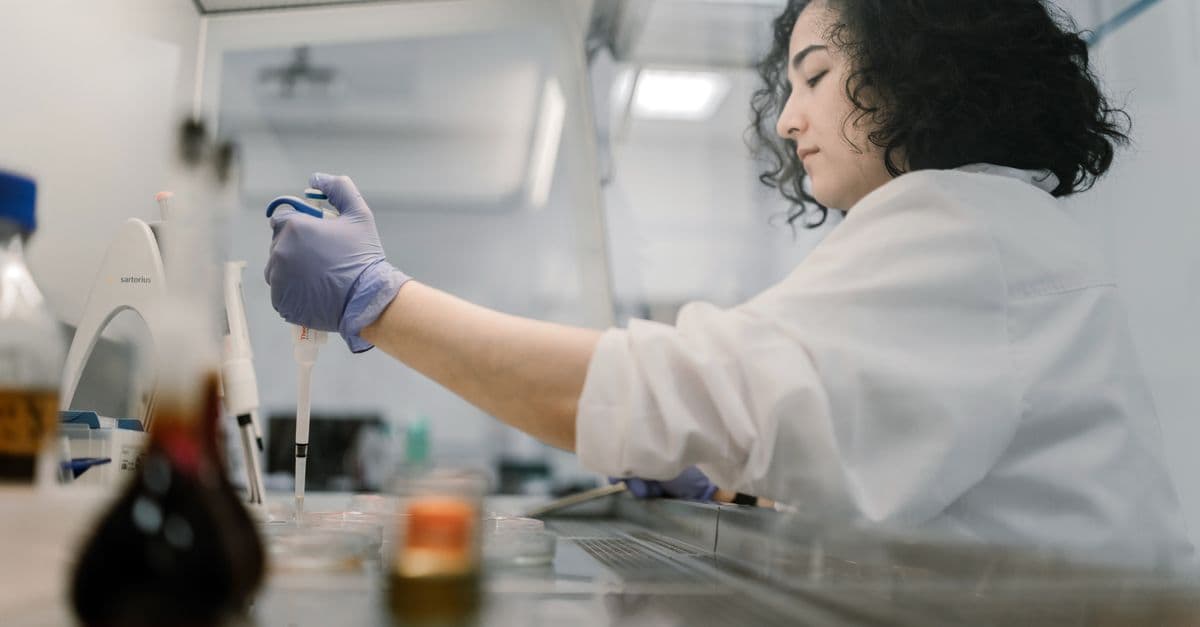
Photo: Mikhail Nilov / Pexels
Henrietta Lacks (1920–1951) died of aggressive cervical cancer at Johns Hopkins Hospital in Baltimore at the age of thirty-one. During her treatment, in February 1951, a sample of her cancer cells was taken by a laboratory researcher without her knowledge or consent. Those cells, unlike any human cells that had ever been kept in a laboratory, did not die. They divided, and kept dividing. They have been dividing ever since. Under the name HeLa — derived from the first two letters of her first and last names — they became the first immortal human cell line in history. They were used to develop and test the Salk polio vaccine. They have been used in research on cancer, AIDS, gene mapping, drug development, in vitro fertilization, and the HPV vaccine. There are estimated to be tens of millions of metric tons of HeLa cells in laboratories worldwide — more human biological material than any person who ever lived has generated. Henrietta Lacks' family did not learn what had been done with her cells until twenty-five years after her death. They received no compensation for seven decades. A settlement between the Lacks family and Thermo Fisher Scientific was reached in 2023.
Quick Biography
Henrietta Lacks was born Loretta Pleasant on August 1, 1920, in Roanoke, Virginia, the ninth of ten children of Eliza Pleasant and Johnny Pleasant. Her mother died in childbirth when Henrietta was four; her father, unable to care for the children alone, distributed them among relatives in Clover, Virginia. Henrietta went to live with her maternal grandfather, Tommy Lacks, at a tobacco farm in Clover. Her cousin David Lacks, known as Day, grew up in the same house. They married in 1941.
Henrietta and David Lacks moved to Baltimore during World War II, when a cousin brought word that jobs were available in the steel industry at Bethlehem Steel's Sparrows Point plant. They settled in Turner Station, a Black community in east Baltimore. They had five children: Lawrence, Elsie, David Jr. (Sonny), Deborah, and Joseph (who later changed his name to Zakariyya). Elsie was severely disabled with developmental differences and was institutionalized at the Crownsville State Hospital, where records show she died in 1955 under conditions typical of mid-century psychiatric institutions.
In January 1951, Henrietta Lacks presented at Johns Hopkins Hospital — which was, for Black residents of Baltimore, one of the few hospitals where Black patients received treatment — with vaginal bleeding. She was diagnosed with epidermoid carcinoma of the cervix. The disease was aggressive; the initial treatment with radium did not control it. She was admitted for treatment repeatedly through the spring and summer of 1951 and died on October 4, 1951, at Johns Hopkins, at thirty-one years old. She is buried in an unmarked grave in the Lacks family cemetery in Clover, Virginia — a grave that received a headstone only in 2010, after Rebecca Skloot's book The Immortal Life of Henrietta Lacks was published.
The Lacks Family: David "Day," Five Children, and the Decades of Not Knowing
Henrietta Lacks and David "Day" Lacks had grown up in the same tobacco farming household in Clover, Virginia, raised by their grandfather Tommy Lacks after their respective parents' deaths. The relationship between them — close since childhood — became a marriage in 1941, when Henrietta was twenty. Day worked at Bethlehem Steel for the duration of his working life in Baltimore. He was a quiet man, by his family's account: dependable, not expressive, not engaged with institutions in the way that later became necessary when the HeLa story became public.
Their five children's lives varied widely. Lawrence, the eldest, remained in the Baltimore area and lived close to the family. Elsie, institutionalized at Crownsville State Hospital for developmental disabilities, died there in 1955 at fifteen — the family could not visit regularly because of both distance and the realities of mid-century institutional care for Black patients. David Jr. (Sonny) and Joseph (Zakariyya) lived lives shaped by poverty and, in Zakariyya's case, by the anger of a man who understood that something had been taken from his family and that no one in authority had acknowledged it for decades.
Deborah — born in 1949, too young to remember her mother — became the center of the family's effort to understand the HeLa story. When Rebecca Skloot began researching the book that would become The Immortal Life of Henrietta Lacks in the late 1990s, it was Deborah who eventually agreed to work with her, and it was Deborah's decade-long quest to know who her mother was that gives Skloot's book much of its emotional core. Deborah wanted to know what her mother looked like, what she sounded like, what she had cared about. She also wanted to know what HeLa cells actually were — whether they contained something of her mother that was still alive, whether her mother could feel what was being done to the cells in laboratories. The questions were not scientifically answerable in the literal sense Deborah meant them, but they were human questions with real weight. Deborah died in 2009, a year before the book was published and before she could see the recognition her pursuit helped make possible.
Day Lacks lived into the era when the HeLa story became widely known but remained largely outside its public dimensions. He had known his wife for her adult lifetime; he had not known, for twenty-five years after her death, that anything of her had persisted. The knowledge, when it came, was disorienting rather than comforting. He died in 2002.
The HeLa Cells: What Happened and Why It Mattered
How the Cells Were Taken
During Henrietta Lacks' first treatment visit at Johns Hopkins in February 1951, a physician — Howard Jones, a gynecological resident — took a biopsy of her cervical tumor, as was standard practice. A portion of the biopsy tissue was sent to George Gey's tissue culture laboratory at Johns Hopkins. Gey and his wife Margaret Gey, a tissue culture technician, had been attempting for years to grow human cells in culture — to keep them alive and dividing outside the body — without success. Human cells consistently died within days or weeks.
Lacks' cells did not die. They divided rapidly and robustly, doubling approximately every 20 to 24 hours. Within days it was clear that these cells behaved differently from any human cells Gey had seen. Within weeks they were thriving.
Lacks was not informed that her cells were being kept. There was no consent discussion, no notification, no knowledge on her part that a sample had been sent to the research laboratory rather than used solely for her diagnosis and treatment. The medical and legal norms of 1951, particularly as applied to Black patients at American hospitals, did not require such consent. This is factual description, not exculpation: the practice was standard, and the standard was unjust.
Gey began distributing the cells to other researchers. By the time Lacks died in October 1951, HeLa cells were already being sent to laboratories across the United States and internationally. Gey did not patent them or profit commercially from them; he appears to have considered their distribution a contribution to medical science, which in material terms it was.
Why HeLa Cells Are Biologically Unusual
Human somatic cells — the body's ordinary cells — divide a limited number of times before entering senescence and dying. This limit, described by Leonard Hayflick in the 1960s, is called the Hayflick limit and is related to the shortening of telomeres (the protective ends of chromosomes) with each division. Most human cells in culture divide approximately 40 to 60 times before stopping.
HeLa cells do not stop. They express telomerase, an enzyme that maintains telomere length, at high levels — a characteristic they acquired through the specific mutations of Lacks' cancer. The cervical cancer from which the HeLa cells derive has since been characterized as caused by human papillomavirus (HPV), specifically HPV-18, which inserts viral DNA into the host cell's genome and disrupts the normal cellular controls on division. The HPV integration, combined with other mutations in Lacks' cancer cells, produced a cell that divides indefinitely.
The combination of aggressive proliferation, vigorous survival in culture, and robustness under a wide range of conditions made HeLa cells not merely alive but unusually tractable for laboratory work — easy to grow, quick to produce results, hardy enough to survive shipping. These properties made them disproportionately useful and disproportionately distributed. For context on how cell biology connects to modern genomics, see CRISPR gene editing explained.
Specific Medical Contributions
The most important early use of HeLa cells was in the development of the Salk polio vaccine. Jonas Salk had developed a candidate vaccine against poliomyelitis but needed to test it on a massive scale. Polio virus had been difficult to grow in large quantities; it required nerve tissue, which was not available in industrial amounts. In 1952, researchers found that HeLa cells could be infected with poliovirus and used to produce the virus in large quantities. The Tuskegee Institute established a production facility using HeLa cells specifically for the polio vaccine program. The Salk vaccine, announced effective in 1955, effectively ended epidemic polio in the United States.
Subsequent uses of HeLa cells include: cancer chemotherapy research, HIV/AIDS research, the development of in vitro fertilization techniques, the development and testing of the HPV vaccine (a direct connection, since HeLa cells are HPV-positive), gene mapping studies, radiation biology, and fundamental cell biology including studies of cell division, the cell cycle, and the mechanisms of cancer. Estimates of the number of publications involving HeLa cells exceed 100,000 papers.
The HeLa Contamination Crisis: A Hidden Consequence
HeLa cells are extraordinarily robust. This property, which made them so useful in 1951, became a serious problem for the wider scientific enterprise beginning in the 1960s. The cells proved capable of contaminating other cell cultures in the same laboratory, overtaking and replacing them so completely that researchers had no idea their supposedly distinct cell lines were actually HeLa cells.
The contamination problem was first formally identified in 1966 by Stanley Gartler, a geneticist who presented his findings at a cell culture conference. Gartler had tested the first 18 established human cell lines known at the time and found that all of them expressed a genetic marker — the GGPD-A allozyme — that was characteristic of individuals of African ancestry. The cell lines were labeled as coming from Caucasian tumors and tissues of various types. Gartler's finding implied they had all been contaminated by a single source: HeLa cells, derived from an African-American woman.
The implications were serious and were not immediately addressed. Through the 1970s and into the 1980s, cell biologist Walter Nelson-Rees pursued the contamination problem systematically, using chromosome banding techniques to identify which supposedly independent cell lines were actually HeLa in disguise. Between 1974 and 1982, Nelson-Rees and his group identified 240 cases of misidentified or contaminated cell lines — 40 of which had been taken over entirely by HeLa cells. A conservative estimate put the number of publications based on erroneous cell line identifications at over 500, with more than 20 million dollars of research funding potentially wasted on experiments conducted on cells the researchers incorrectly believed were something other than HeLa.
The contamination crisis is a consequence that flows directly from the same properties that made HeLa cells so useful: their rapid division, their hardiness, and their tendency to outcompete slower-dividing cells in a shared environment. It is also a consequence of the early decision to distribute the cells freely and widely before the risks of cross-contamination were understood. The problem is not fully resolved: cell line authentication — the practice of verifying that a cell culture is actually what the researcher believes it to be — is now standard practice in rigorous research, but lapses still occur. HeLa contamination is a known ongoing risk in cell culture laboratories.
The contamination crisis added a dimension to the HeLa story that is rarely included in popular accounts: Henrietta Lacks' cells did not just enable medical advances; they also, by their uncontrolled distribution, undermined a significant amount of research and generated a crisis of reproducibility in cell biology that took decades to partially address.
The Lacks Family: What They Were Not Told and What They Lost
Twenty-Five Years of Not Knowing
Henrietta Lacks' husband and children were not informed that her cells had been kept and distributed. David Lacks Sr. — Day — knew she had died of cancer; he did not know that anything of her had continued beyond her burial. The first family member to learn about HeLa cells was Lawrence Lacks, her eldest son, who was told by a researcher trying to reach family members in the 1970s for blood samples — blood samples needed for a study of HeLa genetic variants, which required family DNA for comparison. The manner of the disclosure was, by the family's account, confusing and inadequately explained. They learned that cells from Henrietta were alive and being used in laboratories worldwide, and they were asked to provide blood.
The HeLa contamination crisis of the early 1970s had forced researchers to study the genetics of HeLa cells more carefully, and this in turn created the need to compare HeLa genetics to those of biological relatives. The family was approached as a resource for a scientific problem — a contamination crisis that had itself arisen from the unconsented use of their mother's cells. The circularity of this situation was not lost on them.
Deborah Lacks spent years attempting to understand what HeLa cells were, what they meant for her mother's identity, and what had been taken without consent. Rebecca Skloot met Deborah in 2000 and worked with her for ten years on the book that became the definitive account of the HeLa story. Deborah died in 2009, a year before the book was published.
The Consent and Bioethics Dimensions
The HeLa case has become the central case study in discussions of informed consent in medical research. The 1951 practice at Johns Hopkins was consistent with the general standard of the period: patients did not give specific consent for tissue samples to be used in research; there was no legal requirement that they be informed.
In 1990, the California Supreme Court ruled, in Moore v. Regents of the University of California, that patients do not retain property rights over cells removed from their bodies during treatment. John Moore had sued UCLA after discovering that a cell line derived from his leukemic cells had been patented. The court ruled against Moore while simultaneously ruling that informed consent requirements should cover research use of tissue. The HeLa situation predated any such requirement by forty years.
The National Institutes of Health, in 2013, proposed to make the HeLa genome sequence — which had been published without family consultation — subject to access controls requiring researchers to apply for access and acknowledge the family. This was established through an agreement with the Lacks family, which included representation on the panel governing access.
The financial settlement between the Lacks family and Thermo Fisher Scientific, announced in August 2023, resolved a lawsuit filed by the family in 2021. Thermo Fisher is a major biomedical company that sells HeLa-derived products commercially. The terms of the settlement were not publicly disclosed. The Lacks family's attorneys stated that the settlement was significant; it was the first financial resolution in any legal action brought by the family related to the HeLa cells.
The ethical questions raised by the HeLa story — about consent, about the ownership of biological material, about the relationship between medical institutions and the patients (particularly poor and minority patients) who contribute to research — remain active in bioethics and medical law. Lacks' case appears in the curriculum of most medical schools' bioethics courses. For the parallel history of another woman's contribution being used without full recognition, see Rosalind Franklin's biography.
What We Know About Henrietta Lacks as a Person
The extraordinary circumstance of the HeLa story is that its central figure is almost unknown as an individual. Henrietta Lacks appears in the historical record primarily as a medical subject — a patient, a source of tissue, a case. Rebecca Skloot's book is the most detailed account of her as a person, assembled from interviews with family members, medical records, and the few photographs that exist.
What emerges from these accounts is a woman who was, by her family's description, warm, generous, and practically organized. She cooked for neighbors, took in family members who needed a place to stay, kept her house carefully, and is remembered by cousins and neighbors for a specific quality of attention and care. She wore red nail polish. She liked dancing and socializing. She was known within her community in Turner Station as someone who took care of people around her.
Her cousin Sadie says Henrietta was the kind of person who, if she had known her cells would help people, would have been glad. Her son Sonny has said he wishes people would know she was a person. The cells are everywhere; the person is mostly unrecoverable.
Family Quotes
"She's the most important person in the world and her family living in poverty. If our mother is so important to science, why can't we get health insurance?" Deborah Lacks, as quoted in Rebecca Skloot, The Immortal Life of Henrietta Lacks (2010).
"I always have thought it was strange, if our mother cells done so much for medicine, how come her family can't afford to see no doctors?" Sonny Lacks (David Lacks Jr.), from Skloot's interviews.
"Henrietta was my first cousin. She was good-looking and had a beautiful smile and was a very nice person. If she knew that her cells were going to help people, she would have been glad." Sadie Sturdivant (Henrietta's cousin), quoted in Skloot's book.
"I want the world to know that Henrietta Lacks was a strong Black woman and her cells are still alive and she is still saving lives." Lawrence Lacks Sr. (eldest son), from public statements in 2010 following publication of the book.
Legacy
Henrietta Lacks' legacy is divided between two things that are both real but in tension. The biological legacy is enormous and specific: HeLa cells have been central to some of the most important biomedical advances of the twentieth century, and they remain in daily use in laboratories worldwide. The human legacy is an unresolved account of how a woman's most intimate biological material was taken, used, distributed, and eventually commercialized without her knowledge, without her family's knowledge, and without any benefit to the people from whom it came.
These two things coexist. The polio vaccine is real. The biomedical advances are real. The lack of consent is also real. The contamination crisis — in which HeLa's aggressiveness undermined decades of other research — is also real. The family's seventy years of poverty while HeLa cells generated commercial value is also real. The HeLa story is not a simple story of exploitation, because the individual researchers involved in 1951 were largely not acting for commercial gain. It is a story of how systems — medical, legal, racial, economic — produce outcomes that no individual necessarily chose.
The Lacks family's persistence — in pursuing recognition, in demanding acknowledgment, in insisting that Henrietta be known as a person — has changed both the legal framework of medical consent and the public understanding of how biomedical research intersects with justice. The 2023 settlement does not close the account. It acknowledges that the account exists.
The Henrietta Lacks Foundation, established to provide scholarships and healthcare to members of the Lacks family and to others who have made involuntary contributions to science, continues this work. Henrietta Lacks is now taught in biology classrooms worldwide, in medical schools, in ethics courses. She is on a postage stamp. The cells are still dividing.
FAQ
Q: What are HeLa cells? A: HeLa cells are a line of human cancer cells derived from a biopsy of Henrietta Lacks' cervical tumor in 1951. They were the first human cells successfully maintained in continuous culture — they do not stop dividing. They express telomerase at high levels and carry mutations from HPV-18 infection that prevent normal cell death. They have been maintained in laboratories worldwide since 1951 and are used in research across virtually all areas of biomedical science.
Q: Were Henrietta Lacks' cells taken without consent? A: Yes. A biopsy taken during her treatment in February 1951 was sent to a research laboratory without her knowledge or specific consent. The medical and legal norms of 1951 did not require patient consent for research use of tissue samples. This standard has since changed substantially — the Common Rule governing federally funded research requires informed consent for identifiable human specimens — partly as a consequence of the ethical discussions the HeLa case generated.
Q: How did HeLa cells help develop the polio vaccine? A: The Salk polio vaccine, tested in 1954 and declared effective in 1955, required large quantities of poliovirus for testing. Researchers found that HeLa cells could be infected with poliovirus and used to produce it in industrial quantities. The Tuskegee Institute established a production facility using HeLa cells specifically for the polio vaccine program. The mass testing of the vaccine would have been significantly more difficult without a reliable cell substrate.
Q: What was the HeLa contamination crisis? A: From the late 1960s through the 1980s, it became apparent that HeLa cells had contaminated a significant number of other cell lines in research laboratories worldwide. Because HeLa cells divide so rapidly and aggressively, they can outcompete slower-dividing cells when introduced into the same environment. In 1966, Stanley Gartler reported that the first 18 established human cell lines all showed a genetic marker specific to African-American individuals, suggesting HeLa contamination. Cytogeneticist Walter Nelson-Rees subsequently identified 240 cases of misidentified cell lines between 1974 and 1982, with at least 40 overtaken entirely by HeLa. Conservative estimates put erroneous publications in the hundreds. Cell line authentication is now a required step in rigorous research.
Q: Did Johns Hopkins profit from HeLa cells? A: Johns Hopkins states that it did not commercialize HeLa cells directly and did not profit from their distribution. George Gey distributed the cells without charging licensing fees. Commercial HeLa cell lines became available through companies such as Thermo Fisher Scientific; the 2023 settlement with the Lacks family was against Thermo Fisher, not Johns Hopkins. A separate legal action against Johns Hopkins was also in progress.
Q: How much do HeLa cells weigh in total? A: The commonly cited estimate is that the total mass of HeLa cells grown since 1951 exceeds 50 million metric tons — more than 50 times the weight of the Empire State Building. This figure is based on rough calculations of the number of HeLa cell cultures active worldwide over seventy years and is an approximation. Its purpose is to convey the biological scale of what a single cell sample has produced.
Q: What was Deborah Lacks' quest, and did she see it completed? A: Deborah Lacks, Henrietta's youngest daughter, spent years trying to understand who her mother was and what HeLa cells meant for her mother's identity and legacy. She worked for a decade with Rebecca Skloot on the book that would become The Immortal Life of Henrietta Lacks. She asked whether her mother could feel what was being done to the cells. She sought records of her institutionalized sister Elsie. She pursued acknowledgment that her family deserved to know what had been taken. Deborah died in 2009, a year before the book was published and before the legal settlements that followed. She did not see the formal recognition she worked toward.
Q: What changed legally because of the HeLa case? A: The HeLa case contributed to significant changes in medical consent law and bioethics. The 1990 Moore v. Regents ruling established that patients do not retain property rights in cells removed during treatment but that informed consent for research use is required. The 2013 NIH agreement placed access controls on the HeLa genome sequence, with Lacks family representation on the governing panel. The 2023 settlement with Thermo Fisher Scientific was the first financial resolution in any legal action brought by the family. Medical schools now routinely teach the HeLa case in bioethics curricula as an example of the intersection of race, consent, and biomedical research.
Sources
- Skloot, Rebecca. The Immortal Life of Henrietta Lacks. Crown Publishers, 2010. (Primary narrative source; extensively researched, includes primary interviews with family members and access to medical records.)
- Hayflick, Leonard. "The Limited In Vitro Lifetime of Human Diploid Cell Strains." Experimental Cell Research 37 (1965): 614–636.
- Gey, George O., Ward D. Coffman, and Mary T. Kubicek. "Tissue Culture Studies of the Proliferative Capacity of Cervical Carcinoma and Normal Epithelium." Cancer Research 12 (1952): 264–265.
- Gartler, Stanley M. "Genetic Markers as Tracers in Cell Culture." National Cancer Institute Monograph 26 (1967): 167–195.
- Nelson-Rees, Walter A. "Responsibility for Truth in Research." Philosophical Transactions of the Royal Society B 356 (2001): 849–851.
- Moore v. Regents of the University of California. 51 Cal. 3d 120 (1990).
- Callaway, Ewen. "HeLa Publication Brews Bioethical Storm." Nature 495 (2013): 418.
- Lacks, Henrietta. Patient records, Johns Hopkins Hospital, 1951. (Referenced in Skloot 2010 and subsequent scholarship.)
- Kuku, Victoria. "Henrietta Lacks' Family Reaches Settlement with Thermo Fisher Scientific." CNN, August 2023.
- Henrietta Lacks Foundation. henriettalacksfoundation.org.
Follow new articles
Add SciHub101 to your feed reader to see new science and technology stories.
About the Author
SciHub101 is an independent science and technology publication founded and edited by Buğra Sözeri, a software engineer and app developer based in Türkiye. AI tools assist with drafting and research. Source documentation in the existing archive is uneven, and articles are being reviewed and corrected. The Editorial Team byline identifies editorial responsibility; it does not certify specialist or independent human review. Where we compare products, anything built by our own team is labelled as such — see the editorial guidelines and About page for how corrections and disclosures work.
Related Articles
Hypatia of Alexandria: The Last Great Philosopher of the Ancient World
Hypatia of Alexandria's life, scientific legacy, and verified quirks: chariot rides, a shocking rejection of a suitor, astrolabe design, and a death that ended classical science.
Florence Nightingale: Statistician, Reformer, and the Woman Behind the Lamp
Florence Nightingale's life, statistical innovations, and verified quirks: the polar area diagram, pet owl Athena, 50 years bedridden, and rewriting hospital medicine from her bedroom.
Organoids Explained: What Mini-Organs Can and Cannot Model
Organoids are 3D cell cultures that self-organize into organ-like structures. See how they are grown, what they have taught us, and why they are not tiny organs.
Claude Shannon: The Bell Labs Tinkerer Who Invented Information
Claude Shannon founded information theory in 1948, proved Boolean algebra runs circuits in 1937, built a maze-solving mouse, and juggled on a unicycle through Bell Labs hallways.
Ernest Rutherford: The New Zealander Who Split the Atom
Ernest Rutherford discovered the atomic nucleus, named alpha and beta radiation, and mentored 11 future Nobel laureates. His biography, gold foil experiment, and legacy.
Hans Bethe: The Physicist Who Explained Why Stars Shine
Hans Bethe discovered the CNO cycle that powers stars, led Manhattan Project theory, won the 1967 Nobel Prize, and spent 70 years at Cornell advocating against nuclear weapons. He lived to 98.