Jane Goodall: The Scientist Who Named the Chimps and Changed Primatology
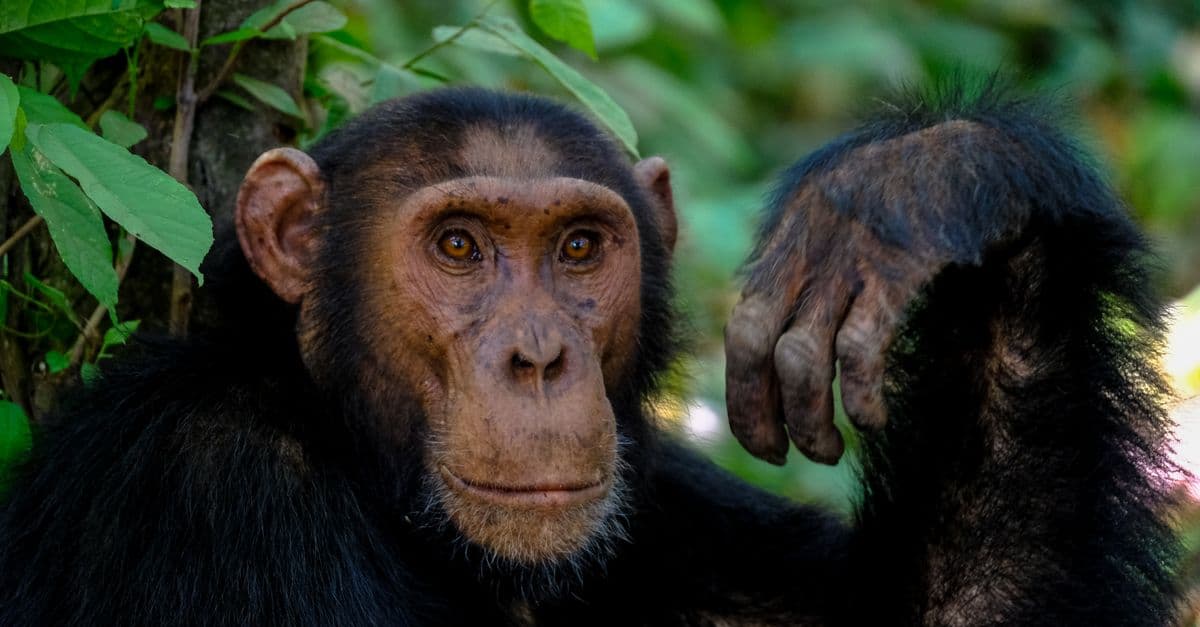
Photo: Francesco Ungaro / Pexels
Jane Goodall (born 1934) is a British primatologist and conservationist whose 60-year study of wild chimpanzees at Gombe Stream in Tanzania constitutes the longest continuous field study of any wild animal species in history. She overturned the definition of humanity by demonstrating that chimpanzees make and use tools; she broke scientific convention by giving her research subjects names rather than numbers; and she spent the second half of her career as one of the most effective conservation advocates in the world. She did not have a university degree when she began her fieldwork. She earned her PhD at Cambridge without ever completing an undergraduate degree.
Quick Biography
Valerie Jane Morris-Goodall was born on April 3, 1934, in London, to Mortimer Herbert Morris-Goodall, a businessman, and Margaret Myfanwe Joseph (known as Vanne). When she was one, her father gave her a stuffed chimpanzee toy named Jubilee, purchased to celebrate the birth of a chimpanzee of that name at the London Zoo. Family members worried that a child fixated on a large stuffed ape might be unsettled; her mother predicted she would grow up to love animals. Both assessments proved correct, in different ways. Goodall still has Jubilee.
She grew up in Bournemouth after her parents divorced during World War II. Her mother, a novelist, encouraged her daughter's intense interest in animals and natural history. At eight, Goodall sat motionless in a henhouse for four hours waiting to see how a chicken laid an egg — an act of patient field observation that prefigured her scientific method exactly. At fourteen she began writing in her diary about wanting to go to Africa to be with animals.
With no money for university, she trained as a secretary after school. In 1956 she received a letter from a school friend whose family had moved to Kenya. Goodall saved her earnings from a waitressing job and traveled to Nairobi in 1957. Through a connection she made on arrival, she secured a meeting with Louis Leakey, the famous paleoanthropologist, who hired her as his personal secretary. Leakey believed that a woman observer without a conventional scientific education — and therefore without fixed ideas about what to look for — would be an ideal fieldworker for a long-term study of chimpanzees. In 1960, he arranged funding and sent Goodall to Gombe Stream Game Reserve on the eastern shore of Lake Tanganyika in what is now Tanzania.
The early weeks at Gombe were difficult. The chimpanzees fled at her approach for months. Goodall persisted, making herself less threatening by observing from a distance and habituating the animals to her presence over time. By 1961, one chimpanzee she had named David Greybeard began approaching her voluntarily. What she observed in the following months shook the scientific establishment.
She married wildlife documentary filmmaker Hugo van Lawick in 1964; they had a son, Hugo Eric Louis van Lawick (known as "Grub"), in 1967, and divorced in 1974. She married Tanzanian politician Derek Bryceson in 1975; he died of cancer in 1980. Goodall has spent most of the intervening decades traveling globally on behalf of conservation, environmental education, and chimpanzee welfare. She maintains a base in Bournemouth and visits Gombe regularly.
Major Scientific Contributions
Chimpanzees Make and Use Tools (1960)
On November 4, 1960, Jane Goodall observed David Greybeard inserting a grass stem into a termite mound and withdrawing it covered in termites, then using his lips to strip the termites off the stem and eat them. He was making a tool — stripping the leaves from a twig to make it more effective. When Goodall reported this to Leakey by telegram, he replied: "Now we must redefine tool, redefine man, or accept chimpanzees as humans." The observation dismantled the definition of Homo sapiens that had prevailed in biology: "Man the Toolmaker." Prior to Gombe, tool use was considered definitively human. Goodall's observation forced science to revise this and to look more seriously at the cognitive capacities of non-human primates.
Chimpanzees Hunt and Eat Meat
Goodall observed that chimpanzees at Gombe were cooperative hunters who regularly killed and ate smaller mammals, including red colobus monkeys, bush pigs, and baboons. This overturned the assumption that wild chimpanzees were vegetarians or at most opportunistic consumers of insects. She documented the social dynamics of the hunt, the sharing of meat, and the use of meat as social currency. The finding had implications not only for primatology but for theories of early human hunting behavior.
Chimpanzee Warfare (The Gombe Chimpanzee War, 1974–1978)
Goodall's most disturbing discovery at Gombe was that chimpanzees engage in coordinated, deliberate, lethal violence against members of neighboring communities. Between 1974 and 1978, she documented the systematic killing of the entire Kahama community — a group that had split from the main Kasakela community — by the Kasakela males. Males would seek out isolated members of the rival group, hold them down, and inflict severe injuries. Every member of the Kahama community was eventually killed or disappeared. The finding — that warfare, long considered uniquely human — existed in our closest living relatives, was deeply unsettling. Goodall wrote in Through a Window that the observations destroyed her belief in the essentially peaceful nature of chimpanzee society.
Longitudinal Social and Behavioral Data (1960–Present)
The Gombe study, now spanning more than 60 years, has produced the longest longitudinal dataset on any wild primate population. It has documented chimpanzee aging, mother-offspring relationships across generations, personality differences, disease transmission, and the effects of habitat loss on social behavior. Gombe is the only site where researchers know the life histories of specific individuals across four generations. This dataset has shaped everything from comparative psychology to evolutionary biology to medical research on primate cognition.
Naming as Scientific Methodology
Goodall named her research subjects: David Greybeard, Flo, Frodo, Gremlin. This was immediately controversial. The scientific convention in ethology at the time was to number animals — naming them was considered a projection of human characteristics that would bias observation. Cambridge University, where Goodall was pursuing her PhD, initially rejected her dissertation chapter descriptions of chimpanzees having personalities, emotions, and minds. Her supervisor, Robert Hinde, told her the committee found her use of names and her references to mental states methodologically unacceptable. She revised the submission; the degree was awarded in 1965. Subsequent work in comparative cognition and animal behavior has substantially vindicated her approach. For the parallel story of another scientist who defied institutional convention, see Rosalind Franklin: The Scientist Whose X-Rays Unlocked the Double Helix.
David Greybeard: The Individual Who Changed Science
David Greybeard was the first Gombe chimpanzee to lose his fear of Goodall. He was a calm, low-ranking male, older than most of the community, with a distinctive grey-bearded face. He began approaching her observation post in late 1960 and was the individual she observed making and using tools on November 4, 1960. He was also the first chimpanzee to accept food from her hand — a fig, offered palm-up, that he took and released before wandering off. Goodall described this interaction in In the Shadow of Man as one of the most important moments of her scientific life: not because it was data, but because it confirmed that the chimpanzees were not simply tolerating her presence, but engaging with her as an individual.
David Greybeard died in the late 1960s, probably from a respiratory disease. The specific date was not recorded because he simply stopped appearing at Gombe and was never seen again. He is the most documented individual in the early Gombe records. Goodall has said that without his particular temperament — his calmness, his apparent willingness to treat her as a benign presence rather than a threat — the entire study might have collapsed in the early months when the other chimpanzees still fled from her.
Personal Life and Relationships
Goodall's personal life at Gombe was inseparable from her scientific life in ways unusual even for field biologists. Her mother, Vanne, accompanied her to Gombe for the first several months in 1960 — not as a co-researcher but because the Tanzanian authorities at the time would not permit a young woman to enter the reserve alone. Vanne set up a basic medical clinic for local villagers while Jane worked in the forest, a practical arrangement that also built goodwill with the surrounding community. Vanne's presence gave Goodall both logistical support and, on the difficult days when the chimpanzees fled and nothing was observed, a companion who understood what she was trying to do.
Hugo van Lawick arrived at Gombe in 1962 as a National Geographic photographer assigned to document Goodall's work. Their marriage in 1964 was covered extensively by the press — a young, photogenic couple living with wild chimpanzees in an African forest was, by the standards of 1960s nature photography, extraordinary material. Their son, Hugo Eric Louis van Lawick, known as Grub, was born in 1967 and grew up at Gombe during the research seasons. Goodall took considerable care to ensure he was not traumatized by the chimpanzees, who were large enough and occasionally aggressive enough to harm a child. She built a "chimpanzee-proof" cage — a metal-mesh enclosure — in which Grub could play safely outdoors at the camp. The arrangement is described in In the Shadow of Man with characteristic Goodall matter-of-factness: the child came first; the methodology adjusted.
The marriage to van Lawick ended in 1974. He remained in Africa as a wildlife photographer and filmmaker. Goodall married Derek Bryceson in 1975 — a former RAF pilot who had been paralyzed from the waist down in a crash and who had become director of Tanzania's national parks. He was one of the few non-Tanzanian citizens in a senior government position and used his access to protect Gombe from encroachment. His death from cancer in 1980, after only five years of marriage, left Goodall with both a personal grief and the loss of a political ally who had made her work possible in practical terms. She has not remarried.
Lesser-Known Habits and Quirks
She Slept in a Tree at Gombe — Repeatedly
During her early months at Gombe in 1960, Goodall spent significant time in the forest canopy, climbing to elevated positions to observe chimpanzees at a distance without alarming them. This went beyond ordinary fieldwork positioning. She described, in multiple interviews and in her memoir Reason for Hope (1999), sleeping in trees at Gombe on several occasions — particularly in the early period before the chimpanzees accepted her presence on the ground. She would find a stable fork in a large tree, wrap herself in her sleeping bag, and spend the night there, reasoning that being at chimpanzee height made her less threatening. Her camp at Gombe in the early years was also minimal to the point of austerity: a canvas tent, a camp bed, and minimal equipment. The tree sleeping was not a stunt; it was a fieldwork decision made in the dark alone in the forest, which indicates something about her temperament.
Her Childhood Toy Chimpanzee Is Still With Her
Goodall received the stuffed chimpanzee toy "Jubilee" as a gift when she was one year old, in 1935. She has kept it for her entire life. As of her most recent documented interviews in the mid-2020s, Jubilee remains with her in Bournemouth. Goodall has mentioned this in numerous public appearances, noting that people predicted a small child fixated on a stuffed ape would be frightened or disturbed; the prediction proved, to put it mildly, incorrect. Jubilee has traveled with her in some form throughout her career, functioning as a personal talisman more than a scientific artifact. It is among the more poignant details of her biography: the toy that prefigured the life.
She Broke Every Methodological Convention Her Discipline Had
The naming controversy was only the most visible of Goodall's methodological departures. She made close physical contact with chimpanzees — David Greybeard allowed her to touch him — at a time when fieldworkers were trained to maintain strict distance. She provisioned (fed) chimpanzees with bananas for a period in the 1960s to sustain close observation, a practice later criticized for distorting social behavior (and which Goodall herself later acknowledged as a mistake). She stayed for years rather than months, accumulating longitudinal data at a time when most animal behavior studies ran for weeks or at most months. She collaborated with her mother, who joined her at Gombe in the early months to provide companionship and logistical support — an arrangement entirely outside the norms of academic fieldwork. The cumulative effect of these departures was a scientific record that no one working within conventional constraints could have produced.
She Sat in a Henhouse for Four Hours as a Child
This is documented in Goodall's own autobiographical accounts and verified by her mother's recollections. At approximately age eight, Goodall wanted to understand how a chicken laid an egg. Unable to find a satisfactory answer in available books, she entered the family henhouse and sat motionless in a corner until a hen settled on a nest near her and laid an egg. She waited approximately four hours. When she returned to the house, her mother had been about to call the police, believing her daughter was missing. On learning what Jane had been doing, Vanne — rather than scolding her — listened to the account carefully and praised her daughter's patience. Jane Goodall has cited this response as formative: her mother's validation of methodical observation over impulsive reaction shaped her sense of what good fieldwork was.
She Has Maintained a Punishing Travel Schedule Well Into Her 90s
Jane Goodall turned 90 in April 2024. For the previous two decades — from roughly her mid-sixties onward — she maintained a schedule of approximately 300 travel days per year, flying around the world to give lectures, meet with policymakers, visit Roots and Shoots programs (the youth conservation program she founded in 1991), and advocate for chimpanzee welfare and habitat protection. Colleagues and journalists who travel with her routinely note that her stamina exceeds that of people half her age. She has attributed this to purpose: she believes she is doing the most important work she can be doing and has no intention of stopping.
Her Voice Is Part of Her Science
Goodall has a documented ability to vocalize sounds closely approximating chimpanzee calls, which she developed through years of observation at Gombe. She uses these vocalizations in public presentations — a pant-hoot greeting, for example — but also used them in the field as part of establishing communication with the Gombe chimpanzees. Biographers and documentary filmmakers who worked with her at Gombe describe this as neither a trick nor an affectation: it was a genuine component of how she established trust with research subjects. The chimpanzees responded to her calls as they would to those of other chimpanzees.
Famous Quotes
"What you do makes a difference, and you have to decide what kind of difference you want to make." From multiple speeches and interviews over her conservation career. This is Goodall's core public message — the ethical obligation that follows from knowledge — and it appears in verified recordings and interviews.
"You cannot get through a single day without having an impact on the world around you." From her book Jane Goodall: 50 Years at Gombe (2010) and repeated in lectures. Documented in multiple formats.
"The greatest danger to our future is apathy." From Reason for Hope (1999). Goodall uses this as the foundation of her conservation advocacy: the combination of knowledge and indifference is the mechanism by which environmental destruction proceeds.
"Only if we understand, will we care. Only if we care, will we help. Only if we help, shall all be saved." Attributed to Goodall in multiple sources; the precise origin in her writings is verifiable in Roots and Shoots program materials and public lectures from the 1990s.
Legacy
Jane Goodall's scientific legacy is precisely bounded: she transformed primatology, forced a revision of the definition of humanity, and produced a longitudinal dataset without parallel in animal behavior science. Her conservation legacy is harder to bound because it is still accumulating. The Jane Goodall Institute, founded in 1977, operates in 65 countries. Roots and Shoots, her youth environmental program, has more than 150,000 members in over 60 countries. She has testified before legislatures, advised governments, and influenced wildlife protection law on multiple continents.
The more subtle legacy may be methodological. Goodall's insistence on naming, on relationship, on the presence of personality and emotion in her research subjects — initially dismissed as sentimental and unscientific — has been substantially vindicated by subsequent research in comparative cognition, behavioral ecology, and neuroscience. The animals she studied were not objects; they were individuals with histories. Science took decades to catch up to what she had observed from a tree at Gombe in 1960.
For a companion study in conservation and understanding evolutionary kinship, see Charles Darwin: The Naturalist Who Rewrote Life's Story.
FAQ
Q: Did Jane Goodall have a university degree when she started at Gombe? No. She had no university degree of any kind when she began fieldwork at Gombe in 1960. Louis Leakey sent her deliberately, believing an observer without academic preconceptions would notice things a trained scientist might screen out. She later earned a PhD from Cambridge University in 1965 — without first completing an undergraduate degree — based on her Gombe fieldwork. Cambridge made a special dispensation for this.
Q: Why did Jane Goodall name the chimpanzees instead of numbering them? She named them because she observed that they were individuals with distinct personalities, social relationships, and behavioral histories that could not be captured by a number. The scientific convention of numbering was designed to prevent anthropomorphism, but Goodall argued that refusing to acknowledge individuality in research subjects produced its own kind of distortion. Her Cambridge examiners initially objected; her approach has since become standard in long-term primate field studies.
Q: What is Gombe Stream and how long has it been studied? Gombe Stream National Park is a narrow strip of forest on the eastern shore of Lake Tanganyika in Tanzania. Jane Goodall arrived there in July 1960. Research has continued continuously since then — making it the longest-running field study of any wild animal population in history. The Gombe Stream Research Centre, now operated by the Jane Goodall Institute in collaboration with Tanzanian researchers, continues to collect data.
Q: Did Jane Goodall discover that chimpanzees make war? She documented the Gombe Chimpanzee War (1974–1978), in which one community of chimpanzees systematically killed all members of a neighboring community that had split from it. This was the first documented case of what researchers call "intergroup lethal violence" in non-human primates and was deeply disturbing to Goodall personally and to the scientific community more broadly.
Q: Is Jane Goodall's childhood toy chimpanzee really still with her? Yes. The stuffed chimpanzee named "Jubilee," given to her as a gift in 1935 when she was one year old, has remained with her throughout her life. She has referenced it in interviews and public appearances on multiple occasions.
Q: How did Goodall's tool-use observation actually redefine "human"? Before Goodall's 1960 observation of David Greybeard stripping leaves from a grass stem to insert into a termite mound, the standard scientific definition of humanity included tool use as a uniquely human characteristic. The prevailing statement was that humans were "Man the Toolmaker." When Goodall reported her observation to paleoanthropologist Louis Leakey, he responded: "Now we must redefine tool, redefine man, or accept chimpanzees as humans." Since then, tool use has been documented in dozens of other species — crows, otters, dolphins, elephants — and is no longer considered a defining human trait. A single field observation by a 26-year-old researcher without a university degree dissolved a century of taxonomic certainty.
Q: What is Roots and Shoots and how large has it grown? Roots and Shoots is the youth environmental and humanitarian program Goodall founded in 1991 in Tanzania with a group of 12 local students. It is built around a simple premise: every individual, regardless of age, has the power to make a positive difference. Programs operate in more than 60 countries, with participation from primary school children through university students. Members identify local problems — environmental, animal welfare, or community-related — and carry out practical projects to address them. Goodall has said the program, more than any of her scientific work, is what she wants her legacy to rest on.
Q: Did Goodall ever regret the provisioning experiment? Yes, explicitly. In the 1960s, Goodall provisioned (fed) the Gombe chimpanzees with bananas as a way to sustain close observation. This worked in the short term but distorted social behavior: the artificially concentrated food source made the chimpanzees more aggressive and may have contributed to the social tensions that preceded the Gombe Chimpanzee War. Goodall acknowledged in later interviews and in her book Through a Window (1990) that provisioning was a methodological error. She stopped the practice in the early 1970s. It is cited in animal behavior literature as a cautionary example of how the observer can alter what is being observed — a version of the Heisenberg uncertainty principle applied to field biology. For more on the ethics of observer effects in science, see Charles Darwin: The Naturalist Who Rewrote Life's Story.
Sources
- Goodall, Jane. In the Shadow of Man. Houghton Mifflin, 1971.
- Goodall, Jane. Through a Window: My Thirty Years with the Chimpanzees of Gombe. Houghton Mifflin, 1990.
- Goodall, Jane. Reason for Hope: A Spiritual Journey. Warner Books, 1999. (With Phillip Berman.)
- Peterson, Dale. Jane Goodall: The Woman Who Redefined Man. Houghton Mifflin, 2006.
- Goodall, Jane. Africa in My Blood: An Autobiography in Letters (The Early Years). Ed. Dale Peterson. Houghton Mifflin, 2000.
- The Jane Goodall Institute. https://www.janegoodall.org/
- Goodall, Jane. 50 Years at Gombe. Stewart, Tabori and Chang, 2010.
Follow new articles
Add SciHub101 to your feed reader to see new science and technology stories.
About the Author
SciHub101 is an independent science and technology publication founded and edited by Buğra Sözeri, a software engineer and app developer based in Türkiye. AI tools assist with drafting and research. Source documentation in the existing archive is uneven, and articles are being reviewed and corrected. The Editorial Team byline identifies editorial responsibility; it does not certify specialist or independent human review. Where we compare products, anything built by our own team is labelled as such — see the editorial guidelines and About page for how corrections and disclosures work.
Related Articles
Lise Meitner: The Physicist Who Explained Fission and Refused the Bomb
Lise Meitner co-explained nuclear fission while her collaborator got the Nobel. She fled Nazi Germany with 10 marks and refused to work on the Manhattan Project. Her biography.

James Clerk Maxwell: The Poet-Physicist Who Unified Electromagnetism
James Clerk Maxwell unified electricity, magnetism, and light into four equations, shot the first color photograph, and wrote thermodynamics poetry. His verified biography.
Claude Shannon: The Bell Labs Tinkerer Who Invented Information
Claude Shannon founded information theory in 1948, proved Boolean algebra runs circuits in 1937, built a maze-solving mouse, and juggled on a unicycle through Bell Labs hallways.

Ernest Rutherford: The New Zealander Who Split the Atom
Ernest Rutherford discovered the atomic nucleus, named alpha and beta radiation, and mentored 11 future Nobel laureates. His biography, gold foil experiment, and legacy.

Hans Bethe: The Physicist Who Explained Why Stars Shine
Hans Bethe discovered the CNO cycle that powers stars, led Manhattan Project theory, won the 1967 Nobel Prize, and spent 70 years at Cornell advocating against nuclear weapons. He lived to 98.

Hermann von Helmholtz: The Physicist Who Measured a Thought
Hermann von Helmholtz formulated energy conservation, invented the ophthalmoscope, measured nerve impulse speed, and trained Heinrich Hertz. His full biography and science.