Mary Anning: The Fossil Hunter Who Built Paleontology
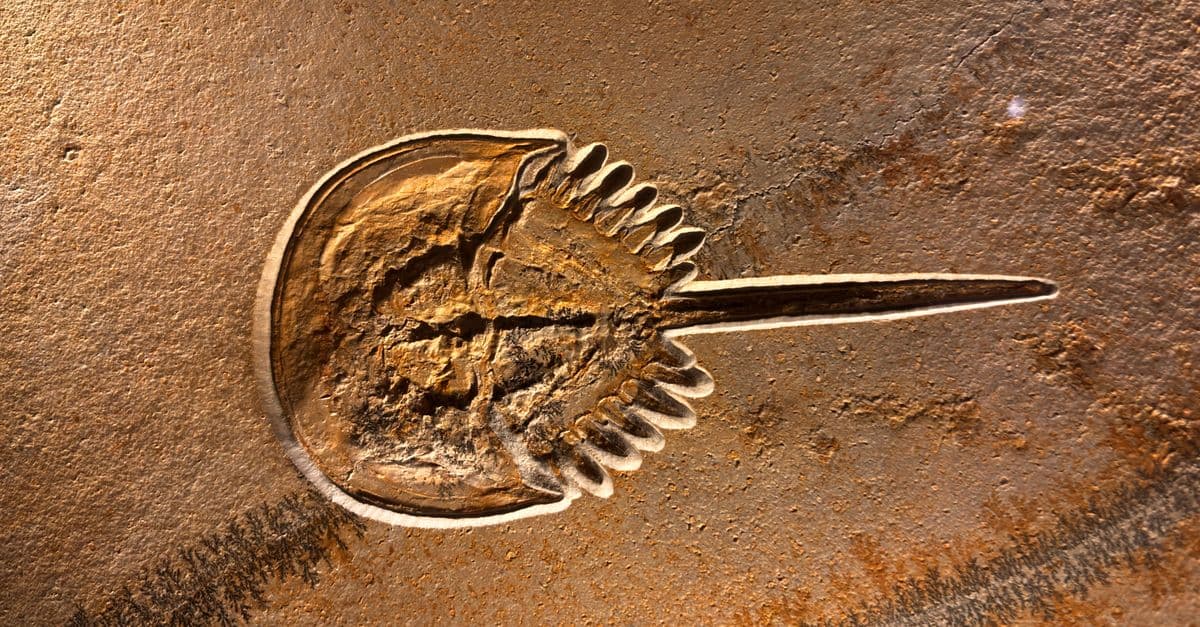
Photo: Alejandro Quintanar / Pexels
Mary Anning (1799–1847) was an English fossil collector and self-taught paleontologist who, working the Jurassic cliffs of Lyme Regis on England's Dorset coast, made more foundational discoveries than most trained scientists of her era. She found the first complete ichthyosaur skeleton, the first complete plesiosaur skeleton, and the first pterosaur specimen found outside Germany — all before the age of 30. She was barred from the Geological Society of London because she was a woman and working class. The science she helped create did not formally acknowledge her until after her death.
Early Life: Lyme Regis and the Jurassic Coast
Mary Anning was born on May 21, 1799, in Lyme Regis, a small coastal town in Dorset, England, at the edge of what is now called the Jurassic Coast — a 95-mile (153 km) stretch of coastline whose exposed rock strata represent 185 million years of Earth history. The Blue Lias cliffs that frame the town are particularly rich in Jurassic marine fossils. They are also unstable. Seasonal rains and frost cause them to crumble and slide, constantly exposing new material from the ancient seabed.
Her father, Richard Anning, was a cabinetmaker and carpenter who supplemented the family's meager income by collecting fossils from the beach and selling them to tourists. "Curiosities" — ammonites, belemnites, and vertebrae — were fashionable collectibles in the early 19th century, and Lyme Regis attracted visitors who wanted specimens. Richard took his children on collecting trips, teaching them which formations yielded what kinds of fossils, and how to clean and prepare specimens for sale.
Ammonite — an extinct group of marine mollusks with coiled shells that lived from the Devonian period until the end-Cretaceous extinction, approximately 66 million years ago. Their coiled shells are among the most common Jurassic fossils and were sold as "snake stones" in Anning's time.
Mary was the second surviving child of ten — most of the others died young, as was common in working-class households of the period. She had one surviving sibling, an older brother named Joseph.
A family story, which Mary's contemporaries also told, describes a remarkable event: in August 1800, when Mary was approximately 15 months old, a woman named Elizabeth Haskings was holding her at an outdoor event when lightning struck a tree under which the group had gathered. Elizabeth Haskings and two other women with her died. Mary, unconscious, was rushed home and revived with warm water. The family attributed the transformation of a reportedly sickly infant into a bright, healthy child to this event. The story was repeated during her lifetime and appears in early accounts of her.
Source: Mary Anning — Wikipedia; Natural History Museum biography; Britannica.
Richard Anning died in November 1810, when Mary was 11, likely of a combination of tuberculosis and injuries sustained in a fall while fossil collecting. He left the family with significant debts. Mary, Joseph, and their mother Molly immediately took over the fossil-selling business as a matter of economic survival, not scientific ambition.
Major Discoveries: Three Firsts That Defined a Field
The Ichthyosaur (1811)
In the winter of 1811–1812, Mary, then 12 or 13 years old, and her brother Joseph found a large fossilized skull embedded in the Blue Lias cliffs. Joseph found the skull first; Mary spent months carefully excavating the rest of the skeleton, working in difficult conditions — cliff faces, tidal zones, slippery rock — until she had exposed a nearly complete skeleton nearly 5.2 meters (17 feet) long.
The animal was unlike anything in any known natural history collection. It had a long snout, large eye sockets, paddle-like limbs, and a spine that curved at the tail. Early naturalists who examined the specimen thought it might be a crocodile, or a fish, or something in between. It was eventually named Ichthyosaurus — "fish-lizard" — and identified as an extinct marine reptile from the Jurassic period. The Anning specimen, sold to the local lord Henry Hoste Henley for £23, passed through several hands and eventually entered the collection of the British Museum in London, where it is still held.
Ichthyosaur — a group of extinct marine reptiles that lived from the Triassic to the late Cretaceous period, approximately 250 to 90 million years ago. They were air-breathing reptiles that evolved to live entirely in the ocean, convergently developing body shapes similar to modern dolphins. They were not dinosaurs.
The discovery was the first scientifically significant ichthyosaur skeleton known to science, and it arrived at a time when the question of extinction — the idea that entire species of creatures could cease to exist — was deeply contested. Georges Cuvier in Paris had argued for extinction based on fossil evidence; others resisted the idea on theological grounds. The ichthyosaur was a major piece of evidence.
Source: Mary Anning — Wikipedia; Natural History Museum, London — "Mary Anning: unsung hero of fossil discovery"; Scientific American, "Mary Anning and the Birth of Paleontology."
The Plesiosaur (1823)
Mary Anning was 23 when she found the first complete Plesiosaurus skeleton in December 1823. The plesiosaur was even stranger than the ichthyosaur — a small head on an extremely long neck, a broad body, and four large paddle-like limbs. When the specimen was presented to the Geological Society of London in 1824, some members initially doubted its authenticity. The animal looked, in the description of the time, like "a snake threaded through the body of a turtle."
Cuvier himself, reviewing the specimen from Paris, initially expressed skepticism. Upon further examination of the evidence, he accepted that the specimen was genuine and correctly identified. Anning had found not a curiosity but a genuine new category of ancient animal.
The plesiosaur specimen was purchased by the Duke of Buckingham for £100 — a substantial sum that helped keep the Anning household solvent for a period. It joined the ichthyosaur as evidence that the Mesozoic seas had been populated by large, complex creatures utterly unlike anything living.
The Pterosaur (1828)
Mary Anning's third major discovery — and in some respects her most technically impressive — was a pterosaur: a flying reptile. Her 1828 specimen was identified as Pterodactylus macronyx (later reclassified as Dimorphodon macronyx). It was the first pterosaur specimen found outside Germany, where the original discoveries had been made.
Pterosaurs had been known since the late 18th century, when Cosimo Alessandro Collini described a Bavarian specimen in 1784. But they were poorly understood — Collini initially thought the specimen might be an aquatic creature using its long fingers as paddles. Anning's specimen added to the comparative data needed to understand that pterosaurs were genuinely flying animals.
She also found fish fossils, additional ichthyosaur and plesiosaur specimens, cephalopod fossils with preserved ink sacs (she and her dog were reportedly once splashed with ink released from a fossil), and coprolites — fossilized feces. She was, in fact, the first person to correctly identify coprolites for what they are.
Source: Mary Anning biography — University of California Museum of Paleontology; Britannica.
The Geological Society and the Walls of Exclusion
The Geological Society of London, founded in 1807, was the premier institution for geological science in Britain. Its meetings, publications, and membership were the formal structure through which geological knowledge was established and credentialed. Mary Anning could not join. Women were not admitted to the Geological Society until 1919 — 72 years after her death.
This was not an incidental inconvenience. It meant that the scientific work Anning did — identifying specimens, interpreting formations, making observations about the distribution and character of fossils in the Lyme Regis strata — could not be published in her own name in the Society's Transactions. It could not be presented by her at meetings. It had to be channeled through the men she sold fossils to and corresponded with.
Several of those men were generous in acknowledging her. The geologist William Buckland, who studied her coprolite identification and published the finding that these were fossilized feces, credited Anning explicitly in his 1829 paper. The geologist Henry De la Beche commissioned a painting (Duria Antiquior, one of the first reconstructions of an ancient landscape) based directly on Anning's discoveries and sold prints to raise money for her. Charles Lyell, whose Principles of Geology became the foundational text of 19th-century geology, visited Lyme Regis and relied on her local knowledge.
But others were not generous. Some specimens were described in scientific publications without any mention of who had found them or how. Anning was aware of this and occasionally expressed frustration. A letter she wrote in 1839 to a scientific journal noted directly that "the world has used me so unkindly, I fear it has made me suspicious of everyone."
Source: Museum of the Earth, Paleontological Research Institution — Mary Anning biography; Natural History Museum London.
The Geological Society did eventually make a gesture in her direction: in 1838, the year before her death, the Society and the British Association for the Advancement of Science jointly arranged for her to receive a small annual stipend in recognition of her contributions. She was also made an honorary member of the Dorset County Museum. These were recognition, but not membership, not authorship, and not the full institutional standing that comparable contributions by men would have produced.
The Dog Tray and the Landslide
Among the episodes of Mary Anning's life, one has a particular weight in the biographical record because she herself described it so vividly.
In October 1833, while she was fossil hunting on the cliffs near Lyme Regis, a section of cliff collapsed in a landslide. Her black-and-white terrier Tray, who accompanied her on virtually every fossil hunt, was buried and killed instantly. Anning narrowly escaped the same fate — she was just clear of the slide when it came down.
She wrote about it in a letter to Charlotte Murchison, wife of the geologist Roderick Murchison, in November 1833: "Perhaps you will laugh when I say that the death of my old faithful dog quite upset me, the cliff that fell upon him and killed him in a moment before my eyes, and close to my feet... it was but a moment between me and the same fate."
The composure of the letter, its combination of acknowledged grief with the dry observation about proximity to death, is characteristic of the small number of surviving personal documents from Anning. She worked in physical danger routinely — the same unstable cliffs that exposed fossils could and did collapse without warning — and Tray was both a working companion and, by her account, a genuine source of comfort in a life that offered limited social recognition.
Source: Mary Anning — Wikipedia, citing Anning correspondence with Charlotte Murchison, November 1833.
Self-Education: Geology, Anatomy, Scientific Literature
One of the most striking aspects of Mary Anning's career is the degree to which she educated herself in the sciences she needed.
She had limited formal schooling. The Sunday school at the local Congregational chapel taught her to read using the Bible. Beyond that, she taught herself geology, vertebrate anatomy, scientific illustration, and enough French and German to follow the relevant European literature. She regularly dissected modern animals — including cuttlefish, to understand the anatomy she was finding fossilized — and compared living anatomical structures with fossil ones.
She read the scientific papers of Cuvier, Buckland, Conybeare, and others, and she could identify errors. When Henry De la Beche presented her plesiosaur specimen to the Geological Society in 1824, it was Mary Anning who had worked out the anatomical description. The paper was De la Beche's because it had to be — she could not present it — but the knowledge was hers.
She maintained a notebook of fossil discoveries and observations, and she was known to the leading geologists of Europe. When visitors came to Lyme Regis specifically to see the formations, she took them out on the cliffs. Alexander Brongniart, the French geologist; Gideon Mantell, who discovered the iguanodon; William Buckland; and many others all used her local knowledge and relied on her expertise. Louis Agassiz, the Swiss-American naturalist famous for his work on glaciation, named two fish species after her: Acrodus anningiae and Belenostomus anningiae.
Source: Lyme Regis Museum — Mary Anning collection notes; Natural History Museum London, "Mary Anning: unsung hero of fossil discovery."
"She Sells Seashells": The Rhyme and Its Disputed Origin
The tongue-twister "She sells seashells by the seashore" is frequently attributed to Mary Anning. The claim has some evidence behind it and a significant complication.
The song was written by Terry Sullivan with music by Harry Gifford and published in 1908 — 61 years after Anning's death. The published version explicitly mentions Lyme Regis and a woman who sold shells on the shore. The historian P.J. McCartney, in his 1978 book on geologist Henry De la Beche, argued that the song was inspired by Anning.
However, no direct documentary link connects Sullivan to Anning as a specific source. The attribution has been widely repeated but has also been challenged by scholars who note that it rests on McCartney's claim without a chain of primary evidence. The truth appears to be: the song was written with Lyme Regis in mind, probably with some tradition of a seashell-selling woman in the town's folklore, and the identification of that woman with Mary Anning is plausible but not definitively established.
Whether or not the rhyme is hers, the association has made Anning's name familiar to people who might otherwise never have heard it, which she would probably have appreciated more than the ambiguity.
Personal Life: Class, Religion, and Financial Precarity
Mary Anning lived in working-class conditions throughout her life. The income from fossil sales was irregular and often depended on wealthy collectors who could negotiate prices downward. She and her mother shared a small house on the main street of Lyme Regis, which served as both home and fossil shop. After a period of extreme financial difficulty in 1835, when the family was genuinely destitute, a group of geologists organized a public subscription and raised funds to help her.
She was a committed member of the Congregational chapel, though she converted to the Church of England later in life — reportedly in connection with her friendship with the Birch family, who were significant patrons. Her faith was genuine and consistent with her view of her work: finding the evidence of ancient creation, in her framing, was an act of learning about the scope of God's creation rather than a challenge to it. This was a common position among English naturalists of the period.
She never married. The reasons are not documented in personal correspondence in any explicit way, though the financial instability of her position and the constraints of her social class would have limited options. Some later biographers have speculated about personal attachments, but the evidence is thin.
She died of breast cancer on March 9, 1847, at the age of 47. In the final months of her illness she continued to work when she could. The Geological Society, which had never admitted her, commissioned a stained-glass window in her memory at the local church — a posthumous recognition that acknowledged her contributions without any institutional belonging.
Little-Known Aspects of Her Scientific Work
Several of Anning's specific contributions to paleontological knowledge are less discussed than the major skeleton discoveries.
Her identification of coprolites — the oddly shaped stones found in the abdominal regions of ichthyosaur skeletons, which she correctly identified as fossilized feces — was a genuine scientific finding, not just a curiosity. William Buckland published the result in 1829 under his own name but acknowledged Anning's prior identification. Coprolites subsequently proved useful for reconstructing ancient food webs, since they contain the remains of whatever the animal had eaten.
She also recognized that fossil cephalopods contained preserved ink sacs — the structures that produce ink in modern octopuses and cuttlefish. She used fossil ink from these sacs to draw illustrations of the fossils. This is both a practical detail and a conceptual one: she understood that the structures she was excavating had biological function, not just morphological form.
She made careful observations about the stratigraphic distribution of different fossil types — which species appeared in which rock layers — that contributed to the growing understanding that different geological periods had distinct faunas. This stratigraphic work was not published in her name but was used by the geologists she worked with.
Source: Britannica — Mary Anning; UCMP Berkeley — Mary Anning biography (1799–1847).
Legacy: What Paleontology Owes Her
Anning's legacy is both scientific and symbolic. The scientific debt is concrete: three major extinct animal groups — ichthyosaurs, plesiosaurs, and pterosaurs — were all defined or significantly clarified by specimens she found. The early history of paleontology as a discipline runs directly through the Blue Lias cliffs of Lyme Regis, and through her.
The symbolic legacy is about who gets to do science and who gets to be recognized for doing it. Anning worked in conditions that excluded her from the formal structures of knowledge production — no degree, no institutional affiliation, no published papers in her own name, no membership in the Geological Society. She did the work anyway. The combination is unusual enough to be worth holding in mind: she was not simply a discoverer who happened to be working class and female; she was a discoverer whose working-class, female position actively structured what credit she could claim.
Several species have since been named in her honor. The genus Anningasaura (a plesiosaur) was named after her in 2012. The species Ichthyosaurus anningae was named in 2015. The Natural History Museum in London holds the ichthyosaur skull she found at age 12.
In 2010, the Royal Society included her in a list of the ten British women who most influenced the history of science. In 2022, her portrait was officially added to the Natural History Museum.
| Discovery | Year | Significance |
|---|---|---|
| Ichthyosaur skeleton | 1811–1812 | First scientifically documented specimen; established a new category of extinct marine reptile |
| Complete plesiosaur | 1823 | First complete specimen; defined plesiosaur anatomy |
| British pterosaur | 1828 | First pterosaur outside Germany; extended geographic range of flying reptiles |
| Coprolite identification | ~1824 | First correct identification of fossilized feces; named by Buckland in 1829 |
| Fossil ink sacs | 1820s | Recognized and used preserved cephalopod ink for illustration |
The Takeaway
Mary Anning did not have access to the institutions that would have given her work a formal scientific standing in her own time. She had the cliffs, she had the eye, she had the self-taught knowledge, and she had the physical courage to work a dangerous coastline in all weather with a terrier for company. What she built — through decades of precise observation, careful excavation, and correspondence with the men who could get things published — was the foundation of vertebrate paleontology. The fact that her name was largely absent from the literature she contributed to is not a minor biographical detail. It is a description of how science worked, and for whom.
Read next:
- Rosalind Franklin: The Scientist Whose X-Rays Revealed DNA
- Charles Darwin: Evolution and the Making of a Theory
- Vera Rubin: The Astronomer Who Found Dark Matter
FAQs
Q: What is Mary Anning famous for discovering?
A: Anning made three major fossil discoveries: the first complete ichthyosaur skeleton (1811–1812), the first complete plesiosaur skeleton (1823), and the first pterosaur specimen found outside Germany (1828). She also correctly identified coprolites (fossilized feces) and recognized preserved ink sacs in fossil cephalopods.
Q: Was Mary Anning a member of the Geological Society?
A: No. Women were barred from the Geological Society of London until 1919, 72 years after Anning's death. Despite her discoveries being central to the development of paleontology, she could not present papers, attend meetings as a member, or publish in the Society's Transactions in her own name.
Q: Did Mary Anning have formal scientific training?
A: No. Her formal education consisted of Sunday school at the local Congregational chapel, where she learned to read using the Bible. She taught herself geology, vertebrate anatomy, scientific illustration, and enough French and German to follow European scientific literature. She regularly dissected modern animals to compare living and fossil anatomy.
Q: Did the tongue-twister "she sells seashells" come from Mary Anning?
A: The attribution is plausible but not definitively established. The song was written by Terry Sullivan in 1908, 61 years after Anning's death. It mentions Lyme Regis and a seashell seller, and historian P.J. McCartney argued in 1978 that it was inspired by Anning, but no direct documentary link has been confirmed.
Q: How did Mary Anning support herself financially?
A: She sold fossils from a small shop in Lyme Regis to wealthy collectors, tourists, and museums. The income was irregular and she often sold significant specimens at prices that did not reflect their scientific value. She experienced genuine destitution at least once, in 1835, when a group of geologists organized a public subscription to provide her financial support.
Q: When did Anning receive formal scientific recognition?
A: Recognition was largely posthumous. The Geological Society arranged a small annual stipend in her final years. After her death in 1847, the Society commissioned a memorial window in her local church. Multiple species have since been named after her, including Anningasaura (2012) and Ichthyosaurus anningae (2015). The Royal Society included her in its list of the ten British women most influential in the history of science in 2010.
Follow new articles
Add SciHub101 to your feed reader to see new science and technology stories.
About the Author
SciHub101 is an independent science and technology publication founded and edited by Buğra Sözeri, a software engineer and app developer based in Türkiye. AI tools assist with drafting and research. Source documentation in the existing archive is uneven, and articles are being reviewed and corrected. The Editorial Team byline identifies editorial responsibility; it does not certify specialist or independent human review. Where we compare products, anything built by our own team is labelled as such — see the editorial guidelines and About page for how corrections and disclosures work.
Related Articles
Mary Cartwright: The Mathematician Who Found Chaos Before It Had a Name
Mary Cartwright discovered chaotic behavior in differential equations in the 1940s, decades before chaos theory existed, while doing classified wartime radar work.

Maria Goeppert Mayer: The Nuclear Shell Model and 30 Years Without Pay
Maria Goeppert Mayer built the nuclear shell model that explains why certain atoms are extraordinarily stable, then waited decades for a paid academic position.

Alfred Wegener: The Man Who Said the Continents Move
Alfred Wegener proposed continental drift in 1912 and was rejected by his field. Plate tectonics vindicated him decades after his death on Greenland's ice.

Cecilia Payne-Gaposchkin: The Astronomer Who Read the Stars
Cecilia Payne-Gaposchkin proved stars are made of hydrogen in 1925 — then was told to suppress it. She became Harvard's first female full professor. Here is her story.
Henrietta Leavitt: The Woman Who Measured the Universe
Henrietta Leavitt's 1912 discovery of the Cepheid period-luminosity relation gave astronomy its first reliable cosmic distance scale. Her story and legacy.