Maryam Mirzakhani: The First Woman to Win the Fields Medal

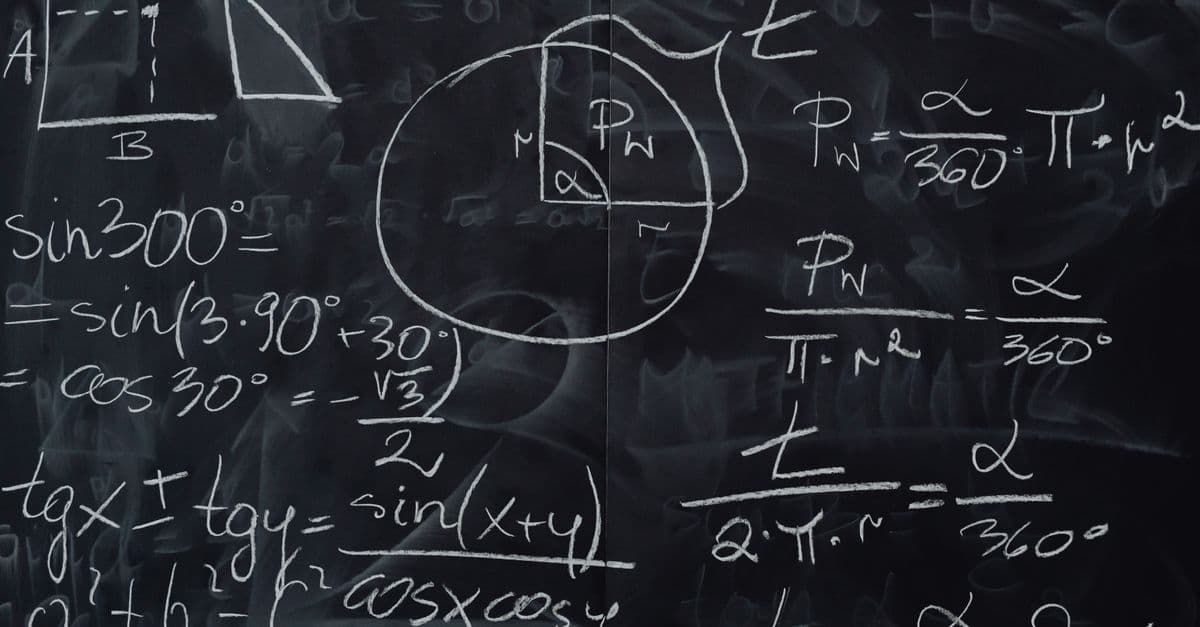
Photo: www.kaboompics.com / Pexels
Maryam Mirzakhani (1977–2017) was an Iranian mathematician whose work on the geometry and dynamics of Riemann surfaces earned her the Fields Medal in 2014 — the first woman to receive the award in its eighty-year history, and the first Iranian. She died of breast cancer three years later at age forty. In the mathematical community, the losses are measured separately: losing the first female Fields Medalist before she was fifty, and losing work that her colleagues say was still accelerating toward its most significant results.
Quick Biography
Maryam Mirzakhani was born on May 3, 1977, in Tehran, Iran, the daughter of an engineer and a homemaker. She grew up in a household that valued education and in a city whose schools, at least for a mathematically gifted child in the 1980s, offered real resources. She was not initially drawn to mathematics; as a child she wanted to be a writer, and she read voraciously through Iranian and translated fiction.
Mathematics announced itself during her secondary schooling at Farzanegan school in Tehran, a school for talented students. She and her close friend Roya Beheshti entered the 1994 International Mathematical Olympiad, held in Hong Kong — the first time an Iranian girl had been selected for the national team. Mirzakhani won a gold medal. The following year, at the 1995 IMO in Canada, she won gold again with a perfect score.
She completed her undergraduate degree at Sharif University of Technology in Tehran — then, as now, Iran's most rigorous technical institution — and in 1999 moved to Harvard for graduate work under Curtis McMullen, a Fields Medalist himself who is one of the central figures in the geometric and dynamical work she would go on to develop. Her PhD thesis, completed in 2004, solved two problems that had been open for years and was described by Princeton's Peter Sarnak as "a masterpiece."
She joined Princeton's faculty in 2004 and Stanford's in 2008, where she remained for the rest of her career. She married Jan Vondrák, a Czech-Slovak theoretical computer scientist and mathematician on the faculty at Stanford, and had a daughter named Anahita, born around 2011. She was diagnosed with breast cancer in 2013, a year before the Fields Medal. The cancer spread to her bones and eventually her liver. She died on July 14, 2017, at Stanford Hospital. She was forty.
Personal Life and Relationships
Jan Vondrák and Family Life at Stanford
Mirzakhani met Jan Vondrák during her time in the US academic mathematics community. Vondrák is a theoretical computer scientist and mathematician known for his work in combinatorial optimization and submodular functions; he holds a faculty position at Stanford, where the two of them overlapped when Mirzakhani joined the mathematics department in 2008. The specifics of their early relationship are not extensively documented in published sources, which is consistent with Mirzakhani's general reticence about her personal life in interviews.
Their daughter Anahita became, in the biographical accounts published after Mirzakhani's death, one of the most frequently mentioned figures. It was Anahita who, watching her mother work, described the process as "painting" — the word that has since become the standard shorthand for Mirzakhani's working method of covering large sheets of paper on the floor with geometric diagrams and calculations. Anahita was approximately six years old when her mother received the Fields Medal in 2014 and approximately nine when she died in 2017.
After Mirzakhani's death, Vondrák and Anahita remained in the Bay Area. Stanford's memorial events and the published tributes from colleagues consistently describe the marriage as a household in which mathematics was understood and valued, with Vondrák attending seminars and understanding the significance of the work Mirzakhani was doing even as she declined to discuss it publicly.
The Illness and the Decision to Work
Mirzakhani was diagnosed with breast cancer in 2013 and chose not to discuss the diagnosis publicly. She continued working. The 2013 paper with Eskin on invariant measures for the SL(2,R) action — a paper that colleagues regard as among the most important in the field in decades — was completed and submitted while she was undergoing treatment. She attended the ICM in Seoul in August 2014 to receive the Fields Medal and give the required address while already dealing with a worsening prognosis.
The decision to continue working was not merely stoic. Colleagues who spoke with her during this period reported that she was genuinely engaged with the mathematics, that she had open problems she wanted to resolve, and that the work was not a distraction from the illness but a domain where the illness was irrelevant. The extent to which she was ill was known only to close friends and family until she was near death.
Major Contributions
Dynamics on Riemann Surfaces
Mirzakhani worked primarily on Riemann surfaces — geometric objects that generalize the idea of a surface and are central to both geometry and theoretical physics. Think of a Riemann surface as a two-dimensional shape that has been stretched, twisted, or punched with holes in ways that preserve its local geometric structure. Her doctoral thesis computed the volumes of moduli spaces of Riemann surfaces with geodesic boundary components, using a recursive formula that had not previously been derived. The computation required developing new techniques in hyperbolic geometry and gave the first complete proof of a conjecture by the physicist Edward Witten about intersection numbers on moduli spaces.
Her formula — now called the Mirzakhani recursion — became an essential tool in the study of topological quantum field theory and random matrix theory, areas of mathematical physics where it was not initially obvious a geometer had anything to contribute.
The Witten Conjecture and Intersection Theory
Her thesis provided a new proof of the Witten conjecture (first proved by Maxim Kontsevich in 1992, for which Kontsevich received the Fields Medal). Mirzakhani's proof was entirely different in method — where Kontsevich used combinatorial techniques, Mirzakhani used hyperbolic geometry. Having two independent proofs of the same result, via entirely different routes, is a significant mathematical event: it suggests the result is a manifestation of a deeper structure that both proofs are touching from different angles.
Counting Simple Closed Geodesics
A geodesic on a surface is the generalization of a straight line — the shortest path between two points. Think of it as the path a taut string would follow on a curved surface. On a hyperbolic surface (a surface of constant negative curvature, which behaves locally like a saddle at every point), geodesics can close back on themselves to form loops. The question of how many closed geodesics of at most a given length exist on a surface is classical. But Mirzakhani proved a precise asymptotic formula for the count of simple closed geodesics — geodesics that do not cross themselves. This was a harder and less-studied case than the self-crossing version, because simplicity is a non-local property: you cannot tell whether a geodesic will cross itself until you have traced its entire path. Her proof required new geometric machinery that was used extensively in the later Magic Wand work.
The Magic Wand Theorem
With Alex Eskin and Amir Mohammadi, Mirzakhani proved what has been called the Magic Wand Theorem: that in the space of all translation surfaces, every orbit under the action of the group SL(2,R) is either closed or dense — no intermediate behavior is possible. A translation surface is a flat surface with cone singularities, like a polygon with sides identified in pairs. The orbits of SL(2,R) on these surfaces describe how the surface changes as you stretch and rotate it. The theorem says these orbits behave with complete regularity: they either stay on a compact algebraic set or fill the space densely, with no fractal or irregular intermediate possibility.
The result was published in Annals of Mathematics in two parts (2013 and 2015) and has been compared in its structural importance to the work of Marina Ratner on unipotent flows in the 1990s — work that itself resulted in a Fields Medal for Ratner. Curtis McMullen, Mirzakhani's doctoral supervisor, called the Eskin-Mirzakhani-Mohammadi theorem "the most important theorem in the field in the last decade." Applications include the behavior of billiard trajectories in polygonal rooms and problems in flat surface theory with connections to number theory.
Lesser-Known Habits and Quirks
Mathematics as Painting
Mirzakhani's working method was unusual and has been described by her husband, her colleagues, and in the biographical accounts published after her death. She worked on large sheets of white paper spread on the floor, lying or sitting on the ground, drawing diagrams and writing calculations that covered the entire surface. The diagrams were elaborate and meticulous — she drew the geometric objects she was studying, marked relationships, and surrounded them with formulas.
Her daughter Anahita, who was young during the height of her mother's mathematical productivity, described the sessions as her mother "painting." The description is not entirely metaphorical: the sheets of paper were covered with visual, spatial thinking. Mirzakhani's colleagues note that her approach to mathematics was distinctly geometric — she thought in shapes and transformations rather than purely formal symbol manipulation, and the large-sheet working method was an extension of this.
Stanford mathematics professor Ravi Vakil, in a memorial statement published by Stanford News in 2017, described being shown one of her working sheets and finding it a genuine aesthetic experience — dense with drawing and calculation and occupying a kind of space between visual art and mathematical proof.
The Two Perfect Scores
Winning the International Mathematical Olympiad gold medal twice is unusual. Winning it the second time with a perfect score — 42 out of 42 points — is rarer. Mirzakhani did this at the 1995 IMO. The IMO attracts the best mathematical students in the world; a perfect score requires not merely solving every problem but solving every problem completely, with no partial errors. The record is documented in the official IMO results for 1995.
What is perhaps more striking is that her first exposure to competitive mathematics came from near-nowhere. She had not been interested in mathematics as an olympiad subject; she and Roya Beheshti decided to approach their school's principal and ask why girls were not participating in the Olympiad training program when boys at equivalent schools were. The principal agreed to start a program. Within two years Mirzakhani had a perfect score at the world championship.
Resistance to the "First Woman" Frame
Throughout her career, Mirzakhani was consistently thoughtful and somewhat reluctant about being framed primarily as a groundbreaker. She expressed in interviews that she hoped the Fields Medal would draw more girls to mathematics, but she was careful to distinguish between being a symbol and being a mathematician, and she resisted narratives that reduced her work to its historical significance. "I don't think I'm in a position to be a role model," she said in a 2014 interview with Quanta Magazine after the Medal. "I hope [my work] encourages more women, but I am not in that category of people who can give advice to others easily."
This restraint extended to how she discussed her own work. She was known for describing her mathematical results in modest, even tentative terms in public, while colleagues described the work itself as ambitious and transformational.
She Almost Became a Writer
The accounts of her childhood consistently note that her first ambition was literary. She read widely in Persian literature and translated fiction and described, in a 2014 profile, wanting to write books as a child. Mathematics did not replace this interest so much as absorb it — she later described her geometric diagrams as a kind of visual storytelling, and her working method on large floor-sheets has the quality of composition as much as calculation.
Her mathematical writing, colleagues note, was unusually clear and precise in its explanations for work at the frontier of the field. McMullen described her as a communicator who thought about how to make her arguments comprehensible as she developed them, not as an afterthought.
The Diagnosis Before the Medal
Mirzakhani was diagnosed with breast cancer in 2013. The Fields Medal was awarded in August 2014. She therefore received the highest honor in mathematics while already knowing she was fighting a cancer that had a poor prognosis. She continued working through her treatment, producing papers with Eskin and Mohammadi that appeared during her illness. She gave the 2014 ICM address in Seoul — the address each Fields Medalist gives — while undergoing treatment.
The decision not to publicly discuss her illness until close to her death was her own. Most colleagues in the mathematical community did not know the severity of her condition until 2017.
The Mountain and the Medal
After Mirzakhani's death, the Iranian government named a range of mountains in her honor — the Mirzakhani Mountains in the Alborz range, which runs along Iran's northern border. This was a significant gesture in a country whose official public culture had been largely silent about her achievements while she was alive, partly because acknowledging her required acknowledging the influence of a woman who had built her career in the United States after leaving Iran. Her image appeared on the cover of Iranian newspapers after her death in ways it never had during her life.
Like Srinivasa Ramanujan, she died at an age — forty — when most mathematicians are still producing their central work, and left a body of mathematics that will take decades to fully absorb. The comparison is not merely rhetorical: both were working at the frontier of their field when they died, both left problems they had identified but not solved, and both are studied now for what the mathematics suggests they were heading toward, not only for what they completed.
Famous Quotes
"The beauty of mathematics only shows itself to more patient followers." From a 2014 interview with Quanta Magazine. The statement is characteristic: not inspirational in a generic sense, but specific about the difficulty and the reward.
"Of course, the most rewarding part is the 'Aha' moment, the excitement of discovery and enjoyment of understanding something new — the feeling of being on top of a hill and having a clear view." From the same Quanta Magazine profile. She described mathematics as landscape — consistent with her floor-painting working method.
"I don't have any particular recipe. It is the reason why doing research is challenging as well as attractive. It is like being lost in a jungle and trying to use all the knowledge that you can gather to come up with some new tricks, and with a bit of luck you might find a way out." From her 2014 ICM address. The jungle metaphor is specific and unglamorous, which is what makes it accurate about mathematical research.
Legacy
Mirzakhani's Fields Medal citation described her as "one of the greatest geometers of her generation." Her work on dynamics of Riemann surfaces and the Magic Wand Theorem has been compared to the foundational results of the 20th century in ergodic theory and geometry. The Eskin-Mirzakhani-Mohammadi paper is among the most-cited papers in modern geometry.
After her death, the International Mathematical Union established the Maryam Mirzakhani Prize, awarded in even-numbered years to a mathematician under forty for outstanding work in the mathematical sciences with a demonstrated influence. Iran's government named the Mirzakhani Mountains after her. Stanford's mathematics department named its building's seminar room in her honor.
She was the first woman in eighty years of the Fields Medal and the first Iranian. As of 2026, no woman has won the Fields Medal since.
For more on women who reshaped mathematical sciences in the face of institutional resistance, see Ada Lovelace and Emmy Noether.
FAQ
Q: Was Maryam Mirzakhani the first woman to win the Fields Medal? Yes. The Fields Medal has been awarded every four years since 1936. Mirzakhani received it in 2014 at the International Congress of Mathematicians in Seoul. She was thirty-six years old at the time of the award.
Q: What is the Fields Medal, and why does it matter? The Fields Medal is awarded every four years by the International Mathematical Union to between two and four mathematicians under forty. It is commonly described as the equivalent of the Nobel Prize in mathematics, though this analogy is imprecise — the Nobel has no mathematics category, and the Fields Medal is age-restricted in a way the Nobels are not. The restriction to mathematicians under forty reflects the historical belief that major mathematical breakthroughs tend to occur in younger researchers.
Q: What was the Magic Wand Theorem and why does it matter? The theorem, proved with Eskin and Mohammadi, establishes that orbit closures in the space of translation surfaces are always algebraic submanifolds — there is no possibility of fractal or irregular intermediate orbit closure behavior. The result resolved a decades-old open problem and has implications for billiard trajectories, mathematical physics, and the theory of flat surfaces.
Q: Did Mirzakhani's illness affect her work? She continued publishing through her treatment. Her 2013 paper with Eskin appeared after her diagnosis; additional joint work was published in 2015. Her productivity during illness is documented in the posthumous tributes from colleagues and in the paper trail. She was working on new problems until close to her death.
Q: Was Mirzakhani the first Iranian to win a Fields Medal? Yes. She was both the first woman and the first Iranian national to receive the award.
Q: Who was Mirzakhani's husband? Jan Vondrák, a Czech-Slovak theoretical computer scientist and mathematician at Stanford. The couple had one daughter, Anahita, born around 2011. Vondrák remained at Stanford after Mirzakhani's death in 2017.
Q: What was the Mirzakhani recursion? A formula derived in her PhD thesis that computes the volumes of moduli spaces of hyperbolic surfaces with geodesic boundary. The formula works recursively — the volume of a surface with a given number of boundary components can be computed from the volumes of simpler surfaces. It was the first complete proof of a conjecture by Edward Witten and became a foundational tool in both geometry and topological quantum field theory.
Q: How did Mirzakhani first get into competitive mathematics? She and her friend Roya Beheshti confronted their school principal about the lack of a mathematics olympiad program for girls. The principal agreed to start one. Within two years, Mirzakhani won gold at the International Mathematical Olympiad — and did it again the following year with a perfect score.
Sources
- Eskin, Alex, and Mirzakhani, Maryam. "Invariant and Stationary Measures for the SL(2,R) Action on Moduli Space." Publications Mathématiques de l'IHES 127 (2018): 95–324. (Submitted 2013.)
- Mirzakhani, Maryam. "Weil-Petersson Volumes and Intersection Theory on the Moduli Space of Curves." Journal of the American Mathematical Society 20 (2007): 1–23.
- Klarreich, Erica. "A Tenacious Explorer of Abstract Surfaces." Quanta Magazine, August 12, 2014.
- International Mathematical Union. Fields Medal Citation for Maryam Mirzakhani. ICM Seoul, 2014.
- Vakil, Ravi. "Maryam Mirzakhani (1977–2017)." Stanford News, July 15, 2017.
- McMullen, Curtis T. "The Work of Maryam Mirzakhani." ICM Seoul Proceedings, 2014.
- Remembering Maryam Mirzakhani. Notices of the American Mathematical Society 65, no. 10 (2018): 1221–1249.
Follow new articles
Add SciHub101 to your feed reader to see new science and technology stories.
About the Author
SciHub101 is an independent science and technology publication founded and edited by Buğra Sözeri, a software engineer and app developer based in Türkiye. AI tools assist with drafting and research. Source documentation in the existing archive is uneven, and articles are being reviewed and corrected. The Editorial Team byline identifies editorial responsibility; it does not certify specialist or independent human review. Where we compare products, anything built by our own team is labelled as such — see the editorial guidelines and About page for how corrections and disclosures work.
Related Articles
Srinivasa Ramanujan: The Man Who Heard Mathematics in Dreams
Srinivasa Ramanujan's life, discoveries, and verified quirks: divine formula dreams, the taxi-cab number 1729, near-starvation in Cambridge, and dying at 32.
Hypatia of Alexandria: The Last Great Philosopher of the Ancient World
Hypatia of Alexandria's life, scientific legacy, and verified quirks: chariot rides, a shocking rejection of a suitor, astrolabe design, and a death that ended classical science.

Pythagoras: The Theorem, the Brotherhood, and the Man Who Feared Beans
Pythagoras founded a secretive mathematical cult, gave his name to a theorem the Babylonians already knew, and may have had a disciple drowned for proving irrational numbers exist.

Joseph-Louis Lagrange: The Mathematician Who Rewrote Mechanics
Lagrange's 1788 Mécanique analytique reformulated Newton using pure algebra. He discovered Lagrange points, invented calculus of variations, and survived the Revolution that killed Lavoisier.

Kurt Gödel: The Logician Who Proved Mathematics Has Limits
Kurt Gödel's incompleteness theorems (1931) shattered the dream of a complete mathematics. His Princeton friendship with Einstein and tragic death reveal a singular mind.

Pierre-Simon Laplace: The Mathematician Who Mapped the Solar System
Laplace's celestial mechanics proved the solar system stable, his demon defined determinism, and his probability theory is still used today. He served Napoleon and the Bourbons with equal facility.