William Herschel: The Musician Who Discovered a Planet
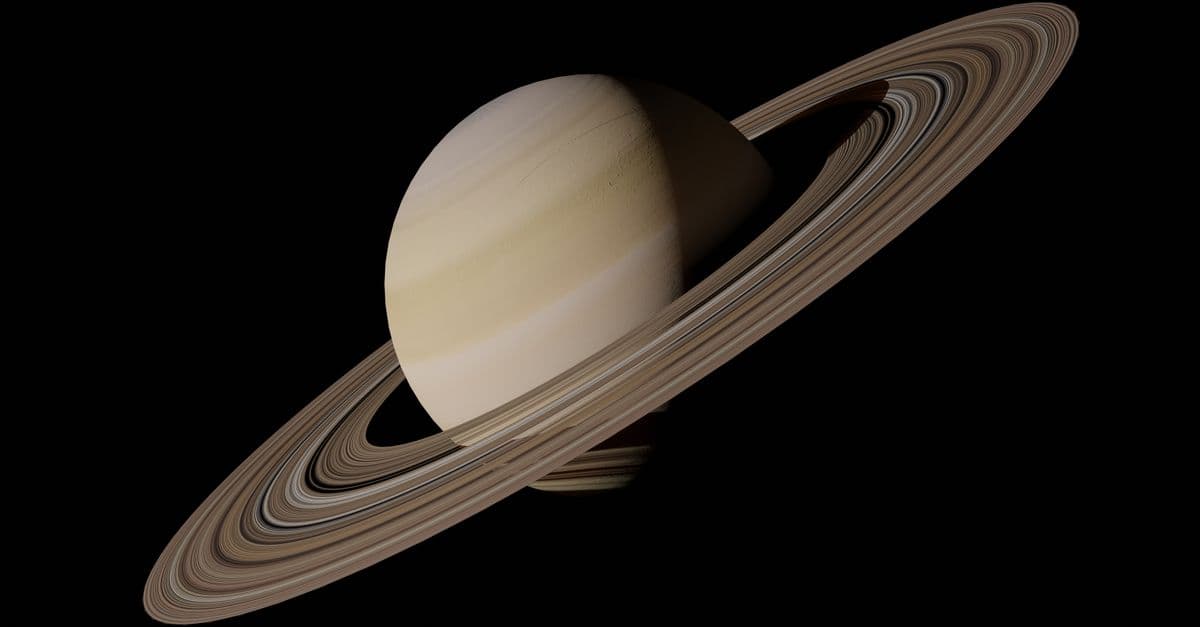
Photo: Zelch Csaba / Pexels
William Herschel (1738–1822) was a German-born British astronomer who spent his first 35 years as a professional musician — oboist, organist, violinist, conductor, and composer of 24 symphonies — before building a telescope in his garden and discovering Uranus in 1781, the first planet found since antiquity. He then discovered infrared radiation, catalogued thousands of nebulae and double stars, built the largest telescope in the world, and worked alongside his sister Caroline, who became the first professional female astronomer. His career in science lasted 40 years and changed how humanity understands the size and structure of the universe.
Early Life: Hanover, the Military Band, and a Flight to England
Friedrich Wilhelm Herschel was born on November 15, 1738, in Hanover, then part of the Holy Roman Empire, now northern Germany. His father, Isaac Herschel, was an oboist in the Hanover Military Band — a court musician in the modest but respectable tradition of German civic music. Isaac was largely self-taught and placed great value on education. He read to his children from books on philosophy and science in their spare hours, and encouraged them in music.
William and his brother Jacob were both trained as oboists and joined the Hanoverian Guards regimental band. Music was to be their vocation as it had been their father's.
In 1755, the Hanoverian Guards were ordered to England — Britain and Hanover shared a king, George II, under the personal union of the British and Hanoverian crowns. William crossed the English Channel as a military musician. After the Battle of Hastenbeck in 1757, during the Seven Years' War, William deserted — or, in the account he gave later in life, was granted permission to leave — and settled permanently in England. He was 19.
Source: William Herschel — Wikipedia; Britannica biography.
The following years were spent as a working musician in northern England: copying music, teaching, performing, moving between positions. He worked as a violinist in Newcastle, an organist in Leeds, and eventually was offered the post of organist at the Octagon Chapel in Bath, one of the most fashionable chapels in one of England's most fashionable cities. Bath in the 1760s and 1770s was a center of English social life, visited by the wealthy for its thermal springs and its entertainment calendar. A successful musician in Bath had access to prominent patronage and a stable income.
Herschel arrived in Bath in 1766. He became organist and director of public concerts at the Octagon Chapel, a position he held for 16 years. He composed prolifically — 24 symphonies, concertos for various instruments, chamber music, and church music — and taught music privately to students from the town's prosperous families. He was successful, respected, and fully occupied.
But he was also reading.
The Transition to Astronomy: Self-Taught at 35
Herschel's turn toward astronomy was gradual and self-initiated. He had read popular accounts of astronomy and natural philosophy throughout his adult life, and in 1773 — when he was 35 — he acquired a copy of James Ferguson's Astronomy Explained Upon Sir Isaac Newton's Principles. The book was aimed at educated non-specialists, and it ignited something.
He borrowed a small refracting telescope from a neighbor, found it insufficient, and decided to build his own. The equipment available for purchase was expensive and of variable quality. Herschel taught himself the craft of grinding and polishing mirrors — the critical skill for reflector telescopes — through a process of systematic experimentation that lasted months. He worked on the mirrors in the intervals between music lessons and concerts, and Caroline later recalled that he sometimes came to meals with his hands still stained from polishing compounds.
Reflecting telescope — a telescope that uses a curved mirror rather than a lens to collect and focus light. Isaac Newton built the first working example in 1668. Reflectors can be made much larger than refractors because mirrors can be supported from behind, whereas lenses must be supported only at their edges.
His first observations, beginning in 1774, were systematic. He kept a detailed journal. He observed Saturn, the Moon, the Orion Nebula, and the positions of stars. By 1779 he had embarked on what he called a "review of the heavens" — a comprehensive survey of the entire sky visible from Bath, looking for objects that deviated from the catalogs of fixed stars. He had noticed that existing star catalogs were inconsistent and incomplete. He intended to correct that.
It was this survey, conducted on the night of March 13, 1781, that produced the discovery that changed his life.
Source: William Herschel — MacTutor History of Mathematics; Smithsonian Libraries blog, "Uranus Discovered by William Herschel in 1781."
Uranus: The First Planet Found Since Antiquity
On the night of March 13, 1781, Herschel was working through the constellation Gemini with a 6.2-inch (157 mm) reflector telescope he had built himself. He noticed an object that appeared as a disk rather than as a point of light. Stars, at any magnification, appear as points. An object showing a disk was either much larger, much closer, or both.
He initially logged it as a comet and reported it to the Astronomer Royal, Nevil Maskelyne, and to the Royal Society. Maskelyne was skeptical — it did not behave like a comet. Other astronomers, including Anders Johan Lexell in St. Petersburg and Charles Messier in Paris, computed the object's orbit from multiple observations. It was not a comet. Its orbit was nearly circular and lay beyond Saturn. It was a planet.
Herschel proposed naming it Georgium Sidus — the Georgian Star — in honor of King George III. The international astronomical community rejected this. French astronomers favored the name Uranus, following the classical tradition of naming planets after Roman deities, with Uranus as the father of Saturn (Cronus) in mythology. The name Uranus eventually prevailed, though Georgium Sidus was used in British publications for decades.
The discovery was seismic. No planet beyond Saturn had ever been identified in recorded history. Every culture's cosmology had fixed the planets at six (Mercury, Venus, Mars, Jupiter, Saturn, and Earth). The solar system was suddenly larger than it had been, by a planet whose orbit extends to 2.87 billion km (1.78 billion miles) from the Sun, roughly twice Saturn's distance.
Source: Uranus Discovered by William Herschel in 1781 — Smithsonian Libraries blog; William Herschel — Wikipedia.
Herschel was elected a Fellow of the Royal Society on December 7, 1781. King George III awarded him an annual stipend of £200 — not a fortune, but enough to end the music career. On May 19, 1782, Herschel resigned his position at the Octagon Chapel, left Bath, and moved to the village of Datchet near Windsor to be near the court. He was 43 years old, and his scientific career had just begun.
Caroline Herschel: The Partner Without Whom It Could Not Have Happened
In 1772, ten years before the Uranus discovery, William had invited his youngest sister Caroline to come from Hanover and live with him in Bath. The invitation was practical: he wanted a housekeeper and a soprano to perform in his concerts. Caroline, who was 22 and had been kept in domestic service by her mother, accepted.
What happened next was not what either of them had planned. Caroline was soon assisting William with his telescope construction and his observations. She took on the grinding and polishing of mirrors. She kept the logs of observations when William's hands were on the telescope. She calculated positions and compared them with catalogs.
Caroline Herschel (1750–1848) — German-born British astronomer, William's younger sister and primary research collaborator. She was the first woman to discover a comet, finding eight in total between 1786 and 1797. In 1787, she received a salary of £50 per year from King George III for her work as William's assistant — making her the first woman in England to hold a government position and the first woman to receive a salary as a scientist.
In 1786, Caroline discovered her first comet independently. She eventually found eight comets and three nebulae. She compiled a comprehensive catalog of star clusters and nebulae that corrected and extended the existing Flamsteed catalog, a work that was published by the Royal Astronomical Society in 1798. After William's death in 1822, she returned to Hanover and continued working, completing a catalog of 2,500 nebulae at the age of 75.
The Herschel collaboration is sometimes framed as William's work with Caroline's assistance, but this undersells what was actually a scientific partnership. Caroline's independent astronomical work was significant enough to earn her the Gold Medal of the Royal Astronomical Society in 1828 and an honorary membership. She lived to 97 and was active intellectually until near the end.
Source: Caroline Herschel — Wikipedia; ESA — "Caroline and William Herschel: Revealing the invisible"; MacTutor History of Mathematics.
Infrared Radiation: A Discovery by Thermometer
In 1800, William Herschel made a discovery of a completely different kind — one that opened an entirely new domain of physics.
He was working on the problem of solar observation. Looking at the Sun through a telescope is dangerous, and Herschel was experimenting with different colored glass filters to reduce the intensity of sunlight. He noticed that different colored filters had different heating effects — red filters seemed to produce more heat than blue or green filters, even when the visible brightness was controlled. This was puzzling.
To investigate systematically, he passed sunlight through a glass prism to produce a spectrum — a rainbow of colors spread across a surface — and placed thermometers at different positions within the spectrum. Red light, at one end, showed higher temperatures than violet light at the other. Then he placed a thermometer just beyond the red end of the spectrum, where there was no visible light at all.
The temperature reading was higher than in the red part of the visible spectrum.
There was radiation beyond the red end of light, invisible to the eye but capable of heating objects. Herschel called this "calorific rays." We now call it infrared radiation.
Source: Herschel's Experiment — Cool Cosmos, Caltech (coolcosmos.ipac.caltech.edu); NASA, "Sir Frederick William Herschel Discovery of Infrared Light."
This was the first demonstration that the electromagnetic spectrum extends beyond visible light — that "light" as perceived by the eye is only a narrow slice of a much wider phenomenon. The discovery prefigured the entire field of non-visible astronomy: radio astronomy, X-ray astronomy, ultraviolet astronomy, and the infrared astronomy for which the Herschel Space Observatory (launched 2009, named in his honor) was specifically designed.
Herschel's conclusion was partly correct. He believed infrared rays were a different kind of radiation from visible light — a separate phenomenon rather than a longer-wavelength form of the same thing. The unification came later, when James Clerk Maxwell developed the electromagnetic theory in the 1860s and showed that all these radiations — radio waves, infrared, visible light, ultraviolet, X-rays — are the same phenomenon at different frequencies.
The 40-Foot Telescope: The Largest in the World
Between 1785 and 1789, Herschel constructed the most ambitious telescope that had ever been built. The "40-foot telescope" — named for the length of its tube — had a primary mirror 48 inches (1.2 meters) in diameter. It was funded by a £4,000 grant from King George III, an enormous sum at the time.
The mirror was cast on October 31, 1785, at a London foundry. The alloy — speculum metal, a mix of copper and tin — cracked on the first pour, an expensive failure. A second mirror was successfully cast and ground. The tube was made of iron, 40 feet (12.2 meters) long, mounted on a massive wooden framework at the grounds of Herschel's house in Slough. The entire structure required multiple workers to operate and a system of ropes and winches to point it at different positions in the sky.
The telescope was the largest in the world for 50 years. As a working instrument it was, by most accounts, awkward — its size made precise pointing difficult, the huge mirror collected dew and tarnished rapidly, and the arrangement required observers to stand on a platform high above the ground in the dark. Herschel used it for major observations but did much of his daily work with smaller, more manageable instruments.
Its most important discovery came quickly: on its first full night of operation in 1789, Herschel discovered two new moons of Saturn — Mimas and Enceladus — adding to the two he had already found in earlier observations (Titania and Oberon, moons of Uranus, in 1787).
Source: 40-foot telescope — Wikipedia; Science History Institute, "A Giant of Astronomy."
The 40-foot telescope was demolished in 1839, after Herschel's death. His son John, who was himself a major astronomer, photographed the structure before its dismantling — the photograph is one of the earliest scientific photographs ever taken.
Cataloguing the Deep Sky: Nebulae and Double Stars
Herschel's most methodical contribution to astronomy was his systematic cataloguing of nebulae and double stars. Starting in the late 1770s and continuing for decades, he surveyed the sky repeatedly and documented every non-stellar object he could find.
His catalog of nebulae and star clusters eventually totaled 2,514 objects. This work was the foundation of what later became the New General Catalogue (NGC), the standard reference for non-stellar deep-sky objects that is still in use. When astronomers today refer to NGC 224 (the Andromeda Galaxy) or NGC 5194 (the Whirlpool Galaxy), they are working from a catalog whose roots lie in Herschel's surveys.
His observations of double stars — pairs of stars that appear close together — were intended initially to measure stellar parallax (the tiny shift in apparent position caused by the Earth's orbital movement, used to measure stellar distances). He expected double stars to be chance alignments at different distances. Instead, he found that many of them were genuine orbital pairs — what he called "binary stars" — physically bound by gravity and orbiting a common center. This was the first observational evidence that Newton's law of gravitation operated at interstellar distances.
Binary star — two stars physically bound by mutual gravitational attraction, orbiting a common center of mass. Binary systems are now known to be extremely common — roughly half of all Sun-like stars are in binary or multiple-star systems.
Source: William Herschel biography — MacTutor History of Mathematics; Britannica.
He also attempted to map the shape of the Milky Way. By counting stars in different directions — a technique he called "star gauging" — he produced in 1785 the first diagram of the Milky Way as a flat, disk-like structure with the solar system near its center. The method was limited because he could not see through the dense dust clouds that obscure the galactic center, but the basic framework — the Milky Way as a bounded disk of stars, not an infinite distributed field — was correct in its essentials.
Lesser-Known Work: Music, the Solar System's Motion, and the Nature of the Sun
Several aspects of Herschel's work are less prominent than Uranus and infrared but represent significant findings.
In 1783, he determined that the solar system itself is moving through space — that the Sun, and all the planets with it, are traveling in a specific direction relative to the background stars. He identified the point toward which the Sun is moving, called the solar apex, and placed it in the constellation Hercules. His estimate was approximately correct. This was the first determination of the Sun's peculiar motion through the galaxy, derived from a careful statistical analysis of the proper motions of the stars he had catalogued.
He made extensive observations of the Sun's surface and proposed that sunspots were openings in the bright outer layer (the photosphere) through which a cooler, darker interior could be seen. He went further and argued that the Sun's interior might be habitable — a cooler solid body shielded from the extreme outer heat by the luminous atmosphere. This was wrong, as Herschel himself acknowledged might be the case, but it reflects the extent to which he engaged with the Sun as a physical object rather than simply a source of light for illuminating other things.
He also discovered that the planet Saturn's rings lie in a plane inclined to its equator, made careful measurements of the polar flattening of Saturn and Uranus (both of which, like Earth and Jupiter, are oblate spheroids), and confirmed that the rotation period of Mars was approximately 24 hours.
Source: William Herschel — Wikipedia; New World Encyclopedia — William Herschel biography.
Personal Life: Mary Baldwin, John Herschel, and the House at Slough
Herschel married Mary Baldwin Pitt, a wealthy widow from Bath, on May 8, 1788. He was 49; she was a widow and financially independent. The marriage appears to have been a genuine partnership — Mary managed the household and, significantly, provided financial stability that allowed Herschel to build and maintain his increasingly expensive telescopes. Their son, John Frederick William Herschel, was born in 1792.
John Herschel became one of the most important scientists of the 19th century in his own right: a mathematician, chemist, pioneer of photography, and astronomer who extended his father's deep-sky catalogs to the southern hemisphere (working from the Cape of Good Hope between 1834 and 1838). He also popularized science through widely read books and coined the terms "positive" and "negative" in photography. The Herschel family represents three generations of major science.
William Herschel was made a Knight of the Royal Hanoverian Guelphic Order in 1816, at the age of 77 — one of the few formal honors he received in his lifetime. He died on August 25, 1822, at his home in Slough, at the age of 83. He had been observing from his garden telescope almost until the end.
Little-Known Habits and Quirks
Several specific characteristics of Herschel as a working scientist are documented in Caroline's journals and accounts.
He was extraordinarily physically committed to observation work. Telescope mirrors in his era required constant maintenance — they tarnished and had to be repolished. Herschel would polish mirrors for hours, continuing until Caroline physically removed the equipment because he would not stop. Observation nights sometimes lasted until dawn, after which he would immediately begin computing observations or writing up results.
He ate dinner while Caroline read scientific papers to him. This is documented in Caroline's memoirs: William did not consider dinner a natural break in work. She read to him and he ate; the work continued.
He worked in the cold. Slough in winter is genuinely uncomfortable, and observing from an open-air platform at the end of a 40-foot tube in a frost was physically demanding. There are accounts of observations being made in temperatures well below freezing. Caroline's job on observation nights included keeping notes, calling out time signals, and occasionally climbing the platform to make adjustments.
He was also persistent about music into his scientific career. He continued to compose and perform occasionally after his appointment as Court Astronomer — the transition from musician to scientist was professional and financial but not a clean break in his personal practice.
Source: William Herschel biography — MacTutor History of Mathematics; Musicians of the Old Post Road — "William Herschel: Composer and Astronomer."
Legacy: The Universe Beyond the Solar System
Herschel's legacy operates at multiple levels. There is the specific discovery — Uranus, the third-largest planet in the solar system, with a diameter of 51,118 km (31,763 miles) and a distinctive feature: its axis of rotation is tilted at 97.8 degrees relative to its orbit, meaning it rotates essentially on its side. Two moons of Uranus that he discovered, Titania and Oberon, and two of Saturn that he found, Mimas and Enceladus, are now major targets of planetary science. Enceladus, discovered by Herschel in 1789, turned out to have a subsurface ocean and active geysers — two features unknown for centuries after his discovery.
The infrared discovery opened a physical domain that now encompasses thermal imaging, night-vision technology, remote sensing, and the entire field of infrared astronomy. The Herschel Space Observatory, operated by the European Space Agency from 2009 to 2013, was the largest infrared space telescope ever launched and was explicitly named in his honor.
| Discovery or Contribution | Year | Long-Term Significance |
|---|---|---|
| Uranus discovered | 1781 | First planet found since antiquity; doubled known solar system size |
| Two moons of Uranus (Titania, Oberon) | 1787 | First known Uranian moons |
| Two moons of Saturn (Mimas, Enceladus) | 1789 | Enceladus later found to have subsurface ocean |
| Infrared radiation | 1800 | First non-visible electromagnetic radiation detected |
| Solar motion through space | 1783 | First measurement of the Sun's peculiar velocity |
| Milky Way as a disk | 1785 | First structural model of the galaxy |
| Binary stars confirmed | 1802 | First evidence of gravity operating at interstellar distances |
| 2,514 deep-sky objects catalogued | 1786–1802 | Foundation of modern NGC catalog |
His work on double stars established that Newton's gravitation operates at stellar distances — a non-trivial demonstration at the time, when the Sun's gravitational influence on far stars was not assumed. His catalogs of nebulae built the foundation for all subsequent deep-sky observation. His model of the Milky Way was the first observational estimate of galactic structure.
Carl Sagan described the expansion of the known universe in the 20th century as one of the great intellectual revolutions of human history. That expansion began in the 18th century, on a winter night in Bath, when a professional musician built a better telescope than anyone had built before and started looking at the sky with the systematic patience of someone who had been trained since childhood to hear what everyone else was missing.
The Takeaway
Herschel's career is a reminder that late starts are possible and that the skills from one discipline can transfer unexpectedly to another. The ear training, rhythmic discipline, and systematic practice that made him a professional musician are not obviously connected to telescope-building and sky-surveying, but the traits they cultivate — attention to detail, persistence, systematic method, tolerance for cold and discomfort — served the astronomy. He was 43 when he stopped being a musician. By 55, he had discovered a planet, found infrared light, built the world's largest telescope, and catalogued thousands of previously unrecorded astronomical objects. He had 27 more years of work after that.
Read next:
- Galileo Galilei: The Astronomer Who Faced the Inquisition
- Johannes Kepler: Laws of Planetary Motion
- Carl Sagan: The Scientist Who Spoke to Everyone
FAQs
Q: What did William Herschel discover?
A: Herschel's major discoveries include: Uranus (1781), the first planet identified since antiquity; infrared radiation (1800), the first electromagnetic radiation detected beyond visible light; two moons of Uranus (Titania and Oberon, 1787); two moons of Saturn (Mimas and Enceladus, 1789); and that the solar system is moving through space (1783). He also catalogued 2,514 nebulae and star clusters and confirmed that many double stars are physically bound binary systems.
Q: Was William Herschel really a professional musician before becoming an astronomer?
A: Yes. Herschel worked as a professional musician from his teens until age 43, when the Uranus discovery brought royal patronage that allowed him to give up music. He was an oboist, violinist, organist, and conductor, and composed 24 symphonies along with concertos and chamber music. He served as organist and director of public concerts at the Octagon Chapel in Bath for 16 years.
Q: What was Caroline Herschel's role in William's discoveries?
A: Caroline was a research partner, not merely an assistant. She ground and polished telescope mirrors, kept observational logs during night sessions, calculated positions, and catalogued objects. She independently discovered eight comets and three nebulae, and compiled a comprehensive catalog of nebulae published by the Royal Astronomical Society in 1798. In 1787, she became the first woman in England to hold a government position when King George III gave her a salary of £50 per year as William's assistant.
Q: How did Herschel discover infrared radiation?
A: In 1800, he placed thermometers at different positions within a solar spectrum produced by a glass prism. He found that temperatures increased toward the red end of the visible spectrum, and — critically — that a thermometer placed just beyond the red end, in a region with no visible light, showed the highest temperature of all. This invisible heating radiation became known as infrared light.
Q: What was the 40-foot telescope and why was it significant?
A: The 40-foot telescope was a reflecting telescope Herschel built between 1785 and 1789 at his home in Slough, funded by £4,000 from King George III. With a 48-inch (1.2 m) primary mirror and a 40-foot (12.2 m) tube, it was the largest telescope in the world for 50 years. On its first night of full operation in 1789, it was used to discover Saturn's moon Enceladus — now known to have a subsurface ocean.
Q: Did Herschel discover all the moons of Uranus?
A: Herschel discovered the first two known moons of Uranus — Titania and Oberon — in 1787. Uranus has 28 known moons in total; the others were discovered in the 19th and 20th centuries, with two more found by Voyager 2 during its 1986 flyby. All of Uranus's moons are named after characters from Shakespeare and Alexander Pope, a tradition started after Herschel's original two.
Follow new articles
Add SciHub101 to your feed reader to see new science and technology stories.
About the Author
SciHub101 is an independent science and technology publication founded and edited by Buğra Sözeri, a software engineer and app developer based in Türkiye. AI tools assist with drafting and research. Source documentation in the existing archive is uneven, and articles are being reviewed and corrected. The Editorial Team byline identifies editorial responsibility; it does not certify specialist or independent human review. Where we compare products, anything built by our own team is labelled as such — see the editorial guidelines and About page for how corrections and disclosures work.
Related Articles
Wolfgang Pauli: The Exclusion Principle and the Neutrino
Wolfgang Pauli formulated the exclusion principle in 1925 and predicted the neutrino in 1930. Explore his physics, sharp wit, and legendary Pauli effect.
Vladimir Vernadsky: The Scientist Who Invented the Biosphere
Vladimir Vernadsky founded biogeochemistry and defined the biosphere and noosphere. This Russian polymath shaped environmental science a century before it was mainstream.
The 1919 Eclipse Expedition: The Experiment That Made Einstein Famous
On May 29, 1919, two expeditions photographed a solar eclipse to test Einstein's general relativity. The results made Einstein a global celebrity — and sparked a controversy that took 90 years to resolve.

Galileo: The Night He Pointed a Telescope at Jupiter
In January 1610, Galileo saw four stars near Jupiter that moved. Within a week he understood the solar system would never be the same.
Hubble Space Telescope: The Discoveries That Changed Astronomy
Hubble launched with a flawed mirror and came back from the brink to become humanity's greatest eye on the cosmos.
Chandra X-Ray Observatory: Revealing the High-Energy Universe
Since 1999, Chandra has mapped X-rays from black holes, neutron stars, and galaxy clusters, transforming understanding of the universe's most violent phenomena.