How Floating Solar Panels Work
Photo: Jędrzej Koralewski / Pexels
Floating solar panels, often called "floatovoltaics," are ordinary photovoltaic modules mounted on buoyant platforms and anchored to the bottom of a reservoir, pond, or former mining pit instead of being bolted to the ground. China's Dezhou Dingzhuang project in Shandong Province, a 320-megawatt array built across two phases on a lake formed by decades of coal mining subsidence, is the clearest large-scale proof that the approach works at utility scale (HPI, project data via power-technology.com). The engineering swaps dry land for water, and in doing so it solves a land-use conflict, trims a reservoir's evaporation losses, and runs the panels a few degrees cooler than their land-based equivalents. None of that is free: floating installations cost more per watt than ground-mounted solar, and the technology's operating history is still comparatively short. This piece walks through the mechanics, the physics behind the efficiency gain, the real projects proving the concept, and the tradeoffs that keep floating solar a niche rather than a default.
The land-use problem floating solar exists to solve
Utility-scale solar farms need large, flat, unobstructed tracts of land, and that requirement puts them in direct competition with farmland, forests, and increasingly expensive real estate near population centers. A single gigawatt of ground-mounted solar can require somewhere in the range of 8 to 12 square kilometers depending on panel density and layout, and in land-constrained countries that space is rarely idle or cheap. Developers routinely face permitting delays, community opposition, and higher land-acquisition costs specifically because solar arrays and food production want the same acreage.
Reservoirs, hydropower lakes, irrigation ponds, and old mining pits filled with water represent a category of surface area that almost nobody else wants. They cannot be farmed, they are usually unsuitable for construction, and in many cases they already sit inside land already designated for industrial or utility use, which simplifies permitting considerably. That combination, water that has no competing claim and infrastructure that is frequently already grid-connected nearby, is what made floating solar attractive the moment a workable mounting system existed.
The idea is not entirely new. Small-scale floating PV pilots date to the early 2010s in Japan and the United Kingdom, but the technology only reached true utility scale once manufacturers standardized buoyant mounting hardware and insurers grew comfortable underwriting multi-decade water exposure. The World Bank and the Solar Energy Research Institute of Singapore (SERIS) published the first comprehensive global market assessment of the sector in 2018, and it remains one of the most cited references for the industry's scale (World Bank/SERIS, "Where Sun Meets Water," 2018).
Floatovoltaics — a colloquial industry term for photovoltaic systems mounted on water rather than land — is functionally identical to conventional solar at the panel level. The difference is entirely in the mounting and anchoring hardware underneath.
The engineering: buoyancy, anchoring, and keeping electricity away from water
The core technical challenge in floating solar is not generating electricity, it is keeping conventional solar hardware safe, level, and stationary on a surface that never stops moving. Three separate engineering systems handle this: the flotation structure, the anchoring system, and the marine-rated electrical protection.
Flotation is handled by high-density polyethylene (HDPE) pontoons, which are hollow, buoyant, UV-resistant plastic modules that link together into a floating raft. HDPE was chosen across the industry because it resists degradation from constant sun and water exposure far better than cheaper plastics, and it can be molded into interlocking shapes that form a rigid, walkable platform strong enough to support installation crews and maintenance foot traffic. The panels themselves sit atop this raft, tilted at a shallow angle, just as they would on a rooftop rack.
Anchoring keeps the entire raft from drifting with wind and current while still allowing it to rise and fall with the water level. Most utility-scale installations use a system of cables or chains running from the raft to anchor points on the shore, the lake bed, or both, engineered with enough slack to accommodate seasonal water-level swings without the structure running aground in a drought or straining loose in a flood. Anchoring design has to account for wave action too. Choppier bodies of water, or reservoirs exposed to strong prevailing winds, need heavier-duty tethering than sheltered ponds.
Electrical protection is the part with zero tolerance for error. Every junction box, connector, and inverter housing on a floating array is rated for continuous exposure to a humid, occasionally splashed environment, using sealed IP67- or IP68-rated enclosures, corrosion-resistant metals, and cabling routed to stay clear of the waterline even as the raft shifts. Inverters, the components that convert the panels' direct current output into grid-compatible alternating current, are sometimes mounted on the floating platform itself in smaller installations and sometimes kept onshore in larger ones, depending on cable-run economics and maintenance access.
How do floating solar panels stay anchored without drifting away?
Cables or chains tether the buoyant HDPE platform to anchor points on the shoreline, the lake bed, or both, with enough slack built in to let the array rise and fall with seasonal water levels. Anchor tension is engineered against local wind and wave conditions, so a sheltered irrigation pond needs lighter tethering than an open reservoir exposed to strong prevailing winds.
Why the water underneath makes the panels more efficient
Solar cells lose efficiency as their temperature rises. The physics is straightforward: higher temperature increases electrical resistance inside the photovoltaic material, which reduces the voltage the cell can output for a given amount of sunlight. A typical crystalline-silicon panel loses roughly 0.3 to 0.5 percent of its rated output for every degree Celsius above 25°C (77°F), which is why panels tested under laboratory "standard test conditions" rarely hit their nameplate output on a genuinely hot, sunny day (8MSolar, "Solar Panel Efficiency vs. Temperature"). A rooftop or a field of dark panels absorbing direct sun for eight or more hours can climb well above ambient air temperature, sometimes by 20°C (36°F) or more, and that heat buildup directly eats into output.
Water changes this dynamic the same way a lake cools the air around it on a hot afternoon: it has a much higher heat capacity than land or rooftop material, so it absorbs and disperses heat far more slowly, keeping the air layer immediately above its surface cooler than the air above dry ground or asphalt. Floating panels sit close enough to that cooler, more humid air layer to shed heat more effectively than a rooftop array baking over shingles or a ground-mount array over dry soil. Some installations add passive or active water-cooling contact points on the underside of the panel frame for an even stronger effect, though most utility-scale floating projects rely on ambient cooling alone.
The measured gains vary considerably by study, climate, and installation design, but they consistently land in a real, positive range. Field research has reported efficiency increases anywhere from roughly 5 to 15 percent as a general range across multiple site studies, with some specific installations reporting considerably higher single-digit-to-20-percent gains under favorable conditions, such as a Malaysian study that found a 16.7 percent electrical efficiency increase over conventional ground PV and an Indonesian installation that recorded a 20.6 percent gain (Cuce et al., cited via industry technical reviews; ScienceDirect thermal behavior comparison, 2025). The spread exists because cooling benefit depends heavily on local humidity, wind exposure over the water, panel height above the surface, and how hot the comparison ground-mount baseline runs in the first place.
Does the cooling effect apply everywhere floating solar is installed?
No. The magnitude of the cooling benefit depends on climate, wind exposure, and how far above the water the panels sit. Hot, dry inland climates with large land-versus-water temperature differentials tend to show the biggest gains, while humid coastal or already-temperate sites show a smaller but still measurable edge over comparable ground-mounted arrays.
Evaporation reduction: the second benefit that matters as much as electricity
For many governments and utilities, the electricity output is only half the appeal. The other half is water. Reservoirs used for drinking water, irrigation, or hydropower generation lose a portion of their stored volume every year to evaporation, and in hot, dry, or drought-stressed regions that loss can be substantial over a full season.
Floating solar panels physically shade a portion of the water surface and block wind from moving directly across it, both of which slow evaporation. The magnitude of the effect has now been measured in a range of peer-reviewed and applied studies across different climates:
| Study location | Reported evaporation reduction | Source |
|---|---|---|
| Passaúna Reservoir, Brazil | 60.2% (130 kW installation) | MDPI Energies, 2022 |
| Aswan High Dam Reservoir, Egypt | 49.7% at 90% surface coverage | Journal of Hydrology / Taylor & Francis, 2024 |
| Semi-arid pond study | 59% (0.76 mm/day vs. 1.84 mm/day control) | International Journal of Low-Carbon Technologies |
| Jordan reservoir case study | 42% (approximately 12,700 m³ saved annually) | ScienceDirect, 2022 |
Evaporation reductions from floating solar vary widely by climate and coverage area, but every peer-reviewed field study of the technology has found a meaningful positive effect.
The mechanism is intuitive once you see it laid out: less direct sun hitting the water surface means less energy available to convert liquid water into vapor, and a floating raft breaks up the wind-driven turbulence at the surface that would otherwise accelerate evaporation. The tradeoff is coverage. Reductions in the 50 to 60 percent range generally correspond to studies with high surface coverage by the array; reservoirs where floating solar covers only a small fraction of the total surface see proportionally smaller water savings, even if the per-square-meter effect underneath the panels is just as strong.
Does covering a reservoir with solar panels actually reduce evaporation?
Yes. Multiple independent field studies across Brazil, Egypt, Jordan, and other sites have measured evaporation reductions ranging from roughly 40 to 60 percent under the shaded area, driven by reduced direct solar heating and reduced wind turbulence at the water surface. The exact percentage depends heavily on local climate and how much of the reservoir the array covers.
Real-world projects: China, and where else the model is scaling
Floating solar has grown fastest in exactly the countries theory would predict: places with limited available land, high population density, and existing reservoir infrastructure. China leads by a wide margin, driven partly by projects like Dezhou Dingzhuang that convert coal-mining subsidence lakes, land ruined for any other use, into functioning power stations. The Anhui province has hosted similarly framed projects on former coal-mining sinkholes, part of a broader Chinese pattern of pairing floating solar with land already degraded by fossil-fuel extraction, turning a liability into a renewable-energy asset (project coverage via pv-magazine.com and electrek.co).
The Dezhou Dingzhuang installation itself is instructive because it is not a standalone solar project. It sits near a 2.65-gigawatt coal-fired power station operated by Huaneng Power International (HPI), and it is integrated with a 100-megawatt wind farm and 8 megawatt-hours of battery storage sharing the same grid connection, generating an estimated 550 million kilowatt-hours of electricity per year across its combined 320 megawatts of floating solar capacity (HPI project data, reported via Offshore Energy and pv-magazine). Pairing renewables at a site with existing fossil-fuel grid infrastructure is a recurring pattern in Chinese energy planning: it reuses transmission capacity that would otherwise sit underused as coal plants are phased down.
Beyond China, Japan and South Korea have both built substantial floating solar capacity on reservoirs and dam lakes, driven by the same acute land scarcity that shapes much of their infrastructure planning. India has pursued floating solar aggressively as part of its renewable buildout, often pairing it with existing hydropower reservoirs so both technologies can share transmission infrastructure, an approach sometimes called a hybrid solar-hydro system. In the United States, the National Renewable Energy Laboratory (NREL) has estimated that floating solar on federally controlled reservoirs alone could generate between 861 and 1,042 gigawatts of direct-current capacity, a figure that would represent close to half the solar capacity the country would need to fully decarbonize its electricity grid by 2050 (NREL analysis, reported via Mercom India). That estimate remains theoretical potential rather than built capacity, since the US floating solar market is still comparatively small.
Hydro-solar hybrid installations deserve special mention as a distinct use case. When floating solar sits on a reservoir that already feeds a hydroelectric dam, the two technologies can complement each other operationally: solar generates during sunny daytime hours, and the dam's hydro turbines can ramp output up or down to smooth out the solar array's variability, since water can be held back or released on relatively short notice in a way that most other generation sources cannot match.
What limits floating solar as a broader solution
Cost is the most immediate constraint. Floating installations require pontoons, anchoring hardware, and marine-rated electrical components that ground-mounted systems simply do not need, and all of that adds capital expense per installed watt. Underwater cable runs and specialized maintenance access, since technicians often need boats or walkways rather than a truck and a ladder, add further ongoing operating costs that ground-mounted solar avoids entirely.
Operating history is the second constraint, and it is a genuine unknown rather than a solved problem. Utility-scale ground-mounted solar has multiple decades of real-world data behind it, covering everything from panel degradation rates to connector failure modes to anchor and racking corrosion over 25-plus-year service lives. Floating solar at true utility scale is barely more than a decade old as an industry, which means questions about how HDPE pontoons, submerged anchoring hardware, and marine electrical seals perform after 20 or 30 years of continuous water exposure remain genuinely open, not because engineers expect failure, but because nobody has run that experiment for that long yet.
Ecological impact is the third, and it is the area with the most active ongoing research. Large floating arrays reduce the amount of sunlight reaching the water column beneath them, which can lower photosynthesis rates for algae and aquatic plants, alter dissolved oxygen levels, and shift local water temperature stratification. A 2025 study covered by Phys.org found that these environmental effects vary significantly by location and installation design, meaning floating solar is not uniformly benign or uniformly harmful to the water bodies it sits on, it depends heavily on the specific reservoir, its existing ecosystem, and how much surface area the array covers (Phys.org, 2025). Regulators in several countries now require ecological impact assessments before permitting large floating installations, precisely because the science is still developing rather than settled.
Wildlife and recreational use of a reservoir can also be affected, since a large floating array occupies surface area that might otherwise support boating, fishing, or bird habitat, which is one reason siting decisions increasingly involve environmental review alongside straightforward engineering feasibility.
What people get wrong about floating solar
A common misconception is that floating solar panels sit directly in the water, submerged or half-submerged like a dock. In reality, the panels themselves stay entirely dry, mounted at a tilt angle on top of a buoyant platform, with only the pontoons and anchoring hardware ever making contact with water. Confusing "floating on water" with "partially submerged in water" leads people to overestimate corrosion risk to the panels themselves, when the actual engineering challenge is protecting the electrical components from splash and humidity, not full immersion.
Another frequent assumption is that floating solar is simply a more expensive version of ground-mounted solar with no functional advantage beyond saving land. That undersells the water-cooling efficiency gain, which field studies consistently place in a real, positive range, and it ignores the evaporation-reduction benefit entirely, which delivers value to reservoir operators independent of the electricity generated. For a water utility managing a drought-stressed reservoir, the water savings alone can justify part of the project's cost, separate from the power purchase agreement covering the electricity.
A third misconception treats "floating solar" as a single standardized product, when in practice the pontoon materials, anchoring approach, and electrical protection standards vary meaningfully between manufacturers and installation sites. A shallow, sheltered irrigation pond and a large, wind-exposed reservoir require materially different engineering, even though both get described with the same "floating solar" label in casual conversation.
The takeaway
Floating solar works by mounting conventional photovoltaic panels on anchored, buoyant HDPE platforms instead of land, and the underlying physics rewards that choice twice over: water's cooling effect measurably improves panel efficiency compared to hotter ground-mounted or rooftop installations, and the shading effect measurably reduces evaporation from the reservoir underneath, a genuine secondary benefit for drought-prone regions managing scarce water alongside energy needs. Real installations like China's Dezhou Dingzhuang project, built on a former coal-mining subsidence lake, prove the model works at true utility scale rather than as a boutique pilot. The tradeoffs are real too: higher installation costs than ground-mounted solar, a shorter operating track record for judging multi-decade durability, and ecological effects on covered water bodies that researchers are still actively characterizing rather than treating as settled. That combination of genuine advantage and genuine unknowns is exactly why floating solar has grown fastest in specific, land-constrained countries with existing reservoir infrastructure, rather than becoming the default choice for solar development everywhere.
Read next:
FAQ
Q: What keeps floating solar panels from sinking or drifting away?
Buoyant high-density polyethylene (HDPE) pontoons support the panels above the waterline, while anchoring systems, typically cables or chains tethered to the shore or lake bed with slack for seasonal water-level changes, keep the array from drifting with wind and current.
Q: Do floating solar panels actually produce more electricity than land-based panels?
Field studies have found floating installations can produce roughly 5 to 15 percent more electricity than comparable land-based systems on average, with some specific site studies reporting gains as high as 16 to 20 percent, largely due to the cooling effect of the water beneath the panels reducing electrical resistance losses. The exact gain depends heavily on climate and site conditions.
Q: Does covering a reservoir with solar panels really reduce water evaporation?
Yes. Peer-reviewed field studies from Brazil, Egypt, Jordan, and other sites have documented evaporation reductions ranging from roughly 40 to 60 percent in the shaded portion of the reservoir, a valuable side benefit in drought-prone regions that depend on the same water for drinking or irrigation.
Q: Why isn't floating solar used everywhere instead of ground-mounted solar?
Floating systems generally cost more per installed watt due to pontoons, specialized anchoring, and marine-rated electrical components, and they have a much shorter multi-decade operating history than land-based solar. They make the most economic and practical sense specifically where land is scarce or reservoirs already exist and are already grid-connected.
Q: Which countries use floating solar the most?
China leads by a wide margin, with projects like the 320-megawatt Dezhou Dingzhuang installation on a former coal-mining subsidence lake in Shandong Province. Japan, South Korea, and India also host some of the world's largest floating solar installations, driven by limited available land and existing reservoir or hydropower infrastructure suitable for floating arrays.
Q: Can floating solar be combined with hydropower?
Yes, this is called a hybrid solar-hydro system. Floating solar panels on a reservoir that already feeds a hydroelectric dam can share the same grid connection, and the dam's turbines can ramp output up or down relatively quickly to smooth out the variability of solar generation across the day.
Follow new articles
Add SciHub101 to your feed reader to see new science and technology stories.
About the Author
SciHub101 is an independent science and technology publication founded and edited by Buğra Sözeri, a software engineer and app developer based in Türkiye. AI tools assist with drafting and research. Source documentation in the existing archive is uneven, and articles are being reviewed and corrected. The Editorial Team byline identifies editorial responsibility; it does not certify specialist or independent human review. Where we compare products, anything built by our own team is labelled as such — see the editorial guidelines and About page for how corrections and disclosures work.
Related Articles
Complete Sustainability Guide 2026 — Climate, Energy, and Conservation
The complete guide to sustainability in 2026: renewable energy, climate science, circular economy, conservation strategies, and actionable steps to reduce your impact.

How to Start a Sustainable Garden at Home: Composting, Native Plants, Soil Health, and No-Dig Methods
Starting a sustainable home garden requires understanding five core practices: composting organic waste (reducing landfill methane emissions and creating nutrient-rich soil amendment), selecting native plants adapted to local climate and water (reducing irrigation by 50–70% compared to exotic plants), building healthy soil through no-dig and mulching methods (improving water retention, reducing chemical inputs), water-wise gardening via mulch and irrigation optimization (cutting water use by 30–50%), and avoiding synthetic pesticides and fertilizers. A typical backyard garden (400–600 sq ft) requires 3–6 months to establish, costs $200–$500 for initial soil amendments and plants, and produces 50–150 lbs of vegetables or fruit annually depending on crop selection, reducing household food costs by $300–$600/year and offsetting 200–400 lbs of CO2 emissions from avoided food transport.
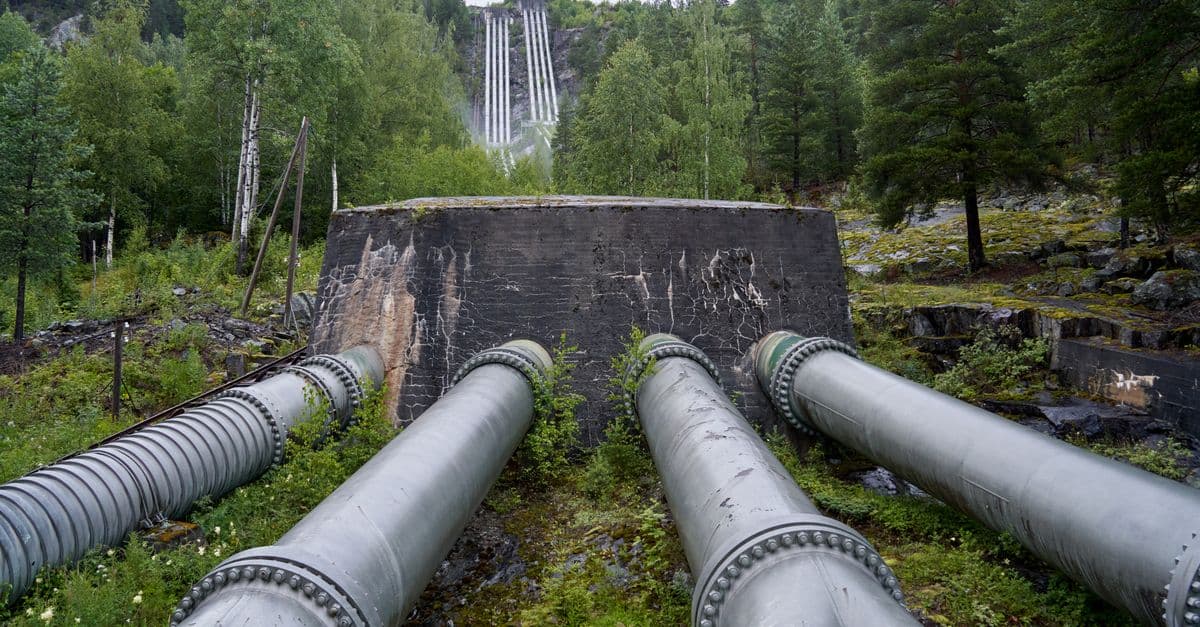
Countries with the Most Hydropower (Ranked by Installed Capacity)
China leads the world in hydropower with 435.95 GW of installed capacity — more than three times that of second-place Brazil at 110 GW. Hydropower is the world's largest source of renewable electricity, accounting for roughly 40 percent of global renewable generation. This ranking covers the top 15 countries by hydropower installed capacity using IHA and IRENA 2024 data, with methodology, historical context, and caveats about what capacity figures do and do not tell you.
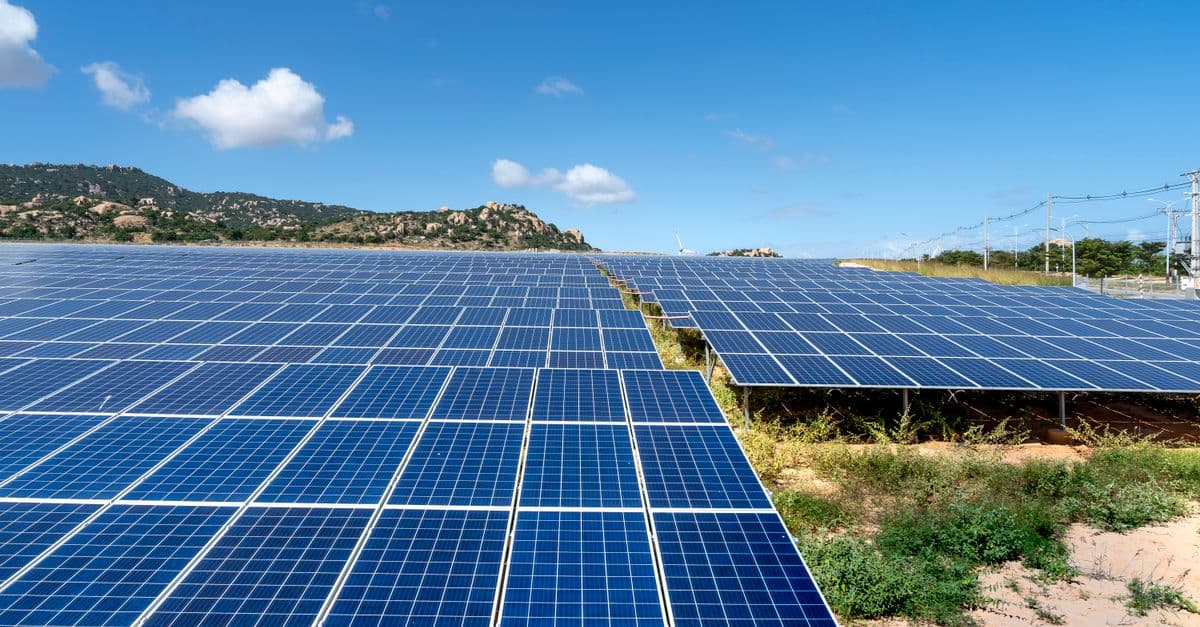
Countries That Produce the Most Solar Power (Ranked)
China installed 278 GW of new solar capacity in 2024 alone — more than the entire installed base of the United States. With 888 GW of total solar PV capacity, China now hosts nearly half of all solar power on Earth. This article ranks the top solar nations by installed capacity and explains how the global solar revolution became so geographically concentrated.