Skip to content
ISSUE 11.07.26/24 CATEGORIES

physiology

32 articles tagged with #physiology

Artistic grayscale photo highlighting a shirtless male torso, emphasizing light and shadow.
Human Body

Why Do Our Ears Pop? The Science of Pressure Equalization

Every airplane climb or diving descent reminds us: the human ear is exquisitely sensitive to pressure change. The familiar pop occurs because the middle ear—a small air-filled chamber behind the eardrum—must equalize its pressure to match the ambient environment. When you yawn or swallow, the Eustachian tube opens to let air flow in or out, restoring balance. Altitude, diving, colds, and even weather shifts can create pressure mismatches that strain the tympanic membrane; when equalization finally succeeds, you feel the sudden relief of the pop.

Editorial Team·June 26, 2026·18 min
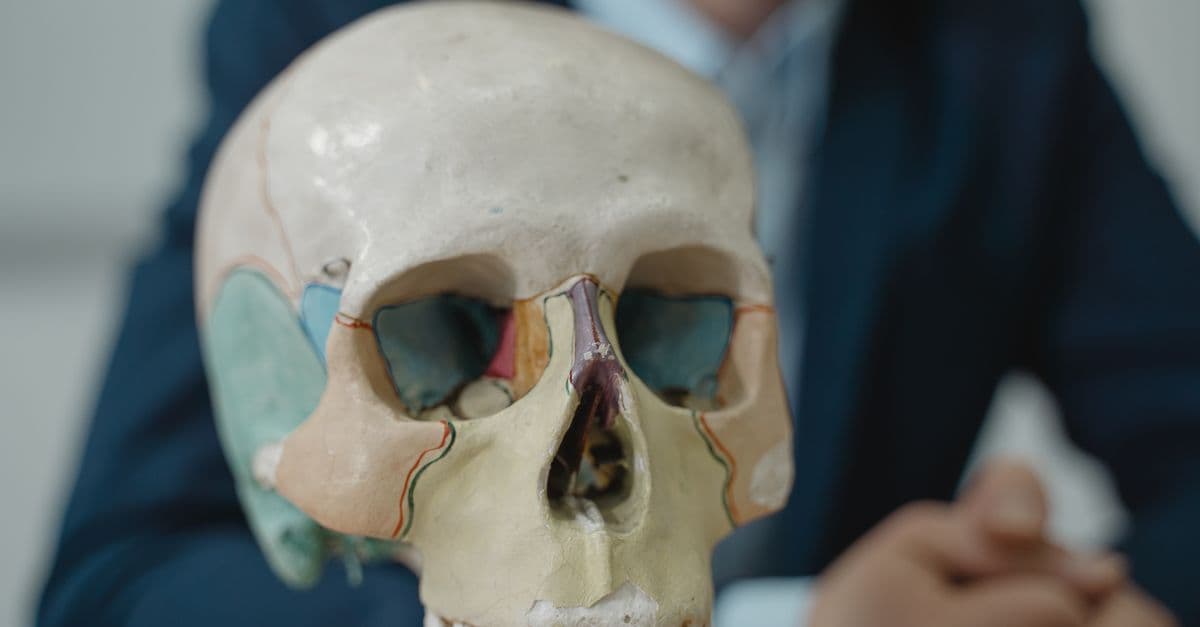
Close-up of a colorful anatomical skull model in a classroom setting, ideal for educational purposes.
Human Body

Why Do Our Limbs Fall Asleep? The Science of Paresthesia

Sustained pressure squeezes a nerve and its blood supply, so the signals that carry sensation stop. When the pressure lifts, the recovering fibers fire on their own, and the brain reads that noise as pins and needles. The episode is common and usually harmless, but the same mechanisms underlie nerve compression syndromes, and the pattern of symptoms helps separate the two.

Editorial Team·June 26, 2026·20 min
A close-up shot of a blue eye partially hidden behind green leaves.
Human Body

Why Do We Get Motion Sickness? The Science of Sensory Conflict

Motion sickness strikes when your inner-ear vestibular system, eyes, and body position sensors send the brain conflicting motion signals. The leading explanation is the sensory-conflict theory, supported by the evolutionary toxin-detector hypothesis: your brain interprets the contradiction as a sign of poisoning and triggers nausea, sweating, and dizziness as a purge reflex. Reading in a moving car, standing below deck on a boat in rough seas, or piloting a flight simulator worsens the conflict. This response is ancient, rooted in survival.

Editorial Team·June 26, 2026·19 min
Detailed image of a human hand showing prominent veins against a dark background.
Human Body

Why Do We Shiver? The Science of Thermoregulation

Shivering is an involuntary muscle contraction that generates heat when your body temperature drops below its set point. Your hypothalamus acts as a thermostat, detecting temperature changes through cold receptors and triggering both shivering and non-shivering heat production. Brown fat provides extra warmth in infants, while shivering during fever occurs because your body's target temperature has been reset upward. Understanding this physiological response reveals how your nervous system maintains the narrow 37°C window needed for survival.

Editorial Team·June 26, 2026·15 min
A soothing back massage performed by a therapist outdoors, focusing on relaxation and well-being.
Human Body

How Do Wounds Heal? The Science of Tissue Repair

Wound healing is a four-stage biological process triggered immediately after injury and lasting weeks to years. Within seconds, platelets plug the wound; within hours, immune cells flood the area and initiate inflammation; over days to weeks, fibroblasts synthesize collagen and new blood vessels form; over months to years, tissue remodels and scars form. Despite apparent simplicity, the process involves coordinated signaling across dozens of cell types, growth factors, and immune mechanisms. Understanding wound healing is critical for treating chronic wounds (affecting 2 percent of the global population) and improving outcomes after surgery, trauma, and burn injuries.

Editorial Team·June 10, 2026·19 min
Child learning anatomy using a human skeleton model with organs.
Human Body

Why Do We Get Goosebumps? The Science of Piloerection

Goosebumps are involuntary contractions of arrector pili muscles attached to hair follicles, triggered by cold, fear, or intense emotion. The response is mediated by the sympathetic nervous system and adrenaline, the same system that drives fight-or-flight reactions. In our evolutionary past, when humans were covered in body hair, piloerection served two critical functions: thermal regulation in cold environments and threat display to appear larger and more intimidating to predators. Today, as mostly hairless creatures, goosebumps persist as a vestigial reflex—a relic of our evolutionary history that no longer serves its original purpose but remains embedded in human physiology. Paradoxically, goosebumps can also be triggered by aesthetic and emotional experiences, including music, awe, and profound beauty.

Editorial Team·June 10, 2026·21 min
Two hands reaching towards each other against a vibrant pink background, symbolizing connection and diversity.
Human Body

Why Do We Sneeze? The Science of the Reflex Arc and Explosive Defense

A sneeze expels air from the lungs at speeds approaching 100 kilometers per hour, dispatching up to 40,000 virus-laden droplets up to 8 meters into the air. This explosive defensive response is triggered by irritation of the nasal mucosa and controlled by the trigeminal nerve, which detects irritants and signals the brainstem to initiate a coordinated motor program. Sneezes serve multiple purposes: removing pathogens and allergens, communicating disease state, and protecting the respiratory tract from invasion. The reflex arc involves specialized sensory neurons in the nasal cavity (MrgprC11+ neurons) that respond to capsaicin, histamine, and allergens, transmitting signals through the trigeminal nerve to the medulla oblongata, which then activates motor neurons controlling the diaphragm, intercostal muscles, and facial muscles. Some individuals experience photic sneeze reflex (ACHOO syndrome), triggered by bright light rather than nasal irritation, affecting 18–35 percent of the population. Why eyes involuntarily close during sneezing, why some sneezes are allergic while others respond to pure irritants, and how the brain coordinates the explosive expulsion of air all illustrate the sophistication of this ancient physiological defense mechanism.

Editorial Team·June 10, 2026·23 min
Shirtless man reflects at gym window, showcasing muscular physique and determination.
Human Body

How Do Muscles Grow? The Science of Hypertrophy, Protein Synthesis, and Muscle Adaptation

When you lift a weight, you are not building muscle — you are damaging it. Within hours, the muscle responds by activating protein synthesis, repairing the damage with new protein, and strengthening the contractile machinery. Over weeks of repeated stimulus, the cross-sectional area of muscle fibers expands, a process called hypertrophy. The physiology of muscle growth involves three fundamental mechanisms: mechanical tension (the force produced by contracting muscle against resistance), muscle damage (the microtears that occur when muscle is stressed), and metabolic stress (the accumulation of metabolites like lactate during intense activity). Satellite cells, dormant muscle stem cells surrounding each fiber, activate in response to growth signals and fuse to existing fibers, donating nuclei that increase the capacity for protein synthesis. Progressive overload — gradually increasing the weight, volume, or intensity of exercise — is essential because muscles adapt to stress; once adaptation occurs, growth plateaus until a new, greater stimulus is applied. Research reveals that muscle growth is constrained by genetics, nutritional status (particularly protein intake), recovery (sleep and time between sessions), and age, yet the fundamental mechanisms are conserved across these variables.

Editorial Team·June 4, 2026·22 min
A dramatic black and white portrait of a woman sitting in a contemplative pose.
Human Body

Why Do We Blush? The Science Behind Facial Flushing

Blushing is an involuntary reddening of the face triggered by emotional arousal — embarrassment, shame, attention, or self-awareness. Unlike sweating or trembling, blushing is mediated by the sympathetic nervous system and involves dilation of blood vessels in the face and neck. The capillaries in facial skin dilate dramatically, flooding the skin with blood and producing the characteristic red color. Paradoxically, humans appear to be the only species that blushes; other primates do not show this response. Blushing is believed to have evolved as an honest signal of social distress or vulnerability, one that cannot be easily faked, making it a critical element of human social communication.

Editorial Team·June 4, 2026·20 min
A bald man in a blue striped shirt with clenched fists expressing frustration against a white background.
Human Body

Why Do We Cry? The Science of Tears, Emotional Expression, and Stress Relief

Tears are among the most visible and emotionally laden expressions in human behavior. They fall from the eyes during emotional moments — joy, sadness, grief, anger, or profound relief — yet tears also serve practical functions: lubricating the eyes during blinking, protecting the cornea from irritants, and fighting infection. Humans produce three types of tears, each with a distinct chemical composition and function. Basal tears are produced continuously throughout the day to maintain corneal health. Reflex tears flow in response to irritants like onions, cold wind, or dust. Emotional tears, uniquely abundant in humans compared to other primates, contain elevated levels of stress hormones including cortisol and prolactin, suggesting that crying is a physiological response to emotional stress. Research indicates that emotional crying may indeed relieve stress, though the evidence is more nuanced than pop-psychology claims. The tear-related hypothesis — that the physical act of crying somehow removes stress from the body — has become increasingly credible as neuroscience reveals the neurochemical basis of emotional tears and their relationship to the sympathetic nervous system, emotion regulation, and social signaling.

Editorial Team·June 4, 2026·18 min
Cutout paper composition representing sick human figure with viral infection in stomach on blue background
Human Body

Why Do We Get Hiccups? The Neuroscience of Involuntary Spasms and Evolutionary Mysteries

A hiccup is one of the most peculiar and involuntary motor acts in the human behavioral repertoire. The diaphragm, the muscle responsible for drawing air into the lungs, suddenly contracts involuntarily, causing an abrupt inhalation. The vocal cords snap shut milliseconds after the inhalation begins, blocking airflow and producing the characteristic 'hic' sound. The entire sequence lasts roughly 35 milliseconds and repeats in regular intervals (typically 5–60 times per minute), often continuing for seconds or minutes despite your conscious desire for them to stop. Hiccups are triggered by a variety of stimuli: sudden temperature changes in the stomach (hot or cold food/drink), gastric distension, swallowing irritating substances, sudden emotional changes, or no obvious trigger at all. The neural circuit underlying hiccuping involves the phrenic nerve (controlling the diaphragm), the vagus nerve (carrying sensory information from the stomach), and brainstem centers regulating respiration, suggesting that hiccups represent a malfunction or partial dysfunction of normal respiratory control. The evolutionary function of hiccups is obscure; some researchers propose that hiccups are an evolutionary vestige of amphibian breathing mechanisms, retained in mammals but serving no current function. Other researchers propose that hiccups may serve to clear the esophagus or coordinate swallowing, though evidence is limited. What is clear is that hiccups are involuntary, difficult to consciously control, and generally self-limited, resolving within minutes to hours.

Editorial Team·June 4, 2026·16 min
Close-up of a woman applying moisturizer to her arm in a studio setting.
Human Body

How the Body Regulates Temperature: The Hypothalamic Thermostat, Sweating, Shivering, and Fever

The human body maintains core temperature within a range of less than 1°C (1.8°F) despite external temperatures swinging 60°C or more across seasons, and despite internal heat generation that — in hard exercise — rises to 20 times the resting rate. This precision requires a thermostat, an active cooling system, an emergency heating system, and dedicated fat that burns itself to generate warmth. None of it is conscious. Here is how thermoregulation actually works.

Editorial Team·June 2, 2026·17 min
Page 1 of 3Next →