How Bluetooth Works — Wireless Tech Explained
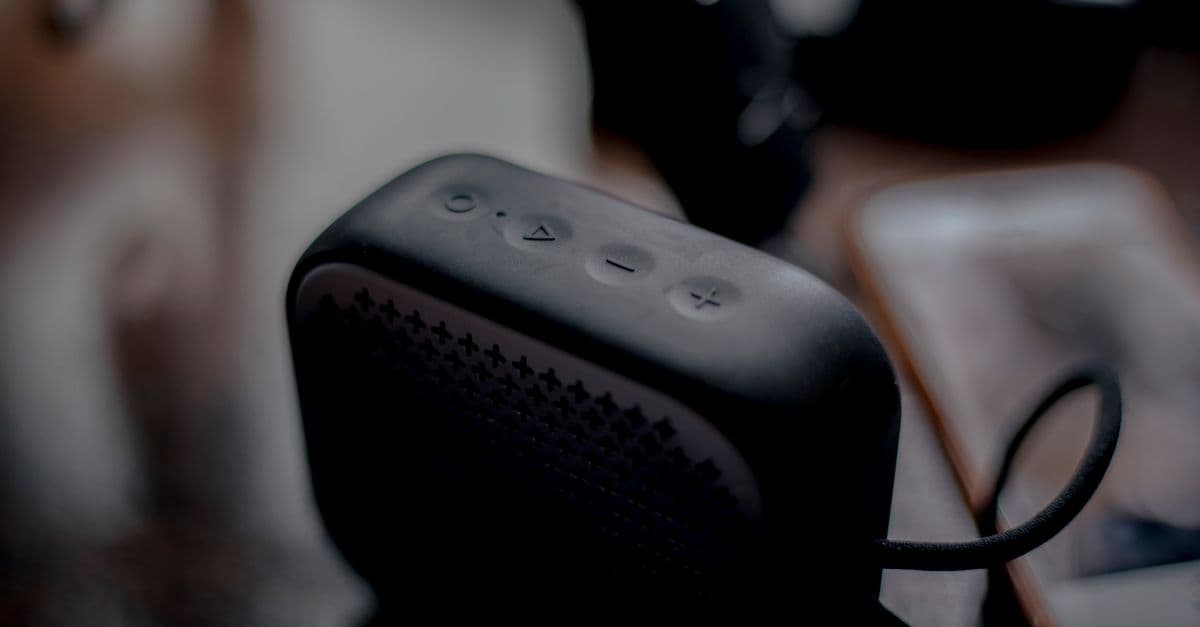
Photo: Akshay Shende / Pexels
Bluetooth is the invisible glue connecting headphones, keyboards, fitness trackers, smart locks, and increasingly, the entire internet of things. Despite being ubiquitous since the early 2000s, most users have only a fuzzy idea of how the protocol actually moves bits between devices, why pairing sometimes fails, or why your AirPods can survive a full day on a single charge while a Wi-Fi hotspot drains a phone in hours. This article unpacks Bluetooth from the radio waves up.
A Brief History: Why It's Called Bluetooth
Bluetooth was invented at Ericsson in 1994 by engineer Jaap Haartsen, who was tasked with designing a short-range radio standard to replace the tangle of cables connecting phones, headsets, and PCs. The name comes from Harald "Bluetooth" Gormsson, a 10th-century Danish king who unified warring Scandinavian tribes — a fitting metaphor for a protocol intended to unite incompatible devices. The Bluetooth logo is a bind rune combining Harald's initials (ᚼ and ᛒ) in the Younger Futhark alphabet.
The Bluetooth Special Interest Group (SIG) was formed in 1998 by Ericsson, Intel, IBM, Nokia, and Toshiba, and the first consumer products shipped in 2000. As of 2026 the SIG has more than 40,000 member companies and ships over 5 billion Bluetooth-enabled devices per year.
The Physical Layer: 2.4 GHz and Frequency Hopping
Bluetooth operates in the 2.4 GHz ISM (Industrial, Scientific, Medical) band — the same unlicensed slice of spectrum used by Wi-Fi, microwave ovens, baby monitors, and Zigbee. To coexist with this crowded environment, Bluetooth uses Adaptive Frequency Hopping Spread Spectrum (AFH).
The 2.4 GHz band is sliced into 79 channels (Bluetooth Classic) or 40 channels (BLE), each 1 or 2 MHz wide. A connected Bluetooth pair hops between these channels up to 1,600 times per second in a pseudo-random pattern agreed upon during pairing. If one channel is congested by a Wi-Fi router, the hop sequence simply avoids it. This is why microwaving popcorn rarely kills your Bluetooth music but can disrupt Wi-Fi: Bluetooth dodges, Wi-Fi sits still.
Bluetooth Classic vs Bluetooth Low Energy (BLE)
The most important architectural split in Bluetooth happened in 2010 with version 4.0, which introduced Bluetooth Low Energy (BLE) alongside Bluetooth Classic (also called BR/EDR — Basic Rate/Enhanced Data Rate).
- Bluetooth Classic — Designed for continuous, relatively high-bandwidth streams: audio (A2DP), file transfer, tethering. Always-on connection. Typical power draw: tens of milliwatts.
- Bluetooth Low Energy (BLE) — Designed for small, infrequent bursts of data: sensor readings, button presses, beacons. Devices sleep most of the time and wake briefly to transmit. A coin-cell-powered BLE sensor can run for years.
BLE underpins Apple AirTags, Tile trackers, most fitness wearables, glucose monitors, smart locks, beacons (iBeacon, Eddystone), and modern wireless peripherals. A modern smartphone supports both Classic and BLE simultaneously — its Bluetooth radio is "dual-mode."
Pairing: How Two Devices Become Friends
Pairing is the process of establishing shared cryptographic keys so two devices can communicate securely. It has evolved significantly:
- Legacy PIN pairing (pre-2.1) — User enters a 4-digit code on both devices. Vulnerable to brute force.
- Secure Simple Pairing (SSP, 2.1+) — Uses Elliptic Curve Diffie-Hellman (ECDH) to exchange keys, with four association models: Just Works (no UI, common for headsets), Numeric Comparison (both screens show the same number), Passkey Entry (one device displays, other types), and Out-of-Band (NFC tap, QR code).
- LE Secure Connections (4.2+) — Brings stronger 128-bit ECDH (P-256 curve) to BLE, replacing the weaker legacy LE pairing.
Once paired, devices store a Long-Term Key (LTK) and can reconnect automatically without re-pairing.
Profiles: What Devices Actually Do
Bluetooth defines profiles — standardized protocols for specific use cases. A headset and a phone both need to speak the same profile to work together.
- A2DP (Advanced Audio Distribution Profile) — Stereo audio streaming. Uses SBC, AAC, aptX, or LDAC codecs.
- HFP (Hands-Free Profile) — Phone calls, microphone input.
- HID (Human Interface Device) — Keyboards, mice, game controllers.
- GATT (Generic Attribute Profile) — The BLE foundation for sensor data, used by heart rate monitors, smart bulbs, etc.
- MAP / PBAP — Messaging and phonebook sync (used in cars).
Bluetooth Versions: What Changed
| Version | Year | Key Features | Max Speed | Range |
|---|---|---|---|---|
| 1.0 | 1999 | Initial release, BR | 721 kbps | ~10 m |
| 2.0 + EDR | 2004 | Enhanced Data Rate | 2.1 Mbps | ~10 m |
| 3.0 + HS | 2009 | Wi-Fi handover for big files | 24 Mbps | ~10 m |
| 4.0 | 2010 | BLE introduced | 1 Mbps (LE) | ~50 m (LE) |
| 4.2 | 2014 | LE Secure Connections, IPv6 | 1 Mbps | ~50 m |
| 5.0 | 2016 | 2× speed, 4× range, 8× advertising | 2 Mbps (LE) | up to 240 m |
| 5.1 | 2019 | Direction finding (AoA/AoD) | 2 Mbps | 240 m |
| 5.2 | 2020 | LE Audio, LC3 codec, Auracast | 2 Mbps | 240 m |
| 5.3 | 2021 | Periodic advertising enhancements | 2 Mbps | 240 m |
| 5.4 | 2023 | Encrypted advertising, PAwR | 2 Mbps | 240 m |
LE Audio (5.2) is the biggest leap in years. The new LC3 codec delivers better quality than SBC at half the bitrate, enabling smaller batteries and longer life. Auracast lets one transmitter broadcast audio to unlimited receivers — imagine an airport gate announcement streaming directly to every traveler's earbuds.
Range and Power Classes
Bluetooth radios fall into three power classes:
- Class 3 — 1 mW, ~1 m range (rare).
- Class 2 — 2.5 mW, ~10 m range (phones, headphones — the default).
- Class 1 — 100 mW, up to 100 m range (industrial, some PC dongles).
Bluetooth 5.0's "Long Range" PHY (LE Coded) trades data rate for range, achieving up to 1 km line-of-sight at 125 kbps — useful for asset tracking and outdoor IoT.
Bluetooth Mesh
Introduced in 2017, Bluetooth Mesh is a separate protocol built on BLE for many-to-many networks. Each node relays messages, so a single mesh can cover an entire building with hundreds of light bulbs, sensors, or industrial actuators. It competes directly with Zigbee and Thread for smart-building applications.
Bluetooth vs Other Wireless Standards
| Feature | Bluetooth (BLE) | Wi-Fi | Zigbee | Thread |
|---|---|---|---|---|
| Band | 2.4 GHz | 2.4/5/6 GHz | 2.4 GHz | 2.4 GHz |
| Range | 10–240 m | 50–100 m | 10–100 m | 10–30 m |
| Data rate | 1–2 Mbps | 100+ Mbps | 250 kbps | 250 kbps |
| Power | Very low | High | Very low | Very low |
| Topology | Star / Mesh | Star | Mesh | Mesh |
| IP-native | No | Yes | No | Yes (IPv6) |
| Typical use | Wearables, audio | Internet, video | Smart bulbs | Matter smart home |
For more on Wi-Fi internals, see our companion guide on how Wi-Fi works and the broader history of encryption for security context.
Security: From BlueBorne to AES-CCM
Bluetooth security has had a bumpy ride. The 2017 BlueBorne vulnerability allowed remote code execution without pairing, affecting an estimated 5.3 billion devices. The KNOB attack (2019) showed that encryption keys could be forced down to 1 byte of entropy. BLURtooth (2020) exploited cross-transport key derivation.
Modern Bluetooth (5.x) uses AES-CCM 128-bit encryption for the link layer, ECDH P-256 for key exchange, and address randomization (LE Privacy) to prevent tracking via MAC address. Still, the rule holds: keep firmware updated, disable discoverability when not pairing, and treat "Just Works" devices as untrusted.
FAQs
Q: Why does my Bluetooth audio sometimes stutter near a Wi-Fi router? A: Both share the 2.4 GHz band. Adaptive Frequency Hopping mitigates this, but heavy Wi-Fi 2.4 GHz traffic (especially channels 1, 6, 11) can still cause brief audio dropouts. Moving the router to 5 GHz solves most cases.
Q: What's the real-world range of Bluetooth 5.0? A: For Class 2 phones, expect 30–60 m line of sight indoors despite the 240 m theoretical figure. Walls, bodies, and 2.4 GHz noise cut range significantly. Long-range PHY (LE Coded) is much more robust.
Q: Why does BLE use so little power? A: BLE devices spend over 99% of their time asleep, waking briefly (a few milliseconds) to advertise or exchange small packets. Combined with low transmit power and short frames, a CR2032 coin cell can last 1–5 years in a sensor.
Q: Can someone hack my Bluetooth headphones? A: Modern paired connections use AES-128, which is robust. The realistic threats are pairing-time attacks (BLURtooth, KNOB), firmware vulnerabilities, and tracking via static MAC addresses on cheap devices. Keep firmware current and avoid pairing in crowded public spaces.
Q: What is Auracast and when can I use it? A: Auracast is broadcast audio over BLE Audio (5.2+). One source streams to unlimited receivers — gyms, airports, museums, TVs in noisy bars. Adoption began in 2023 and is widespread in 2026 across new TVs, hearing aids, and earbuds.
Q: How does Bluetooth differ from Zigbee for smart homes? A: Zigbee and Thread are mesh-first, IP-light (Zigbee) or IP-native (Thread), and optimized for hundreds of always-on nodes. Bluetooth Mesh exists but the ecosystem is smaller. For Matter-based smart homes, Thread is the rising standard; Bluetooth still dominates wearables and audio.
Sources
- Bluetooth SIG Core Specification 5.4 (2023)
- Haartsen, J. (1998). "Bluetooth — The universal radio interface for ad hoc, wireless connectivity." Ericsson Review.
- Armis Labs (2017). "BlueBorne Technical White Paper."
- Antonioli et al. (2019). "The KNOB is Broken: Exploiting Low Entropy in the Encryption Key Negotiation Of Bluetooth BR/EDR." USENIX Security.
- IEEE 802.15.1 standard documentation.
- Bluetooth SIG (2024). "2024 Bluetooth Market Update."
Follow new articles
Add SciHub101 to your feed reader to see new science and technology stories.
About the Author
SciHub101 is an independent science and technology publication founded and edited by Buğra Sözeri, a software engineer and app developer based in Türkiye. AI tools assist with drafting and research. Source documentation in the existing archive is uneven, and articles are being reviewed and corrected. The Editorial Team byline identifies editorial responsibility; it does not certify specialist or independent human review. Where we compare products, anything built by our own team is labelled as such — see the editorial guidelines and About page for how corrections and disclosures work.
Related Articles
How Camera Sensors Work — CCD vs CMOS
How digital camera sensors turn photons into pixels: photodiodes, Bayer filters, CCD vs CMOS, pixel size, noise, dynamic range, and computational photography.
How Search Engines Work — Inside Google
How Google crawls, indexes, and ranks the web — from PageRank to BERT to AI Overviews — and the rise of AI-powered alternatives.
How Wi-Fi and 5G Actually Work
Wireless data is invisible, but the engineering behind it is surprisingly concrete — radio waves, spectral efficiency, and antenna tricks.
How Fiber Optic Cables Transmit Data
A strand of glass thinner than a human hair can carry more information than all the copper wires ever made. Here's the physics behind it.
How the Internet Actually Works
Undersea cables, packets, IP addresses, routers, DNS and encryption: the engineering that moves every click from your device to a server and back in a fraction of a second.

The Internet of Things Explained — When Everything Becomes Connected
Your fridge, doorbell, watch, and car can all be online. The Internet of Things has 15+ billion devices already. Here's how it works, what it enables, and the security mess we're creating.