The Future of Smart Glasses: AR, AI, Cameras, and Privacy
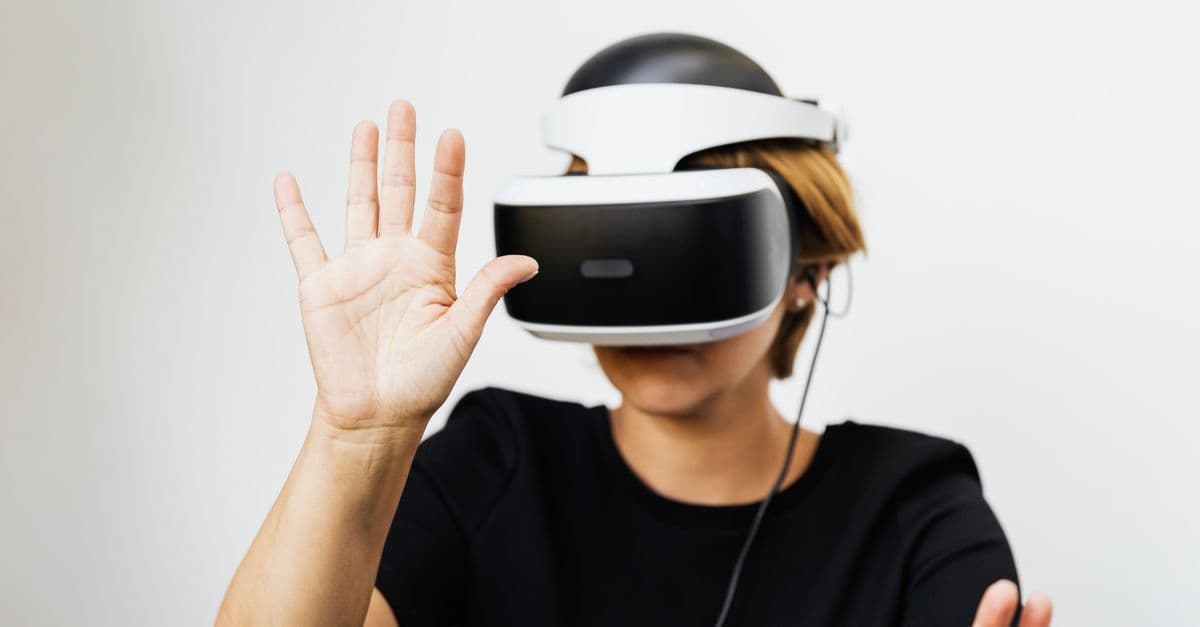
Photo: www.kaboompics.com / Pexels
Smart glasses are likely to succeed first as lightweight AI, camera, audio, and notification devices before full augmented-reality (AR) displays become mainstream. Augmented reality — technology that overlays digital images or information onto a person's view of the real world — is the long-term goal, but the hardware to deliver a wide, bright AR display in normal-looking glasses is not there yet. What is already working, and already selling in the millions, is a simpler category: glasses with a camera, microphones, speakers, and an AI assistant built in. This guide explains how that split happened, what the display technologies actually do, and where the real bottlenecks — battery, weight, and privacy — still sit.
Why smart glasses failed the first time
Smart glasses are not a new idea. Google Glass launched to developers in 2013 wearing a small prism display over one eye, a camera, and a $1,500 price tag. It was discontinued for consumers within two years, and Google's parent company Alphabet reported roughly $895 million in losses tied to "Other Bets" projects that included Glass around that period (StartupTalky, 2024).
The failure had less to do with the underlying optics than with three compounding problems. First, the price put it far outside impulse-purchase territory for a product with no obvious daily use case. Second, the always-on camera created a genuine social backlash — bars and restaurants banned "Glassholes," and the device became shorthand for tech overreach into other people's privacy. Third, the product never answered a clear question: what is this for, that a phone does not already do better?
That third problem is the one modern smart glasses have solved differently. Instead of promising a heads-up AR interface, companies like Meta reframed the pitch around things a phone genuinely cannot do while your hands are full: hands-free photo and video capture, open-ear audio, and a voice assistant that sees what you see. The camera is still the most sensitive part of the product, but it now ships alongside a visible recording light and social framing as "sunglasses with a camera," not "computer on your face."
Fastest-selling wearable of its kind: Meta is reportedly targeting roughly 10 million smart glasses sold in the second half of 2026 alone (The Information, via Road to VR, 2026) — a volume Google Glass never approached in its entire consumer run.
The three display technologies competing for your face
Every AR display has to solve the same physics problem: project a bright, focused image close to the eye without making the glasses look like ski goggles. Three approaches currently split the market, and each trades off field of view, brightness, thickness, and cost differently.
Waveguides etch or print microscopic patterns into a thin sheet of glass or plastic. A projector fires an image into the edge of the waveguide, and total internal reflection — light bouncing inside a transparent material because it hits the surface at too shallow an angle to escape — carries it across the lens until diffractive gratings steer it out toward the eye. Waveguides are the thinnest and most glasses-like option, which is why Meta's Ray-Ban Display and most high-end AR prototypes use them, but they are hard to manufacture with a wide field of view without adding thickness or losing brightness (Avantier, 2026).
Birdbath optics use a small projector, a beam splitter, and a curved mirror arranged like a tiny periscope in front of the eye. Light bounces off the curved surface, through a polarizing splitter, and into the pupil. Birdbath modules deliver good color accuracy and a wider field of view — often 40 to 70 degrees — at a lower manufacturing cost than waveguides, but the optical stack sits farther from the lens surface, which makes the glasses noticeably thicker (INAIRSPACE, 2026).
Direct projection, sometimes called retinal projection, skips the lens entirely and beams an image straight onto the retina or onto a simple reflective surface. It is the lightest approach in principle because it needs the least glass, but it has the narrowest practical field of view and the tightest eye-position tolerance — move the glasses a few millimeters and the image disappears.
None of the three currently matches what a phone or a standalone headset like Apple Vision Pro can do for image quality. Vision Pro's dual micro-OLED panels deliver a roughly 100° × 73° field of view (Apple, 2026) — wider than any waveguide glasses shipping today — but it does that by wearing a full headset that weighs 600 to 800 grams before the external battery pack, versus 40 to 50 grams for a pair of glasses. That weight gap is the whole story of why AR glasses and VR/AR headsets are not converging into one product yet.
| Display type | Typical field of view | Relative thickness | Best current example |
|---|---|---|---|
| Waveguide | 20°–35° | Thinnest (near normal lens) | Meta Ray-Ban Display |
| Birdbath | 40°–70° | Moderate (visibly thicker rim) | Entry-level and budget AR glasses |
| Direct projection | Under 20° | Thin but positionally fragile | Experimental retinal-projection prototypes |
| Standalone headset (for context) | ~100° × 73° | Full enclosed goggle | Apple Vision Pro |
Wider field of view still requires either thicker optics or a fully enclosed headset — no current display technology gives glasses-thin hardware and a wide AR view at the same time.
Why battery life is the hardest problem, not the display
Display optics get most of the attention, but battery capacity is the tighter constraint. A pair of glasses has room for maybe one to two grams of battery cells split across both temples, compared to the tens of grams packed into a phone. Meta's second-generation Ray-Ban glasses squeeze about eight hours of typical use from that space, recharging to 50 percent in 20 minutes and relying on a charging case for roughly 48 additional hours (Road to VR, 2026). The Ray-Ban Display model, which adds an actual waveguide screen, drops to around six hours of mixed use because driving a display draws meaningfully more power than a camera and microphones alone (Road to VR, 2026).
That gap is not an engineering oversight — it is a direct consequence of what each version of the hardware has to power. A camera-and-audio-only design idles most of its circuitry until you speak a wake word or press the shutter button. A display has to keep a projector and waveguide driver active continuously whenever content is on screen, and running any GPS, real-time object recognition, or live translation feature multiplies the draw further.
This is why the current generation of "AI glasses" without a display consistently outlasts the display-equipped versions, and why upcoming hardware — Meta's rumored third-generation Ray-Ban glasses are expected to pair a Qualcomm Snapdragon AR chipset with a battery life target of six to eight hours (Road to VR, 2026) — is optimizing for efficiency gains rather than chasing all-day, phone-like battery life. Until battery energy density improves substantially, or manufacturers accept a thicker temple to fit more cells, all-day AR display use will stay out of reach. The realistic path is glasses that sip power most of the day and spend their battery budget in short, deliberate bursts: a photo, a translated sentence, a two-minute navigation overlay.
How does compute get offloaded to make this work?
Smart glasses do not run large AI models locally. Voice queries, image recognition, and translation are typically streamed to a paired phone or the cloud, where a much larger chip handles the actual computation. This is the same offloading pattern that makes GPUs essential to modern AI systems — the glasses capture the input, but a far more powerful processor elsewhere does the heavy lifting.
What the camera and AI features are actually good for
Strip away the AR marketing and the honest current use case for smart glasses is narrower and more practical: hands-free capture, ambient audio, and a voice assistant with a camera attached. Meta's Ray-Ban glasses record 3K video at 30 frames per second through a 12-megapixel ultra-wide camera (Road to VR, 2026), which is a meaningful downgrade from a modern phone's main sensor but genuinely useful for point-of-view footage a phone cannot capture without being held up.
The AI layer adds real-time object and location recognition, live translation of spoken conversation, and a general-purpose voice assistant that can answer questions about whatever the wearer is looking at. This is the same underlying capability that powers phone-based AI assistants, trained the same way large language models are built — the difference is the input stream now includes a live camera feed instead of just text or voice.
Audio is arguably the most mature feature category. Open-ear speakers built into the temples let the wearer take calls, listen to music, or hear an AI assistant's response without blocking ambient sound the way earbuds do. That matters for safety in outdoor settings — cycling, running, walking near traffic — where full noise isolation is a real hazard, not just an inconvenience.
None of these features requires solving the AR display problem. That is precisely why the camera-and-audio category shipped and scaled first: it does not need a breakthrough in waveguide manufacturing, it needs a decent camera sensor, an efficient chip, and a partnership with an eyewear brand people already wanted to wear. Ray-Ban's decades of frame design and retail distribution did more for Meta's adoption numbers than any optical innovation did.
The privacy problem Google Glass never solved
The core tension has not changed since 2013: a camera worn on someone's face can record other people who never agreed to be recorded, and there is no reliable way for bystanders to tell whether it is active. Google Glass tried a small LED recording indicator, and it was widely regarded as too subtle to actually inform anyone nearby. Current-generation glasses use a similar visible light when recording, but the underlying problem — that the indicator only works if the person facing the camera happens to notice it — is unresolved.
Regulators have started paying closer attention as adoption climbs. The concern is not hypothetical: a camera integrated into ordinary-looking sunglasses is far less conspicuous than someone visibly holding up a phone to film, and covert recording in places like locker rooms, private homes, or one-on-one conversations is a materially different risk profile than a phone camera that requires an obvious raised-arm gesture.
There is also a second, quieter privacy layer: what happens to the data. Voice queries and images that get sent to the cloud for AI processing are, by definition, leaving the device. How long that data is retained, whether it trains future models, and who can access it are policy questions, not hardware ones, and they vary by company and by jurisdiction. A reader evaluating any smart glasses product should treat the privacy policy as seriously as the spec sheet, because the camera is only half of the exposure — the backend processing pipeline is the other half.
Q: Can bystanders tell when smart glasses are recording? A: Most current models show a small visible LED while recording, similar to Google Glass's indicator, but it only informs someone who happens to be looking directly at the wearer's face and knows what the light means.
What people get wrong about AR glasses
The most common misconception is treating today's camera-and-audio glasses and true AR display glasses as the same product on a smooth upgrade path. They are not. A pair of glasses that streams video to a phone and answers voice questions is a fundamentally simpler engineering problem than one that also has to project a bright, wide, stable image onto the retina all day on a battery the size of a grain of rice. Solving the first does not automatically get a company closer to solving the second — it just proves people will wear a computer on their face if the form factor is right.
A second misconception is assuming Apple Vision Pro represents where glasses are headed. Vision Pro is a full VR/AR headset, not a glasses form factor, and its far wider field of view comes directly from being heavier, bulkier, and worn for shorter sessions. Glasses and headsets are likely to remain two separate product categories serving different use cases — brief, all-day-wearable AI assistance versus immersive, session-based computing — rather than converging into one device.
A third misconception is that better AI makes the display problem disappear. Voice assistants and object recognition run largely on cloud or phone compute and do not require a display to be useful — they can speak an answer instead of showing one. That is exactly why the non-display glasses category scaled faster: it decoupled "useful AI wearable" from "solve the hardest unsolved problem in consumer optics."
Why hasn't AR field of view caught up to VR headsets?
A VR or AR headset can dedicate its entire enclosed volume to optics and batteries because it does not need to look like ordinary eyewear. Glasses have to fit inside a frame roughly 5 millimeters thick, which caps how much waveguide material, projector hardware, and battery capacity can fit — a physical constraint that better software cannot solve.
How the 2026 privacy backlash escalated beyond the LED debate
The abstract privacy concern from the Google Glass era became concrete in 2026. A US class-action lawsuit filed in March 2026 by plaintiffs Gina Bartone and Mateo Canu alleges that Meta and its manufacturing partner Luxottica routed footage captured by Ray-Ban glasses to a Kenya-based subcontractor, Sama, for AI-training review without disclosing that human contractors — not just software — were watching the clips (Fortune, March 2026). Some of the footage reportedly included private moments never intended for outside eyes. Meta terminated its contract with Sama in April 2026, a move that affected more than 1,100 workers, but the episode reframed the privacy question: it is not only about whether a bystander notices a recording LED, it is also about who reviews the footage after it leaves the device.
A separate and more visible problem emerged around misuse rather than data handling. Online creators began using the glasses' hands-free, inconspicuous camera to film strangers, often women, without consent, then post the footage for engagement — a pattern widespread enough that the product picked up the unflattering nickname "pervert glasses" in tech press coverage (Gadget Review, 2026; Fortune, July 2026). Meta has since tightened in-app policies and pushed harder enforcement against covert-recording content on Instagram, but the underlying hardware problem — a camera that looks like an ordinary pair of sunglasses — has not changed.
A planned facial-recognition feature, internally called "Name Tag" and first reported by The New York Times in February 2026, would let a wearer identify a stranger in real time by matching their face against Meta's photo databases. The feature has not shipped as of this writing, but its existence drew scrutiny from UK regulators; the Information Commissioner's Office opened an inquiry into the privacy implications of real-time facial matching worn on someone's face rather than run from a phone. Google Glass never got far enough into mainstream use to test a feature like this at scale — smart glasses have.
Who else is building smart glasses beyond Meta
Meta is not competing alone, and the shape of the competition matters for where the category goes next. Google and Samsung are jointly developing Android XR, a software platform meant to run across both full headsets and lighter glasses, positioning Google's Gemini AI assistant as the software layer that ships across multiple hardware partners rather than one vendor-locked device, similar to how Android itself scaled across phone manufacturers rather than staying an in-house Google product. Samsung's own glasses hardware built on that platform is expected to compete directly with Ray-Ban's camera-and-AI category rather than chase a full AR display first.
Apple's position remains the most conservative of the major players: Vision Pro is a headset, not glasses, and the company has not shipped a lightweight AI-glasses competitor to Ray-Ban as of mid-2026, reportedly favoring further display and battery maturation before entering a category where Meta already has a multi-year head start in retail distribution and frame design through Luxottica. That head start, more than any single technical advantage, is why Ray-Ban-branded glasses reached scale before a Google- or Apple-branded pair did — eyewear is a fashion category as much as a technology one, and Meta borrowed decades of an established brand's retail relationships instead of building that trust from zero.
The takeaway
Smart glasses split into two real products in the mid-2020s: camera-and-AI glasses that already work and are selling at scale, and true AR-display glasses that remain constrained by battery density and waveguide manufacturing limits. The camera category succeeded by solving a narrower problem — hands-free capture and voice AI in a normal-looking frame — rather than chasing the harder display problem Google Glass stumbled on first. Privacy remains the unresolved variable in both categories, and it is a policy and social problem as much as a hardware one. Expect incremental gains in field of view and battery life for years before AR glasses look anything like the sci-fi version of the idea.
Read next:
- How GPUs Work — Why AI Needs Them
- Why Semiconductors Are So Hard to Make
- How AI Models Are Trained: The Full Pipeline Explained
Frequently Asked Questions
Q: Why did Google Glass fail? A: Google Glass launched at $1,500 with an unclear everyday use case, and its always-on camera triggered a social backlash over covert recording. Alphabet reported roughly $895 million in losses tied to "Other Bets" projects that included Glass (StartupTalky, 2024).
Q: What is the difference between waveguide and birdbath AR displays? A: Waveguides use total internal reflection inside thin glass to steer an image toward the eye, producing thinner, more glasses-like lenses but a narrower field of view. Birdbath optics use a curved mirror and beam splitter for a wider field of view at lower cost, but the optical stack makes the frame noticeably thicker.
Q: How long do smart glasses batteries last? A: Camera-and-audio glasses without a display, like Meta's Ray-Ban Gen 2, get about eight hours of typical use per charge. Display-equipped models like Ray-Ban Display drop to around six hours because driving a projector and waveguide continuously draws more power (Road to VR, 2026).
Q: Are smart glasses a privacy risk? A: Yes, in ways phones are not. A camera built into ordinary-looking eyewear is harder for bystanders to notice than someone visibly holding up a phone, and the recording-indicator LEDs used today only inform someone who is looking directly at the wearer.
Q: Will AR glasses ever match a headset like Apple Vision Pro for field of view? A: Not without a fundamental optics breakthrough. Vision Pro's roughly 100° × 73° field of view (Apple, 2026) comes from a fully enclosed headset weighing 600 to 800 grams; glasses have to fit optics inside a frame a few millimeters thick, which caps field of view regardless of software improvements.
Sources
- Road to VR, "Meta Unveils Ray-Ban Smart Glasses with Display, Launching for $800 This Month," 2026.
- StartupTalky, "Why Google Glass Failed? Google Glass Failure Case Study," 2024.
- Apple, "Apple Vision Pro — Technical Specifications," 2026.
- Avantier Inc., "AR Glasses: Waveguide Optics, Technology, and Key Types," 2026.
- INAIRSPACE, "AR Display Types: A Deep Dive into the Optics Shaping Our Digital Future," 2026.
- Fortune, "Meta promised it wouldn't spy on you with its AI smart glasses. A lawsuit says humans are watching you, actually," March 2026.
- Fortune, "Meta tightens Ray-Ban smart glasses privacy while it tests 'super-sensing' AI prototype," July 2026.
- Gadget Review, "Meta's Ray-Ban Smart Glasses Have Officially Earned the Public Nickname 'Pervert Glasses' Amid a Massive Privacy Reckoning," 2026.
Follow new articles
Add SciHub101 to your feed reader to see new science and technology stories.
About the Author
SciHub101 is an independent science and technology publication founded and edited by Buğra Sözeri, a software engineer and app developer based in Türkiye. AI tools assist with drafting and research. Source documentation in the existing archive is uneven, and articles are being reviewed and corrected. The Editorial Team byline identifies editorial responsibility; it does not certify specialist or independent human review. Where we compare products, anything built by our own team is labelled as such — see the editorial guidelines and About page for how corrections and disclosures work.
Related Articles

How Microphones Work — From Sound Waves to Electrical Signals
A microphone is a transducer that converts pressure waves in air into electrical signals, and there are at least six fundamentally different ways to accomplish that conversion, each with trade-offs in sensitivity, ruggedness, and frequency response.

Quantum Internet Explained: What It Is and What It Is Not
The quantum internet is not faster Wi-Fi. It is a network for distributing quantum states, entanglement, and ultra-secure communication under strict physical limits.
Best Clipboard Managers for Mac in 2026 (Compared)
Best clipboard managers for Mac in 2026: Vee, Maccy, Paste, Raycast, Alfred and macOS Spotlight compared on price, history length, privacy and honest limits.

How Websites Detect You Are Using an Ad Blocker
Ad blocker detection is an arms race. Publishers plant decoy elements, probe blocked URLs, and in rare cases use CSS or HTTP 103 Early Hints to notice a blocker without running any JavaScript.
How Fingerprint Sensors Work — Tech Explained
Optical, capacitive, and ultrasonic fingerprint sensors explained — how phones authenticate you in milliseconds without storing your print.

How VPN Works — Virtual Private Networks
How VPNs work: encrypted tunnels, protocols (WireGuard, OpenVPN, IKEv2), top providers in 2026, limitations, and how they compare to Tor.