Quantum Internet Explained: What It Is and What It Is Not
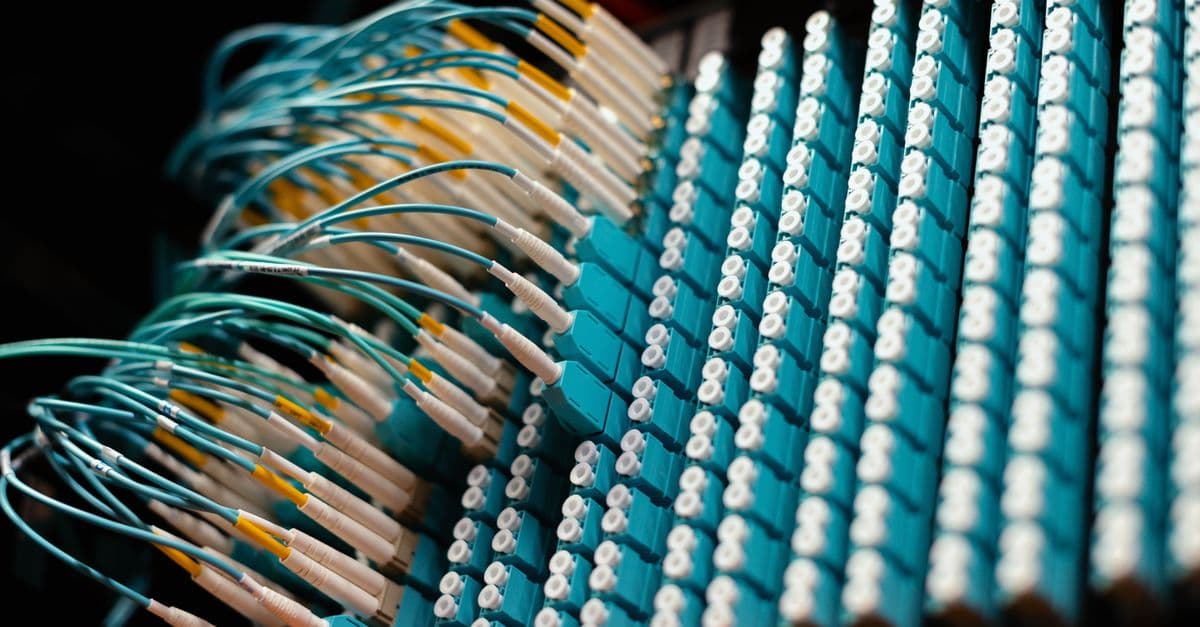
Photo: Brett Sayles / Pexels
A quantum internet would connect quantum devices by distributing entanglement and quantum states across distance; it is not a faster or bigger version of today's internet. Where the classical internet moves copies of data (a photo you send is still on your phone after you send it), a quantum network moves a resource that cannot be copied at all. That single restriction, rooted in the no-cloning theorem of quantum mechanics, is what makes quantum communication both extraordinarily secure and extraordinarily hard to build at scale.
What "quantum" actually changes about a network
Classical networks work by copying bits. A router receiving a packet duplicates it, forwards the duplicate, and keeps sending copies down the line until they reach a destination. Quantum information cannot be handled this way. The no-cloning theorem, a mathematical consequence of quantum mechanics, proves that it is impossible to create an identical copy of an arbitrary unknown quantum state (Postquantum.com, QKD and BB84).
That restriction sounds like a limitation, and for raw data throughput it is. But it is also the source of quantum communication's main selling point: security. If a quantum state cannot be copied, an eavesdropper cannot silently intercept, duplicate, and forward it without disturbing the original. Any attempt to measure a quantum bit before it is supposed to be measured changes it in a way the intended recipient can detect. That property underlies quantum key distribution (QKD), a protocol first proposed by Charles Bennett and Gilles Brassard in 1984 (hence the name BB84) that uses photon polarization states to let two parties generate a shared secret encryption key while making any eavesdropping attempt statistically detectable (QuantumZeitgeist, The BB84 Protocol).
Think of it like sending a message written in a special ink that smears unrecognizably the instant anyone other than the intended reader unfolds the paper. The message itself might get destroyed by a snoop, but the two original parties will always know, from the smear pattern, that someone tried to look. That is fundamentally different from classical encryption, where a sufficiently patient or well-resourced attacker can, in principle, copy the encrypted data and try to break it later without either party knowing.
How entanglement gets distributed over distance
The more ambitious goal beyond point-to-point key distribution is a network that distributes entanglement itself, the phenomenon where two particles remain correlated no matter how far apart they are, such that measuring one instantly tells you something about the state of the other. A full quantum internet would use entangled particle pairs as a shared resource between distant nodes, enabling not just secure key exchange but distributed quantum computing and ultra-precise networked sensing.
The problem is that photons, the usual carriers of quantum information over fiber-optic cable, get absorbed or scattered as they travel. Classical networks solve signal loss with repeaters that simply read the signal and retransmit a fresh copy. Quantum networks cannot do that, because reading (measuring) a quantum state collapses it, destroying exactly the information the repeater was supposed to relay. The workaround is a quantum repeater, a device that uses entanglement swapping to link two shorter-range entangled pairs into one longer-range entangled pair without ever measuring the underlying state directly (arXiv, Reducing classical communication costs in multiplexed quantum repeaters).
Progress on this front has accelerated. In 2026, researchers demonstrated long-lived remote ion-ion entanglement intended as a building block for scalable quantum repeaters, extending device-independent quantum key distribution beyond 100 kilometers (62 miles) by chaining together memory-to-memory entangled nodes through repeated entanglement swapping (Nature, Long-lived remote ion-ion entanglement for scalable quantum repeaters; EurekAlert, Device-independent QKD over 100 km). A separate 2026 metropolitan-scale system achieved an entanglement distribution rate over 100 times faster than earlier metro-area quantum relays, maintaining 78.6% entanglement fidelity across a 14.5-kilometer (9-mile) span using existing fiber infrastructure rather than purpose-built cable (Phys.org, New quantum protocol breaks distance and speed barriers in fiber networks).
Why can't quantum signals just use a regular repeater like Wi-Fi does?
A classical repeater reads an incoming signal and broadcasts a fresh copy, which works because copying bits is trivial. A quantum repeater cannot read the signal first, because measuring a quantum state destroys the very information being relayed, so it must instead swap entanglement between adjacent short links to build a single long-range entangled connection without ever directly observing the state in transit.
Real infrastructure already exists, at limited scale
The quantum internet is not purely theoretical. China's Micius satellite, launched in August 2016 as part of the Quantum Experiments at Space Scale program, demonstrated satellite-based distribution of entangled photon pairs over 1,200 kilometers (746 miles), splitting entangled photon pairs and sending them to ground stations in Delingha and Lijiang, more than doubling the previous distance record set using optical fiber (Science, Satellite-based entanglement distribution over 1200 kilometers).
On the ground, the Chicago Quantum Exchange operates a metropolitan quantum network spanning 124 miles (200 kilometers) of optical fiber across six nodes, connecting the Department of Energy's Argonne National Laboratory in Lemont, Illinois, to sites at the University of Chicago and in the city's Hyde Park neighborhood. The network runs live quantum key distribution using Toshiba hardware, moving quantum keys over fiber at speeds exceeding 80,000 quantum bits per second, and is being opened to academic and industry researchers as one of the first publicly accessible quantum security testbeds in the country (University of Chicago News, Chicago expands and activates quantum network). Additional metropolitan networks are operational or under construction in Chattanooga, Tennessee (EPB's quantum network), New York (Qunnect's GothamQ), and New Mexico (ABQ-Net), reflecting a broader push toward regional quantum testbeds rather than a single national system (The Quantum Insider, Understanding Quantum Networking and Its Industrial Potential).
The table below summarizes how today's quantum communication milestones compare in scale.
Table: Quantum communication milestones by distance and method
| Project | Distance covered | Method | Status |
|---|---|---|---|
| Micius satellite entanglement link | 1,200 km (746 mi) | Satellite-relayed entangled photon pairs | Demonstrated 2017, referenced as a benchmark result |
| Chicago Quantum Exchange network | 124 mi (200 km) of fiber, 6 nodes | Ground fiber, QKD with Toshiba hardware | Operational, opening to researchers |
| 2026 device-independent QKD link | Over 100 km (62 mi) | Chained ion-ion entangled nodes via entanglement swapping | Laboratory demonstration, 2026 |
| 2026 metro quantum relay | 14.5 km (9 mi) | High-rate entanglement distribution over deployed fiber | Laboratory demonstration, 78.6% fidelity |
Table: distances and methods reflect publicly reported research and infrastructure milestones as of mid-2026; laboratory results are not yet deployed as public network services.
Why it matters: security first, computing second
The near-term case for quantum networking is defensive. Government agencies and financial institutions are increasingly concerned about "harvest now, decrypt later" attacks, where an adversary captures today's classically encrypted traffic and stores it, betting that future quantum computers will be able to break the encryption retroactively. Quantum key distribution sidesteps that risk for the specific traffic it protects, because the security guarantee comes from physics rather than from computational difficulty, so it does not degrade as computing power improves.
The longer-term case is distributed quantum computing: linking multiple quantum processors together via entanglement so they can function as one larger machine, and networked quantum sensing, where entangled sensors at different locations can make correlated measurements more precise than any single sensor could achieve alone. Neither of these applications is close to commercial deployment. They depend on quantum repeaters and quantum memory technology that, as of 2026, work in laboratories over tens of kilometers, not the thousands of kilometers of dark fiber that make up commercial internet backbones.
What people get wrong about the quantum internet
The most common misconception is that a quantum internet will eventually replace the internet you use every day, carrying quantum versions of email, video, and web pages. It will not, because quantum information cannot be copied or amplified the way classical data can, which makes it fundamentally unsuited to broadcast-style traffic like streaming video or CDN-cached web pages. The quantum internet is better understood as a specialized parallel network layered alongside the classical internet, built for tasks (secure key exchange, distributed quantum sensing, linking quantum computers) that specifically require entanglement or unclonable states, not as a general-purpose upgrade.
A second misconception is that quantum encryption alone solves cybersecurity. Quantum key distribution secures the exchange of a cryptographic key against interception, but the data still gets encrypted and decrypted using classical algorithms once the key is established, and it still runs on classical hardware and software that carry their own vulnerabilities: malware, phishing, insider threats, and implementation bugs are untouched by QKD. Security researchers generally treat quantum-resistant cryptography (new classical algorithms designed to resist quantum computer attacks) and quantum key distribution as complementary tools, not substitutes for each other.
A third misconception, encouraged by loose reporting on entanglement, is that quantum networks allow faster-than-light communication because measuring one entangled particle "instantly" affects its partner. The correlation is real, but it cannot be used to send a message faster than light, because the outcome of any single measurement looks random until it is compared against the other particle's result over a classical communication channel, and that comparison is limited to the speed of light like everything else.
The other national program: China's 4,600-kilometer network
While the United States has largely pursued quantum networking through university and national-lab testbeds, China has built the largest operational quantum communication system in the world. Its Beijing-Shanghai backbone, completed in 2017, is a 2,000-kilometer (1,243-mile) fiber-optic quantum key distribution line running through Jinan and Hefei, relayed through 32 trusted nodes, and delivering an end-to-end secure key rate of about 20 kilobits per second (Postquantum.com, China's Quantum Networking and QKD).
In 2021, Chinese researchers integrated that fiber backbone with the Micius satellite's ground-to-satellite links, creating what they described as the world's first fully integrated space-ground quantum communication network. The combined system links more than 700 fiber-optic connections on the ground with satellite relays to achieve quantum key distribution over an effective span of 4,600 kilometers (2,858 miles), and it is reportedly already serving over 150 industrial users, including state and local banks, municipal power grids, and government agencies (Phys.org, The world's first integrated quantum communication network; Physics World, Quantum cryptography network spans 4,600 km in China).
A caveat matters here: the fiber backbone's 32 relay nodes are described as "trusted nodes," meaning each one decrypts and re-encrypts the key rather than preserving end-to-end quantum entanglement the way a true quantum repeater would. That is a meaningful security trade-off. A trusted node is a point where the key briefly exists in a form that could, in principle, be compromised if that specific relay station were breached, which is different from the repeater-based entanglement swapping described earlier, where the underlying quantum state is never measured or exposed at any intermediate point. China's system proves that continent-spanning quantum-secured communication is operationally achievable today, but it also illustrates why researchers still treat true, repeater-based quantum networks as the more secure long-term goal.
The US roadmap: the DOE's four-stage blueprint
The United States has its own long-range plan, laid out in a 2020 workshop report from the Department of Energy's Office of Advanced Scientific Computing Research, titled "From Long-Distance Entanglement to Building a Nationwide Quantum Internet." Rather than racing to build a national backbone the way China did, the DOE blueprint sequences the buildout into four escalating milestones: first verify secure quantum protocols over existing metropolitan fiber, then extend entangled connections across a single campus or city, then link multiple cities together, and finally connect across states using quantum repeaters to bridge distances current technology cannot cover directly (Fermilab News, DOE blueprint launch event; HPCwire, What's Needed to Deliver the Nationwide Quantum Internet Blueprint).
The DOE's 17 national laboratories, including Argonne, Brookhaven, Oak Ridge, and Fermilab, form the backbone of this effort, and the report anticipates a working nationwide prototype within roughly a decade of the 2020 workshop, putting a rough target around 2030 (HPCwire). The Chicago Quantum Exchange network described earlier represents the "link across a city" stage of that roadmap already operating; the 2026 laboratory results pushing device-independent QKD past 100 kilometers represent early steps into the "link across cities" stage. The "link across states" stage, which requires mature, deployed quantum repeaters rather than laboratory demonstrations, remains the unmet piece of the plan as of 2026.
How does China's approach differ from the US approach to quantum networking?
China built a single, centrally coordinated national backbone using trusted-node relays, prioritizing rapid deployment and real-world use by banks and government agencies. The US has pursued a decentralized, milestone-based roadmap through its national laboratories, prioritizing repeater-based networks that preserve end-to-end quantum security over trusted intermediate nodes, at the cost of a slower rollout.
Quantum key distribution versus post-quantum cryptography
Because both are marketed as answers to the same threat, quantum-vulnerable encryption, quantum key distribution (QKD) and post-quantum cryptography (PQC) are frequently confused, but they solve the problem in opposite ways. QKD uses the physical properties of quantum particles to guarantee security; PQC uses new classical mathematical algorithms, running on ordinary computers, that are believed to resist attacks even from a future large-scale quantum computer.
The practical differences are significant. QKD requires specialized hardware, single-photon detectors, entangled photon sources, and dedicated fiber or line-of-sight satellite links, which makes it expensive to deploy and currently limited to point-to-point or metropolitan-scale links like the ones in Chicago and China. PQC, by contrast, can be rolled out as a software update to existing internet infrastructure, which is why the U.S. National Institute of Standards and Technology finalized its first PQC standards in 2024 for near-universal deployment across web browsers, VPNs, and messaging apps, without requiring any new physical hardware.
Most security researchers view the two as complementary rather than competing: PQC as the practical, near-term, broadly deployable defense for the vast majority of internet traffic, and QKD as a higher-assurance option for a narrower set of especially high-value links, like connections between government facilities, central banks, or critical infrastructure, where the cost of dedicated quantum hardware is justified by the stakes.
The takeaway
A quantum internet is a specialized network for moving entanglement and unclonable quantum states, not a faster or expanded version of the internet already carrying your email and video. Its clearest near-term value is physics-guaranteed security through quantum key distribution, already running at metropolitan scale in places like Chicago, with satellite links like Micius proving the concept works over 1,200 kilometers (746 miles). The harder, longer-term goal, linking distant quantum computers and sensors through repeater-based entanglement distribution, is real but still confined to laboratory-scale demonstrations measured in tens of kilometers rather than continental distances.
Read next:
- How GPUs Work — Why AI Needs Them
- Why Semiconductors Are So Hard to Make — Inside the World's Most Complex Manufacturing Process
- How AI Models Are Trained: The Full Process
Frequently Asked Questions
Q: What is a quantum internet in simple terms? A: A quantum internet is a network built to distribute entangled particles and other quantum states between distant locations, mainly to enable physics-guaranteed secure communication, distributed quantum computing, and networked quantum sensing, rather than to carry ordinary data like a classical internet.
Q: Why can't quantum data be copied like a normal file? A: The no-cloning theorem, a proven result of quantum mechanics, shows that an arbitrary unknown quantum state cannot be duplicated exactly. This is the same property that makes quantum key distribution secure, since any attempt to copy or intercept the state disturbs it in a detectable way (Postquantum.com, QKD and BB84).
Q: How far can quantum communication travel today? A: China's Micius satellite distributed entangled photon pairs over 1,200 kilometers (746 miles) in a 2017 demonstration, while ground-based fiber networks such as the Chicago Quantum Exchange currently operate over 124 miles (200 kilometers), and 2026 laboratory repeater experiments have pushed device-independent quantum key distribution just past 100 kilometers (62 miles) (Science; University of Chicago News; EurekAlert).
Q: Does quantum entanglement allow faster-than-light communication? A: No. While measuring one entangled particle correlates instantly with its partner's state, useful information can only be extracted by comparing both measurement results over a classical communication channel, which is still limited to the speed of light.
Q: Will the quantum internet replace the internet we use today? A: No. Quantum networks are being built as a specialized layer for tasks that require unclonable states or entanglement, such as secure key exchange and linking quantum computers, not as a general-purpose replacement for streaming, browsing, or everyday data transfer, which remain classical tasks better suited to classical networks.
Q: Which country has the largest operational quantum network today? A: China operates the largest deployed system, a 2,000-kilometer (1,243-mile) fiber backbone between Beijing and Shanghai integrated with satellite links to reach an effective 4,600 kilometers (2,858 miles), serving over 150 industrial users including banks and government agencies. It relies on trusted-node relays rather than end-to-end entanglement, which is a security trade-off compared to repeater-based designs.
Q: What is the US government's plan for building a quantum internet? A: The Department of Energy's 2020 Quantum Internet Blueprint outlines four escalating stages, starting with securing metropolitan fiber, then linking campuses, then cities, then states via quantum repeaters, coordinated through its 17 national laboratories with a rough decade-long timeline toward a nationwide prototype.
Q: What's the difference between quantum key distribution and post-quantum cryptography? A: Quantum key distribution uses the physical properties of quantum particles and specialized hardware to guarantee security against interception. Post-quantum cryptography uses new classical mathematical algorithms that run on ordinary computers and can be deployed as a software update, which is why NIST finalized PQC standards in 2024 for broad internet-wide rollout while QKD remains limited to specialized, high-value links.
Sources
- Postquantum.com: Quantum Key Distribution (QKD) and the BB84 Protocol
- QuantumZeitgeist: The BB84 Protocol, Quantum Key Distribution Explained
- Nature: Long-lived remote ion-ion entanglement for scalable quantum repeaters
- EurekAlert: Chinese researchers achieve device-independent quantum key distribution over 100 km
- Phys.org: New quantum protocol breaks distance and speed barriers in fiber networks
- arXiv: Reducing classical communication costs in multiplexed quantum repeaters
- Science: Satellite-based entanglement distribution over 1,200 kilometers
- University of Chicago News: Chicago expands and activates quantum network
- The Quantum Insider: Understanding Quantum Networking and Its Industrial Potential
- Postquantum.com: China's Quantum Networking and QKD
- Phys.org: The world's first integrated quantum communication network
- Physics World: Quantum cryptography network spans 4,600 km in China
- Fermilab News: U.S. Department of Energy Unveils Blueprint for the Quantum Internet
- HPCwire: What's Needed to Deliver the Nationwide Quantum Internet Blueprint
Follow new articles
Add SciHub101 to your feed reader to see new science and technology stories.
About the Author
SciHub101 is an independent science and technology publication founded and edited by Buğra Sözeri, a software engineer and app developer based in Türkiye. AI tools assist with drafting and research. Source documentation in the existing archive is uneven, and articles are being reviewed and corrected. The Editorial Team byline identifies editorial responsibility; it does not certify specialist or independent human review. Where we compare products, anything built by our own team is labelled as such — see the editorial guidelines and About page for how corrections and disclosures work.
Related Articles
The Future of Smart Glasses: AR, AI, Cameras, and Privacy
Smart glasses are moving from failed gadgets to AI wearables. This guide explains display types, cameras, audio, battery limits, and privacy questions.
Humanoid Robots Explained: Why 2026 Is a Turning Point
Humanoid robots combine AI, batteries, motors, hands, perception, and manufacturing economics. This guide explains what is real, what is hard, and where they may work first.
Complete Technology Guide 2026 — How Modern Tech Works
The complete guide to technology in 2026: how the internet, semiconductors, and quantum computing work, AI hardware, cybersecurity, and what's coming next.
Post-Quantum Cryptography Explained: How Encryption Changes Before Quantum Computers Arrive
Post-quantum cryptography swaps RSA and elliptic-curve public-key schemes for NIST-standardized ML-KEM, ML-DSA and SLH-DSA. Sizes, timelines, limits.

How Passkeys Replace Passwords
Passkeys promise phishing-resistant login without memorized passwords. This guide explains public-key cryptography, device sync, recovery, and real security tradeoffs.