Humanoid Robots Explained: Why 2026 Is a Turning Point
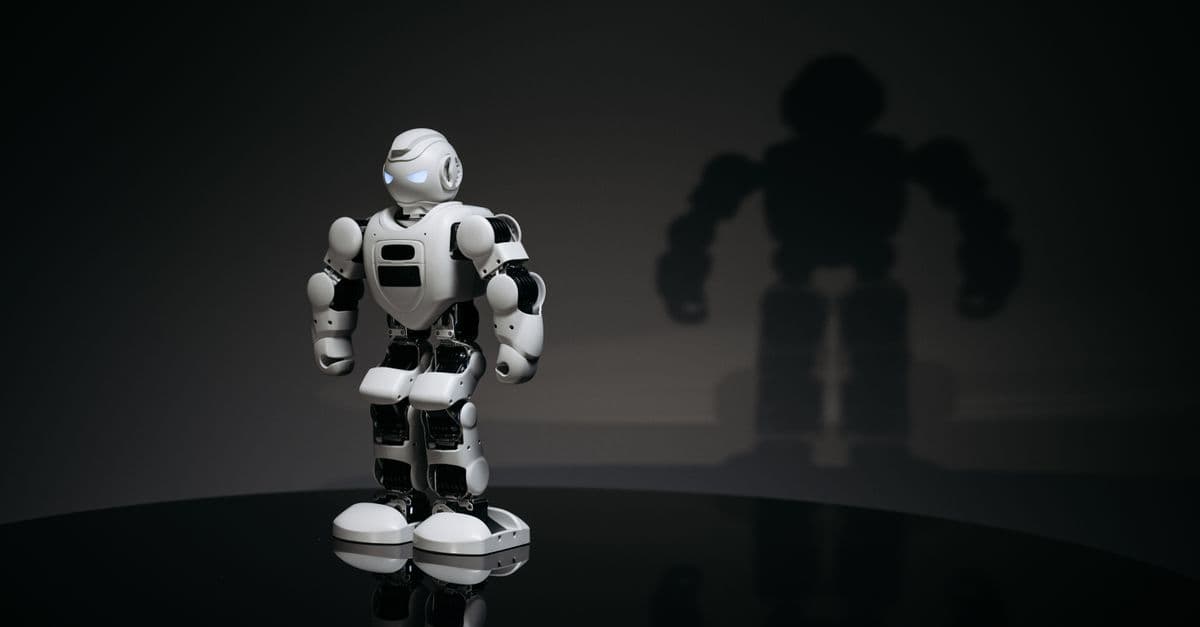
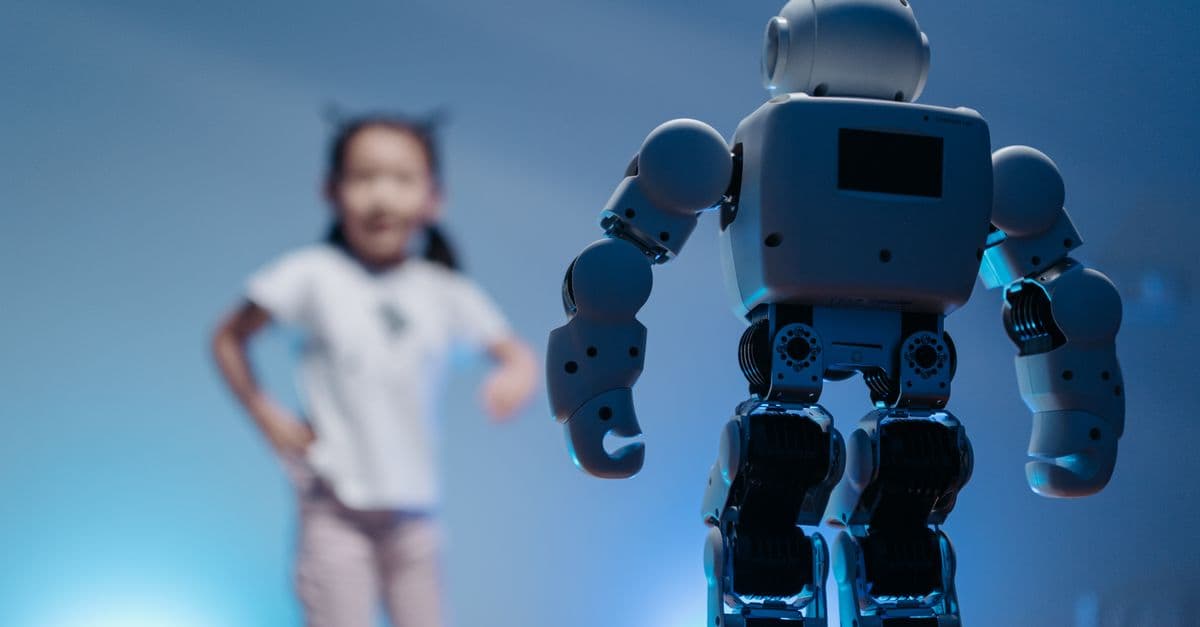
Photo: Pavel Danilyuk / Pexels
A humanoid robot walked BMW's Spartanburg logistics floor in 2026, sorting unsorted components into sequencing trolleys for real vehicle assembly, not a stage demo. That single deployment captures where the industry actually stands: after a decade of viral videos, humanoid robots are finally doing narrow, supervised work inside real factories, while the harder promise, a general-purpose machine that can do a person's job in an unstructured environment, is still years away. The gap between those two facts is the story.
What changed to make this plausible now
Humanoid robots have existed as research projects since the 1970s, but three technologies matured on separate timelines and only recently converged. Perception improved first: cameras, depth sensors, and neural networks trained on massive image and video datasets let a robot recognize objects, estimate distance, and map a room with reliability that would have been science fiction a decade ago. Control improved second: reinforcement learning and imitation learning, where a robot learns a motion by copying recorded human or simulated movement, replaced the hand-coded, joint-by-joint programming that made older robots slow to adapt to anything new.
The third piece, foundation models for physical action, is the newest and least finished. Just as a large language model learns general patterns of text and then gets fine-tuned for a specific chatbot task, robotics labs are training general "vision-language-action" models on huge amounts of demonstration data and then adapting them to specific factory tasks. That approach is why a company can plausibly claim its robot will handle new tasks with weeks of extra training instead of months of new code, though the amount of real-world physical data available to train on is still far smaller than the internet-scale text and image data that made large language models possible.
The three real bottlenecks: hands, batteries, and cost
Ask any robotics engineer what stops a humanoid robot from replacing a warehouse worker today, and the answer is rarely "the AI isn't smart enough." It is almost always one of three physical constraints.
Dexterity. Human hands combine fine motor control, tactile feedback, and enough mechanical compliance to handle a raw egg and a steel bolt with the same fingers. Recreating that in a machine means packing dozens of tiny actuators, sensors, and cables into a space the size of a human palm, all while keeping the hand light enough not to throw off the robot's balance. A 2026 World Economic Forum analysis on automation bottlenecks describes dexterity as "precisely the last mile of automation," noting that perception and decision-making are advancing toward human parity within a few years while manipulation hardware is progressing far more slowly (World Economic Forum, dexterity as an automation barrier).
Battery life. Most humanoid robots today run on lithium-ion batteries under 2 kilowatt-hours (kWh), which typically deliver only two to four hours of light operation, and far less, sometimes 10 to 20 minutes, during energy-intensive dynamic walking or lifting, according to a January 2026 industry analysis from TrendForce (TrendForce, humanoid robot battery bottlenecks). Standard lithium-ion cells are approaching their practical ceiling of roughly 300 watt-hours per kilogram (Wh/kg), which is why the industry is watching solid-state battery development closely: it promises meaningfully higher energy density without adding the weight that would compromise a robot's balance and speed.
Unit cost. A humanoid robot's price is a sum of expensive subsystems: actuators, batteries, sensors, and the dexterous hand alone can run close to $9,500 of a roughly $50,000 total bill of materials, based on the same 2025 manipulation survey. That cost structure is exactly why the market has split into two clear tiers, and understanding that split explains almost every headline about the industry in 2026.
Why do humanoid robots need so many actuators?
An actuator is the motor or artificial muscle that moves a single joint. A human body has dozens of major joints that move independently, and a robot needs a dedicated actuator, along with its own sensor and control electronics, for each one it wants to move with precision. More actuators mean more dexterity and more natural movement, but also more weight, more points of mechanical failure, and a steep rise in manufacturing cost, which is why hand actuators specifically are the single most expensive part of the robot relative to their size.
The two-tier market: research robots versus factory pilots
By mid-2026, the humanoid robot market had split into a low-cost research and education tier and a much smaller, far more expensive tier of robots actually deployed for real industrial work.
Unitree, a Chinese robotics company, sells its G1 humanoid starting around $13,500 to $17,990 depending on configuration and reseller, with fully sensor-equipped "EDU" research configurations priced from roughly $43,900 to $73,900, according to The Robot Report and Forbes coverage of the company's rapid growth (The Robot Report, Unitree G1 pricing; Forbes, Unitree G1 and the robotics investment stack). Unitree shipped more than 5,500 humanoid units in 2025, largely to universities, research labs, and early industrial pilots, and the company's roughly $618 million IPO on China's STAR Market was approved and pricing for a debut in mid-to-late 2026. These robots are genuinely useful for research and controlled demonstrations, but their battery life (roughly two hours under active use) and general-purpose reliability are not yet built for unsupervised, full-shift factory work.
At the other end, Figure AI's Figure 03 robot represents the smaller, far costlier tier built specifically for supervised industrial deployment. In 2025, BMW ran a 10-month pilot with the earlier Figure 02 robot in the body shop of its Spartanburg, South Carolina plant, where it inserted sheet-metal components for welding during the production of more than 30,000 BMW X3 vehicles. In 2026, BMW expanded the program with the newer Figure 03 robot, shifting its role to logistics, organizing unsorted components into sequencing trolleys ahead of assembly, according to BMW Group's own press release and reporting from The Robot Report (BMW Group official press release on Figure 03 deployment; The Robot Report, BMW deploys Figure 03). Figure 03's hardware upgrades include soft exterior padding for workplace safety around human coworkers, wireless charging to reduce downtime, and palm-mounted tactile sensors and cameras aimed directly at the dexterity bottleneck described above.
Tesla's Optimus program illustrates how much harder the "general-purpose humanoid" goal is than the narrow industrial-pilot goal. As of Tesla's July 2026 earnings period, Optimus production at the company's Fremont factory had not yet started, and CEO Elon Musk described having only several hundred units deployed, mostly for gathering training data inside Tesla's own factories rather than doing productive work, according to reporting from Electrek and TechTimes (Electrek, Tesla pushes Optimus production timeline; TechTimes, Tesla Optimus production count remains zero). Musk had originally projected roughly 10,000 units built in 2025 and a rate of "several thousand" more after that; the actual 2025 output was in the low hundreds, a target miss of well over 90%, consistent with a pattern of slipped humanoid production timelines going back to 2023.
Why factories are the first real customer, not homes or hospitals
The pattern across BMW, Unitree's industrial pilots, and other early adopters is not a coincidence. Factories offer three things a home or hospital cannot: a controlled, mapped physical environment, a narrow and repeatable task set, and human supervisors already trained to work alongside machinery safely. Compare this to how self-driving technology developed: geofenced robotaxis in mapped city cores arrived years before anything resembling a car that can drive anywhere a human can, because narrowing the environment narrows the problem enough for current AI and hardware to actually solve it reliably.
The same logic applies to humanoid robots. A robot sorting parts on a marked logistics floor faces predictable lighting, predictable object types, and a fenced or monitored area where a mistake has limited consequences. A robot working in a stranger's kitchen or an unpredictable hospital hallway faces unpredictable lighting, unfamiliar objects, unpredictable people, including children and pets, and errors with much higher stakes. That is why virtually every credible 2026 deployment, BMW's logistics pilot, Unitree's warehouse and facility trials, and similar programs at other automakers, is happening on a factory or warehouse floor rather than in a home.
Comparing the leading approaches
| Company / robot | Primary target market | Reported price range | Deployment status as of mid-2026 |
|---|---|---|---|
| Unitree G1 | Research, education, early industrial pilots | Roughly $13,500–$17,990 base; $43,900–$73,900 for EDU research configurations | Over 5,500 units shipped in 2025; used in labs, universities, and pilot programs such as airport baggage handling trials |
| Figure 03 (Figure AI) | Supervised industrial manufacturing and logistics | Not publicly disclosed; enterprise deployment model | Actively deployed at BMW's Spartanburg plant for parts sequencing, following a 10-month Figure 02 pilot that supported production of 30,000+ vehicles |
| Tesla Optimus | Long-term goal of general-purpose labor, near-term factory data collection | Not yet sold commercially | Several hundred units in Tesla's own factories collecting training data as of mid-2026; Fremont production line not yet operational |
Table: Comparison of leading humanoid robot programs by target market, price, and real-world deployment status, based on company statements and trade press reporting cited throughout this article.
How safety standards are catching up to walking robots
Industrial robots have been sharing floor space with people for decades, but the safety rulebook was written for stationary robot arms bolted to a fixed point, not for a machine that walks, balances, and can tip over. Two existing standards, ISO 10218 (an international standard for industrial robot safety) and ISO/TS 15066 (which governs "collaborative" robots designed to work directly alongside people, addressing how much contact force and pressure a robot arm can safely exert on a human body), were both built around that older assumption (EVS International, industrial robot safety standards overview).
That gap is closing. ISO 10218 received a full 2025 revision, and the American National Standards Institute adopted it domestically as ANSI/A3 R15.06-2025 in October 2025, updating the baseline safety requirements industrial robot manufacturers and integrators must meet in the United States. Neither of those, however, was written specifically for a dynamically stable robot, a machine like a humanoid that has to actively balance itself while moving rather than simply sitting in a fixed base. To close that specific gap, a new standard, ISO 25785-1, is under active development in 2026, aimed directly at the unique failure modes of walking robots, including what happens if one loses its balance near a person (TheresARobotForThat, ISO 25785-1 humanoid robot safety guide). Until that standard is finalized, most humanoid deployments, including Figure 03 at BMW, rely on a combination of the existing collaborative-robot rules, soft exterior padding, restricted work zones, and human supervision, rather than a single purpose-built humanoid safety code.
What is the difference between a collaborative robot and an industrial robot for safety purposes?
A collaborative robot is designed to share workspace directly with humans without a safety cage, so its standards focus on limiting contact force, speed, and the forces it can exert if it touches a person. A traditional industrial robot is typically fenced off from workers entirely, so its standards focus more on preventing any human contact in the first place. Humanoid robots blur this line because they need to work near people but do not yet have a mature, purpose-built standard of their own.
More companies racing toward the same bottlenecks
Figure AI, Unitree, and Tesla are not the only companies chasing the humanoid opportunity. Agility Robotics, an Oregon-based company that has been building bipedal robots since 2015, sells its Digit robot into warehouse and logistics pilots at a price around $250,000 per unit for early enterprise deployments, according to 2026 industry pricing trackers, with white-glove delivery, on-site integration, and operator training bundled into that figure (RoboZaps, Agility Digit review and total cost of ownership). Digit's current operating cost, the ongoing per-hour expense of running the robot including maintenance and support, runs an estimated $10 to $25 per hour today, a figure the company has stated it wants to bring down toward $2 to $3 per hour as hardware costs fall and reliability improves, though that target has not yet been reached at scale.
1X Technologies, a Norwegian-American robotics company, is pursuing the opposite end of the market with its Neo robot, positioned explicitly for home use rather than factory floors, at a far lower price point of roughly $20,000 outright or a $499-per-month subscription, with initial deliveries beginning in 2026 (RoboZaps, 1X Neo review, price, and release timeline). The company has also struck a deal with the private equity firm EQT to place thousands of Neo units across EQT's portfolio companies in manufacturing, facility operations, and healthcare settings, a distribution strategy that trades the "one robot per household" pitch for volume industrial placement in the near term while the home-use hardware and software mature.
The spread between these companies' price points, roughly $13,500 for Unitree's base research robot up to $250,000 for an enterprise-grade Digit deployment, illustrates that "humanoid robot cost" is not a single number. It depends heavily on payload capacity, battery runtime, sensor density, safety certification, and whether the price includes integration and support services or just the bare hardware.
Where humanoid robot costs are headed
Cost trajectory in robotics tends to follow a pattern familiar from other hardware categories: expensive, low-volume early units followed by a gradual decline as manufacturing scales and component costs fall, similar to the path industrial robot arms and, later, electric vehicle battery packs both took over their first decade of commercial production. Agility Robotics' stated goal of cutting Digit's operating cost from $10-25 per hour down to $2-3 per hour is one concrete example of a company publicly committing to that kind of curve, though it depends on manufacturing volume that has not yet materialized broadly across the industry.
The dexterous-hand cost estimate cited earlier in this article, roughly $9,500 of a $50,000 total bill of materials, is one of the clearest levers for future price reduction, since actuator and sensor costs for hands tend to fall as manufacturers standardize designs and increase production volume, the same pattern that brought down the cost of industrial robot arm actuators over the 2000s and 2010s. Whether humanoid robots reach a genuinely mass-market price point this decade depends on three compounding factors moving together: battery energy density improving enough to extend runtime without adding weight, dexterous hand manufacturing scaling enough to fall below its current cost share, and overall unit volume rising enough to justify the manufacturing investment that drives per-unit costs down in the first place.
What people get wrong about humanoid robots
The most common misconception is that a viral demo video is the same thing as a deployed product. Many of the most-shared humanoid robot clips are teleoperated, meaning a human operator is directly controlling the robot's movements from offstage, or they are running a single choreographed routine repeated dozens of times until one clean take is filmed. Neither scenario demonstrates the robot's ability to operate autonomously across varied, real-world conditions, which is the actual bar for replacing a human worker.
A second misconception is that humanoid shape is obviously the right design for warehouse and factory automation. Human shape is useful specifically because human-built environments, doorways, stairs, tool handles, control panels, are designed for the human body, so a humanoid robot can, in theory, use existing infrastructure without a costly redesign. But a humanoid form is also mechanically harder to balance, more expensive to build, and less energy-efficient for many single tasks than a purpose-built wheeled or fixed-arm robot. Companies are betting on humanoid shape as the more general, more reusable long-term investment, not because it is the easiest engineering solution for any one task today.
A third misconception treats "humanoid robots are coming for your job" as an immediate, blanket threat. The realistic near-term picture, based on where deployments are actually happening, is narrow task automation inside supervised, structured environments, alongside human coworkers rather than replacing an entire job category outright. That is a meaningfully different claim than mass, unsupervised labor replacement, and the difference matters for how quickly this technology will actually reshape work.
What this means for the next few years
The realistic timeline, based on current deployment patterns rather than press-release promises, looks like incremental expansion of narrow factory and warehouse pilots through the late 2020s, with battery, hand, and cost improvements arriving as separate, gradual engineering wins rather than one sudden breakthrough. Solid-state batteries, if they reach commercial scale, could meaningfully extend runtime without adding weight. Continued investment in tactile sensors and lower-cost actuator designs could bring dexterous hands down from a premium component to a standard one. Neither of those shifts happens overnight, and neither is guaranteed on any specific date, which is why credible industry analysts describe 2026 as an inflection point for pilots, not the year humanoid robots become common.
The takeaway
Humanoid robots are real and working today, but only inside carefully controlled factory environments, doing narrow tasks under supervision, exactly the same pattern self-driving cars followed before spreading to less structured settings. The technology that made this possible, better perception and learned control policies, matured faster than the hardware that still limits it: dexterous hands, battery energy density, and per-unit manufacturing cost. Watch those three numbers, not the demo videos, to judge how close the industry actually is to a general-purpose robot workforce.
Read next:
- How GPUs Work — Why AI Needs Them
- Why Semiconductors Are So Hard to Make — Inside the World's Most Complex Manufacturing Process
- How AI Models Are Trained: The Full Pipeline Explained
Frequently Asked Questions
Q: Why are humanoid robots suddenly showing up in factories in 2026? A: Perception (recognizing objects and mapping environments) and control (learning movement through imitation and reinforcement learning rather than hand-coded instructions) matured enough for narrow, supervised industrial tasks. BMW's deployment of Figure 03 for parts sequencing at its Spartanburg plant is a direct example of this shift from lab demo to structured factory pilot.
Q: What is the biggest technical obstacle keeping humanoid robots from general use? A: Dexterous hands are the single hardest unsolved problem. Human hands have roughly 27 degrees of freedom, and robotics researchers estimate 19 to 23 are needed for human-like dexterity, all packed into a palm-sized space alongside tactile sensors, while keeping the hand light enough not to throw off the robot's balance.
Q: How long do humanoid robot batteries actually last? A: Most current humanoid robots run on batteries under 2 kWh, providing two to four hours of light activity but often only 10 to 20 minutes during energy-intensive dynamic movement like fast walking or lifting, since standard lithium-ion batteries are approaching their practical energy-density ceiling of about 300 Wh/kg.
Q: How much does a humanoid robot cost? A: It depends heavily on the tier. Unitree's research-oriented G1 starts around $13,500 to $17,990, with fully equipped research configurations reaching roughly $43,900 to $73,900. Industrial deployment robots like Figure's models are not sold at retail; they are deployed through enterprise partnerships with companies like BMW.
Q: Is Tesla Optimus actually working in factories yet? A: Not as full production, as of mid-2026. Tesla had several hundred Optimus units operating mainly to collect training data inside its own factories, and its dedicated Fremont production line had not yet started building robots at volume, a significant slip from Elon Musk's earlier projections of thousands of units in 2025.
Q: Will humanoid robots replace factory or warehouse jobs soon? A: The realistic near-term pattern is narrow task automation alongside human workers in structured, supervised settings, such as sorting parts or moving components, rather than robots working fully unsupervised or replacing entire job categories. That mirrors how self-driving cars first appeared in geofenced, mapped areas before expanding gradually.
Sources
- BMW Group official press release: Figure 03 deployment at Spartanburg plant
- The Robot Report: BMW Group deploys Figure 03 humanoid
- The Robot Report: Unitree Robotics unveils G1 humanoid for $16K
- Forbes: Unitree G1 humanoid robots reshaping the robotics investment stack
- Electrek: Tesla pushes Optimus V3 production timeline
- TechTimes: Tesla Optimus production count remains zero
- arXiv: The Developments and Challenges towards Dexterous and Embodied Robotic Manipulation — A Survey
- World Economic Forum: Why hand dexterity remains a barrier to automation
- TrendForce: Humanoid robots move toward commercialization; solid-state batteries set to break through power bottlenecks
- EVS International: Industrial Robot Safety Standards — ISO 10218, ISO/TS 15066 & CE Marking (2026)
- TheresARobotForThat: ISO 25785-1 — Complete Humanoid Robot Safety Guide for 2026
- RoboZaps: Agility Digit Review — Verdict & ROI (2026)
- RoboZaps: 1X NEO Review — Price, Pre-Order & Release Date (2026)
Follow new articles
Add SciHub101 to your feed reader to see new science and technology stories.
About the Author
SciHub101 is an independent science and technology publication founded and edited by Buğra Sözeri, a software engineer and app developer based in Türkiye. AI tools assist with drafting and research. Source documentation in the existing archive is uneven, and articles are being reviewed and corrected. The Editorial Team byline identifies editorial responsibility; it does not certify specialist or independent human review. Where we compare products, anything built by our own team is labelled as such — see the editorial guidelines and About page for how corrections and disclosures work.
Related Articles
Quantum Internet Explained: What It Is and What It Is Not
The quantum internet is not faster Wi-Fi. It is a network for distributing quantum states, entanglement, and ultra-secure communication under strict physical limits.
How Semiconductor Fabs Work
A chip fab is one of the most complex factories on Earth. This article explains cleanrooms, wafers, lithography, etching, deposition, inspection, and yield.
How Modern Robotics Actually Works
Robots no longer just follow scripts. Modern robots use AI to perceive, plan, and adapt. Here's how they work, where they're being used, and where the technology is heading.

Reinforcement Learning for Robotics: Teaching Machines to Move Through the World
Robots now learn walking, balancing, and some manipulation by trial and error, mostly in simulation. Here is how the training works, what has reached real hardware, and what still breaks.
Countries With the Most Industrial Robots Per Worker (IFR World Robotics 2025)
South Korea runs 1,220 industrial robots per 10,000 manufacturing employees — the highest robot density on earth. See the IFR ranking, how the metric works, and why China's figure fell from 470 to 166.