How Modern Robotics Actually Works
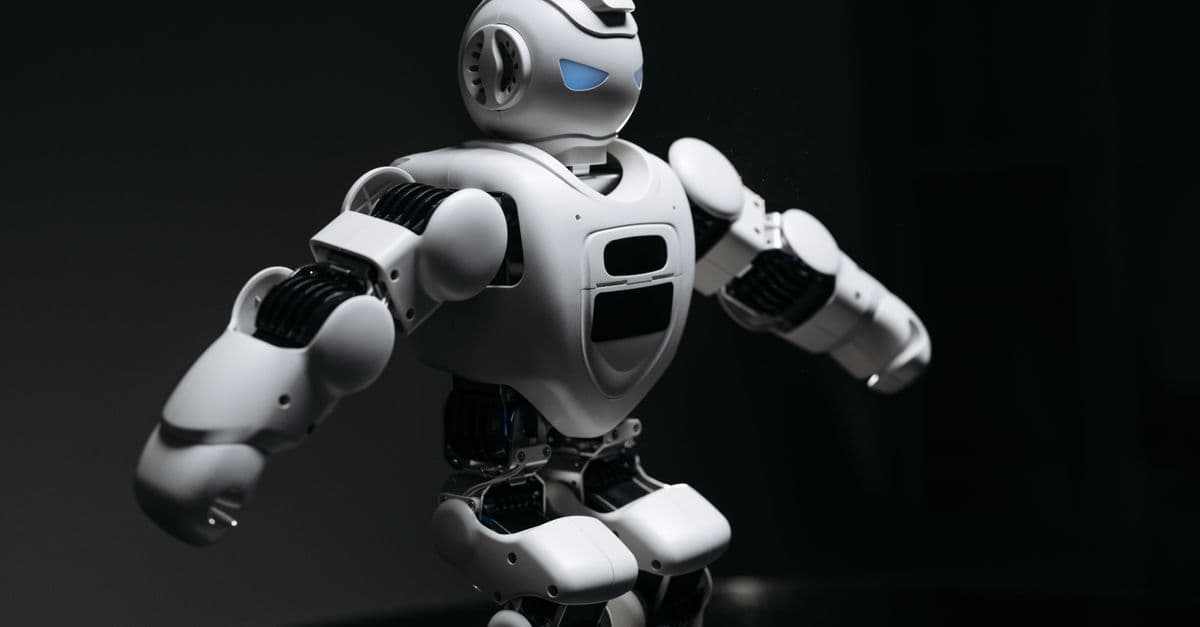
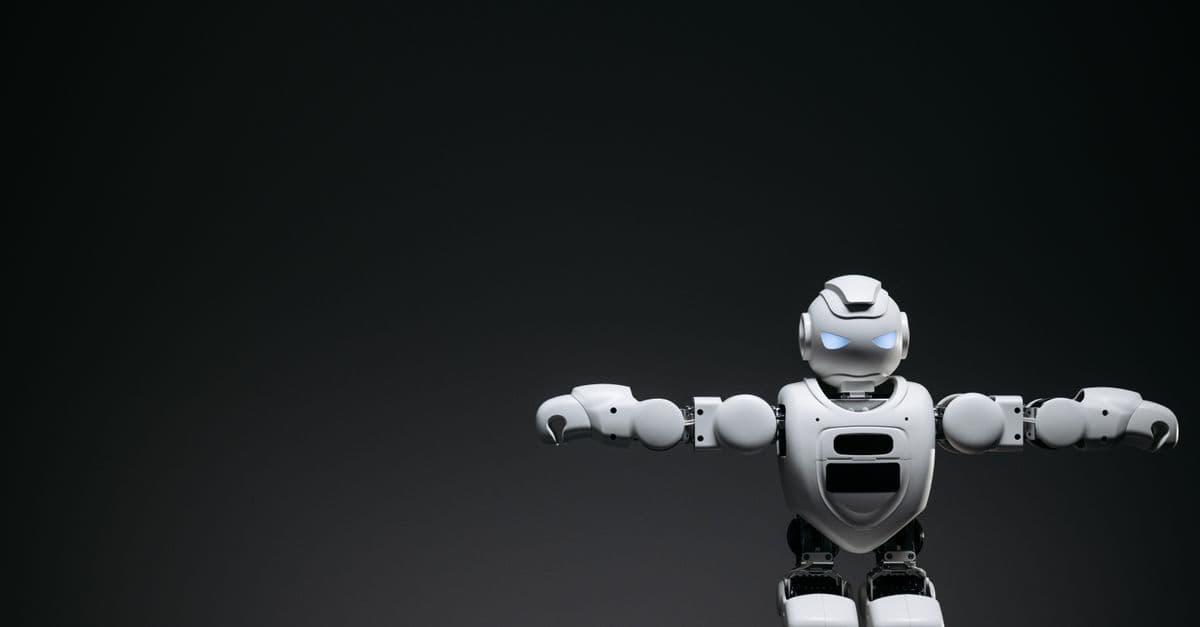
Photo: Pavel Danilyuk / Pexels
A modern robot is a machine that repeats one loop, over and over, many times per second: sense the world, decide what to do, move, and check whether the move worked. In 2024 factories installed 542,000 new industrial robots, and a single warehouse operator passed one million robots in its fleet in 2025. Most of those machines still run fixed programs. A new generation adds learned vision and language models so a robot can handle objects it was never explicitly coded for. This article explains how the loop works, what AI changed, and where the limits remain.
Key takeaways
- A robot is a machine with sensors, actuators (the parts that move), and a controller that connects them in a feedback loop.
- Most robots at work today are industrial arms and warehouse vehicles that repeat well-defined tasks. They are reliable because their world is engineered to be predictable.
- AI has changed perception first (recognizing objects), and is now changing planning and control through vision-language-action models.
- Humanoid robots are advancing quickly in demonstrations, but dexterity, long task sequences, reliability, and cost still restrict them to narrow, supervised roles.
What actually makes a machine a robot
Engineers do not agree on a single definition, but nearly every working definition includes three ingredients: a way to sense, a way to act, and a controller that links the two. Take away the controller and you have a remote-controlled toy. Take away the sensors and you have a machine that plays back a fixed motion and breaks the moment something moves an inch.
The useful mental model is a thermostat with ambition. A thermostat senses temperature, compares it to a target, and switches a heater. A robot arm does the same thing, except it senses the angle of six or seven joints, compares each one to a target angle hundreds or thousands of times per second, and adjusts motor current to close the gap. The principle is identical; the difficulty is that the "temperature" is a whole physical environment.
Sensors: how a robot knows anything
Sensors fall into two groups. Proprioceptive sensors measure the robot itself: joint angles from encoders (devices that count the rotation of a shaft), motor current, and body orientation from inertial measurement units. Exteroceptive sensors measure the outside world: cameras, depth sensors, lidar, microphones, and touch or force sensors.
| Sensor | What it measures | Typical use | Main weakness |
|---|---|---|---|
| Joint encoder | Shaft angle | Knowing where each joint is | Says nothing about the outside world |
| Inertial measurement unit | Acceleration and rotation rate | Balance, orientation | Drifts over time without correction |
| RGB camera | Color images | Recognizing objects and people | No direct depth; sensitive to lighting |
| Depth camera | Distance per pixel | Grasp planning, obstacle checks | Struggles with shiny or transparent surfaces |
| Lidar (laser ranging) | Distance via reflected light | Mapping and navigation | Costly; can be fooled by glass |
| Force/torque sensor | Push, pull, and twist at a joint or wrist | Gentle contact, assembly | Needs careful calibration |
| Microphone | Sound | Voice commands | Noisy environments |
Each sensor has a blind spot, which is why robots combine several and fuse the readings. Our explainers on how LiDAR works and why robots need force sensors cover two of these in detail.
Actuators: where commands become motion
An actuator converts a control signal into physical movement. Electric motors dominate modern robots, often paired with gearboxes that trade speed for torque (turning force). Hydraulic actuators use pressurized fluid to deliver high force from a compact package. Pneumatic actuators use compressed air and suit simple, fast, low-force motions such as suction grippers.
Hydraulics show how engineering fashions shift. The first commercially installed industrial robot, the Unimate at a General Motors plant in Trenton, New Jersey in 1961, ran on a self-contained hydraulic supply operating at 6.9 megapascals (1,000 psi), according to IEEE Spectrum's history of the machine. Boston Dynamics, which long used hydraulics in its Atlas humanoid, announced in April 2024 that it was retiring the hydraulic Atlas and unveiling a fully electric successor.
The controller: the part that decides
The controller is software running on one or more computers. In a classic industrial arm it is a real-time program that executes a stored sequence of positions. In a modern mobile or humanoid robot it is a stack of layers, from tiny fast loops that keep a motor at the right current up to slow, large models that interpret a spoken instruction. We will walk through that stack next.
The sense-plan-act loop, step by step
Textbooks describe robot behavior as a loop with three stages, sometimes written "sense, plan, act." Real systems run several of these loops at once at different speeds. A fast inner loop holds a joint steady, a middle loop plans a smooth path for the arm, and a slow outer loop decides what the task is.
Step 1: Perception turns raw signals into objects
A camera produces a grid of numbers. Perception software turns that grid into statements a planner can use: "there is a cup at this position, with this orientation, about 40 centimeters from the gripper." For a decade this has meant neural networks trained on large labeled image sets. Our article on computer vision object detection explains how those detectors work.
Depth matters as much as recognition. A planner cannot grasp a cup it can only name. That is why many arms pair a color camera with a depth sensor and fuse the two into a 3D scene.
Step 2: Localization answers "where am I?"
A mobile robot must know its own position. The standard solution is SLAM, short for simultaneous localization and mapping: the robot builds a map while estimating its location inside that same map. The problem is circular, because a good map needs a good position estimate and a good position estimate needs a good map.
A 2016 survey by Cesar Cadena, Luca Carlone, and colleagues in IEEE Transactions on Robotics, titled "Past, Present, and Future of Simultaneous Localization and Mapping," describes the standard formulation used today and explicitly asks whether SLAM is "solved." The authors review open challenges in long-term robustness and scalability, which is a fair summary of the field: SLAM works well in controlled spaces and remains hard in places that change over months.
Step 3: Goal interpretation
Every robot needs a goal. In a factory the goal is baked into the program. In a warehouse a fleet manager assigns it. In newer systems the goal can be a sentence such as "put the blue cup in the sink," which has to be turned into something a planner can score. This step is where large language models entered robotics, and we return to it below.
Step 4: Planning at three scales
Planning is not one problem but three nested ones:
- Task planning decides the order of sub-goals: open the drawer, pick up the item, close the drawer.
- Motion planning finds a collision-free path through space for the arm or body, given its joint limits.
- Grasp planning chooses where and how the fingers or suction cups touch the object.
Motion planning is a search problem. A seven-joint arm has seven dimensions of possible poses, and the planner must find a route through that space that avoids obstacles. The mathematics that converts a desired hand position into joint angles is called inverse kinematics. A good analogy is a person reaching for a light switch in a dark room: your brain does not compute shoulder, elbow, and wrist angles explicitly, but a robot has to.
Step 5: Execution with feedback
Execution is where control theory lives. The most common technique is PID control, which stands for proportional, integral, and derivative. In plain terms, the controller looks at the error between the target and the measured value, adds a correction proportional to the error, a correction based on how long the error has persisted, and a correction based on how fast the error is changing. It is the same recipe behind cruise control in a car.
Feedback is what lets a robot cope with imperfection. If a payload is heavier than expected, the joint lags the target, the error grows, and the controller pushes harder. No model of the payload is required; the loop absorbs the surprise.
Step 6: Monitoring and replanning
Plans fail. A grasp slips, a person steps into the path, a door is closed. Modern systems monitor progress, detect that the plan no longer matches reality, and replan. The sophistication of this step is what separates a robot that stops and waits for help from one that tries a second approach.
Step 7: Learning from experience
The final stage is the newest. Data from past attempts can be fed back to improve perception, grasp selection, or the control policy itself. In a fleet, one robot's failure can improve all of them. We cover the main learning methods in a later section.
How a 1961 hydraulic arm differs from a 2025 warehouse fleet
The difference between old and new robotics is mostly about how much of the world has to be fixed in advance.
The original Unimate had no programming language. According to IEEE Spectrum, an operator moved the arm to each position, a position detector recorded it, and the machine then played the sequence back. The task was unloading finished castings from a die-cast press, which the article describes as a "dirty, dreary, and dangerous" job. GM paid $18,000 for the first unit, a large discount from an estimated $65,000 production cost.
That teach-and-playback model still underlies much of industry. The robot repeats a taught path with extraordinary consistency, which is why it dominates welding, painting, and assembly. What it cannot do is notice that the part is in the wrong place.
Contrast that with Amazon's announcement in 2025 that it had deployed its one millionth robot, to a fulfillment center in Japan, across a network of more than 300 facilities. Amazon also introduced DeepFleet, a generative AI foundation model that coordinates robot movement across the network. The company says DeepFleet improves the fleet's travel time by 10%. Think of it as traffic management for a city of robots. The individual vehicles are not very different from earlier warehouse robots; the coordination layer is what changed.
What the 2024 installation data shows
The most reliable global count of factory robots comes from the IFR, which publishes an annual World Robotics report. The 2025 edition, released on September 25, 2025, covers installations during 2024.
| Market | Industrial robots installed in 2024 | Change vs. 2023 |
|---|---|---|
| China | 295,000 (record) | Share of global total: about 54% |
| Japan | 44,500 | Down 4% |
| United States | 34,200 | Down 9% |
| Republic of Korea | 30,600 | Down 3% |
| Germany | 26,982 | Down 5% |
| India | 9,100 | Up 7% |
Source: IFR, World Robotics 2025, press release of September 25, 2025.
Three details deserve attention. First, installations have topped 500,000 for four straight years. Second, Asia took 74% of new installations, Europe 16%, and the Americas 9%. Third, China's operational stock exceeded 2 million units, the largest of any country, and Chinese suppliers' share of their home market rose to 57%. The IFR expects global installations to grow 6% to 575,000 units in 2025 and to pass 700,000 by 2028. Those are forecasts, not measurements.
For a ranking by robot density (robots per 10,000 workers), see our article on countries with the most industrial robots per worker. Installations measure how many robots a country buys; density measures how automated its factories are.
How AI changed robotics
Until about a decade ago, a robot's intelligence was written by engineers: explicit rules for each situation. Machine learning changed that in stages, and the order matters.
First came learned perception
Deep neural networks made it possible to recognize arbitrary objects in cluttered scenes rather than only objects with known shapes and markers. That solved the "what is that" problem well enough for warehouse picking and household navigation. It did not solve the "what do I do with it" problem.
Then came learned control in simulation
Reinforcement learning lets a robot discover behavior through trial and error, guided by a reward signal. Real trials are slow and damaging to hardware, so researchers run millions of trials in simulation first. Our explainer on reinforcement learning covers the core idea.
The best-known demonstration came from OpenAI in 2019. Its paper "Solving Rubik's Cube with a Robot Hand" (arXiv:1910.07113) reports that policies trained only in simulation controlled a physical humanoid robot hand. The key technique was Automatic Domain Randomization, which builds a growing distribution of increasingly difficult simulated environments so the policy cannot overfit to one imperfect simulator. The authors credit it with "vastly improved sim2real transfer," meaning the skills carried over to the real hand.
Think of it as practicing a golf swing on a thousand courses with different wind, grass, and club weight. A player who has only practiced on one course is surprised by the first real one; a player who has seen all of them has learned something more general.
Now come vision-language-action models
The newest approach combines a vision-language model (an AI trained on images and text from the internet) with robot data, so the same network that recognizes a picture of a hammer can output the arm motions to pick one up. These are called vision-language-action (VLA) models.
Google DeepMind's RT-2, announced on July 28, 2023, was an early example. It adapted existing vision-language models as backbones and represented robot actions as tokens in the model's output, like words. It was trained on web-scale vision-language data together with robot demonstration data collected over 17 months with 13 robots in an office kitchen. In more than 6,000 robotic trials, DeepMind reported that RT-2 raised performance on unseen scenarios from 32% for its predecessor RT-1 to 62%. A variant could write a short natural-language plan before acting, which let it choose a rock as an improvised hammer.
Two more systems illustrate how fast this moved:
- Figure's Helix, announced February 20, 2025, is a VLA for humanoids with a two-speed design. A "System 2" vision-language model runs at 7 to 9 Hz for scene and language understanding, and a "System 1" visuomotor policy runs at 200 Hz to produce continuous actions for a 35-degree-of-freedom upper body. Figure says it trained on about 500 hours of teleoperated behavior data.
- Gemini Robotics, announced by Google DeepMind on March 12, 2025, is a VLA built on Gemini 2.0, with a companion model, Gemini Robotics-ER, that adds spatial reasoning that roboticists can pair with their own controllers. DeepMind says the model more than doubled performance on a generalization benchmark relative to other leading VLAs, and it is working with Apptronik on humanoid robots.
Treat these performance claims as company-reported. They come from the developers, on benchmarks the developers chose, and independent replication is still thin.
A worked example: "pick up the blue cup"
Abstract loops are easier to grasp with a concrete task. Imagine a kitchen robot with a camera on its head, a depth sensor, two arms, and a mobile base, and a person says, "Pick up the blue cup and put it in the sink."
First, the language step. A language or vision-language model converts the sentence into a goal: find an object matching "blue cup," then find the sink. In an older system this would have been a menu choice or a coded command; in newer systems the same model that understands the sentence may also propose the first motions.
Second, perception. The camera finds objects, the depth sensor assigns each one a distance, and the vision model labels a blue, cylindrical object on the counter. The robot now has a target position, but only with some uncertainty. Reflections off the cup, a cluttered background, or a dim kitchen can all shift that estimate by a few centimeters, which is enough to miss a handle.
Third, planning. The motion planner searches for a path that reaches the cup without hitting the toaster, and the grasp planner proposes a few ways to grip it, such as around the body or by the handle. It scores them against the robot's hand geometry and the expected weight of the cup.
Fourth, execution with feedback. As the fingers close, force or current sensing tells the controller when contact begins and how tightly the cup is held. If the cup is empty and light, the grip can stay gentle; if it holds coffee, the controller needs to avoid tipping it. If the fingers detect slip, the loop tightens the grip within a fraction of a second, without any "thinking" at all.
Fifth, monitoring. The camera checks that the cup is actually in the hand. If it is not, the system replans from the beginning. Each of these five steps has its own failure modes, and the overall success rate is the product of all of them. That product is why a robot can appear fluent in one demonstration and fail half the time in a stranger's kitchen.
A short timeline of how the field got here
| Year | Milestone | Why it matters |
|---|---|---|
| 1961 | First Unimate installed at a General Motors plant in Trenton, New Jersey (IEEE Spectrum) | First commercial industrial robot on a production line |
| 2016 | ISO/TS 15066 first published (ISO) | Formal guidance for robots working beside people |
| 2016 | Cadena et al. survey of SLAM published | Standard formulation of localization and mapping |
| 2019 | OpenAI's robot hand solves a Rubik's Cube using simulation-trained policies | Showed large-scale sim-to-real transfer |
| 2023 | Google DeepMind announces RT-2 | Web-scale vision-language knowledge applied to robot control |
| 2024 | Boston Dynamics retires hydraulic Atlas for an electric version | Shift toward electric humanoids |
| 2025 | Figure's Helix and Google DeepMind's Gemini Robotics announced | Vision-language-action models for humanoids and arms |
| 2025 | Amazon announces one million robots and DeepFleet | Foundation-model coordination of a very large fleet |
Reading the table, the pattern is clear. The first sixty years of industrial robotics were about making motion precise and repeatable. The last decade has been about making robots less dependent on a carefully arranged world, and that is a much harder problem.
Why the "reality gap" matters
Simulation is cheap, but a simulator is an approximation. Friction, the springiness of a gripper pad, motor delay, and camera noise are all slightly wrong in any simulated model. A policy that exploits a quirk of the simulator will fail on hardware. Domain randomization, the technique used in the Rubik's Cube work, deliberately varies those quantities so the policy learns behavior that survives all of them. It is the robotic equivalent of training with weights on uneven ground: the skill that works across variations is the one that transfers.
Why latency shapes the architecture
Robots have a hard time limit that chatbots do not. A balance controller must react in a few milliseconds or the robot falls over, while a language model may take a second or more to produce its answer. That mismatch explains why systems such as Helix split into a slow reasoning module and a fast control module. Engineers put the heavy thinking where time allows, and keep the reflexes small and quick.
The main robot categories compared
Not every robot is trying to be general. Most successful ones are narrow on purpose.
| Category | Typical job | Why it works | Main limit |
|---|---|---|---|
| Industrial arms | Welding, painting, assembly | Fixed workcell, repeatable path | Needs a structured environment |
| Warehouse mobile robots | Moving shelves and carts | Flat floors, mapped layout | Handling items still needs people or special grippers |
| Surgical robots | Surgeon-controlled instruments | Human judgment plus scaled motion | Not autonomous; high cost |
| Legged robots (quadrupeds) | Inspection, site walks | Stairs and rough ground | Payload and battery |
| Humanoids | Pilot tasks in factories and logistics | Fits human-built spaces | Cost, reliability, speed |
| Drones | Inspection, delivery, mapping | Cheap, fast aerial access | Battery, regulation |
| Domestic robots | Vacuuming, mowing | Simple tasks, bounded areas | Narrow capability |
Our article on how drones actually work covers the aerial case, and how self-driving cars actually work covers the road-going version of the same sense-plan-act loop.
Surgical robots are not autonomous robots
The word "robot" misleads here. Intuitive Surgical's da Vinci system is a teleoperated tool. According to the company's 10-K filing for 2024, the surgeon sits at a console viewing a 3D high-definition image, and hand movements are translated into corresponding real-time micro-movements of instruments inside the patient. The system scales motion (the filing gives an example of 3 millimeters of hand movement becoming 1 millimeter inside the body) and filters the tremor inherent in a surgeon's hands.
Scale is substantial. Intuitive reports an estimated 2,683,000 da Vinci procedures worldwide in 2024 and an installed base of 9,902 systems at December 31, 2024, of which 5,807 were in the United States. A surgeon is still making every decision.
Safety: how robots and people share space
Industrial robots were historically fenced off because a fast arm with a heavy payload is dangerous. Collaborative robots, often called cobots, are designed to work beside people without a cage. The ISO technical specification ISO/TS 15066, first published in 2016, supplements the ISO 10218 industrial-robot safety standard with guidance for four collaborative techniques:
- Safety-rated monitored stop: the robot halts whenever a person is in the shared workspace.
- Hand guiding: an operator moves the arm directly by hand.
- Speed and separation monitoring: the robot slows or stops as a person gets closer.
- Power and force limiting: the robot keeps contact forces below thresholds that cause pain or injury.
The last one is why force sensing matters so much. A robot that can feel a collision within milliseconds can stop before it hurts anyone. It also explains a counterintuitive point: a safe collaborative robot is usually slower and less powerful than a caged one. Safety is purchased with performance.
Standards continue to be revised, so the current editions of ISO 10218 and ISO/TS 15066 should be checked with ISO or a national standards body before any real deployment.
What modern robots still struggle with
Demonstrations are edited for their best take. The honest list of unsolved problems is long.
Dexterity in clutter
Picking one item out of a pile of mixed objects remains harder than it looks. Hands need to sense slip, adjust grip force, and cope with deformable or transparent objects. Our article on force sensors in robots explains why touch is still the weak sense.
Long tasks where errors compound
If each step in a ten-step task succeeds 95% of the time, the whole task succeeds about 60% of the time. That arithmetic is a general feature of sequences, not a robotics-specific measurement, and it explains why long, multi-step household tasks are much harder than single pick-and-place actions.
Learning from very little data
A person can watch a task once and copy it. Robot policies typically require many demonstrations, often collected by a human teleoperating the robot. Figure's roughly 500 hours of teleoperation for Helix gives a sense of the scale even for a "generalist" system.
Common sense and edge cases
Language models give robots a broad store of everyday knowledge, but knowledge is not the same as physical judgment. Knowing that a glass is fragile does not guarantee a gentle grasp.
Power and endurance
Mobile robots carry batteries, and batteries limit runtime and payload. Our explainer on how lithium-ion batteries work covers the underlying chemistry and why progress is gradual.
Computing at the edge
A language-model-sized brain needs graphics processors. Helix runs on dual embedded low-power GPUs onboard each robot, according to Figure, which shows the trade-off between model size and what fits in a robot's body. Our explainer on how GPUs work shows why this hardware suits neural networks.
The humanoid push, with a reality check
Humanoid robots are the most heavily publicized corner of robotics, and the logic is straightforward. Stairs, doorways, tools, and shelves are all built for human bodies. A robot with a similar shape could, in principle, work in existing spaces without redesigning them.
Several companies are pursuing this, including Boston Dynamics (Atlas), Figure, Apptronik (Apollo), Agility Robotics, Tesla (Optimus), and Unitree. The electric Atlas that Boston Dynamics unveiled in April 2024 has what the company describes as a broader range of motion than any previous generation, and Hyundai is its starting customer and a testing ground.
The reality check is that nearly all current humanoid work is pilots, demonstrations, and supervised trials. Public claims about future prices and production volumes change often and are made by the companies selling the robots, so this article does not repeat specific price targets. For a fuller treatment, see Humanoid Robots Explained.
A useful skeptical test: ask whether a robot has done a task for a full shift, without human help, in a place it has never seen, and how often it failed. Videos rarely answer all three.
How robots learn: a comparison of methods
| Method | How it works | Strength | Weakness |
|---|---|---|---|
| Imitation learning | Copies human demonstrations, often via teleoperation | Quick to teach concrete skills | Needs many demonstrations; fragile outside them |
| Reinforcement learning | Tries actions and maximizes a reward | Finds behaviors humans did not design | Slow in the real world; reward design is tricky |
| Sim-to-real transfer | Trains in simulation, then deploys on hardware | Millions of cheap attempts | Simulator gaps ("reality gap") |
| Foundation-model fine-tuning | Starts from a large pretrained model, adds robot data | Broad knowledge and language | Needs lots of data and compute; opaque failures |
| Fleet learning | Pools data from many robots | Improvements scale across the fleet | Requires deployment at scale |
Foundation models also connect to the broader field of machine learning. Transfer learning explains why starting from a pretrained model beats starting from scratch, which is the idea behind VLA models.
Economics: where robots pay off now
Robots pay off where three conditions overlap: the task is repetitive, the environment can be controlled, and volume is high. That describes automotive welding, electronics assembly, and large warehouses, which explains why those sectors account for the bulk of deployments.
Amazon's own account of its robotics program illustrates the nuance. It says robots handle heavy lifting and repetitive work, reducing physical strain, and that at a next-generation fulfillment center in Shreveport, Louisiana, advanced robotics require 30% more employees in reliability, maintenance, and engineering roles. Those are company statements, and the broader employment effect of automation is still debated among economists. For a hypothetical extreme, see our thought experiment on what if robots did all human work.
Common misconceptions
"Robots are essentially AI with a body"
Most robots contain little or no machine learning. A welding arm uses taught positions and classical control, and works precisely because nothing about it is learned or uncertain. AI adds flexibility, but it also adds failure modes that are harder to predict.
"Robots will be everywhere within a few years"
In specific controlled settings they already are. In homes and unstructured workplaces, the obstacles are dexterity, reliability, safety certification, and cost, and none of those yields to better language models alone.
"A robot that does something in a video can do it reliably"
A demonstration shows that a behavior is possible, not how often it succeeds. Reliability over thousands of repetitions is a different, much harder engineering target.
"Humanoid means advanced"
The most commercially successful robots are not humanoid. Wheeled bases, fixed arms, and suction grippers are simpler and cheaper for most jobs. The humanoid shape is a bet on flexibility, not a mark of sophistication.
"Surgical robots operate on people by themselves"
The da Vinci system is controlled by a surgeon at every moment. Its value is scaled motion, tremor filtering, and 3D vision, not independent decision-making.
Frequently asked questions
Q: How do robots see? A: Robots use cameras, depth sensors, and lidar. Software, usually a neural network, turns the raw image or point cloud into labeled objects with positions. Depth is essential because a grasp planner needs 3D position, not just a name.
Q: What is SLAM in robotics? A: SLAM stands for simultaneous localization and mapping. The robot builds a map of its surroundings while estimating its own position within that map. The 2016 survey in IEEE Transactions on Robotics by Cadena and colleagues describes it as a core capability and examines whether it is truly solved.
Q: What is a vision-language-action model? A: It is a neural network trained on images, text, and robot data so that one model can look at a scene, understand an instruction, and output robot actions. Google DeepMind's RT-2 (2023), Figure's Helix (2025), and Gemini Robotics (2025) are examples.
Q: How many industrial robots are there in the world? A: The IFR reported an operational stock of 4,664,000 industrial robots in 2024, with 542,000 new installations that year. China accounted for about 54% of new installations.
Q: Are surgical robots autonomous? A: No. The da Vinci system is teleoperated by a surgeon at a console. According to Intuitive's 2024 filing, it translates hand motions into smaller instrument motions and filters hand tremor, and about 2,683,000 procedures used it in 2024.
Q: Can robots work safely next to people? A: Yes, within limits. Collaborative robots follow safety methods described in ISO/TS 15066, such as speed and separation monitoring and power and force limiting. Safety usually costs speed and payload, so collaborative robots are typically slower than caged industrial arms.
Q: Will robots replace most jobs? A: Evidence so far shows automation changing tasks and shifting jobs more than ending them wholesale, though economists disagree about the long-term effect. Amazon says its robotics sites require more reliability and maintenance staff, but those are company-reported figures.
The takeaway
Every robot, from a 1961 hydraulic die-casting arm to a warehouse fleet coordinated by a foundation model, runs the same loop of sensing, deciding, acting, and correcting. What changed is how much of that loop is written by engineers and how much is learned from data. Learned perception is mature, and learned control through vision-language-action models is advancing quickly in demonstrations.
The gap that remains is reliability under messy conditions. A robot that works 95% of the time is a research result; one that works 99.99% of the time, in a place it has never seen, is a product. That gap, not intelligence in the abstract, decides where robots appear next.
Sources
- International Federation of Robotics, World Robotics 2025: global robot demand in factories doubles over 10 years (September 25, 2025).
- Amazon, Amazon deploys 1 millionth robot, launches DeepFleet AI foundation model.
- Intuitive Surgical, Form 10-K for fiscal year 2024.
- Google DeepMind, RT-2: new model translates vision and language into action (July 28, 2023).
- Google DeepMind, Gemini Robotics brings AI into the physical world (March 12, 2025).
- Figure AI, Helix: a vision-language-action model for generalist humanoid control (February 20, 2025).
- OpenAI, Solving Rubik's Cube with a Robot Hand, arXiv:1910.07113 (2019).
- Cadena et al., Past, Present, and Future of Simultaneous Localization and Mapping, IEEE Transactions on Robotics 32(6), 2016.
- IEEE Spectrum, The Unimate robot.
- Boston Dynamics, An electric new era for Atlas (April 2024).
Related Reading
- What Are Deepfakes — and How Do They Actually Work?
- Countries With the Most Industrial Robots Per Worker (IFR World Robotics 2025)
- How Do Self-Driving Cars Actually Work?
- How Does the Internet Actually Work? From Your Click to a Server and Back
- What Is Neuralink? How Brain-Computer Interfaces Actually Work
Follow new articles
Add SciHub101 to your feed reader to see new science and technology stories.
About the Author
SciHub101 is an independent science and technology publication founded and edited by Buğra Sözeri, a software engineer and app developer based in Türkiye. AI tools assist with drafting and research. Source documentation in the existing archive is uneven, and articles are being reviewed and corrected. The Editorial Team byline identifies editorial responsibility; it does not certify specialist or independent human review. Where we compare products, anything built by our own team is labelled as such — see the editorial guidelines and About page for how corrections and disclosures work.
Related Articles
What Are VR and AR — and Where Is the Metaverse Actually Going?
Virtual and augmented reality have been "the next big thing" for a decade. Here's how each actually works, where they succeed, and what the realistic future looks like.

What Is Blockchain? Explained Simply, Without the Hype
Blockchain is a way to keep a record everyone can trust without trusting any single party. It powers Bitcoin, but it can do a lot more — and a lot less — than the hype suggests.
Countries with the Most Robots in Manufacturing (Robot Density Ranked)
South Korea has 1,012 industrial robots per 10,000 manufacturing workers — the highest robot density ever recorded for a major economy. That is more than six times the global average of 162, and more than double Germany's figure. The IFR World Robotics 2024 report shows a world where automation in factories is accelerating faster than at any point in industrial history.
Reinforcement Learning for Robotics: Teaching Machines to Move Through the World
Robots now learn walking, balancing, and some manipulation by trial and error, mostly in simulation. Here is how the training works, what has reached real hardware, and what still breaks.
What If Robots Did All Human Work?
Every delivery, every surgery, every harvest, every line of code — done by machines. What do 8 billion humans do on a Tuesday morning?

Will AI Take My Job? An Honest Answer
Everyone is asking the same question. The honest answer is more nuanced than the headlines suggest — some jobs are genuinely at risk, others are safer than you think, and the data tells a more complex story.