Top 10 Fastest Cars Ever Made (2025 Ranked)
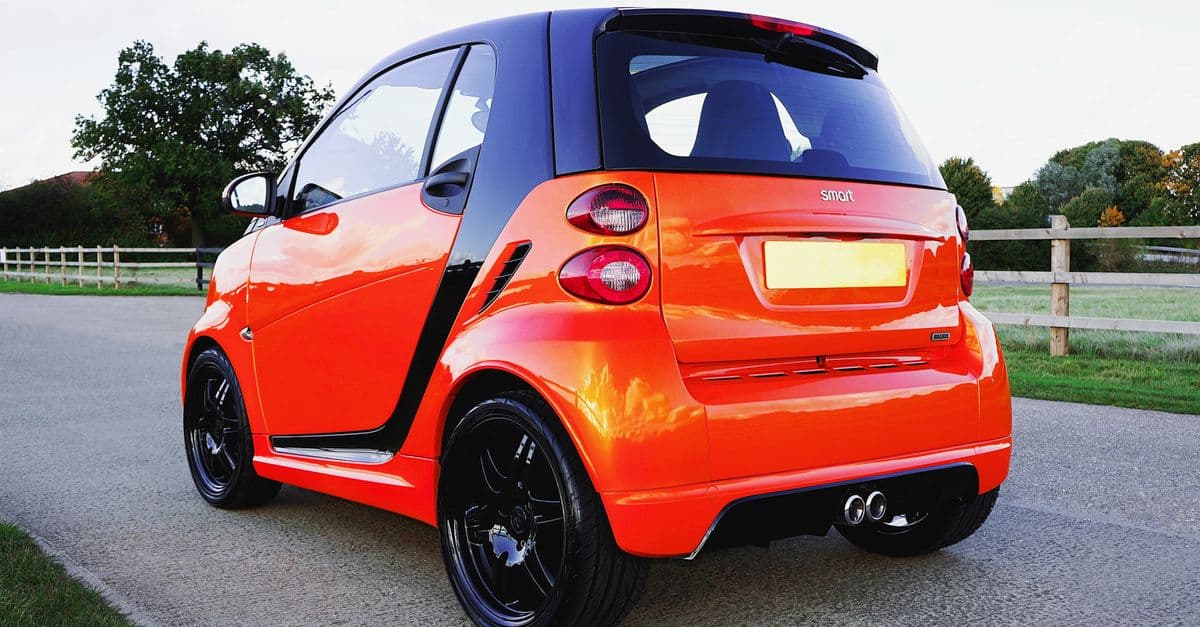
Photo: Mike Bird / Pexels
Speed has always been the definitive measure of automotive engineering ambition. The fastest production cars in history represent the limits of aerodynamics, powertrain engineering, and materials science — each one the product of engineering teams pushing the boundaries of what internal combustion (and now electric) powertrains can achieve. Here are the 10 fastest production cars ever built.
Key takeaways
- The Bugatti Chiron Super Sport 300+ made the first recorded 300 mph+ (483 km/h) run by a production car in 2019 — although the record was technically a one-way pass.
- The SSC Tuatara holds the official two-way average production car speed record at 282.9 mph (455.3 km/h).
- Koenigsegg holds multiple official Guinness World Records for production car performance and has pioneered carbon fibre and electric-hybrid hypercars.
- The fastest electric production car — the Rimac Nevera — can accelerate to 60 mph in 1.74 seconds, the quickest accelerating production car ever recorded.
- All cars in the top 10 cost over $1 million — most are limited to 25–500 units globally.
Top 10 fastest production cars ever made
| Rank | Car | Top speed | Power | Year | Price |
|---|---|---|---|---|---|
| 1 | Bugatti Chiron Super Sport 300+ | 304 mph (489 km/h)* | 1,578 hp | 2019 | $3.9M |
| 2 | SSC Tuatara | 282.9 mph (455 km/h) | 1,750 hp | 2020 | $1.9M |
| 3 | Koenigsegg Jesko Absolut | 330 mph (531 km/h) theoretical | 1,600 hp | 2020 | $3M |
| 4 | Hennessey Venom F5 | 271 mph (436 km/h) tested | 1,817 hp | 2021 | $2.1M |
| 5 | Bugatti Veyron Super Sport | 267.8 mph (431 km/h) | 1,200 hp | 2010 | $2.7M |
| 6 | Koenigsegg Agera RS | 277.9 mph (447 km/h) | 1,360 hp | 2017 | $2.5M |
| 7 | McLaren Speedtail | 250 mph (402 km/h) | 1,036 hp | 2020 | $2.2M |
| 8 | Bugatti Bolide | 310 mph (498 km/h) theoretical | 1,578 hp | 2024 | $4.7M |
| 9 | Rimac Nevera | 258 mph (415 km/h) | 1,914 hp | 2023 | $2.4M |
| 10 | Pagani Huayra R | 236 mph (380 km/h) | 850 hp (NA V12) | 2021 | $3.1M |
*One-way run; official two-way average not recorded.
1. Bugatti Chiron Super Sport 300+ — the 300 mph barrier
In August 2019 on Volkswagen Group's Ehra-Lessien test track, Bugatti test driver Andy Wallace drove a prototype-spec Chiron Super Sport 300+ to 304.773 mph (490.484 km/h) — the first confirmed 300 mph run by any car.
The asterisk: This was a one-way run on a closed, specially prepared 9km straight. The car was not in standard production spec — it had the rear wing removed and used a modified exhaust. Bugatti did not claim an official world record (which requires a two-way average). The production Chiron Super Sport 300+ was subsequently built in 30 units at €3.5M each — but speed-limited to 440 km/h for road use.
The engineering: The Chiron Super Sport 300+'s 8.0-litre quad-turbocharged W16 engine produces 1,578 hp. To reach 300 mph, aerodynamic drag is the primary obstacle — it scales with the square of velocity, meaning drag at 300 mph is 4× the drag at 150 mph. Bugatti's engineers focused as much on reducing aerodynamic drag as on increasing power.
The tyres: Michelin developed bespoke tyres rated to 500 km/h for the 300+ run — a full 50 km/h above any previous street tyre. At 300 mph, each wheel completes 50 rotations per second. The centrifugal forces are enormous; tyre failure at these speeds would be unsurvivable.
2. SSC Tuatara — the official record holder
SSC North America (formerly Shelby SuperCars) holds the officially verified two-way production car speed record:
The verified record: In January 2021 on a closed section of Nevada State Route 160, the Tuatara achieved a two-way average of 282.9 mph (455.3 km/h) — verified by Guinness World Records, GPS telemetry, and independent observers.
The controversy: An earlier October 2020 run claimed 331 mph but was disputed due to GPS data inconsistencies and subsequently withdrawn. The January 2021 verified run represents the clean, undisputed record.
The powertrain: 1,750 hp from a 5.9-litre twin-turbocharged V8 running on E85 ethanol fuel. The carbon fibre monocoque weighs 1,247 kg — remarkably light for this power output.
3. Koenigsegg Jesko Absolut — the theoretical maximum
The Jesko Absolut has not had its top speed officially verified — but Koenigsegg's calculations (using aerodynamic drag data and dyno-verified power figures) suggest a theoretical maximum of 330 mph:
The name: "Absolut" is Koenigsegg's designation for their aerodynamically optimised (maximum speed) variant, versus the "Attack" variant optimised for downforce and track use.
The powertrain: 1,600 hp from a 5.0-litre twin-turbocharged V8 — but the headline figure is its nine-speed multi-clutch transmission, which Koenigsegg claims shifts in under 20 milliseconds — faster than any competitor's dual-clutch transmission.
The owner: Named after Jesko von Koenigsegg, the founder's father, who provided the initial capital to start the company in the 1990s.
4. Hennessey Venom F5 — the Texas hypercar
Hennessey Performance Engineering (Sealy, Texas) produces the most powerful production car engine ever offered to customers:
1,817 hp: The Hennessey Fury V8 — a 6.6-litre twin-turbocharged engine — produces 1,817 hp on 98-octane pump petrol. This is the highest power output of any naturally-described production car engine.
The 271 mph run: In 2023, Hennessey recorded 271.6 mph (437 km/h) on a closed runway — impressive but falling short of the SSC Tuatara's official record. Hennessey states that top speed attempts are ongoing.
Production: 24 units, each priced at $2.1M. Buyers were required to purchase a Hennessey vehicle previously or demonstrate existing relationship with the company.
9. Rimac Nevera — the electric record breaker
The Rimac Nevera rewrites what electric cars can do at the limit:
1.74 seconds 0-60 mph: Verified by numerous independent tests, the Nevera is the quickest-accelerating production car ever built — quicker than any combustion car. Four electric motors (one per wheel) deliver 1,914 hp with zero turbo lag or gear shift interruptions.
The driving experience: Unlike combustion hypercars, the Nevera's power is entirely linear — no power curve, no gear changes, no torque management across a rev range. Maximum torque is available from 0 rpm. The sensation is described by testers as unlike any previous vehicle experience.
Croatian engineering: Rimac is a Croatian company founded by Mate Rimac in his garage in 2009 at age 21. Rimac is now partly owned by Porsche (49%) and also manufactures the powertrain for the Bugatti Rimac Tourbillon (Bugatti's most expensive production car, priced at $4.5M). The Nevera demonstrates that electric vehicles can outperform combustion at the performance extreme.
The speed limit debate
Every car on this list is speed-limited on European roads to 250 km/h (or 155 mph). The Autobahn has unrestricted sections; the Nevada and Utah salt flats provide American test grounds. The reality of owning a 300 mph car is that this performance is experienced almost exclusively on closed courses and test tracks — and in the knowledge that the engineering capability exists.
Frequently asked questions
What is the fastest car ever made, including race cars?
The ThrustSSC holds the land speed record at 763 mph (1,228 km/h) — but it is powered by two jet engines and is categorically different from a production car. Among purpose-built racing cars, the Porsche 919 Evo Hybrid (919 hp, modified Nürburgring lap record holder) and the Red Bull X2010 (simulation-only concept) exceed production cars in performance but are not road cars. Among true production cars, the SSC Tuatara holds the verified record.
Will any car break 400 mph?
The Koenigsegg Jesko Absolut's theoretical calculations suggest it could approach 330 mph under ideal conditions. Breaking 400 mph in a road car would require either significantly more power or dramatically lower aerodynamic drag — or both. Current tyre technology is a limiting factor; no commercial tyre manufacturer has produced a road-appropriate tyre rated above 500 km/h.
Is the Bugatti Chiron faster than the SSC Tuatara?
The Bugatti Chiron Super Sport 300+ recorded a faster one-way run (304 mph vs. 282.9 mph). However, the SSC Tuatara holds the official Guinness World Record for the fastest production car two-way speed average. Bugatti chose not to pursue an official two-way record after the 300+ run.
The bottom line
The fastest production cars represent engineering at its most extreme — the pursuit of speed as an end in itself, funded by buyers who pay millions for the engineering achievement rather than the practical transportation. The shift toward electric hypercars (Rimac Nevera, Pininfarina Battista, upcoming offerings from Lamborghini and Ferrari) suggests the next speed records will be set by electric or hybrid powertrains. The Rimac Nevera has already proven that electricity accelerates faster than combustion from a standstill; high-speed records require aerodynamic efficiency as much as power, and that battle is only beginning.
Related Reading
Follow new articles
Add SciHub101 to your feed reader to see new science and technology stories.
About the Author
SciHub101 is an independent science and technology publication founded and edited by Buğra Sözeri, a software engineer and app developer based in Türkiye. AI tools assist with drafting and research. Source documentation in the existing archive is uneven, and articles are being reviewed and corrected. The Editorial Team byline identifies editorial responsibility; it does not certify specialist or independent human review. Where we compare products, anything built by our own team is labelled as such — see the editorial guidelines and About page for how corrections and disclosures work.
Related Articles
Top 10 Motorcycles to Buy in 2025 — Best Bikes Ranked
The Ducati Panigale V4 R produces 240 hp — more than many supercars. The Honda Gold Wing weighs 365 kg and has a 6-speed automatic gearbox. The Royal Enfield Meteor is the world's best-selling 350cc bike. Here are the 10 best motorcycles of 2025 ranked across every category.
Countries With the Most Electric Vehicles Per Capita (2025)
Norway has the highest electric share of any national car fleet, with more than one in three cars electric, and 97% of its 2025 new-car sales were electric or plug-in hybrid. Here is how every major market compares, and why fleet share and sales share tell different stories.
Best Free E-Signature Tools in 2026 (No Signer Account)
Best free e-signature tools in 2026 where signers need no account: eSignSimple, Zoho Sign, SignWell, Dropbox Sign, DocuSign and Adobe compared on limits and audit trails.
Best Free Online Tools in 2026: How to Pick Them Safely
A hub for our 17 free-tool guides, from PDFs and e-signatures to AI photo apps and prayer times, plus a checklist for privacy, file handling, free tiers, and accessibility.
Best Free PDF Tools With No Watermark in 2026
Best free PDF tools with no watermark in 2026: pdfdots, PDF24, PDFgear, Stirling-PDF, Sejda and iLovePDF compared on limits, file privacy, and price.
Best Spec Comparison Sites With Auditable Scores (2026)
Best spec comparison sites with auditable scores (2026): vsMars, GSMArena, RTINGS, DXOMARK, Technical City, and PassMark compared on method and limits.