Top 10 Motorcycles to Buy in 2025 — Best Bikes Ranked
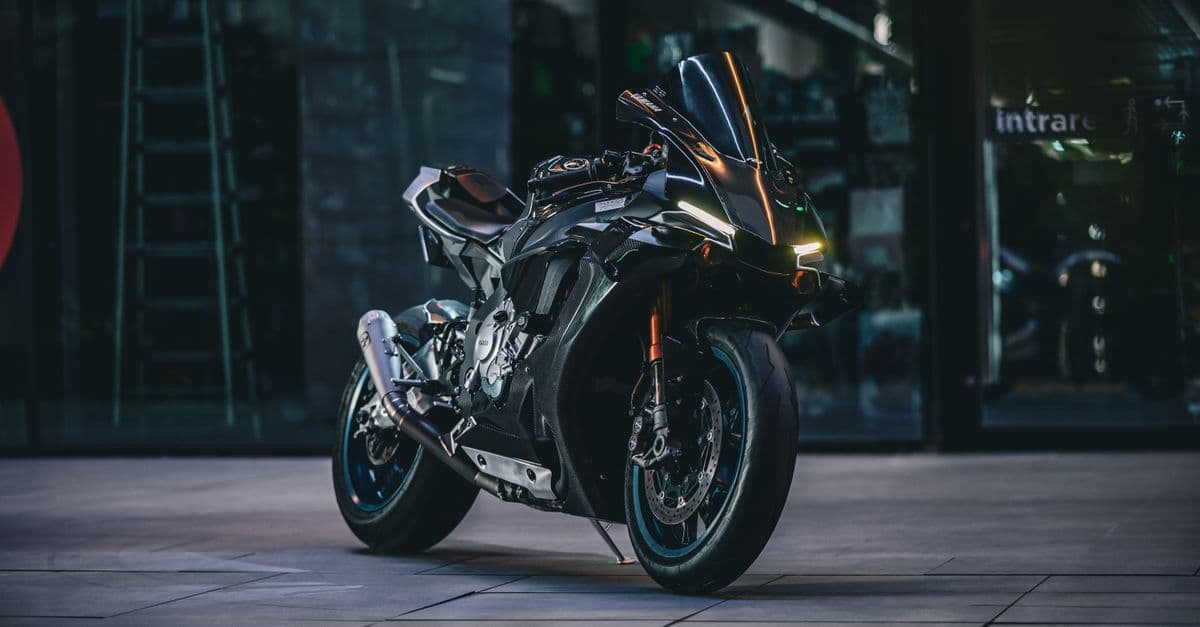
Photo: Ene Marius / Pexels
The global motorcycle market serves approximately 500 million riders worldwide, spanning everything from 50cc commuter scooters in Southeast Asia to 240 hp superbikes on European circuits. Here are the 10 best motorcycles to buy in 2025 across every category — from track-focused superbikes to long-distance tourers.
Key takeaways
- The Ducati Panigale V4 R (240 hp) produces more power than many performance cars — the most powerful production superbike ever made.
- The Honda Gold Wing is the definitive long-distance touring motorcycle — with a 6-speed dual-clutch transmission, airbag, and Apple CarPlay.
- The Kawasaki Z900 is the best-value all-rounder — strong performance at entry-level pricing.
- Electric motorcycles (Zero SR/F, Energica Ego) are maturing rapidly but still face charging infrastructure limitations.
- The BMW R 1300 GS remains the world's best-selling adventure motorcycle for over a decade.
Top 10 motorcycles of 2025
| Rank | Model | Price (from) | Engine | Power | Best for |
|---|---|---|---|---|---|
| 1 | Ducati Panigale V4 R | $40,000 | 998cc V4 | 240 hp | Track/superbike |
| 2 | Honda Gold Wing Tour | $28,000 | 1833cc flat-6 | 125 hp | Long-distance touring |
| 3 | BMW R 1300 GS | $18,000 | 1300cc boxer | 145 hp | Adventure/all-road |
| 4 | Kawasaki Ninja ZX-10R | $17,000 | 998cc inline-4 | 213 hp | Track/sport |
| 5 | Harley-Davidson Road Glide | $25,000 | 1923cc V-twin | 93 ft-lb | American touring |
| 6 | Kawasaki Z900 | $9,500 | 948cc inline-4 | 125 hp | Best value all-rounder |
| 7 | Triumph Trident 660 | $8,800 | 660cc inline-3 | 81 hp | Best A2 middleweight |
| 8 | Royal Enfield Himalayan | $5,500 | 452cc single | 40 hp | Budget adventure |
| 9 | Zero SR/F | $21,000 | Electric | 110 hp | Best electric |
| 10 | Honda CB500F | $6,800 | 471cc parallel-twin | 47 hp | Best beginner |
1. Ducati Panigale V4 R — the pinnacle of superbike engineering
The Panigale V4 R represents the absolute limit of what road-legal motorcycle engineering can achieve:
The engine: Ducati's Desmosedici Stradale R engine is derived directly from MotoGP technology — the same Desmodromic valve actuation system used in GP racing. At 240 hp in homologation (track) trim with the racing exhaust fitted, it exceeds the power output of many performance cars costing 10× as much.
The aerodynamics: The Panigale V4 R features a full aerodynamic package — front winglets generating 30 kg of downforce at 270 km/h, a rear downforce package, and an underbody diffuser. This isn't aesthetic; at circuit speeds, the downforce is measurable in cornering stability and rear traction.
The electronics: 6-axis IMU (inertial measurement unit) feeds data to cornering ABS, traction control, wheelie control, launch control, and engine brake control. The bike monitors lean angle, pitch, yaw, and acceleration simultaneously at 1,000 times per second. What once required professional racing teams to set up is now available in standard production bikes.
The reality: This bike is challenging to ride at its limit on public roads — its power and chassis are optimised for circuit use. Many buyers trailer it to track days. For those who do ride it on roads, the electronics make it manageable; the experience at 7,000+ rpm is unlike any other production vehicle.
2. Honda Gold Wing Tour — touring perfection
The Honda Gold Wing is one of motorcycling's longest-running legends — produced since 1975 with continuous development:
The engineering achievement: A 1,833cc horizontally-opposed 6-cylinder engine (a "flat-6") — unique in motorcycling — sits low in the frame to centralise mass. The 6-speed dual-clutch transmission (automatic mode available) eliminates the clutch lever entirely. Apple CarPlay integration means navigation, music, and calls are managed through the touchscreen or handlebar controls.
The airbag: The Gold Wing Tour is one of the only motorcycles in production with a fitted airbag — deploying from the fairing to slow the rider in front-end impacts. Honda's testing showed significant injury reduction in forward collisions.
The weight question: At 365 kg, the Gold Wing requires planning at low speeds. Parking lot manoeuvring is challenging. However, at speed, the mass contributes to stability — at motorway speeds, it is one of the most planted motorcycles in existence.
The touring proposition: Storage for two full-face helmets in lockable luggage, passenger seat with backrest and armrests, heated seats and grips, independent suspension adjustable from the handlebars, and a range of ~450 km between fuel stops. For transcontinental touring, no production motorcycle does it better.
3. BMW R 1300 GS — adventure category king
The BMW GS series has dominated adventure motorcycle sales globally for over a decade:
The category it created: BMW's GS (Gelände/Straße — off-road/road) series created the adventure motorcycle category in 1980. The concept — a large-capacity motorcycle equally capable of motorway touring and dirt tracks — now represents the largest motorcycle segment globally. Sales data shows adventure motorcycles now comprise approximately 15% of global motorcycle unit sales, up from <5% two decades ago.
The 1300 GS update: The 2024 R 1300 GS (continuing into 2025) replaced the legendary R 1250 GS with a new 1300cc engine producing 145 hp, revised Telelever and EVO Paralever suspension, new aerodynamics, and upgraded electronics including a 10.25-inch TFT display. Weight reduced by 12 kg versus the outgoing model.
Real-world versatility: The R 1300 GS is ridden to work in London, across the Sahara, through the Alps, and on unsealed roads in Mongolia. Its suspension travel (190mm front, 200mm rear) handles rough surfaces; its aerodynamics handle motorway speeds; its engine handles everything between. No other single motorcycle covers this range of use cases as well.
Source: MCN Magazine (2024) — "BMW R 1300 GS real-world testing"
4. Kawasaki Ninja ZX-10R — supersport precision
The Kawasaki Ninja ZX-10R competes in the exotic superbike category against the Ducati Panigale and Yamaha YZF-R1:
The displacement advantage: At 998cc (matching Ducati), Kawasaki's inline-4 engine produces 213 hp — slightly less than Ducati's 240 hp but still extraordinary. The inline-4 philosophy prioritizes high-rpm smoothness over low-end torque; power arrives dramatically at 6,500+ rpm.
Track performance: The ZX-10R is track-focused engineering. Rider aids include cornering ABS, engine braking control, and traction control mapped for different track conditions. Many riders prefer the ZX-10R's linearity over Ducati's volatile peak power delivery.
Value proposition: At $17,000 versus Ducati's $40,000, the ZX-10R represents extraordinary value for superbike specification. Real-world testing shows equivalent lap times to the Panigale V4 R when rider skill is equivalent.
5. Harley-Davidson Road Glide — American cruising icon
The Harley-Davidson Road Glide represents American motorcycle culture and serves a substantial loyal market:
The engine: Harley's 1923cc V-twin (Milwaukee-Eight) is specifically designed for torque delivery below 3,000 rpm — the cruising range. 93 ft-lbs of torque (125 Nm) at just 3,000 rpm enables relaxed cruising with substantial pulling power.
Touring capability: The Road Glide features a fairing-mounted windshield (versus fork-mounted, reducing head buffeting), integrated storage, cruise control, heated seats, and Apple CarPlay integration. Weight of 366 kg is substantial but well-distributed for stability.
Cultural significance: Harley-Davidson controls approximately 48% of the cruiser market globally. The Road Glide specifically appeals to riders prioritizing style, brand heritage, and community over peak performance specifications.
7. Triumph Trident 660 — middleweight character
The Triumph Trident 660 fills the A2-category market with character and quality:
A2 category leader: Triumph's 660cc inline-3 produces exactly 81 hp (47 kW) — the A2 restriction limit for new riders in EU. The Trident 660 is consistently rated the best-handling A2 motorcycle available; its chassis and suspension prioritize feel and feedback over absolute grip.
Design philosophy: Triumph's "modern retro" styling appeals to riders seeking personality. The engine character — a distinctive three-cylinder thump — delivers an engaging experience at the cost of slightly higher vibration than parallel-twin competitors.
Growth trajectory: Many riders purchasing the Trident 660 as their A2 bike keep it for years post-full license, enjoying its handling characteristics.
8. Royal Enfield Himalayan — global adventure access
The Royal Enfield Himalayan serves an enormous global market with affordable adventure capability:
Market position: Royal Enfield produces more motorcycles than any manufacturer globally except Honda. The Himalayan represents the company's adventure offering at $5,500 — 75% cheaper than BMW's entry-level adventure bike (F 750 GS at $8,500).
Engine reality: The 452cc single-cylinder engine produces just 40 hp. But at 199 kg dry weight, power-to-weight rivals the BMW. The engine is supremely reliable — tested across extreme environments from the Arctic to the Sahara by Himalayan expedition riders.
Real-world ownership: Himalayan ownership reveals a simple, maintainable motorcycle that prioritizes reliability over performance. Service intervals stretch to 10,000 km; parts cost a fraction of European bikes; dealer networks exist throughout Asia, Africa, and Latin America.
9. Zero SR/F — electric motorcycle reality
Zero Motorcycles' SR/F represents the maturity of electric two-wheelers:
Performance spec: The SR/F produces 110 hp (equivalent to 600cc sport bikes) from an electric motor. Zero-to-60 mph acceleration is 3.0 seconds — faster than most superbikes due to instant motor torque.
Range reality: Real-world testing shows 160-200 km range in typical riding. Motorway riding reduces range 30-40% below city speeds. Cold weather reduces range 15-25%. Fast charger (0-95% in 60 minutes) or standard outlet charging (0-100% in 4-6 hours) are available.
Cost of ownership: No oil changes, valve adjustments, or combustion-related maintenance. Tire and brake wear are standard. Electricity costs ~$0.02 per km versus $0.06 for petrol motorcycles. Battery replacements (8-10 year lifespan) cost $3,000-4,000.
10. Honda CB500F — beginner excellence
The Honda CB500F remains the most-recommended beginner motorcycle for a reason:
A2 compliance with growth: The CB500F produces exactly 47 hp at 1.5 hp per kg — A2 restricted in EU/UK markets. After A2 restrictions lift, the same bike remains an excellent handler for riders preferring smooth, predictable power delivery.
Reliability pedigree: Honda's parallel-twin engine is derived from designs used in millions of motorcycles. Service intervals are 15,000 km; routine maintenance is straightforward; parts availability is global.
Resale value: CB500F bikes typically retain 70-80% of original value after 3-5 years — superior to most competitors. Predictable costs make ownership economics favorable for first-time buyers.
At $9,500, the Z900 delivers performance and quality that once cost twice as much:
The engine: Kawasaki's 948cc inline-4 produces 125 hp — exactly as much as entry-level Ducatis cost far more to deliver. The power delivery is smooth and usable from low revs.
Naked simplicity: Without fairings, the Z900 is lighter and simpler to maintain than sports-faired alternatives. The upright riding position is sustainable for longer journeys than extreme sport bike positions.
Why it wins the value argument: At $9,500, the Z900 is within reach of entry-level motorcyclists moving beyond A2-restricted bikes, offers enough performance to grow with skills over years, and has Kawasaki's proven reliability. Running costs are predictable and parts are widely available.
Modern Motorcycle Technology: What's Changed in 2025
Motorcycle technology has advanced dramatically in the past five years, with rider aids that were once exclusive to premium models now standard across categories:
Cornering ABS and Traction Control: Modern motorcycles measure lean angle at 1,000+ Hz using 6-axis IMUs. ABS systems now modulate braking independently at each wheel based on lean angle — a breakthrough that permits hard braking while leaned. Traction control similarly monitors slip and adjusts engine output. Five years ago, these were exotic. Today, they're available on motorcycles priced at $8,500.
Source: Motorcycle Safety Foundation (2024) — "Modern rider aids and accident reduction"
Connectivity and Navigation: Apple CarPlay and Android Auto integration is now standard on premium motorcycles. Turn-by-turn navigation displays on the motorcycle's dashboard or head-up displays. Smartphone integration enables calls and music management via handlebar controls — eliminating phone-from-pocket distractions.
Engine Efficiency: Fuel injection, variable valve timing, and combustion optimization have improved real-world fuel economy by 20% versus 2015 models. Many middleweight motorcycles now achieve 20+ km/liter in mixed riding. Engine braking control allows riders to adjust engine-drag deceleration — crucial for trail braking on track or unpredictable surfaces.
Suspension Technology: Electronically-adjustable damping allows suspension behavior to shift between road and track modes. Some adventure bikes offer adjustable suspension from the handlebar without stopping. Traction-sensitive suspension adjusts behavior based on engine load and slip — optimizing grip.
Frequently Asked Questions
Q: What is the best motorcycle for a beginner?
A: The Honda CB500F is the most recommended beginner motorcycle. At 47 hp, it's powerful enough for enjoyment but manageable for learning; Honda's reliability is industry-leading; A2 license compliance in EU/UK markets is built in; resale value is strong at 70-80% retention over three years.
Q: Are electric motorcycles worth buying in 2025?
A: Electric motorcycles like the Zero SR/F now deliver genuinely practical performance — 160-200 km range, 0-60 mph in 3 seconds, and negligible operating costs. However, charging infrastructure outside cities remains inconsistent, range drops 30-40% at motorway speeds, and battery replacements cost $3,000-4,000 after 8-10 years. For urban/suburban riding, they're practical; for long-distance touring, they remain challenging.
Q: Which motorcycles have the best reliability record?
A: Japanese manufacturers (Honda, Yamaha, Kawasaki, Suzuki) lead reliability surveys. The Honda CB series and Gold Wing achieve the highest ratings, with service costs and parts availability globally consistent. European brands have narrowed the gap — BMW and Ducati now match Japanese reliability, though maintenance costs remain higher.
Q: How much should I spend on my first motorcycle?
A: Budget $5,000-8,000 for a beginner bike. At $5,500, the Royal Enfield Himalayan offers durability; at $6,800, the Honda CB500F provides premium engineering; at $8,800, the Triumph Trident 660 adds styling and character. Spending more than $10,000 is unnecessary for learning; focus on rider training courses instead.
Q: Can I tour on a sport bike like the Ducati Panigale?
A: Technically yes, but unpleasantly. Sport bikes prioritize track performance — aggressive riding positions cause fatigue over 2-3 hours; limited fuel range (300 km) requires frequent refueling; minimal luggage capacity demands saddle bags; exhaust heat can burn legs at traffic lights. Adventure bikes and tourers are specifically engineered for long-distance comfort and practicality.
Q: What's the actual cost of motorcycle ownership in 2025?
A: Annual expenses typically run $800-1,500 depending on bike category. Fuel costs $600-900 annually for average riding. Insurance costs $300-600 depending on age/location/bike. Tires last 10,000-15,000 km (every 1-2 years), costing $200-400. Maintenance costs $200-400 annually. Premium brand motorcycles (Ducati, BMW) run $200-300 higher annually than Japanese bikes.
Motorcycle Safety and Accident Prevention
Motorcycle accident statistics reveal stark realities. Motorcyclists suffer injury rates 37 times higher than automobile drivers, and fatal crash rates 28 times higher. However, modern electronic rider aids are reducing these rates significantly:
Cornering ABS Effectiveness: Studies of cornering ABS implementation show 25-35% reduction in accident rates when riders adopt the technology. The ability to brake hard while leaned has prevented countless low-side crashes.
Source: Journal of Safety Research (2023) — "Electronic motorcycle safety systems and accident reduction"
Protective Gear Reality: Helmet usage reduces head injury risk by 69% and death risk by 42%. Leather jackets, gloves, and armor distribute crash impact, reducing serious injury. Modern textile gear offers protection equivalent to leather with weather flexibility.
Training Impact: Motorcycle Safety Foundation courses reduce accident risk by 40% among recent graduates. Professional rider training is more cost-effective than any aftermarket safety device at preventing incidents.
Visibility and Detection: The majority of motorcycle accidents involve drivers failing to detect the motorcycle (SMIDSY — "Sorry Mate, I Didn't See You"). Modern motorcycles include ABS, LED lighting (superior to halogen for visibility), and reflective surfaces. Some new models incorporate collision-warning radar.
Source: National Highway Traffic Safety Administration (2024) — "Motorcycle safety technology effectiveness"
Motorcycle Market Trends and Future Directions
The global motorcycle market served 500 million riders in 2025, with distinct regional trends:
Regional Growth: The highest growth occurs in Asia (12-15% annually) where motorcycles dominate personal transport. Africa shows 8-10% growth. Europe and North America mature at 1-3% growth, with a shift from commuter bikes to leisure/adventure motorcycles.
Electric Transition: Electric motorcycles represent <3% of global sales in 2025, but growth exceeds 25% annually. By 2030, predictions suggest 8-12% of new motorcycle sales will be electric. Infrastructure expansion (public charging networks) is the critical limiting factor.
Adventure Motorcycle Dominance: Adventure motorcycles now represent the largest single segment globally at 15% of unit sales (up from 5% in 2010). This shift reflects aging rider demographics (median age increasing to 50+) and the appeal of versatile bikes for diverse use cases.
Luxury and Premium Shift: Premium motorcycles (>$15,000) represent 8% of global sales but 45% of revenue. Manufacturers prioritize profit over volume, explaining why entry-level capacity has consolidated around the $5,000-8,000 sweet spot.
Chinese Manufacturers: Companies like Zongshen, Lifan, and Loncin now produce technically competitive motorcycles at price points Western manufacturers cannot match. Quality has improved dramatically since 2015, though brand reputation remains behind Japanese/European manufacturers.
Source: Motorcycle Industry Council (2024) — "Global motorcycle market trends 2025"
The Bottom Line
The best motorcycle is the one matched to how you actually ride. The Ducati Panigale V4 R is the pinnacle of superbike engineering — if your roads include circuits, it is the greatest two-wheeled machine ever produced at its price. The Honda Gold Wing and BMW R 1300 GS are the engineering standards for their categories: tourer and adventure respectively.
For most riders, the Kawasaki Z900 ($9,500) and Triumph Trident 660 ($8,800) offer the best combination of performance, usability, and value. The motorcycle market in 2025 offers genuinely extraordinary technology at every price point — the democratisation of electronic rider aids (ABS, traction control, cornering ABS) from expensive superbikes down to budget motorcycles has made modern motorcycles safer and more capable than any previous generation.
First-time buyers should invest as much in training as in the bike itself. The Motorcycle Safety Foundation offers courses that cost $300-500 but reduce accident risk by 40% — better value than any aftermarket upgrade. Investing in protective gear (helmet, jacket, gloves, armor) adds $800-1,500 to initial costs but is essential. The motorcycle itself is merely the platform; skill development, protective equipment, and safety awareness determine real-world outcomes.
Modern motorcycles are technological marvels — from sub-$6,000 reliable commuters to $40,000 track-focused superbikes. The 2025 market offers unprecedented choice, reliability, and capability. The challenge is selecting the bike matched to your genuine needs and riding style, then developing the skills to exploit its capabilities safely.
Read next:
Follow new articles
Add SciHub101 to your feed reader to see new science and technology stories.
About the Author
SciHub101 is an independent science and technology publication founded and edited by Buğra Sözeri, a software engineer and app developer based in Türkiye. AI tools assist with drafting and research. Source documentation in the existing archive is uneven, and articles are being reviewed and corrected. The Editorial Team byline identifies editorial responsibility; it does not certify specialist or independent human review. Where we compare products, anything built by our own team is labelled as such — see the editorial guidelines and About page for how corrections and disclosures work.
Related Articles
Countries With the Most Supercomputers (June 2026 TOP500)
The United States has the most systems on the TOP500, but China's LineShine now holds the No. 1 spot. This ranking explains the June 2026 list, the five exascale machines, and what the count leaves out.
Top 10 Fastest Cars Ever Made (2025 Ranked)
The SSC Tuatara hit 282.9 mph (455 km/h) — the fastest speed ever recorded by a production car. The Bugatti Chiron Super Sport 300+ was the first production car to break 300 mph (483 km/h) in a one-way run. Here are the 10 fastest production cars ever built.
Cycling by Country: How to Interpret Trips and Modal Share
How to compare cycling trip shares, commute statistics, and national travel surveys without confusing cities with countries.
Best Free E-Signature Tools in 2026 (No Signer Account)
Best free e-signature tools in 2026 where signers need no account: eSignSimple, Zoho Sign, SignWell, Dropbox Sign, DocuSign and Adobe compared on limits and audit trails.
Best Free Online Tools in 2026: How to Pick Them Safely
A hub for our 17 free-tool guides, from PDFs and e-signatures to AI photo apps and prayer times, plus a checklist for privacy, file handling, free tiers, and accessibility.
Best Free PDF Tools With No Watermark in 2026
Best free PDF tools with no watermark in 2026: pdfdots, PDF24, PDFgear, Stirling-PDF, Sejda and iLovePDF compared on limits, file privacy, and price.