Top 10 Electric Cars to Buy in 2025: Best EVs Ranked

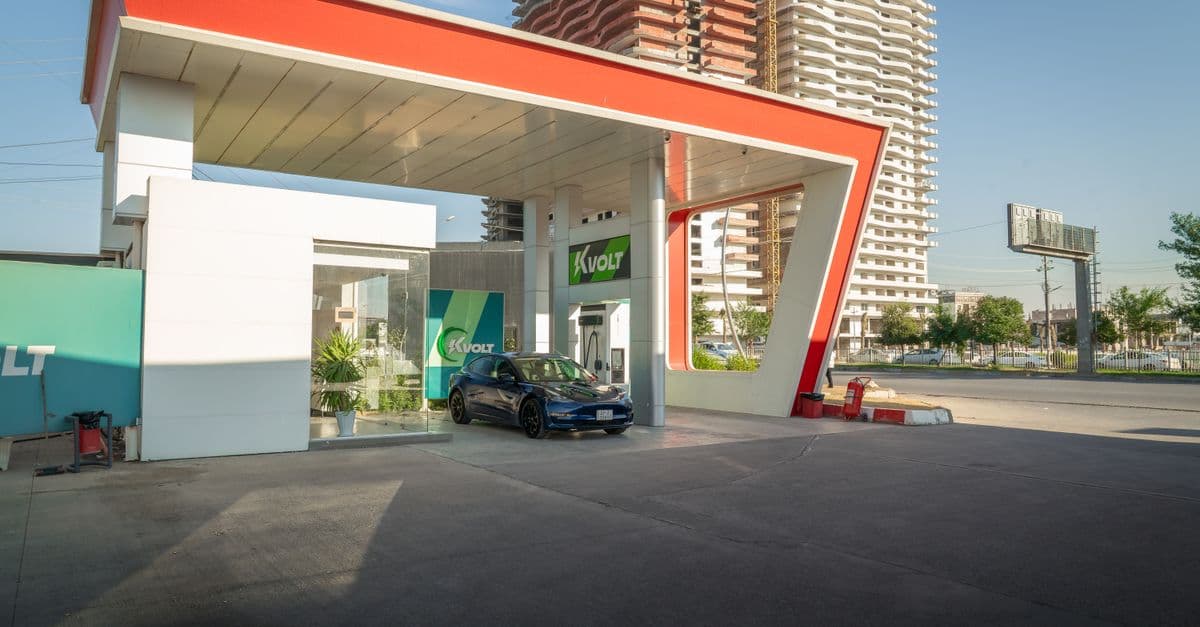
Photo: Gustavo Fring / Pexels
The top 10 electric cars of 2025 range from a roughly 300 km city runabout to a 785 km luxury sedan, and the right one depends on where you live and how you charge. In 2024, electric cars made up more than 20% of global new-car sales, according to the International Energy Agency (IEA). This ranking is an editorial judgment built on published specifications, with each number sourced and each test cycle named so you can compare like with like.
Key takeaways
- The Tesla Model Y was the best-selling vehicle of any type worldwide in 2023, at about 1.22 million units, according to JATO Dynamics data reported by the press. In 2024 the Toyota RAV4 edged it by fewer than 3,000 units.
- BYD sold more battery-electric cars than Tesla in 2025: about 2.26 million versus 1.64 million, per CnEVPost.
- Range figures are not interchangeable. CLTC (China) is generally the most optimistic, WLTP (Europe) runs above EPA (US) for the same car.
- Charging speed is set by the car's peak kilowatts and by the charger, so a fast car on a slow charger is a slow car.
- Prices are left out of the tables on purpose. They vary by country, trim, incentives, and month.
How this ranking works
A ranking of cars is only as honest as its criteria. We weighed four things: how much range the car delivers for its battery size, how fast it can charge, how widely available it is, and how much of the car's appeal does not depend on one market's incentives. The order is a judgment call, not a measurement, and reasonable people would swap several places.
We did not test these cars. The specifications come from manufacturer figures as compiled in reference summaries, plus the sources named in each section. Variants matter a great deal in this market: the same badge can mean a 50 kWh battery or a 77 kWh one, so where a figure applies to one trim, we say so.
Prices are excluded. A starting price quoted in one country says little about what you would pay in another, and tariffs, tax credits, and trim packages move the real cost around. Check the manufacturer's current configurator before comparing.
WLTP, EPA, and CLTC: why the same car has three ranges
Three test procedures dominate official range figures, and they are not calibrated to each other. Treat a range number as meaningless until you know which test produced it.
| Test | Used in | Key trait | Typical relationship |
|---|---|---|---|
| WLTP | Europe and many other markets | Four speed phases, tested at 23°C, top speed about 131 km/h | Higher than EPA for the same car |
| EPA | United States | City and highway cycles, with a 0.7 adjustment factor applied to the result | Lower than WLTP, closer to real-world driving |
| CLTC | China | Gentler driving profile | Usually the most optimistic of the three |
The EPA multiplies its measured range by 0.7 to bring the label closer to what drivers see, and WLTP has no such step. The size of the gap varies by automaker and by model, so there is no single conversion factor.
This matters because several cars below are quoted in different cycles. The BYD Seagull's headline range is CLTC, while the IONIQ 6 and BMW iX figures are WLTP. A 305 km CLTC car is not obviously better or worse than a 345 km WLTP car, and an honest comparison needs the same yardstick.
The ten cars at a glance
The table lists each car's headline range and peak DC charging power. Ranges are tied to the cycle named, and many models offer several battery options, so the figures show the variant noted.
| Rank | Model | Range (cycle, variant) | Peak DC charging | Best for |
|---|---|---|---|---|
| 1 | Tesla Model Y | About 533 km WLTP (one trim); 600 km for Long Range AWD | 250 kW | Families wanting one car for everything |
| 2 | Hyundai IONIQ 6 | Up to 614 km WLTP (77.4 kWh RWD) | 233 kW | Efficiency and long trips |
| 3 | Tesla Model 3 | 534 km WLTP (RWD); 629 km (Premium AWD) | 170 to 250 kW | Sedan buyers |
| 4 | BYD Atto 3 | 345 to 420 km WLTP; 510 km for the 74.8 kWh Evo | 70 to 88 kW (Evo: 220 kW) | Value-focused buyers |
| 5 | Kia EV6 | Up to about 510 km | 180 to 240 kW | Driving feel and design |
| 6 | Volkswagen ID.4 | 512 to 572 km WLTP (82 kWh, 2024 onward) | Up to 175 kW | Conventional crossover buyers |
| 7 | BMW iX | 549 to 630 km WLTP (xDrive50) | 195 to 200 kW | Premium daily driving |
| 8 | Rivian R1T | 255 to 420 miles EPA (2022 to 2024 configurations) | 210 to 225 kW | Adventure and towing |
| 9 | Mercedes-Benz EQS | 785 km WLTP (EQS 450+) | 350 kW | Maximum range and comfort |
| 10 | BYD Seagull | 305 to 405 km CLTC | 30 to 40 kW (China) | Short-range city driving |
Sources for the table: reference summaries of each model, each of which cites manufacturer data, plus the section sources below. The Kia EV6 range figure does not specify a test cycle in its source, so treat it as indicative.
1. Tesla Model Y: the volume leader
The Model Y earned its place on volume and breadth. Tesla's own shareholder deck put worldwide Model Y sales at 1,211,601 in 2023, and JATO Dynamics data reported by the press ranked it the best-selling vehicle of any type in the world that year, ahead of the Toyota RAV4. In 2024 the order flipped: the RAV4 reached about 1.187 million to the Model Y's roughly 1.185 million, a gap of under 3,000 units, and coverage attributed part of the Model Y's dip to a production pause for its refresh.
On paper the Model Y supports DC charging up to 250 kW, or 225 kW on the Standard trim. Its WLTP ratings span roughly 430 to 600 km depending on trim, with 533 km listed for one of the mainstream versions and 600 km for Long Range AWD. The software, the charging network integration, and the cargo space explain more of its popularity than any single spec does.
Its weakness is the same as any volume leader's: a car sold in this many configurations is hard to summarize. Compare trims, not just the badge. Our guide to choosing the best electric vehicle walks through that decision in more detail.
2. Hyundai IONIQ 6: the efficiency champion
The IONIQ 6 won the World Car of the Year award in 2023, and its best number is the 614 km WLTP range of the 77.4 kWh rear-drive version. Part of that comes from shape. Hyundai lowered the drag coefficient (Cd, a measure of how easily a body slips through air) to 0.21, which is why it travels far on a given battery.
Charging is the other strength. The car peaks at 233 kW, and CNET reported a 10% to 80% charge in 18 minutes on a 350 kW, 800-volt charger. The EPA ratings tell a similar story with a harder-headed scale: 361 miles (581 km) for the long-range rear-drive version on 18-inch wheels, falling to 305 miles (491 km) on 20-inch wheels.
That last pair of numbers is the lesson. Wheel size alone changed the EPA range by 56 miles. Treat any "up to" figure as the best case for the smallest wheels.
3. Tesla Model 3: the sedan alternative
The Model 3 is the Model Y's lower, lighter sibling, and the 2023 "Highland" refresh changed the car substantially. The currently available versions list WLTP ranges from 534 km (rear-wheel drive) to 629 km (Premium all-wheel drive), with peak DC charging of 170 kW on the base car and up to 250 kW on the Long Range variant.
Acceleration is a strength: the page for the car lists 0 to 60 mph in 5.8 seconds for the base version and 2.9 seconds for the Performance. A lower roofline gives it better efficiency than the Model Y in most comparisons, though the Model Y's hatchback is more practical.
Combined Model 3 and Model Y deliveries were 1,739,707 in 2023 and 1,704,093 in 2024, according to the figures compiled on the car's reference page. Those totals include both models, so they say little about the Model 3 alone.
4. BYD Atto 3: the value contender
The Atto 3 is BYD's compact crossover sold in Europe and other markets, and it uses the company's lithium iron phosphate (LFP) Blade battery. LFP cells trade some energy density for cost and are generally considered less prone to overheating than the nickel-based chemistries used in many rivals. That is the reasoning behind their popularity in lower-priced cars.
WLTP ranges are 345 km for the smaller packs (49.92 and 50.25 kWh) and 420 km for the 60.48 kWh pack. A 2025 facelift, the Atto 3 Evo, adds a 74.8 kWh battery rated at 510 km WLTP and charging up to 220 kW. Earlier cars charge at 70 kW (Standard Range) and 80 kW (Extended Range), with one magazine test measuring 88 kW.
Slow DC charging is the earlier model's main compromise, and the Evo addresses it. Because BYD has changed the car mid-cycle, check which version a dealer is actually selling. Our explainer on how lithium-ion batteries work covers the chemistry behind the trade-off.
5. Kia EV6: the driver's car
The EV6 was the 2022 European Car of the Year. Kia lists DC fast-charging at 180 kW for the 58 kWh battery and 240 kW for the 77.4 kWh version, with a 0 to 80% time of 18 minutes at 180 kW for the smaller pack. The performance GT version is claimed to reach 100 km/h in 3.5 seconds.
Range is quoted as up to 510 km in the source we used, without a named test cycle. That is a reminder to confirm the cycle before comparing it with a WLTP or EPA figure. Compared with the IONIQ 6, the EV6 gives up some efficiency in exchange for a crossover body and a firmer driving feel.
6. Volkswagen ID.4: the mainstream pick
The ID.4 is the quietest entry on the list in terms of ambition and the most conventional in what it asks of the driver. WLTP ranges are 512 to 572 km for the 82 kWh versions from 2024 onward, and 341 to 364 km for the smaller 55 to 62 kWh packs. EPA figures for the 82 kWh car are 263 to 291 miles (423 to 468 km), depending on version.
Peak charging reaches 175 kW on the 82 kWh pack built with SK On cells, while earlier LG-cell cars were limited to 135 kW. Volkswagen raised the LG pack's rate through an over-the-air update, a useful example of software changing a car after purchase. The 2024 model year also brought heavily revised software and infotainment hardware.
One caution for US buyers: the reference page for the car says production at Volkswagen's Chattanooga plant ended in April 2026, citing Ars Technica. Availability, parts, and resale are worth checking before you buy.
7. BMW iX: the premium option
The iX is a large luxury SUV, and its range depends strongly on which battery it carries. The xDrive50 has a 111.5 kWh battery (105 kWh usable), a WLTP range of 549 to 630 km, and charging up to 200 kW. A January 2025 update added the xDrive60 with a 113.4 kWh battery, a WLTP range of 700 km, and charging up to 195 kW.
Notice the odd trade: the newer car carries a slightly lower peak charging figure but a longer range. A bigger number on a spec sheet is not always the better one in practice. Peak kilowatts are reached only briefly, and what matters is how long the car stays near that rate.
The iX is the most expensive configuration of the mainstream European approach: it is large, heavy, and comfortable, and efficiency is not its main aim.
8. Rivian R1T: the electric truck
The R1T was one of the first electric pickups to reach buyers, and it is not the only one: the market now includes several rivals from established truck makers. Its EPA range spans 255 to 420 miles for the 2022 to 2024 model years, depending on motors, battery, and wheel size.
Rivian lists a towing capacity of 11,000 lb (4,990 kg), tested in desert heat under an SAE procedure. Motor options range from the dual-motor car at 533 hp to the second-generation quad-motor at 1,025 hp. A "gear tunnel" behind the rear seats provides 11.6 cubic feet (328 L) of storage.
Towing cuts range sharply, which is true of every vehicle, but it is more visible when the fuel gauge is a battery percentage. A 2020 report headline put it bluntly: it can tow up to 11,000 lb, but that would cut the range in half. Plan trips around charger locations if you tow.
9. Mercedes-Benz EQS: the range leader
The EQS 450+ is rated at 785 km WLTP, the longest range of any car on this list. It has an exceptionally slippery body, with a drag coefficient as low as 0.20, which the manufacturer described at launch as the lowest of any production car. The battery is large: about 108 to 120 kWh depending on the source, and peak DC charging reaches 350 kW.
A 2026 facelift lists up to 926 km WLTP for the 450+, but that is a later generation than the 2025 car. The older figure is the one to use when comparing it with the rest of this list.
A huge battery means a long charge at home. At 11 kW, a 100 kWh pack takes around nine hours to fill, so an EQS owner without a home charger is leaning on public stations more than a smaller-car owner would.
10. BYD Seagull: the price disruptor
The Seagull launched in China in April 2023 at under 90,000 yuan, which the reference page converts to about US$12,000, with a lowest cited price of 73,800 yuan. Its battery options are 30.08 kWh and 38.88 kWh, giving 305 km and about 405 km on the CLTC cycle respectively. DC charging in China is 30 or 40 kW.
CLTC ranges overstate what a European or American driver would see, so a 305 km CLTC rating should be read as meaningfully shorter on a WLTP or EPA basis. Even so, the Seagull shows how far battery and manufacturing costs have fallen.
Europe gets a larger version called the BYD Dolphin Surf, which launched in April 2025 in Scandinavian markets. It is 3,990 mm long, 210 mm longer than the base Chinese car, and earned a five-star Euro NCAP rating in 2025. Its 43.2 kWh battery supports charging up to 85 kW.
Charging: the part of ownership that the spec sheet hides
Peak charging power, in kilowatts, is the number manufacturers advertise. Charging time is energy divided by power: an illustrative 77 kWh battery filled at a steady 7 kW takes about 11 hours, while the same battery at 150 kW would add the same energy in roughly half an hour if it could hold that rate, which batteries cannot do for a full charge.
Real chargers taper. A car charges fastest at low battery levels and slows as it fills, which is why makers quote 10% to 80% times. Think of it like pouring water into a glass: you can pour hard at first, then you ease off near the brim.
Higher system voltage helps. Electrical power is voltage times current, so an 800-volt system, like the one the IONIQ 6 is paired with at fast chargers, needs only half the current of a 400-volt system to deliver the same power. Less current means less heat in the cables and connectors.
The infrastructure side is moving quickly. The IEA reports that public charging stations doubled in the past two years, and that ultra-fast chargers of 150 kW and above grew about 50% in 2024, making up nearly 10% of public fast chargers. More than three-quarters of European highways have a fast charger at least every 50 km, compared with less than half of US highways. Where you live changes how much a car's peak charging rate matters.
For the broader picture of how electric cars interact with the grid, see our explainer on electric vehicles and the power grid.
Batteries: how long they last
Battery wear is the most common worry among first-time buyers, and large-scale fleet data helps. In its 2025 analysis of more than 22,700 electric vehicles across 21 models, the telematics company Geotab found an average capacity loss of 2.3% per year, the same as in its first study and up from 1.8% per year for 11 common models in its 2023 analysis. Geotab projects the average battery to hold about 81.6% of its original capacity after eight years.
Two caveats matter. The averages come from a connected-fleet sample, not every car on the road, and DC fast charging and hot climates are commonly linked to faster-than-average degradation. An average is not a guarantee for any one car. Our piece on why lithium-ion batteries age explains what drives that wear.
What an EV costs to run, and what it does to emissions
Consumer Reports' analysis, as summarized by the press, found that EVs usually cost less to own over their lifetime than comparable gasoline cars, with typical savings of several thousand dollars. Maintenance costs were roughly half as high, and fuel costs fell substantially, with owners spending about 60% less to power the car. The same coverage noted that EVs often cost 10% to more than 40% more up front, so payback depends on the price gap.
Home charging matters too. A University of Michigan study cited in that coverage found that home charging access reduces the lifetime cost of a 300-mile midsize SUV by roughly $10,000 on average. Drivers without a driveway or garage see smaller savings.
On emissions, the International Council on Clean Transportation (ICCT) compared the full life cycle of medium-size cars registered in 2021. Battery-electric cars produced 66% to 69% lower greenhouse-gas emissions than gasoline cars in Europe, 60% to 68% lower in the United States, 37% to 45% lower in China, and 19% to 34% lower in India. The range between countries reflects how clean the local electricity grid is.
The ICCT's projection for cars registered in 2030 widens the gap to 74% to 77% in Europe and 62% to 76% in the United States, as grids add renewable power. For a deeper look at the power side, see our rankings of countries with the most wind power capacity and countries that produce the most solar power.
Tariffs: why some of these cars are hard to buy
Trade policy decides which cars on this list a given buyer can actually get. In the United States, a 2024 review under Section 301 raised the tariff on Chinese-made electric vehicles from 25% to 100%, which is why the Seagull and Atto 3 are not mainstream US products.
The European Union took a different route. After an investigation into subsidies, it imposed definitive countervailing duties on Chinese-made battery-electric cars from 30 October 2024, for five years: 17.0% for BYD, 18.8% for Geely, 35.3% for SAIC, and 7.8% for Tesla's Shanghai plant if it applied for individual examination. These sit on top of the EU's usual car import duty, which the Commission page we consulted does not describe.
The practical effect is a patchwork. The BYD Dolphin Surf is sold in Europe while Chinese-built cars face a 100% tariff in the US, and production plans for a Hungarian BYD plant have faced delays. Because policies change, check the current rules for your country before assuming a price you saw abroad applies at home.
The market context
The IEA reports that global electric car sales exceeded 17 million in 2024, a share of more than 20%, an increase of about 3.5 million from 2023. Regional pictures differ sharply: China sold over 11 million electric cars, close to half of its car sales, while the US share was above 1 in 10 and Europe's was around 20%.
The IEA's forecast for 2025 was sales above 20 million, more than a quarter of the global market, with China near 60%, Europe near 25%, and the United States near 11%. Those are projections made in early 2025, not outcomes. For a country-by-country view, see our rankings of countries with the most electric vehicles per capita, countries with the most electric vehicles, and countries with the most electric buses.
Battery prices fell in 2024 in every market, by about 30% in China and 10% to 15% in Europe and the United States, according to the IEA. Cheaper batteries are the main reason cars like the Seagull exist. For the engineering behind these cars, see how electric cars actually work.
What people get wrong about electric cars
"The best-selling car in the world is a Tesla." Only for one year. The Model Y led in 2023, and the RAV4 narrowly beat it in 2024.
"BYD outsells Tesla." It depends on which cars you count. In battery-electric cars, BYD passed Tesla for the full year 2025. Counting plug-in hybrids too, BYD's total new-energy sales were about 4.6 million in 2025.
"Range on the spec sheet is what I will get." It is a lab number from one of several test cycles. Speed, temperature, wheel size, and load all change it. The IONIQ 6's EPA range dropped by 56 miles with larger wheels.
"A faster peak charge rate means a faster trip." Not by itself. Charging curves taper, and the charger has to match. A 350 kW car at a 50 kW station charges at 50 kW.
"Batteries die after a few years." Geotab's 2025 data show an average of 2.3% capacity loss per year, with fast charging and heat as commonly cited aggravating factors. Individual cases vary.
"Electric cars are only worth it with cheap electricity and a home charger." Home charging does improve the economics, but the ICCT results show lower life-cycle emissions even in China and India, where grids are more carbon-intensive, though by smaller margins.
Frequently asked questions
Q: Which electric car has the longest range on this list? A: The Mercedes-Benz EQS 450+, at 785 km on the WLTP cycle. The BMW iX xDrive60 is rated at 700 km WLTP, and the IONIQ 6 reaches 614 km. These are best-case lab figures, and cycles differ between regions, so real-world range will be lower.
Q: How fast can an electric car charge? A: Peak rates on this list run from about 30 kW (BYD Seagull in China) to 350 kW (Mercedes EQS). Hyundai quotes 18 minutes for 10% to 80% in the IONIQ 6 on a 350 kW, 800-volt charger. Home charging is far slower but can run overnight.
Q: Are electric cars cheaper to run than gasoline cars? A: Usually, according to Consumer Reports. Its analysis found roughly half the maintenance cost and about 60% less spent on power. Higher purchase prices offset part of the saving, and access to home charging changes the result.
Q: Are electric cars better for the environment? A: Over the whole life cycle, yes, in every region the ICCT studied. For cars registered in 2021, emissions were 66% to 69% lower in Europe and 19% to 34% lower in India. The advantage grows as electricity grids add renewables.
Q: How long do EV batteries last? A: Geotab's 2025 analysis of more than 22,700 vehicles found an average loss of 2.3% per year, with the average battery projected at about 81.6% capacity after eight years. That is an average, and fast charging and heat can speed wear.
Q: Why can't I buy a BYD Seagull in the United States? A: Trade policy is the main obstacle. The US raised its tariff on Chinese-made electric vehicles to 100% in 2024. Europe sells a larger version, the Dolphin Surf, subject to EU duties of 17.0% on BYD imports.
Q: What is the difference between WLTP and EPA range? A: They use different test procedures. EPA multiplies its measured range by 0.7, while WLTP does not, so WLTP figures usually come out higher, though the gap varies by car.
The takeaway
The most useful skill in buying an electric car in 2025 is reading specifications critically. The same car carries different range numbers under three test cycles, a charging rate that shrinks as the battery fills, and a battery size that changes with trim. Rankings, including this one, compress all of that into an order that you should adjust to your own situation.
What the ten cars show together is a market that has split into tiers. A small, cheap car like the Seagull exists because batteries got cheaper, a 785 km sedan like the EQS exists because some buyers will pay for range, and a mainstream crossover like the ID.4 sits between. Start with how you will charge, check which test cycle produced the range figure, and the choice usually narrows itself.
Sources
- International Energy Agency, Global EV Outlook 2025: Executive summary
- CnEVPost, Tesla loses BEV crown to BYD in 2025
- European Commission, Countervailing duties on battery electric vehicles from China
- InsideEVs, EPA vs WLTP: EV range difference
- Reference summaries with manufacturer-sourced specifications: Tesla Model Y, Tesla Model 3, Hyundai IONIQ 6, BYD Seagull, BYD Atto 3, Kia EV6, Volkswagen ID.4, BMW iX, Rivian R1T, Mercedes-Benz EQS
Related reading
Follow new articles
Add SciHub101 to your feed reader to see new science and technology stories.
About the Author
SciHub101 is an independent science and technology publication founded and edited by Buğra Sözeri, a software engineer and app developer based in Türkiye. AI tools assist with drafting and research. Source documentation in the existing archive is uneven, and articles are being reviewed and corrected. The Editorial Team byline identifies editorial responsibility; it does not certify specialist or independent human review. Where we compare products, anything built by our own team is labelled as such — see the editorial guidelines and About page for how corrections and disclosures work.
Related Articles

Countries with the Most Open Source Contributors (2025 Ranked)
The United States has the most developers on GitHub, India has the most contributors, and Germany punches above its developer count. Here is the ranking, the sources behind it, and what a country total cannot tell you.

Top 10 Luxury Cars to Buy in 2025 — Best Ranked
The Rolls-Royce Spectre is the brand's first electric vehicle — starting at $420,000. The Bentley Bentayga Speed is the world's fastest SUV. Lamborghini sold out its entire production run for 2025. Here are the 10 best luxury cars of 2025 ranked by craftsmanship, performance, and ownership experience.

How EV Charging Works — Levels and Standards
Level 1, Level 2, and DC fast charging explained — connectors (NACS, CCS, CHAdeMO), kilowatts, charge curves, V2G, and 2026 status.

Countries With the Most Electric Vehicles Per Capita (2025)
Norway has the highest electric share of any national car fleet, with more than one in three cars electric, and 97% of its 2025 new-car sales were electric or plug-in hybrid. Here is how every major market compares, and why fleet share and sales share tell different stories.
Countries with the Most Electric Vehicles (Ranked)
China dominates global EV adoption: of the nearly 58 million electric cars on the world's roads at the end of 2024, China accounts for more than half. Chinese buyers purchased over 11 million new EVs in 2024 alone — more than were sold globally just two years earlier. Norway leads in EV penetration, with 29% of all cars on its roads now electric. This ranking covers the top countries by total EV stock, new sales, and market share, sourced from the IEA Global EV Outlook 2025.
Electric Cars vs Gas Cars — Complete Comparison
EVs vs gas cars in 2026: range, cost, emissions, charging, maintenance, battery life, and cold-weather performance compared head-to-head.