Top 10 Luxury Cars to Buy in 2025 — Best Ranked
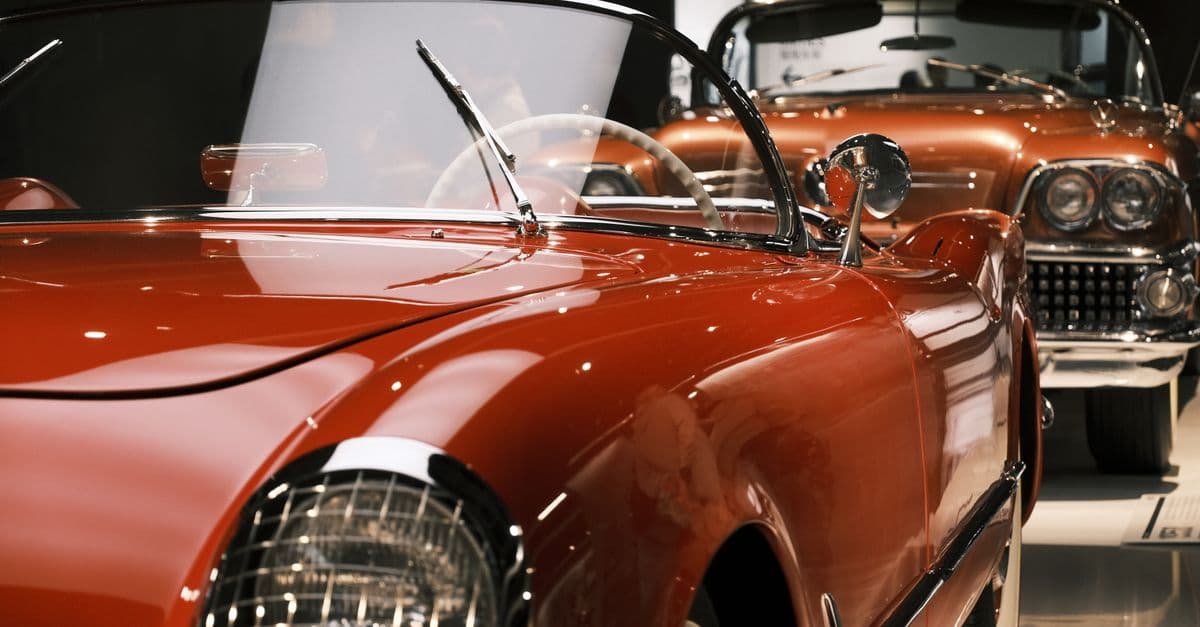
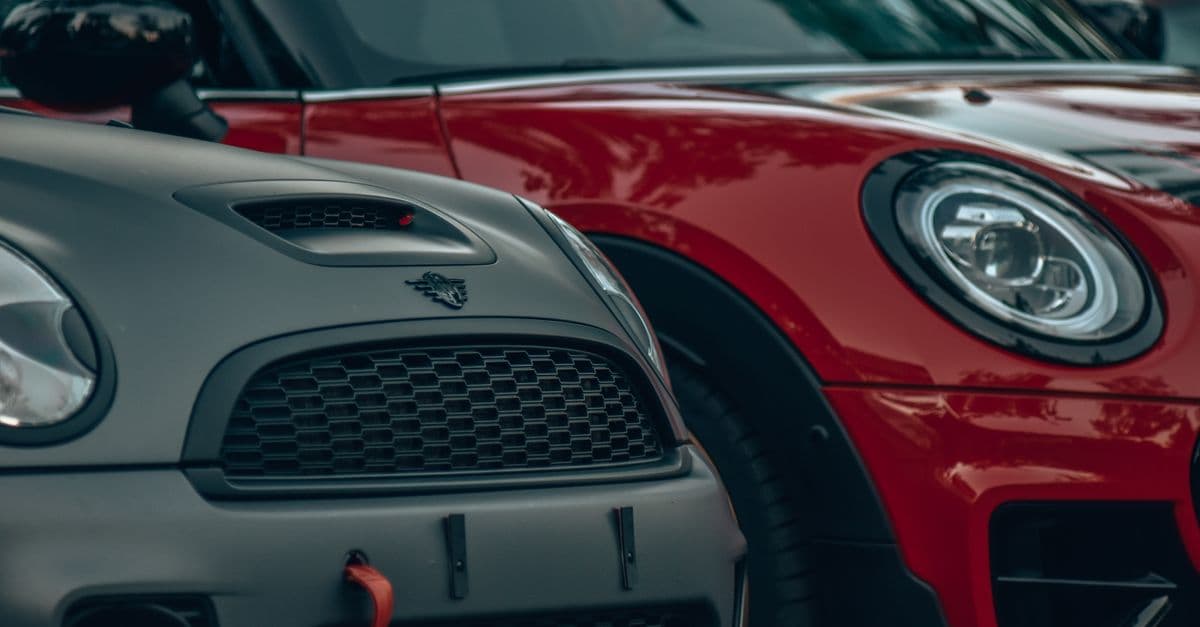
Photo: 虎 曼 / Pexels
The global luxury car market generates over $600 billion annually. At its highest tier, vehicles costing $200,000 to $500,000+ represent engineering achievements that blur the line between automobile and sculpture. Here are the 10 best luxury cars of 2025 — ranked by craftsmanship, performance, technology, and ownership experience.
Key takeaways
- Rolls-Royce launched its first fully electric car — the Spectre — at $420,000+, marking the brand's transition to electrification.
- Bentley holds multiple records for the world's fastest luxury saloon and performance SUV.
- Ferrari and Lamborghini routinely sell out production years in advance — buyers wait 2–3 years for allocations.
- The Porsche Taycan Turbo GT set the production EV Nürburgring lap record — redefining what luxury electric performance means.
- Luxury cars increasingly offer over-the-air software updates, real-time performance telemetry, and optional driver coaching systems.
Top 10 luxury cars of 2025
| Rank | Model | Price (from) | 0-60 mph | Power | Category |
|---|---|---|---|---|---|
| 1 | Rolls-Royce Spectre | $420,000 | 4.5 sec | 577 hp | Luxury GT Coupé |
| 2 | Bentley Flying Spur Speed | $260,000 | 3.7 sec | 771 hp | Luxury Saloon |
| 3 | Lamborghini Urus Performante | $260,000 | 3.3 sec | 666 hp | Super SUV |
| 4 | Ferrari Roma Spider | $280,000 | 3.4 sec | 612 hp | Luxury Spider |
| 5 | Porsche Taycan Turbo GT | $230,000 | 2.2 sec | 1,092 hp | Electric GT |
| 6 | Mercedes-AMG G 63 | $180,000 | 4.4 sec | 577 hp | Luxury 4x4 |
| 7 | BMW M7 xDrive | $160,000 | 3.5 sec | 523 hp | Executive Saloon |
| 8 | Aston Martin DB12 | $250,000 | 3.5 sec | 671 hp | Grand Tourer |
| 9 | Maserati MC20 Cielo | $260,000 | 2.9 sec | 621 hp | Luxury Spider |
| 10 | McLaren Artura | $240,000 | 3.0 sec | 690 hp | Hybrid Supercar |
1. Rolls-Royce Spectre — the electric future of luxury
Rolls-Royce's first fully electric car represents the brand's boldest statement in its 120-year history:
The silence proposition: Rolls-Royce has always sold silence as a feature — the famous story of the engineer who said the loudest sound in a Silver Shadow at speed was the clock. The Spectre takes this to its logical conclusion: a genuinely silent powertrain combined with 130mm of acoustic glazing and 100kg of sound-deadening material.
The craftsmanship: Each Spectre requires 18 months of hand-building. The interior contains up to 90,000 stitches in the upholstery; wood veneers are paired from the same tree for visual symmetry; metals are polished by hand to specifications that reflect perfectionists rather than machines. 1,700 stars can be configured in the Starlight Headliner.
The Bespoke programme: Most Rolls-Royce buyers commission entirely custom vehicles. Paint colours are custom-matched to any reference provided (a client's grandmother's lipstick, a sunset photograph, a piece of fabric). No two Spectres need be identical.
Why electric works for Rolls-Royce: The 577 hp electric powertrain delivers instant torque without gear shifts — the smoothest possible acceleration profile. The absence of engine vibration aligns with Rolls-Royce's core luxury proposition better than any combustion engine.
2. Bentley Flying Spur Speed — the definitive luxury saloon
The Flying Spur Speed makes the case that a four-door saloon can offer supercar performance with limousine comfort:
The W12 engine: Bentley's 6.0-litre twin-turbocharged W12 produces 771 hp and 1,000 Nm of torque. Despite weighing over 2.4 tonnes, the Flying Spur Speed reaches 100 km/h in 3.7 seconds and a top speed of 335 km/h — extraordinary for a full four-seat luxury saloon.
Rear seat priority: The Flying Spur is frequently chosen as a chauffeur-driven vehicle. The rear seats offer adjustable footrests, massage function, individual climate control, entertainment screens, and enough legroom for tall passengers in formal wear.
Craftsmanship: 100+ hours of hand-stitching in the interior. The dashboard can be optioned with a rotating display that presents either a traditional clock, a digital instrument panel, or a smooth veneer — hiding technology within traditional luxury materials.
3. Lamborghini Urus Performante — the super SUV
The Urus has single-handedly transformed Lamborghini's financial position:
The business impact: The Urus (launched 2018) doubled Lamborghini's annual sales volume. The company, historically selling 5,000–6,000 cars annually, now sells 10,000+. Most are Uruses. The profit margin on a $260,000 SUV with relatively high manufacturing volume is significant.
The Performante upgrade: The Urus Performante adds 50 hp over the standard model (666 total), reduces weight by 47 kg through carbon fibre components, and includes track-focused suspension, larger brakes, and a performance exhaust. It set the production SUV lap record at Pikes Peak.
The controversy: Purists argue the Urus dilutes Lamborghini's sports car heritage. The financial reality is that Urus profits fund the development of mid-engine V10 and V12 sports cars that represent the brand's identity. The commercial success enabled the Revuelto (the Aventador's hybrid successor) to exist.
4. Ferrari Roma Spider — the grand tourer reimagined
The Roma Spider represents Ferrari's "everyday" grand tourer — a car for a driving holiday rather than a track day:
The design: Ferrari's Maranello styling centre produced the Roma with deliberately restrained lines compared to the SF90 or 812. The Roma references 1950s-60s Italian grand touring aesthetics — the "Dolce Vita" era of Ferrari when cars were driven between Rome and Cannes. The retractable hardtop opens in 14 seconds.
612 hp V8: The Roma uses Ferrari's ubiquitous 3.9-litre twin-turbo V8 — also found in the California T, Portofino, F8, and SF90. In Roma specification, it produces 612 hp and drives through an 8-speed dual-clutch transmission.
The GT compromise: The Roma is softer than a 296 GTB or F8 Tributo — deliberately. Ferrari designed it for long-distance comfort while retaining sports car performance. This positioning means it often appeals to buyers who want Ferrari ownership without demanding track performance.
5. Porsche Taycan Turbo GT — electric redefined
The Taycan Turbo GT shattered expectations of what an electric luxury car can do dynamically:
The Nürburgring record: The Taycan Turbo GT set the production electric vehicle lap record at the Nürburgring Nordschleife — 7:07.55 — faster than many combustion-powered supercars. This is a car with four seats, a practical boot, and air conditioning.
1,092 hp: The Turbo GT's overboost figure of 1,092 hp is enabled by Porsche's 800V architecture — the same system in the Taycan since launch. The 800V battery charges at up to 270 kW, adding 100 km of range in approximately 5 minutes.
The Weissach package: An optional track package removes the rear seats, adds carbon-ceramic brakes, and further reduces weight. The result is a four-door saloon that corners and brakes at levels previously only achieved by dedicated track cars.
Frequently asked questions
Are luxury cars worth the price premium over mainstream cars?
At the ultra-luxury tier, the price reflects hand craftsmanship, bespoke options, brand heritage, and residual value stability that mainstream cars cannot offer. A Rolls-Royce Spectre's depreciation curve is dramatically flatter than a mainstream luxury car. For buyers who prioritise the ownership experience, craftsmanship quality, and exclusivity signal, the premium is considered justified. For pure transportation value, mainstream cars at 1/10th the price deliver 90% of the functionality.
What is the best luxury car for daily driving?
The Porsche Taycan (non-Turbo GT) or BMW M7 offer the best combination of daily usability, performance, and luxury at their respective price points. Both have significant luggage space, comfortable suspension options, and technology that makes long-distance driving effortless. The ultra-luxury options (Rolls-Royce, Bentley) are excellent daily drivers but require wider parking spaces and more cautious urban manoeuvring.
How long do luxury cars last?
Properly maintained luxury cars last as long as mainstream cars — often longer, given buyers' ability to fund proper maintenance. Rolls-Royce claims 65% of all Rolls-Royces ever built are still in operation. Ferrari's servicing programme and parts availability for older models supports longevity. The challenge is the cost of maintenance — a major service on an older Ferrari or Bentley can cost $10,000–30,000.
The bottom line
The best luxury cars of 2025 share a common thread: they are not just transportation but experiences — engineered to deliver something that cannot be replicated at any lower price point. Whether that is the absolute silence of a Rolls-Royce Spectre, the impossible performance of a Porsche Taycan Turbo GT, or the hand-crafted precision of a Ferrari Roma Spider, each justifies its price through a combination of technology, craftsmanship, and rarity that mainstream automotive manufacturing cannot produce. The electrification of this segment — Rolls-Royce, Porsche, Lamborghini, and Ferrari all with electric or hybrid models — represents the industry's recognition that performance and luxury are not incompatible with zero-emission powertrains.
Related Reading
Follow new articles
Add SciHub101 to your feed reader to see new science and technology stories.
About the Author
SciHub101 is an independent science and technology publication founded and edited by Buğra Sözeri, a software engineer and app developer based in Türkiye. AI tools assist with drafting and research. Source documentation in the existing archive is uneven, and articles are being reviewed and corrected. The Editorial Team byline identifies editorial responsibility; it does not certify specialist or independent human review. Where we compare products, anything built by our own team is labelled as such — see the editorial guidelines and About page for how corrections and disclosures work.
Related Articles
Top 10 Electric Cars to Buy in 2025: Best EVs Ranked
Ten electric cars that defined the 2025 market, from the Tesla Model Y to the BYD Seagull, compared on range, charging speed, and what the official numbers do and do not tell you. Includes how WLTP, EPA, and CLTC ranges differ and how tariffs shape who can buy what.

Countries With the Most Tech Workers and Software Developers (2025)
Sweden has the highest share of ICT specialists in Europe at 8.6% of employment, Israel's high-tech sector employs about 11.5% of its workforce, and China, India and the US lead on sheer numbers. Here is what official statistics show, and what counts as a tech worker.
Electric Cars vs Gas Cars — Complete Comparison
EVs vs gas cars in 2026: range, cost, emissions, charging, maintenance, battery life, and cold-weather performance compared head-to-head.
The Internal Combustion Engine — History, Mechanics, and What Comes Next — SciHub101
From Lenoir's 1860 coal-gas motor to Diesel's compression ignition, the internal combustion engine powered a billion vehicles. Here is how it works and where it is going.
Countries with the Most Car Ownership Per Capita (2025 Ranked)
San Marino reports about 1,570 registered vehicles per 1,000 residents, the United States about 875, and Italy leads the EU at 709 passenger cars. What the numbers count, why rankings shift with the definition, and how electric cars are changing fleets.
Best Free E-Signature Tools in 2026 (No Signer Account)
Best free e-signature tools in 2026 where signers need no account: eSignSimple, Zoho Sign, SignWell, Dropbox Sign, DocuSign and Adobe compared on limits and audit trails.