What If AI Could Predict Every Natural Disaster?
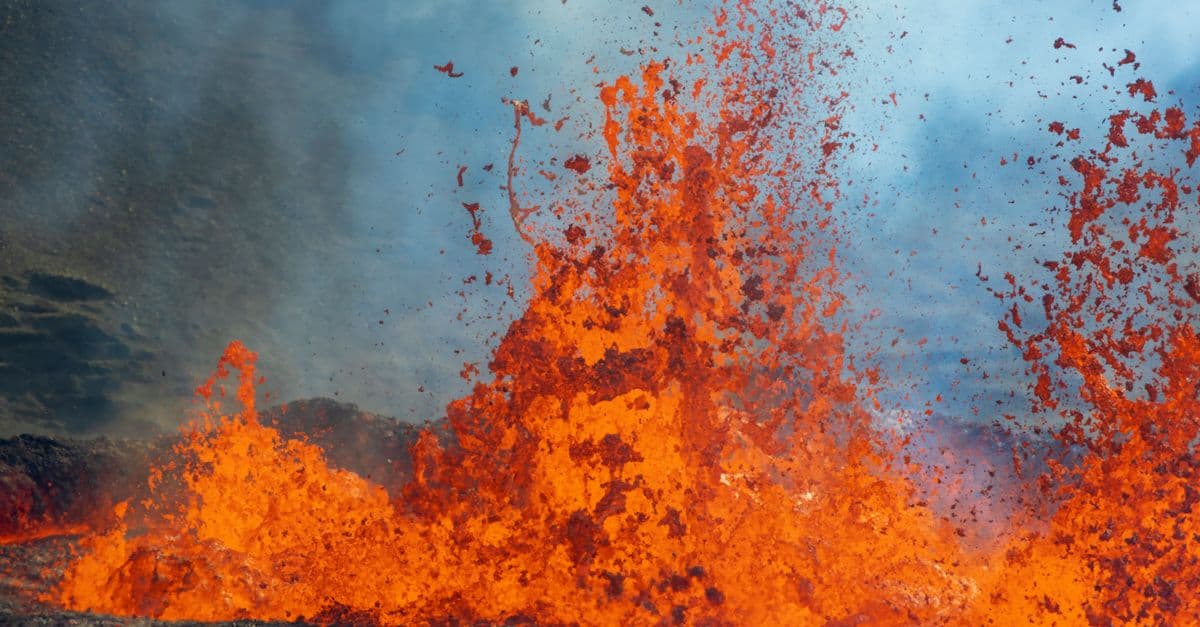
Photo: Rino Adamo / Pexels
The alert arrives on every phone in the Cascadia subduction zone simultaneously at 11:47 PM on a Tuesday. A 9.1 magnitude earthquake will rupture the fault in 72 hours. The AI gives coordinates, timing, and a confidence interval of plus or minus six hours. It has never been wrong.
Thought experiment. This article explores a hypothetical scenario for educational and speculative purposes. The events described are not predictions and should not be interpreted as warnings, advocacy, or instructions.
Within an hour, traffic out of Seattle, Portland, and Vancouver has ground to a standstill. Hospitals begin discharging stable patients. The military preprograms supply caches. Insurance companies freeze new policy issuances. Three thousand miles away, financial markets open with earthquake-adjusted pricing already baked in.
Seventy-one hours and forty-three minutes later, the ground moves exactly where and when the AI said it would. A disaster that would have killed 30,000 kills fewer than 200. The buildings that collapse were the ones flagged months earlier as structural risks by the same AI system.
But the evacuation cost $18 billion and three people died in traffic accidents fleeing. The city's poorest residents couldn't leave and sheltered in place. And the construction lobby is already fighting the AI's building assessment recommendations in court.
Key takeaways
- AI has already dramatically improved weather and some geological predictions — the question is how far this can extend to truly unpredictable events like earthquakes.
- Perfect prediction does not automatically mean perfect preparedness — social, economic, and political barriers to evacuation and mitigation are separate from the technical prediction problem.
- False alarms erode compliance — a history of accurate warnings can be undone by one high-profile incorrect prediction.
- Prediction inequality matters: who gets the warnings first, who can afford to act on them, and who bears the costs of evacuation.
The optimistic scenario
The potential to save lives is large enough to be worth taking seriously as a thought experiment. According to the Centre for Research on the Epidemiology of Disasters (CRED), 2023 alone saw 399 recorded natural hazard disasters kill 86,473 people and cause $202.7 billion in economic losses worldwide — a toll pushed sharply above the 20-year average of roughly 64,000 annual deaths by the February 2023 Türkiye–Syria earthquake, which alone killed more than 56,000 people (EM-DAT 2023 report). Most of this death and destruction is not inevitable. It results from people being in the wrong place when the disaster strikes, often because they did not have enough warning, or enough resources, to leave.
AI systems have already demonstrated real capability in weather prediction. Google DeepMind's GraphCast model, published in Science in 2023, outperformed the European Centre for Medium-Range Weather Forecasts (ECMWF) deterministic model on 89.3% of 2,760 target variables and lead times tested, and beat it on more than 99% of tropospheric variables like rainfall and air temperature. It generates a 10-day global forecast in under a minute on a single TPU, versus the hour-plus and supercomputer that conventional numerical weather prediction requires (MIT Technology Review, 2023; Google DeepMind). Cyclone track prediction has improved substantially in the same wave of models, giving coastal populations more lead time than older numerical methods provided.
If this capability extended to earthquakes, volcanic eruptions, tsunamis, and wildfires with similar accuracy, the changes to emergency management would be profound. Buildings could be cleared before collapse. Coastal cities could be evacuated before tsunamis strike. Emergency resources could be pre-positioned precisely where needed instead of spread thin across a wide contingency zone. Insurance pricing could become accurate enough to actually incentivize better building codes and land-use decisions, rather than spreading risk across policyholders who never see the disaster coming.
The downstream scientific benefit would also be significant. A system that could reliably predict earthquakes days in advance would necessarily have learned something genuinely new about fault mechanics — knowledge that could ripple outward into infrastructure design, mining safety, and geothermal energy extraction, all of which depend on understanding how rock stores and releases stress.
Why weather is solvable and earthquakes might not be
Weather prediction works, and keeps getting better, for a specific physical reason: the atmosphere is a fluid governed by equations we understand well, sampled continuously by satellites, balloons, ships, and ground stations feeding petabytes of data into models every day. GraphCast and its peers — NVIDIA's FourCastNet and Huawei's Pangu-Weather among them — succeed because they are pattern-matching against a system whose governing physics is already known and whose current state is densely observed.
Earthquakes are a different kind of problem entirely. Faults are kilometers underground, seismometer coverage is sparse and expensive to install, and stress in rock accumulates over years or decades before releasing in seconds. Rupture is a nonlinear, chaotic process in the technical sense used in dynamical systems: tiny differences in the exact frictional state of a fault at the moment of failure can produce a magnitude-4 tremor or a magnitude-9 megathrust event, with no reliable way to distinguish the two in advance from surface observations. Chaos theory, first formalized by meteorologist Edward Lorenz, describes exactly this kind of sensitive dependence on initial conditions — small, unmeasurable differences compounding into wildly different outcomes (see our explainer on chaos theory and the butterfly effect).
That does not mean earthquake research has stalled. Machine learning is finding real signal in what used to be dismissed as noise. Studies have shown that background seismic vibrations, once treated as meaningless static, actually encode information about the state of a fault and can help forecast slow-slip events in subduction zones like Cascadia. Laboratory experiments — where researchers fracture rock samples under controlled conditions and record the acoustic emissions — have produced convolutional neural networks that predict the timing of lab-scale "earthquakes" with real accuracy, and that transfer reasonably well across different rock types and stress conditions (Communications Earth & Environment, 2025). Separate work has used deep learning to identify precursory foreshock patterns ahead of induced earthquakes, the kind triggered by wastewater injection or geothermal drilling, with promising but not yet operational results. A related scenario is what if we used AI to reverse climate change.
The gap between "AI-assisted pattern recognition in a lab rock sample" and "reliably predicts a specific magnitude-9 earthquake 72 hours in advance in the real world" is enormous, and most seismologists remain skeptical that it will close given current physics. Some researchers argue the short-term prediction problem may be provably intractable, not just technically unsolved, because the relevant information about fault-failure timing may not be recoverable from any surface-accessible measurement.
Can AI already predict earthquakes?
Not in the sense of reliably forecasting when and where a major quake will occur days ahead. AI can detect patterns that may indicate elevated short-term risk in seismic sequences and can provide seconds to tens of seconds of early warning after a rupture has already begun. True prospective prediction, issued before an earthquake starts, remains undemonstrated at operational scale.
What early warning already achieves — and its limits
There is a meaningful, already-deployed middle ground between "no warning" and "72 hours of advance notice," and it matters enormously in practice. Earthquake early warning systems do not predict earthquakes before they start. They detect the fast-moving, less-damaging P-waves generated the instant a rupture begins, and race that signal ahead of the slower, more destructive S-waves and surface waves, buying seconds to tens of seconds before the shaking that actually causes damage arrives.
Japan's system, developed after decades of investment following the 1995 Kobe earthquake and operating publicly since 2007, is the most mature version of this technology in the world. During the March 2011 Tohoku earthquake, several million people near the epicenter received a warning roughly 15 to 20 seconds before the most severe shaking hit, and residents of Tokyo, some 370 kilometers (230 miles) away, got about 30 seconds of notice via cell phones and television broadcasts (USGS). That system, run in part by East Japan Railway Company, automatically triggered emergency braking on Shinkansen bullet trains before the worst shaking reached the tracks, and none of the trains running at the time derailed from the initial quake. Similar automatic responses fired during the 2016 Kumamoto and 2018 Osaka earthquakes: trains stopped, elevator doors opened so no one would be trapped, gas valves shut automatically, and factory production lines halted.
Seconds do not sound like much, but they are enough to drop, cover, and hold on; to stop a surgeon mid-incision; to halt a train before a bridge fails beneath it. What they are not is enough time to evacuate a city, which is the entire premise of the disaster-prediction thought experiment this article opened with. Genuine days-in-advance earthquake prediction, at the accuracy needed to justify evacuating millions of people, does not currently exist anywhere in the world, and there is no clear technical roadmap showing when — or whether — it will.
What natural disaster is best predicted today?
Tropical cyclones and river floods. AI has substantially improved track and intensity forecasting for hurricanes and typhoons, often providing usable warnings five to seven days in advance. Google's Flood Hub, built on machine learning hydrology and inundation models, now provides river flood forecasts up to seven days ahead for basins across more than 80 countries, reaching a population in the hundreds of millions (Google Research).
The realistic complications: prediction is not the whole problem
Even where AI prediction is genuinely strong, the social system for converting a forecast into safe behavior is often the actual bottleneck, not the forecast itself. New Orleans had days of advance warning before Hurricane Katrina made landfall in 2005, and the storm still killed more than 1,800 people, disproportionately among residents who had no car, no money for a hotel, or no way to leave a hospital or nursing home. The 2011 Tohoku tsunami warnings reached millions of people within seconds of the earthquake, and some residents drove toward the coastline to watch or retrieve belongings rather than moving to higher ground immediately, a pattern documented in multiple post-disaster reviews of Japanese evacuation behavior.
Prediction systems only work if the people receiving them believe the warning applies to them specifically, understand what action to take, and are physically and financially able to take it. All three of those conditions can fail even when the underlying science is flawless. A perfect AI forecast handed to an imperfect evacuation, transportation, and social-safety-net system still produces an imperfect disaster outcome, just one shifted a few steps earlier in the chain.
| Disaster type | Best current AI lead time | Primary bottleneck once warned |
|---|---|---|
| Tropical cyclones / hurricanes | 5–7 days | Evacuation logistics, cost of leaving, storm-track uncertainty near landfall |
| River floods | Up to 7 days (Google Flood Hub) | Coverage gaps in low-income regions, real-time data feeds |
| Wildfires | 24–48 hours (spread modeling) | Speed of ignition-to-spread, wind unpredictability |
| Volcanic eruptions | Days to weeks (unrest signals) | Distinguishing unrest from imminent eruption; see our explainer on how scientists predict volcanic eruptions |
| Earthquakes (shaking onset) | Seconds (early warning, post-rupture only) | No true pre-rupture prediction exists |
| Earthquakes (true prediction) | Not achieved | Chaotic fault dynamics; may be physically intractable |
Table: Approximate current lead times and limiting factors by disaster type, based on published capabilities of operational and research systems described in this article.
The unintended consequences of getting it right
A world with genuinely reliable, long-lead-time disaster prediction would face some counterintuitive second-order effects, the kind that only show up once you push a thought experiment past the first, obviously-good outcome.
The moral hazard of perfect warnings. If people know they will always receive an accurate, actionable warning, they have less incentive to invest in resilient infrastructure, avoid building in known hazard zones, or maintain personal emergency preparedness. Why retrofit a building against earthquake shaking if you know you'll always get 72 hours to leave before the ground moves? Applied across an entire economy, that logic could quietly increase the total building stock at risk even as the prediction technology improves, because the perceived cost of risk-taking drops. This is the same dynamic economists observe with flood insurance in floodplains: subsidized, reliable protection can paradoxically encourage more development in exactly the areas it protects.
Who bears the cost of evacuation? A mass evacuation is expensive: lost wages, fuel, hotel costs, shuttered businesses, spoiled inventory. If predictions are highly accurate and governments are politically or legally accountable for acting on them, there will be intense pressure to avoid ordering evacuations that disrupt economic activity, especially for predictions with any residual uncertainty. Conversely, if the AI calls for an evacuation that turns out to be unnecessary, the economic damage and erosion of public trust could be severe enough to make officials reluctant to issue the next warning, even a correct one. Either direction of error becomes politically costly in a way that pure forecast accuracy does not capture.
Land value transformation. Reliable prediction would allow precise, parcel-level mapping of disaster risk everywhere on Earth. Insurers would price that risk accurately, which is economically rational and, at the same time, socially disruptive. Communities that currently live in flood plains, wildfire interface zones, or active fault corridors, often because it is the only land they can afford, would face insurance costs that make their homes essentially worthless on paper even though nothing about the physical risk has changed. Perfect information does not redistribute risk; it just makes existing risk visible and priced, and the people who can least afford to move are usually the ones already living where the risk is highest. Reliable prediction, in other words, could make disaster-driven inequality worse before it makes it better.
Gaming and manipulating the system. Any forecasting system valuable enough to move billion-dollar insurance, real estate, and commodities markets becomes a target for manipulation. If an AI disaster-prediction system influenced futures markets, insurance premiums, or municipal bond ratings, there would be strong financial incentives for sophisticated actors to try to understand, front-run, or distort its outputs, the same dynamic already seen around algorithmic trading systems and credit-rating models.
What people get wrong about AI disaster prediction
The most common misconception is treating "AI got dramatically better at weather forecasting" as evidence that "AI will soon predict earthquakes too." These are not the same category of problem. Weather improved because the underlying physics is well understood, continuously observed, and fluid-dynamical in a way that lends itself to the pattern-learning approach used by models like GraphCast. Earthquake prediction is limited by physical chaos and sparse underground observation, not by insufficient computing power or model architecture, so throwing more data or larger models at it does not guarantee the same kind of breakthrough.
A second misconception is conflating early warning with prediction. Japan's system, and similar ones operating in Mexico, California, and Taiwan, are genuinely valuable and genuinely save lives, but they detect an earthquake that has already started rupturing and race the warning ahead of the worst shaking. That is fundamentally different from forecasting an earthquake before it begins, and confusing the two overstates how close the world actually is to Cascadia-style, days-ahead earthquake warnings.
A third misconception is assuming better prediction automatically means fewer deaths. As the Katrina and Tohoku examples show, disaster mortality is a function of prediction accuracy, warning distribution, public trust, evacuation logistics, and economic ability to act, multiplied together. Improving only the first term in that chain, however dramatically, does not guarantee proportional improvement in the final death toll if the other terms remain weak. Volcanic eruptions illustrate this well: monitoring networks can now detect the seismic swarms, gas emissions, and ground deformation that precede many eruptions with real skill, yet eruptions like some of history's deadliest still caused catastrophic loss of life because evacuation, communication, or political response failed even where the geological signs were present.
What science actually says today
AI weather prediction is genuinely transforming the field, not just incrementally but in kind: GraphCast-class models are already faster and, on most metrics, more accurate than the physics-based numerical models meteorological agencies have relied on for decades (Nature, 2024). Flood prediction has improved substantially alongside it, with river-basin coverage expanding rapidly through systems like Google's Flood Hub. For wildfires, systems trained on satellite imagery, wind data, and fuel-moisture models can now project fire spread with meaningful accuracy over 24 to 48 hour windows, a real improvement that helps fire crews position resources ahead of the worst conditions rather than reacting after the fact.
Earthquake early warning systems, distinct from prediction, exist and work well in several countries, buying seconds that measurably reduce casualties and train derailments. The frontier of true earthquake prediction research remains active and is producing genuinely interesting results in laboratory settings and in narrow contexts like induced seismicity near injection wells, but nothing published to date demonstrates the kind of reliable, days-ahead, real-world prediction the opening scenario of this article imagines.
The honest summary: AI prediction capability is advancing rapidly for most natural hazards, with genuine near-term potential to reduce deaths from floods, hurricanes, and wildfires meaningfully over the next decade. Earthquake prediction remains the hardest case on the list, and the underlying physics of chaotic fault rupture may constrain what is achievable regardless of how much AI capability improves.
FAQ
Q: Can AI already predict earthquakes? Not in the sense of reliably forecasting when and where a major quake will occur. AI can detect patterns that may indicate elevated short-term risk in seismic sequences, and can provide seconds of early warning after a quake starts. True prospective prediction days in advance remains undemonstrated.
Q: What natural disaster is best predicted today? Tropical cyclones and floods. AI has substantially improved track and intensity forecasting for hurricanes and typhoons, often providing accurate warnings five to seven days in advance. Flood forecasting, including Google's Flood Hub covering river basins in more than 80 countries, has similarly improved.
Q: Would perfect prediction eliminate disaster deaths? No. Many disaster deaths occur because people cannot or will not evacuate, due to poverty, disability, disbelief, or attachment to home, as seen in both Hurricane Katrina and the 2011 Tohoku tsunami despite advance warning in both cases. Prediction is only one part of the disaster risk reduction system.
Q: What's the biggest risk of overconfident disaster AI? Automation bias — emergency managers and the public accepting AI predictions uncritically and failing to exercise independent judgment. A single high-profile prediction failure following a period of high accuracy could cause a sharp trust collapse in warning systems generally.
Q: Would AI prediction systems be hackable or manipulable? Any system with sufficient economic and social importance becomes a target. A disaster prediction AI that influenced evacuation decisions, insurance markets, and infrastructure investment would be extremely high-value to adversaries who could manipulate or spoof its outputs.
Q: How accurate is AI weather forecasting compared to traditional models? Google DeepMind's GraphCast, published in Science in 2023, outperformed the ECMWF's leading deterministic model on 89.3% of 2,760 variables and lead times tested, and produces a 10-day global forecast in under a minute versus the hour-plus a supercomputer needs for conventional numerical weather prediction.
Q: Why is earthquake prediction so much harder than weather prediction? The atmosphere is a well-understood, densely observed fluid system. Fault rupture is a chaotic process occurring kilometers underground with sparse sensor coverage, where tiny differences in frictional state can produce wildly different outcomes, a phenomenon closely related to the sensitive dependence on initial conditions described by chaos theory.
Q: Does Japan's earthquake early warning system predict earthquakes before they happen? No. It detects the earthquake after rupture has already begun, using the fast P-wave to race a warning ahead of the slower, more damaging S-wave and surface shaking. It provided roughly 15 to 30 seconds of warning during the 2011 Tohoku earthquake, enough to trigger automatic train braking, not enough for a city-scale evacuation.
Q: Could AI eventually make volcanic eruption forecasting as reliable as weather forecasting? Volcanoes are more tractable than earthquakes because they give observable precursors, seismic swarms, gas emissions, and ground deformation, in the days to weeks before many eruptions. AI is already being applied to these signals, though distinguishing genuine pre-eruptive unrest from a false alarm remains an open challenge.
The takeaway
AI is not one technology with one level of maturity. It is dramatically ahead of schedule for weather, floods, and wildfires, genuinely useful for the first few seconds of earthquake response, and still fundamentally blocked on true earthquake prediction by physics rather than by a lack of data or computing power. A world with perfect prediction for every hazard is worth imagining precisely because it exposes a truth that applies even to the predictions we already have: accurate forecasts only save lives when they reach people who can act on them, and building that second half of the system, the evacuation logistics, the trust, the equitable access, is a harder and less glamorous problem than building the model itself.
Read next:
Follow new articles
Add SciHub101 to your feed reader to see new science and technology stories.
About the Author
SciHub101 is an independent science and technology publication founded and edited by Buğra Sözeri, a software engineer and app developer based in Türkiye. AI tools assist with drafting and research. Source documentation in the existing archive is uneven, and articles are being reviewed and corrected. The Editorial Team byline identifies editorial responsibility; it does not certify specialist or independent human review. Where we compare products, anything built by our own team is labelled as such — see the editorial guidelines and About page for how corrections and disclosures work.
Related Articles
What If AI Designed All New Cities?
What if every new city built from scratch was designed entirely by AI — optimized for efficiency, sustainability, and human wellbeing? The results might surprise you.

What If Artificial General Intelligence Arrived Tomorrow?
Not in five years, not after careful preparation — tomorrow. An AI that can do anything a human can, better. The world is not ready.

What If Every Person Had a Personal AI Doctor?
A doctor who knows your complete medical history, never forgets, is available at 3 AM, and has read every study ever published. What's not to like?

What If AI Could Stop All Wars?
War is driven by miscalculation, misperception, and the fog of conflict. What if AI removed all three — would peace be the result, or just a different kind of violence?

What If AI Controlled All Financial Markets?
Algorithms already execute most market trades. What happens when AI moves from executing human decisions to making all of them — and nobody is sure who's actually in charge?
What If AI Discovered Alien Life?
AI is already scanning billions of radio signals, analyzing atmospheric data, and searching exoplanet spectra. What happens the day it finds something that shouldn't be there?