Why Do We Have Eyebrows? Evolution and Function
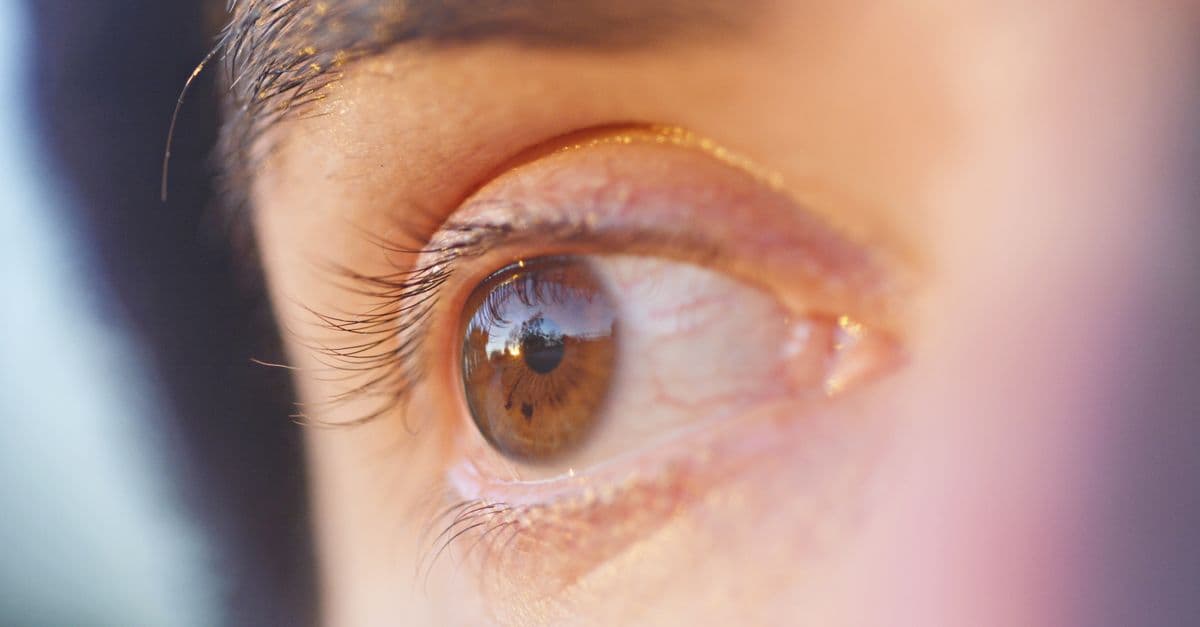
Photo: fijaos88 / Pexels
Cover an eyebrow with makeup and the face underneath it becomes noticeably harder to recognize, even to people who know it well. That single fact reframes what eyebrows are for. They are not decorative leftovers from a hairier past; they are a dedicated communication and protection system, built from roughly 250 short hairs sitting on a bony ridge that our own species has spent hundreds of thousands of years quietly reshaping. Here is what eyebrows actually do, how they got that way, and why losing them changes more than your looks.
What eyebrows actually do
Ask most people why humans have eyebrows and you get one answer: they stop sweat from running into the eyes. That's real, but it's only half the story, and probably not even the more important half anymore.
Biologists generally converge on two functions, and current evidence suggests they arrived at different points in human evolution. The older, more mechanical function is fluid deflection. The newer, more socially loaded function is communication. Neither one cancels the other out; they're layered, the way a smartphone still makes calls but is mostly used for everything else now.
Sweat and rain deflection
Eyebrow hairs grow outward and slightly downward in short, arched rows that follow the curve of the supraorbital ridge, the bony shelf at the base of the forehead. That growth angle is not decorative. It channels liquid — sweat running down from the forehead, rain falling from above — sideways toward the temples instead of straight down into the eyes.
For a species that regulates body heat mainly by sweating (humans lose heat this way far more efficiently than most mammals, thanks to an unusually high density of eccrine sweat glands), keeping salt water out of the eyes during sustained physical activity is a real functional problem. An eye stinging with salt water blinks reflexively and floods with tears, which blurs vision at exactly the moment an early human might have been tracking prey or watching for a predator. The eyebrow's arch is a low-cost fix: a gutter built into the face, no different in principle from the brim of a hat directing rain away from a windshield-less car.
Social signaling and face recognition
The more surprising function showed up almost by accident, in a 2003 face-recognition study out of MIT. Javid Sadr, Izzat Jarudi, and Pawan Sinha digitally removed either the eyes or the eyebrows from photographs of well-known faces and asked participants to identify who they were looking at. Removing the eyebrows hurt recognition more than removing the eyes did — a result that surprised even the researchers, since prior face-recognition research had barely studied eyebrows at all (Sadr, Jarudi & Sinha, 2003, Perception).
That finding turned eyebrows from an overlooked strip of hair into a genuine research subject. The likely explanation is that eyebrows sit at a high-contrast boundary — dark hair against lighter skin, positioned at a stable, easily measured distance from other facial landmarks — which makes them unusually efficient anchor points for the brain's face-recognition circuitry in the fusiform gyrus. Eyes move, blink, and change with lighting and pupil size; eyebrows hold their position and shape far more consistently across a lifetime of photographs.
Beyond identification, eyebrows are extraordinarily expressive relative to how little they actually move. A brow raised on one side signals skepticism. Both raised together, combined with wide eyes, signals surprise. Brows drawn down and inward signal anger or concentration. Compare that range to any other primate's face and the gap is stark — no chimpanzee, gorilla, or orangutan has anything close to this vocabulary of small, precise eyebrow movements layered onto a shared basic expression set.
Anatomy of an eyebrow, and why it can never grow long
Eyebrow hair looks like a small, static detail, but it runs on its own biological clock, distinct from the hair on your scalp.
| Feature | Eyebrow hair | Scalp hair |
|---|---|---|
| Average hair count | ~250 per brow, with high variation up to roughly 1,100 in never-plucked brows | ~100,000 total |
| Growth rate | About 0.1–0.16 mm per day (roughly 3–5 mm/month) | About 12–15 mm/month |
| Anagen (growth) phase length | 4–7 months | 2–7 years |
| Catagen (transition) phase | 2–3 weeks | 2–3 weeks |
| Telogen (resting) phase | About 3 months before shedding | Up to several months |
| Maximum length reached | A few millimeters to about 1 cm | Can exceed a meter over a lifetime |
Table: Eyebrow hair vs. scalp hair growth cycle, based on dermatological hair-cycle data (Journal of Drugs in Dermatology, "The Biology, Structure, and Function of Eyebrow Hair").
The reason eyebrows never get long, no matter how long you leave them alone, is that anagen — the active growth phase — is short. A scalp hair follicle can stay in growth mode for years, which is why uncut hair can reach the floor. An eyebrow follicle grows for a matter of months, then shifts into catagen, shrinks, rests in telogen, and sheds. It's the biological equivalent of a sprinter versus a marathon runner: eyebrow follicles are built for a short, controlled burst, not distance.
Structurally, eyebrow hairs sit directly over the supraorbital ridge, the same bony shelf that, in earlier hominins, was far more pronounced. Two facial muscles do almost all the actual moving: the frontalis, which raises the brow, and the corrugator supercilii, which pulls the brows down and together — the muscle responsible for a furrowed, concentrating, or angry expression. A third muscle, the procerus, contributes to the vertical wrinkle between the brows. Together they give the eyebrow region a mechanical range that most of the rest of the face simply doesn't have.
Why we lose eyebrows with age — and what it can signal
Thinning eyebrows after age 50 are common, and the causes range from unremarkable to clinically significant.
Q: Why do eyebrows thin with age? A: Hair follicles across the body slow down and miniaturize with age, and eyebrow follicles — with their already short growth cycle — show this earlier and more visibly than scalp hair. This is a normal part of aging in most people and not, by itself, a medical concern.
Beyond ordinary aging, several specific conditions target eyebrow hair in a recognizable pattern:
- Hypothyroidism classically thins the outer third of the eyebrow, a finding clinicians call Queen Anne's sign (also known as the Hertoghe sign). It has been documented in medical literature for more than a century and, in some patients, is the first visible clue that prompts a thyroid workup (Oxford Academic, QJM, 2023).
- Nutritional deficiencies — particularly zinc, iron, and biotin — can thin brows along with other hair.
- Alopecia areata, an autoimmune condition, can cause patchy or complete eyebrow loss independent of scalp hair loss.
- Atopic dermatitis and, historically, leprosy and syphilis can also produce outer-third thinning, which is why the sign alone doesn't confirm a thyroid problem — it raises suspicion, and blood tests confirm or rule it out.
The mechanism behind why hypothyroidism specifically targets the outer third of the brow, rather than the whole eyebrow evenly, is still not fully understood. The leading explanation involves depressed metabolic activity and a buildup of glycosaminoglycans (complex sugar molecules) in the skin, which is known to affect hair follicle cycling generally, but the specific outer-third pattern remains an open question in dermatology.
The evolutionary story: from brow ridge to mobile brow
This is where eyebrows stop being a grooming topic and become a genuinely interesting evolutionary puzzle.
Look at a Neanderthal skull, or an even older Homo erectus skull, and the difference from a modern human skull is immediate: a heavy, continuous bar of bone runs across the top of the eye sockets. Modern Homo sapiens, by contrast, has a comparatively flat, vertical forehead with barely any bony ridge at all — the eyebrow, such as it is, sits on a much smaller bony shelf, doing its work mostly with hair and muscle instead of bone.
For decades, one leading explanation for the brow ridge was mechanical: the idea that it braced the skull against the forces generated by heavy chewing, a "masticatory-force hypothesis." But researchers testing that idea directly found the ridge didn't line up well with chewing-force patterns, which pushed the field to look for other explanations.
A 2018 study by Ricardo Godinho, Penny Spikins, and Paul O'Higgins, published in Nature Ecology & Evolution, offered a different answer. Using 3D virtual modeling of an archaic hominin skull (Kabwe 1), the team found the brow ridge played only a limited biomechanical role in withstanding bite forces — leaving room for it to have been repurposed for something else entirely: social signaling (Godinho, Spikins & O'Higgins, 2018, Nature Ecology & Evolution).
Their argument runs like this. In many social mammals, a fixed, prominent facial structure functions as a permanent dominance signal — think of a stag's antlers, or the brightly colored, ridged faces of male mandrills. A heavy brow ridge could have worked the same way in earlier hominins: a built-in, unchanging display of size and aggression, visible at a glance, that never needed to be "performed."
Modern humans, the argument goes, evolved in the opposite direction. As faces became flatter and foreheads more vertical, the fixed bony signal disappeared — and was effectively replaced by a movable one. A flatter brow with mobile hair and muscle could no longer flash a single, permanent "I am dominant" message, but it could do something a rigid bone ridge never could: shift moment to moment, expressing recognition, sympathy, concern, agreement, or surprise. For a species whose survival depended increasingly on cooperation within large, complex social groups rather than displays of individual strength, that flexibility was arguably more valuable than the fixed signal it replaced (University of York summary of Godinho et al., 2018).
In short: humans didn't lose the brow. We traded a permanent, one-note signal made of bone for a fast, nuanced, muscle-driven one made of hair — a swap from a billboard to a touchscreen. Eyebrows are not the only feature that reflects our evolutionary past; why we have wisdom teeth is another example.
Did other early humans have expressive eyebrows too?
Almost certainly not, or at least not to the same degree. Neanderthals and earlier hominins had heavy bony ridges with comparatively limited room for the fine muscular movement that gives modern human brows their range. The flatter forehead and reduced ridge appear to be specific to Homo sapiens, which is part of why researchers see the shift as tied to how modern humans evolved to communicate and cooperate.
What about other animals?
No other primate has anything resembling the dense, mobile, expressive eyebrow humans carry. Chimpanzees and gorillas have bony brow ridges with only sparse hair above the eyes — visually prominent, but nowhere close to human eyebrows in either hair density or the range of independent movement.
The closest parallel in the animal kingdom, oddly enough, isn't a primate at all. In a 2019 study published in the Proceedings of the National Academy of Sciences, researchers dissecting dog and wolf heads found that dogs — but not wolves — consistently have a muscle called the levator anguli oculi medialis, which raises the inner corner of the eyebrow (Kaminski et al., 2019, PNAS). Behavioral data showed dogs produce this "puppy dog eyes" movement far more often and more intensely than wolves do. The leading interpretation is that this muscle emerged over roughly 33,000 years of domestication because it triggers a nurturing response in humans — dogs whose faces could mimic a human sad expression had a selection advantage with the species controlling their food and shelter.
It's a genuinely striking parallel: two very different species, humans and domestic dogs, independently evolving expressive eyebrow movement because it helped them communicate — in the human case, with each other; in the dog's case, with us.
Comparison: eyebrow vs. eyelash vs. scalp hair
| Feature | Eyebrow | Eyelash | Scalp hair |
|---|---|---|---|
| Primary function | Sweat/rain deflection, social signaling | Particle and dust protection, blink-reflex trigger | Thermoregulation, UV protection |
| Hair count | ~250 per side (up to ~1,100 unplucked) | ~150–200 upper lid, ~75–100 lower lid | ~100,000 total |
| Growth rate | ~0.1–0.16 mm/day | ~0.12–0.16 mm/day | ~0.4–0.5 mm/day |
| Anagen phase length | 4–7 months | 1–6 weeks | 2–7 years |
| Reflex involvement | Voluntary/expressive movement | Involuntary blink reflex | None |
| Evolutionary uniqueness in humans | Very high — no primate analog | Moderate — most mammals have some form | Low — shared broadly with other primates |
Table: Structural and functional comparison of the three main types of facial protective hair.
Common confusions and misconceptions about eyebrows
"Eyebrows are just leftover body hair." Not really. If eyebrows were simply residual hair that the rest of the body shed, you'd expect them to follow the same growth pattern as body hair generally — long dormant periods, minimal density, little structural specialization. Instead, eyebrow follicles have a distinct, short growth cycle and sit precisely over the bony ridge in a pattern that shows clear signs of having been shaped by selection, not left behind by it.
"Thicker eyebrows are always healthier." Eyebrow density varies enormously between individuals and across ethnic backgrounds for reasons that have nothing to do with health — genetics, particularly variants affecting hair follicle density and androgen sensitivity, account for most of the natural variation. Sudden, patchy, or rapid thinning is the pattern worth paying attention to, not baseline thickness.
"Plucking or shaving permanently damages the follicle." Occasional plucking generally does not destroy follicles; eyebrow hair follicles, like other hair follicles, can regenerate through their normal cycle. Chronic over-plucking over many years, however, can eventually damage follicles enough to reduce regrowth, which is part of why the heavily over-plucked 1990s and early-2000s brow trend left some people with genuinely thinner brows decades later.
"Eyebrow shape doesn't really affect how people read your emotions." It does, more than most facial features people consciously groom. Because eyebrow position is such a heavily weighted cue in emotion perception, cosmetic changes to brow shape and angle measurably shift how neutral expressions are read by other people — flatter brows tend to read as more neutral or stern, higher-arched brows as more surprised or approachable.
The cultural and cosmetic history of eyebrow grooming
Once a biological signal becomes something other people read, it inevitably becomes something people try to control — and eyebrow grooming has one of the longer documented histories of any beauty practice.
Ancient Egyptians, as far back as roughly 3500 BCE, darkened and defined their eyebrows with kohl, a pigment made from ground minerals like galena, applied by both men and women to sharpen the eyes and brows together. In medieval and Elizabethan Europe, the fashion swung the opposite direction: high, hairless foreheads were considered elegant, and women plucked their eyebrows thin — sometimes removing them almost entirely — while using lead-based pencils to paint in a faint, delicate arch.
The 20th century cycled through eyebrow trends about once a generation: the ultra-thin, high-arched pencil brow of the 1920s–30s (associated with actresses like Jean Harlow), fuller and more natural brows through the mid-century, the heavily over-plucked thin brow of the 1990s and early 2000s, and a swing back toward thick, natural, "your brows but better" styling in the 2010s, driven heavily by social media and brow-specific products.
That last trend fed directly into microblading, a semi-permanent tattooing technique that deposits pigment in fine, hair-like strokes to simulate fuller brows. What started as a niche cosmetic procedure has become a substantial global industry — market analysts valued microblading services at roughly 1.2 billion USD in 2024, with projected growth to around 2.8 billion USD by 2033, and in North America microblading alone reportedly accounts for over half of brow-salon service revenue as of 2024. That's an extraordinary amount of commercial infrastructure built around maintaining a feature that, biologically, exists mainly to keep sweat out of your eyes and help other people recognize your face.
What this means
Eyebrows do double duty in a way few other facial features do: they're a physical gutter that evolved to keep salt water and rain out of the eyes, and — probably later, and now arguably more importantly — a fast, muscle-driven signaling system that helps other humans recognize you and read your emotional state at a glance. The fossil record suggests our species made an explicit trade to get there, swapping a heavy, fixed bony brow ridge for a flatter forehead and a small, mobile patch of hair capable of far more nuanced communication. The next time you catch yourself unconsciously raising an eyebrow in disbelief, you're using a piece of anatomy that a few hundred thousand years of human evolution spent considerable effort building specifically for that job.
FAQs
Q: Do eyebrows really matter for face recognition? A: Yes. In controlled tests, removing eyebrows from photos of familiar faces disrupted recognition more severely than removing the eyes, a result that surprised the MIT researchers who first documented it in 2003.
Q: Why don't eyebrows grow as long as head hair? A: The anagen, or active growth, phase for eyebrow follicles lasts only about 4 to 7 months, compared with 2 to 7 years for scalp hair follicles. The hair simply stops growing and sheds long before it could reach any real length.
Q: Did Neanderthals have eyebrows like ours? A: Not in the same way. Neanderthals had a heavy, continuous bony brow ridge with limited room for expressive muscle movement. Modern humans evolved a flatter forehead with a much smaller bony ridge, replacing a fixed dominance signal with a mobile, muscle-driven one.
Q: Why does losing outer eyebrow hair suggest a thyroid problem? A: Thinning specifically at the outer third of the eyebrow — known clinically as Queen Anne's sign or the Hertoghe sign — has been associated with hypothyroidism for over a century. The exact mechanism isn't fully established, but it's linked to slowed metabolism and glycosaminoglycan buildup affecting hair follicle cycling.
Q: Can eyebrow shape really change how people read your emotions? A: Yes. Because eyebrow position is such a heavily weighted visual cue, small changes in angle and shape measurably shift how a neutral face is perceived, from stern to approachable to surprised, which is part of why cosmetic brow shaping affects how people are read socially.
Q: Do animals other than humans have expressive eyebrows? A: Domestic dogs are the closest known parallel. A 2019 PNAS study found dogs, unlike wolves, consistently have a facial muscle that raises the inner eyebrow, likely evolved over roughly 33,000 years of domestication because it elicits a caregiving response in humans.
Q: Is it true that plucking eyebrows can permanently stop them from growing back? A: Occasional plucking does not typically destroy the follicle, and hair usually regrows through the normal cycle. Years of chronic over-plucking, however, can eventually damage follicles enough to reduce or prevent regrowth.
Q: Why do eyebrows sit exactly where they do on the face? A: They sit directly over the supraorbital ridge, the bony shelf at the base of the frontal bone above the eye socket — the same anatomical location that housed the much larger, fused brow ridge in earlier hominins before it was reduced over the course of human evolution.
Q: Are thicker eyebrows a sign of better health? A: Not inherently. Eyebrow density varies widely due to genetics and ethnic background and isn't, by itself, a health marker. What is clinically meaningful is a noticeable change over time, such as sudden thinning or patchy loss, rather than baseline thickness.
Q: How many hairs does the average eyebrow have? A: Roughly 250 hairs per eyebrow on average, though the range is wide, with never-plucked brows reported to reach as many as 1,100 hairs in some individuals.
Read next:
Sources
- Sadr, J., Jarudi, I., & Sinha, P. (2003). "The role of eyebrows in face recognition." Perception, 32(3), 285–293. journals.sagepub.com
- Godinho, R. M., Spikins, P., & O'Higgins, P. (2018). "Supraorbital morphology and social dynamics in human evolution." Nature Ecology & Evolution, 2, 956–961. nature.com
- University of York (2018). "Why expressive brows might have mattered in human evolution." york.ac.uk
- Kaminski, J., Waller, B. M., Diogo, R., Hartstone-Rose, A., & Burrows, A. M. (2019). "Evolution of facial muscle anatomy in dogs." PNAS, 116(29), 14677–14681. pnas.org
- "Eyebrow loss and the Queen Anne sign in hypothyroidism." (2023). QJM: An International Journal of Medicine. academic.oup.com
- "The Biology, Structure, and Function of Eyebrow Hair." Journal of Drugs in Dermatology. jddonline.com
Follow new articles
Add SciHub101 to your feed reader to see new science and technology stories.
About the Author
SciHub101 is an independent science and technology publication founded and edited by Buğra Sözeri, a software engineer and app developer based in Türkiye. AI tools assist with drafting and research. Source documentation in the existing archive is uneven, and articles are being reviewed and corrected. The Editorial Team byline identifies editorial responsibility; it does not certify specialist or independent human review. Where we compare products, anything built by our own team is labelled as such — see the editorial guidelines and About page for how corrections and disclosures work.
Related Articles

Why We Forget Our Dreams — The Brain Science
Most adults forget 95% of dreams within minutes. The neuroscience: low norepinephrine, MCH neurons, weak hippocampal coupling, and how to remember more.

Why We Get Jet Lag — Circadian Disruption
Why does jet lag happen and why is going east worse? The circadian science of body clocks, light, melatonin, and evidence-based recovery strategies.

What Is the Appendix For? Biology Explained
What does the appendix actually do? The microbiome safe-house hypothesis, immune function, appendicitis, and why it's not really useless.

The Science of Superpowers: Could Humans Really Fly?
Comic book heroes make flight look effortless — but a serious look at biology and physics shows why human flight is one of nature's hardest engineering problems.
Complete Biology Guide 2026 — How Life Works
The complete guide to biology in 2026: cells and genetics, evolution, the human body, neuroscience, disease, immune systems, and the future of genetic engineering.

How Do Fireflies Glow? The Science of Bioluminescence
Fireflies produce light through a chemical reaction called bioluminescence, where the protein luciferin is oxidized by the enzyme luciferase using oxygen and ATP to emit photons with nearly zero heat loss. The insect controls flash timing by regulating oxygen flow to its light organ, and each species produces a distinct flash pattern used for mating recognition. This same light-producing chemistry has become essential to modern biology, allowing researchers to track gene expression, detect ATP in tissue samples, and study cellular processes in real time.