The Lenski Long-Term Evolution Experiment: Evolution in Real Time
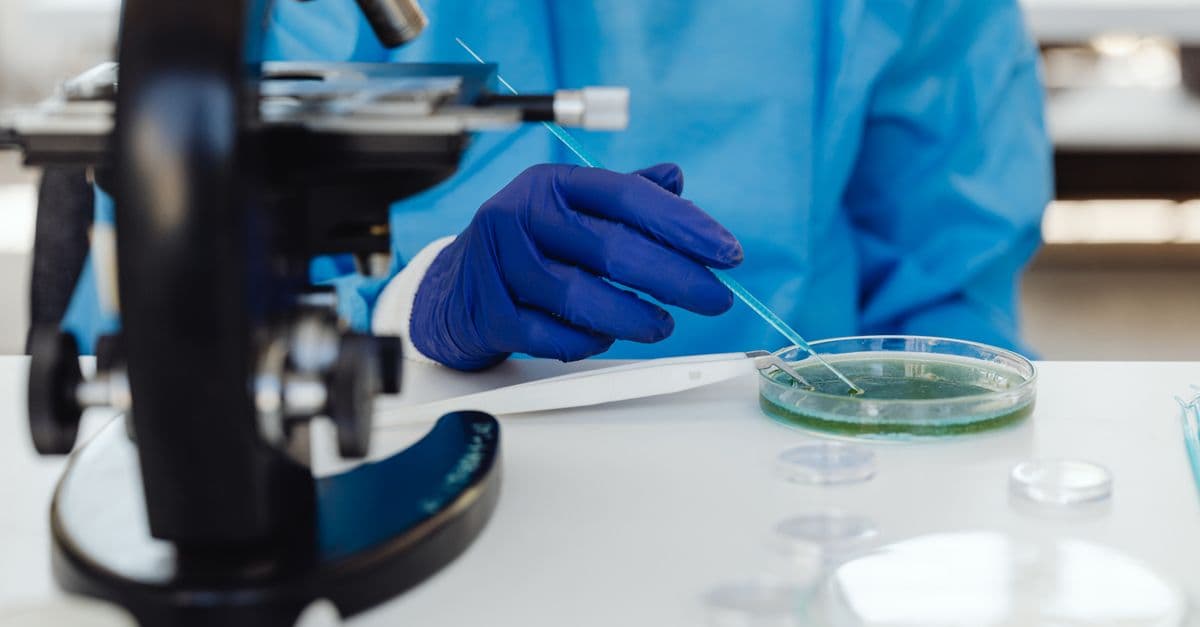
Photo: www.kaboompics.com / Pexels
On February 24, 1988, Richard Lenski placed 12 identical flasks of Escherichia coli in an incubator at Michigan State University. Every day since, someone in his laboratory has transferred a small sample from each flask into fresh nutrient medium, restarted the growth cycle, and preserved frozen samples of each population at regular intervals. As of 2024, those populations have undergone more than 80,000 generations of evolution — equivalent, in terms of generational time, to roughly 1.6 million years of human evolution. The experiment has become the longest-running controlled evolution experiment in history, a living fossil record that can be replayed and examined in ways that no paleontological record permits.
Why Run an Evolution Experiment at All?
Evolution is, in the normal course of biology, not observable on human timescales. The transition from a common ancestor to two modern species — a sparrow and a hawk, a frog and a salamander — takes millions of years. The geological record shows us the before and after, but not the process unfolding step by step.
Bacteria change this calculation entirely. E. coli divides approximately every 20–30 minutes under favorable conditions. Lenski's daily transfer protocol allows each population to go through roughly 6.64 generations per day (a 100-fold dilution means approximately 6–7 doublings to replenish the culture). Over a year, that is about 2,400 generations. Over 36 years, more than 80,000 generations.
With 80,000 generations of evolution archived as frozen samples at every 500-generation interval, the Lenski experiment offers something no evolutionary study of large organisms can: the ability to go back in time. Frozen samples from any historical generation can be revived, grown under any condition, and compared directly with modern descendants or with each other. Evolutionary hypotheses can be tested by literally replaying the tape.
Source: Lenski, R. E. et al. (1991), "Long-term experimental evolution in Escherichia coli. I. Adaptation and divergence during 2,000 generations," American Naturalist, 138(6), 1315–1341 — the first major publication from the LTEE, establishing the basic fitness trajectory.
Fitness — in an evolutionary context, the ability of an organism to survive and reproduce relative to others in the same environment. In the LTEE, fitness is measured by competition assays: a test strain and the ancestral strain are mixed and allowed to compete; the ratio of their populations after 24 hours determines relative fitness.
The Design: Twelve Flasks, One Selective Pressure
The LTEE's design is deliberately minimal. Each of the 12 populations was founded from a single ancestral E. coli B strain. Six populations carry a genetic marker that makes them appear on agar plates as red colonies; six make white colonies. This allows Lenski's team to distinguish mixed populations during competition assays.
The medium is DM25 — Davis Minimal medium containing 25 micrograms per milliliter of glucose. This is a nutrient-poor environment: the glucose is exhausted within hours of each daily transfer, after which the bacteria must survive in a depleted medium until the next transfer. The low glucose concentration creates strong selection for efficient glucose utilization.
Critically, the medium also contains citrate — a small organic molecule present at approximately 1,700 micrograms per milliliter. Wild-type E. coli cannot use citrate as a carbon or energy source under aerobic conditions. Citrate is present in the medium not as a nutrient but as a chelating agent (a molecule that binds metal ions and keeps them in solution). The 12 populations evolve in a world where citrate is abundant but, under normal E. coli physiology, inaccessible.
Source: Lenski, R. E. & Travisano, M. (1994), "Dynamics of adaptation and diversification: a 10,000-generation experiment with bacterial populations," PNAS, 91(15), 6808–6814 — a decade of LTEE data, showing consistent fitness gains and the dynamics of adaptation.
Each day, 0.1 mL of culture is transferred to 9.9 mL of fresh DM25 medium — a 100-fold dilution — starting a new cycle of growth and starvation. The 11 remaining populations are discarded and replaced with fresh medium. Every 500 generations (approximately 75 days), samples from each population are mixed with 15% glycerol and frozen at -80°C, creating a permanent, revivable archive.
The First Findings: Predictable Adaptation
Within the first 2,000 generations, all 12 populations showed substantial fitness gains relative to the ancestral strain. Fitness increased rapidly at first — a pattern consistent with natural selection acting on mutants that are much better adapted to the DM25 environment than the ancestor — and then slowed as diminishing returns set in.
This pattern is consistent with what evolutionary theory predicts. The ancestral strain, placed suddenly into a novel, resource-limited environment, is far from the adaptive optimum. Large-effect mutations that dramatically improve glucose efficiency are common early. As the population approaches the optimum, beneficial mutations become rarer and have smaller effects.
Source: Lenski, R. E. et al. (1991), American Naturalist, 138(6), 1315–1341 — data on fitness trajectories in the first 2,000 generations.
By 10,000 generations, all 12 populations had achieved average fitness gains of approximately 30% relative to the ancestor — meaning the evolved strains outcompeted the ancestor in the DM25 environment by a factor of 1.3 in 24 hours. By 50,000 generations, fitness gains had plateaued at roughly 70–80% above the ancestor, though slow further gains continued.
The fitness gains came partly from predictable routes: mutations in genes controlling glucose uptake, central carbon metabolism, and regulatory circuits governing how cells respond to nutrient stress appeared repeatedly and independently across multiple populations. This parallel evolution — the same or similar mutations appearing independently in separate populations facing the same selective pressure — is a strong signal that the mutations are genuinely beneficial rather than neutral accidents.
Parallel evolution — the independent evolution of similar traits or mutations in separate lineages facing similar selective pressures. In the LTEE, the same genes mutated independently in multiple populations, providing evidence that natural selection, not random genetic drift, was driving the changes.
Source: Cooper, T. F. et al. (2003), "Parallel changes in gene expression after 20,000 generations of evolution in Escherichia coli," PNAS, 100(3), 1072–1077 — demonstration of parallel transcriptional changes across LTEE populations.
The Citrate Innovation: One Population, One Chance in Billions
For the first 31,000 generations, all 12 populations behaved as expected: they got better at consuming glucose. Then, in population Ara-3, something unprecedented occurred.
Around generation 31,500, a mutant appeared in the Ara-3 population that could consume citrate aerobically. By approximately generation 33,127, the citrate-consuming cells (called Cit+) had risen to high frequency in the population, producing a visible change: the culture became substantially cloudier as the bacteria entered exponential growth on citrate. Lenski's students noticed that one of their 12 flasks looked different.
Cit+ phenotype — the ability of a bacterium to transport and metabolize citrate aerobically. Wild-type E. coli cannot do this: it can use citrate anaerobically (without oxygen), but the aerobic citrate transporter is not expressed under oxic conditions. Acquiring this ability under aerobic conditions requires mutations that alter gene expression in a novel way.
The significance of this change is difficult to overstate. E. coli is defined in part by its inability to consume citrate aerobically — this physiological characteristic is part of the standard laboratory tests used to identify the species. No previously described strain of wild-type E. coli had ever evolved this capability, despite E. coli being one of the most intensively studied organisms in all of microbiology.
Moreover, the other 11 populations did not develop citrate utilization, despite being in the same medium with the same abundant citrate, for 80,000+ generations. They had tested, collectively, billions of spontaneous mutations and found no path to aerobic citrate utilization.
Source: Blount, Z. D., Borland, C. Z. & Lenski, R. E. (2008), "Historical contingency and the evolution of a key innovation in an experimental population of Escherichia coli," PNAS, 105(23), 7899–7906 — the landmark paper describing the Cit+ evolution and historical contingency analysis.
Historical Contingency: The Frozen Archive Answers a Deep Question
The appearance of citrate utilization in only one of 12 populations raised a profound question: was this event driven by some peculiarity of Ara-3's evolutionary history, or could any of the 12 populations have evolved Cit+ given enough time?
Lenski and Zachary Blount used the frozen archive to answer this directly. They revived frozen samples from various generations in Ara-3's history and used them as starting points for new evolution experiments — effectively "replaying the tape" from different points in the population's history. They also replayed the tape from samples taken from the other 11 populations.
The result was striking: Cit+ could re-evolve from Ara-3 samples taken from generation 20,000 onward, but not from earlier Ara-3 samples, and not at all from the other 11 populations.
This meant the evolution of citrate utilization was historically contingent — it depended on earlier evolutionary changes (mutations that accumulated in Ara-3 after generation 20,000) that were necessary prerequisites. Without those prior mutations, Cit+ could not arise, even given enormous evolutionary opportunity.
Source: Blount et al. (2008), PNAS, 105(23), 7899–7906 — the tape-replay experiment and historical contingency analysis.
Blount and Lenski identified three evolutionary stages in the Cit+ origin:
Potentiating mutations: Changes that accumulated in Ara-3 before generation ~20,000, which were necessary (but not sufficient) for Cit+ to arise. These mutations did not themselves confer citrate utilization but created a genetic background in which a subsequent mutation could produce the Cit+ phenotype.
Actualizing mutation: The specific mutation (or small set of mutations) that first produced the Cit+ phenotype, occurring around generation 31,500. This was a regulatory change — a genetic duplication that placed the gene citT (which encodes a citrate transporter normally active only under anaerobic conditions) under the control of a promoter that drives expression under aerobic conditions.
Refining mutations: Subsequent mutations that improved citrate utilization efficiency after the Cit+ phenotype first appeared. The first Cit+ cells were only weakly capable of citrate growth; later mutations enhanced transporter expression and metabolic integration.
Source: Blount, Z. D. et al. (2012), "Genomic analysis of a key innovation in an experimental Escherichia coli population," Nature, 489, 513–518 — genomic sequencing of the Cit+ evolution, identifying the citT duplication as the actualizing mutation.
Fifty-Five Years of LTEE Data: The Broader Picture
The citrate story is the LTEE's most famous result, but the experiment has produced a rich body of findings across six decades of continuous data collection.
Fitness gains are decelerating but not stopping. The rapid fitness increase of the first 20,000 generations has slowed substantially, but all 12 populations continue to show measurable fitness gains even at 80,000 generations. The populations have not reached a permanent adaptive plateau.
Mutation rates evolved. In several populations, "mutator" mutants arose — strains with defective DNA repair systems that produce mutations at rates 50–200 times higher than the ancestral strain. Mutators can spread when beneficial mutations are still common, because the elevated mutation rate increases the chance of acquiring beneficial mutations. As environments become saturated, mutators tend to be outcompeted by low-mutation-rate strains carrying their beneficial mutations.
Source: Sniegowski, P. D., Gerrish, P. J. & Lenski, R. E. (1997), "Evolution of high mutation rates in experimental populations of E. coli," Nature, 387, 703–705 — discovery of mutator evolution in LTEE populations.
Genetic drift and clonal interference. Within each population, multiple beneficial mutations often arise simultaneously in different lineages. These lineages compete, and some beneficial mutations are lost not because they are deleterious but because they arise in a lineage that loses the competition with another lineage. This clonal interference slows adaptation and creates complex within-population dynamics.
Genomic sequencing reveals the full mutational landscape. By 2012, Lenski's team had collaborated with the Broad Institute to sequence the genomes of strains sampled at many time points across all 12 populations. This produced an unprecedented view of molecular evolution: which genes mutated, in what order, and how often.
Source: Barrick, J. E. et al. (2009), "Genome evolution and adaptation in a long-term experiment with Escherichia coli," Nature, 461, 1243–1247 — genomic analysis of LTEE evolution over 40,000 generations.
Key genes that mutated repeatedly across populations include spoT (global stress response regulator), topA (DNA topology), mrdA (cell shape), and pykF (pyruvate kinase, central metabolism). The fact that the same genes mutated independently in multiple populations confirms that natural selection, not chance, was driving the genetic change.
The LTEE Timeline
| Date / Generation | Event |
|---|---|
| February 24, 1988 | LTEE begins: 12 populations of E. coli B founded at Michigan State |
| ~Gen 2,000 (1989) | First publication; all 12 populations show ~30% fitness gain |
| ~Gen 10,000 (1992) | Mutator strains identified in several populations |
| ~Gen 20,000 (1996) | 10-year LTEE synthesis published; ongoing fitness gains confirmed |
| ~Gen 31,500 (2003) | Cit+ mutation arises in Ara-3 population |
| ~Gen 33,127 (2003) | Cit+ cells dominate the Ara-3 culture; anomalous flask density noticed |
| 2008 | Blount, Borland & Lenski publish historical contingency analysis in PNAS |
| 2009 | First whole-genome sequencing of LTEE strains published in Nature |
| 2012 | Genomic analysis of Cit+ evolution; actualizing mutation identified |
| 2016 | LTEE passes 65,000 generations; Lenski moves lab from MSU to continue |
| August 2024 | LTEE populations pass 80,000 generations — still running |
What the LTEE Tells Us About Evolution's Rules
The LTEE has become one of the most important datasets in evolutionary biology because it allows direct empirical testing of questions that previously could only be addressed theoretically.
Is evolution predictable? Partly. The parallel mutations across LTEE populations show that natural selection has clear preferences — the same genes mutated repeatedly because they were the best available targets for adaptation in this environment. But the citrate evolution shows that some innovations depend on historical accident. Both determinism and contingency operate simultaneously.
Does evolution stop? No. Even after 80,000 generations in a constant environment, fitness gains continue. There is no evidence that populations have reached the absolute fitness peak — the adaptive landscape has not been fully climbed. This has implications for arguments that evolution would stop if environments stabilized.
Can major innovations arise through gradual processes? The Cit+ result directly addresses a long-standing argument that major evolutionary innovations require some special mechanism beyond natural selection on standing variation. The citrate capability, genuinely unprecedented in E. coli, arose through gradual accumulation of mutations — first potentiating, then actualizing, then refining — each selected for reasons that, alone, had nothing to do with citrate. The innovation was assembled from small steps.
Source: Lenski, R. E. (2017), "Experimental evolution and the dynamics of adaptation and genome evolution in microbial populations," ISME Journal, 11(10), 2181–2194 — Lenski's own synthesis of LTEE lessons for evolutionary biology.
Does the frozen archive allow replaying the tape of evolution? Yes — and this is the experiment's methodological genius. The frozen samples allow direct tests of historical contingency that are impossible in any other evolutionary system. The ability to revive ancestral populations and expose them to current conditions, or to replay evolution from any saved time point, turns theoretical questions into experimental ones.
What People Get Wrong About the LTEE
"The citrate bacteria evolved a brand new gene." The Cit+ mutation was a regulatory change — a duplication that placed an existing gene (citT) under a new promoter — not the invention of a new gene from scratch. The transporter that allows citrate uptake was already present in the E. coli genome; it simply could not be expressed under aerobic conditions. Evolution repurposed existing genetic material.
"The LTEE proves evolution is limitless." The LTEE shows that substantial adaptation occurs over 80,000 generations in a constant environment, but 11 of 12 populations never acquired citrate utilization despite testing billions of mutations. Some evolutionary innovations are historically contingent and may not be accessible to all populations, even with enormous genetic opportunity.
"The experiment shows bacteria becoming a new species." The LTEE populations are still E. coli — they have not diverged to the point where biologists would recognize them as a new species by any conventional criterion. The Cit+ population has acquired a novel metabolic capability, but speciation involves reproductive isolation and many more changes. The LTEE populations can still exchange genes with the ancestral strain.
"Lenski's experiment is running itself." The daily transfer requires someone to actually be present, making the transfers, every single day — including weekends, holidays, and through the COVID-19 pandemic. The experiment is a 36-year commitment to daily laboratory work. It has survived because Lenski built laboratory infrastructure and trained generations of students and postdoctoral researchers to maintain continuity.
FAQs
Q: How long has the Lenski experiment been running?
A: The LTEE began on February 24, 1988, at Michigan State University. As of 2024, it has been running for more than 36 years and the populations have undergone more than 80,000 generations of evolution.
Q: What is special about the citrate mutation?
A: Wild-type E. coli cannot consume citrate aerobically — this inability is part of the standard microbiological definition of the species. The Cit+ mutation, which arose in one of 12 populations around generation 31,500, allowed aerobic citrate utilization for the first time. No other E. coli population, in or outside the LTEE, had ever been observed to acquire this capability.
Q: Why did only one population evolve citrate utilization?
A: The Cit+ innovation required prior "potentiating" mutations that accumulated in Ara-3 before generation 20,000. Without those specific earlier mutations, the actualizing mutation that conferred citrate utilization could not produce the Cit+ phenotype. This historical contingency explains why 11 other populations, with identical glucose medium and identical opportunity, did not acquire the same capability.
Q: What is the frozen archive, and why does it matter?
A: Every 500 generations, Lenski's team freezes samples of each population in liquid nitrogen. These samples can be revived and grown years or decades later. This allows direct comparisons between ancestral and evolved strains, and — crucially — allows experiments that "replay the tape of evolution" from any historical time point, testing hypotheses about contingency and predictability.
Q: How does the LTEE measure evolutionary fitness?
A: Fitness is measured by competition assays. The test strain (evolved) and the ancestral strain (marked with a different colony color) are mixed and allowed to compete for 24 hours in DM25 medium. The ratio of their population sizes at the end versus the beginning reveals which strain grows faster — the strain with the higher growth rate has higher fitness in that environment.
Q: Has the experiment produced new species?
A: No. The LTEE populations have diverged substantially from the ancestral strain in fitness and some physiological properties, but they remain E. coli by any standard microbiological criterion. Speciation requires reproductive isolation and extensive genomic divergence; the LTEE populations have not crossed that threshold.
Q: What is "parallel evolution" in the LTEE context?
A: The same genes have mutated independently in multiple separate LTEE populations. For example, the gene spoT (a global stress regulator) mutated in nearly all 12 populations. This parallelism is strong evidence that natural selection, not random genetic drift, drove those specific mutations — because random processes would be unlikely to produce the same changes independently in separate populations.
Q: Could the citrate mutation happen in bacteria outside the lab?
A: Possibly, but with low probability. The LTEE's citrate result required specific prior mutations that assembled over 20,000 generations of evolution in a very specific environment. In natural E. coli populations, different selective pressures and environments would favor different evolutionary paths. The result does not mean citrate-eating E. coli will appear in nature imminently.
The Takeaway
The Lenski experiment is the closest thing to watching evolution happen in front of you. Twelve populations of identical bacteria, growing in the same medium for 80,000+ generations, have shown that evolution is both predictable — the same genes mutate repeatedly across populations because selection has clear preferences — and contingent — in only one population, a specific historical sequence of prior mutations made a genuinely unprecedented metabolic innovation possible. The frozen archive means this is not just an observation but a replaying, revisitable experiment. What began in twelve flasks in a Michigan incubator in 1988 has become the most detailed record of evolution in action that science has ever produced.
Read next:
Follow new articles
Add SciHub101 to your feed reader to see new science and technology stories.
About the Author
SciHub101 is an independent science and technology publication founded and edited by Buğra Sözeri, a software engineer and app developer based in Türkiye. AI tools assist with drafting and research. Source documentation in the existing archive is uneven, and articles are being reviewed and corrected. The Editorial Team byline identifies editorial responsibility; it does not certify specialist or independent human review. Where we compare products, anything built by our own team is labelled as such — see the editorial guidelines and About page for how corrections and disclosures work.
Related Articles
The Nirenberg Experiment: Cracking the Genetic Code
In 1961, Marshall Nirenberg used a synthetic poly-U RNA to show UUU codes for phenylalanine — the first codon ever cracked, starting the complete decipherment of the genetic code.

Lavoisier's Combustion Experiments: How Oxygen Ended the Phlogiston Era
In the 1770s, Antoine Lavoisier used the sealed flask and the balance to prove combustion consumes oxygen, conservation of mass holds, and phlogiston does not exist.
Charles Darwin: The Reluctant Revolutionary Who Ate His Specimens — SciHub101
Charles Darwin's life, discoveries, and verified quirks: eating exotic animals, daily backgammon with his wife, decades of anxiety-induced vomiting, and the theory that changed biology.

Evolution and Natural Selection — How Life Changes
Darwin's theory, modern synthesis, mechanisms, evidence, speciation, and human evolution — explained clearly with common misconceptions corrected.