Climate Change Explained — The Greenhouse Effect
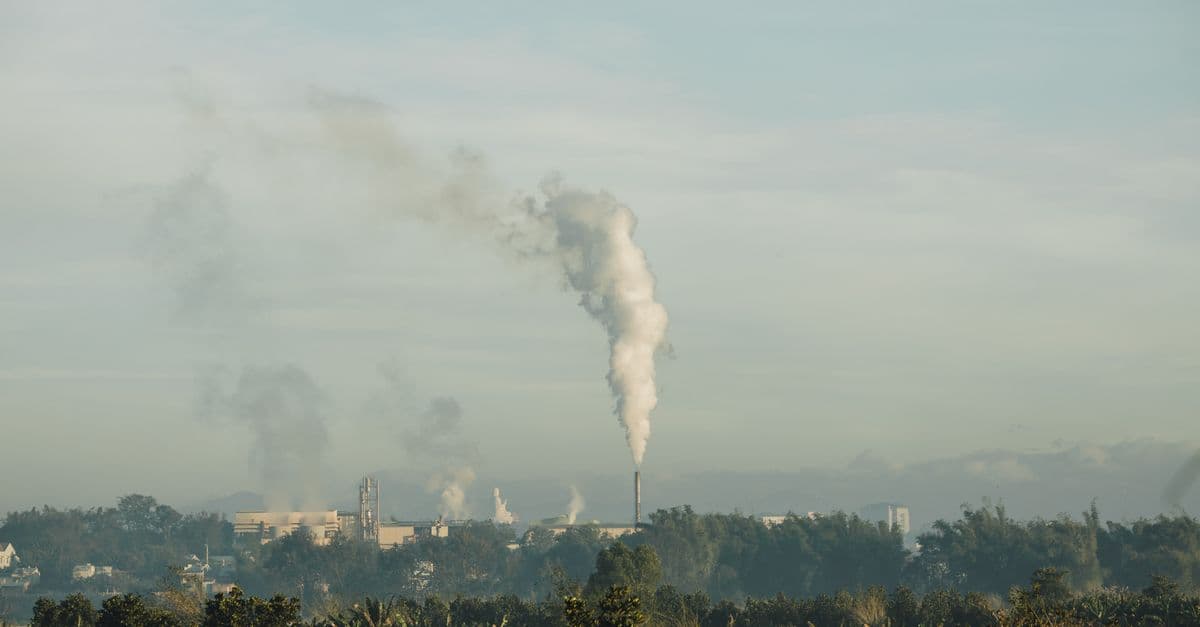
Photo: Thái Trường Giang / Pexels
The greenhouse effect is not a problem. It is the reason Earth is habitable. Without an atmosphere that traps part of the Sun's heat, Earth's average surface temperature would be roughly 255 K (-18 °C) — a frozen rock. The actual average is about 288 K (15 °C). That 33 °C difference is the natural greenhouse effect, and life depends on it.
The problem is that humans have strengthened it. Atmospheric CO₂ has risen from a pre-industrial 280 parts per million (ppm) to about 425 ppm in 2024, a level the planet has not seen in roughly 3 million years. That extra warming, currently around 1.2–1.3 °C above pre-industrial, is what we call anthropogenic climate change.
This article explains the physics of the greenhouse effect, which gases matter and why, the evidence base behind attribution, the feedback loops that amplify warming, and the observed effects in 2026.
The Physics: Why Greenhouse Gases Trap Heat
Earth is in approximate radiative balance: incoming solar energy (mostly visible light) equals outgoing thermal energy (longwave infrared). Sunlight passes through the atmosphere relatively unimpeded, warms the surface, and the surface re-radiates that energy as infrared.
Greenhouse gases are molecules with vibrational and rotational modes that absorb infrared at specific wavelengths. Diatomic molecules with identical atoms — N₂ and O₂, the bulk of the atmosphere — have no dipole moment changes during vibration and are essentially transparent to IR. Molecules with three or more atoms, or asymmetric bonds (H₂O, CO₂, CH₄, N₂O, O₃, CFCs), absorb IR strongly, then re-emit it in all directions, including back down. That re-emission warms the lower atmosphere and surface.
This is not theory. It was measured in the lab by John Tyndall in 1859, quantified for CO₂ by Svante Arrhenius in 1896, and confirmed by satellite IR spectroscopy showing the exact absorption bands missing from Earth's outgoing radiation.
Which Gases Matter (and Why Some More Than Others)
| Gas | Pre-industrial | 2024 | Lifetime | GWP (100-yr) | Contribution to forcing |
|---|---|---|---|---|---|
| Water vapor (H₂O) | variable | variable | days | n/a (feedback) | Strongest absolute effect; acts as feedback, not driver |
| Carbon dioxide (CO₂) | 280 ppm | 425 ppm | centuries to millennia | 1 (reference) | ~66% of anthropogenic forcing |
| Methane (CH₄) | 700 ppb | 1930 ppb | ~12 years | 28–34 | ~16% |
| Nitrous oxide (N₂O) | 270 ppb | 336 ppb | ~120 years | 273 | ~7% |
| CFCs / HFCs | 0 | trace ppt | decades to millennia | 1,000–14,000+ | ~10% combined |
| Ozone (tropospheric) | low | elevated | weeks | indirect | regional warming |
Water vapor is the strongest absolute greenhouse gas, but it is short-lived (days) and its concentration is set by temperature via the Clausius-Clapeyron relation. So it acts as a feedback — warmer air holds more water vapor, which warms further — not as the driver. Humans don't control atmospheric humidity directly; we control it indirectly by raising temperatures with CO₂.
CO₂ is the master control knob of Earth's climate on human timescales because it persists in the atmosphere for centuries to millennia. About 25% of CO₂ emitted today will still be warming the climate in 1,000 years.
Methane (CH₄) is roughly 80 times more potent than CO₂ on a 20-year timescale but only lasts about 12 years, which is why short-term methane cuts (leaks, livestock, landfills) offer fast climate wins.
The Evidence: How We Know
The Keeling Curve
Since 1958, Charles David Keeling and successors have measured atmospheric CO₂ at Mauna Loa, Hawaii. The record shows a relentless rise from ~315 ppm to ~425 ppm, with a clean annual sawtooth from Northern Hemisphere photosynthesis. It is one of the most important datasets in science.
Ice Cores: 800,000 Years of History
Antarctic ice cores from Vostok, EPICA, and Dome C trap ancient air bubbles. Over 800,000 years and 8 glacial cycles, CO₂ oscillated between roughly 180 ppm (glacials) and 280 ppm (interglacials). It never exceeded 300 ppm. Today's 425 ppm is far outside that natural envelope, and the rate of change is ~100 times faster than typical glacial-interglacial transitions.
Isotopic Fingerprint
Fossil fuels are depleted in carbon-14 (decayed away) and slightly depleted in carbon-13. The atmospheric CO₂ added since 1850 carries exactly that isotopic signature. We can identify the source the same way a forensic lab IDs a substance.
IPCC AR6
The IPCC Sixth Assessment Report (2021–2023) states it is "unequivocal" that human influence has warmed the atmosphere, ocean, and land. This is the strongest language the IPCC has ever used. Observed warming since 1850 is ~1.2–1.3 °C, and essentially all of it is attributable to human activity. Natural drivers (solar, volcanic) have been roughly neutral or slightly cooling over the same period.
What About Milankovitch Cycles?
Earth's climate naturally varies over tens of thousands of years due to Milankovitch cycles — orbital eccentricity (~100,000 yr), axial tilt or obliquity (~41,000 yr), and precession (~26,000 yr). These trigger glacial-interglacial transitions. The relevant facts: Milankovitch forcing operates on tens-of-thousands-of-years timescales and is currently in a cooling phase. The observed century-scale warming runs in the opposite direction and far faster than any orbital effect can drive. It is decisively anthropogenic.
See Earth's axial tilt explained and how oceans work for related background.
Feedback Loops and Tipping Points
Climate sensitivity — how much warming per CO₂ doubling — is estimated by IPCC AR6 at 2.5–4 °C per doubling (best estimate ~3 °C). Most of that uncertainty is in feedbacks, not the direct CO₂ forcing.
- Water vapor feedback (positive): warmer air holds more H₂O, which traps more IR.
- Ice-albedo feedback (positive): melting ice exposes darker ocean and land, absorbing more sunlight.
- Cloud feedbacks (uncertain): low clouds cool, high clouds warm.
- Permafrost methane (positive): thawing Arctic releases CH₄ and CO₂, a feared tipping point.
- Carbon sink saturation (positive): oceans and forests currently absorb ~50% of emissions; this fraction declines as they saturate.
"Tipping points" — Greenland ice sheet, Amazon dieback, Atlantic Meridional Overturning Circulation (AMOC), West Antarctic Ice Sheet — are nonlinear thresholds beyond which change becomes self-sustaining. Recent research (Armstrong McKay et al., Science, 2022) suggests several may activate even at the current 1.2 °C.
Observed Effects in 2026
- Global mean temperature: ~1.2–1.3 °C above 1850–1900 baseline.
- Sea level rise: ~3.7 mm/year and accelerating (satellite altimetry).
- Ocean heat content: record highs every year since 2014; oceans absorb ~90% of the excess heat.
- Ocean acidification: surface pH dropped ~0.1 units since pre-industrial — a ~30% increase in hydrogen ion concentration. See ocean science.
- Extreme weather: attribution science (World Weather Attribution) shows clear human fingerprints on heat waves, heavy precipitation, and droughts.
- Arctic sea ice: September minimum down ~40% since 1979.
What Reduces the Forcing
The physics dictates the solution: reduce emissions of long-lived greenhouse gases, especially CO₂. Per IPCC, limiting warming to 1.5 °C requires roughly net-zero CO₂ by 2050 and roughly half today's emissions by 2030. Methane cuts offer the fastest near-term temperature benefit per dollar. Carbon dioxide removal (afforestation, direct air capture, enhanced weathering, BECCS) is now considered necessary alongside emissions cuts in nearly all IPCC pathways.
For related explainers, see climate tipping points prediction with ML and ocean science.
FAQs
Q: Isn't CO₂ a tiny fraction of the atmosphere — how can it matter? A: Concentration ≠ effect. CO₂ is ~0.04% of the atmosphere but absorbs strongly in the IR bands where Earth radiates. Without any CO₂, Earth's surface would average roughly -18 °C. Doubling CO₂ adds about 3 °C globally. It's the IR absorption physics, not the percentage, that matters.
Q: Climate has always changed — what makes this different? A: Two things: speed and cause. Past natural changes (ice ages, Milankovitch cycles) took tens of thousands of years. We're moving CO₂ ~100 times faster. And isotopes, the Keeling curve, and ice cores all point to fossil fuels as the source.
Q: Is water vapor the bigger greenhouse gas? A: Yes, in absolute terms — but it's a feedback, not a driver. Atmospheric water vapor adjusts within days to temperature. Adding water vapor to a cool atmosphere just makes it rain out. CO₂ controls the long-term temperature; water vapor amplifies it.
Q: How sure are scientists that humans are responsible? A: IPCC AR6 calls it "unequivocal" — the strongest term in their vocabulary. The isotopic signature of fossil fuel CO₂, the cooling stratosphere (a unique greenhouse fingerprint), and the failure of natural drivers to explain observed warming together close the case.
Q: Will technology fix it without cutting emissions? A: Carbon removal at the scale needed (gigatons per year by 2050) is technologically possible but enormously expensive and energy-intensive. Every credible IPCC pathway combines deep emissions cuts with some CDR. There is no realistic scenario in which we keep emitting and remove the difference.
Q: What about methane — is cutting it as important as CO₂? A: Both matter, on different timescales. Methane is short-lived (~12 yr) but very potent — cutting it produces fast cooling. CO₂ is long-lived and sets the long-term temperature. The IPCC recommends aggressive cuts to both.
Sources
- IPCC AR6 Working Group I (2021). Climate Change 2021: The Physical Science Basis.
- NOAA Global Monitoring Laboratory. Mauna Loa CO₂ record (Keeling Curve).
- EPICA Community Members (2004). Eight glacial cycles from an Antarctic ice core. Nature.
- Armstrong McKay DI et al. (2022). Exceeding 1.5 °C global warming could trigger multiple climate tipping points. Science.
- Hansen J, Sato M, Ruedy R (2012). Perception of climate change. PNAS.
- World Meteorological Organization (2024). State of the Global Climate.
Weekly digest
Stay ahead of the curve
Get the best science, AI, and tech stories delivered to your inbox every week. No spam — unsubscribe any time.
About the Author
SciHub101 is an independent science and technology publication founded and edited by Buğra Sözeri, a software engineer and app developer based in Türkiye. Articles are drafted against peer-reviewed literature and primary sources, fact-checked, and edited by a human before publication. Where we compare products, anything built by our own team is labelled as such — see the editorial guidelines and About page for how corrections and disclosures work.
Related Articles
How MRI Works — Magnets and Body Imaging
MRI uses powerful magnets and radio waves to image soft tissue without radiation. How the physics works, fMRI, and MRI vs CT vs X-ray compared.

History of Vaccines — From Jenner to mRNA
From variolation and Jenner's cowpox to Pasteur, polio, smallpox eradication, and mRNA — the full history of vaccines and modern frontiers.
Climate Change Science: How It Actually Works
From the greenhouse effect to tipping points — the peer-reviewed science behind climate change, carbon budgets, feedbacks, and 2100 scenarios.
Countries That Emit the Most CO2 (Ranked)
China emits 12.3 billion tonnes of CO2 per year — 32% of the global total — making it by far the world's largest emitter. The United States is second at 4.9 Gt, India third at roughly 3.4 Gt. Together the top three nations account for more than half of all fossil fuel CO2 emissions on Earth. Here is the full country ranking with methodology, per-capita figures, and historical context.
Climate Change Explained — The Science, Causes, and Consequences
Climate change is happening, it's caused mainly by human emissions, and the evidence comes from thousands of independent measurements. Here's the science, the consequences, and the realistic path forward.
Extreme Weather and Climate Change: What Science Says
How scientists link extreme weather to climate change—heat waves, wildfires, hurricanes, and floods explained with attribution science.