
Science
Plague and Disease: How Epidemics Shaped History
The Black Death killed a third of Europe. The 1918 flu killed more people than World War I. Epidemics have redirected history more than any army.
Latest science news: breakthrough research in physics, chemistry, and climate science — major scientific discoveries explained for everyone.
The Black Death killed a third of Europe. The 1918 flu killed more people than World War I. Epidemics have redirected history more than any army.
Mathematics is the only field where we prove things are true forever. The story of how humans discovered that power spans 2,300 years and several revolutions in thought.
The atom went from a philosophical guess to a nuclear reality in about 150 years. Each model that replaced the last was stranger than anyone expected.

Before 1846, surgery meant unbearable agony and a near-certain chance of fatal infection. Here's how medicine solved both problems within a generation.

DNA was discovered in 1869, but nobody knew what it did. Working out its role and structure took 84 more years, and the story is more collaborative, and more complicated, than the famous version.
In 144 years, European thinkers traded inherited doctrine for measurement, experiment, and proof, and built the method science still runs on.
Ampère discovered that electric currents create magnetic fields and developed the mathematical framework of electromagnetism. His laws still govern electrical engineering.
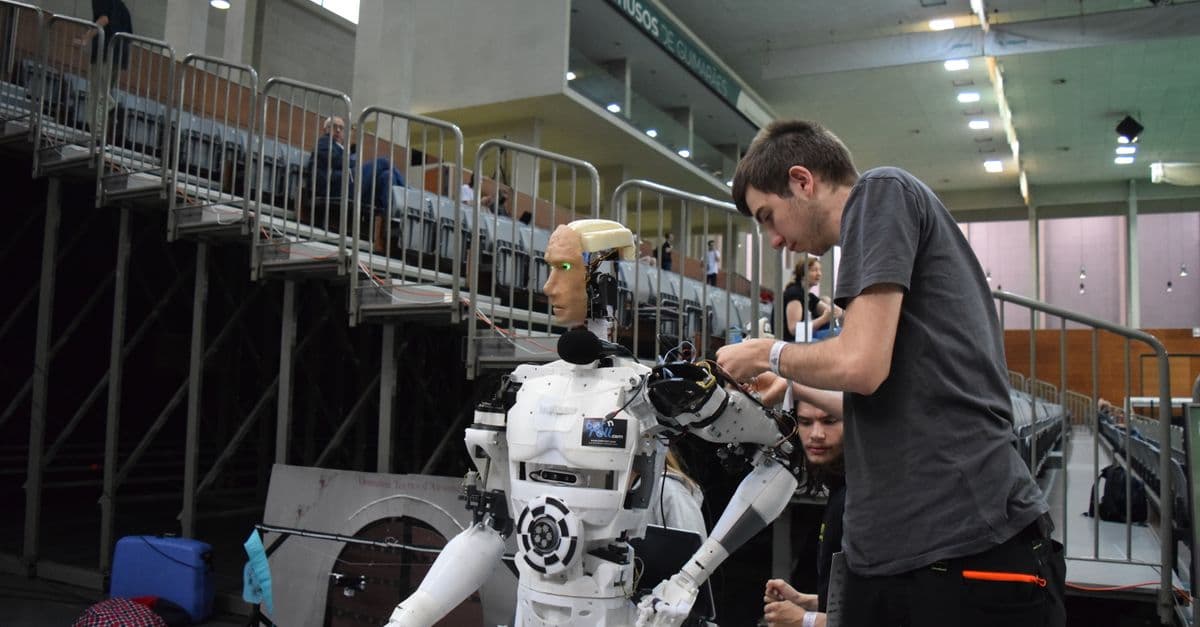
Molecules are naturally graphs—atoms as nodes, bonds as edges. Graph neural networks exploit this structure to predict chemical properties with striking accuracy.

Medicine has gone from bloodletting and prayer to gene editing in just a few centuries. Here's how we got there.
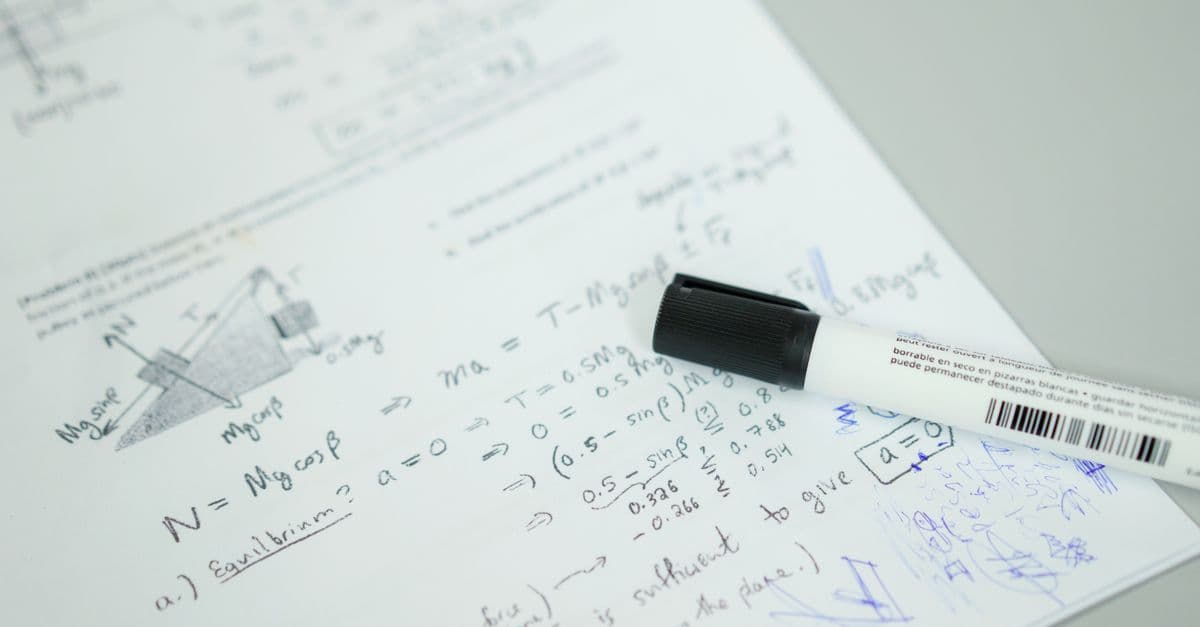
Not all infinities are equal. Georg Cantor proved that some infinite sets are larger than others — a discovery so strange it drove mathematicians mad.

People will deny the evidence of their own eyes to agree with a group. The psychology behind conformity is stranger — and more rational — than it appears.

Atoms are not all stable. Some nuclei spontaneously transform, emitting radiation as they go. The process powers nuclear medicine, reveals the age of ancient artifacts, and tells us the age of the Earth itself.