Avicenna: The Persian Polymath Whose Medical Canon Ruled Europe for 600 Years — SciHub101
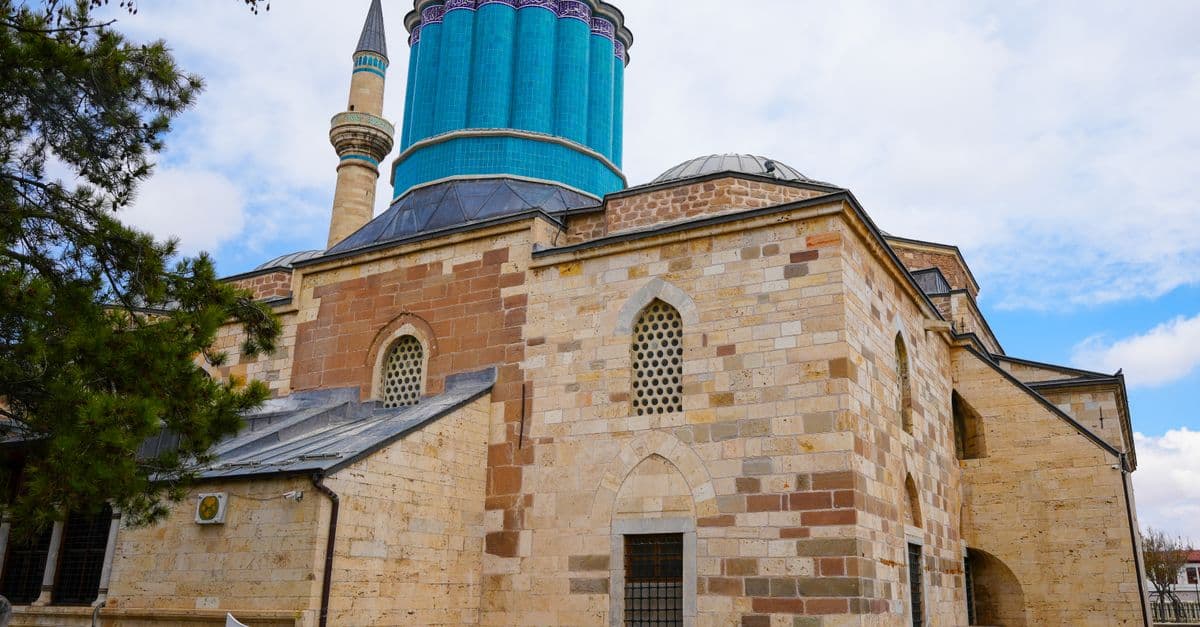
Photo: Şinasi Müldür / Pexels
Abu Ali al-Husayn ibn Abd Allah ibn Sina (980–1037 CE), known in Europe as Avicenna, was a Persian physician, philosopher, mathematician, and astronomer whose Canon of Medicine remained a standard textbook in European and Islamic universities from the 12th century to the mid-17th century — a span of roughly 600 years. He wrote more than 450 works across virtually every field of knowledge available to a 10th-century scholar, memorized the Quran by the age of ten, produced his greatest philosophical synthesis while serving as a court physician and political official under multiple dynasties, and claimed that his most difficult intellectual problems resolved themselves in dreams. He is the most influential scientist of the medieval Islamic world.
Quick Biography
Ibn Sina was born in 980 CE in Afshana, near Bukhara (in present-day Uzbekistan), to a Samanid government official and a woman from the village of Afshana. His family moved to Bukhara, then one of the greatest cities of the Islamic world — a center of scholarship, commerce, and political sophistication. His father was attracted to Ismaili Shia thought and exposed the young Ibn Sina to philosophical discussions that most children of the era never encountered.
By ten he had memorized the Quran and a substantial body of Arabic poetry. By fourteen he had surpassed his teachers in grammar, Islamic jurisprudence, and philosophy. He began studying medicine at sixteen, calling it a "not difficult" science compared to mathematics and metaphysics. At seventeen he successfully treated the Samanid ruler Nuh ibn Mansur of an illness that court physicians had been unable to cure. As a reward he was granted access to the royal library — a collection that he later described as containing books he had never encountered anywhere else and never found again after the library burned.
He wrote al-Qanun fi al-Tibb (The Canon of Medicine) and Kitab al-Shifa (The Book of Healing, a philosophical and scientific encyclopedia) primarily in his thirties, while simultaneously serving as a court vizier and, on several occasions, as a fugitive fleeing political instability. The Samanid dynasty collapsed; the Buyid and Ghaznavid powers competed for control of the region. Ibn Sina navigated between patrons, was imprisoned at least once, and continued writing throughout — reportedly composing parts of al-Shifa while on horseback and during the disruptions of political upheaval.
He died in 1037 in Hamadan, Iran, at approximately 57, reportedly from a severe intestinal condition — possibly colitis — that he had attempted to treat himself, with mixed results. A student who served him in his final illness recorded that he had worked himself mercilessly throughout his adult life, eating irregularly, sleeping little when engaged with a problem, and drinking wine regularly. His last self-prescriptions were reportedly excessive and worsened his condition.
Patrons, Prisons, and a Life in Motion
The biographical picture of Ibn Sina that emerges from his autobiography and from al-Juzjani's account is not that of a cloistered scholar but of a man whose intellectual life was conducted under conditions of continual political instability and physical movement. Understanding the sequence of his patrons is essential to understanding how the Canon and al-Shifa actually got written.
After the death of Nuh ibn Mansur and the collapse of the Samanid dynasty around 1004, Ibn Sina entered a period of wandering through the cities of Khorasan and Persia — Gurganj (now Urgench in Uzbekistan), Nasa, Baward, Tus, Semnan, and eventually Ray (near modern Tehran). In some cities he found temporary patronage; in others he was simply a traveler seeking work. He carried with him the manuscripts of works in progress, including early drafts of what would become al-Shifa.
His most stable patronage came from the Buyid prince Shams al-Dawla in Hamadan, in western Iran. Ibn Sina served as his court physician and was appointed vizier — the chief administrative officer of the principality — twice. The second appointment followed his successful treatment of the prince for a recurrence of his colic. This is the period during which the largest portions of al-Shifa and the Canon were completed: after the court retired each evening, Ibn Sina would gather his students, dictate sections of his books, and drink wine while working through problems. His student al-Juzjani, who was present for much of this period, recorded the nightly sessions in detail.
The imprisonment at Fardajan fortress came after Shams al-Dawla's death in 1021. The new prince, Taj al-Mulk, suspected Ibn Sina of corresponding with the Kakuyid ruler Ala al-Dawla ibn Kakuya — Shams al-Dawla's rival — with offers of service. The charge may have had some basis: Ibn Sina had indeed been in contact with Ala al-Dawla. He spent approximately four months imprisoned at Fardajan; during that time he composed three works, including a philosophical allegory and a work on pulse diagnosis. He escaped, disguised as a Sufi, and eventually reached Isfahan, where Ala al-Dawla became his final patron and where he spent the most productive and stable years of his later career, completing major works and continuing to serve as physician and advisor until a military campaign disrupted his final years.
The pattern of his adult life — high intellectual productivity sustained under conditions of political danger, physical displacement, and administrative responsibility — is without close parallel among major scientific figures. He was not simply a scholar who also happened to be politically connected. He was a court official and medical practitioner who found the intellectual resources to produce, simultaneously, the most comprehensive medical encyclopedia in history and one of the most ambitious philosophical syntheses of the medieval world.
Major Contributions
The Canon of Medicine
al-Qanun fi al-Tibb is a five-volume systematic presentation of Greek and Islamic medicine, Ibn Sina's own clinical observations, and a theoretical framework integrating Galenic medicine with Aristotelian natural philosophy. It covered general principles of medicine, simple drugs (with descriptions of 760 substances), diseases organized by organ system, conditions affecting the whole body, and compound drugs. It was translated into Latin by Gerard of Cremona in the 12th century, became a standard text at the medical schools of Montpellier, Bologna, and other European universities, and continued in use at some European institutions until the mid-17th century — longer than any other medical text in history.
Its longevity was partly a function of quality and partly of institutional inertia, but the quality was real. Ibn Sina's discussions of contagious disease were unusually precise for the era: he proposed that soil and water can spread disease, that bodily secretions can contaminate soil, and that quarantine can prevent spread — concepts that were ahead of prevailing European medical theory by centuries. His description of pulmonary tuberculosis as contagious is particularly noted by historians of medicine.
The Book of Healing
Kitab al-Shifa is not a medical text despite its name. It is an encyclopedic work of Aristotelian-influenced philosophy covering logic, natural sciences (physics, cosmology, meteorology, mineralogy), mathematics, music, and metaphysics. It is among the most comprehensive philosophical syntheses produced in the medieval world. Its metaphysical sections — particularly the argument for the existence of God from contingent being and the treatment of the soul — heavily influenced later Islamic philosophy and, via Latin translation, the work of Thomas Aquinas and other Scholastic philosophers.
The Flying Man Thought Experiment
In Kitab al-Shifa and Kitab al-Isharat, Ibn Sina presents the "Flying Man" (or "Floating Man") thought experiment: imagine a person created fully formed in empty space, with no sensory input of any kind — no touch, no sight, no sound. Would that person still be aware of existing? Ibn Sina's answer was yes: self-awareness is not reducible to sensory experience. The argument is an anticipation of Descartes' cogito by more than 600 years and has attracted serious attention from historians of philosophy for its structural similarity to the Cartesian project of grounding knowledge in the certainty of the thinking self.
Contributions to Optics, Astronomy, and Chemistry
Ibn Sina made contributions across natural philosophy that are less celebrated than his medical work. In optics he challenged the "emission theory" — the ancient Greek view that the eye emits rays — arguing instead that vision works by light reaching the eye from objects. In astronomy he described his observation of Venus transiting the sun (970 CE is the relevant observation period) and used it to argue that Venus was closer to the Earth than the sun — a correct conclusion. In chemistry he was skeptical of transmutation (alchemy in its literal sense), arguing that metals cannot be truly transformed and that apparent transformations are surface changes — a more rigorous empirical position than most of his contemporaries.
Influence on Islamic and European Philosophy
Ibn Sina's synthesis of Aristotelian philosophy with Islamic theology was among the most consequential intellectual achievements of the medieval period. His metaphysics — particularly the distinction between essence and existence, and the proof for a "Necessary Existent" (God) whose essence and existence are identical — shaped Islamic scholastic philosophy (kalam) and directly influenced the Latin Scholastic tradition. The Spanish scholar Averroes engaged extensively with Ibn Sina's readings of Aristotle, and Aquinas incorporated elements of his metaphysics into the Summa Theologica. For the transition from medieval to early modern science, see Galileo Galilei: The Stargazer Who Broke the Universe, whose method of empirical observation built on a tradition that Ibn Sina helped establish.
Lesser-Known Scientific Work
Psychology and the Theory of the Internal Senses
Ibn Sina developed one of the most detailed accounts of cognitive psychology in the pre-modern world, embedded within Kitab al-Shifa and his later work Kitab al-Najat (The Book of Salvation). He proposed a hierarchy of internal senses — faculties of the mind that process, combine, and store information from the external senses — including the common sense (which unifies input from different senses), the retentive imagination (which stores sensory images), the compositive imagination (which combines and recombines them), the estimative faculty (which perceives non-sensory qualities like the wolf's hostility), and the memorative faculty (which stores estimative judgments). This was not speculative: he grounded each faculty in a specific region of the brain, drawing on anatomical reasoning.
The estimative faculty is particularly interesting from a modern standpoint. Ibn Sina argued that animals perceive properties — danger, friendliness, edibility — that are not reducible to color, sound, or touch. A sheep does not smell the wolf's hostility; it perceives it directly through a faculty that combines sensory data with innate or learned dispositions. This is a sophisticated anticipation of debates in contemporary cognitive science about embodied cognition and the non-inferential perception of affordances.
Music Theory
Among the sections of Kitab al-Shifa is a substantial treatment of music theory that represents one of the most mathematically sophisticated accounts of musical intervals in the medieval Islamic world. Ibn Sina analyzed musical scales, the mathematics of consonance and dissonance, and the physical basis of sound in ways that built on Greek theory (particularly Pythagorean and Aristoxenian traditions) while extending it with his own analysis. His account of the minor second and his treatment of rhythmic cycles influenced later Islamic music theory significantly. This work is rarely mentioned in Western accounts of his legacy, which tend to focus on the medical and philosophical texts, but it is a serious contribution to the mathematical theory of music.
Geology and the Formation of Mountains
In the section of Kitab al-Shifa dealing with minerals and geology, Ibn Sina proposed that mountains are formed by one of two processes: either by the uplifting of the earth's crust through seismic activity, or by the differential erosion of hard and soft rock by water over long periods of time. He reasoned that the fossil marine organisms found on high mountain plateaus indicated that those areas had once been under water — and that the rocks themselves preserved evidence of processes that had occurred over immense spans of time. This is recognizably proto-geological reasoning about stratigraphy and deep time, produced 700 years before the establishment of geology as a discipline. The argument appears in Fazlur Rahman's translation and commentary and is one of the more striking examples of Ibn Sina's empirical range.
Lesser-Known Habits and Quirks
Memorized the Quran at Ten
The claim that Ibn Sina memorized the Quran by age ten is recorded in his autobiography, dictated to his student Abu Ubayd al-Juzjani — one of the most reliable primary sources for his life. The autobiography is candid about his intellectual development in a way that sounds less like hagiography and more like genuine recollection: he describes specific teachers, the specific order in which he mastered subjects, and his own assessment of when he surpassed them. The Quran memorization is presented not as a spiritual achievement but as one data point in a sequence of rapid intellectual development. He also records mastering a difficult philosophical problem that had defeated him for eighteen months, then finally understanding it after reading al-Farabi's commentary on Aristotle's Metaphysics — "I was so pleased that I distributed alms to the poor in thanks to God."
Writing While Drinking Wine
Ibn Sina's habit of drinking wine while working is documented by al-Juzjani and by later biographers who drew on the same tradition. This is notable not merely as personal eccentricity but because wine is explicitly prohibited in Islamic law, and Ibn Sina was a Muslim writing extensively on Islamic theology and Quranic interpretation. His relationship to the prohibition appears to have been pragmatic rather than dismissive: he was aware of it, did not publicly advocate ignoring it, and apparently treated it as a private matter between himself and his intellectual commitments. He reportedly used wine as a cognitive stimulant — drinking when working through difficult problems late at night, a practice he prescribed to himself as a physician even while acknowledging the prohibition.
Later Islamic scholars were divided on this. Some dismissed it as calumny; others acknowledged it but emphasized that his scientific achievements should be evaluated separately from his personal habits. The question of how to assess a towering religious-philosophical thinker who violated explicit religious law is one the Islamic scholarly tradition has grappled with ever since.
Solving Problems in Dreams
Ibn Sina describes in his autobiography that when he was stuck on a difficult philosophical or scientific problem, he would concentrate on the question intensely before sleeping, then find that he understood it upon waking. He also writes of performing ablutions and praying when stuck, then returning to work — indicating that he did not treat the dream-problem-solving as separate from religious practice. The phenomenon he describes — what we would now recognize as insight during sleep, or incubation in the psychology of creativity — has been documented in numerous scientific figures. Whether Ibn Sina's dreams provided genuine solutions or simply the sense of solution is not determinable from the sources; what is clear is that he experienced and relied on this process deliberately.
Fugitive Years and Political Turbulence
Ibn Sina spent significant periods of his adult life as a political fugitive. After the collapse of the Samanid dynasty he served multiple patrons — the Buyid prince Majd al-Dawla in Ray, then Shams al-Dawla in Hamadan, where he served as court physician and vizier. When Shams al-Dawla died, his son's court was hostile and Ibn Sina went into hiding for several months in the house of a pharmacist, Abu Sahl Masih, while continuing to write al-Shifa. He was later imprisoned for approximately four months at the fortress of Fardajan, reportedly for corresponding with the Ghaznavid ruler Mahmud's rival. He continued writing during imprisonment.
The combination of high political responsibility and physical insecurity is unusual among major scientific figures. Ibn Sina was not an academic cloistered from the world; he administered tax policy, commanded military forces as a vizier, and navigated court politics that could and did threaten his life, all while producing the work for which he is remembered.
He Rejected Alchemy — While Living Among Alchemists
Ibn Sina's skepticism about metallurgical transmutation set him apart from most of his contemporaries in the Islamic world, where alchemy had a serious intellectual following. His position in Kitab al-Shifa was essentially empirical: he had observed many supposed transmutations and concluded they were surface transformations — plating, alloying, or superficial changes in color — rather than genuine changes of substance. He did not dismiss the goal of alchemy as philosophically incoherent; he dismissed the specific claims of practitioners as unverified. This is a methodologically modern stance: demand the evidence, not just the theory. It sat uncomfortably with the alchemical tradition he shared intellectual space with, and later Islamic commentators debated his position extensively.
Self-Medication and Its Consequences
Al-Juzjani's account of Ibn Sina's final illness is frank and unflattering: a severe intestinal condition, almost certainly colitis, that his own excessive treatment protocols worsened. He reportedly administered to himself high doses of celery seed as a remedy (intended to restore intestinal function), overdosed, which precipitated convulsions, then during recovery was treated by his servants with high doses of drugs that they miscalculated, and never fully recovered. Al-Juzjani attributes the fatal deterioration partly to Ibn Sina's own excessive prescribing and partly to his life of overwork: "he chose to live intensely rather than carefully." The physician who could not successfully treat himself is a genuine irony that al-Juzjani preserves without softening it.
Famous Quotes
"The world is divided into men who have wit and no religion, and men who have religion and no wit." Attributed to Ibn Sina in several medieval sources. The provenance is difficult to verify definitively, but the formulation is consistent with the intellectual independence visible in his documented work and personal habits.
"I prefer a short life with width to a narrow one with length." Attributed, and consistent with al-Juzjani's account of his habits. He is reported to have said something similar when warned that his lifestyle would shorten his life.
"An ignorant doctor is the aide-de-camp of death." From medical writings, widely cited in later Islamic and European medical literature. The precise Arabic source text is the Canon of Medicine and related correspondence.
"The knowledge of anything, since all things have causes, is not acquired or complete unless it is known by its causes." From Kitab al-Shifa, reflecting his Aristotelian commitment to causal explanation as the basis of knowledge.
Legacy
Avicenna's influence across cultures and centuries is without parallel among medieval scientists. The Canon of Medicine remained a living teaching text in European universities for 600 years — longer than any comparable work. His metaphysics shaped both Islamic scholasticism and Latin Scholastic philosophy. His thought experiments anticipated Descartes. His clinical observations on contagion anticipated germ theory by eight centuries. His geological reasoning about mountain formation anticipated uniformitarian geology by seven centuries.
In modern Iran and the broader Islamic world he is a figure of national and civilizational pride. In the history of medicine he is recognized as the organizer who took what Greek medicine knew and made it teachable, systematic, and extensible. In the history of philosophy he is recognized as the thinker who showed how Aristotle and Islamic theology could be made to speak to each other — a project that was controversial in his own time and remained so.
The Islamic Golden Age he represented — a tradition of rigorous empirical and philosophical inquiry carried out within and alongside religious faith — is a corrective to any simple narrative about science and religion as necessarily in conflict. For the transition into early modern European science that built on this tradition, see Galileo Galilei: The Stargazer Who Broke the Universe. For another polymath who transmitted ancient knowledge across civilizational boundaries, see Hypatia of Alexandria: The Last Great Philosopher of the Ancient World.
FAQ
Q: Is Avicenna considered the "father of modern medicine"?
He is one of several figures to whom that title has been applied. Hippocrates is often called the founding figure of Western medicine; Galen established the theoretical framework that dominated for 1,500 years; Ibn Sina systematized and extended that tradition and added important independent contributions, especially in pharmacology and infectious disease theory. The most accurate formulation is that the Canon of Medicine was the most widely used medical textbook in history and that his clinical methodology was more rigorous than most of his European contemporaries for several centuries.
Q: How did Avicenna's work reach Europe?
Primarily through the translation movement of the 12th and 13th centuries, centered in Toledo, Spain, and later in Sicily, where scholars translated Arabic texts into Latin. Gerard of Cremona translated the Canon from Arabic into Latin around 1187. Once in Latin, it entered the university curriculum at major European medical schools and remained there for centuries.
Q: Was Ibn Sina religious?
Yes. He wrote extensively on Islamic theology, produced commentaries on the Quran, and engaged seriously with questions of religious metaphysics. His metaphysical arguments for the existence of God were influential in Islamic theological tradition. The fact that he also drank wine is a complication that later biographers have handled in various ways, but it does not suggest he rejected Islam — the sources suggest a man who took religion seriously as a philosophical and intellectual commitment while treating certain prescriptions as negotiable in his private life.
Q: Did Avicenna really memorize the Quran at ten?
This is what his autobiography, dictated to his student, claims. The autobiography is unusually detailed and self-aware for a medieval source; historians generally treat it as reliable on the broad outline of his development, while recognizing that some details may have been shaped by the conventions of biographical hagiography. Memorizing the Quran by age ten, while exceptional, is not unique — the tradition of hifz (memorization) produces such results regularly in intensive religious education environments.
Q: What is the "Flying Man" thought experiment?
It is Ibn Sina's argument that self-awareness is independent of sensory experience. Imagine a person created fully formed in void space with no sensory input. Ibn Sina argues they would still be aware of their own existence, demonstrating that the soul's self-awareness is not derived from the body. The argument anticipates Descartes' cogito ergo sum by over 600 years and is considered a significant contribution to the history of philosophy of mind.
Q: What did Ibn Sina contribute to psychology?
He developed a detailed account of the internal senses — cognitive faculties that process and store sensory information — including the estimative faculty, which he proposed allows animals and humans to perceive non-sensory properties such as danger or intention. His anatomical localization of these faculties to specific brain regions was speculative by modern standards but represented a serious attempt to connect psychological function to physical structure. Fazlur Rahman's Avicenna's Psychology (Oxford University Press, 1952) is the standard English-language treatment of this aspect of his work.
Q: Did Ibn Sina contribute to geology?
Yes, in ways rarely mentioned in standard accounts. In the natural science sections of Kitab al-Shifa he proposed that mountains form through seismic uplift or differential erosion, and he used fossil marine organisms found at altitude as evidence that those areas were once submerged. This is proto-uniformitarian geological reasoning — using present physical processes to explain past changes — produced seven centuries before geology became a formal discipline.
Q: Why was the Canon of Medicine used in European universities for so long?
A combination of genuine quality and institutional inertia. The Canon was systematic, comprehensive, and clearly organized in a way that made it ideal as a teaching text. Medieval and early modern European universities were conservative institutions; once a text was established in the curriculum, displacing it required strong evidence that a replacement was superior, not merely equivalent. The Galenic framework the Canon was built on remained credible until the 17th century. When Vesalius revised anatomy in 1543 and Harvey described circulation in 1628, the empirical foundation the Canon rested on began to shift — but the text remained in use at some schools until the mid-1600s.
Sources
- Goodman, Lenn E. Avicenna. Routledge, 1992.
- Gohlman, William E. The Life of Ibn Sina: A Critical Edition and Annotated Translation. SUNY Press, 1974. (Ibn Sina's autobiography as dictated to al-Juzjani.)
- McGinnis, Jon. Avicenna. Oxford University Press, 2010.
- Siraisi, Nancy G. Avicenna in Renaissance Italy: The Canon and Medical Teaching in Italian Universities after 1500. Princeton University Press, 1987.
- Ibn Sina. al-Qanun fi al-Tibb (The Canon of Medicine). c. 1025 CE.
- Ibn Sina. Kitab al-Shifa (The Book of Healing). c. 1020–1027 CE.
- Fazlur Rahman. Avicenna's Psychology. Oxford University Press, 1952.
Follow new articles
Add SciHub101 to your feed reader to see new science and technology stories.
About the Author
SciHub101 is an independent science and technology publication founded and edited by Buğra Sözeri, a software engineer and app developer based in Türkiye. AI tools assist with drafting and research. Source documentation in the existing archive is uneven, and articles are being reviewed and corrected. The Editorial Team byline identifies editorial responsibility; it does not certify specialist or independent human review. Where we compare products, anything built by our own team is labelled as such — see the editorial guidelines and About page for how corrections and disclosures work.
Related Articles

Alexander Fleming: The Messy Lab That Changed Medicine Forever — SciHub101
Alexander Fleming's life, discoveries, and verified quirks: the contaminated petri dish that became penicillin, painting with bacteria, and what Florey and Chain actually did.

Aristotle: The Man Who Dissected 500 Species and Got the Brain Completely Wrong — SciHub101
Aristotle founded systematic biology, logic, and Western philosophy, dissected hundreds of species, taught Alexander the Great — and was catastrophically wrong about the brain. A verified biography.
Claude Shannon: The Bell Labs Tinkerer Who Invented Information — SciHub101
Claude Shannon founded information theory in 1948, proved Boolean algebra runs circuits in 1937, built a maze-solving mouse, and juggled on a unicycle through Bell Labs hallways.

Ernest Rutherford: The New Zealander Who Split the Atom — SciHub101
Ernest Rutherford discovered the atomic nucleus, named alpha and beta radiation, and mentored 11 future Nobel laureates. His biography, gold foil experiment, and legacy.

Hans Bethe: The Physicist Who Explained Why Stars Shine — SciHub101
Hans Bethe discovered the CNO cycle that powers stars, led Manhattan Project theory, won the 1967 Nobel Prize, and spent 70 years at Cornell advocating against nuclear weapons. He lived to 98.
Hermann von Helmholtz: The Physicist Who Measured a Thought — SciHub101
Hermann von Helmholtz formulated energy conservation, invented the ophthalmoscope, measured nerve impulse speed, and trained Heinrich Hertz. His full biography and science.