Skip to content
ISSUE 10.29.26/24 CATEGORIES

memory

35 articles tagged with #memory

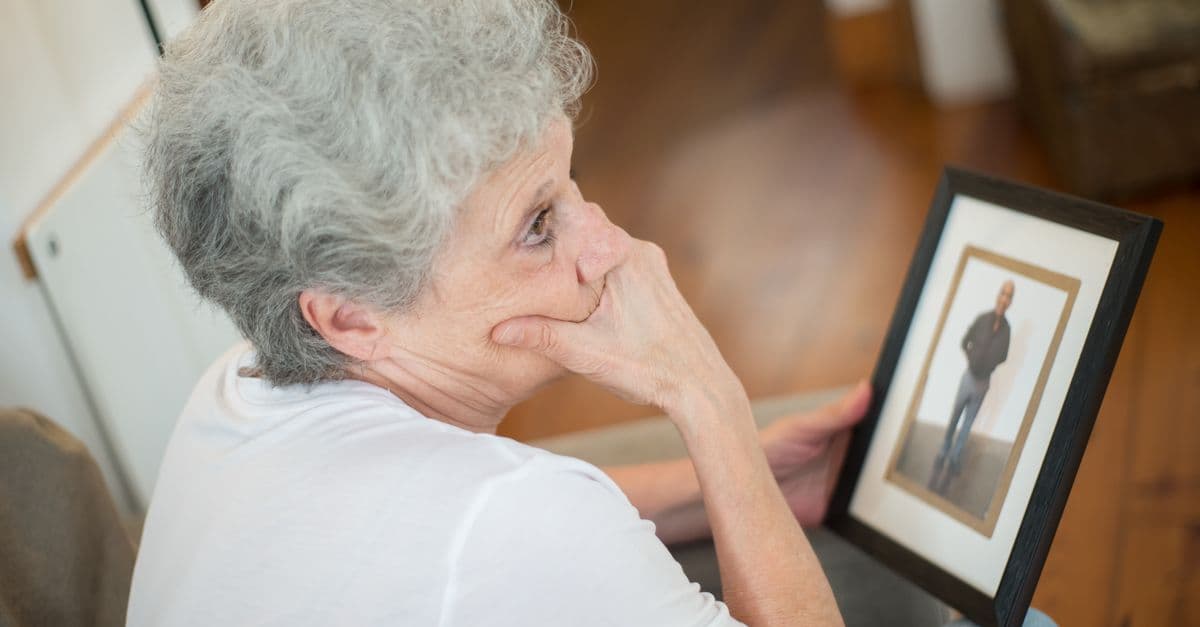
Close-up of hands sorting through a collection of vintage family photos.
Science

The Mandela Effect: What Science Says About False Memories

Millions of people clearly remember Nelson Mandela dying in prison in the 1980s. He died in 2013. Millions more remember the children's book series being spelled 'Berenstein Bears' — it was always 'Berenstain.' These are not misremembrings of obscure facts: they are vivid, confident memories that contradict documented reality, shared by large numbers of people who arrived at them independently. Neuroscience has a precise, non-mysterious explanation for every major Mandela Effect case, and it reveals something more striking than any alternate timeline: human memory is not a recording. It is a reconstruction.

Editorial Team·June 4, 2026·17 min
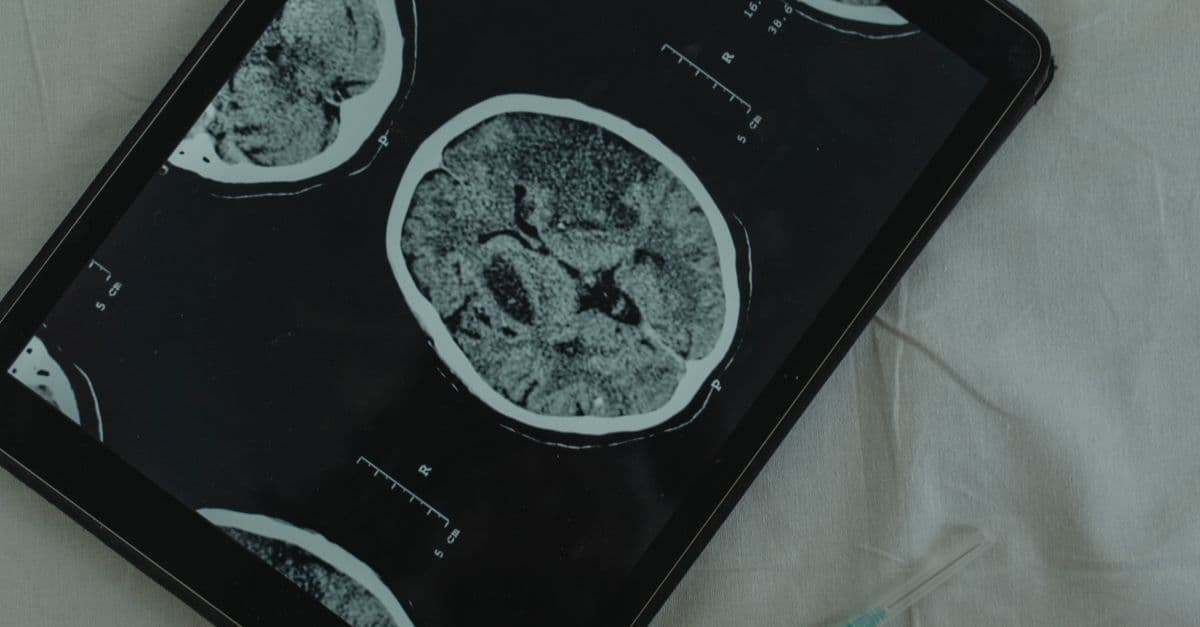
Close-up view of a brain CT scan displayed on a digital tablet with a medical needle beside it.
Science

The Science of Déjà Vu: What Actually Causes It

Roughly two-thirds of the general population reports experiencing déjà vu at some point in their lives — that disorienting conviction that a present moment has been experienced before, accompanied by the simultaneous knowledge that it cannot have been. The experience lasts a few seconds, then dissolves. For most people it is occasional and benign. For patients with temporal lobe epilepsy, it can be a reliable seizure precursor. The fact that déjà vu can be reproduced reliably in clinical settings — both by electrical stimulation of specific brain regions and by certain drug compounds — tells neuroscientists where to look for the mechanism.

Editorial Team·June 4, 2026·17 min
Close-up of an elderly woman's face reflected in a hand-held mirror, showcasing age and grace.
Science

Why Time Feels Faster as You Age: The Science Behind It

A summer at age eight felt endless. A year at forty disappears. This is not nostalgia distorting judgment — it is a measurable difference in how the brain processes and encodes time. Multiple mechanisms are involved: a mathematical relationship between age and perceived duration, a decline in the novelty that creates dense memories, slowing neural processing speed, and falling dopamine levels that alter the brain's internal clock. Each mechanism operates independently, but they all converge on the same result: subjective time accelerates across a human lifetime.

Editorial Team·June 4, 2026·17 min
An adult writing in a notebook with a laptop on a wooden table for work or leisure.
Technology

How to Build a Second Brain with Digital Note-Taking

Your memory is a retrieval system, not a storage system. A brain neuron firing at the moment you need to recall information is vastly more important than the amount of information you have stored. Digital note-taking tools—Obsidian, Notion, Roam Research, LogSeq—enable you to externalize information into a structure that enhances retrieval. The framework is Tiago Forte's PARA system: Capture raw information, Organize into Projects and Areas, Distill into clear ideas, Express by synthesizing notes into written work. This is not about collecting notes passively; it is about building a networked knowledge system where ideas link, cross-pollinate, and compound over time. The science of external memory and spaced repetition shows that people who maintain a 'second brain' learn 20-40 percent faster than those who rely on biological memory alone.

Editorial Team·June 4, 2026·17 min